
Episode Archives


Money Draught #32 – The One About Trains
Topics include: Trains
** This cast is for mature listeners **
Your Hosts:
Jason Alt — @JasonEAlt
Slick Jagger — @slickJagger
JR — @time_elemental

Pitt Imps Podcast #119 Mind Your Business
This week we fight through tech problems but manage to go over both GP’s and all the news. Angelo rants again. Seriously, why keep pissing him off? Then Angelo and Mike tell you how they each did at their respective PPTQ/IQ that they attended.
Host Angelo Twitter @ganksuou
Co-Host Mike Twitter @Huntmaster_Mike
Email [email protected]
The Pitt Imps is brought to you by Taitan Game Shop and Brainstorm Brewery

Weekend Magic: 5/15-5/17
Last weekend brought us Grand Prix: Shanghai and Star City Games: Dallas. In other words, plenty of Standard action with a side of Modern and Legacy. Let’s see what the results were.
Grand Prix: Shanghai
Format – Standard
“Abzan Megamorph Control” is quite a mouthful yet is an apt name for the deck that won GP Shanghai. Yuuki Ichikawa had the full playset of [card]Deathmist Raptor[/card]s and [card]Den Protector[/card]s in this build in order to generate tons of value together along with board clear [card]Crux of Fate[/card] and spells [card]Abzan Charm[/card] and [card]Hero’s Downfall[/card]. [card]Elspeth, Sun’s Champion[/card] is the big finisher in the deck with [card]Nisa, Worldwaker[/card] and [card]Sorin, Solemn Visitor[/card] coming in from the sideboard to help clean things up against control mirror matches.
The rest of the Top 8 wasn’t very diverse. Two other Abzan decks and five G/R decks made it in. Notably absent is Esper Dragons – it seems that G/R dragons and Abzan decks are good counters to the control deck’s counterpart.
Some notable cards from the G/R lists include [card]Thunderbreak Regent[/card], [card]Stormbreath Dragon[/card], [card]Dragonlord Atarka[/card], [card]Whisperwood Elemental[/card], and [card]Rattleclaw Mystic[/card].
Star City Games Open: Standard (Dallas, TX, USA)
Decklists
| Deck | Finish | Player | Deck | Finish | Player |
| G/R Dragons | 1st | Nathan Fabilenia | Abzan Aggro | 9th | Edward Eng |
| Abzan Control | 2nd | Jon Lim | U/B Control | 10th | Nick Schoolcraft-McCuen |
| Abzan Aggro | 3rd | Gabe Joglar | Mardu Dragons | 11th | Clifton Beech |
| Atarka Red | 4th | Nathan Zamora | Mardu Dragons | 12th | Josh Crowe |
| Mardu Dragons | 5th | Michael Villavicenci | Abzan Megamorph | 13th | Nathan Waxer |
| G/W Megamorph | 6th | Jonathan Berg | Abzan Megamorph | 14th | Richard Shade |
| Esper Dragons | 7th | Sam Berkenbile | Bant Heroic | 15th | Logan Mize |
| Mono-Red Aggro | 8th | Drew Iafrate | G/B Constellation | 16th | Erick Ramirez |
G/R Dragons took down the Standard portion piloted by Nathan Fabilenia. There are plenty of example G/R Dragons decks from GP Shanghai, so we’ll focus on other lists that made the Top 8.
Mardu Dragons made an appearance in the Top 8, along with two other Top 16 appearances. After being featured in the finals of GP Toronto the deck is still doing well in the Standard metagame. Key players in this deck include [card]Stormbreath Dragon[/card], [card]Thunderbreak Regent[/card], [card]Kolaghan, the Storm’s Fury[/card], [card]Crackling Doom[/card], [card]Draconic Roar[/card], and [card]Foul-Tongue Invocation[/card].
Abzan decks also did well in Dallas last weekend, so you should continue to expect them in the Standard metagame. G/W Megamorph featured four [card]Avatar of the Resolute[/card] this time, along with a playset of [card]Collected Company[/card] however no [card]Mastery of the Unseen[/card] in the main deck (though it still made the sideboard). Mono-Red Aggro is still looking as fast as ever though interestingly only two [card]Goblin Rabblemaster[/card]s were main deck with the other two relegated to the sideboard to increase the clock against slower decks.
Rounding out the Top 16, Bant Heroic and G/B Constellation made appearances. Though becoming more “old school” Standard as the days go on, they can still put up impressive results if the pilot is skilled enough. Cards like [card]Hero of Iroas[/card], [card]Doomwake Giant[/card], and [card]Eidolon of Blossoms[/card] are still powerful in the right build and you should still expect to see these decks pop up from time to time until rotation.
Star City Games Premier IQ: Modern (Dallas, TX, USA)
Decklists
| Deck | Finish | Player | Deck | Finish | Player |
| Grixis Twin | 1st | Roland Hinajosa | Abzan | 9th | Dylan Backham |
| Affinity | 2nd | Christopher Arico | Burn | 10th | Matthew Hudson |
| Grixis Control | 3rd | Dan Jessup | Jund | 11th | Todd Anderson |
| Affinity | 4th | Brandon Borowicz | Obliterator Rock | 12th | Jason Blackmor |
| Slivers | 5th | Bryan Dubois | Jund | 13th | Jason Clark |
| Merfolk | 6th | Ty Elrod | Restore Balance | 14th | Robert Garza |
| Abzan Company | 7th | JB Milo | U/R Twin | 15th | Benjamin Autin |
| Jund | 8th | Eddie Leza | Burn | 16th | Anderes Hernandoez |
Moving on to the Modern portion of the weekend, Grixis Twin took down the event piloted by Roland Hinajosa. Remember, the black splash is for [card]Tasigur, the Golden Fang[/card] and [card]Kolaghan’s Command[/card] main deck with multiple sideboard options including [card]Engineered Explosives[/card], [card]Murderous Cut[/card], and [card]Bitterblossom[/card], and more copies of [card]Kolaghan’s Command[/card].
Rounding out the rest of the Top 8, Slivers has finally made a break into Modern and even Merfolk was able to place well. Grixis Control is nicely tuned deck that made third place. It is able to take advantage of cards like [card]Vedalken Shackles[/card] and [card]Blood Moon[/card], along with [card]Cryptic Command[/card] and other Modern powerhouses to take control of the game and prevent the opponent from advancing their game plan.
Slivers is all kinds of out there – with so many one-of’s in the deck, it would be better to check it out for yourself rather than have me list them all here. The core slivers which were played as four copies include [card]Galerider Sliver[/card], [card]Predatory Sliver[/card], and [card]Sinew Sliver[/card], along with three copies each of [card]Homing Sliver[/card] and [card]Manaweft Sliver[/card]. Of course, cards like [card]Cavern of Souls[/card] are insane in this deck and even four copies of [card]Sliver Hive[/card] and [card]Reflecting Pool[/card] are pretty awesome too for rainbow mana. [card]Aether Vial[/card] seems pretty important for this deck, and of course [card]Collected Company[/card] is going to pretty much always get you two slivers off the top at instant speed.
Merfolk seems to be appearing more and more in the Top 8 of the Modenr IQ’s, so it is definitely a deck to watch out for these days. Elrod’s version is very streamlined, with pretty much every copy of the card in the deck being a playset (even in the sideboard!). [card]Kira, Great Glass-Spinner[/card] just seems so broken in this deck – if you have at least three creatures in play and if you resolve it, it can be very sad times for the opponent.
Rounding out the rest of the Top 16, Obliterator Rock and Restore Balance are the innovative decks that did well this week. Cards to watch out for in Obliterator Rock include [card]Phyrexian Obliterator[/card], [card]Vampire Nighthawk[/card], [card]Liliana of the Veil[/card], and [card]Abrupt Decay[/card]. Cards to watch out for in Restore Balance are [card]Greater Gargadon[/card], [card]Geist of Saint Traft[/card], [card]Huntmaster of the Fells[/card], and [card]Restore Balance[/card].
Star City Games Premier IQ: Legacy (Dallas, TX, USA)
Decklists
| Deck | Finish | Player | Deck | Finish | Player |
| Storm | 1st | Dustin Carriere | U/R Delver | 9th | Dustin Buckingham |
| U/R Delver | 2nd | David Houghton | Grixis Control | 10th | Harold Williams |
| Reanimator | 3rd | Austin Palmer | Miracles | 11th | Patrick Tierney |
| Storm | 4th | Caleb Scherer | Miracles | 12th | Shane Remelt |
| Miracles | 5th | Collin Rountree | Sultai Delver | 13th | William Lo |
| Miracles | 6th | Bo Zhang | Sultai Delver | 14th | Tannon Grace |
| Miracles | 7th | Skyler Goy | Show and Tell | 15th | Kayleb Koslowsky |
| Omni-Tell | 8th | Nick Loiacono | Omni-Tell | 16th | Dennis Wilder |
Storm took the top spot in Legacy piloted by Dustin Carriere. Storm is always a Legacy staple, so if you play Legacy you know to expect it fairly often. You must be careful and counter key parts of the combo in order to slow them down enough to kill them. Key cards include [card]Lion’s Eye Diamond[/card], [card]Infernal Tutor[/card], and the various rituals that the deck uses to get enough mana to combo off.
The rest of the Top 8 is not very diverse, and includes many decks that have been seen in Legacy over the past several months. Miracles made numerous showings throughout the Top 16, as did Omni-Tell / Show and Tell builds along with U/R Delver and Sultai Delver builds. Not a ton of innovation in Legacy this week, however Legacy is a fairly stable format and doesn’t change that much from week to week.
That’s all for this week! Stay tuned for future Magic updates.

The Status of Women in Magic: Let’s Talk About “Rape”
Trigger Warning
This article is going to be about the use of “rape” and other references to sexualized violence in our community. In lieu of a formalized all-encompassing trigger warning, I believe it is more productive to be transparent about the direction in which I am leading this discussion. If you feel you would be traumatized or re-victimized by reading details of a sexual assault case or general conversation about rape, I recommend you avoid reading this article. If you decide to march forward any way and end up feeling upset, I am sorry for your pain. Please know you are not alone, and you will endure! May I direct you to these resources.
The Impetus…
Just over ten years ago, Zachary Jesse plead guilty to aggravated sexual battery, a felony, due to charges resulting from non-consensual vaginal and anal contact he forced upon another undergraduate student. Why is this relevant? Because this past Sunday, on May 10, Zach Jesse was a top-eight competitor at Grand Prix Atlantic City.
He was featured on screen without comment. In response, Drew Levin distributed news media links alerting other viewers to Jesse’s history and the coverage team’s oversight in including him. Immediately and unsurprisingly, Twitter erupted in a flurry of conversation. While many professional players and Magic: The Gathering talking heads displayed their disgust at the coverage team’s decision to feature Jesse, much of the playerbase involved in the conversation rejected the notion that Wizards had erred.
…and the Broader Problem
The Zach Jesse debacle is not isolated. Many of you may recall when Lucas Florent threatened to rape Director of Global Organized Play Helene Bergeot in 2011. His “lifetime” ban lasted all of six months. Jackie Lee has also been vocal about the rape threats she has faced for daring to be a woman who plays Magic well and visibly.
Each of these three situations are extreme examples of a problem I believe the MTG community faces regularly: alienating potential participants and active players through threats or relying on outmoded, offensive language that associates being defeated in a card game with a grave crime.
While it may be tempting to cast aside my concerns by attributing this disgraceful behavior to the social distance the internet provides, the players who tweet ferociously in defense of Zach Jesse or sling rape threats online patronize local game shops, too. I routinely hear players in my LGS and at tournaments say things like, “Oh, you just got raped!” usually with a gleeful smile on their faces. I am tying together a common trend and exemplary incidents because I believe the former cultivates an environment in which the latter can occur.
You may inquire: what does this have to do with women playing MTG? Women are disproportionately affected by sexualized violence. If you have more than a few women in a room, statistically, it is likely at least one of them has encountered rape or sexual assault. When you are flippant about your utilization of language or—as I saw repeatedly on Twitter this weekend—you defend a convicted rapist’s “right” to play a game, you signal to those present that you are not a safe person from whom to seek solace. You are not empathetic. You are not deliberate with your actions. You have not achieved a level of emotional maturity where you can be conscientious and distinguish between governmental censorship and a care-centered ethos that builds community. Now, if you would like to continue to reproduce these patterns of behavior and erect strawmen decrying a fabricated vision of institutional enforcement that very few MTG players have ever seriously endorsed…that’s fine. But I don’t want to play with you. I do not trust you. And you shouldn’t be surprised when other women [Editor’s note: or men!] don’t want to, either.

Fostering a hostile environment toward rape victims can dissuade women from participating, but it also has implications outside of exploring women’s limited role in Magic. Men experience sexualized violence at stunning rates, too.
Imploring fellow players and MTG community members to self-examine their behavior isn’t borne from of a desire to stamp out difference, eradicate fun, or be a wet blanket—it is about compassion and breeding an environment where the highest number of people can maximize their enjoyment. It is a matter of acknowledging that others have experiences that differ from your own and which may have lasting impacts of varying degrees. It is an issue of mutual respect and appreciation.
MTG is necessarily a social game, which means our interactions within the context of playing constitute the gaming environment. If it were not, you would be solely satisfied with emulators that mimic decision trees. Reducing the harm we enact against others is a complex process rife with competing interests. In this instance, however, I think the mental calculus is a simple weighing of costs and benefits. It costs you very little to be purposeful with your language. For someone suffering with PTSD, your failure to exert what will ultimately be a negligible effort for you, this seemingly small mistake can cost a great deal.

“Free Speech” and “Being Offended” versus Community Cultivation
To those whose fingers itch to unload on me, whose internal cogs whirl like a cartoon character’s feet before they again gain traction and dash forward, as a bastion of “PC culture,” please evaluate what made you so bitter and eager to incite pain.
If your only line of logic is, “They’re denying my freedom of speech,” you are willfully misunderstanding the First Amendment of the Bill of Rights. To those detractors who would reply with a slippery slope argument of, “If I can’t say ‘rape,’ what next?” I ask that you appraise why you are so analytically lazy. If you would like to relish and praise your inability to identify gradation between institutionally imposed bans and self-inspection, you have only fulfilled the claims of those who accuse trading card players of being stunted.
“Oh, does this mean next we can’t say ‘kill’?”
Typically, murder victims are unable to hear jokes surrounding their abuse, because they are, well, dead. Unfortunately, they are not able to participate in the massive multiplayer game we call life or the MTG community any longer. Furthermore, rates of murder are notably lower than sexualized violence:
| National or state crime in 2012 | |||
| State | Population | Murder and nonnegligent manslaughter rate | Forcible rape rate |
| United States-Total | 313914040 | 4.7 | 26.9 |
It is rather unlikely you would encounter an attempted murder victim in your LGS, while the same cannot be said of victims of sexualized violence. Lastly, people do not generally attribute murder to the behavior or past actions of murder victims, while rape survivors are routinely blamed for their victimization. There is no cultural ambiguity about the nature of murder, but confusion over the “boundaries” of consent is still regularly levied as a legal defense.
Rape victims are not figments of “misandrists’” imaginations. We exist. You play with us at LGSs, online, and around your kitchen tables. You trade with, buy from, and sell to us. We are members of the MTG community and we deserve to reap the rewards that a solidified subcultural environment can provide—camaraderie, fun, support, and growth—just the same as those who have not had to endure sexualized violence.
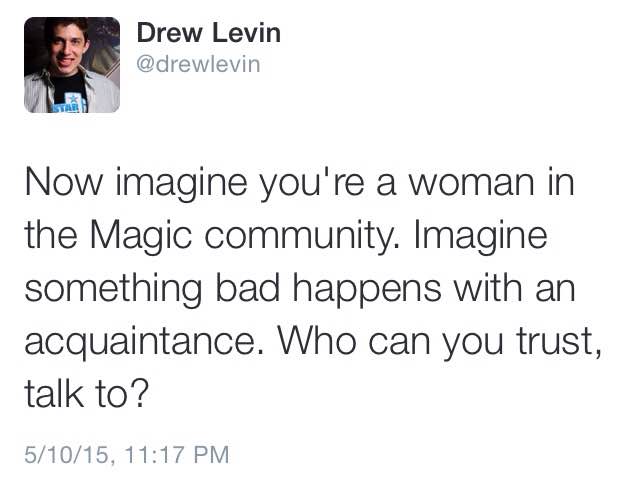
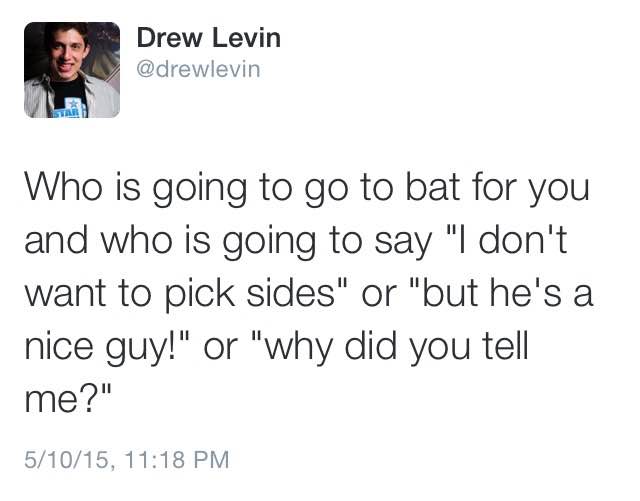
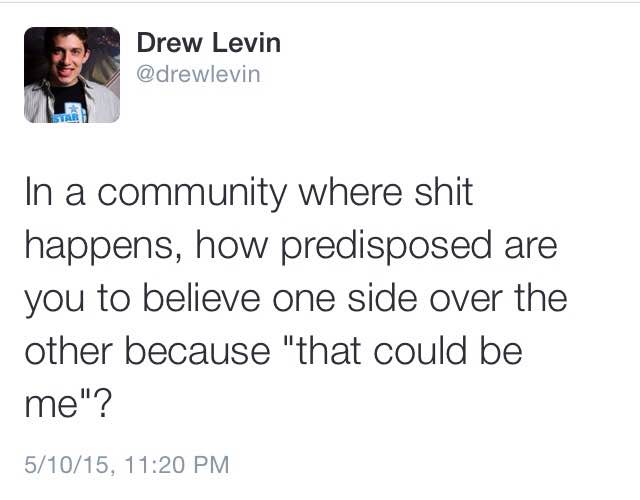
Drew Levin posed some questions on Twitter on which I would like all naysayers and doubters to reflect:




Possible Solutions
Of course, it is misguided to identify a problem without proposing a solution.

What language should replace the offending language people are currently employing?
Some replacements I have heard recommended are “owned” and “rekt.” I would encourage you to be even more creative! May I point you toward a Shakespearean insult generator?
Now, I have heard claims that “rekt” or other variations are at risk of becoming substitutes that maintain the original meaning of the offensive language in question. You know your own intentions. If your trash talk is a loosely-veiled allegory for sexualized violence consider revising your statement before you speak. If your trash talk relies upon cultural scripts surrounding gendered patterns of dominance, reevaluate! Ask yourself why you would wish to inflict that sort of trauma on someone with whom you are playing a game. Hell, remove the final qualifier of that sentence. Why would you wish to inflict pain on anyone?
What should you do when you hear someone else use this language?
Speak up! Be polite but firm. In most instances I have personally experienced it suffices to say something along the lines of, “Hey, could you please not use that word?” Rarely have I encountered negative responses to that request, at least in person.
As for online play, I have no suggestions that have proven efficacious. Once in an online MTG interface, I asked nicely and at least four of the draft members proceeded to independently message me grotesque and detailed rape threats. Social desirability bias of in-person interactions obviously renders some techniques less effective online. As to what will rectify this beyond programmer-inserted chat filters, your guess is as good as mine. We have to be accountable to each other. The buck needs to stop somewhere.
I look forward to reading your responses to my thoughts, to the Zach Jesse scandal, and to the issue of the use of “rape” in our community.

Unified Theory of Commander: Political Answers
You may have noticed that the further we’ve progressed into the Unified Theory’s MDTAS system, the more we’ve discussed the “character” of your deck. This isn’t a coincidence. Every deck needs mana sources, and the rules that help players improve their mana base can be broadly applied. Every deck wants card draw, so resource acquisition is an easy topic to tackle from a general point of view.
However, as we progressed past resource acquisition and into resource selection and utilization, it’s become more necessary to identify the specific goals of our decks. This allows us to make focused card selections that keep each deck functional and fun. So to wrap up our discussion on Answers, it’s important to shine a light back on that topic and make sure our selected answers are genuinely working in service of our goals.
Answers to Answers
The easiest way to introduce this topic is to go back to the example of [card]Soul of New Phyrexia[/card] from our previous conversation on answers. While[card]Wrath of God[/card] or [card]Path to Exile[/card] are answers that address threats, Soul of New Phyrexia might be better seen as an answer to an opponent’s answer. A tokens deck is most vulnerable to board wipes, so running a card that grants immunity to those sets up an army of 1/1 soldiers, elves, or goblins for victory.
Answer to Answers
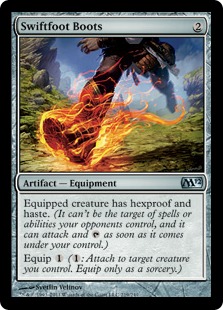
Pause a moment and consider what makes [card]Swiftfoot Boots[/card] an EDH staple. Sure, it can allow an aggro general to swing in a turn sooner, but is that really why it’s so ubiquitous in decks that focus on the commander? I would argue Swiftfoot Boots more important function is being a cheap, near-universal answer to single-target removal. Granting haste is just gravy. What players really want is to know their commander, or another critical threat, is safe from most instant-speed answers.
To retread the most beaten path in Magic scholarship, this is what makes counterspells so immensely powerful and annoying. The “universal answer” isn’t just an answer to threats. It’s an answer to answers too. Consider how often you’ve heard the phrase “I was holding [THREAT] until I had a counterspell to back it up.” So while an aggro deck might have to pick between a removal spell or some kind of defense for their threats, a blue mage can use one slot to cover both. Answers to answers are incredibly valuable.
Bringing the Pain
Taken too far, this “answers to answers” concept can create some of the most powerful and frustrating decks in the format. A prime example would be the “stax” deck archetype. These decks are often helmed by commanders such as [card]Grand Arbiter Augustin IV[/card] or [card]Derevi[/card] and are packed with cards like [card]Winter Orb[/card], [card]Smokestack[/card], and [card]Tangle Wire[/card]. They lock down resources, prevent opponents from getting threats online and make it virtually impossible to answer their own threats. I’m sure you can see why these decks have a reputation for being the least fun in Commander.

Sorry, dude. No one likes you.
You may have heard similar complaints about decks that rush a threat online, then activate mass land destruction to prevent answers. Watching an unchallenged [card]Jor Kadeen[/card] topple one player after another or a [card]Narset, Englightened Master[/card] play solitaire while being unable to keep lands online just isn’t fun. Mass discard decks like [card]Nath of the Gilt-Leaf[/card] also tend to have a crummy reputation for putting the rest of the table into topdeck mode for the entire game. So aggressively pushing answers to answers in other ways can clearly create bad feelings over time.
Cards such as [card]Painful Quandary[/card] or [card]Sadistic Sacrament[/card] don’t feel that mean when you are putting them into your deck. They feel like answers, and in some situations they really can function that way. In practice, they tend to push their controllers to play more competitively and require judicious utilization to not be incredibly frustrating. Aggressively and preemptively answering everything can produce obvious results. It can win you games. It just might not win you very many friends.
Prevention vs Reaction
So this brings us back to the goals we’ve set for our decks and the environments in which we expect to be piloting them. Most answers tend to be reactionary, which allows them to be used contextually and politically to your advantage. Holding a board wipe until someone has presented themselves as a major threat is not only wise, but it can also position you as an ally to the rest of the table and garner some goodwill that can be utilized to advance your own gameplan later. This is another great reason to always include answers of some kind in your decks.
Reactionary answers can be risky though. They require the right threat to target and sit in your hand until that threat presents itself. This is why players tend to include preventative answers in their decks as well. Preventative answers can be the “answers to answers” we discussed above, but they can also be cards that slow down opponents like [card]Aura of Silence[/card], remove their resources like [card]Strip Mine[/card], or provide general protection like [card/]Avacyn, Angel of Hope[card]. While these preventative answers can frustrate opponents, they generally aren’t bad choices and many decks should consider them to meet specific goals.
Be aware that how far do you go with prevention is going to characterize your deck in the minds of other players and will skew the way you pilot the deck too. Taking prevention to its extremes, we find cards such as [card]Iona, Shield of Emeria[/card] and [card]Contamination[/card], which can lock out opponents and make your deck not only seem more aggressive, but also make it quite hard to play politically. If the rest of your table isn’t expecting to play that competitively, you may find yourself playing archenemy instead of EDH, and rightly so. Don’t play cards that preventative and potent and then complain when the table teams up to stop you. You made those card choices and if playing solo against the table isn’t your goal, then you made some bad decisions during deck construction.
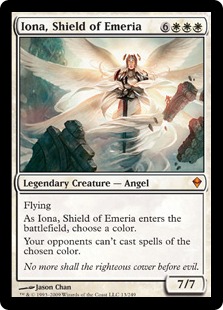
Prevention to the Extreme
If your goal is to be as competitive and aggressive as possible (and there’s nothing wrong with that in the right setting) then select answers that support that goal and don’t be sheepish about including them. But if your regular table is very political, has mixed power levels, or just prefers a friendly game of spellslinging to nuclear war and you want to build a deck for that environment, then make sure to pick answers that fit the zeitgeist. Skew more reactionary and save the preventative answers for the stuff your deck just cannot answer otherwise.
Conclusion
Deciding what kind of deck you really want to be playing isn’t just about selecting the right threats. Answers have a tremendous impact on the power level and character of your deck as well. You may have built a deck to be “friendly” by skipping certain potent threats and format staples, but selected more aggressive answers that frustrate your friends anyways. You may have tried to build a genuinely potent deck, but failed to identify the threats you need to prevent instead of simply answer. Both mistakes will leave your deck feeling unsatisfying and produce uneven results.
So make sure to run answers, but choose them carefully and be certain they align with the goals you set for the deck. Do your answers support or interfere with the deck’s plan? Are they meeting your expectations for potency and reliability? Most importantly, are you still having fun? If the answer to any of these questions is unclear, don’t be afraid to make some edits and experiment until it feels right again.

Weekend Magic: 5/8-5/10
Last weekend brought us Grand Prix: Paris, a look into the Standard environment of Europe. Interestingly, no Esper Dragons decks made the Top 8 of Paris. Let’s take a look at the Top 8 and see how the dragons met their downfall.
Grand Prix: Paris
Abzan Midrange piloted by Amand Dosimont closed out the tournament. Based on the three other Abzan Midrange decks in the Top 8 we can clearly see that Abzan has plenty of tools in order to keep the deck in Tier 1 status. Notable cards in Dosimont’s list include [card]Rakshasa Deathdealer[/card], [card]Anafenza, the Foremost[/card], [card]Siege Rhino[/card], and [card]Fleecemane Lion[/card]. [card]Warden of the First Tree[/card] was also included as a two-of, in order to make the most out of the late game if the game continued to drag towards the later stages. [card]Sorin, Solemn Visitor[/card] is still a great roleplayer in the deck by both giving it reach and a better board presence depending on the situation. Interestingly, the [card]Den Protector[/card]’s were in the sideboard for this particular deck – even with two of the other decks playing them main deck. [card]Elspeth, Sun’s Champion[/card] was also relegated to the sideboard since the metagame has started speeding up due to the presence of so many faster decks. Aggro makes up 75% of the format now!
Let’s take a look at some of the themes amongst the Abzan Aggro decks:
- [card]Den Protector[/card] – Either in the main deck or sideboard, this card did a ton of work for all players that made the Top 8 in Paris last weekend
- [card]Fleecemane Lion[/card] – Still the best two drop around for the Abzan Aggro and Midrange builds
- [card]Siege Rhino[/card] – If you’re playing Abzan, this is the reason why.
- [card]Abzan Charm[/card] – Another great reason to play Abzan, both the charm and Rhino provide a ton of reach against opponents
- [card]Hero’s Downfall[/card] – Still one of the best removal spells in the format
- [card]Dromoka’s Command[/card] – Another recent addition, I expect that this card will fall out of favor once Theros block rotates but you never know. Charms are just so versatile, and this one costs only two mana, so it could just as easily see play post Theros as it is seeing now depending on what the metagame looks like.
Rounding out the rest of the Top 8 were Selesnya Aggro, two Red Deck Wins, and Devotion to Green.
Selesnya Aggro was certainly an interesting build. By going heavy on [card]Collected Company[/card], the deck tried to make the most out of its low cost creatures by including ones such as [card]Hidden Dragonslayer[/card]so that in addition to Megamorphing them they could also get them into play off with a [card]Collected Company[/card]. I’m sure it felt bad to only get a single [card]Elvish Mystic[/card] off the top every once in a while yet when [card]Collected Company[/card] hits it can hit really well. By including [card]Mastery of the Unseen[/card] as well as [card]Deathmist Raptor[/card], the deck gains a bit of additional reach by being able to Manifest creatures continually off the top of the deck and continuing the onslaught. [card]Whisperwood Elemental[/card] has been relegated to the sideboard here and [card]Hornet Nest[/card] is a nasty surprise that can be turned face up with [card]Mastery of the Unseen[/card] or be put into play with [card]Collected Company[/card]. Overall, a really fun deck that is able to compete well in the current environment.
Red Deck Wins is looking the same as ever. Notable cards include [card]Monastery Swiftspear[/card], [card]Eidolon of the Great Revel[/card], [card]Zurgo Bellstriker[/card], [card]Stoke the Flames[/card], [card]Lightning Strike[/card], and [card]Wild Slash[/card]. Kim opted to play four [card]Thunderbreak Regent[/card]s and three [card]Flamewake Phoenix[/card]’s as a way to fly over opposing creatures (pumping them up with [card]Titan’s Strength[/card]), while Polzl choose to play the faster goblins in the form of [card]Goblin Rabblemaster[/card] and [card]Goblin Heelcutter[/card] in order to finish off opponents with more burst attacks.
Finally, Devotion to Green is a deck we haven’t seen in a while but is still very good in the format. Though the deck is mainly devoted to green, there are of course splashes of red in there for cards [card]Dragonlord Atarka[/card] and [card]Xenagos, the Reveler[/card]. Other notable cards include [card]Nykthos, Shrine to Nyx[/card], [card]Whisperwood Elemental[/card], [card]Rattleclaw Mystic[/card], and [card]Genesis Hydra[/card]. This deck can be insanely fast and can generate an absurd amount of mana very quickly if left unchecked or undisrupted.
Outside of the Top 8, one other interesting deck that went undefeated Day 1 was a four color [card]Collected Company[/card] deck piloted by Yohan Dudognon. This deck featured such cards as [card]Savage Knuckleblade[/card], [card]Mantis Rider[/card], [card]Goblin Rabblemaster[/card], and [card]Fleecemane Lion[/card] all in the same deck! Talk about getting the most out of your Collected Companies! Even [card]Ojutai’s Command[/card] made an appearance as a way to get back cheaper creatures that died like [card]Seeker of the Way[/card] and [card]Rattleclaw Mystic[/card].
So there we have it, the only non-Limited event of the previous weekend! Each weekend continues to bring us something more exciting whether it is Standard or beyond.
Pitt Imps Podcast #118 Rants Away
In this weeks episode of the Pitt Imps the guys go over both standard GP’s with a little more vigor than usual. They take about Cedric’s amazing run to the SCG top8 only to have to face his worst matchup. A ton of Modern Masters things came out and a quick touch on Tempest Remastered before it goes live on MTGO. Then Angelo loses his mind a bit. He goes off on the idea that political correctness has run a muck. Then blah, blah, blah. I mean it is an audio podcast and all.
Host Angelo Twitter @ganksuou
Co-Host Mike Twitter @Huntmaster_Mike
We got shirts you should buy one
Show Email [email protected]
Pitt Imps is brought to you by Taitan Game Shop and the Brainstorm Brewery
Money Draught #31 – The One About Our Guest Lucas Siow and Magic the Gathering
The One About Our Guest Lucas Siow @toordeforce and Magic the Gathering.
** This cast is for mature listeners **
Your Hosts:
Jason Alt — @JasonEAlt
Slick Jagger — @slickJagger
JR — @time_elemental
Tournament 2-for-1
Hey People,
So two weeks ago I was able to take down TCGPlayer Modern States at Top Deck Games and luckily StarCity Games Modern States were being held at the same store a weekend after. I decided to run it back.
Star City Games Modern States Top 16
Round 1. Affinity
This matchup feels incredibly good for game one as you are almost always just a bit faster than they are. I managed to take it pretty convincingly after my opponent had to mulligan. Unfortunately for me Infect doesn’t mulligan well and I lost in three games. Nothing really to write home about except a disappointing start. 0-1
Round 2. Burn
I got lucky. My opponent put me down to 1 in our first game and I was able to hit him for 10 poison and steal the game. Game two was fantastic. My hand wasn’t great and neither was my opponents. We went back and forth a little bit with him killing my creatures and me just trying to survive against a [card]Goblin Guide[/card] until I was able to resolve a [card]Wild Defiance[/card] followed by an [card]Ichorclaw Myr[/card]. By this point I had two copies of [card]Nature’s Claim[/card] in my hand and Goblin Guide had handed me an [card]Inkmoth Nexus[/card] the turn prior. I was able to pump my Myr with [card]Might of Old Krosa[/card] trigger Wild Defiance and move my opponent to 9 poison. While he was tapped out I Nature’s Claimed my Myr and also my Wild Defiance to give myself enough cushion to get the last point on my following turn with my Nexus. 1-1
Round 3. Jund
This is a pretty bad matchup for Infect and I got slaughtered in three games. again not much to write home about except hope you never see this one. 1-2
Round 4. Storm
This match was loads of fun. I thought I was completely out of contention at this point so I just wanted to have some fun playing Magic. I won the race game one. Game two my opponent makes a stupid block throwing away a [card]Goblin Electromancer[/card] when he didn’t have to and proceeded to try and storm off a turn or two after. with a storm count of 19 he fizzled out. He had a [card]Blood Moon[/card] and access to three lighting bolts but decided to dig for the kill instead of putting me under a Blood Moon and killing all of my creatures. After the game he agreed that he should’ve just gone for that line and it could have forced a game three. 2-2
Round 5. White Moon
You know you are in the dregs of a tournament when you play against something like this. While the deck seems cool it just seems too low on power. I wish there was more to say here besides I survived an [card]Isochron Scepter[/card] with a [card]Boros Charm[/card] on it game one and kept a no land 7 on the draw with a probe and rattled off two lands into a turn 3 kill. I played like an idiot and got rewarded for it. 3-2
Round 6. Burn
This match was just a race and nothing really spectacular happened. I won.
4-2
Round 7. Mardu Midrange/Tokens?
My opponent fetched a [card]Sacred Foundry[/card] off of a [card]Marsh Flats[/card] which to me meant they were on a brew and I should probably expect Lingering Souls. I didn’t see any game one and took it pretty quickly but I assumed my opponent was smart and had them in their list. Finally I got to board in my extra [card]Distortion Strike[/card] for all these [card]Lingering Souls[/card] matchups. I didn’t event get to use it as I used [card]Apostle’s Blessing[/card] for the evasion I needed to grab a turn 4 kill. 5-2
At this point I knew I was out of Top 8 contention but I’m happy with my performance and how I was able to rally back and end with a solid day and 13th place which was good for a nice chunk of store credit and an overall fun day of Magic. I got to watch one friend make their first big event top 8 and another miss by 0.041% on tiebreakers.
A Modern PPTQ
This past weekend I went to a PPTQ or as I now like to affectionately call them an LMNOPTQ. I haven’t been playing many of them lately but I saw one at The Comic Book Store in New Jersey only 30 miles away so I jumped at the chance especially because it was a credit 1k paid to top 8.
Round 1. RG Tron
I played against a friend of mine this round and got crushed game 1 by a turn 2 [card]Spellskite[/card]. Game two I had a [card]Glistener Elf[/card] turn one and was able to fire off two [card]Mutagenic Growth[/card]s to move him to five poison. He played a chalice on 1 and I was able to burn some spells and kill him with Become Immense on my turn. That card is Broken. Game 3 I had Nature’s Claims to deal with his two Spellskites and quickly stole the game from there. 1-0
Round 2. Burn
My opponent was play multiple copies of [card]Searing Blaze[/card] and it was a great call for the tournament. I died in two quick games.
1-1
Round 3. Scapeshift
So I got to ask my opponent “do you have it” multiple times. He only had it once and I was able to win. 2-1
I punted incredibly hard in this match. I have been dealing with some personal issues lately and I was too distracted and only won because things broke in my favor. Before throwing money on the line just make sure you are in a good headspace to play well in a tournament you want to win as I spent the entire day not wanting to be there.
Round 4. Scapeshift
There were two in the room and I pulled them back to back. It went very similarly to my prior round and I was able to catch some breaks and win the round while my opponent just didn’t draw well. 3-1
Round 5. Burn
I got a little tilted at this point because I was already not in a great head space to be playing Magic and I was not up for this race. Luckily my deck played itself and although I misplayed heavily sometimes Become Immense is just too broken for you to lose. 4-1
I felt really weird going into round 6. I had been punting a lot the entire day and I didn’t want to be there but when you play a good deck sometimes things like this can just break your way as you stumble into Top 8 with a handshake.
Round 6. BUG
Shook hands and tried to relax for a little bit. It didn’t work.
Quarterfinals. Burn
This was against my Round 2 opponent and the match went about the same as it did in round 2. I mulliganed pretty deep and wasn’t able to overcome it and squeak a win. My opponent ended up going on to beat a friend of mine in the finals of the tournament and I got $100 in store credit out of it so it could have been worse but I definitely never want to play a tournament in that head space again.
What I Took Away From These Events
These events showed me that Infect is a really powerful deck but I’m also not sure it is the deck for me. I love how aggressive it is but not being able to hold up well in longer games and grind out a win is something I feel that I’m lacking. The deck also mulligans quite poorly and while a lot of the time it is powerful I find myself keeping decent 7 card hands instead of digging deeper for a stronger hand and rolling the dice on that. I wan’t to get Zoo back together and test out some new cards with it as well as a Bant brew just because I want to play cards like Wilt-Leaf Liege and Rhox War Monk. Also one more thing,
My Top 8 Cards
I saw Jim Davis write an article about this topic and I definitely think anyone reading this should go check it out on the select side of StarCityGames.com. Well here goes nothing
8. [card]Heartless Summoning[/card]
This card was the engine of the first deck I ever tried to play competitively. I was trying to go infinite with this, [card]Havengul Lich[/card], [card]Perilous Myr[/card], and [card]Priest of Urabrask[/card]. When the combo couldn’t happen I could always grind people out with fatties like [card]Runescarred Demon[/card] and [card]Inferno Titan[/card]
7. [card]Elvish Piper[/card]
Clear and simple the reason I play Magic is to play fatties and crush my opponents under huge creatures. While I no longer use [card]Duskdale Wurm[/card] or play a deck full of Wurms and [card]Levitation[/card] this card helped shape the style of Magic I love.
6. [card]Kessig Wolf Run[/card]
This card is just sweet and I love giving my already big creatures Trample. This card in tandem with a few others on my list have given me the majority of my tournament successes.
5. [card]Wild Nacatl[/card]
I love aggressive cards and I love big creatures. I knew we were meant to be once my friend came back from an extended vacation to the Modern Format. Just a few weeks after I played my first GP and my 11-3-1 record has a lot to do with Wild Nacatl.
4. [card]Thundermaw Hellkite[/card]
At that GP while playing against Jund in round 11 I got to put a Batterskull on my dragon and live out my own version of one of my favorite Magic players finest moment, becoming a Dragon Master.
3. [card]Wilt-Leaf Liege[/card]
Wilt-Leaf starred in my very first modern deck which was GW Hatebears during the Reign of Deathrite Jund. My Lieges carried me through tournaments and cemented my love of large creatures crushing my opponents face.
2. [card]Knight of the Reliquary[/card]
My knights are special to me. They have been in every build of Zoo I have ever played and fall into one of my favorite color combinations. I love to do shenanigans with lands as well and crush peoples faces and Knight makes both of those worlds a reality.
1. [card]Ajani Vengeant[/card]
My favorite Planeswalker is just value all around. He has helped me win countless matches and his pop vinyl figure adorns the dashboard of car.
I hope you all enjoyed reading this and hopefully I can get another article written soon enough.
Commanding Opinion: Azami, Lady of Scrolls
You either die a hero or live long enough to become the villain.
-Harvey Dent/Two Face, The Dark Knight
When I began playing Commander, [card]Azami, Lady of Scrolls[/card] was the bane of my card store’s existence. To this day, it’s her fault that all infinite combos in that store have been eliminated and why I’ve stopped going there.
Before she got combos banned at that store, I got fed up with losing to Azami, and decided to try the deck out myself.
I could see why everyone wanted to play it. The deck was super consistent and easily won out against huge pods of player, even when ganged up on.
The deck is a pure mono-blue combo/counter deck. You play a bunch of wizards, draw a bunch of cards, and win. Simple as that.
Important Creatures:
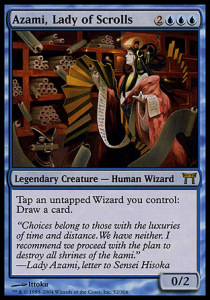
[card]Azami, Lady of Scrolls[/card] is our Commander of Choice due to the fact that she provides the most advantage for her cost. At 2UUU, she at a minimum will draw you 1 card per wizard as long as she resolves – which is not difficult to due between [card]Cavern of Souls[/card] and all of our many, many counterspells.
While it’s also a combo/counter deck, by it’s very nature it’s a wizard tribal deck, as well. They’re all pretty solid plays, either giving us more ways to draw cards or giving us utility until Azami hits the board.

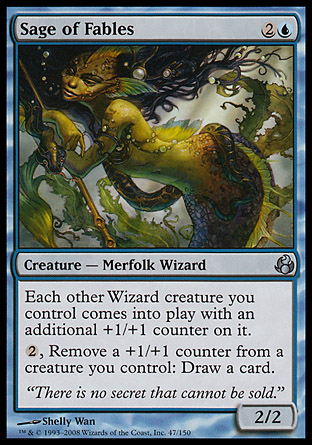
[card]Glen Elendra Archmage[/card] is a fantastic card due to the fact it’s not one, but two or more counterspells on the same card, especially combined with [card]Sage of Fables[/card]. Since [card]Glen Elendra Archmage[/card] dies and comes back with a -1/-1 counter, and [card]Sage of Fables[/card] causes Wizards to come into play with a +1/+1 counter, Glen Elendra can sacrifice itself as many times as it wants and keep coming back.
[card]Sage of Fables[/card] also adds some more utility to the deck. It makes our usually tiny creatures a little bigger, and gives us the option to draw a bunch of cards in addition to Azami’s insane draw power.
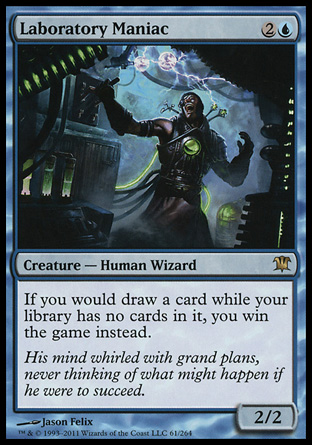
[card]Laboratory Maniac[/card] is one of our main win conditions. It’s very easy to draw your entire library with this deck, and it’s a solid play against people that really want to play mill with [card]Mirko Vosk, Mind Drinker[/card] or [card]Phenax, God of Deception[/card].
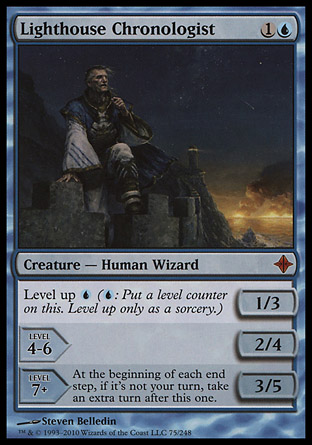
[card]LIghthouse Chronologist[/card] is the most expensive creature card in the game with Level Up, and for good reason. While he doesn’t do anything special until level 7+, when he does get there it’s well worth the 1UUUUUUUU mana that he ends up costing in the end. After every turn that isn’t your turn, you get another turn. While this isn’t a huge effect in 1v1 (though you still get two turns in a row constantly) in multiplayer, you get a turn after every other player’s turn – giving us access to 4 or 5 extra cards and land drops against all of your opponents. Of course, he’s still easy to get rid of – even at level 7 he’s still only a 3/5, but you have counter magic to keep him on board for long enough to matter.
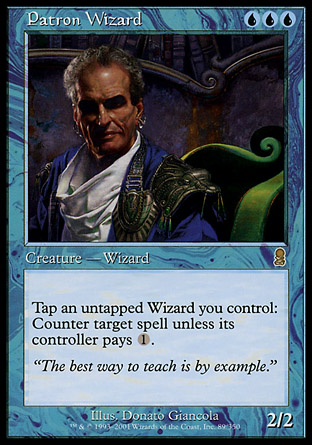
[card]Patron Wizard[/card] is probably one of the best wizards in the game. When Azami isn’t in play, this guy is the big player – countering spells or at least adding taxes is ridiculous when it’s scalable to the number of wizards you control.

[card]Teferi, Mage of Zhalfir[/card] shuts down your opponents during your turn, letting you just combo off without too much interruption if he’s in play. Alternatively, you can play him as your Commander if you’d rather go with a more control-oriented build rather than the combo build that I’m suggesting. You can just add cards like [card]Erayo, Soratami Ascendent[card], [card]Arcane Laboratory[/card] or [card]Knowledge Pool[/card].
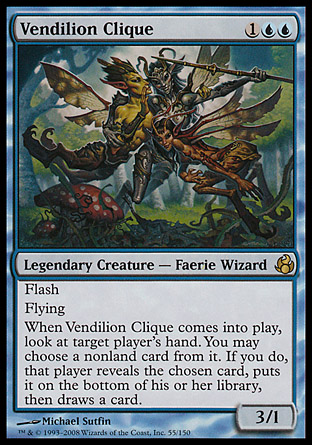
Personally, I haven’t gotten a chance to play [card]Vendilion Clique[/card] but the value is clear. 1UU for a 3/1 Flash and Flying wizard lets you get rid of immediate threats in player’s hands. It’s better in 1v1 than it is in multiplayer. If you have one, play it. If not, it’s not necessarily worth the investment for this deck.
Counterspells:
The counterspells are probably the most important thing in the deck – it protects all of your combos, and keeps your opponents from winning in the mean time.

Hard Counters:
- [card]Arcane Denial[/card]
- [card]Counterspell[/card]
- [card]Cryptic Command[/card]
- [card]Desertion[/card]
- [card]Spelljack[/card]
- [card]Swan Song[/card]
Permission spells aren’t nearly as powerful in multiplayer, so we generally stick to Hard Counters.

Manaless Counters:
- [card]Disrupting Shoal[/card]
- [card]Force of Will[/card]
- [card]Pact of Negation[/card]
These are spells we can actually play even when we’re tapped out, which is perfect for protecting yourself long enough to win the game. [card]Foil[/card] is another option, but i personally don’t play it due to being strictly worse than [card]Force of Will[/card].

Tuck/Bounce Counters:
- [card]Hinder[/card]
- [card]Memory Lapse[/card]
- [card]Remand[/card]
- [card]Spell Crumple[/card]
While tuck is no longer nearly as powerful as it used to be due to not tucking Commanders any more, sometimes you just need to get rid of something permanently, or at least make your opponent waste a tutor to get it back. [card]Remand[/card] is probably the best card here – at just 1U to counter a spell for a turn, it’s pretty solid seeing as it always draws you a card.
The Combos!:
Of course, the entire purpose of the deck is to combo out and win. Azami supplies us with the card draw to give us answers and draw us into our combos.
Azami, Lady of Scrolls + Mind Over Matter


This one is pretty simple – [card]Azami, Lady of Scrolls[/card] draws you a card, and you discard that card to untap Azami with [card]Mind Over Matter[/card], and then tap to draw another card, etc. Then, you either win by swinging with a gigantic Azami with [card]Diviner’s Wand[/card] or win by drawing your entire library with [card]Laboratory Maniac[/card] on board.
Palinchron + Any Mana Doubler
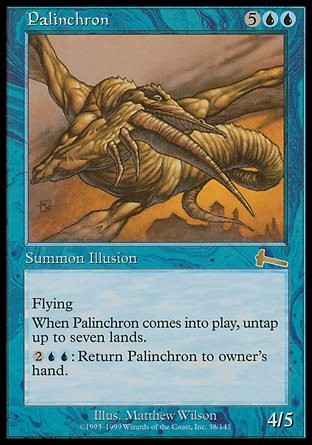

[card]Palinchron[/card] is another one of those cards that automatically draws hate due to existence of this combo. [card]Caged Sun[/card], [card]Extraplanar Lens[/card]. and [card]Gauntlet of Power[/card] are the easiest way to do this. [card]Nykthos, Shrine to Nyx[/card] also works this this, as long as you have 7 lands including Nykthos plus having a devotion to blue of at least 6. This is pretty easy in a mono-blue deck with a lot of cards that have 2 or 3 colored mana symbols.
Once you have infinite mana you can play whatever you want. [card]Diviner’s Wand[/card] easily wins you the game at this point.

In addition to being a Wizard, [card]Diviner’s Wand[/card] is one of your win conditions once you get infinite mana. You can draw as many cards as you want for 4 mana each, and that creature gets +1/+1 and flying for each card you draw.
Azami, Lady of Scrolls + Venser, Shaper Savant + Omniscience or Infinite Mana


[card]Venser, Shape Savant[/card] is one of those cards that breaks the rules of normal magic. Instead of countering a spell when he comes into play, he returns a permanent or a spell to it’s owner’s hand. Generally Wizards doesn’t print cards that actively interacts with the stack, but they made an exception with this one guy from Future Sight (aside from [card]Lightning Storm[/card] – that card is an active attack on the stack, and that was Coldsnap and not Future Sight). As [card]Omniscience[/card] lets you cast anything for free, you can use Venser to bounce himself back to your hand. In response to his triggered ability, you tap him with Azami’s draw ability, allowing you to draw your entire library by just repeating this process, and all at instant speed during any player’s turn. Again, this wins you the game with Laboratory Maniac.
In addition, this combo also turns [card]Patron Wizard[/card] into a hard counter for every single spell your opponent’s play – And Venser himself can [card]Remand[/card] uncounterable spells.
Etherium Sculptor + Future Sight/Magus of the Future + Sensei’s Divining Top
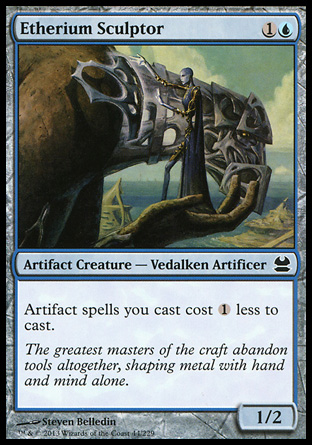


This is one of the more obscure combos that I personally like playing because I generally play all of the cards regardless. [card]Future Sight[/card] hasn’t always made the cut, but [card]Magus of the Future[/card] always does in this deck for me at least. [card]Etherium Sculptor[/card] decreases the cost of all of your artifacts by 1, which makes [card]Sensei’s Divining Top[/card] free. With [card]Future Sight[/card] or [card]Magus of the Future[/card], you get to play Top for free from the Top of your deck after tapping it to draw a card.
[deck title=Azami, Lady of Scrolls]
[Creatures]
Aether Adept
Archaeomancer
Azami, Lady of Scrolls
Consecrated Sphinx
Cursecatcher
Daring Apprentice
Etherium Sculptor
Glen Elendra Archmage
Kozilek, Butcher of Truth
Laboratory Maniac
Lighthouse Chronologist
Magus of the Future
Master of Waves
Palinchron
Patron Wizard
Phyrexian Metamorph
Sage of Fables
Shapesharer
Snapcaster Mage
Spellskite
Stonybrook Banneret
Teferi, Mage of Zhalfir
Trinket Mage
Vendillion Clique
Venser, Shaper Savant
[/Creatures]
[Spells]
Arcane Denial
Beacon of Tomorrows
Blue Sun’s Zenith
Caged Sun
Capsize
Counterspell
Cryptic Command
Desertion
Disrupting Shoal
Dissipate
Diviner’s Wand
Elixir of Immortality
Expedition Map
Extraplanar Lens
Force of Will
Future Sight
Gauntlet of Power
High Tide
Hinder
Illusionist’s Bracer
Long-Term Plans
Memory Lapse
MInd Over Matter
Mystical Tutor
Omniscience
Pact of Negation
Remand
Sensei’s Divining Top
Sol RIng
Spell Crumple
Spelljack
Swan Song
Temporal Mastery
TIme Spiral
Time Stretch
Time Warp
Treachery
Turnabout
Vedalken Shackles
Walk the Aeons
[/Spells]
[Land]
Academy Ruins
Cavern of Souls
MInamo, School at Water’s Edge
Mutavault
Myriad Landscape
Nykthos, Shrine to Nyx
Reliquary Tower
Ridetide Laboratory
Scrying Sheets
Seat of the Synod
23 Snow-Covered Island
Terrain Generator
Tolaria West
[/Land]
[/deck]
If you like winning and being the only one having fun, feel free to try out Azami. Also, if you like playing Solitaire at your desk alone, try building Azami. Otherwise, stick to someone a little more friendly if you have a more casual play group.
Until next time,
David M. Rowell
Pitt Imps Podcast #117 Will Will Be Walking
This is the last week for Will as a regular until the fall. He’s going for a walk. So he choose the topic (Ethics in Magic). We go over the BS with the SCG chat over the weekend. Talk about the tournament that happened in Cleveland. Maybe I strong armed us into spending way to much time on the new direction Mardu decks appear to be moving. We chat about Scouting and is it good or bad for the game and come to no conclusion. We also manage to fit in the maybe spoilers for MM2. Then the rambling starts and we say good-bye for now to Will.
Host Angelo Twitter @ganksuou
Co-Host Will Facebook
Co-Host Mike Twitter @Huntmaster_Mike
Email [email protected]
The Pitt Imps is brought to you each week by Brainstorm Brewery and Taitan Game Shop.

Weekend Magic: 4/24-4/26
This past weekend brought us Star City Games: Cleveland. The main event was Standard, with of course a side of Modern and Legacy. Let’s take a look at the results and see what happened.
Star City Games Open – Standard (Cleveland, OH, USA)
Decklists
| Deck | Finish | Player | Deck | Finish | Player |
| Bant Heroic | 1st | Ross Merriam | Jeskai Aggro | 9th | Harlan Firer |
| G/R Dragons | 2nd | Brad Fallen | Esper Dragons | 10th | Zachary Helfer |
| Abzan Aggro | 3rd | Kyle Boggemes | Mardu Midrange | 11th | Joshua Taylor |
| Esper Dragons | 4th | Gerard Fabiano | Esper Dragons | 12th | Andrew Maine |
| Bant Midrange | 5th | Collins Mullen | Atarka Red | 13th | Matt Ratajceak |
| Jeskai Tokens | 6th | Alex Zurawski | Abzan Megamorph | 14th | Jim Davis |
| Esper Dragons | 7th | Kenta Hiroki | Abzan Aggro | 15th | Andrew Boswell |
| Abzan Aggro | 8th | Connor Bowman | Bant Midrange | 16th | Chris Andersen |
Ross Merriam took down the Standard portion piloting Bant Heroic. Key players in this deck are [card]Favored Hoplite[/card], [card]Hero of Iroas[/card], [card]Seeker of the Way[/card], and [card]Dromoka’s Command[/card] to bring home the versatility. I’m sure that [card]Dromoka’s Command[/card] contributed a great deal to Merriam’s success and is definitely a card to watch out for the in future, in Bant Heroic and other decks. Other notable cards in the list are two [card]Monastery Mentor[/card] main deck and three [card]Encase in Ice[/card] out of the sideboard. In this deck we see some interesting innovations in the typical Heroic list that enabled it to come out top dog of the weekend.
The runner up was G/R Dragons, another deck we’ve seen cement itself in the metagame since Dragons of Tarkir was released. This deck was playing [card]Stormbreath Dragon[/card] and [card]Thunderbreak Regent[/card] as the main dragons, with [card]Dragonlord Atarka[/card] backup in case the game goes long. [card]Xenagos, the Reveler[/card] continues to show up in these lists in order to help generate massive amounts of mana in order to cast the heavier dragons like Atarka or even monstrifying a [card]Stormbreath Dragon[/card] for massive amounts of damage.
Rounding out the Top 8, decks of note include two Abzan Aggro decks and Bant Midrange. Boggemes’ list resembled past lists by featuring solid choices like [card]Abzan Charm[/card] and [card]Hero’s Downfall[/card]. Bowman’s list featured a playset of [card]Collected Company[/card] and main decked two [card]Grim Haruspex[/card] as a way to generate card advantage through a “surprise” [card]Collected Company[/card] during the combat phase. Another interesting choice was a full playset of [card]Herald of Torment[/card] and [card]Warden of the First Tree[/card], again to get the most out of those CC plays. Certainly an interesting list that could pick up more steam over time as more creatures that cost three mana or less are added to the Standard card pool. Finally, Bant Midrange features the best of the Heroic and G/W Midrange decks by playing [card]Dragonlord Ojutai[/card] along with beatstick [card]Surrak, the Hunt Caller[/card], [card]Deathmist Raptor[/card], [card]Fleecemane Lion[/card], and [card]Mastery of the Unseen[/card]. All in all just a solid deck choice that has pretty decent matchups against most of the field (though not quite at the level of Esper Dragons).
Rouding out the Top 16, decks of note include Mardu Midrange and Abzan Megamorph. Notable cards in Mardu Midrange are [card]Brimaz, King of Oreskos[/card], [card]Outpost Siege[/card], [card]Crackling Doom[/card], and [card]Mardu Charm[/card]. Notable cards in Abzan Megamorph are [card]Deathmist Raptor[/card], [card]Den Protector[/card], [card]Abzan Charm[/card], and [card]Mastery of the Unseen[/card] out of the sideboard.
Star City Games Premier IQ – Modern (Cleveland, OH, USA)
Decklists
| Deck | Finish | Player | Deck | Finish | Player |
| Sultai Control | 1st | Matthew Tickal | Abzan Collected Company | 9th | Bobby Colegrove |
| Amulet Bloom | 2nd | James McCoury | Affinity | 10th | Leonard Wernette-Leff |
| G/W Trap | 3rd | Nicholas Montaquila | Abzan | 11th | Jacob Lee |
| Grixis Twin | 4th | Kevin Jones | Abzan Collected Company | 12th | James Moffitt |
| Burn | 5th | Cody Alexander | Ad Nauseam | 13th | Bill Ragle |
| Abzan Aggro | 6th | Joseph Nowell | Jund | 14th | Adam Vincik |
| Affinity | 7th | Steven Baker | Storm | 15th | Travis Limbert |
| Affinity | 8th | Andrew Eales | Amulet Bloom | 16th | Eric Rill |
Moving on to Modern, Sultai Control took down the Premier IQ piloted by Matthew Tickal. Similar to the list first introducted by Gerrard Fabiano, again we see [card]Thragtusk[/card], [card]Ashiok, Nightmare Weaver[/card], and [card]Jace, Architect of Thought[/card] battling alongside of [card]Snapcaster Mage[/card], [card]Tarmogoyf[/card], and other notable Modern staples. Second place went to Amulet Bloom, a deck that was featured at the Pro Tour and is widely known in Modern at this point. McCoury’s deck featured [card]Grave Titan[/card] as another way to win in addition to [card]Primeval Titan[/card] and the [card]Hive Mind[/card] / Pact combo.
Looking at the rest of the Top 8, G/W Trap seems to be a new brew featuring cards such as [card]Knight of the Reliquary[/card], [card]Lotus Cobra[/card], [card]Nest Invader[/card], [card]Primeval Titan[/card], and [card]Emrakul, the Aeons Torn[/card] along with [card]Summoning Trap[/card] and [card]Mosswort Bridge[/card] in order to cheat an Emrakul into play without paying the mana cost. We also see a black splash for [card]Lingering Souls[/card] in the main deck, to help delay the game until Emrakul can come online or to help finish a game that seems stalled. Certainly an interesting build – I’m not sure how good it is on a large scale however it is certainly something to keep an eye on moving forward. The Affinity decks also featured some tech in the form of [card]Temur Battle Rage[/card] and and [card]Ghostfire Blade[/card].
Looking at the rest of the Top 16, Abzan Collected Company continues to showcase its strength and even Jund and Storm showed up to make the Top 16 in Cleveland. Nothing really new or innovative here.
Star City Games Premier IQ – Legacy (Cleveland, OH, USA)
Decklists
| Deck | Finish | Player | Deck | Finish | Player |
| Grixis Control | 1st | Jason Smith | Miracles | 9th | Dan Musser |
| Miracles | 2nd | Sitharthan Sriharan | Lands | 10th | Nick Byrd |
| Miracles | 3rd | Joe Lossett | Tezzerator | 11th | Cameron Wisniewski |
| Miracles | 4th | Sean O’Neal | Grixis Pyro | 12th | Chris Stagno |
| Omni-Tell | 5th | Zechariah Szoke | Sultai Delver | 13th | John Wiley |
| Death and Taxes | 6th | Adam Johnson | Miracles | 14th | Marcus Perez |
| Jeskai Stoneblade | 7th | Steven McGrew | Metalworker | 15th | Stephen Seliskar |
| Metalworker | 8th | Sean Logie | Merfolk | 16th | Scott Muir |
With results from GP Kyoto in, it looks like it has changed the face of Legacy. Again we see Miracles and Omni-Tell in the Top 8 however Grixis Control piloted by Jason Smith took down the event. Notable cards here include [card]Baleful Strix[/card], [card]Young Pyromancer[/card], [card]Dack Fayden[/card], and four copies of [card]Dig Through Time[/card].
Moving on to Miracles, key components of the deck include the [card]Counterbalance[/card] / [card]Sensei’s Diving Top[/card] package, [card]Terminus[/card], [card]Entreat the Angels[/card], [card]Snapcaster Mage[/card], and [card]Jace, the Mind Sculptor[/card]. Nothing innovate going on with Top 8 Miracles lists.
Omni-Tell shows up again, featuring a playset of [card]Omniscience[/card] and [card]Cunning Wish[/card]. Metalworker is playing two [card]Ugin, the Spirit Dragon[/card] these days which is cool. I’m surprised that it makes the cut over [card]Karn Liberated[/card] but it appears that a one-sided [card]Pernicious Deed[/card] with exile is superior [card]Vindicate[/card] with exile.
Rounding out the Top 16, Tezzerator makes an appearance in 11th place and Merfolk makes an appearance in 16th place. Notable cards from Tezzerator include [card]Baleful Strix[/card], [card]Dack Fayden[/card], [card]Tezzeret, Agent of Bolas[/card], [card]Chalice of the Void[/card], [card]Mox Diamond[/card], [card]Sword of the Meek[/card] / [card]Thopter Foundry[/card], and [card]Transmute Artifact[/card]. Notable cards from Merfolk include [card]True-Name Nemesis[/card], [card]Phantasmal Image[/card], a single [card]Mishra’s Factory[/card], a single [card]Thassa, God of the Sea[/card], and [card]Vapor Snag[/card].
That’s all from Cleveland! See you next time.
Money Draught #30 — Red Panda Rhetoric
Topics include: Pro Tour “Friday card spikes”, Modern Masters 2015 availability, the new “Vegas House”, zoos and botanical gardens.
** This cast is for mature listeners **
Your Hosts:
Jason Alt — @JasonEAlt
Slick Jagger — @slickJagger
JR — @time_elemental

New is Always Better – Getting Tricksy with Death and Taxes
Death and Taxes has been a real force in Legacy for quite a while now. The deck may not be particularly powerful in itself, but it’s built in such a way as to position itself very well versus the format. Utilizing several different hatebears, Death and Taxes will make life hard for many opponents. Thalia, Guardian of Thraben laughs in the face of decks filled with Brainstorms and Ponders. Phyrexian Revoker can stifle many strategies if you know what to name with it. “Nice Sensei’s Divining Top/Sneak Attack/Lion’s Eye Diamond you got there”. While lists have varied over time the core concept of the deck has remained intact; a mono white deck filled with disruptive creatures and mana denial. The deck made a name for itself when Thomas Enevoldsen and Michael Bonde both took it to the top 8 of GP Strasbourg in 2013, with Enevoldsen eventually winning the whole thing. If you were paying attention back then however, you will know that the deck was already doing well in the hands of Thomas Enevoldsen. He had taken down the Danish Legacy Masters with it months earlier, and even took it to a twelfth place finish at GP Ghent in 2012. Still, GP Strasbourg was when the deck really had its big break. For reference, here’s the list he used to take it down.
This list is still relatively similar to many of the Death and Taxes lists we see today. People will shave a card here and there, tweak the numbers according to their preferences, or choose to go with more recent inclusions such as Spirit of the Labyrinth, Brimaz, King of Oreskos and Containment Priest. The core concept however has remained the same for a long time. Until now. If you follow news in Legacy you likely won’t have missed this new take on Death and Taxes that popular MTGO streamer Bahra has been playing recently. To be fair, people have been splashing different colors in Death and Taxes before, but this is the first time I’ve seen the red splash get this much attention. Let’s take a look.
[Deck title=R/W Taxes by Bahra]
[Creatures]
*3 Phyrexian Revoker
*4 Flickerwisp
*2 Imperial Recruiter
*3 Magus of the Moon
*1 Mirran Crusader
*4 Mother of Runes
*1 Serra Avenger
*4 Stoneforge Mystic
*4 Thalia, Guardian of Thraben
[/Creatures]
[Noncreature Spells]
*4 Aether Vial
*4 Swords to Plowshares
*1 Umezawa’s Jitte
*1 Batterskull
*1 Sword of Fire and Ice
[/Noncreature Spells]
[Lands]
*4 Wasteland
*4 Rishadan Port
*2 Karakas
*2 Plateau
*3 Plains
*3 Flooded Strand
*4 Windswept Heath
*1 Cavern of Souls
[/Lands]
[Sideboard]
*1 Pithing Needle
*1 Ratchet Bomb
*3 Ethersworn Canonist
*2 Kor Firewalker
*3 Rest in Peace
*2 Council’s Judgment
*3 Sudden Demise
[/Sideboard]
[/Deck]
Magus of the Moon can singlehandedly win games versus decks heavy with nonbasic lands, such as Shardless BUG and Lands. Imperial Painter posted really strong results last time Shardless BUG and Esper Deathblade decks were everywhere, and that was largely due to the strength of Blood Moon effects. Imperial Recruiter can recruit your hatebear of choice, and gets even better after sideboard, essentially giving you two more copies of whatever hoser creatures you choose to include. Sudden Demise provides some much needed assistance in the Elves matchup, giving you a way to clear their board. Those things all seem great, but they come at the cost of a weaker mana base and a deck that feels a lot clunkier. Whether the red splash is worth it or not will depend on the expected metagame, but whether you’re planning to play this deck or not you should know what to expect when your Death and Taxes opponent shows you a Plateau.
One twist on Death and Taxes that there hasn’t been as much fuss about is the blue splash. Death and Taxes is an incredibly tricky deck, full of intricate interactions, and this version takes it one step further! Check out this innovative take on the deck that a friend of mine piloted at a local 54-people tournament recently.
[Deck title=Tricks and Taxes]
[Creatures]
*4 Mother of Runes
*2 Gilded Drake
*2 Phyrexian Revoker
*3 Spirit of the Labyrinth
*4 Stoneforge Mystic
*4 Thalia, Guardian of Thraben
*4 Flickerwisp
*3 Vendilion Clique
*2 Venser, Shaper Savant
[/creatures]
[Noncreature Spells]
*4 Aether Vial
*4 Swords to Plowshares
*1 Umezawa’s Jitte
*1 Batterskull
[/noncreature spells]
[Lands]
*4 Flooded Strand
*2 Island
*3 Karakas
*2 Plains
*3 Polluted Delta
*4 Tundra
*4 Wasteland
[/lands]
[Sideboard]
*3 Ethersworn Canonist
*3 Meddling Mage
*2 Phyrexian Revoker
*4 Rest in Peace
*2 True-Name Nemesis
*1 Venser, Shaper Savant
[/sideboard]
[/deck]
This deck is sweet! If you thought Venser, Shaper Savant was good alongside Karakas, wait until you get to do it with an Aether Vial in play. How would you like casting Vendilion Clique in your opponent’s draw step when you have a Spirit of the Labyrinth? What about using Flickerwisp on your own Gilded Drake to effectively steal another creature? Sure, there are things I dislike about this iteration of the deck (such as the mana base and the absence of Containment Priest), but this deck is so full of neat tricks and powerful ways to abuse its cards that I can’t help but fantasize about all the potential interactions it presents. It’s a Death and Taxes list, but it also reminds me of this deck:
[Deck title=U/W Vial by Travis Gibson]
[Creatures]
*4 Mother of Runes
*2 Weathered Wayfarer
*4 Stoneforge Mystic
*4 Serra Avenger
*3 True-Name Nemesis
*1 Brimaz, King of Oreskos
*1 Vendilion Clique
[/creatures]
[Noncreature Spells]
*4 Aether Vial
*1 Umezawa’s Jitte
*1 Sword of War and Peace
*1 Batterskull
*4 Swords to Plowshares
*4 Brainstorm
*1 Ponder
*4 Daze
*2 Force of Will
*2 Spell pierce
[/noncreature spells]
[Lands]
*2 Island
*2 Plains
*1 Cephalid Coliseum
*1 Karakas
*4 Tundra
*1 Wasteland
*1 Mishra’s Factory
*2 Windswept Heath
*4 Flooded Strand
[/lands]
[/deck]
This deck lacks the traditional disruptive elements of a Death and Taxes deck. Instead you have an aggro control deck with a fairly strong tempo plan. You lose out on a lot of what makes Death and Taxes a deck, but on the other hand you get to play with Brainstorm. I like how it’s built like an aggressive, threat heavier Stoneblade deck, but the Weathered Wayfarer package seems like it’s a bit too cute and not something I would be happy about drawing in the late game. The mana base is also stronger. The deck is more evenly split between its colors, and has already moved away from the mana disruption package. I think this deck has merit, though it may need further tuning.
As I mentioned earlier my main dislike about the Tricks and Taxes list was the mana base. Neither Venser, Shaper Savant nor Vendilion Clique is especially splash friendly, with both requiring double blue to cast. Thankfully though, the decks you want them against aren’t ones that typically play Wasteland, so it’s not as much of a drawback as one might think. I put together a first draft of what I would like the deck to look like. Losing out on Rishadan Port sucks and Venser just might be too cute for maindeck inclusion, but other than that I’m fairly happy about how it looks. Moving some Meddling Mages to the maindeck gives the deck more room for high impact sideboard cards, which should lead to better game two and three matchups versus a lot of the field. At first I wanted to fit some copies of Containment Priest in there as well, as the deck already wants to be playing the full four Flickerwisps, but the blue splash is enough more reliant on Aether Vial that I deemed it not worth it.
[Deck title=Tricks and Taxes by Sandro Rajalin]
[Creatures]
*4 Mother of Runes
*4 Thalia, Guardian of Thraben
*4 Stoneforge Mystic
*2 Phyrexian Revoker
*2 Gilded Drake
*2 Meddling Mage
*2 Spirit of the Labyrinth
*4 Flickerwisp
*2 Vendilion Clique
*1 Venser, Shaper Savant
[/creatures]
[Noncreature Spells]
*4 Aether Vial
*4 Swords to Plowshares
*1 Umezawa’s Jitte
*1 Batterskull
[/noncreature spells]
[Lands]
*4 Tundra
*1 Hallowed Fountain
*1 Cavern of Souls
*4 Flooded Strand
*3 Arid Mesa
*3 Plains
*4 Wasteland
*3 Karakas
[/lands]
[/deck]
The addition of both Meddling Mage and Vendilion Clique should give the deck some much needed tools to fight the Miracles menace. I don’t know how good Gilded Drake actually is, but it seems super sweet in this deck and should be able to swing games on its own. I’m inclined to believe that Venser, Shaper Savant is too clunky and might not end up making the cut, but I would rather have it from the start to see if it has merit and then cut if it does not. In that case we could probably afford to shave a land, or fit some Rishadan Ports in there. Hallowed Fountain is there as insurance versus decks that are capable of wastelanding us multiple times. Cavern of Souls is a nod to Miracles. An uncounterable Vendilion Clique to stop their Terminus should buy you enough time to finish them off, and if you have a Karakas you get to do it over and over again. I don’t imagine this deck will be tearing up the legacy metagame anytime soon, but I always enjoy an innovative twist on an established archetype. The legacy format is so diverse that a skilled pilot can always do well in any given tournament if they’re up to date on the current metagame and can tune their deck to beat it. Decks that go under the radar gain a lot of percentages because people simply don’t know how to play against them properly. This is especially true if those decks are also packing tricks that players aren’t used to seeing; tricky interactions with a high blowout potential. We saw this phenomenon years ago with the original Death and Taxes, and we’ve seen it with Infect in the hands of Tom ‘the boss’ Ross.
My name is Sandro Rajalin. I’m a Magic player, writer, and Legacy aficionado from Stockholm, Sweden. You can follow me on Twitter for all my magic related content at @SandroRajalin or email me at [email protected]
Pitt Imps Podcast #116 PT Experience
This week the Imps welcomed back Zac Roorda as a guest on the show. He helped us go through the two GP’s in the city’s that start with K. One was Standard while the other was a rare Legacy GP in Japan. Then we picked Zac’s brain about what it was like to be a first time PT competitor. So cool by the way. We went over his decks and then began to ramble about everything.
Host Angelo Twitter @ganksuou
Co-Host Will Facebook
Co-Host Mike Twitter @Huntmaster_Mike
Guest Zac Roorda Twitter @Kithkinz
Show Email [email protected]
The Pitt Imps is brought to you by Taitan Game Shop and the Brainstorm Brewery
The Status of Women in Magic: An Optimistic Prognosis
Fellow Magic: The Gathering players, we need to talk.
To continue to nurture the healthy growth of our community and to maintain a sense of accountability to those who actively participate (and to those who would like to!), we need to be self-reflexive and introspective about the status of women. Aside from attending GP Orlando this past fall, I am rarely ever in a room with more than two other women players.
This article (and those I intend to publish in its wake) is an attempt to sustain a mutually beneficial dialogue that has recently become more salient. I have ruminated on this issue for nearly as long as I have been playing Magic, but Gaby Spartz’s April 7 article “6 Things You Can Do to Get More Women in Magic” on Channel Fireball motivated me to finally organize and articulate my many thoughts on this topic.
While future writings will provide examples of the experiences I believe we should strive to minimize as well as explore specific areas for improvement, the goal of this article is to set a positive tone by praising existing efforts.
Who I Am
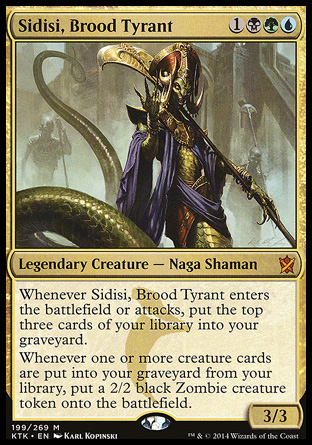
Before I commence outlining some areas where I see the Magic community succeeding at integrating women, I would like to briefly introduce myself. I purchased my first introductory deck during New Phyrexia and by Innistrad was drafting weekly. I have faded in and out of Standard, as no deck has captured my attention and excited me as much as [card]Nephalia Drownyard[/card] Esper Control during Innistrad/Return To Ravnica Standard, but the emergence of a viable Sidisi-Whip build may lure me back.
Limited formats and Commander are my true passions. In terms of Mark Rosewater’s psychographic profiles, I align most closely with Johnny Jenny (more on this below!) but like any competitive player, I have Spike streaks! Sultai is my favorite color combination, though I tend to enjoy any two-color pairing contained within that triad. Outside of the Magic community, I am a Sociology PhD student who studies social movements and mass media. Now, onto my primary purpose!
How Magic is Different
I firmly believe Magic the Gathering is a unique gaming environment in that sexism and misogyny are not endemic to the game itself. Unlike videogames, which sometimes are structured in such a way that exclusion is built into the design, Wizards of the Coast employees have repeatedly demonstrated their commitment to fostering a welcoming community. High-profile designers and directors like Doug Beyer and our beloved Mark Rosewater routinely discuss the issue of women in Magic. Most recently, throughout the week of April 13, MaRo featured a different woman employee, each representing distinct departments, on his Tumblr Blogatog. In March of this year, MaRo expressed that he regrets labeling the player archetypes he pioneered with male-gendered names and proposed alternatives (Tammy for Timmy, Jenny for Johnny, Mel for Melvin, while Vorthos and Spike remain gender-neutral).
The culture of inclusion extends beyond a few public figureheads, too. Some of you may recall the controversy surrounding the [card] Triumph of Ferocity [/card] art, which portrayed Garruk looming over Liliana and forcibly pressing forward between her thighs. Though Wizards initially fumbled, they swiftly acknowledged their error, apologized, and pledged to prevent similar mistakes in the future (and, as of yet, have maintained that vow!). When the card was reintroduced in Duels 2015, new art was even commissioned.
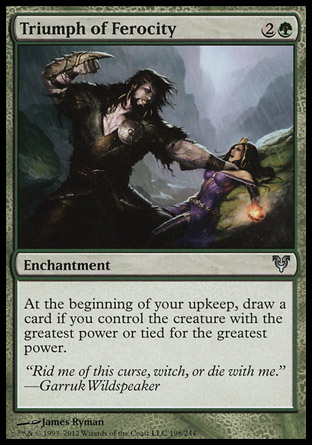

While employee composition and responses to mistakes are solid indicators of WOTC’s dedication to constructing a gaming environment where women can comfortably participate, what is most notable, in my opinion, are the cards throughout the history of Magic featuring depictions of widely-varied women in diverse roles with rich characterization. Across all segments of the color pie, women are regularly featured as warriors, priestesses, bureaucrats, sorcerers, healers, necromancers, spies, leaders, followers, and more. Recently, Wizards has even introduced a trans woman ([card]Alesha, Who Smiles at Death[/card]) and an agendered character ([card]Ashiok, Nightmare Weaver[/card] )! As I stated above, the presence of all of these factors leads me to believe the issue is not inherent to the game itself.
Community Figureheads
Professional players and commentators have contributed to keeping the conversation about women in Magic alive, too. Patrick Sullivan, Luis Scott-Vargas, Drew Levin, and Marshall Sutcliffe all cultivate productive and interactive conversations on Twitter, in their articles, and on their streams. I am also fond of Sam Black’s Facebook group “Story Time with Sam Black!” It is filled with passages where he genuinely reflects on gender. Even though many of the writings are not directly relevant to the Magic community, it is encouraging to see a professional player with high visibility exhibit sensitivity to the inequity commonly faced by women and the negative consequences of restrictive gender norms and roles for all people.
Even amongst those of us who constitute the average player base, there are those who have established enclaves for women players. The Lady Planeswalkers Society (started by Tifa Robles), the MTG Diversity Twitter account, and the FEMtg and Lady MTG Tumblrs are all spaces intentionally created to facilitate women becoming more involved as well as commiserate and process negative experiences. The internet’s ability to connect people across time and geographic space reveals a consensus: current players acknowledge women’s relative absence and want to rectify it.
So What’s the Problem?
The dearth of women who play Magic competitively does not seem to align with WOTC’s informal and direct efforts to broaden the appeal of the game, the attitudes of tastemakers in our community at large, or the overall tone of the conversation online. So why does the issue persist?
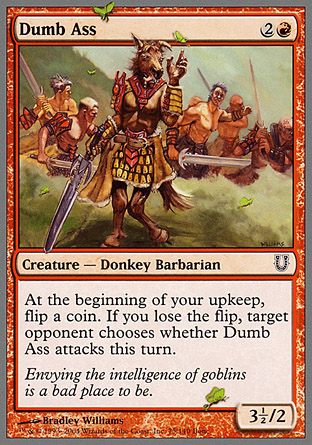

Anecdotally, I have the perception that there are many women who restrict themselves to kitchen-table casual play. I do not believe the gulf is attributable to women’s interest in Magic or in table-top gaming more generally. I am inclined to refocus my attention on the micro-cultures of local game stores and the average player base. Accordingly, in future editions of this column, the avenues for improvement I will explore (including but not necessarily limited to: general “othering” of women in Magic, the way we discuss female professional players, exclusionary language, and sexual harassment) will be overwhelmingly oriented toward the environment in which many of us are playing Magic: smaller-scale tournaments like the FNM you may attend weekly. The standards we collectively set in our respective LGSs inform how people behave when they attend Pro Tour Qualifiers and Grands Prix.
Being deliberate and conscientious goes a long way in terms of alleviating potential concerns. The examples I have described above make that much evident. As my title suggests, I am hopeful about the future of the status of women in the Magic community. I look forward to reading your responses and I am confident our discussions can be respectful and constructive.

MTG After Hours #12 – Saclings
Brainstorm Brewery After Hours is a collection of outtakes and stories that aren’t fit for publication on respectable websites. While Brainstorm Brewery is a podcast that strives for a PG-13 rating, After Hours has no such aspirations.
This week on After Hours, we are joined by Houston Whitehead and Jon Celso from the Tap N Sac podcast. This is from last year when Marcel and Jason were guests on episode 96. Lots of hidden gems were covered with no regard for feelings. You’re welcome.
Cabe Riseau produced the intro and outro music for Brainstorm Brewery.
Contact Us!
Brainstorm Brewery – Website – E-mail – Twitter – Facebook – RSS – iTunes – Stitcher
Ryan Bushard – E-mail – Twitter – Facebook
Corbin Hosler – E-mail – Twitter – Facebook – QuietSpeculation
Jason E Alt – E-mail – Twitter – Facebook – QuietSpeculation
Unified Theory of Commander: Answers
Up through this point in the Unified Theory of Commander, we’ve been primarily concerned with what our own decks want to do. Threats define the goals of the deck, while Draw and Mana give us access to those threats and the ability to cast them. As we move into the fourth element in our theory, its necessary for us to switch gears and start thinking critically about our opponents. Answers are all about responding to the other decks at the table.
Why Answers?
Remember from our last discussion that threats attempt to advance a gameplan and create a win condition. They exert pressure on the table and “demand answers.” That means answers are the cards that respond to and hopefully stop threats from creating momentum for another’s players strategy. They relieve pressure at the table and ideally put your deck in a position to continue executing its own plan.
So we’ve got a functional definition of answers, but a lot of players who understand what an answer technically is still miss the material advantage of running answers in their decks. If we go back to our discussion on card advantage, its clear that Commander is a game of resource acquisition and management. Acquiring and utilizing resources is bound by rules, which dictate the time and pace at which we can use them. Threats attempt to reduce the amount of time left in the game. That’s “pressure.” It says that if this threat goes unanswered, then the table only has X turns before its controller wins. And sometimes X equals zero! If no one is holding an instant speed answer, the game is over.
Many answers cards may seem like card disadvantage in the moment, but when used properly they actually create time. They add to X, which creates more turns for you to acquire and utilize resources. So making sure your deck has appropriate answers to the threats at the table is going to be critical. Maintaining card advantage is pointless if you don’t have the time to execute your strategy and win the game, right?
The Answers Menu
So what cards qualify as answers? The most ubiquitous and obvious answers for our multiplayer format are wraths and boardwipes. A single spell that clears potentially dozens of your opponent’s assets from the battlefield clearly produces significant card advantage. Rarely does a friendly game of commander reach its conclusion without a single one of these powerful cards making an appearance, but these aren’t your only options.
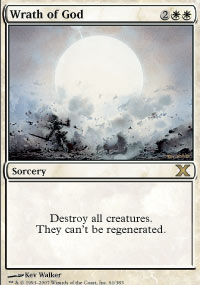
Not Your Only Option
Single target removal spells such as Swords to Plowshares certainly have their place in the format, especially since they tend to function at instant speed and allow you to be very selective with their use. Removing artifacts, enchantments and other permanent types is important to consider as well. And yes, no matter how sad you are when it happens to you, land destruction is part of the answers package as well. Being able to use Strip Mine on the Maze of Ith that’s keeping your commander from getting in for lethal damage might be pretty important if you are playing a voltron deck.
There are broader answers available as well. Cards like Chaos Warp or Karn Liberated hit just about any permanent and cover weaknesses in colors that struggle removing specific threats from the table. “Prison” cards such as Oblivion Ring and Detention Sphere and other oddball defensive spells such as Nevermore see play in specific deck archetypes as well, so always be on the lookout for the right options for your deck’s specific gameplan.
Selecting Answers
So how do we go about selecting answers for our decks? For that, we need to turn inward again for a moment to the goals we set for our decks. If you know what your deck wants to do, you can begin to figure out what threatens it. If your deck isn’t creature heavy, then wraths will certainly work in your favor. Wraths become your enemy in a tokens deck, so finding answers that protect your side of the battlefield are much more important. Suddenly a card like Soul of New Phyrexia might seem attractive as an answer.
We also need to consider each type of threat we might see at the table and make sure we are able to respond to all of them. We can do this broadly to get started. Make a list of permanent types and consider whether or not your deck has a way to deal with each of them. If your deck is missing removal for a particular permanent type, consider how it is going to handle one of those being played as a threat. You may need to make some edits.

A Threat and an Answer in the Right Deck
We can get more specific by building another list of threatening deck archetypes, particularly those that might show up at our own card shops or regular gaming night with friends. If your deck is combat oriented, do you have answers for a “pillowfort” deck stacked with defensive enchantments? If not, a Bane of Progress might be an excellent inclusion. Is a voltron deck king of your playgroup? Then make sure your deck is packing enough instant-speed removal or sacrifice effects to keep their commander pointed at someone else. Consider the strategies that tend to leave your deck feeling hopeless and go find the tools to fight back effectively.
Reliability of Your Answers
Including another threat is almost always going to make you happier during deck construction than adding another answer. Its easy to imagine the myriad of ways each threat can win the game, but hard to consider all the ways in which you might need another answer. Have you ever daydreamed about casting Wrath of God for four mana on your own turn? Or blowing your Swords to Plowshares on turn three against a threatening Rafiq? Probably not. So almost every EDH player to sleeve up a deck has fallen into the trap of overvaluing the density of their threats and undervaluing the need for answers.
Is your coverage dense enough?
We try to avoid hard rules for things like card ratios in the Unified Theory because each deck has its own goals and each playgroup its own nuances. However, it is safe to say that when an opponent plays a big threat, you are almost always going to wish you had an answer in your hand. So its generally a good idea to distribute answers in your deck in such a way that you will see at least one in your opening hand or by the turn at which players at your table tend to start resolving major threats.
It’s relatively easy to follow that rule and use a hypergeometric calculator (like we did for mana sources) to find a good number of answers for your deck. If players at your table start resolving big threats around turn six, then fifteen answers makes your deck 90% reliable at playing defense. You can tune up or down based on a variety of factors, but remember that this is just a starting point. Just like the “start with 40 lands” guideline, make sure you don’t just cram 15 answers in your deck and call it a day. Like mana sources and threats, your deck needs answers that fit its strategy and the expected play environment. So keep adjusting until you don’t feel helpless against any strategy, but don’t give up the character of your deck to fit a specific rule.
Conclusion
Answers don’t feel as good as threats, but they are every bit as vital to making sure your deck is fun and functional at any table. When holding a shiny new threat from the latest set that desperately needs to join your favorite deck, you will be tempted to remove an answer to make room. You will even feel good about the swap when that threat resolves and the table collective groans at the advantage create your new toy. But those good feelings might be covering up the way your deck is actually getting weaker and less able to respond to your opponent’s own shiny new toys. Don’t fall into that trap. Find that answers that keep your deck in the game and run them.

Weekend Magic: 4/17-4/19
This week brings us Grand Prix Krakow, Grand Prix Kyoto, and Star City Games: Providence. That’s a ton of information to cover so let’s get down to business.
GP Krakow (Poland)
Top 8 Decklists
Top 16 Decklists
Format – Standard
Standard is still all about dragons in Europe yet the Top 8 seemed to prefer the blue, white, and black dragons more than the classic red color. [card]Dragonlord Ojutai[/card] was the key player in many of the Top 8 decks and has thereby cemented itself as a powerhouse in Standard based on the results. No less than five Esper Dragons decks placed in the Top 8, with six total appearances in the Top 16. Let’s take a closer look at this deck for other key players besides Dragonlord Ojutai.
- [card]Silumgar, the Drifting Death[/card] – A notable threat all weekend, Silumgar keeps opposing armies in check until the control deck can stabilize and finish the opponent off.
- [card]Crux of Fate[/card] – I hear one sided [card]Wrath of God[/card] is pretty nice, of course a Dragons control deck is going to run it!
- [card]Dig Through Time[/card] – Needed for card selection and a Standard staple in almost any blue deck.
- [card]Silumgar’s Scorn[/card] – [card]Counterspell[/card] is nuts, and while you won’t always have Counterspell dragons in your hand available you can still cast it at the opportune moment to disrupt your opponent’s game plan. Just a solid card all around.
- [card]Foul-Tongue Invocation[/card] – One of the new premier removal spells, this card reminds us of [card]Devour Flesh[/card] but is so much better. Expect to continue seeing it over its Standard life.
Other decks in the Top 8 included Blue / Black dragons (might as well be Esper), Jeskai Tokens, and Ojutai Bant. Notables from Jeskai Tokens includes [card]Secure the Wastes[/card] and [card]Jeskai Ascendancy[/card]. Notables from Ojutai Bant include [card]Den Protector[/card], [card]Deathmist Raptor[/card], [card]Dragonlord Ojutai[/card], and [card]Surrak, the Hunt Caller[/card].
Looking outside of the Top 8, the field becomes much more diverse. Bant Heroic, Red-Green Dragons, Abzan Whip, another Esper Dragons, Green-White Aggro, Green Devotion, Abzan Midrange, and Abzan Control were all represented here. Notables from the decks include:
- [card]Hero of Iroas[/card] and [card]Dromoka’s Command[/card] in Bant Heroic
- [card]Thunderbreak Regent[/card] in Red-Green Dragons
- [card]Wingmate Roc[/card] and [card]Sidisi, Undead Vizier[/card] in Abzan Whip
- [card]Avatar of the Resolute[/card], [card]Reverent Hunter[/card], [card]Den Protector[/card], [card]Collected Company[/card], and [card]Dromoka’s Command[/card] in Green-White Aggro
- [card]Rattleclaw Mystic[/card], [card]Whisperwood Elemental[/card], [card]Dragonlord Atarka[/card], and [card]See the Unwritten[/card] in Green Devotion
- [card]Den Protector[/card] in Abzan Control
Looking at the Top 8 doesn’t show many diverse results, however the Top 16 saw plenty of variety in the way that Standard decks can be built.
GP Kyoto (Japan)
Format – Legacy
U/W Miracles took down the event with Stoneblade in a close second. [card]Monastery Mentor[/card] made an appearance as a playset in Murakami’s Stoneblade list. Looks like Mentor has broken into Legacy formats and might be another threat along with [card]Young Pyromancer[/card] that will keep churning out tokens for years to come.
[card]Omniscience[/card] was an important player in Kyoto, with two Omni-Show decks making it into the Top 8. Other key cards in Omni-Show include [card]Show and Tell[/card], [card]Cunning Wish[/card], and [card]Dig Through Time[/card]. Along with Sneak and Show, Omni-Show is another deck that you need to look out for due its explosive combo nature.
Not a ton of innovation here outside of Omni-Tell (which has been around in Legacy, but has become better positioned since Dragons of Tarkir has been released) just solid deck pilots that were able to sweep through the preliminary rounds with decks like Storm.
Star City Games Open – Standard (Providence, USA)
Decklists
| Deck | Finish | Player | Deck | Finish | Player |
| Abzan Reanimator | 1st | Oliver Tomajko | Abzan Control | 9th | Thomas Roth |
| Mono-Red Aggro | 2nd | Peter Nguyen | Temur Dragons | 10th | Brian Dolan |
| Sultai Reanimator | 3rd | Dustin Taylor | Jeskai Aggro | 11th | Kei Rong |
| Abzan Control | 4th | Robert Vaughn | Jeskai Aggro | 12th | Nick Allain |
| Abzan Aggro | 5th | Andrew Boswell | Abzan Control | 13th | Dan Jessup |
| Abzan Control | 6th | Kyle Shane | Abzan Aggro | 14th | Robert Elias |
| Jeskai Aggro | 7th | Noah Walker | Mono-Red Aggro | 15th | Michael Ray |
| Abzan Control | 8th | Ben Feingersh | Esper Dragons | 16th | Zachary Kiihne |
With Esper Dragons barely making the Top 16, Providence instead featured plenty of Abzan action. Between Abzan Aggro, Control, and Reanimator decks taking five spots in the Top 8, there were also three copies in the Top 16. Cards in Abzan strategies that are notable include:
- [card]Siege Rhino[/card] – If you were Abzan, you were packing four copies of the Rhino in your deck.
- [card]Den Protector[/card] showed up again across a few lists
- [card]Fleecemane Lion[/card] was an important role player in both Control and Aggro lists
- [card]Warden of the First Tree[/card] and [card]Anafenza, the Foremost[/card] in Abzan Aggro
- [card]Deathmist Raptor[/card] was featured in Vaughn’s contro list
Not a whole lot of new tech from Dragons was featured in Abzan decks.
Rounding out the rest of the Top 8 were Mono-Red Aggro, Sultai Reanimator, and Jeskai Aggro. Notable cards from these decks include [card]Dragonlord Atarka[/card] and [card]Sidisi, Undead Vizier[/card] in Sultai Reanimator and [card]Thunderbreak Regent[/card] in Jeskai Aggro.
Rounding out the rest of the Top 16, Temur Dragons is the only unique deck. This deck featured four [card]Savage Knuckleblade[/card], four [card]Thunderbreak Regent[/card], three [card]Whisperwood Elemental[/card], and four [card]Stubborn Denial[/card]. Though it is named Dragons, it doesn’t run any of the Dragon enabled spells like [card]Draconic Roar[/card].
Star City Games Premier IQ – Modern (Providence, USA)
Decklists
| Deck | Finish | Player | Deck | Finish | Player |
| Abzan | 1st | Caupolican Lopez Yapor | G/R Tron | 9th | Alexander Oliveira |
| Abzan | 2nd | Nick Giordano | Abzan | 10th | Greg Gentile |
| U/R Twin | 3rd | Michael McKena | Jeskai | 11th | Nicholas Heal |
| Burn | 4th | Ben Kazhdan | Grixis Pyro | 12th | Luis Alfonso |
| U/B Faeries | 5th | Anthony Huynh | Burn | 13th | Jonathan Delano |
| Affinity | 6th | Ian Hacker | Burn | 14th | Alfoso Krivickas |
| Affinity | 7th | Griffin Kadar | Affinity | 15th | Rachel Dillon |
| Esper Tokens | 8th | Zane Knapp | Grixis Delver | 16th | Michael Deidolori |
Moving on to Modern, Abzan and Affinity took four of the Top 8 spots along with U/R Twin, Burn, U/B Faeries, and Esper Tokens. Abzan seems to be adopting one [card]Dromoka’s Command[/card] main deck, so look out for this card in Modern moving forward as well as Standard.
Looking at U/B Faeries, the deck featured [card]Mistbind Clique[/card], [card]Scion of Oona[/card], four [card]Spellstutter Sprite[/card], and four [card]Bitterblossom[/card]. [card]Countersquall[/card] out of the sideboard is also an interesting choice, as it isn’t seen very often but can be a nice card in the right metagame.
In Esper Tokens we find four [card]Monastery Mentor[/card], [card]Sorin, Solemn Visitor[/card], [card]Slaughter Pact[/card], and [card]Lingering Souls[/card]. [card]Curse of Death’s Hold[/card] out of the sideboard is also notable, since token decks seem to be making waves in Modern as more people experiment with [card]Monastery Mentor[/card].
Rounding out the rest of the Top 16, notable decks include Grixis Pyro and Grixis Delver. Grixis Pyro featured [card]Young Pyromancer[/card], [card]Tasigur, the Golden Fang[/card], and [card]Kolaghan’s Command[/card]. Grixis Delver also had Young Pyromancer and experimented with [card]Gurmag Angler[/card]. Jeskai also made an appearance in the Top 16 playing [card]Geist of Saint Traft[/card] and [card]Restoration Angel[/card], so UWR isn’t quite out of the running in Modern either even if we haven’t seen consistent results in a while.
Star City Games Premier IQ – Legacy (Providence, USA)
Decklists
| Deck | Finish | Player | Deck | Finish | Player |
| Omni-Tell | 1st | Adam Brennan | Miracles | 9th | Bradley Berk |
| Temur Delver | 2nd | Tanner Parente | Grixis Pyro | 10th | Matthew Smith |
| Miracles | 3rd | Christopher Stitson | Elves | 11th | Samuel Blau |
| Sneak and Show | 4th | Jason Grigely | MUD | 12th | Hunter Prendergast |
| 12-Post | 5th | Aaron Gazzaniga | Abzan Deathblade | 13th | John-Paul Phelan |
| Omni-Tell | 6th | Daniel Hall | Omni-Tell | 14th | Brandon Jones |
| Death and Taxes | 7th | Jake Bartlett | Omni-Tell | 15th | Kevin Saunders |
| Omni-Tell | 8th | Cory Abrams | Elves | 16th | Nicholas Malatesta |
Finally, we had some Legacy action in Providence too and Omni-Tell was the story of this tournament. Not only did the deck take down the event but it also put four other people into the Top 16. In Legacy, a format as diverse as you can possibly get, this doesn’t happen very often and should be a sign that Omni-Tell is going to be a force in the format going forward. As mentioned in the Kyoto section, cards like Omniscience are key components of the deck that allow it play a very unfair game if left unchecked.
12-Post making the Top 8 hasn’t happened in a while. Key cards in that deck include [card]Oracle of Mul Daya[/card], [card]Primeval Titan[/card], [card]Ugin, the Spirit Dragon[/card], [card]Candelabra of Tawnos[/card], [card]Crop Rotation[/card], and [card]Ancient Stirrings[/card] with of course the twelve posts ([card]Cloudpost[/card], [card]Glimmerpost[/card], and [card]Vesuva[/card]). The deck is resilient thanks to the land [card]Eye of Ugin[/card] and can come out of nowhere with a surprise win if you’re not expecting it. Though hard to build due to Candelabra being so rare, if your local tournament allows proxies for Legacy this could be an interesting choice to bring to the event if you’re looking for a combo deck that is unique and fun to play.
Grixis Pyro also appeared in Legacy, with notables being [card]True-Name Nemesis[/card], [card]Dack Fayden[/card], [card]Dig Through Time[/card], and [card]Cabal Therapy[/card]. Similar to the Modern version, this deck aims to take a more controlling path to victory.
Abzan Deathblade seems like a new deck archetype that appeared, but its really just a rename of Pikula with the [card]Stoneforge Mystic[/card] package. [card]Hymn to Tourach[/card] is a feature in the deck but otherwise it just plays Abzan goodstuff in Legacy.
That’s a wrap for this week! See you next time.
Pitt Imps Podcast #115 PT DRAGONS!!!
Well its that time again. The Pro Tour. Did you miss it? Don’t worry, we got you covered. As has become a tradition for us we go over the entire thing RD by RD. Yup, every one of them. There was good Magics played. Some very naughty players. A very quick finals and so much more.
Host Angelo Twitter @ganksuou
Co-Host Will Find on Facebook
Co-Host Mike Twitter @Huntmaster_Mike
Show Email [email protected]
Pitt Imps is brought each week to you by our sponsors Taitan Game Shop and Brainstorm Brewery

Red Deck Wins (a 5K)
Hi! My name is Jake Tilk (@JakeTilk on Twitter), and last weekend I placed first in a 5K in Grand Rapids, Michigan. I’ve never done one of these before, but I want people to see why Mono-Red is a good choice for any event. Here is the list.
As you can see, my deck is a little different from what you saw at the Pro Tour. But, what can I say about mine? It is extremely consistent. At first, I was a little apprehensive about playing mono-red at a big tournament like this. Mono-red, in my experience, has the possibility of running red hot, and then sort of petering out.
What was the solution to this?I had to find a red list that bested the top decks in the format. That is exactly what it did. The deck’s game plan involves using my creatures for the first three or four turns to swing as fast as possible then burning the opponent out with the average of about two burn spells in my hand on turn five or six. So, let’s go into my deck choices. As you see, a lot of this is pretty stock. But, then you get to the four main deck [card]Searing Bloods[/card]. Over the course of the day, I had a lot of people asking me how many Searing Bloods I was playing. When I said four, I was met with varying amounts of responses. Whether it was, “What about the control matchup?” or “How does that get over [card]Courser of Kruphix[/card]?” I can honestly say that Searing Blood over-performed for me that weekend as the card was absolutely ridiculous when it killed something.
Oh, and Courser? She ain’t no thang. Sure, that card is an absolute pain in the ass. But I will gladly trade my Zurgo the Bellstriker and a Searing Blood for a big ass body and life gain any day of the week. Another card that I got some skepticism for was [card]Break through the Line[/card]. After not really drawing this card except for the finals, I do not really have a huge opinion on it other than as a one-of, it is probably fine but needs more testing.
Here was the situation:
In the finals, I played against a really nice dude playing Abzan Aggro. I had a Break through the Lines on board for two turns or so. He was at five life and tapped out for [card]Wingmate Roc[/card]. I was at only one after chumping all of the Snuggasquad NA. In my hand I had a [card]Lightning Berserker[/card], and a Mountain. Commence my turn: I played the Mountain (now I have 6), dash Berserker, break her through the lines, and then I pump her four times for exacties.
I admit, when I was on the draw, I sided out Break against creature decks for [card]Magmatic Chasm[/card]. I feel like nothing else in my deck is that weird besides maybe the one-of [card]Roast[/card]. That was personal preference, and it actually over-performed in game ones getting rid of so many big ass bodies.
Let’s Talk About Sideboarding
Against Abzan Aggro/Mid, and G/R. Play: -1 Mardu Scout -2 Hordeling -4 Wild Slash; +2 Harness By Force +3 Roast +2 Magmatic Chasm Draw: -1 Mardu Scout -2 Hordeling -3 Wild Slash -1 Break Through The Lines; +2 Harness by Force +3 Roast +2 Magmatic Chasm
Against Control: Play: -2 Hordeling -1 Break Through The Lines -1 Roast -4 Searing Blood; +3 Eidolon of The Great Revel +2 Outpost Siege +3 Arc Lightning Draw: Same thing.
Against the mirror: Play: -1 Mardu Scout -2 Heelcutter -1 Roast -1 Break Through; +3 Arc Lightning +2 Eidolon Draw: -1 Mardu Scout -2 Heelcutter -1 Break Through; +3 Arc Lightning +1 Roast
G/W Devotion: Play: -1 Mardu Scout -2 Hordeling -4 Wild Slash +1 Magmatic Chasm +3 Roast +3 Eidolon of the Great Revel. Draw: -1 Mardu Scout -2 Hordeling Outburst -1 Wild Slash -1 Break Through The Line +2 Magmatic Chasm +3 Roast
Matchups
Round One: Abzan Midrange. I won the die roll and start slamming down little dudes. Game one is done in three minutes. People next to us were still resolving mulligans. Game two, I saw his deck was a little weird so I sideboarded like I normally do for Abzan and kept a bad hand. Still made it work though, through a Sorin, and Doomwake Giant.
Round Two: This round I played against my friend Travis Cullum. He was playing the Chris VanMeter Red Green deck, and I am not going to lie when I tell you guys I was a little worried. After a close match, with me closing the game out sub optimally Harnessing By Force his Thunderbreak instead of Searing Blooding his morph, I was put into top deck range with me at 11 and him at 1. I learned from this mistake and carried on. Thankfully he did not top deck what he needed to close this game out.
Round Three: G/W Devotion. This guy was extremely nice, and although I would like to say it was close, it was not a fun game of magic because I did Mono Red shenanigans game one, and game two he chose to mulligan to probably the best three card hand I have ever seen. It just was not quite enough.
Round Four: Also a nice guy. He made an awesome play in game two where he used Setessan Tactic’s to fight his Hornet’s Nest with my board and my Magmatic Chasm I was holding back became awful. Mostly because it does not get me past those flyers. However, in game three I pulled it out. My opponent was at 9. I had a Lightning Strike in hand, a Stoke the Flames, and 3 creatures on board. One of which was Eidolon of the Great Revel. He had a revealed Mastery of the Unseen off of his Courser. I also do not think that he expected me to have double burn spell in my hand. As most red decks do not play the amount of burn that I play. He slams the Mastery hoping to turn his dudes into some life. I respond by dumping my hand. That was a close one. If I was in his position with mana dorks I would probably do the same.
Round Five: Mono White Hate Bears?! This deck was insane. Also, the woman piloting it was very nice. All I can say is, I see how it ended up at table one. This is a deck I would love to test at FNM. It had main deck Banishing Lights, Silk Wraps, Valorous Stances, God’s Willings, Seeker of the Way’s, and wait for it. FABLED HERO. This guy was absolutely insane. God’s willing this guy and you push through a ton of double strike damage. A lot of the time he got through because I had to deal with his one and two drops. (Especially Seeker of the Way). The card that almost sealed the close game three with her was Secure the Wastes. In a trading one for one matchup, this card for six mana for her straight up almost blew me out. I definitely cannot stop something even that wide, even with Arc Lightning. I won the game three by burning her one blocker out, and swinging for game. She was racing me, which I admire.
Round Six: There were three undefeated players. I was in second, hoping to double draw in. Lucky me, I got the pair down. I offered him the draw in the hopes that he would win the last round. No dice. Jeskai Dragons wanted a piece of me. I sat down, and due to easy to Searing Blood Seeker of the Way’s,Soulfire Grandmasters, and tapped lands. I clutch stole the win.
Round Seven: I drew into first seed for top 8.
Round One Top 8: Played against my friend Travis Cullum again. He beat out two people in tie breakers finishing 5-1-1. This was an extremely close game three where I had two draws to end the game or else I lost. He had Courser of Kruphix, and four life. So basically my only real out was one turn. I had one card I could draw. With four left in the deck, that is exactly what I did. I slammed Stoke The Flames and praised the prophecy for drawing my one out.
Round Two Top 4: I played against Ryan Hovis, and his Esper Control deck. His list seemed much better placed against Red than many of the Esper decks that I was testing with. Although, that was not quite enough and the Outpost Siege pulled me through.
Round Three Top 2: Played against a new buddy of mine named Rick. He was playing Abzan Aggro. As I mentioned earlier, he got me really close and slammed Wingmate Roc. Break Through The Line definitely won me this match.
Now, what would I change about my deck for next time? Although, I really like my deck list. I think the only significant changes I would make would be the inclusion of Circle of Flame in my sideboard. I would take out a Magmatic Chasm for it. In the main deck, I would consider taking out a Hordeling Outburst for a fourth Dragon Fodder to get lower to the ground.
Play tight, and long live Atarka! See you in Cleveland!
Commanding Opinion: Sedris, the Traitor King
I started playing Magic with New Phyrexia, the spring of my sophomore year of high school. I had been playing the Yu-gi-oh! and Pokemon TCGs for quite a while, but I had never really tried to play Magic. My brother finally convinced me to actually give it a shot.
Needless to say, I played and just kept playing. I learned fast and started to play Standard. Sadly, I played when the entire format was just between Cawblade and Splinter Twin. The “fun” I wanted to have with the format was stifled, and I just didn’t end up playing all that much.
Then, during the Summer of 2011, I learned about EDH as it was being officially re-branded to Commander; 100 card singleton with a General, or Commander.
My brother had bought all 5 of the decks, and allowed me to use one of them – Counter Punch, with [card]Ghave, Guru of Spores[/card]. The first time I actually played it against was in a pod with [card]Cromat[/card] “good stuff,” [card]Child of Alara[/card] Allies and [card]Silvos, Rogue Elemental[/card] ramp. I ended up winning with the regular Ghave deck with few modifications.
After that, I aimed to build my first EDH deck from scratch – [card]Nicol Bolas[/card], because he was a bad-ass Dragon that I already owned. While I waited for the cards for it to arrive, I purchased Devour for Power while it was still on the shelves and played with [card]Mimeoplasm[/card] with my brother.
I went to the local EDH league (casual multi-player with store credit awarded to winners) at my local game store and promptly got second with my homebrew, but realized that my commander was really, really expensive. I only ended up casting him once, and he got countered.
Then, I saw [card]Sedris, the Traitor King[/card] in somebody’s trade binder and promptly picked him up for a little less than a dollar, and made changes to the deck. While I’ve changed it a lot over the years and dismantled it multiple times, I’ve always kept Grixis close to my heart.

[card]Sedris. the Traitor[/card] is a 5/5 Zombie Warrior for 3UBR that seems pretty unassuming – until you read his ability.Each creature card in your graveyard has unearth 2B.
Unearth lets a creature reanimate itself for a cost – in this case, 2B. It’s a slightly forgotten ability – the only card relevant in any formats that I can think of with Unearth would be [card]Hellspark Elemental[/card].
When I first discovered Sedris and what he could do, I automatically fell in love with it. I had already been playing [card]The Mimeoplasm[/card] so I was already well versed in reanimator decks.
As a self-admitted Johnny, I ended up building this deck as a Combo deck in my personal collection.
I chose Sedris over other Grixis commanders because of his intrinsic reanimation ability. While [card]Marchesa, the Black Rose[/card] is easier to cast and animates stuff even easier, Sedris has the ablity to pull the cards back out of the graveyard after he hits the board instead of having to already be in play.
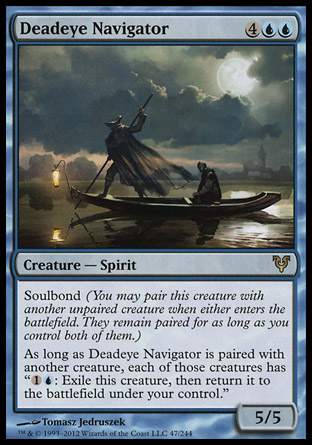
Despite being considered one of the most degenerate cards in the format, he actually serves a very good purpose here. [card]Deadeye Navigator[/card] is the major enabler in this deck. On top of being fantastic with enter the battlefield effects, he enables a slew of combos in this deck, and saves our unearthed creatures from exile by flickering them with his Soulbond ability. However, one problem with this is that a lot of people seem to disagree about this ruling, so here’s the direct text from the rules compendium:
2B: Return this card to play. The creature gains haste. Exile it at end of turn or if it would leave play. Unearth only as a sorcery.
The other important thing to note about Unearth is that it causes a delayed trigger – the “exile it at end of turn or if it would leave play” part of Unearth. There isn’t anything in particular about Unearth referring to this in the compendium, but there’s this note on the Gatherer:
If a creature returned to the battlefield with unearth would leave the battlefield for any reason, it’s exiled instead — unless the spell or ability that’s causing the creature to leave the battlefield is actually trying to exile it! In that case, it’s succeeds at exiling it. If it later returns the creature card to the battlefield, the creature card will return to the battlefield as a new object with no relation to its previous existence. The unearth effect will no longer apply to it.
This makes every creature in the deck a major threat – being able to come back to life over and over again completely removes the downside from unearth, even if it costs us a little more mana. I used to play cards like [card]Conjurer’s Closet[/card] and [card]Teferi’s Veil[/card], but they just felt too clunky and really only worked for either a slower control build or a faster aggressive build. Our combo build is somewhere in the middle. [card]Deadeye Navigator[/card] takes up the slot of exiling to keep them nicely.

[card]Duplicant[/card] is our all-purpose removal creature that has the upside of becoming just as big as the creature you exile. It gives us an easy way to get rid of annoying creatures like [card]Iona, Shield of Emeria[/card] or indestructible creatures like [card]Avaycn, Angel of Hope[/card] or [card]Blightsteel Colossus[/card].

[card]Palinchron[/card] untaps 7 lands whenever it comes into play – essentially being a free 4/5 flyer. There’s also the fact that [card]Palinchron[/card] + [card]Dead-eye Navigator[/card] gives us infinite mana, to do whatever we like with it. At worst, you can also unearth it to untap some lands to unearth more creatures.
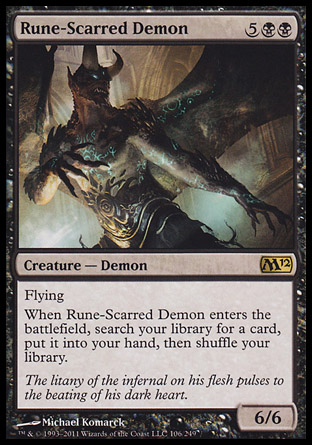
[card]Rune-Scarred Demon[/card] is a second [card]Demonic Tutor[/card] for this deck, allowing us to search any combo piece we need, and just be a 6/6 flyer..
Now we’re going to cover the main combos for the deck.

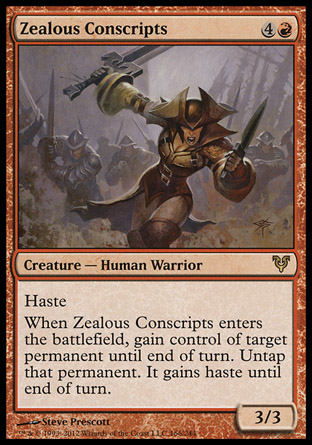
[card]Kiki-Jiki, Mirror Breaker[/card] and [card]Zealous Conscripts[/card] together are one of the main win combos in the deck. Similar to [card]Splinter Twin[/card] and [card]Deceiver Exarch[/card], you can get infinitely many Conscripts for a straight win against every player at the table.
These two together are already pretty well known – 2 mana to untap 7 lands over and over again, the usual. Once you’ve gotten all the mana you need, you can always blink Deadeye to soulbond another creature and keep blinking another ETB creature.

These three together are another infinite mana combo, in the case your [card]Palinchron[/card] disappears, First, you have Deadeye paired with Zealous Conscript, and then tap [card]Gilded Lotus[/card] for 3 blue mana. You use 2 of that to blink Zealous Conscripts and untap Gilded Lotus and so on until you have all the mana you’ll ever need.
The two infinite mana combos are what enable the deck to easily finish off the game. Infinite mana gives you the ability to unearth everything in your graveyard and blink whatever you want with [card]Deadeye Navigator[/card] infinitely many times, whether it be [card]Rune-Scarred Demon[/card] to search your entire library to your hand, or for [card]Inferno Titan[/card] to burn every opponent to death.
And of course, Reanimation is our forte here.

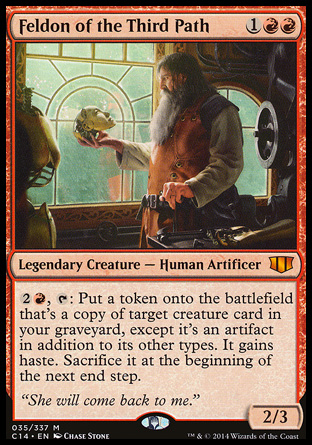
[card]Havengul Lich[/card] gives us the ability to recast creatures out of anyone’s graveyard, and [card]Havengul Lich[/card] gets that creature’s activated abilities, as long as you cast the creature. We don’t have a ton of activated abilities in this deck, but [card]Havengul Lich[/card] gives us the ability to keep a board presence and possibly keep important combo pieces out of other people’s graveyards and keep a check on other graveyard-centric decks.
[card]Feldon of the Third Path[/card], while very new to the Commander scene, is indeed very powerful in this format. He can power out strong creatures like [card]Nicol Bolas[/card] and [card]Wurmcoil Engine[/card] with ease. In addition, the token is sacrificed rather than exiled and still gets death triggers, which is important for Wurmcoil engine.
As for our reanimation spells, it’s a pretty standard yet.
- [card]Animate Dead[/card]
- [card]Dance of the Dead[/card]
- [card]Dread Return[/card]
- [card]Necromancy[/card]
- [card]Reanimate[/card]
- [card]Victimize[/card]
Now, just because I’m a Johnny, doesn’t mean I don’t know how to attack, too.

The original Commander never left – [card]Nicol Bolas[/card] is still a very mean guy – a single hit from this guy will wipe out that players entire hand. The main thing done with Nicol Bolas is to just have him in play for one turn and hit a vulnerable player with him. Reanimation + Haste is his best friend most of the time. [card]Feldon, of the Third Path[/card] is probably the best way to get him out consistently and against multiple players.
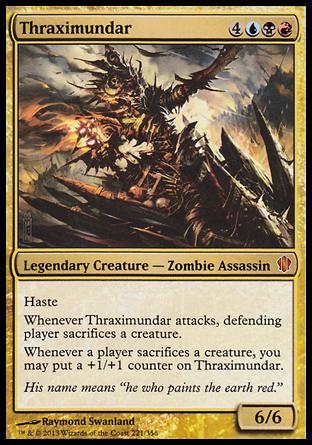
[card]Thraximundar[/card] is a super-aggressive card. 6/6 haste that gets bigger and eats creatures on the swing is pretty strong. A decent commander in his own rite, but not what we’re going for here. For the most part, he’s here simply to counter creatureless decks like [card[Narset, Enlightened Master[/card], [card]Melek Izzet Paragon[/card] or low creature count voltron decks like [card]Bruna, Light of Alabaster[/card], [card]Sigarda, Host of Herons[/card] and [card]Zur the Enchanter[/card]. [card]Fleshbag Marauder[/card] helps with this too.
[card]Lord of the Void[/card] is about as aggro as they come. A 7/7 for 4BBB, this 7/7 monstrosity lets you drag cards out of your opponent’s library. Against creature-centric decks, this is probably one of the first things you’re going to try to get in play. Even against decks like [card]Narset, Enlightened Master[/card], exiling those cards before they can get to them can be game changing.

[card]Wurmcoil Engine[/card] is a purely aggressive card. Originally a Birthing Pod and Control finisher in standard, he’s very consistently seen in Commander these days as an all around good card. A 6/6 for 6 colorless is already easy to manage in any deck, but also having Deathtouch and Lifelink on the same creature can wipe out big creatures and combos with trample enablers (not in this deck, but still relevant with cards like [card]Nylea, God of the Hunt[/card] and [card]Surrak Dragonclaw[/card] in the format. In here, he’s pure value. You don’t get his “when it dies” trigger off of Sedris, but it’s a big and swingy enough creature to turn games in your favor and eat removal without skipping a beat.
In order to get to these creatures and combos, we need a significant amount of drawing and filtering to get to them.
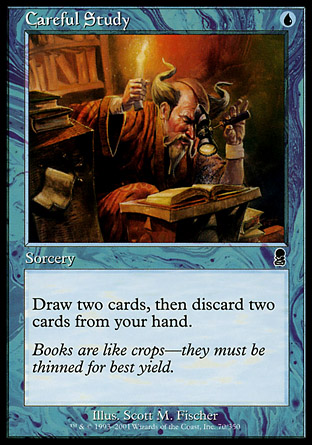


[card]Careful Study[/card]. [card]Faithless Looting[/card], [card]Frantic Search[/card], and [card]Izzet Charm[/card] all draw 2 discard two at low mana costs to get us some early games to discard big hitters like [card]Jin-Gitaxias, Core Augur[/card] and [card]Nicol Bolas[/card].
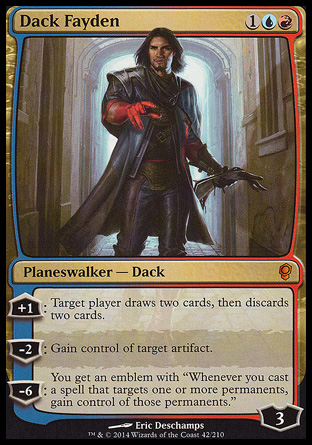
[card]Dack Fayden[/card], the greatest thief in the multiverse, is the only planeswalker we need for this deck. His only real purpose is to +1 and do the same as the two above cards. His -2 is also very relevant – stealing early game [card]Sol Ring[/card] and other mana rock plays. Also a very strong play against Artifact decks like [card]Sharuum, the Hegemon[/card] or [cardMemnarch[/card].
[card]Desolate Lighthouse[/card] is a basic utility card for this deck. The deck doesn’t have very many mana sinks, and this card slots right in to giving us a discard outlet even when we may not need it.

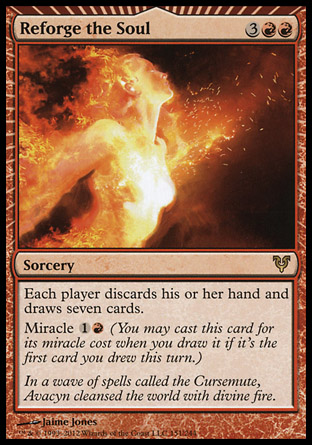
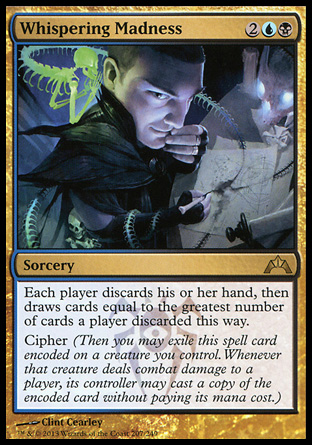
[card]Jin-Gitaxias, Core Augur[/card] is a sneaky one. 10 mana is too much even in Commander, but this deck can pretty easily get him to hit the board turn 2 or 3 with an entomb and a reanimate spell. Drawing 7 and dicarding down to your maximum hand size is just as good as the other two here in most cases. [card]Wheel of Fortune[/card] and ]card]Reforge the Soul[/card] are both pretty straightforward – discard everything and draw 7. [card]Whispering Madness[/card] is a windfall with a Cipher trigger. As we can easily swing in repeatedly, it’s not uncommon that we’ll get a few uses out of it.
On to the decklist:
[deck title=Sedris the Traitor King]
[Creatures]
Body Double
Consecrated Sphinx
Dack’s Duplicate
Dead-Eye Navigator
Duplicant
Feldon of the Third Path
Fleshbag Marauder
Glen Elendra Archmage
Havengul Lich
Inferno Titan
Jin-Gitaxias, Core Augur
Kiki-Jiki, Mirror Breaker
Lord of the Void
Nicol Bolas
Palinchron
Phyrexian Metamorph
Rune-Scarred Demon
Sedris, the Traitor King
Solemn Simulacrum
Thraximundar
Urabrask the Hidden
Wurmcoil Engine
Zealous Conscripts
{/Creatures]
[Spells]
Animate Dead
Arcane Denial
Beacon of Unrest
Black Sun’s Zenith
Blasphemous Act
Buried Alive
Careful Study
Chromatic Lantern
Counterspell
Crux of Fate
Cyclonic Rift
Dack Fayden
Dance of the Dead
Darksteel Ingot
Demonic Tutor
Dimir Signet
Dissipate
Dread Return
Dream Halls
Entomb
Exhume
Faithless Looting
Frantic Search
Gilded Lotus
Izzet Charm
Izzet Signet
Life’s Finale
Lightning Greaves
Mystical Tutor
Necromancy
Pyroblast
Reanimate
Reforge the Soul
Remand
Sensei’s Divining Top
Sol Ring
Spell Crumple
Victimize
Wheel of Fortune
Whispering Madness
[/Spells]
[Lamd]
Blackcleave Cliffs
Blood Crypt
Bloodstained Mire
Command Tower
Crumbling Necropolis
Darkslick Shores
Desolate Lighthouse
Dragonskull Summit
Drowned Catacombs
Flamekin Village
Graven Cairns
island
Mountain
Polluted Delta
Reflecting Pool
Reliquary Tower
Shivan Reef
Steam Vents
Sulfur Falls
Sunken Ruins
Swamp
Temple of Deceit
Temple of Epiphany
Temple of Malice
Temple of the False God
Urborg, Tomb of Yawgmoth
Watery Crave
[/Land]
[/deck]
Now, this is by no means the only way to build Sedris, but it’s the way I’ve had the most luck with. The mana base isn’t 100% optimized, but it’s pretty close. It’s what I’ve run for my entire time playing the deck.
Until next time,
David M. Rowell
Commanding Opinion: Angus Mackenzie

[card]Angus Mackenzie[/card] is one of the legendary creatures that are simultaneously exclusive to Legends and on the Reserved List – making it extremely expensive now. I’m surprised it didn’t spike again when Tiny Leaders became a popular format.
So what does he do?
Well, for WUG, you get a 2/2 Legendary creature. Nothing too impressive, but he’s at least playable as soon as turn 2 or 3 with the right mana fixing. His ability is the real reason he is powerful – for WUG and tap, you prevent all combat damage this turn, as long as it is done before combat damage.
Due to the fact his activated ability is [card]Fog[/card], his deck tend to play more defensively – preventing the damage makes you basically invincible to damage as long as you leave 3 mana open. The most common strategy for this is for Superfriends – Bant gives you a lot of fantastic planeswalkers combined with [card]Doubling Season[/card].
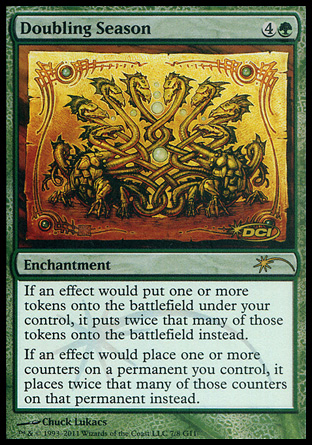
Obviously, the main thing for a Superfriends deck is to play a ton of planeswalkers.
Essentially every Planeswalker in this deck can immediately use its ultimate if it comes into play after [card]Doubling Season[/card]. As a quick reminder, [card]Doubling Season[/card] only modifies the loyalty that the Planeswalkers enter with. They’re placed when a planeswalker enters play, but adding loyalty is a cost to use the activated ability of the planeswalker. [card]Doubling Season[/card] only causes twice as many counters to be “placed” when counters are “placed,” not added as a cost.

[card]Clockspinning[/card] is a more narrow card. For U, you can take a counter from any permanent or suspended card and either remove it, or add another counter of that kind to that card. As this includes loyalty counters, it’s already pretty good. It wouldn’t be worth playing if you only used it once, though – it has Buyback for 3 colorless mana, which lets you cast it and then return it to your hand if you pay the buyback cost.

[card]Gilder Bairn[/card] is the only way we really have to double our Planeswalkers after they’re already in play – for 2{G/U} and an untap (not a tap) you double all of the counters on target permanent. Fairly self explanatory. The only real downside is that it has to be tapped in order to use its ability. Luckily, Angus prevents all combat damage,
M15 has given us quite a few new tools for this deck, in fact.
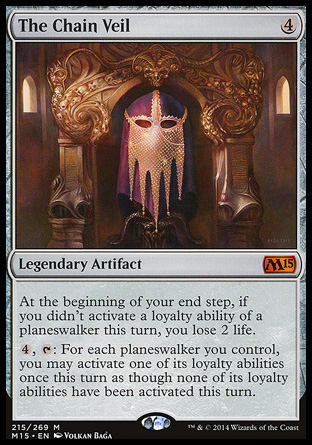
[card]The Chain Veil[/card] is the newest Superfriends support card. The downside is mostly non-existent in a Superfriends deck as you should always have at least 1 planeswalker in play that you’re using. By paying 4 mana and tapping it, you get to use each planeswalker you control an additional time this turn. This can easily push certain Planeswalkers over the amount of counters that they would need to activate their final abilities.
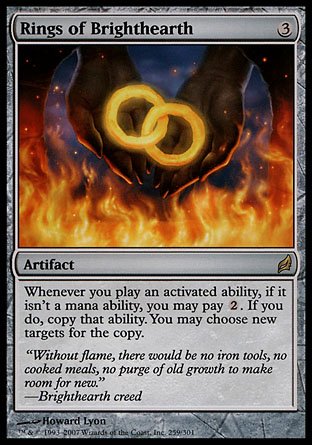
Combined with [card]Rings of Brighthearth[/card], you can then double the Chain Veil activation to get an additional two planeswalker abilities per planeswalker you control. Even when you don’t have the Chain Veil in play, you can use the Rings to get additional planeswalker abilities (though no additional loyalty counters).


We also got two new Planeswalkers from Magic 2015 that feel almost exclusively for Superfriends. [card]Ajani Steadfast[/card] has a powerful -2 that helps out your other Planeswalkers, but his ultimate combined with [card]Doubling Season[/card] gives you an emblem that causes all damage that you or your Planeswalkers would take from a source to 1 – making it much easier to survive an onslaught even if Angus isn’t in play. [card]Jace, the Living Guildpact[/card] is fairly strong in this deck. His +1 isn’t as bad in Commander as it is in Constructed due to the size of the decks, but his ultimate at -8 is just ridiculous and it can automatically go off with [card]Doubling Season[/card].

While [card]Teferi, Temporal Archmage[/card] is allowed as a commander, he serves a much better purpose in a Superfriends deck like this. His -10 is the most notable aspect when it comes to this deck. The emblem he gives you lets you use your planeswalkers every turn, not just on your own turns. Aside from that, his +1 is solid card filtering, and his -1 is very powerful as well, untapping important artifacts like [card]The Chain Veil[/card], and whatever mana rocks you play.


[card]Seedborn Muse[/card] is already a fantastic card in Commander, and Teferi just makes it even better. It essentially lets you use each of your planeswalker’s abilities twice every turn, including your opponent’s turns. [card]Prophet of Kruphix[/card] is also very good, but Seedborn Muse is strictly better in this build of the deck due to lack of creatures and the number of permanents we’d like untapped.

Our two colorless planeswalkers (the only two in the game, to be fair) are both ridiculously powerful, especially with doubling season. Even with Karn unable to ultimate directly off [card]Doubling Season[/card], having 12 starting loyalty even at 7 mana is ridiculous (and his regular 6 still isn’t bad) and his +4, while better in 1v1 than multiplayer, can slowly whittle away player’s hands while pumping up Karn. [card]Ugin, the Spirit Dragon[/card] on the other hand does go ultimate just with [card]Doubling Season[/card]. His -10 gains you 7 life, draws you 7 cards, and put any 7 permanents in your hand into play. Very, very powerful. His +2 is also pretty solid burn/removal, especially on a colorless permanent that gives us 2 loyalty. The -X is mostly an emergency board wipe if we desparately need it, but hopefully you won’t, as it’s very likely to kill Angus. However, it is very good against token decks, as you can -0 to kill all colored tokens in play. Just a little tip.
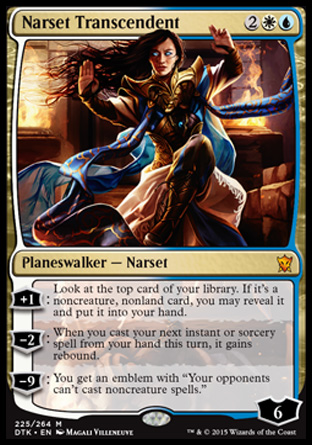
[card]Narset Transcendent[/card] is a new planeswalker from Dragons of Tarkir. An alternate time line of [card]Narset, Enlightened Master[/card] (who will get her own article or two in some time) [card]Narset Transcendent[/card] is a ridiculous card, especially with the ultimate. The +1 is very solid in this deck as we play only 10 creatures (plus our commander) you have about a 51% chance of hitting a non-creature non-land card off of her ability. The -2 isn’t too relevant, but it’s usable on removal like [card]Swords to Plowshares[/card] and [card]Path to Exile[/card] to get rid of a few problematic creatures. The big thing is the ultimate – opponents are unable to cast noncreature spells for the rest of the game. There’s plenty of decks in Commander that don’t play very many creatures, so this can easily completely swing a game in your favor, depending on what you’re playing against.
The rest of the Planeswalkers in the deck are simply there to have their ultimates able to be activated with [card]Doubling Season[/card] on board, mostly.
The deck essentially is a pillow fort deck – just prevent people from doing anything to you. With the planeswalkers, it constantly gives you something to do with all the time pillow-forting provides.
Without further ado, here’s the list I compiled.
[deck title=Angus Mackenzie Superfriends]
[Creatures]
Angus Mackenzie
Azor’s Elocutors
Gilder Bairn
Lighthouse Chronologist
Prophet of Kruphix
Seedborn Muse
Silent Arbiter
Spike Weaver
Teferi, Mage of Zhalfir
Trinket Mage
Viral Drake
[/Creatures]
[Spells]
Ajani, Mentor of Heroes
Ajani Steadfast
Arcane Denial
Azorious Signet
Chord of Calling
Clockspinning
Constant Mists
Contagion Engine
Counterspell
Crab Umbra
Creeping Renaissance
Cultivate
Darksteel Ingot
Darksteel Plate
Doubling Season
Elspeth, Knight-Errant
Elspeth, Sun’s Champion
Enlightened Tutor
Explosive Vegetation
Freyalise, Llanowar’s Fury
Ghostly Prison
Inexorable Tide
Jace, Architect of Thought
Jace Beleren
Jace, the Living Guildpact
Karn Liberated
Kiora, the Crashing Wave
Kirtar’s Wrath
Krosan Grip
Lightning Greaves
Mirari’s Wake
Mystical Tutor
Narset Transcendent
Nature’s Lore
Path to Exile
Propaganda
Ranger’s Path
Rewind
Rings of Brighthearth
Selesnya Signet
Simic Signet
Sol Ring
Skyshroud Claim
Supreme Verdict
Swords to Plowshares
Tamiyo, the Moon Sage
Teferi, Temporal Archmage
Tezzeret the Seejer
The Chain Veil
Ugin, the Spirit Dragon
Wrath of God
[/Spells]
[Land]
Ancient Den
Breeding Pool
Command Tower
Flooded Grove
Flooded Strand
5 Forest
Glacial Fortress
Hallowed Fountain
Hinterland Harbor
4 Island
Kor Haven
Maze of Ith
Minamo, School at Water’s Edge
Mystic Gate
3 Plains
Prahv, Spires of Order
Razorverge Thicket
Reliquary Tower
Seachrome Coast
Seat of the Synod
Sunpetal Grove
Temple Garden
Temple of Enlightenment
Temple of Mystery
Temple of Plenty
Temple of the False God
Tree of Tales
Windswept Heath
Wooded Bastion
[/Land]
[/deck]

The deck also has a few cards to Profilerate.
You choose any number of permanents and/or players with counters on them, then give each another counter of a kind already there.
Viral Drake is the more important of the two due to the fact it can practically be a win condition on it’s own. As Proliferate does work with infect, a single counter from [card]Viral Drake[/card] could lead to death after a few activations of its second ability.
Contagion Engine is also a very good card, especially against decks like [card]Darien, King of Kjeldor[/card] or [card]Krenko, Mob Boss[/card] due to the fact that it puts a -1/-1 counter on each creature target player controls when it comes into play, and then has the ability to proliferate not once, but twice per activation.

[card]Inexorable Tide[/card] is another really cool card – every time you cast a spell, proliferate. Pretty much as strong as the above cards, but it’s very good with [card]Clockspinning[/card] due to the fact you can keep casting it over and over again due to Clockspinning’s Buyback.
All of t hese allow you to add counters to planeswalkers you have, as well as increase the number of level up counters on [card]Lighthouse Chronologist[/card] or the filibuster counters on [card]Azor’s Elocutors[/card]. Aside from that, the deck essentially just spams planeswalker abilities and just pillowforts as much as it needs to until it accomplishes what it needs to.
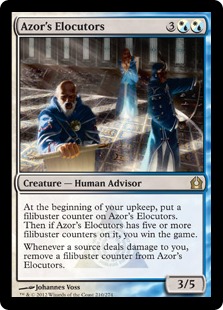
[card]Azor’s Elocutors[/card] is one of the main win conditions of the deck. For 3{W/U)(W/U), you get a 3/5 that doesn’t have any impact on the board state – or does he?
At the beginning of each upkeep, he gets a Filibuster Counter – and if you have 5 or more of them, you win. With cards like [card]Doubling Season[/card], [card]Clockspinning[/card], and [card]Gilder Bairn[/card] you can win over the course of one or two turns.
The downside is that any time you take damage from any source, he loses a filibuster counter. Luckily, our Commander just happens to prevent damage – lucky us, huh?
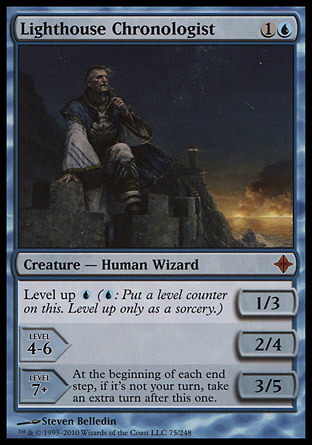
[card]Lighthouse Chronologist[/card] is probably the coolest level up card from Rise of the Eldrazi. He lets you take a turn after every turn that isn’t yours – if you get him up to level 7. Again, with all of our counter doubling, it really isn’t that difficult to get him up to 7.
Superfriends is a really cool concept, and I think that Angus is one of the deck options for it. And of course, this isn’t the only way to build an Angus Mackenzie deck or a Superfriends deck – but it’s what I recommend.
Until next time.
-SolemnParty