Episode Archives

Weekend Magic: 4/10-4/12

This weekend brought us Pro Tour Dragons of Tarkir. After an intense weekend (especially due to all the infractions that were documented) there was a healthy diversity of decks that made the Top 8. Let’s take a look at these decks and see what types of cards from Dragons were seeing play.

Top 8

Decklists

The deck that took down the whole tournament was Martin Dang’s R/g Aggro, where the only card he was splashing green for was four [card]Atarka’s Command[/card] and one [card]Become Immense[/card] as a surprise finisher. If this hasn’t been stated enough already, [card]Atarka’s Command[/card] is the real deal and you should expect to see it plenty of more times over the course of Khans Standard. Not only that, but the card is also pretty insane in Modern – I hear having some additional [card]Boros Cham[/card] utility is never a bad thing and at rare it means that the card will sustain a much higher price over the long term without a reprint.

Also present from Dragons were three [card]Zurgo Bellstriker[/card], four [card]Dragon Fodder[/card], and four [card]Roast[/card] out of the sideboard. Zurgo and Dragon Fodder are not suprising, as they can easily increase the clock against opponents who are playing a slower match that provide nice early turn plays to create tempo for the deck. I expect since Dang’s deck is so easily to pilot that we’ll be seeing it more and more over the coming months, unless a control archetype is established that is able to push it out of the format. I think we’ve seen in the past though that Red Deck Wins has been around for quite some time in Standard, and this time yet again I think we’ll be seeing it over the coming months.

Looking at the runnerup’s deck, Shota Yasooka was on Blue-Black Control which is the exact opposite of what Dang’s deck is trying to accomplish. The deck operates much more slowly and eventually builds itself up to a position where it can take down the opponent after establishing control. Two [card]Dragonlord Silumgar[/card], three [card]Icefall Regent[/card], two [card]Foul-Tongue Invocation[/card], four [card]Silumgar’s Scorn[/card], two [card]Ultimate Price[/card], and one [card]Haven of the Spirit Dragon[/card]  made the main deck while [card]Ultimate Price[/card], [card]Stratus Dancer[/card], [card]Duress[/card], [card]Virulent Plague[/card], and [card]Dragonlord’s Prerogative[/card] made the sideboard. Based on his results, it looks like Dragons has added plenty of good cards to the control player’s arsenal. [card]Silumgar’s Scorn[/card] especially is a spicy card, since as the game goes on it turns in [card]Counterspell[/card] which is extremely powerful for the mana cost. Control definitely has some exciting days ahead and plenty of new toys to play around with from Dragons.

Rounding out the Top 8, other cards from Dragons making waves include:

  • Four [card]Dragonlord Atarka[/card] and two [card]Surrak, the Hunt Caller[/card] from Starsky’s Green Devotion
  • One [card]Dragonlord’s Prerogative[/card] and one [card]Ultimate Price[/card] from Sullivan’s Blue-Black Control
  • Three [card]Surrak, the Hunt Caller[/card], four [card]Thunderbreak Regent[/card], one [card]Roast[/card], two [card]Draconic Roar[/card], and one [card]Haven of the Spirit Dragon[/card] in Chung’s Red-Green Dragons. There was also one more [card]Roast[/card] in the sideboard.
  • Two [card]Ultimate Price[/card] and two [card]Duress[/card] out of the sideboard in Cammilluzzi’s Abzan Control
  • Three [card]Dragonlord Atarka[/card] and two [card]Shaman of the Forgotten Ways[/card] out of Hendriks’ Green Devotion
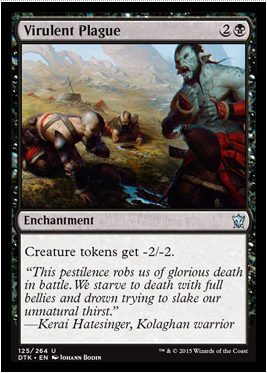
  • Two [card]Dragonlord Ojutai[/card], two [card]Dragonlord Silumgar[/card], two [card]Icefall Regent[/card], one [card]Dragonlord’s Prerogative[/card], three [card]Foul-Tongue Invocation[/card], four [card]Silumgar’s Scorn[/card], two [card]Ultimate Price[/card], and two [card]Haven of the Spirit Dragon[/card] in Ohlschwager’s Blue-Black Control. Also one [card]Foul-Tongue[/card] Invocation and one [card]Virulent Plague[/card] out of the sideboard.

As you can see, Dragons affected some decks more than others. We’ll have to wait and see how Standard will be shaken up over the next few weeks based on the results. Until then, we’ll just have to take a look at the numbers from 24-27 points or better to see if there are any other Dragons of Tarkir cards that did well yet didn’t make the Top 8 of the tournament.

24-27 Points or Better

Some trending cards from the rest of the top finishers include:

  • Even though the card didn’t make the Top 8, [card]Dromoka’s Command[/card] was one of the most played cards in the tournament from Dragons. There were multiple decks playing three to four copies since it is very versatile in the current Standard. I expect we’ll continue to see plenty of Dromoka’s Commands being cast over the coming months, along with of course [card]Atarka’s Command[/card].
  • Let’s also not forget about [card]Deathmist Raptor[/card]. This efficient, death-touching lizard beast is certainly going to be used to nicely fill out curves over the coming months. Not only does it provide a decent threat that is also a rattlesnake, it also has recursion in the late game! You can’t ask much more from your three drops which is why plenty of pros opted to play Clever Girl.
  • [card]Den Protector[/card] is a surprising notable, and while not every green mage was packing them this weekend they still showed up across a few different decks that did well. It has just enough going for it that it can be a decent threat that like Raptor allows you to recur things later in the game. Keep an eye out for Protectors, as not every morph is going to be Raptor from this point on!
  • [card]Secure the Wastes[/card] – Only viable in token strategies, but it can really do work when your opponent isn’t expecting it! Having a surprise four tokens at the end of a turn that are ready to attack with a [card]Jeskai Ascendency[/card] in play are not joke.
  • [card]Sidisi, Undead Vizier[/card] – Yes, due to her utility and [card]Demonic Tutor[/card] powers the pros also felt that Sidisi had much to offer. The only downside is that sometimes you don’t exploit because you need the body, and other times you’re paying five mana for Demonic Tutor which is pretty terrible. When it works though, it works well.
  • [card]Encase in Ice[/card], [card]Self-Inflicted Wound[/card], [card]Display of Dominance[/card], [card]Rending Volley[/card] – Great sideboard cards are great, so expect to see some hate for your color’s enemies as we continue through Standard due to the new color hosers getting printed in Dragons.
  • Minor appearances were also made by [card]Ojutai Exemplars[/card], [card]Dragonlord Dromoka[/card], [card]Kolaghan’s Command[/card], [card]Dragon Whisperer[/card], and [card]Collected Company[/card] but not enough copies were seen to note any trends amongst all the 24-27 decks. These cards appeared more as tech rather than real threats that were the core of the player’s deck.

There we are, with another Pro Tour come and gone. Though many players have despaired Dragons as being a “weak” set, I think this Pro Tour has proven that there is power in several of the cards that have been printed. In the grand scheme of things, I think we’ll need to wait and see if anything else emerges but this is what we have for now in Standard. Until next week!

Pitt Imps Podcast #114 We Be Draft’in

This weeks show starts with Angelo talking about some very personal things that has been going on. You know all the things he normally says he doesn’t want to talk about. Then after a the guys take a break they come back to go over SCG Cuse. They go over the slight rules changes to Platinum Pro’s and PPTQ’s. Then they draft for the PT.

Host Angelo     Twitter  @ganksuou

Co-Host Mike    Twitter  @Huntmaster_Mike

Co-Host Will    Facebook

Email  [email protected]

Pitt Imps is brought to you by Brainstorm Brewery and Taitan Game Shop

Winning TCGplayer Modern States

Believe it or not, I haven’t written a tournament report in a long time and I don’t think I have ever written a report on a deck that wasn’t Zoo. But that’s what I’m going to do today.

Here goes nothing!

The Deck

[deck title=Infect]
[creatures]
4 Noble Hierarch
4 Glistener Elf
4 Blighted Agent
2 Spellskite
1 Ichorclaw Myr
[/creatures]
[spells]
4 Gitaxian Probe
4 Mutagenic Growth
4 Might of Old Krosa
4 Vines of Vastwood
4 Become Immense
2 apostle’s blessing
2 Distortion Strike
2 Wild Defiance
[/spells]
[lands]
4 Misty Rainforest
4 Verdant Catacombs
1 Windswept Heath
2 Breeding Pool
2 Forest
2 PendelHaven
4 Inkmoth Nexus
[/lands]
[sideboard]
4 Nature’s Claim
2 Dispel
2 Spell Pierce
2 Twisted Image
2 Spellskite
1 Wild Defiance
1 Dryad Arbor
1 Distortion Strike
[/sideboard]
[/deck]

I love how the maindeck feels with this configuration. However, I want to make some sideboard changes. I love having the third [card]Distortion Strike[/card] in my sideboard but since the deck is such a dog to [card]Chalice of the Void[/card], I want to cut it and possibly one of my [card]Nature’s Claim[/card]s for [card]Viridian Corrupter[/card].

The Tournament

The tournament was held at Top Deck Games in New Jersey, which is one of my favorite stores to play at in the area. Since Pennsylvania states were six hours away in Pittsburgh it was logical to go battle in New Jersey. For those who don’t know me, I will mercilessly talk shit on New Jersey, as any self-respecting Philadelphian does. Suffice to say I will never live this down.

The first few rounds were mostly easy wins. I played against the [card]Goryo’s Vengeance[/card] deck and killed it before they could go off in two quick games. Following that I beat up on [card]Splinter Twin[/card] a bunch before picking up losses to Grixis Delver and their [card]Izzet Staticaster[/card]s, as well as Green-Black Infect, which just obliterated me.

inkmothnexus


Going into the final round of Swiss, my opponent assumed we were dead for top 8 and conceded to me. He didn’t realize while we were 9th and 10th in the standings that 7th and 8th were also battling it out against each other. Based on tiebreakers, the winner of our match would be the 8th seed. I guess this was my lucky day.

Quarterfinals: Infect Vs Affinity

I played against the first seed, who was a person I know pretty well, as we play at the same local store. We both knew what the other was playing, and that Infect versus Affinity is always a race. I won game one on an easy kill before dying to [card]Chalice of the Void[/card] in game two.

Game three, I took my first turn: just a land, nothing special. My opponent responds on his turn by putting six permanents into play. Instead of deploying a threat, I held up [card]Spell Pierce[/card] and I got rewarded when I got a target on turn two.. After that a couple of pump spells sealed the deal and I was through. Pretty lucky day I’d say.

Semifinals: Infect Vs RWg Burn

I lost game one, which is just an awful game for Infect anyway. I Probed on turn one and say a hand that told me I was dead on turn four. My opponent had revealed [card]Skullcrack[/card] to me off my Probe and decided to mock me after I called a judge for an oracle text because I wanted to make sure it had the damage prevention clause so I didn’t burn an [card]Apostle’s Blessing[/card] trying to block. He of course thought I was an idiot and assumed I wanted to redirect it to my [card]Spellskite[/card].

I won game two and he punted game three when I was dead on board, because instead of reading [card]Wild Defiance[/card] he just assumed it would trigger off of [card]Grim Lavamancer[/card].

I guess it was a little bit of karmic justice helping me get the win. People, please treat your opponents with respect.

Finals: Infect Vs Affinity

My opponent for this round was an incredibly good Affinity pilot named Vipin Chackonal, the runner up of Grand Prix Richmond. Luckily, my deck decided I would have an unblockable, nearly unstoppable, turn-three kill in game one, so that was nice.

In game two, I mulliganed down to three cards and didn’t see a land, but at least I didn’t reveal any information and I would get to be on the play.

In our final game, I played a fetch land on turn one and simply passed. Vipin played a [card]Glimmervoid[/card] followed by a [card]Mox Opal[/card], in response to which I made the heads-up play of Spell Piercing. After that, he Thoughtseized me and then placed his Glimmervoid in the graveyard. My [card]Blighted Agent[/card]s were able to finish off the game.

I had won the tournament.

furnacecelebration

Going Forward

This deck is insane to play and I’m having loads of fun with this change of pace. I was considering brewing up a CounterCat-esque Zoo list for Star City Games States next week, but after this tournament, I’m going to just make some sideboard changes and run this one back.

I hope you enjoyed this and hopefully I’ll have another one for you after next week!

Kitchen-Table Magic: Ta Ta Tuck

I’ve been playing Commander with my kitchen-table group of friends since the original Commander decks were produced by Wizards of the Coast. I remember sitting in the food court area at GenCon back in 2011 with newly opened Commander decks. We had no idea what we were getting into, but we have had great fun with the format.

In case you have been hiding under a rock for the past couple weeks, you should know that the Commander rules committee adjusted the rules of the format so that when your commander is changing zones to your hand or your library, you can now choose to send it instead to the command zone. In the past, the hand and library were the only two places a commander could be sent without the “send to the command zone” replacement effect.

My play group never really understood the tucking rule. It didn’t seem to fit the format. Why would a format that bends over backwards to keep its commander within reach have this complex way to hide another player’s commander in their deck?

Elder Dragon HIGHLANDER

In Elder Dragon Highlander, “There can be only one.” The “Gathering” in Magic: The Gathering may have gotten its original name partly from the “game” played by immortals in Highlander, powerful beings searching for and defeating one another in combat.

ugin the spirit dragon

The Commander format takes that idea one step further and identifies a legendary creature as the commander to serve in the immortal planeswalker’s place. That creature should assume an immortal role in games of Commander by being available to cast from the command zone no matter how many times the creature is killed or removed from play. Under the rules of Highlander, an immortal keeps coming back until you chop off its head. In Magic, that means taking your opponent’s life total to zero.

Tucking the commander never felt right. It felt like getting your head cut off, but without the instant-death effect. Instead, death came slowly over the next 14 turns as your commander deck bled all over the floor.

Unnecessary Complication

Tucking was always just a little too complicated to explain to new Commander players. It should be simple to explain. If your commander is removed from play in any manner, you can have it go to the command zone instead.

Tucking complicates the dance between the command zone and all other zones. Instead of being simple, explaining where the commander goes based on which effect is resolving was always face-melting.

“If your commander dies, you can put it back in the command zone instead of the graveyard. If it gets exiled, same thing. Now, if it gets sent to the bottom of your library, you are out of luck.” Huh? I’ve been asked why tucking was the rule, and I have never really been able to explain it. Flavor-wise, it does not make sense. Rule simplification-wise, it still does not make sense.

Where Did My Deck Go?

When I build Commander decks, I use my commander card as the focal point. It is a Johnny’s wet dream! You know you will have access to the commander card all game long, so you can fantasize about all those crazy interactions between your commander and the rest of your deck.

When the commander card is tucked, all your dreams turn into poopy diapers. When a commander is tucked, a lot of the fun of a deck is tucked with it. I am glad the rules committee said “no more.”

dragonscards5

Tuck Haters

It should be noted that there are some long-time Magic players out there who will get into Commander precisely because tucking is no longer involved.

Do you have friends who play Magic, but hate Commander, like Marcel of Brainstorm Brewery fame? Maybe the death of tucking will tempt some experienced Magic players who had a bad tuck experience or just thought that tucking was too counterintuitive among the other rules of the format. I believe that removing the tuck rule and making the interaction between commanders and zones simple will keep more players engaged with the format. More players keeps the format healthier.

Tutors Still Fun

Will we play fewer tutors? I doubt it. In a 100-card singleton format, tutors buy a little more consistency. Plus, there is always that one combo that ends the game.

If you aren’t playing at least one game-ending combo in your Commander decks, you should consider adding them. Sometimes, we just need to put the game out of its misery. Tutors get that job done nicely. I don’t agree with the rules committee that changing the tuck rule will decrease the number of tutors people are playing. Tutors are still very good (and fun!) in a format with 99-card libraries.

I have listened to the belly-aching from many a podcast host and column writer over the rule change. I think it is a positive one that simplifies the rules and stays true to the spirit of the original Elder Dragon Highlander. I am guessing the tuck rule was in place because of troublesome commanders with few outs. Instead of creating a rule that complicates the game, ban those commanders. I think the committee was correct in this rule change. Could we see some new commander bannings in the future resulting from this change? I think it is highly likely.

Brago Returns

My brother has a [card]Brago, King Eternal[/card] deck. He loves Brago. Everyone else hates it. When Brago comes out, it gets tucked. Every time. When we see Brago sitting in the command zone, we save our tuck effects for it.

The result is that my brother never gets to play his Brago deck. There are other ways to deal with the Brago deck without tucking Brago, but tucking the commander is the easiest way to deal with it, so that is how we do it.

Now that the rules have changed, we will have to start investigating the other ways to deal with the Brago deck without tucking. My brother gets to play his Brago deck, and we get a new challenge, figuring out a new way to make him suffer. That seems like a win for everyone.

Weekend Magic: 4/3-4/5

Last weekend brought us Star City Games: Syracuse. This Open featured Standard as the main event with a side of Modern and Legacy. Let’s see what the results were and note any trending cards amongst the lists.

Star City Games Open – Standard (Syracuse, USA)

Decklists

Deck Finish Player Deck Finish Player
G/R Aggro 1st Chris VanMeter Jund Midrange 9th Gerard Fabiano
Abzan Aggro 2nd Jesse Grogan R/G Aggro 10th Aaron Garitillo
Temur Aggro 3rd Andrew Nacci Jeskai Tokens 11th Todd Anderson
Mono-Red Aggro 4th Michael Egolf Abzan Aggro 12th John Davison
R/g Aggro 5th Ryan Sandrin R/g Aggro 13th Chris Thomas
G/R Aggro 6th Stephen Rice G/R Aggro 14th Xavier Biron
Bant Heroic 7th Tom Ross G/R Aggro 15th Brandon Pascal
G/R Aggro 8th Van Nguyen Abzan Aggro 16th Max Mitchell

Chris VanMeter took down the event piloting G/R Aggro, which also put three other people into the Top 8 and another four into the Top 16 (basically half the top 16 was G/R, though there were differing archetypes among these decks which I’ll get to later). This has been an established Standard archetype ever since [card]Xenagos, the Reveler[/card] was introduced to Standard with Theros block but it definitely looks like Dragons of Tarkir has given this deck some tools to make it really strong. Chris is playing three Xenagos along with some new additions from Dragons of Tarkir. The deck featured a playset of [card]Thunderbreak Regent[/card], two [card]Dragonlord Atarka[/card], a playset of [card]Draconic Roar[/card], and two [card]Roast[/card]. Last week, we saw that Roast is one of the most played uncommons in Standard at the moment, because five damage for two mana is extremely efficient.  The deck also played three copies of [card]Haven of the Spirit Dragon[/card], which I’m sure was nice to recur killed Atarka’s for value. Even getting back [card]Thunderbreak Regent[/card] and [card]Strombreath Dragon[/card] is pretty nice too, especially if you can play them on curve the turn that you sacrifice the land to return them to your hand. In the sideboard, there is another [card]Roast[/card] along with [card]Seismic Rupture[/card] from Dragons.

G/R Aggro Decks in general were playing the following cards from Dragons:

  • Midrange Version
    • [card]Thunderbreak Regent[/card] (playset)
    • [card]Surrak, the Hunt Caller[/card] (two to three copies)
    • [card]Draconic Roar[/card] (two to four copies)
    • [card]Haven of the Spirit Dragon[/card] (one to three copies)
    • [card]Deathmist Raptor[/card] showed up in two lists as well
  • True Aggro Version
    • [card]Lightning Berserker[/card] (two to four copies)
    • [card]Zurgo Bellstriker[/card] (three to four copies)
    • [card]Atarka’s Command[/card] (three to four copies)

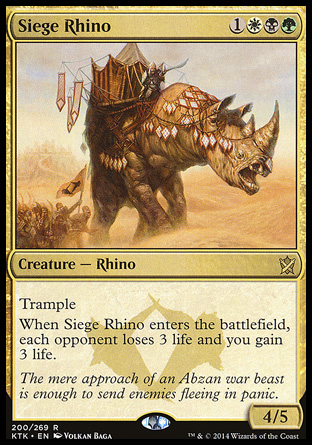
The second place deck, Abzan Aggro, featured a playset of [card]Dromoka’s Command[/card] across the main deck and sideboard. Other notable cards included were a playset of [card]Siege Rhino[/card], [card]Rakshasa Deathdealer[/card], and three [card]Anafenza, the Foremost[/card].

Notables from the rest of the Top 8:

  • Three [card]Frostwalker[/card], four [card]Savage Knuckleblade[/card], three [card]Thunderbreak Regent[/card], and two [card]Surrak, the Hunt Caller[/card] in Temur Aggro
  • Four [card]Lightning Berserker[/card] and three [card]Zurgo Bellstriker[/card] in Mono-Red Aggro
  • Four [card]Dromoka’s Command[/card] in Bant Heroic

Notables from the rest of the Top 16:

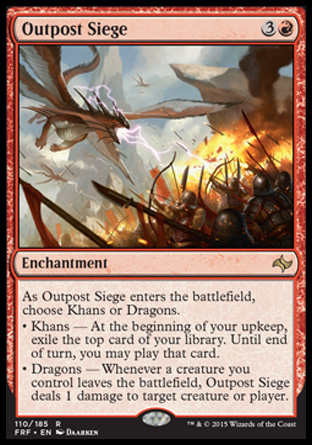
  • One [card]Dragonlord Atarka[/card] and two [card]Sidisi, Undead Vizier[/card] from Jund Midrange. This deck is pretty interesting as we’ve never seen a deck before that’s tried to combine [card]Outpost Siege[/card] into a G/B deck build but as we’ve seen over the past several months we should just learn to expect as much from Fabiano!
  • One [card]Dragonlord Ojutai[/card], three [card]Anticipate[/card], and two [card]Secure the Wastes[/card] in Jeskai Tokens
  • Three [card]Dromoka’s Command[/card] in Davison’s Abzan Aggro, along with three [card]Ultimate Price[/card] out of the sideboard
  • Two [card]Surrak, the Hunt Caller[/card] and two [card]Dromoka’s Command[/card] in Mitchell’s Abzan Aggro

Though it would appear that G/R or R/g strategies dominated this Standard Open, there was still plenty of innovation going on even in established lists like U/W/x Heroic.

Star City Games Premier IQ – Modern (Syracuse, USA)

Decklists

Deck Finish Player Deck Finish Player
Affinity 1st James Harrod Hatebears 9th David Gree
G/W Hate Bears 2nd Kyle Dauch Abzan Midrange 10th John Boccardo`
Jund Midrange 3rd Andrew Boswell Abzan Collected Company 11th Max Brown
Abzan 4th Jacob Lee Abzan Midrange 12th Kevin Florio
U/R Twin 5th Nick Kent G/R Tron 13th Taylor Stovenson
Affinity 6th Andrew Skorik UR Delver 14th Edgar Bustos
Jund Midrange 7th Rudy Briskza Grixis Twin 15th Dan Jessup
Abzan Midrange 8th MIchael Derzco Affinity 16th Randy Belcher

Affinity took down the Modern portion of the event, with another copy of Affinity, two Abzan, and two Jund decks also placing in the Top 8. The second place deck was G/W Hatebears, which is a deck that can do well at Modern events if they are packing the right type of hate. Key cards from Dauch’s deck included four [card]Aven Mindcensor[/card], four [card]Leonin Arbiter[/card], four [card]Noble Hierarch[/card], three [card]Scavenging Ooze[/card], and three [card]Thalia, Guardian of Thraben[/card]. The deck was strangely packing many 1-of’s without any way to tutor for them, which is interesting but allows easier sideboard decisions I guess. [card]Horizon Canopy[/card] also helps filter through the deck, so maybe that was the reason he didn’t want to play more than one [card]Gaddock Teeg[/card] or [card]Linvala, Keeper of Silence[/card]. Either way, the deck did well and will continue to put up results in Legacy as Wizards continue to print more “hate” creatures in green and white.

Who says [card]Dark Confidant[/card] is irrelevant in Modern? Boswell’s Jund Midrange was packing a full playset of Bob and he seemed to do pretty well at this event coming in third. Though it should be noted that the other Top 8 Jund Midrange did not play any copies of Bob and also reached about the same level of success. We even have our first Dragons of Tarkir card featured in this deck, one [card]Kolaghan’s Command[/card] out of the sideboard. Speaking of which, looking at Briskza’s list he was playing two copies of [card]Kolaghan’s Command[/card], one in the main deck and one in the sideboard. Another card featured in the decks was [card]Huntmaster of the Fells[/card], with one version opting to play two copies main deck and the other version playing two copies in the sideboard.

Rounding out the rest of the Top 16, another copy of Hatebears appears along with a new deck called Abzan Collected Company. Featuring four Dragons of Tarkir [card]Collected Company[/card], the deck also utilizes [card]Congregation at Dawn[/card] in order to setup some pretty C.C situations where you’re going to get a ton of value. Is this the new direction that the old [card]Birthing Pod[/card] deck are going to go? I’m not sure if its good enough to play at larger events but the build is so unique that I would love to see it continue to see more results. It even plays [card]Anafenza, Kin-Tree Spirit[/card] for value with [card]Melira, Sylvok Outcast[/card]!

Star City Games Premier IQ – Modern (Legacy, USA)

Decklists

Deck Finish Player Deck Finish Player
Jeskai Stoneblade 1st David Melendez Death and Taxes 9th Adam Quinlon
Deadguy Ale 2nd Wilkin Chau Deadguy Ale 10th Aaron Webster
Miracles 3rd Drew Brantner Elves 11th Erik Burger
Grixis Control 4th Jason Smith Storm 12th Bryant Cook
Miracles 5th Ronald Mackenzie Dark Maverick 13th Jesse Adams
Shardless Sultai 6th Ted McCulskie Burn 14th Nicholas Herbs
Mono-Red Burn 7th Jacob Shannon Jund 15th Douglas Wilson
Sultai Delver 8th Elliot Wolchesky Sultai Delver 16th Paulo Cesari

Deadguy Ale is the story of this Legacy event, which put two people into the Top 16. A deck that hasn’t put up any results in quite some time, Deadguy Ale is pretty much your classic B/W discard heavy deck that plays efficient threats while tearing the opponent’s hand apart. More recently, the deck has been called Pikula since Chris Pikula brought it back as an Abzan-based deck, however the original name hearkens back to the days when it was only black and white.

[card]Hymn to Tourach[/card] is usually seen, but not always. In this case, Chau’s opted to play Hymn while Webster chose to splash green for [card]Tarmogoyf[/card] and [card]Abrupt Decay[/card]. Chau’s deck stuck to a main deck of black/white only spells with a splash of green for sideboard answers like [card]Engineered Explosives[/card] and [card]Gaddock Teeg[/card]. [card]Chrome Mox[/card] is an interesting addition to the deck, which allows it to play [card]Lingering Souls[/card], [card]Vindicate[/card], or [card]Liliana of the Veil[/card] a turn earlier than expected. You could even have a turn one [card]Dark Confidant[/card] or [card]Stoneforge Mystic[/card]! Certainly an interesting deck to say the least.

Dark Maverick is also a more unique deck. Notables included four [card]Knight of the Reliquary[/card], four [card]Thalia, Guardian of Thraben[/card], and four [card]Green Sun’s Zenith[/card]. Dark refers to playing black for [card]Abrupt Decay[/card] and some choice sideboard cards. [card]Sigarda, Host of Herons[/card] also showed up in this build as a nice GSZ target against [card]Liliana of the Veil[/card].

Rounding out the rest of the Top 16 is pretty much your average Legacy metagame these days. Nothing really innovative or exciting in the rest of the lists.

That’s all for this week! Keep checking back for more weekend Magic results.

Commanding Opinion: Toshiro Umezawa

Sorry for having not written anything in quite a while. I’ve been very, very busy with work and family life, so I’m going to be making some edits to guest posts I received a while back and reposting them on here so people can still enjoy them.


This was originally a guest post from when I wrote on WinTargetGame.net. We were taking posts from people on Reddit and reposting them to our site with their permission. Since they wrote these articles specifically for us, I want them to still be out there on a public forum to be discussed and viewed. Anything in these is not necessarily my opinion, but the opinion of the people that submitted these posts to me.

On with the post!


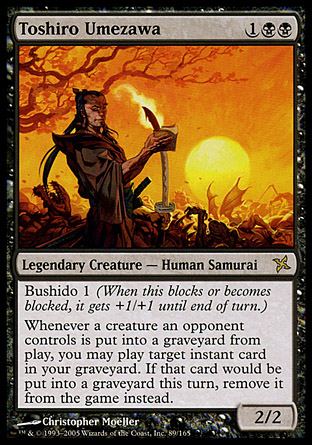
Does anyone else out there remember when every Magic set got a novel? I used to love that, I collected those little paperback bastards and would always have a dogeared copy of one of them in my backpack next to my books for English class. While Kamigawa block had some gameplay issues, its novels were stellar. I recently reread them and in doing so reacquainted myself with [card]Toshiro Umezawa[/card].

Last time I read through the Kamigawa trilogy, EDH was not a thing, now I had the ability to bring my favourite character from the books to life on the tabletop. This is how my Mono-Black KILL ALL THE THINGS deck was born.

toshiro umezawa

Having played him for a while now, I have discovered that Toshiro is a very cool card and he possesses exceptional potential—but he comes with some serious pros and cons.

Pros

He Is Cheap – A mono-color Commander with CMC 3 is exceptionally easy to cast and re-cast. You can reliably count on Toshiro to be present for the majority of the time you’re playing the deck.
He Is Unassuming – Commander players take the phrase “fear the unknown” and turn it on its head. When you sit down for a game of Commander, the table is far more likely to attack the deck that has slaughtered them before than the deck they have never seen. There is almost no one out there that has seen a Toshiro Commander deck which is a massive advantage for you.
His Ability Is Powerful – Once you have figured out how to make Toshiro tick, he is an absolutely devastating Commander.

Cons

He Is Tricky To Master – Figuring out what makes Toshiro tick will take some time. I have been playing him consistently for months, with solid success, and there are still micro-interactions in my deck that I don’t notice until it is too late.
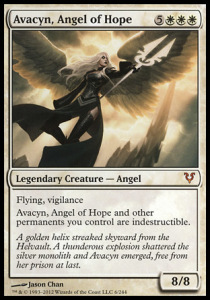
Indestructible and Hexproof Ruin Your Day – You will have to play some niche answers to these keywords because an Avacyn or an Uril will shred your face if you’re just relying on Black “good stuff” to carry the day.

Toshiro is an odd duck because he is both linear and flexible.

In order for it to make sense to play him as your Commander, you have to have lots of instants and you have to make sure that there are a lot of things dying on your opponents’ side of the board. A Commander with so many caveats to success definitely falls into the “linear” camp.

Toshi’s flexibility comes from his color identity. Mono-black loves playing instants that also happen to kill things. There is a surprisingly deep card pool of viable options to choose from with Toshi and there are many viable lists that can be drawn from such a “linear” Commander.

The wide variety of options aside, here are some things most Toshi lists should play:

A Quick Disclaimer

Before you die-hard Elder Dragoners out there tear apart some of my suggestions, I need you to breathe deeply and remember the lesson that [card]Necropotence[/card] taught us all those years ago: It doesn’t matter what your life total is if you’ve already won the game.

black marketcrypt ghastnirkana revenant

[card]Black Market[/card], [card]Crypt Ghast[/card], and [card]Nirkana Revenant[/card] are all-stars in most lack decks. Toshi can get a little mana-hungry, especially if your graveyard is very full and lots of things are dying, and having any combination of these three on the battlefield ensures that you will never be at a loss for options. Toshi decks tend towards being controlling, and the extort from the [card]Crypt Ghast[/card] can get some surprising mileage in longer games.

cabal ritualdark ritualspoils of evil

[card]Cabal Ritual[/card], [card]Dark Ritual[/card], and [card]Spoils of Evil[/card] also address the issue of mana, but do so in a very different way. Playing Toshiro is all about learning how to chain the spells from your hand and the spells in your graveyard together in order to properly manipulate the state of the board. While “ritual” effects are not always very good in Commander, they are excellent in a deck that can use them to establish a presence early in the game and then be guaranteed to use them later to maintain advantage.

entombvampiric tutor

[card]Entomb[/card] and [card]Vampiric Tutor[/card] are both instants and tutors, which is important to Toshiro. Toshiro is a deck that is very much about setting up your dominoes and then knocking them down just right. The ability to tutor twice with one card is instrumental in executing a victory with Toshi.

silence the believers

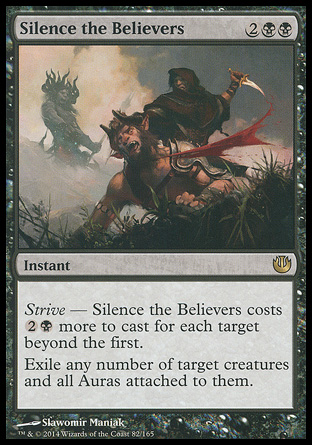
[card]Silence the Believers[/card] is currently the best black answer to indestructible creatures. It sucks that Toshi won’t see them die, but sometimes [card]Avacyn[/card] has just gotta go.

vendetta

[card]Vendetta[/card] is generally considered bad in Commander. In a format where mana is rarely a problem and creatures tend to be BIG, a removal spell that trades its casting cost for a penalty directly influenced by the size of its target seems bad. Trust me on this one though—after many games with Toshi, having a one-mana removal spell is amazing.

liliana of the veil

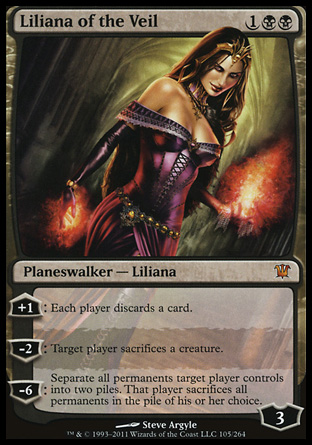
Speaking of generally considered bad in Commander, [card]Liliana of the Veil[/card] is right at home here. Her +1 has synergy with Toshiro’s graveyard manipulation, and her repeatable edict that costs no mana is insane in this deck. When anything dying lets you cast a potentially powerful spell from your graveyard, your opponent sacrificing a token to her ability seems a little less heartbreaking.

vithering boonimps mischief

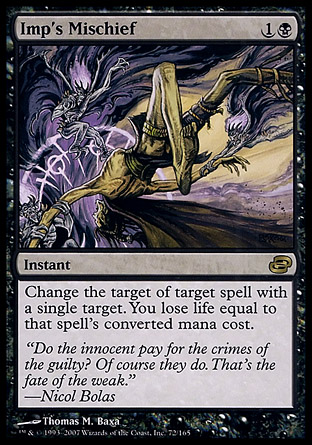
[card]Withering Boon[/card] and [card]Imp’s Mischief[/card] don’t seem very good. Both of them are worse versions of cards in other colours, but this doesn’t mean you can write them off. Both of these cards allow Toshi, and Mono-Black in general, to catch opponents off-guard. It’s amazing to witness how powerful people’s assumptions are, even if you have these lying in your graveyard, plain to see, people will still be surprised when the Black deck counters their [card]Sigarda[/card] after casting [card]Doom Blade[/card] on their Wurm token.

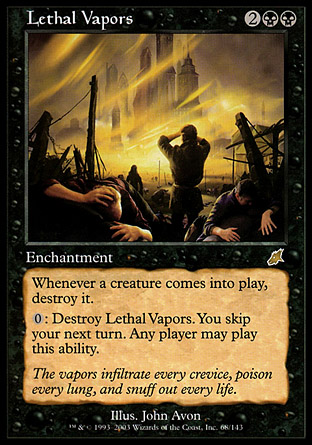
lethal vapors

At its very worst, [card]Lethal Vapors[/card] reads “target player loses a turn”; at its best, no one is quite sure how to react to this card and you get to harvest substantial advantage from it. If you have cast a lot of utility instants in the first few turns, this card will let you maximize their impact and set you up for the mid-game. If the momentum of others players has been out of your ability to control, this card will let you curtail that momentum for a bit so that you can stabilize.

null profusion

I have saved the very best for last: [card]Null Profusion[/card]. If there is one thing that this deck is going to be doing a lot of, it is casting spells. Null Profusion is the perfect card advantage engine for this deck, because while you’re going to be getting more than one use out of most of your spells, you’re still going to be burning through them. Null Profusion ensures you never run out of fuel for your Mono-Black Murder Fire.

The cards listed above are things that I would recommend for anyone thinking of building a deck around Toshiro Umezawa. To fill in the rest of the deck, I would suggest the following categories of cards:

  • Creatures that kill things when they enter the battlefield (eg. [card]Shriekmaw[/card])
  • Things that let you pilfer from opponents’ graveyards (eg. [card]Fated Return[/card])
  • Things that let you profit when lots of creatures are dying (eg. [card]Blood Artist[/card])
  • Answers to Hexproof and Indestructible

Lastly, you should settle on a consistent way to win the game. My Toshiro deck is what I would call Attrition-Combo: I chip away at the life total in the early game using opportunistic attacks and creatures taken from the graveyards of my enemies, I then close out the game with repeated castings of [card]Tendrils of Agony[/card] thanks to [card]Yawgmoth’s Will[/card] or a powerful creature buffed with [card]Hatred and [card]Tainted Strike[/card].

I have seen Toshi builds that hew much closer to traditional Mono-Black control and I have seen hyper-aggressive Toshi strategies that try and clear a path to the red zone as quickly as possible. There are a lot of ways to play Mr. Umezawa and the best approach is to play and tweak until you find something that works for you.

[deck title=Toshiro Umezawa]

[Creatures]
Chainer, Dementia Master
Crypt Ghast
Gray Merchant of Asphodel
Kokusho, the Evening Star
Kuro, Pitlord
Magus of the Coffers
Massacre Wurm
Nirkana Revenant
Sheoldred, Whispering One
Solemn Simulacrum
Toshiro Umezawa
[/Creatures]

[Spells]
Attrition
Black Market
Black Sun’s Zenith
Cabal Ritual
Caged Sun
Culling the Weak
Damnation
Dark Ritual
Darksteel Plate
Demonic Tutor
Devour in Shadow
Diabolic Edict
Doom Blade
Dictate of Erebos
Entomb
Exsanguinate
Exquisite Blood
Glaring Spotlight
Go for the Throat
Grave Pact
Hatred
Imp’s Mischief
Jet Medallion
Karn Liberated
Lethal Vapors
Life’s Finale
Lightning Greaves
Liliana of the Dark Realms
Liliana of the Veil
Mutilate
Necropotence
Null Profusion
Ob Nixlis of the Black Oath
Painful Quandary
Phyrexian Arena
Reanimate
Sanguine Bond
Silence the Believers
Slaugher
Snuff Out
Sol Ring
Spine of Ish Sah
Spoils of Evil
Tainted Strike
Temporal Extortion
Tendrils of Corruption
Tragic Slip
Ugin, the Spirit Dragon
Vampiric Tutor
Vendetta
Victim of Night
Withering Boon
[/Spells]

[Land]
Arcane Lighthouse
Bojuka Bog
Cabal Coffers
Myriad Landscape
Nykthos, Shrine to Nyx
Phyrexian Tower
Phyrexia’s Core
Reliquary Tower
27 Swamp
Urborg, Tomb of Yawgmoth
Volrath’s Stronghold
[/Land]
[/deck]

Good Luck and Happy Building!

PS: Toshiro makes a cool addition to the 99 if you’re playing a graveyard-centric Black deck. Since I started using him as a commander, he has popped up in my playgroup outside of the command zone. Jarad Dredge, Marchesa Board Wipes.dec, and Skeleton Ship Control have all made use of Toshi. If you’re planning on having a full graveyard, you are going get your money’s worth out of a three-mana permanent that does a good impression of [card]Yawgmoth’s Will[/card].

-/u/JackSonor

MTG After Hours #11 – Final Straw

Brainstorm Brewery After Hours is a collection of outtakes and stories that aren’t fit for publication on respectable websites. While Brainstorm Brewery is a podcast that strives for a PG-13 rating, After Hours has no such aspirations.
This week on After Hours, Corbin is “forced” to tell a story about a trip to Buffalo Wild Wings that went badly. Corbin wasn’t comfortable with the world knowing that his wife consumed alcoholic beverages and had him pick her up and give her a ride. If anything, making the responsible choice and calling for a Designated Driver is a great example. What’s not a great example is showing up at Buffalo Wild Wings A) right before closing and B) ever. Enjoy After Hours episode number 11 and look forward to getting these a lot more frequently. You’re welcome.

Cabe Riseau produced the intro and outro music for Brainstorm Brewery.

Contact Us!

Brainstorm BreweryWebsiteE-mailTwitterFacebookRSSiTunesStitcher

Ryan BushardE-mailTwitterFacebook

Corbin HoslerE-mailTwitterFacebookQuietSpeculation

Jason E AltE-mailTwitterFacebookQuietSpeculation

Marcel WhiteE-mailTwitter


Pitt Imps Podcast #113 Bear with Imp Wings

This week, we welcome Jon Celso onto the cast as our fourth host. While the departure from Tap’N”Sac has left him a bit upset, we are more than willing to give him a mic seat. We go over the SCG Invitational and Open. We take a few to cover the Gauntlet of Greatness, which figured out what the best Standard deck of all time is. Hint: do you like degenerately drawing cards? Yeah, it’s that.

(Important note for the gullible: this show was part of an April’s Fools Joke. Jon Celso is not a permanent host.)

Host Angelo   Twitter @ganksuou

Co-Host Jon   Twitter @BalduvianBears 

Co-Host  Mike  Twitter   @Huntmaster_Mike

Co-Host  Will   Facebook

Gauntlet of Greatness

Email  [email protected]

Pitt Imps is brought to you by our sponsors Brainstorm Brewery and Taitan Game Shop

Why Infect?

Why Infect?

Well to start off, I think Infect is currently one of the best decks in Modern and is in my opinion the best aggressive deck in the format at the moment. Bogles, Zoo, and Affinity can all struggle against [card]Lingering Souls[/card]. While each deck has the necessary tools to defeat those pesky spirit tokens, they are just not the cards you want to see or even sideboard in most matchups. Bogles, of course, does have [card]Spirit Mantle[/card], but they also get blown out by [card]Liliana of the Veil[/card] a majority of the time.  With all other aggressive options either out of favor or unappealing (Bogles), I decided to do a thing I haven’t done since I first started playing Magic: play pump spells on mediocre creatures.

Infect’s Place in the Metagame

In the current Modern metagame, Infect seems poised to do well. According to MTGTop8, Junk, Burn, and Twin make up 17, 14, and 16 percent of the metagame respectively. The great thing here is that the worst early play out of 47 percent of the meta is [card]Eidolon of the Great Revel[/card] cast at an early point in the game. I love these odds. Another fun matchup that is a byproduct of Junk being a large player in the metagame is that it is only a matter of time until Tron comes crawling out of the woodwork—and that matchup is incredibly good for Infect.

On the play, Infect can be the fastest deck in the format and a lot of slow draws end up with wins between turns four and six while the average aggressive draw can win on turn three or four pretty consistently.

The decks with the strongest matchup against it would be decks like my own Big Zoo list or Jund, but since those decks are both outclassed by Dr. Siegeman Rhinocerous, you’re not likely to face either of those decks.

The Cons of the Deck

I’ve talked about some of the great reasons to play the deck, but there are some critically bad components of the deck that must be taken under consideration before picking it up for a tournament.

This deck mulligans poorly. When you are playing 19 lands and 12 creatures that can kill your opponent, it can be very hard to find a strong opening hand. The blue mana in the deck is only a splash and you can easily win games without ever seeing it, so I consider these the key components to a strong opening hand:

  1. An infect creature.
  2. Two mana sources with at least one being green.
  3. A form of protection.

The most important pieces are the first two, while the third is very helpful as half of your maindeck protection doubles as pump spells and one quarter of it serves as evasion. I don’t include [card]Wild Defiance[/card] in the protection I look for unless I am playing versus [card]Splinter Twin[/card] or other [card]Lightning Bolt[/card] decks, because for the most part it serves as additional pump and gets sided out for the matchups you don’t need it.

Another big con is that [card]Spellskite[/card] is widely played and that card can be a big thorn in your side as an infect player. Wild Defiance is great against it though because it triggers when your creatures get targeted, and every pump spell is at least a [card]Giant Growth[/card], which is not the worst card, especially when your creatures have infect.

Where I’m At

I’ve updated my list, although I only changed one card. I decided to cut the [card]Piracy Charm[/card] from my sideboard so I could place a copy of [card]Distortion Strike[/card]. That way, I’ll have up to three of them in the [card]Lingering Souls[/card] matchup as well as against Affinity where there can be a bunch of blockers mucking up the ground and the air.

I plan to make an update to Zoo soon, too, and I have a fun Esper brew featuring [card]Monastery Mentor[/card] that is heavily influenced by [card]Time Warp[/card] Faeries, so if it proves to be good I hope to write about it soon, as well.

In the meantime, if you have any comments, you know what to do!


MTG After Hours #10 – Lost Cause

Brainstorm Brewery After Hours is a collection of outtakes and stories that aren’t fit for publication on respectable websites. While Brainstorm Brewery is a podcast that strives for a PG-13 rating, After Hours has no such aspirations.
This week on After Hours is a lost episode that never made it to be published. You’re welcome.

Cabe Riseau produced the intro and outro music for Brainstorm Brewery.

Contact Us!

Brainstorm BreweryWebsiteE-mailTwitterFacebookRSSiTunesStitcher

Ryan BushardE-mailTwitterFacebook

Corbin HoslerE-mailTwitterFacebookQuietSpeculation

Jason E AltE-mailTwitterFacebookQuietSpeculation

Marcel WhiteE-mailTwitter

Three Hundred Sixty Five: Anthony Lowry

Anthony Lowry is a columnist for Star City Games. We chatted about his trip to SCG Dallas, his love of the game, and does he still play fighters.

[soundcloud url=”https://api.soundcloud.com/tracks/198985565″ params=”auto_play=false&hide_related=false&show_comments=true&show_user=true&show_reposts=false&visual=true” width=”100%” height=”450″ iframe=”true” /]

This is an interview that is part of my project called Three Hundred Sixty Five. A project where I try to complete 365 interviews in one year. If you want to know more about the project you can click on this link.

Privileged Perspective 19 – The Blind Side

Have you ever watched kids play football? I remember hating it at recess; one kid would be “quarterback” and basically every play was a Hail Mary downfield. I would typically take one step across the line of scrimmage and appeal to the kid with the ball that if he just handed off to me, I’d be able to easily pick up a first down (and then some). To the other kids, the entire game of football was just “throw it deep enough times and hope you win.” That is an incredibly stupid game.

In Magic and football, it takes a lot of different elements to be successful. You don’t cast a [card]Fleecemane Lion[/card] on turn two and win the game, and you don’t chuck the ball 80 yards on every play. Both take a lot of interactions and exchanges to create a possibility for success. [card]Thoughtseize[/card] doesn’t kill your opponent, but is often responsible for helping you win the game several turns later. [card]Dromoka’s Command[/card] is not the star wide receiver diving into the end zone, but it is definitely the left tackle protecting the quarterback, giving him the time and protection he needs to make the play. Even though it wasn’t the game-winning move, you wouldn’t have won without it. Just like Jaguars great Tony Boselli.

TonyBoselli

Dromoka’s Command is Very Possibly the Best Card in Dragons of Tarkir

I’ve been building a lot of mediocre to terrible decks trying to get my sea legs in this new format. Every time I cast [card]Dromoka’s Command[/card], I end up winning the game. Not necessarily on that turn, but it is always setting up a key interaction or exchange of resources that throws off the opponent’s plan. Think about all of the things that a player has to track if they want to play around Dromoka’s Command:

  • +1/+1 counter on any creature can throw off math, letting a blocker survive or a smaller creature trade up.
  • Sacrificing an enchantment could mean killing an enchantment creature like [card]Courser of Kruphix[/card], [card]Doomwake Giant[/card], or [card]Eidolon of the Great Revel[/card]. Or an artifact creature like ummm… [card]Obsianus Golem[/card]?
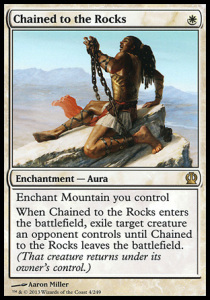
  • Sacrificing an enchantment at instant speed is also dangerous in a world where [card]Chained to the Rocks[/card] and [card]Banishing Light[/card] are prevalent. If they suddenly have that creature back in play, does it influence attacking? What about their next attack step? What about “enters the battlefield” abilities?
  • Are there any prowess triggers to consider? Prowess resolves before the Command does, meaning that you can make a [card]Seeker of the Way[/card] a 4/4 lifelinker that fights one creature before blockers and blocks another. That’s up to eight life, and you killed up to two of their creatures. NICE RED DECK, NERD.
  • There are also a couple corner-case things to consider, like, does this attack still work if they destroy my [card]Outpost Siege[/card] (set to Dragons) or my [card]Whip of Erebos[/card] (lifelink)? Even though there is a very high amount of playable enchantments in this format, there are few decks that play a very high amount of the card type—it’s likely you’ll only have one in play early on.
  • Again, corner case, but there are a lot of different things that care about +1/+1 counters in this format.
  • Does the blocking player have a large enough creature to fight one attacking creature and live to block another? That is both with and without the possibility of a +1/+1 counter.
  • Dromoka’s Command can trigger heroic for up to two of your creatures at once, if that’s something you’re into.

All of this for two mana. Oh, and that was totally ignoring the first mode (which is also very good, but entirely dependent on them casting something first). I don’t see [card]Anger of the Gods[/card] making a comeback in Standard, but this is a strong answer to it (assuming, of course, you have the mana open).

The only reason I’m upset about preordering these is that I won’t have them in my hands on day one.

Evaluating the Commands

Dromoka’s Command is the best of the cycle, and very likely to be a major player in the format moving forward. How good are the other ones, and what can we expect from them?

Right away, I can tell you that [card]Silumgar’s Command[/card] is the worst, and that is predicated entirely on rate. With Dromoka’s Command, all of the modes are less impactful than Silumgar’s, and each is worth significantly less mana if they were printed on a card. However, at two mana (and only one card), you are always getting your “money’s worth,” and sometimes getting a great deal. With Silumgar’s Command, you are hoping to get your money’s worth, and typically paying a little extra for the benefit of both modes being on one card. The thing that scares me most about Silumgar’s Command is that it comes down too late in the aggro matchups to make the -3/-3 mode be a strong enough tempo play, and you’ll likely be wanting a [card]Crux of Fate[/card] at that point instead. Against the control decks, the [card]Negate[/card] mode is great, but requires holding up five mana—at that point, the stronger play may often be Dig and a Dissolve (or whatever three-mana counter you choose). Destroying a planeswalker is good, and you’ll always want some amount of that effect in a world where Ashiok is a factor, but again, five mana feels like a weird place for it. If you’re playing against Abzan Control and they are on the play, you can kill their Elspeth and… bounce a land? Or a Courser? I’m not sure, it just feels like the few times you get an awesome exchange out of it won’t justify the other times it is underwhelming and overpaid. I guess that makes it the Mike Wallace of Commands?

Ojutai’s Command is probably the best for control, but some of the modes feel disjointed. Getting a little guy back in UW is not typically as exciting as it is in RB, especially since it checks mana cost and not power. [card]Seeker of the Way[/card] is the first guy I think of getting back, but that’s not a strong enough play to take back a losing game. Drawing a card is of course always good, but it’s only at its best when coupled with a strong tempo play. “Gain 4 life, draw a card” is the type of card that you see in someone’s main deck at FNM that helps you realize you’re going to 2-0 them. Ultimately, this is [card]Remove Soul[/card] (or whatever it’s called now) with, “Draw a Card unless you REALLY need 4 life.”

Atarka’s Command already has four slots in my Modern RG Aggro deck. I expect it to do largely nothing in Standard. It costs [card]Burning-Tree Emissary[/card], so it has to be good!

Kolaghan’s Command will either be deceptively strong or deceptively bad. If it wasn’t an instant it would be costed at RB, but because you can force a player to discard during their draw step sometimes, it had to get pushed up an extra one mana. At RB, it’s extremely solid, especially against aggro, and at 2RB it’s stone unplayable. This one is going to require the most work. There are a lot of strong RB creatures in the set though, so maybe Rakdos aggro becomes a thing?

Obviously this is just a first look at everything, and we won’t have a better idea of how these cards look until we get a little more time with them. For now, here are my power rankings:

  1. Dromoka’s Command
  2. Atarka’s Command (Modern)
  3. Silumgar’s Command
  4. Atarka’s Command (Standard)
  5. Kolaghan’s Command
  6. Ojutai’s Command

Also, before we close out today, I want to let you know what my new writing schedule is going to be. From now on, my weekly finance writing will be over at MTGPrice.com, your home for the best finance content online. My occasional strategy thinkpieces and rye, folksy musings will still be here, but not weekly. Instead, I will only be here when the people need me the most, like Batman.

I am Batman.

Best,

Batman

Weekend Magic: 3/27-3/29

Last weekend Star City Games brought us two major events: the Invitational and SCG Richmond. The Invitational featured Standard and Legacy action while Richmond featured Standard as the main event with a side of Modern and Legacy. Let’s take a look and see how Dragons of Tarkir has shaken up the format.

Star City Games Invitational (Richmond, USA)

Format – Standard, Legacy

Standard Top 8  Decklists

Deck Finish Player
Abzan Control 1st Jacob Wilson
Sultai Reanimator 2nd Reid Duke
Abzan Aggro 3rd Jason Coleman
G/W Devotion 4th Chris Andersen
Mono-Red Aggro 5th Michael Braverman
Jeskai Tokens 6th Todd Anderson
Abzan Control 7th Joe Bass
R/G Aggro 8th Ross Merriam

Legacy Top 8 Decklists

Deck Finish Player
Temur Delver 1st Jacob Wilson
Miracles 2nd Reid Duke
Lands 3rd Jason Coleman
Esper Thopter Foundry 4th Chris Andersen
Shardless Sultai 5th Michael Braverman
Infect 6th Todd Anderson
Miracles 7th Joe Bass
Sultai Delver 8th Ross Merriam

Standard Results

Jacob Wilson’s Standard deck featured two [card]Sidisi, Undead Vizier[/card] main deck. This new Sidisi seems pretty good in a control build. In Abzan, she can exploit Elspeth tokens and [card]Satyr Wayfinder[/card]s in order to find the particular card that the deck’s pilot needs at that moment. Also being a 4/6 with deathtouch means that she is really hard to deal with. I’m sure we’ll be seeing more of Sidisi in Standard over the next few months, along with the all the action she is sure to see at the Commander tables.

Reid Duke’s Standard deck also featured two undead versions of Sidisi along with a single copy of [card]Dragonlord Silumgar[/card] in the main deck. [card]Sidisi, Brood Tyrant[/card] was one of the deck’s main card advantage engines and was a key component to Reid’s Standard success that weekend. Some other interesting cards from the deck included one [card]Torrent Elemental[/card] and one [card]Silumgar, the Drifting Death[/card].

Rounding out the rest of the Standard decks, some cards to to prepare to play against in future tournaments include:

  • [card]Dromoka’s Command[/card], which appeared in Abzan Aggro and G/W Devotion. This was the only command from Dragons of Tarkir to appear in the Top 8 decks.
  • [card]Deathmist Raptor[/card], which of course slotted nicely as a full playset into the G/W Devotion deck based around Mastery of the Unseen
  • [card]Zurgo Bellstriker[/card], which was featured a playset in Mono-Red Aggro despite being legendary.
    • [card]Eidolon of the Great Revel[/card] also made a Standard appearance in this deck as a playset.
    • I also didn’t think [card]Lightning Striker[/card] would get played, but the Dash ability on the creature can’t be underestimated. I’m sure there were plenty of random blowouts that happened when Berserker came down and stomped face.
  • [card]Anticipate[/card] saw play in Jeskai Tokens, to help the deck find [card]Jeskai Ascendancy[/card] faster
  • [card]ThunderBreak Regent[/card] and [card]Surrak, the Hunt Caller[/card] slotted nicely into R/G Aggro. [card]Crater’s Claws[/card] is still being played as a playset in this deck, and the two copies of [card]Draconic Roar[/card] can do a ton of work if you’re still holding dragons in your hand as you cast it.

Legacy Results

Dragons of Tarkir didn’t quite have the impact it made on Standard. In fact, there weren’t any cards from Dragons in the Legacy results. [card]Dig Through Time[/card] is now seeing plenty of play without [card]Treasure Cruise[/card] in the format anymore.

Temur Delve and Miracles are run-of-the-mill decks at this point, and Wilson’s and Duke’s lists aren’t innovative in any way. [card]Dig Through Time[/card] is now a three-of in Miracles in order to help sift through the deck faster to get the lockdown pieces.

Moving onto Lands, it is a unique deck but doesn’t have much in the way of innovation either. Some of the key cards to the deck include the [card]Thespian’s Stage[/card] / [card]Dark Depths[/card] combo and the [card]Grove the Burnwillows[/card] / [card]Punishing Fire[/card] synergy in order to control the board while you’re setting up the more deadly finisher.

Esper Thopter Foundry is a deck that has been seen before but hasn’t put up results in a while. Now that the format has slowed down a bit more after the post Cruise banning, more decks that can really take advantage of the card selection [card]Dig Through Time[/card] offers are popping up. This deck features a full playset of [card]Dig Through Time[/card] and plays enablers like [card]Mental Note[/card] and [card]Thought Scour[/card] to help cast the Dig’s quicker. At it’s heart, this deck is a control deck and wins by using the [card]Sword of the Meek[/card] / [card]Thopter Foundry[/card] combo to generate tons of 1/1 flyers and gain enough life survive until they can kill you. Certainly an interesting deck that harkens back to the old [card]Vampire Hexmage[/card] / [card]Dark Depths[/card] / [card]Thopter Foundry[/card] / [card]Sword of the Meek[/card] / [card]Gifts Ungiven[/card] extended deck.

The rest of the Legacy Top 8 doesn’t offer us anything new to the format. We still see [card]Tasigur, the Golden Fang[/card] making an appearance here and there in order to generate card advantage but nothing else of note.

Star City Games Open – Standard (Richmond, USA)

Decklists

Deck Finish Player Deck Finish Player
Jeskai Heroic 1st Joe Lossett R/G Aggro 9th Ryan Macedo
Abzan Aggro 2nd Hunter Nance Abzan Aggro 10th Drew Cranfill
R/G Aggro 3rd Dan Jessup G/R Devotion 11th Joseph Eckert
G/R Monsters 4th Chas Tanner Jeskai Tokens 12th Patrick Tierney
G/W Devotion 5th David Fulk Ascendancy Combo 13th Zach Jesse
Jeskai Tokens 6th Alex Bianchi G/W Devotion 14th Scott Robins
Jeskai Aggro 7th Noah Walker Jeskai Aggro 15th Derek Campbell
R/G Aggro 8th Trevor Bumgardner Mono-Red Aggro 16th Sean Handy

The Standard Open at Richmond continues to offer us insight into the new format. I’ve crunched the numbers from the Top 16 to see which cards, by rarity, are seeing the most play (at least at this event).


Mythic Rare12 [card]Whisperwood Elemental[/card]

12 [card]Polukranos, World Eater[/card]

9 [card]Soulfire Grand Master[/card]

8 [card]Stormbreath Dragon[/card]

7 [card]Anafenza, the Foremost[/card]

5 [card]Deathmist Raptor[/card]***

4 [card]Warden of the First Tree[/card]

4 [card]Brimaz, King of Oreskos[/card]

2 [card]Xenagos, the Reveler[/card]

2 [card]Wingmate Roc[/card]

2 [card]Ugin, the Spirit Dragon[/card]

2 [card]Sarkhan, the Dragonspeaker[/card]

2 [card]Dragonlord Atarka[/card]***

1 [card]Soul of Theros[/card]

1 [card]Sorin, Solemn Visitor[/card]

1 [card]Nissa, Worldwaker[/card]

Rare28 [card]Goblin Rabblemaster[/card]

25 [card]Mana Confluence[/card]

20 [card]Wooded Foothills[/card]

19 [card]Flooded Strand[/card]

16 [card]Windswept Heath[/card]

16 [card]Sylvan Caryatid[/card]

15 [card]Temple of Triumph[/card]

15 [card]Battlefield Forge[/card]

14 [card]Temple of Abandon[/card]

13 [card]Boon Satyr[/card]

12 [card]Shivan Reef[/card]

12 [card]Rattleclaw Mystic[/card]

12 [card]Nykthos, Shrine to Ny[/card]

12 [card]Jeskai Ascendancy[/card]

10 [card]Temple of Epiphany[/card]

9 [card]Temple of Plenty[/card]

8 [card]Thunderbreak Regent[/card]***

8 [card]Surrak, the Hunt Caller[/card]***

8 [card]Siege Rhino[/card]

8 [card]Rakshasa Deathdealer[/card]

8 [card]Mantis Rider[/card]

8 [card]Fleecemane Lion[/card]

8 [card]Dromoka’s Command[/card]***

8 [card]Crater’s Claws[/card]

8 [card]Courser of Kruphi[/card]

8 [card]Atarka’s Command[/card]***

7 [card]Zurgo Bellstriker[/card]***

7 [card]Mastery of the Unseen[/card]

7 [card]Hero’s Downfall[/card]

6 [card]Temple of Silence[/card]

6 [card]Temple of Enlightenment[/card]

6 [card]Genesis Hydra[/card]

6 [card]Dig Through Time[/card]

5 [card]Llanowar Wastes[/card]

5 [card]Den Protector[/card]***

5 [card]Caves of Koilos[/card]

4 [card]Outpost Siege[/card]

4 [card]Hero of Iroas[/card]

3 [card]Urborg, Tomb of Yawgmoth[/card]

3 [card]Twinflame[/card]

3 [card]Temple of Mystery[/card]

3 [card]Temple of Malady[/card]

3 [card]Secure the Wastes[/card]***

2 [card]Yavimaya Coast[/card]

2 [card]Thoughtseize[/card]

2 [card]End Hostilities[/card]

2 [card]Collected Company[/card]***

2 [card]Anafenza, Kin-Tree Spirit[/card]

1 [card]Tasigur, the Golden Fang[/card]

1 [card]Hornet Queen[/card]

1 [card]Hidden Dragonslayer[/card]***

1 [card]Haven of the Spirit Dragon[/card]***

1 [card]Firedrinker Satyr[/card]

Uncommon28 [card]Stoke the Flames[/card]

21 [card]Wild Slash[/card]

17 [card]Mystic Monastery[/card]

16 [card]Hordeling Outburst[/card]

12 [card]Monastery Swiftspear[/card]

11 [card]Valorous Stance[/card]

11 [card]Seeker of the Way[/card]

8 [card]Sandsteppe Citadel[/card]

6 [card]Searing Blood[/card]

6 [card]Heir of the Wilds[/card]

4 [card]Ordeal of Thassa[/card]

4 [card]Favored Hoplite[/card]

4 [card]Draconic Roar[/card]***

4 [card]Battlewise Hoplite[/card]

3 [card]Frontier Bivouac[/card]

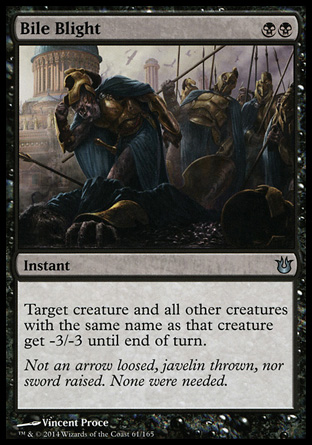
3 [card]Bile Blight[/card]

2 [card]Ultimate Price[/card]***

2 [card]Temur Sabertooth[/card]

2 [card]Roast[/card]***

2 [card]Ordeal of Heliod[/card]

2 [card]Lightning Berserker[/card]***

2 [card]Briber’s Purse[/card]

2 [card]Banishing Light[/card]

2 [card]Abzan Charm[/card]

1 [card]Murderous Cut[/card]

1 [card]Kiora’s Follower[/card]

1 [card]Jeskai Charm[/card]

1 [card]Frenzied Goblin[/card]

Common20 [card]Lightning Strike[/card]

20 [card]Elvish Mystic[/card]

13 [card]Anticipate[/card]***

12 [card]Foundry Street Denizen[/card]

12 [card]Dragon Fodder[/card]***

10 [card]Treasure Cruise[/card]

9 [card]Voyaging Satyr[/card]

6 [card]Raise the Alarm[/card]

5 [card]Mardu Scout[/card]

4 [card]Temur Battle Rage[/card]

4 [card]Retraction Helix[/card]

4 [card]Gods Willing[/card]

4 [card]Goblin Heelcutter[/card]

4 [card]Dragon Mantle[/card]

4 [card]Defiant Strike[/card]

3 [card]Commune with the Gods[/card]

3 [card]Collateral Damage[/card]

3 [card]Center Soul[/card]***

3 [card]Blossoming Sands[/card]

2 [card]Tormenting Voice[/card]

2 [card]Rugged Highlands[/card]

1 [card]Negate[/card]

1 [card]Lagonna-Band Trailblazer[/card]

Sideboard15 [card]Glare of Heresy[/card]

14 [card]Roast[/card]***

13 [card]Disdainful Stroke[/card]

10 [card]Nissa, Worldwaker[/card]

8 [card]Wild Slash[/card]

8 [card]Valorous Stance[/card]

8 [card]Destructive Revelry[/card]

8 [card]Arc Lightning[/card]

7 [card]Xenagos, the Reveler[/card]

7 [card]Negate[/card]

7 [card]Hornet Nest[/card]

7 [card]Eidolon of the Great Revel[/card]

6 [card]Searing Blood[/card]

6 [card]Fleecemane Lion[/card]

5 [card]Thoughtseize[/card]

5 [card]Setessan Tactics[/card]

5 [card]Magmatic Chasm[/card]***

5 [card]Elspeth, Sun’s Champion[/card]

4 [card]Seismic Rupture[/card]***

4 [card]Brimaz, King of Oreskos[/card]

4 [card]Arbor Colossus[/card]

4 [card]Anger of the Gods[/card]

3 [card]Treasure Cruise[/card]

3 [card]Swan Song[/card]

3 [card]Sorin, Solemn Visitor[/card]

3 [card]Rending Volley[/card]***

3 [card]Reclamation Sage[/card]

3 [card]Ojutai Exemplars[/card]***

3 [card]Nylea’s Disciple[/card]

3 [card]Duress[/card]

3 [card]Drown in Sorrow[/card]

3 [card]Dragonlord Ojutai[/card]***

3 [card]Display of Dominance[/card]***

3 [card]Bile Blight[/card]

2 [card]Ultimate Price[/card]***

2 [card]Stubborn Denial[/card]

2 [card]Scouring Sands[/card]

2 [card]Sarkhan, the Dragonspeaker[/card]

2 [card]Prognostic Sphinx[/card]

2 [card]Ordeal of Heliod[/card]

2 [card]Monastery Siege[/card]

2 [card]Mastery of the Unseen[/card]

2 [card]Magma Spray[/card]

2 [card]Hammer of Purphoros[/card]

2 [card]End Hostilities[/card]

2 [card]Cloudform[/card]

2 [card]Ainok Survivalist[/card]***

2 [card]Abzan Advantage[/card]

1 [card]Vaultbreaker[/card]

1 [card]Temple of Triumph[/card]

1 [card]Tasigur, the Golden Fang[/card]

1 [card]Outpost Siege[/card]

1 [card]Nylea, God of the Hunt[/card]

1 [card]Liliana Vess[/card]

1 [card]Lagonna-Band Trailblazer[/card]

1 [card]Kiora, the Crashing Wave[/card]

1 [card]Hornet Queen[/card]

1 [card]Hall of Triumph[/card]

1 [card]Goblin Heelcutter[/card]

1 [card]Erase[/card]

1 [card]Dromoka’s Command[/card]***

1 [card]Dig Through Time[/card]

1 [card]Den Protector[/card]***

As you can see, there are numerous cards that have taken up homes in Standard decks at this event. [card]Deathmist Raptor[/card] and [card]Dragonlord Atarka[/card] were the only mythics to be seen at the Top 16 in the main decks, while [card]Dragonlord Ojutai[/card] and [card]Ojutai’s Exemplars[/card] were mythics that were played in sideboards.

Looking at the rares, the most played new rares from the set include [card]Thunderbreak Regent[/card], [card]Surrak, the Hunt Caller[/card], [card]Dromoka’s Command[/card], and [card]Atarka’s Command[/card]. [card]Zurgo Bellstriker[/card] was seen in mono-red decks, and [card]Den Protector[/card] and [card]Secure the Wastes[/card] had brief appearances. Someone tried to make [card]Collected Company[/card] work marginally by including two copies in a deck but there was no breakout Collected Company deck totally centered around the card.

Roast was the breakout uncommon of the set, with sixteen copies appearing across main decks and sideboards. [card]Anticipate[/card] and [card]Dragon Fodder[/card] were the breakout commons, as was probably expected since they are both efficient cards for their mana cost.

All in all, there were definitely some shakeups but nothing too crazy. No new archetypes were formed. However, existing ones got a few boosts from the new cards.

Star City Games Premier IQ – Modern (Richmond, USA)

Decklists

Deck Finish Player Deck Finish Player
Affinity 1st Joseph Greer Abzan Midrange 9th Patrick Older
Infect 2nd Michael Allen Jund 10th Van Nguyen
U/W Tron 3rd Mike Kenney U/R Twin 11th Will Benton
Grixis Control 4th Dave Shiels U/R Twin 12th Jason Bennett
Jeskai Control 5th Travis Perlee Abzan Midrange 13th Michael Derczo
Merfolk 6th John Taylor Affinity 14th Betrix Ryan
Merfolk 7th Brandon Frey Esper Control 15th Christopher Mahaffey
Zoo 8th Jeff Szablak Jund 16th Joseph Herrera

Things seem have to shaken up in Modern, at least in Richmond. Outside of the finalists, the decks are ones that usually don’t see Top 8 appearances.

U/W Tron is one that seems to breaking out recently. Notable cards from the deck include one [card]Ugin, the Spirit Dragon[/card], four [card]Azorius Signet[/card], four [card]Gifts Ungiven[/card], and four [card]Thirst for Knowledge[/card]. This deck is interesting in that you can win with [card]Celestial Colonnade[/card] but also have a Gifts package to get whatever is needed at the moment. My suspicion is that this is a deck that you need to be intimately familiar with in order to pilot to success – there are several lines of play that this deck can go down, and knowing all of them takes a lot of practice. It’s good to see control being better in Modern, where just a month ago it seems that aggro, midrange, and combo were the only decks.

Speaking of which, another two control decks were in the Top 8. Grixis Control featured three [card]Tasigur, the Golden Fang[/card], two [card]Go for the Throat[/card], and a package of other counterspells and burn in order to control the game until you get a [card]Blood Moon[/card] or [card]Vedalken Shackles[/card] online. Jeskai Control featured [card]Gideon Jura[/card] as a wind condition along with [card]Anticipate[/card] from Dragons of Tarkir, a single [card]Logic Knot[/card], and splashing black for [card]Lingering Souls[/card] / [card]Mystical Teachings[/card] flashback.

Also, two Merfolk lists made the Top 8! Notables from Merfolk included [card]Master of Waves[/card], [card]Tidebinder Mage[/card], [card]Mutavault[/card], [card]Aether Vial[/card], and [card]Monastery Siege[/card] from Fate Reforged. Looks like Merfolk has really made ahem a splash in Modern now and we’ll be seeing it for some time to come since it is a pretty easy to pilot aggro/tempo deck.

Finally, [card]Collected Company[/card] made a nice debut in Modern Zoo, with the 8th place deck playing a full twenty-seven creatures and three [card]Collected Company[/card] to back them up. [card]Knight of the Reliquary[/card] is back in business folks and it’s pretty sick to rip that and, say, [card]Tarmogoyf[/card] off the top of your deck at instant speed. [card]Kessig Wolf Run[/card] is a cute addition too, as it allows you to completely blow someone out if they’re not expecting it. [card]Bonfire of the Damned[/card] out of the sideboard is an interesting choice, I guess it helps against token strategies?

Rounding out the rest of the Top 16 were some run of the mill decks like Jund, Twin, and Abzan Midrange. Esper Control was the only outlier here. This deck had a full playset of [card]Monastery Mentor[/card], along with [card]Murderous Cut[/card], [card]Slaughter Pact[/card], [card]Thought Scour[/card], and Tasigur in order to help recur spells back. [card]Creeping Tar Pit[/card] is also a nice finisher in the deck. Despite both [card]Treasure Cruise[/card] and [card]Dig Through Time[/card] being banned in Modern, Delve still seems to be a thing.

Star City Games Premier IQ – Legacy (Richmond, USA)

Decklists

Deck Finish Player Deck Finish Player
Reanimator 1st Nick Patnode Temur Delver 9th Zack Kanner
Infect 2nd Tom Ross Lands 10th Micah Greenbaum
Miracles 3rd Shawn French Death and Taxes 11th Christopher Calhoun
Miracles 4th Brian Braun-Duin Dredge 12th Andrew Shrout
Death & Taxes 5th Jessie Butler Temur Delver 13th Stephen Mann
Elves 6th Ryan Hare Omni-Tell 14th Collins Mullen
Jeskai Delver 7th Thomas Trovato Lands 15th Brandon Dempsey
Shardless Sultai 8th Chi Hoi Yim Death & Taxes 16th Jacob Eckert

Like I’ve mentioned in the Invitational section, Legacy hasn’t been shaken up much from the Dragons of Tarkir release. Elves is playing [card]Ruric Thar, the Unbowed[/card] as a nice finisher against control decks. That’s about all the innovation I see in the lists here. Legacy is still pretty much Legacy, even after Dragons has hit the shelves.

Whew, guess that’s it for this week. Keep checking back weekly for all the action that happened the previous weekend that you may have missed!

Quick Hit: Premier IQ Spotlighting

I was looking through the StarCity Games Premier Invitational Qualifier decklists from the Richmond Open and I came across a Zoo list played by Jeff Szablak to an eighth-place finish that looks really interesting to me.

Jeff Szablak 8th Place SCG Premier IQ

[Deck title=Jeff Szablak Zoo]
[creatures]
4 Knight of the Reliquary
4 Loxodon Smiter
4 Noble Hierarch
4 Qasali Pridemage
3 Scavenging Ooze
4 Tarmogoyf
4 Wild Nacatl
[/creatures]
[spells]
3 Collected Company
4 Lightning Bolt
4 Path to Exile
[/spells]
[lands]
4 Arid Mesa
1 Horizon Canopy
1 Kessig Wolf Run
1 Sacred Foundry
2 Stomping Ground
1 Temple Garden
4 Windswept Heath
4 Wooded Foothills
2 forest
2 plains
[/lands]
[sideboard]
1 Ethersworn Canonist
3 Kor Firewalker
3 Blood Moon
2 Choke
2 Stony Silence
2 Thalia, Guardian of Thraben
2 Bonfire of the Damned
[/sideboard]
[/deck]

The reason I want to bring this deck up is because it uses [card]Collected Company[/card] as a powerful card advantage engine that adds directly to the board. This is definitely something I want to test out because it looks like a blast to play. I love the use of hatebears in the sideboard like [card]Thalia, Guardian of Thraben[/card] and I’m curious to try some other cards like [card]Aven Mindcensor[/card], [card]Gaddock Teeg[/card], or even something like [card]Magus of the Moon[/card] to try to attack people off of Collected Company.

As a Zoo enthusiast, I just wanted to bring this build to everyone’s attention. I plan on trying out [card]Collective Company[/card] Zoo in some of my next few local Modern events. I’ll let you know how it goes!


Important Announcement Regarding Tap N’ Sac Podcast

Brainstorm Brewery is excited to add Tap N Sac to the offerings on the site. For the details of this announcement, check out TNS’s explanation below.

Dear listeners of Tap N Sac Podcast, both new and long-time:

I am more than excited to announce that Tap N Sac Podcast, a podcast worth fetching for, will now be sponsored by Brainstorm Brewery!  Because of them, we can guarantee you episodes on a regular basis of the highest quality along with a steady stream of other Magic content, whether it may be articles, a Twitch stream, YouTube videos, etc.  Having the time to deliver Magic content as a result of this sponsorship to you, the listener, is seriously a dream come true.

However, I unfortunately don’t have purely good news to share.  As a result of obtaining this sponsorship, I had to make a seriously difficult decision. Jon Celso, co-host of the podcast and Twitter personality, will no longer join me on a regular basis. For Tap N Sac to grow in this new environment, the show needs to progress toward a similar, but new, direction.  Jon was kind enough to share some parting words:

Dear Tap N Sac listeners/Saclings,
There's never a good way to say goodbye.  I'm super excited that the podcast has achieved a sponsorshipafter Houston put in 2+ years of elbow grease into the podcast -- I'm nothing but excited for him.  I really wish I could be part of it going forward, but I don't want to drive a wedge between Houston and the podcast's growth.  I'm sure he'll find a replacement that also loves bacon, bears, bacon bears, pizza, sandwiches, and Magic.  I'll continue to support the podcast, as I'm sure you will, and I wish it the best of luck.
Sincerely,
Celso (@BalduvianBears)
P.S. Don't worry; I'm sure I'll find my way back on the airwaves in some form or fashion because I love talking about this amazing game.  So keep your eyes peeled!

I want to take the moment now to thank Jon for all the hard work he put into the podcast, and I wish him the best of luck in his future endeavors.

In the meantime, I’ll be doing what Limited Resources has been known for: bringing on a series of guests.  If you’re interested in hopping on the mic, send me an email!

Until next time, see you, fuckers!

Ginger Ale

Kitchen Table Magic: Brewing Dragons – Ojutai Advantage

Hello. My name is Dave, and I am a Magiholic.

[Editor’s note: Hi, Dave!]

At almost 40 years old, I still collect and play with Magic cards. My relationship with Magic began over 20 years ago in high school, but I kicked it for four years, dumping all my Alpha and Beta cards in a garage sale. Sad, I know!

In college, I earned the wrong crowd’s favor and reentered a state of Magiholism, only this time I lived with a [card]mountain stronghold[/card] of guilt for letting my early and now extremely valuable collection go. I vowed never to feel that [card]chained to the rocks[/card] again. Here, I am freeing my [card]heart warden[/card] to intentionally spread my [card]exotic disease[/card]. Don’t listen to me. Save yourselves.

By the way, if you are getting rid of your collection, toss me a tweet; I know a guy.

Home Brews for Home

I am a kitchen-table Magic player. Ninety-nine percent of my play has been with two close friends and my brother. I play on MTGO from time to time, at FNM when I can, and I devour Magic-related media like Marshall Sutcliffe’s Limited and Constructed Resources podcasts, the Brainstorm Brewery podcast, and many columns and resources from across the Magic community. I don’t make any claims to being an expert deck builder or player, but I enjoy having fun with the game we all love, and I want to share that fun with the community.

For my first series I will create five decks based on the new mythic elder dragons. This week’s brew will be based on the blue and white [card]Dragonlord Ojutai[/card]. [card]Narset Transcendent[/card] has captured the attention of the entire Magic community. Patrick Chapin was high on the card during a recent Top Level Podcast. He mentioned an interaction with [card]Courser of Kruphix[/card] that got me thinking about Bant.

[deck title=Ojutai Advantage]
[Creatures]
*4 Elvish Mystic
*4 Sylvan Caryatid
*4 Courser of Kruphix
*1 Dragonlord Dromoka
*1 Silumgar, the Drifting Death
*4 Dragonlord Ojutai
[/Creatures]
[Spells]
*4 Dig Through Time
*4 Dissolve
*4 Silumgar’s Scorn
*3 Valorous Stance
*2 Narset Transcendent
*1 Ugin, the Spirit Dragon
[/Spells]
[Lands]
*4 Flooded Strand
*4 Windswept Heath
*4 Haven of the Spirit Dragon
*4 Opulent Palace
*3 Mana Confluence
*2 Forest
*2 Island
*2 Plains
*1 Crucible of the Spirit Dragon
[/lands]
[Sideboard]
*3 End Hostilities
*3 Disdainful Stroke
*2 Murderous Cut
*2 Perilous Vault
*2 Reclamation Sage
*2 Dragonlord Dromoka
*1 Dragonlord Silumgar
[/sideboard]
[/deck]

Transcendent Courser

[card]Courser of Kruphix[/card] shows us the top card of our library. It is a handy interaction when deciding whether to use [card]Narset Transcendent[/card]’s +1 pseudo card-draw ability. If you see a land, you get to dig to the next card with the Courser. If it is a creature you don’t need, you can sacrifice that fetch, shuffle your library and try again. Combined with Courser and the right deck, Narset essentially says, “+1: Draw a card.”

Flying [card]Anticipate[/card] of Death

When I started brewing around the interaction between Narset and Courser, I spent some time looking through the new dragons and discovered [card]Dragonlord Ojutai[/card]. He is a 5/4, has flying, has hexproof on the turn he is played, and provides a free [card]Anticipate[/card] every time he connects with a player. All this for five mana. I love him. Sure, it is a little bit “win more,” but if I can survive long enough to get this guy on the table, protect him while attacking, and connect with him, I bet I will win.

Courser is green and already a little rampy. If we add in a little more green ramp to push Ojutai out on turn four, then we are really talking. The deck I have in mind acts like a rampy green deck until I get Ojutai on the board, then I switch to a control role, protecting him with [card]Silumgar’s Scorn[/card] and [card]Dissolve[/card], dealing five in the air, and [card]Anticipate[/card]ing each turn. Once [card]Dragonlord Ojutai[/card] is out, I can chump on the ground with my ramp creatures to keep myself alive long enough to win in the air.

Digging for Answers

Narset allows the pilot to dig for counters or sideboarded answers, and Courser just speeds up that searching. I’ve included [card]Silumgar, the Drifting Death[/card] and [card]Dragonlord Dromoka[/card] as additional and surprising win conditions that are either hard to deal with (hexproof) or get me out of [card]Stoke the Flames[/card] range (lifelink). I can use [card]Dig Through Time[/card] to find one or both of these threats, if needed.

Bottom line: there is a lot of card draw and selection in this build. The pilot has a lot of options for finding answers.

Strategy

Against a beatdown deck, getting the ramp out early to trade with their creatures is essential. Courser is great for stopping their early creatures and Caryatid is an untargetable blocker. Ramping out Ojutai is not essential against aggro. The best course of action is to trade creatures until Ojutai hits the board and then to have a counter up to protect the dragonlord from Stoke while attacking. Siding in another lifelinking dragon is a good plan as well as the [card]Disdainful Stroke[/card]s and [card]End Hostilities[/card]. If we can gain some life and knock out their ground force, this matchup should break in our favor.

When facing midrange, we don’t want to get overwhelmed. [card]Whisperwood Elemental[/card], [card]Siege Rhino[/card], [card]Genesis Hydra[/card], and [card]Tasigur, the Golden Fang[/card] are current, popular examples in this strategy. Manifest is a special enemy putting uncounterable bodies on the field every turn, but face-down [card]Genesis Hydra[/card]s don’t do your opponents much good, and flipping up a [card]Siege Rhino[/card] isn’t especially threatening. Your opponents need to cast these monsters from their hand for best value. In the early turns, get out some ramp and blockers to prevent their 2/2s from gaining ground. Once your opponent has five mana open, you need to have a counter ready. Don’t worry about their [card]Voyaging Satyr[/card]s and [card]Sylvan Caryatid[/card]s. Worry instead about their [card]Whisperwood Elemental[/card]s.  Side in the [card]Perilous Vault[/card]s and [card]End Hostilities[/card] to clear the board after they dump their hand to overwhelm you.

siege-rhino

For control match-ups, dump the Caryatids and double down with [card]Disdainful Stroke[/card] and [card]Reclamation Sage[/card]. Getting creatures out early and countering their removal targeting your dragons is key. Courser is especially useful here as it does damage and keeps lands out of your draw step. [card]Dragonlord Ojutai[/card] can be freely cast with a counter at the ready for mass removal. Use the sage to remove their vaults before they can activate them and to deal those last few points of damage. [card]Dragonlord Dromoka[/card] is a nice surprise: an uncounterable threat, but without countermagic at the ready, he won’t last long on the board.

If you like controlling the pace of the game, drawing cards, and playing dragons as much as I do, try out the Ojutai Advantage deck at your next kitchen table event. I promise it will, at the very least, be fun!

Pitt Imps Podcast #112 Back Pain

This week, the Imps have prerelease stories. Not much else really happened in competitive Magic, so its a good thing we had these. We do go over the B&R Announcement as well as the Commander rule change. Keep in mind that none of us are hardcore Commander players so I don’t think we really understood all the outrage. Any who, this is our show. There are many like it but , this one is ours. Our show is our best friend. It is our life. We must master it like we must master our life. Without us our show is useless. Without our show we are useless. We must fire our show true. We must shoot straighter than the other casts that are trying to kill us. We must shoot them before they shoot us. We will. Before God we swear this creed. Our show and ourselves re defenders of this game. We are the masters of our enemy. We are the saviors of our lives. So be it, until there is no enemy, but peace, and men.

Host  Angelo   Twitter  @ganksuou

Co-Host   Will    Find him on Facebook

Co-Host     Mike   Twitter   @Huntmaster_Mike

Go Fund Me

Email   [email protected]

Pitt Imps Podcast is brought to you each week by our proud sponsors.   Brainstorm Brewery and Taitan Game Shop

Analyzing and Deck Building: Featuring Outpost Siege

A common question people ask is: “How do I build a deck?”  It’s easy to say just get one from the internet and play it tons of times to become proficient, but some people really just have a passion for making a deck themselves.  In my opinion, iterative deckbuilding is the best way to build a deck.  As the name implies, each iteration of the deck should be slightly different from the last. Eventually, you’ll reach a point where the end result may not look much like what it started out as.

The Seed

outpost siege

The start of any deck is the seed or the initial concept.  Sometimes it’s a card and sometimes it’s an interaction.

For me, I chose to use [card]Outpost Siege[/card]. The first step to building from a seed is to truly analyze it and figure out what makes it good. [card]Outpost Siege[/card] is a card that is good in certain circumstances. It’s good when your opponent has no cards in hand, it’s good when the board is clear, and it’s good when you can play the extra card every turn.

The next step is to figure out when it’s bad and try to prevent those situations. Siege is pretty bad when your spells don’t do anything, it’s pretty bad when you’re dead, and it’s pretty bad when you’re behind.  Knowing the reasons why you want to build with a card helps to solidify the strengths and weaknesses of the idea.

Pros

1) It’s good when your opponent has no cards in hand: The most obvious thing to do is make them discard cards. That generally will accomplish the goal but it doesn’t help shore up the weaknesses of the card. If you’re making your opponent discard cards and they’re playing cards to the board, you will be behind. That’s not optimal. What can we do to run our opponent out of cards besides playing discards spells? We can play cards that require answers to empty our opponent’s hand. One-for-one cards like removal spells and big efficient creatures are the best way to do this.

2) It’s good when the board is clear: Kill everything!  This seems pretty evident that if we play threats that outclass most threats and remove ones that outclass ours, the board should be in our favor and we can push our advantage with [card]Outpost Siege[/card].

3) It’s good when we play our extra card every turn:  If we exile a land off of [card]Outpost Siege[/card] every turn, there is 100 percent chance we can play it. But what happens if we draw a spell and exile a spell?  If we don’t play both, then we may play a sub-optimal spell or lose out on a spell altogether. This deck needs to be able to double-spell fairly often and fairly consistently.

Cons

1) When our spells don’t do anything:  Exiling a counter spell is pretty bad. Exiling a one-mana 1/1 on turn 16 is usually pretty bad. Exiling cards we can’t cast is also pretty bad. Exiling cards our opponents don’t  care about is pretty bad. How do we fix this? Play flexible reactive spells and threats. There is no such thing as a bad threat, only a bad answer.

2) When you’re behind: When you get behind on the board, [card]Outpost Siege[/card] does nothing outright to get you back into the game.  If you’re at one life staring down 13 goblin tokens, this card will not help you. We need to include cards that help us get to the late game when the Siege can win the game for us.

3) When we’re dead: This goes without saying, but if you’re too slow or your mana is too painful and you die, well then, it didn’t do anything. Having a good amount of life gain and spells that generate “more turns” of gameplay are crucial to our plan.

So About the Deck Building…

Okay, now that we’ve got that settled, where do we start? Well, [card]Outpost Siege[/card] has already been featured in Jeskai and Boros decks to some success. We know how it works there so we need to try something else. My initial thought was a Jund-style deck.

Jund decks have been known to do a lot of the things we need. They play efficient threats, they play good removal to keep the board clear, they have some life gain to make the game take longer. Jund colors lend themselves to the grind pretty easily. The problem is that we don’t have a lot of really efficient mana-fixing for those colors. [card]Mana Confluence[/card] seems like a necessary evil, but it’s hard to say what else we really have for lands after that. Too many Temples makes the deck too slow to play two spells each turn and too many fetchlands may make it too painful and inconsistent.  Enter the engine:

cary satyrmurderous  tas

[card]Sylvan Caryatid[/card] and [card]Satyr Wayfinder[/card] are great mana fixers for a three-color deck. [card]Tasigur, the Golden Fang[/card] and [card]Murderous Cut[/card] are great ways to double spell faster (because we can frequently delve these cards down to one mana) and are also fueled by Wayfinders and the fetchlands we will probably end up playing.  Tasigur provides a big body for defense, and in the later game, more card advantage to help close things out.

courser

This card also helps a lot of our issues.  It lets us gain life to prolong the game, is pretty good at blocking, and provides more lands to let us reach critical mass of double-spelling.

What other cheap efficient removal spells can we play? [card]Murderous Cut[/card] alone will not solve all problemschained

[card]Chained to the Rocks[/card] is a pretty easy splash.  We are already playing [card]Mana Confluence[/card] and [card]Sylvan Caryatid[/card] for fixing, and with two different mountain fetchlands, we don’t need that many actual mountains to have a lot of “theoretical” mountains in our deck.

200143

Even if we have all of the removal in the world, we can’t win the game easily with Tasigur, Courser, and Wayfinder as our only threats.  [card]Stormbreath Dragon[/card] is extremely resilient and we’ve already committed to playing a lot of red sources for [card]Chained to the Rocks[/card], so it seems like a good inclusion.  [card]Siege Rhino[/card] similarly fills a lot of the same roles as Courser with a bigger body.  It only requires one white mana, so it shouldn’t be difficult to cast.

61 90 171

More ways to kill stuff.  We’re really stretching on the white splash because we can pretty much play [card]Sandsteppe Citadel[/card] for free.  This deck will be mainly green-black and will work to splash the other two colors.

Okay, so we throw all of these cards in a blender with some lands and what do we get? A mostly unplayable pile of hot garbage! The deck seems worse than Abzan control because it doesn’t have as good a mana base and doesn’t have [card]Abzan Charm[/card] to draw cards.  Casting RR, GG, BB, GWB, and RWB spells in the same deck proved to be non-trivial. I ended up cutting [card]Chained to the Rocks[/card] before even playing my first match because supporting enough mountains to cast it seemed impossible.

This is the first version of the deck I played:

[deck title=Hot Unplayable Pile of Outpost Siege]
[Creatures]
*4 Satyr Wayfinder
*4 Sylvan Caryatid
*4 Courser of Kruphix
*4 Siege Rhino
*2 Stormbreath Dragon
*4 Tasigur, the Golden Fang
[/Creatures]
[Planeswalkers]
*1 Sarkhan, the Dragonspeaker
[/Planeswalkers]
[Non-Creature, Non-Planeswalker Spells]
*3 Bile Blight
*3 Crackling Doom
*2 Hero’s Downfall
*3 Murderous Cut
*3 Outpost Siege
[/Non-Creature, Non-Planeswalker Spells]
[Lands]
*2 Bloodstained Mire
*2 Forest
*2 Mana Confluence
*1 Mountain
*4 Sandsteppe Citadel
*2 Swamp
*1 Temple of Abandon
*1 Temple of Silence
*1 Temple of Malice
*3 Temple of Malady
*1 Urborg, Tomb of Yawgmoth
*3 Wooded Foothills
[/Lands]
[Sideboard]
*3 Thoughtseize
*4 Drown in Sorrow
*3 Read the Bones
*3 Reclamation Sage
*1 Liliana Vess
*1 Garruk, Apex Predator
[/Sideboard]
[/Deck]

Yep, this deck is rough and the mana looks horrendous, but there is potential!  When I had [card]Outpost Siege[/card] in play, it did what it was supposed to do when the conditions were right. The more I played, the more I realized that the mana was really causing too many problems and being more conservative with my card choices could go a long way. I realized the red cards were just under performing in so many situations. There is not a lot of difference between [card]Crackling Doom[/card], [card]Abzan Charm[/card], and [card]Hero’s Downfall[/card] in a lot of situations, except for the mana symbols on the cards.

I also had a lot of issues with too many lands coming into play tapped. I needed more untapped sources of mana and fewer red ones in general. Often I would find an opening hand with two red sources nearly unplayable because we need to cast GG and BB spells early to live.

But fear not! My experiment wasn’t done. I decided to borrow more cards from the existing Abzan control deck and morph it more to support [card]Outpost Siege[/card] than to make a red deck that supports G/B cards.

There were more iterations of the deck that included [card]Crater’s Claws[/card], [card]Xenagos, the Reveler[/card], and other nonsense like that. The more I played, the more I realized the only red card I really wanted was the Siege.

Version 3.0 of the deck:

[deck title=Abzan Siege]
[Creatures]
*3 Satyr Wayfinder
*4 Sylvan Caryatid
*4 Courser of Kruphix
*4 Siege Rhino
*3 Whisperwood Elemental
*3 Tasigur, the Golden Fang
[/Creatures]
[Planeswalkers]
*2 Sorin, Solemn Visitor
[/Planeswalkers]
[Non-Creature Non-Planeswalker Spells]
*2 Bile Blight
*2 Abzan Charm
*2 Hero’s Downfall
*3 Murderous Cut
*3 Outpost Siege
*2 Thoughtseize
[/Non-Creature Non-Planeswalker Spells]
[Lands]
*1 Bloodstained Mire
*2 Forest
*2 Mana Confluence
*1 Mountain
*1 Plains
*4 Sandsteppe Citadel
*2 Swamp
*1 Temple of Abandon
*1 Temple of Malice
*3 Temple of Malady
*1 Urborg, Tomb of Yawgmoth
*2 Wooded Foothills
*2 Windswept Heath
[/Lands]
[Sideboard]
*2 Thoughtseize
*4 Drown in Sorrow
*3 Read the Bones
*3 Reclamation Sage
*1 Nissa, Worldwaker
*1 Liliana Vess
*1 Garruk, Apex Predator
[/Sideboard]
[/Deck]

What is the deck now?  Still pretty rough, but it’s tuned to beat some matchups pretty thoroughly.

The Abzan mirror match is a joke with an [card]Outpost Siege[/card] in play. Although we eschew [card]Elspeth, Sun’s Champion[/card], our combination of Tasigur and Siege generate enough resources to power through them.  [card]Whisperwood Elemental[/card] gives us great insurance versus Elspeth and [card]Ugin, the Spirit Dragon[/card].

Additionally, our sideboard helps out dealing with problematic cards like [card] Hornet Queen[/card], [card]Whip of Erebos[/card], [card]Perilous Vault[/card], etc.  I would even go so far as to say if you plan to play any version of Abzan, give this one a try. The first time your turn-five play is Tasigur and [card]Siege Rhino[/card] in the same turn, you will understand the power of the deck.

Let me know if you have any questions, comments, suggestions, or success stories with this brew!

Brewing with Dragons of Tarkir

Welcome back for Brewing with Dragons of Tarkir!

Today, I’ll go over eleven lists that I’ve come up with using some of the new cards from Dragons of Tarkir. These decks won’t have fully formed sideboards, since I don’t have time to test them all or complete knowledge of the metagame (the one exception being the Gruul Burn list, which I have had a chance to test). This was quite an exciting set for me as a brewer, and I’m sure you’ll be able to tell from the diverse array of decks I have for you today. But enough babble, let’s see some decks…

Gruul Burn

First up is Gruul Burn. [card]Atarka’s Command[/card] adds a lot of power to the deck, letting you pump your team while dealing three or even shutting down the life gain from those pesky [card]Siege Rhino[/card]s. Upgrading [card]Firedrinker Satyr[/card] into [card]Lightning Berserker[/card] was also a tremendous gain for this deck, allowing it to be more aggressive with its creatures. This will be the first deck I build when Dragons of Tarkir is legal, and with the results of my testing looking good so far, I don’t see me playing anything else unless the format drastically shifts.

[deck title= Gruul Burn]
[Creatures]
4 Monastery Swiftspear
4 Lightning Berserker
2 Zurgo Bellstriker
4 Eidolon of the Great Revel
4 Goblin Rabblemaster
[/Creatures]
[Spells]
2 Wild Slash
4 Magma Jet
4 Lightning Strike
4 Searing Blood
4 Atarka’s Command
4 Stoke the Flames
2 Become Immense
[/Spells]
[Land]
4 Temple of Abandon
4 Wooded Foothills
1 Forest
9 Mountain
[/Land]
[Sideboard]
4 Roast
3 Destructive Revelry
2 Circle of Flame
3 Arc Lightning
3 Outpost Siege
[/Sideboard]
[/deck]

Mono-Green Aggro

When I saw [card]Avatar of the Resolute[/card] get spoiled, I got super excited to build this deck again. The biggest thing keeping me from playing this is its weakness to cards like [card]Drown in Sorrow[/card] and [card]Bile Blight[/card], which are seeing heavy play currently. But if the format shifts away from those, I may be on Mono-Green Aggro yet again.

[deck title= Mono-Green Aggro]
[Creatures]
4 Elvish Mystic
4 Servant of the Scale
4 Avatar of the Resolute
4 Swordwise Centaur
4 Boon Satyr
4 Reverent Hunter
3 Nylea, God of the Hunt
2 Polukranos, World Eater
[/Creatures]
[Spells]
4 Aspect of Hydra
2 Bow of Nylea
2 Setessan Tactics
[/Spells]
[Land]
2 Nykthos, Shrine to Nyx
21 Forest
[/Land]
[/deck]

Sideboard Suggestions: [card]Hunt the Hunter[/card], [card]Nylea’s Disciple[/card], [card]Ranger’s Guile[/card], and [card]Reclamation Sage[/card].

Mono-Blue Devotion

While not quite as powerful as the old Mono-Blue Devotion decks, this deck will likely begin to pick up in popularity. It gained [card]Shorecrasher Elemental[/card] for the main deck, which should prove quite powerful. The biggest gain is probably [card]Encase in Ice[/card], which does a poor [card]Tidebinder Mage[/card] impersonation, but sometimes a poor impersonation is still good enough.

[deck title= Mono Blue Devotion]
[Creatures]
4 Dakra Mystic
4 Hypnotic Siren
4 Frost Walker
4 Stratus Dancer
4 Omenspeaker
4 Shorecrasher Elemental
4 Thassa, God of the Sea
4 Master of Waves
[/Creatures]
[Spells]
3 Military Intelligence
2 Bident of Thassa
[/Spells]
[Land]
3 Nykthos, Shrine to Nyx
20 Island
[/Land]
[/deck]

Sideboard Suggestions: [card]Disdainful Stroke[/card], [card]Dissolve[/card], [card]Encase in Ice[/card], and [card]Icy Blast[/card].

Mono-Black Aggro

This deck will do well at some point soon, but with so many [card]Drown in Sorrow[/card]s running around, it will have to work hard to do it. [card]Pitiless Horde[/card] seems like a very scary card, much like [card]Phyrexian Negator[/card] was in its heyday.

[deck title= Mono-Black Aggro]
[Creatures]
4 Bloodsoaked Champion
4 Gnarled Scarhide
4 Tormented Hero
4 Pain Seer
4 Silumgar Assassin
4 Herald of Torment
4 Mogis’s Marauder
4 Pitiless Horde
[/Creatures]
[Spells]
4 Bile Blight
2 Hero’s Downfall
[/Spells]
[Land]
2 Nykthos, Shrine to Nyx
20 Swamp
[/Land]
[/deck]

Sideboard Suggestions: [card]Hero’s Downfall[/card], [card]Self-Inflicted Wound[/card], [card]Thoughtseize[/card], [card]Ultimate Price[/card].

White Weenie

This deck gained a lot with [card]Anafenza, Kin-Tree Spirit[/card] and [card]Dragon Hunter[/card], making its creatures go up a couple notches in power level. I don’t expect this deck in any kind of numbers, but I wouldn’t discount it from doing quite well.

[deck title= White Weenie]
[Creatures]
4 Dragon Hunter
4 Mardu Woe-Reaper
4 Soldier of the Pantheon
3 Anafenza, Kin-Tree Spirit
4 Phalanx Leader
4 Seeker of the Way
3 Brimaz, King of Oreskos
[/Creatures]
[Spells]
4 Gods Willing
3 Launch the Fleet
2 Valorus Stance
3 Spear of Heliod
[/Spells]
[Land]
22 Plains
[/Land]
[/deck]

Sideboard Suggestions: [card]Erase[/card], [card]Banishing Light[/card], [card]Hushwing Gryff[/card], and [card]Surge of Righteousness[/card],

Red Deck Wins

We will see a lot of this style of Red Deck Wins in the coming months. Big gains were [card]Dragon Fodder[/card] to make cards like [card]Goblin Rabblemaster[/card] and [card]Collateral Damage[/card] even better and [card]Roast[/card] to take care of those problematic blockers. With such a mass of tokens, it will be no problem most games to cast [card]Outpost Siege[/card] naming Dragons to pretty much win on the spot.

[deck title= Red Deck Wins]
[Creatures]
4 Foundry Street Denizen
2 Lightning Berserker
2 Zurgo Bellstriker
4 Dragon Whisperer
4 Mardu Scout
4 Goblin Rabblemaster
[/Creatures]
[Spells]
4 Collateral Damage
4 Dragon Fodder
4 Hordeling Outburst
4 Outpost Siege
4 Stoke the Flames
[/Spells]
[Land]
20 Mountain
[/Land]
[/deck]

Sideboard Suggestions: [card]Arc Lightning[/card], [card]Eidolon of the Great Revel[/card], [card]Frenzied Goblin[/card], and [card]Roast[/card].

Mono-Red Devotion

This deck just wants to go big as quickly as possible, but has plenty of early game to ensure that it doesn’t get run over by the hyper-aggressive decks. The cards [card]Dragon Whisperer[/card] and [card]Thunderbreak Regent[/card] added quite a bit to the deck’s staying power, allowing it to maintain control of the game against decks packing a lot of removal. I’ll be surprised if this deck doesn’t see a lot of play.

[deck title= Mono-Red Devotion]
[Creatures]
4 Dragon Whisperer
4 Eidolon of the Great Revel
4 Goblin Rabblemaster
4 Prophetic Flamespeaker
4 Fanatic of Mogis
4 Thunderbreak Regent
4 Stormbreath Dragon
[/Creatures]
[Spells]
3 Crater’s Claws
2 Hammer of Purphoros
2 Chandra, Pyromaster
2 Sarkhan, the Dragonspeaker
[/Spells]
[Land]
4 Nykthos, Shrine to Nyx
19 Mountain
[/Land]
[/deck]

Sideboard Suggestions: [card]Flamewake Phoenix[/card], [card]Harness by Force[/card], [card]Roast[/card], and [card]Torch Fiend[/card].

Esper Control

It seems like most of the cool toys in this set were geared towards making the blue control decks more viable. While that’s not what I typically play, it is quite tempting. Now that [card]Narset Transcendent[/card] has arrived to draw approximately all the cards, I expect to see control mages everywhere rejoicing. The big issue these decks face is not dying before they can gain control of the game, which will likely be a lot harder now that there are endless one-drop creatures.

[deck title= Esper Control]
[Spells]
2 Bile Blight
2 Ultimate Price
2 Ashiok, Nightmare Weaver
4 Dissolve
3 Hero’s Downfall
3 Narset Transcendent
3 Oujutai’s Command
1 Utter End
2 Crux of Fate
4 End Hostilities
2 Silumgar’s Command
3 Elspeth, Sun’s Champion
4 Dig Through Time
[/Spells]
[Land]
4 Temple of Deceit
4 Temple of Enlightenment
2 Temple of Silence
3 Flooded Strand
3 Polluted Delta
1 Urborg, Tomb of Yawgmoth
3 Island
3 Plains
2 Swamp
[/Land]
[/deck]

Sideboard Suggestions: [card]Self-Inflicted Wound[/card], [card]Surge of Righteousness[/card], [card]Thoughtseize[/card], [card]Virulent Plague[/card].

Azorius Control

With so many amazing cards for Azorius Control, it’s just a matter of combing the right ones. This deck benefited maybe a little too much from this set and could take a while before the optimal build is locked down, but it will be seeing a lot of play from day one.

[deck title= Azorius Control]
[Creatures]
3 Dragonlord Ojutai
[/Creatures]
[Spells]
4 Anticipate
4 Silumgar’s Scorn
1 Banishing Light
4 Dissolve
3 Narset Transcendent
4 Ojutai’s Command
1 Aetherspouts
4 End Hostilities
3 Elspeth, Sun’s Champion
4 Dig Through Time
[/Spells]
[Land]
4 Temple of Enlightenment
4 Tranquil Cove
4 Flooded Strand
4 Radiant Fountain
6 Island
3 Plains
[/Land]
[/deck]

Sideboard Suggestions: [card]Encase in Ice[/card], [card]Glare of Heresy[/card], [card]Negate[/card], and [card]Surge of Righteousness[/card].

Dimir Control

Dimir Control got exactly what it wanted in Dragons of Tarkir, and we may all suffer because of it. This deck will be a major player this season, forcing out a lot of other decks that just can’t compete. It could even displace Abzan strategies from the top spot, now that it has access to [card]Self-Inflicted Wound[/card] and [card]Ultimate Price[/card] to clean up the board.

[deck title= Dimir Control]
[Creatures]
2 Dragonlord Silumgar
1 Silumgar, the Drifting Death
[/Creatures]
[Spells]
2 Anticipate
1 Bile Blight
4 Silumgar’s Scorn
2 Ultimate Price
3 Ashiok, Nightmare Weaver
4 Dissolve
4 Hero’s Downfall
1 Perilous Vault
4 Crux of Fate
2 Silumgar’s Command
4 Dig Through Time
1 Ugin, the Spirit Dragon
[/Spells]
[Land]
4 Temple of Deceit
4 Dismal Backwater
4 Polluted Delta
4 Radiant Fountain
1 Urborg, Tomb of Yawgmoth
5 Island
3 Swamp
[/Land]
[/deck]

Sideboard Suggestions: [card]Encase in Ice[/card], [card]Negate[/card], [card]Self-Inflicted Wound[/card], and [card]Thoughtseize[/card].

Orzhov Warriors

Finally, a critical mass of warriors have been printed to make this deck look very tempting. Now that it has sixteen one-drops, it may be able to race any deck in the format. The biggest issue it will face is [card]Drown in Sorrow[/card] being all over the place, but if it can find a way to deal with that, it should do quite well.

[deck title= Orzhov Warriors]
[Creatures]
4 Bloodsoaked Champion
4 Dragon Hunter
4 Mardu Woe-Reaper
4 Tormented Hero
4 Blood-Chin Rager
4 Chief of the Edge
4 Blood-Chin Fanatic
[/Creatures]
[Spells]
4 Bile Blight
4 Harsh Sustenance
2 Sorin, Solemn Visitor
[/Spells]
[Land]
4 Temple of Silence
4 Caves of Koilos
3 Mana Confluence
1 Urborg, Tomb of Yawgmoth
4 Plains
6 Swamp
[/Land]
[/deck]

Sideboard Suggestions: [card]Erase[/card], [card]Hero’s Downfall[/card], [card]Self-Inflicted Wound[/card], and [card]Thoughtseize[/card].

All Players on Deck

That’s all I have for now. I’ll see you again for Brewing With Magic Origins. If you have any questions or comments, please feel free to leave them below and I will do my best to answer them.

Thanks for reading,

Josh Milliken

@joshuamilliken on Twitter

It’s Time to Tuck the Rules Committee

This week, the EDH Rules Committee announced a change to the format that set my Twitter, Reddit, and Facebook feeds abuzz: players are no longer able to deal with pesky enemy commanders by shuffling them into the opponent’s deck. Any time an ability would cause a commander to return to a player’s hand or be “tucked” into their deck, there is a new replacement effect that allows players to simply return it to the safety of the command zone.

This change will have a pretty big impact on the format (not to mention the price of several cards) and its justly getting a lot of attention from the community. Most of the feedback is negative, and rightly so. The reasons the committee gave for the change are embarrassingly bad, poorly argued, and inconsistently applied. And as a game developer myself, this reeks to me of the kind of bad game design I witness studios make when they try to simplify a game for new players, but end up going about it all the wrong ways.

Bad Arguments

First, the Rules Committee posits that nothing feels worse than having your commander unavailable for the whole game. While I’d agree that having a commander tucked can be a feel-bad experience, I’d also say that I’ve had much worse feelings during an EDH game. Having my commander get tucked may be annoying, but at least I can keep playing the game. There are plenty of individual cards and broader interactions that force me to either concede or sit there and not play until someone else finds their win condition. So kicking off their justification with hyperbole is a pretty bad place to start.

armageddon

Second, they suggest that the threat of tuck leads players to run more tutors. This is an outright falsehood. Players run tutors because this is a singleton format. Period. Full stop. Conversation over. Players want access to their favorite cards and win conditions, so they run tutors. I’m aware that Sheldon has written about going tutorless in his own decks, but that’s not the reality for the majority of the players in the format. Tutors exist and they are used at all levels of power and competition. This change will not reduce tutor usage by any meaningful amount.

Third, the argument that tuck only exists in blue and white and thus potentially forces players to run those colors is just plain silly. Magic is a game about a color wheel with unevenly divided power and mechanics. Saying this needs to get banned because of the color wheel is like suggesting we should ban land ramp spells because they are only available in green. Do players feel like they must run green for mana? Or blue for draw spells? Or black for tutors? Each deck you build is bound by its color restrictions. That’s an essential feature of this format, not a problem for it. This argument is entirely a nonsequitor and sets a truly dangerous precedent.

Fourth, the idea that this clears up some rules fuzziness is perhaps the worst statement of all, especially if the Rules Committee is trying to make this game more accessible to new and casual players. There is now an entire class of cards that doesn’t do what the card actually says, including cards like [card]Spell Crumple[/card] that were designed specifically for the Commander format. [card]Terminus[/card] now reads something like, “Put all creatures except for commanders on the bottom of their owner’s libraries. Players may choose to put their commander onto the bottom of the library or into their command zone. The command tax applies for this return to the command zone.” [card]Chaos Warp[/card] is even more confusing, since you could cast it targeting your own commander and just put the top card of your library into play without the drawback of targeting your own creature.

 chaoswarp

Do we really believe this is easier for casual players to understand? Should we have to explain even more rules intricacies to these players for them to follow the rules of the format? I would argue this is absolutely not the case. One of my many playgroups is a trio of work friends who only play with preconstructed retail decks. They can already barely keep the stack straight when more than a few spells are cast on the same turn. Adding in more special rules will only make the game more obtuse to them. Oh, and this rule doesn’t clear up any fuzziness about commander identity anyways… because you can still choose to put your commander into your deck, right? So this fails, and only fails, to make the rules more simple.

Time for a Change

So this rules change is bad. It’s bad for new players and absolutely will not achieve its stated purpose for improving the format. It’s a terrible decision and its being thrust onto a massive, dedicated community of players that overwhelmingly didn’t want this change. All this only highlights a long-running problem and one that I’ve been meaning to write about for some time: the Rules Committee has outlived its ability to meaningfully manage this format.

misinformation

Yes, I’m suggesting that the Rules Committee shouldn’t be governing the format anymore. Yes, I’m saying the guys who had a hand in creating EDH and guiding it to become the format that we know and love today are the wrong ones to keep leading it. The issue is that this isn’t a niche format played in hotel rooms by judges and Magic insiders anymore. It’s gone commercial, it’s reached the masses, and it’s too big for the Rules Committee to keep effectively managing.

The Rules Committee has demonstrated repeatedly that it is not representing the majority of the players in the format by the way the members inconsistently apply their own guidelines when banning cards or making changes to the format. The committee suggests that their guiding principle is to “create games you’d love to remember, not the ones others would like to forget.” But the format is still host to any number of cards and strategies that throw that notion right out the window. [card]Sylvan Primordial[/card] could create a pretty unhappy board state if a player was fortunate enough to ramp into it quickly, but is that any less fun in those limited instances than a consistently powerful Stax deck locking down the table and playing solitaire? Or a Narset deck blowing up lands over and over while gradually eking out a victory through inevitable commander damage?

I don’t actually want to spill much ink arguing over one ban or another, though. Perhaps [card]Sylvan Primordial[/card] was the worst offender in the format at the time. Perhaps [card]Consecrated Sphinx[/card] doesn’t centralize the game around itself quite as much as [card]Primeval Titan[/card] did. That’s not really the point. The point is that a very small group of players, however intelligent and influential, are making very big decisions that impact tables all over the world, and they are doing it wildly inconsistently.

sylvanprimordial

The Big Delusion

The Rules Committee attempts to hand wave this issue in a few places in their statement on philosophy. First, they say that they attempt to avoid “cascading bans” because it leads to an unmanageable list. The idea here seems to be that they ban the worst offenders in any given category, but leave it up to the players to understand how these bans should guide their deck-making process to keep the format social, fun, and fair. This is smart-sounding way of saying, “We’re going to be inconsistent and we don’t care. We’re leaving it up to the masses to figure out.”

Piggy-backing on that idea, they point out that they believe “local groups” and the official rules can peacefully coexist. They encourage players to engage with the game how they want, being aware they may need to make adjustments when playing with different groups. This may have been a really great statement before Wizards of the Coast began printing official Commander products, but since then, the format has grown tremendously and it’s become increasingly hard to apply in reality.I play at my office, at two local card shops, a kitchen table game, and at various official Magic events like grands prix. Does the Rules Committee really expect me to manage a shifting ban list across all my decks to match the philosophy of each group? This is a painfully disingenuous statement at this point in the growth of EDH. We’re largely stuck with the official rules and they know it.

giftsungiven

The Solution

It’s time to hand the format over to Wizards and start applying more consistent, data-driven rules changes. The format is huge now and players are engaged in so much cross-group play that its no longer viable to hand-wave inconsistencies and expect people to just swallow them. Its unfair to the community to expect us to just roll with the changes determined by the whims of a tiny, semi-official group of players who think the social contract is a good enough solution for the format’s problems. There needs to be accountability in place that drives the format towards a more healthy balance and doesn’t result in ridiculously bad rule changes like this week’s announcement about tuck spells. That’s not going to happen as long as the Rules Committee continues to own the format.

As for the tuck change? I predict it ends up being reverted. It will not meaningfully change the number of tutors players run. It won’t change how players pick the colors for their decks. And it certainly isn’t going to make the format more accessible for new players. It’s only going to make strong commanders stronger, force players to run more removal instead of additional fun threats, and ultimately make for a less interesting format.

It’s unfortunate that we’re being forced to endure this experiment in bad game design until these things are made apparent. It’s inevitable that Wizards eventually takes over stewardship of the Commander format. It’s just too bad it didn’t happen before this week’s announcement.

Identity Crisis

Hey, everyone, it’s been awhile.

For the past few months, I’ve been having an identity crisis with Modern. As the writer of half a dozen articles on Zoo for this very website, saying that I’m considering not playing Zoo now sounds like insanity, but I feel like I have settled down with the deck. I know all of its lines and I can always find the one I need and once I had that mastered I got bored. My play became sloppy and I was not focusing on my matches as much as I should have been. I was going through the motions but I wasn’t getting the enjoyment from the deck that I once did. I needed a change.

Where I Started

Of course, when I think about Modern my first inclination is to play a big Zoo list. I initially started off with my traditional three-color Naya list as well as working through a five-color [card]Tribal Flames[/card] list featuring [card]Siege Rhino[/card] and [card]Geist of Saint Traft[/card]. For those who don’t know me, I despise Siege Rhino and I feel that if it is allowed to run rampant, then [card]Bloodbraid Elf[/card] needs to come back to the format. That is an argument for a different article, though.

Siege-Rhino-Khans-of-Tarkir-Spoiler

[card]Lingering Souls[/card] ended up being too oppressive against the lists I was playing in local IQs and PPTQs, and I found if I changed my deck to make those matchups better, I would be too slow most of the time to fight decks like Tron, Scapeshift, and Splinter Twin. It was time to close down the Zoo.

Lets Watch The Pro Tour

While I was going through this process I was lucky to have some strong results from Pro Tour Fate Reforged to look at. I always take Modern pro tour results with a grain of salt, as the metagame can sometimes become inbred. I immediately latched onto what could be considered an inbred meta deck in Little-Kid Junk, which Jacob Wilson made top eight with and was built by Team Channel Face to Balls (Face to Face Games and Channel Fireball Prime worked together for the tournament).

Through testing I found the deck was pretty strong against the Modern metagame but I realized I wasn’t having fun. [card]Wilt-Leaf Liege[/card] and [card]Loxodon Smiter[/card] are some of my favorite cards but the deck didn’t grind the long games in a way I enjoy and it didn’t have some of the explosive opening I have grown to love with Wild Nacatl. I decided to shelve the deck and try something a little more off the beaten path.

WildNacatl

Playing an Old Favorite

One of my friends, when I first met him, was casting an insanely powerful card-advantage engine known as [card]Gifts Ungiven[/card]. I had been looking for a way to ignite the fun of Modern for me, and this felt right up my alley.

Casting Gifts for [card]Life from the Loam[/card], [card]Raven’s Crime[/card], [card]Urborg, Tomb of Yawgmoth[/card], and either [card]Ghost Quarter[/card] or [card]Tectonic Edge[/card], as well as ending games before they had even begun by casting Gifts for [card]Elesh Norn, Grand Cenobite[/card] and [card]Unburial Rites[/card] was fun, but the mana base felt too inconsistent and it always felt like an uphill battle unless I could resolve Gifts to take control of the game.

giftsungiven

My Final Decision… For Now

After testing those decks, I decided I wanted to be more aggressive and more explosive. I have played with a few Zoo lists using [card]Steppe Lynx[/card] and other hyper-aggressive creatures, but those lists were too explosive to the point they would sometimes explode on you and give you no hope of winning.

I realized I owned all the expensive cards for Infect, so I decided to give it a shot. All I can say is this deck is bonkers. I have only played two events with it so far, and although they haven’t been the most successful, I have ended each tournament with a positive record and I feel most of the deck’s losses come from mulligan decisions. I find it amusing that a deck I used to prey upon with my Zoo list is now the deck that I am battling with, but I think it is one of the best decks in the format right now and I feel like I can win with it whenever I sit down across from my opponents.

blightedagent

For those interested, here is my current Infect list:

[Deck Title=GU Infect]
[Creatures]
4 Noble Hierarch
4 Glistener Elf
4 Blighted Agent
2 Spellskite
1 Ichorclaw Myr
[/Creatures]
[Spells]
4 Mutagenic Growth
4 Might of old Krosa
4 Vines of Vastwood
4 Become Immense
4 Gitaxian Probe
2 Distortion Strike
2 Wild Defiance
2 Apostle’s Blessing
[/Spells]
[Lands]
4 Misty Rainforest
4 Verdant Catacombs
1 Windswept Heath
2 Breeding Pool
2 Forest
4 Inkmoth Nexus
2 Pendelhaven
[/Lands]
[Sideboard]
1 Piracy Charm
1 Wild Defiance
1 Dryad Arbor
2 Dispel
2 Spell Pierce
2 Twisted Image
2 Spellskite
4 Nature’s Claim
[/sideboard]
[/Deck]

I plan to start writing more frequently, and my next article will discuss some of the factors that lead to my current deck selection. Until next time, get out there and go have fun playing Modern.

Pitt Imps Podcast #111 GP Cleveland

This week we go over the GP Auckland and GP Cleveland. The going over of Cleveland is a huge part of the show, since two of us were there. We talk about the change to 6-2-2-2 for any flashback drafts on MTGO. I give you guys the highlights of a two-hour sit-down interview that I got with the TO of GP Cleveland. Some things are good and some things are bad when we talk about the future of GPs. Then we do our Best of Dragons of Tarkir segment that we always do when a new set comes out. I’m sure we got most of them wrong but its so much fun. Then all the stories from the GP come out.

Host Angelo   Twitter @ganksuou

Co-Host  Will     Facebook

The guy with the bad mic     Mike    Twitter  @Huntmaster_Mike

Help us out GO Fund Me

Email  [email protected]

The Pitt Imps is brought to you each week by our proud sponsors. Brainstorm Brewery and Taitan Game Shop

Commander Spotlight: Eight Great Ways to End a Game of Commander

Most people who love Commander love it because you can play all sorts of wacky cards and sweet theme decks that you can’t play in Standard.  But unfortunately, sometimes this leads to huge board stalls where nobody wants to attack anybody and the game drags on for two hours or more.

To combat this, let’s go over my favorite eight cards to get the game moving toward a conclusion.  Personally, I find it a lot more fun to play four games in two hours rather than a single game in in that same amount of time.

Do you have your own favorite game-enders? Share them in the comments below!

8: [card]Avacyn, Angel of Hope[/card]

6

This is the only white card to make the list, because honestly, white doesn’t have a lot of good ways to end games. But boy, does it have a lot of ways to drag games out (I’m looking at you [card]Armageddon[/card], [card]Cataclysm[/card], and [card]Wrath of God[/card]).  Avacyn’s abilities make it very hard to kill your stuff and her stats force a conclusion to come sooner rather than later.

7. [card]Banefire[/card]

banefire

This card is mostly just a [card]Blaze[/card], but it’s uncounterability makes it the easiest to resolve and kill someone with.  There’s always a possibility that is gets [card]Redirect[/card]ed, but in that case, someone is still probably dying.  It doesn’t kill all of your opponents, which makes it much lower on the list than other cards.

6. [card]Cyclonic Rift[/card]

cyclonic

There have been almost too many games to count that I’ve ended with an end-step overloaded [card]Cyclonic Rift[/card] before my turn.  The card doesn’t outright kill anyone, but it should give you enough of a board lead to beat some players before another deadlock happens.

5. [card]Avatar of Slaughter[/card]

avatar

This card also doesn’t kill anyone outright.  But you know what it does do? Makes people attack and makes the game progress.  Without the ability to leave many creatures back on defense, it drives the game very quickly to a conclusion.  I recommend playing this in your second main phase so that you’re not the first one to make a move.

4. [card]Siege Behemoth[/card]

g2

This guy is big, he’s bad, and he’s not getting blocked. And neither is the rest of your team.  [card]Siege Behemoth[/card]’s hexproof body and ability to push through damage can make almost any player mince meat.

3. [card]Triumph of the Hordes[/card]

triumph

This card is one of the best win conditions against players gaining a ton of life or sitting behind multiplicative defenses like [card]Gisela, Blade of Goldnight[/card].  It’s also particularly effective in token strategies.  It’s not quite the best win condition available, because if you don’t do 10 or more poison damage to someone in one attack, it’s unlikely you will be able to do any more poison.

2. [card]Exsanguinate[/card]

ex

Bemoaned by many players in the EDH community, this is one of my favorite cards.  You know what it does?  It quickly kills a lot of people and makes it so the game doesn’t dragon… er, I mean, drag on.  With [card]Cabal Coffers[/card] and [card]Urborg, Tomb of Yawgmoth[/card], it’s not impossible to 40 everyone, but it’s likely when you can kill everyone the game has been going on too long anyway.

1. [card]Craterhoof Behemoth[/card]

crater

The big daddy of creature decks has got to be [card]Craterhoof Behemoth[/card]. It can be simply cast with a board of dudes and attack or turned into an intercontinental ballistic missile with [card]Tooth and Nail[/card] and [card]Avenger of Zendikar[/card].  The facts that it has haste, an enter the battlefield trigger, and isn’t subject to the “cast from hand” clause that a lot of similarly powerful creatures are, means this guy definitely takes the cake.

And eats it too.

Over your opponents’ bodies.

What are your favorite ways to end Commander games?