Episode Archives

Post-Pro Tour Finance: Khans of Tarkir

As I’m sure all of you are aware, the pro tour was last weekend and with it came an bunch of unsustainable spikes.  What does that mean exactly?  I’m glad you asked!

The Hype

siege-rhino

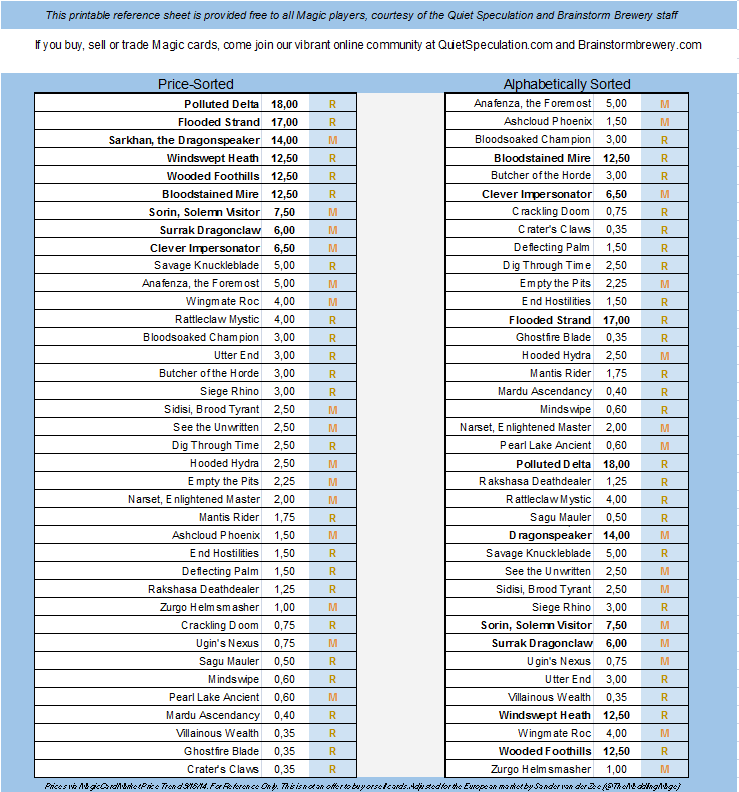
Many cards spiked over the PT weekend based on the amount of play and success they saw. Among them are [card]Pearl Lake Ancient[/card], [card]Siege Rhino[/card], [card]Wingmate Roc[/card], [card]Anafenza, the Foremost[/card], [card]Dig Through Time[/card], [card]Rakshasa Deathdealer[/card],and [card]Perilous Vault[/card].

If you had your copies before Friday, you’re in luck! These cards have increased to almost double the value of what they were last week in retail.  What do we do with them now?  Well, if you’re not playing them, now is the best time to sell them.  Most of these cards (save [card]Dig Through Time[/card]) are likely not eternal-playable and this may be their peak price for the foreseeable future.  The price of Khans of Tarkir singles is unsustainably high and it’s better to count the dollars you make now than the cents you could make by holding out longer. These cards could continue to grow, but it’s much more likely they see a significant dip as people continue to open Khans of Tarkir sealed product.  It’s a safe bet to get rid of your excess product now, because if any of these cards become a bust in the coming weeks, they can come crashing down like some other Khans cards.

The Busts

savage knucks

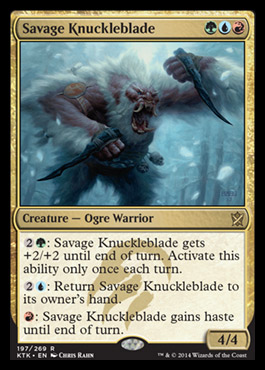
Some of the tri-color creatures in Khans haven’t lived up to their hype.  [card]Savage Knuckleblade[/card] and [card]Butcher of the Horde[/card] in particular are seeing some rough times price-wise.  I would keep an eye on these for further dips and buy in when they’re around $2.  The power level is definitely there for the cards, but they just don’t currently have the deck to be successful.

All other Khans cards over $3 that aren’t seeing tons of play are likely to come down in the next month.  These cards may still have some price memory from pre-order period, but lack of play will cause their prices to flop.

Sell, Sell, Sell!

xenagos

Some older cards have not proven their worth and price tag in new Standard. Among these are [card]Jace, the Living Guildpact[/card], [card]Xenagos, the Reveler[/card], [card]Ashiok, Nightmare Weaver[/card], [card]Erebos, God of the Dead[/card], [card]Keranos, God of Storms[/card], [card]Kiora, the Crashing Wave[/card], [card]Purphorous, God of the Forge[/card], [card]Thassa, God of the Sea[/card], and [card]Master of Waves[/card].

See the pattern?  These are all Standard-playable mythic rares that for the most part don’t have a ton of casual appeal buoying their prices. I would look to get rid of these as soon as possible as all except Keranos see no play in competitive Magic. I would like to say especially that it’s time to get rid of Xenagos—he is prime for a Duel Deck reprint with Elspeth.

Keep a Holding Pattern

anger of the gods

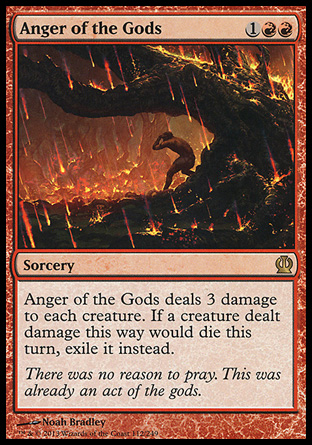
If you read my grinder finance articles from the Khans of Tarkir pre-order period, I advocated buying a few cards and I think it’s still a good idea to hold them. [card]Anger of the Gods[/card] has almost doubled in price since I recommended buying it, but I don’t think it’s done growing. It’s one of two cards that efficiently deal with [card]Goblin Rabblemaster[/card] in the sense of both cards and mana. (The other being a black uncommon, [card]Drown in Sorrow[/card]).  I think this can become an $8 or $10 card if people continue to play Rabblemaster and [card]Mantis Rider[/card].

[card]Hornet Queen[/card] is probably at its peak, but I don’t think they’re quite worth selling yet. There is a possibility that the new Abzan midrange deck from the pro tour decides to play them as an answer to the mirror match.  [card]Hornet Queen[/card] is really the trump in green mirror matches.

The Fetch Question

delta

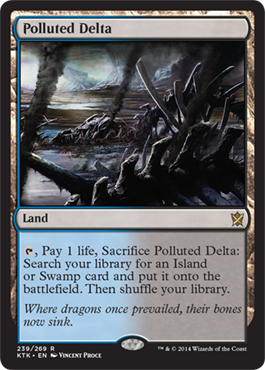
Please don’t buy them.  They’re still too expensive and make up far too much of this set’s price.  They will be down to $8 to $14 by Christmas time.

Invest!

ashen rider

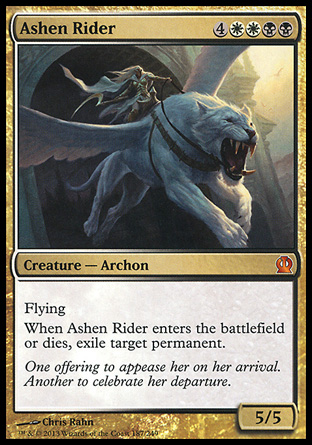
[card]Ashen Rider[/card] is still far too cheap.  A $2 mythic means it’s basically bulk (this is like Tibalt levels of bulk) but this guy is an EDH all-star and plays phenomenally well with [card]Whip of Erebos[/card].

That’s it for this time! Let me know what you think in the comments.

Casually Infinite – Learning to Better Assess the Power of Our Decks

With the exception of drafts that occasionally go truly awry, we frequently find ourselves playing with an unimpressive pool of cards, only to do very well in a tournament. On the other side of this coin, I frequently come out of a draft very happy with my cards only to pull off a mediocre finish. I found this to be the case in the KTK Prerelease and recent M15 drafts, and it was constantly mentioned in coverage at GP Orlando. I think that, overall, our visions of our pools are shrouded by a few things: rares, money cards, synergies, curve, and good creatures.

Issue #1: I Opened a Bomb Rare

Especially in Draft, but no less true in Sealed, opening a big bomb makes us feel really good about our deck. Having something like a Nissa or Sarkhan in the forty makes us feel like we’re always drawing to a win. Make no mistake, having big and tough-to-deal-with cards can really make a deck shine. Unfortunately, planeswalkers and even most other bombs generally require significant support to make a major impact on the game. Most decks these days are packing some kind of removal. If your game plan is to play a bunch of two-drops or bad morphs until you can throw down a [card]Siege Rhino[/card] and take over the game, your Siege Rhino is likely in for a very unfortunate surprise. While bombs are important, a deck is made up of having a series of threats that can’t go unanswered. In this way cards like [card]Abzan Guide[/card] or even the lowly [card]Aniok Bond-Kin[/card] can’t go unanswered for a long time without becoming a serious thorn in your opponent’s side. While I’d love to play a [card]Savage Knuckleblade[/card], two or three [card]Abzan Battle Priest[/card]s are likely to have a larger overall effect on your pool than one sexy rare.

siegerhino

One important question I like to ask is: if I took away my rares, how would I feel about my deck? If your deck still feels pretty good, then you’ve probably got a pretty good deck. If you feel like you just cut the core of the deck, you’re in for an uphill battle in this set of games. While I might be thrilled if my pool contained [card]Utter End[/card], [card]Zurgo Helmsmasher[/card], and [card]Savage Knuckleblade[/card], none of these cards are really going to push me over the top if my deck isn’t already there.

Issue #2: I Already Made My Entry Fee

When I enter a draft, pulling a couple of $5 cards can quickly change my mentality of the draft. After I’ve opened $12 worth of cards, any other wins are simply gravy. This creates a situation where I’m happy with my deck (even if it isn’t very powerful) simply because it has already made me a winner. It may be that the cards I’ve pulled don’t have any real synergy, but either way, I’m drafting on someone else’s dollar at this point. If anyone asks, I’d say my pool is great because of the value, even if my deck is terrible. If we need to truly assess our deck, we need to look at the power level of the cards we’re playing with, now how much they’re affecting our ticket count.

polluted delta

Issue #3: I’ve Got This Cool Synergy

This is perhaps one of the biggest ways we betray our decks. I recall in M14 having a deck with a [card]Rumbling Baloth[/card], [card]Marauding Maulhorn[/card], and [card]Advocate of the Beast[/card]. The combo potential of dropping an Advocate on turn three into a Baloth on turn four and swinging with a 5/5 on turn five (in a very slow format) was awesome. Or maybe I’d get to drop the [card]Marauding Maulhorn[/card] and swing in with a 6/4 on turn five. It’s a nice synnergy and it made my deck a little more powerful.

The problem was that M14 was a format full of removal, and every time that the Advocate of the Beast didn’t get killed, the Rumbling Baloth would. Don’t get me wrong, it’s a perfectly fine synergy that made my deck better. But the fact that I had the combo didn’t really push my deck over the edge, but it sure felt like it did. Even in a best-case scenario, I’d only see the Advocate about once a match and there was no guarantee it would be at the same time as my other Beasts.

Finding synergy makes Limited exciting, but we really can’t depend on a combo to consider our deck powerful. There’s very few situations in which pulling it off will make a substantial difference in a game. In GP Orlando, there was a guy playing five [card]Jeskai Windscout[/card]s. This wasn’t about synergy, it was about hitting people in the face for two or three while your other cards gummed up the ground. Cards like [card]Rush of Battle[/card] aren’t awesome because you have a bunch of warriors in your deck. They’re awesome because they make all your durdly creatures into a game-ending threat.

jeskaicharm

Issue #4: She’s Got These Awesome Curves

Having a solid mana curve in your deck is really important. But more important than that is having important spells to cast. Being able to drop a 2/1 or 2/2 on turn two is a decent deal in Khans of Tarkir due to Morphs and all the other early ground threats. Filling that slot instead with [card]Debilitating Injury[/card], [card]Feat of Resistance[/card], or [card]Savage Punch[/card] is great once things get moving. But if you’re two-drop slot are full of cards like [card]Taigem’s Scheming[/card], [card]Valley Dasher[/card], or [card]Trail of Mystery[/card], you’re going to need some very specific plans to make your deck good. Sticking them in your deck so you have something in the two-drop slot isn’t necessarily going to make your deck better.

While doing nothing on turn two is kind of a bummer, it’s worse to do nothing and lose a card in the process. None of these cards do nothing, but if you aren’t going to take advantage of a raid trigger on turn three from Valley Dasher, all you’ve done is dropped a very easy-to-kill creature on the battlefield for your opponent to play a 2/3 into. A slightly worse curve of better cards is better than a good curve of bad cards.

The other side of things is that you may have a deck without any curve considerations. KTK has a number of fantastic four-drops. They’re very powerful and playable and you want lots of them in your deck. The only problem is that you can’t afford to put lots of them into your deck. While you’ll realistically be able to play two two-drop creatures in one turn, or even a two- and a three-drop creature, you’ll almost never play two four-drop creatures in a turn. If the good cards in your hand are all four-drops, you’re going to play one on turn four, one on turn five, one on turn six, and one on turn seven. Assuming your opponent’s deck got off to any kind of decent start, you’re going to be in real trouble when you start plopping them down and they have a couple of answers.

treasurecruise

Issue #5: I’ve Got All These Good Creatures

Unfortunately, good cards do not always make a good deck. I can’t think of the number of times I was very happy with the power level of my deck only to find that I didn’t have any solid win conditions.

Surprisingly, one card that keeps coming up as a win condition in Abzan decks is [card]Alabaster Kirin[/card]. With cards like [card]Ainok Bond-Kin[/card] holding down the ground, sometimes all you really need is a reliable way to get in two damage per turn. Alabaster Kirin serves that purpose. While it isn’t an impressive card, I frequently find that my decks without it are lacking a certain finisher quality.

Even big creatures like [card]Siege Rhino[/card] don’t necessarily pack the punch necessary to break through a stalemate. If the game comes to parity, I want something like a [card]Krenko’s Enforcer[/card], [card]Accursed Spirit[/card], or [card]Mystic of the Hidden Way[/card]. Even if these options aren’t available, big dumb fliers like [card]Venerable Lammasu[/card], [card]Riverwheel Aerialist[/card], and [card]Abomination of Gudul[/card] will frequently get the job done. Though evasion isn’t the only way, having a way to close out games is vital.

There’s lots of other options for close-out cards. Big swing cards like [card]Rush of Battle[/card] or [card]Incremental Growth[/card] can all push you over the edge when the game stalls out. While these cards aren’t going to do anything for you when you’re behind, they’ll clearly make a huge impact when the game slows down.

Cards like [card]Treasure Cruise[/card] can help as well, but you need to be drawing towards something that can make profitable attacks. The issue here with just having good cards is that they don’t guarantee profitable attacks. If all you’ve got is good value cards, you need to be out valuing your opponent by hitting their big cards with removal while protecting your own big cards. A plan like [card]Forge Devil[/card], [card]Forge Devil[/card], [card]Lighting Strike[/card], [card]Lighting Strike[/card], [card]Stoke the Flames[/card], [card]Covenant of Blood[/card], [card]Covenant of Blood[/card] is a win condition. But if you’re just going to play good creatures, you likely don’t have any way to punch through. You don’t win the game by playing good creatures—you win by turning them sideways and damaging your opponent.

monasteryswiftspear

Summary

I think that it is important to be able to accurately assess the power of our decks. In Draft, this can be particularly challenging because you just don’t know if you happen to be at a table that played nice, opened good cards, or were acting as the hate-draft mafia.

In Draft, it’s possible that you’re mediocre deck is the best mess of cards at the table. But in Sealed, we should be able to compare our deck with a normal standard to see what we’ve put together. Let’s focus on how successful our deck can be with all the cards in our pool rather than focusing on the big cards, money cards, funky synergies, perfect curves, and suite of solid creatures. In order to win, we want win conditions, bombs, a smooth curve, good creatures, and some synnergy, not lots of any one of those.

Money cards don’t hurt, either.

Brainstorm Brewery #118 – Corbin’s True Value

The Pro Tour is over, but you wouldn’t know it because Brainstorm Brewery is a man down after sever jet lag, and some procrastination-related complications sideline everyone’s fourth-favorite cast member. With one fewer person to fill awkward silences, his true worth on the cast becomes apparent to everyone. Will the entire gang manage to get together and record regularly again or will communicable disease season claim the voices of a different member next week?

It’s Pro Tour recap time, and there is plenty to talk about. Who is too sick to make the cast? Who gets to bask in the glory of correct calls that other cast members maligned? Which sets’ cards are better than others as buys during the Pro Tour weekend? Find out the answers to all of these questions and more on a very special episode of your favorite podcast that will have you asking, “Why is Marcel doing shout outs again? Didn’t Jason threaten to murder him last time?” Join us for Brainstorm Brewery.

  • Jeskai Ascendancy Storm? In Standard? What in the actual world?
  • Ari Lax is the Pro Tour winner with Abzan Midrange.
  • Finance 101 is all about buying before and after the Pro Tour.
  • Pick of the Week is back, with more picks than there are cast members this week.
  • Questions? Concerns? E-mail brainstormbrew at gmail dot com.


Cabe Riseau produced the intro and outro music for Brainstorm Brewery.

Contact Us!

Brainstorm BreweryWebsiteE-mailTwitterFacebook

Ryan BushardE-mailTwitterFacebook

Corbin HoslerE-mailTwitterFacebookQuietSpeculation

Jason E AltE-mailTwitterFacebookQuietSpeculation

Marcel WhiteE-mailTwitterFacebook

Conjured Currency #35: My Story

Welcome back! I’m going to preface this week’s rant by mentioning that there’s a low likelihood of Magic finance material ahead. If you’re here solely for your weekly dose of new tips on collection buying, buylisting, or value trading, you’ll probably have to wait until next week. To be completely honest, I’m not 100-percent sure of what lies ahead in this week’s article. I have a general idea or theme that I want to stick to, but for the most part I just plan on letting my mind and fingers wander onto the page. I hate wasting other people’s time, so I wanted to get that out of the way in advance. If you’re interested in reading about my life and thinking about your own for a bit, I welcome you along for the ride. If not, I hold no resentment.

Last Week, Corbin “B Dubs” Hosler managed to way to sneak into my residence hall room from halfway across the continent, and steal my article idea for this week that had been sitting on a Post-It note on my desk. I too had been pondering that specific Gavin Verhey article from three years ago, thinking a lot about how my life had been lead up to this point, and where I would be going into the future. I wasn’t en route to Hawaii for the Pro Tour, but I’ve been having unusual success with the whole “Magic Finance as a primary source of income as a college student” throughout this semester, and it got me thinking about my current life circumstances.

Delusions of Grandeur

Throughout the majority of my high school life, I was more focused on Magic: The Gathering than actual schoolwork. Friday classes were something to be tuned out while I scribbled updates to decklists in my notebook, or goldfished opening hands on my iPod. Study halls were a time to get on the computer and lose myself in spoilers for the next set. My goals and aspirations of reaching the Pro Tour one day were more concrete than the decision of what college I would be attending. I was 200-percent confident that since I could beat people who were twice my age at FNM, I would make my mark on the competitive scene without much trouble at all. I knew I wanted to make it on the Pro Tour, and be a psychology major while in college. I had the perfect battle plan, no need to remind me.

illusionsofgrandeur

Believe it or not, that didn’t happen. Without a car, driver’s licence, or monetary capability to have whatever deck I wanted at a moment’s notice, I was relegated to grinding FNMs for my high school life. I took the chance to hop in the empty seat to a PTQ once every few months if it was within an hour drive, but never made it past the sixth round. I wasn’t surprised—I didn’t practice enough. Magic wasn’t like high school homework where I could show up the day of the test and BS my way to a B+ without any studying or effort. Actual testing, practice, and training was involved. Eww.

Fast forward to my senior year of high school, and the “FNM-grinder, reader of every TCG/free SCG article ever, Pro Tour aspirant” version of DJ came across the previously linked article by Verhey. I asked myself the same question that Gavin, Corbin, and others have done, and I came up with an answer. I wanted to live the stereotypical dream of getting married, having kids, and a career that I loved, but I wanted to make an impact on the Magic world. I wanted to have my name known in the community, and be someone to look up to. I wanted to be the source of inspiration for others to follow their dreams down the line. It’s weird, because I can remember back when I read that article for the first time, but I don’t remember thinking of myself as a Pro Tour champion for the first time. I just knew that I wanted to make my mark.

deathmark

Delusions of Mediocrity

I’m going to press the metaphorical fast forward button once again, to my freshman year of college. I signed up for an SCG Premium membership, and had a roommate who owned a car. I had taught him how to play in the previous year, so in my mind that meant being able to travel to more tournaments. The college campus Magic community was much broader than the group in my hometown, and now I actually lived within walking distance of any number of people to play against. I even had less actual class time than when I was in high school! PTQs, Grands Prix, here we come.

It turns out that I actually just can’t stand studying. Whether it’s in the form of taking a couple of hours to read a textbook for a test I have this coming Thursday, or playtesting a matchup between two decks for 10 games in a row, I get bored easily and want to focus on something fun. The whole Pro Tour dream was just too stressful, and I didn’t want to put in the required time and effort to make it happen. It felt like work, not playing the game like I had been doing at FNM a couple years prior. Even FNM started to feel like a chore or an obligation on some days, not a weekly oasis of relaxation and fun.

oasis

Although I had been value trading, picking commons and uncommons, and speculating on certain cards for a large portion of my Magic life, I had always assumed it was just a thing I knew how to do, and didn’t recognize that “Magic finance” was actually a thing that people did as their only source of income. I started to focus on building my collection more than playing, and learning about the various terminologies used in finance. I moved away from Brad Nelson articles and towards Chas Andres. I started listening to Brainstorm Brewery on a weekly basis, and signed up for a Quiet Speculation membership. I could feel the link to the competitive edge slipping away, but I fell into an entirely new world. I had been doing this for just as long as I had been playing at FNM, and I felt like I was better at it.

It wasn’t too long before I was buying binders and collections on a regular basis, and I shifted roles in the community. Instead of a player to test against on our regular Tuesday night gaming, I grew to commandeer my own table and set up shop with numerous binders and boxes. I grew to be “that guy” who almost always had the cards you were looking for, and always had cash if you were looking to sell. I felt like I was contributing much more to the group than I ever was before, and I feel that my friends think the same, especially when they support me in what I do.

I realized what my answer was to that three-word question had been all along. I saw myself in the future having made an impact on Magic, but it wasn’t by shaking hands with Jon Finkel after a feature match, or testing with team TCGplayer for a week before the Pro Tour. I wanted to be the guy buying [card]Master of Waves[/card] for $5 each mere hours before they hit $15, and warning people on Twitter about impending spikes or price changes. I want to go to Grands Prix to relax, sell cards to vendors, buy stuff that’s under-priced, and hang out with friends, instead of going 3-3 drop and suffering a six-hour return drive of self-loathing for not testing more for that one matchup.

When Corbin posted his article on Empeopled, I gave Gavin’s original piece another read. There are a lot of things in my life that are uncertain at my age (I’m still in undergraduate school, I can’t even legally drink yet, and I have no idea where I want to live or settle down), but I know that one piece of my endgame has started to fall into place. I want to continue in my endeavors of Magic finance, and make my presence known in this community. This time, I’m willing to put in the studying, the work ethic, and the hours—because I enjoy it. I love helping out people with their questions, and hearing that people actually read what I write. I’m thankful every time I get to sit down and produce an article, and I mean it from my heart every time I say a generic “Welcome back!” or “Thanks for reading!” The community has given me so much by just listening what I have to say, and I hope that I can continue to provide relevant information for years to come.

informationdealer

Well? What’s your endgame?

Unified Theory of Commander: Threats

What kind of deck do you really want to build?

This question is at the starting point of every Commander deck, isn’t it? There’s no sense in building a deck that won’t be fun to pilot. So EDH players need to start with this question and then continually revisit it to make sure that the deck they actually build ends up being the deck they set out to play in the first place. Your own personal definition of “fun” is at the heart of deck building.

The answer to that critically important question is what defines the Threats portion of  our Unified Theory of Commander. Threats are the cards that advance the game, execute your plan, and eventually defeat your opponents. They are the cards that define your “critical mana points,” are the primary targets for your tutors, and should be producing card advantage in one form or another if they stick around long enough to do their job. Threats are the cards that great EDH stories spring from.

Revisiting “My Deck Tickled A Sliver”

So if threats are the starting point of every EDH deck, why aren’t they  the first element in the Unified Theory of Commander? Remember that order of operations is different than order of importance. You might pick your favorite cards to build around, but they aren’t ever really “threats” if you can’t get them into your hand or afford to cast them. So while the order of operations for deck building might dictate that you pick your threats first and fix your mana last, it’s important to remember that in order of importance, acquiring the resources that power your threats is most critical to building a deck that actually does its intended  job.

With our discussion on resource acquisition behind us, threats now become the hinge point for the rest of the theory. Understanding our threats helps us determine which mana sources to run and what kinds of card draw we need as the underlying framework for our deck. It also informs our decisions about what kind of answers to run and how we’ll edit our decks for synergy.

Threats vs Synergy

We discussed in our introductory article how focusing on synergy first tends to lead new deck-builders astray. The issue of synergy is probably the most contested point in the entire theory so far, so it’s important that we revisit it now that we’ve come to threats in order to bring a little more clarity to the discussion. Threats can absolutely synergize with each other, but synergy by itself does not constitute a threat.  So understanding how to differentiate between the two can tremendously improve your deck-building skills.

Go to War with Real Threats.

Go to war with real threats.

Let’s use [card]Aurelia, the Warleader[/card] as a tool for illustrating the difference between threats and synergy. Our fiery angel of the Boros Legion has an ability that creates extra attack steps, so a player thinking about synergy first will immediately consider creatures with  abilities triggered by attacking. Getting two activations of battle cry or battalion will absolutely seem exciting, powerful, and synergistic, but does that synergy necessarily “get you there” when the game is on the line? Does it create meaningful card advantage? Does it put enough pressure on the table to threaten to end the game if it goes unanswered? If not, it’s not really a great example of a true “threat.”

Consider the card [card]Warmind Infantry[/card] and how it synergizes with Aurelia. It gets +2/+0 when its battalion ability triggers, so with two combat steps, it has the potential to deal 10 damage on a single turn. Seems pretty great strictly within the context of synergy. That’s a quarter of an opponent’s life total by itself, potentially ballooning to more than half their health when you consider Aurelia and at least one other creature are attacking as well. It sounds pretty appealing to deal half of someone’s health on a single turn, doesn’t it?

So is [card]Warmind Infantry[/card] a good inclusion in your Aurelia deck? Probably not, unless you are building on a strict budget. Three toughness means it’s not likely to survive the first combat step in the first place, so getting a second combat step isn’t guaranteed. The synergy is often wasted right there. More important though, is that Warmind Infantry isn’t very good on its own. It doesn’t threaten to end the game by itself, so without Aurelia to power it up and an empty battlefield so it can avoid blockers, the card just isn’t going to provide enough value to really qualify as a meaningful threat in EDH.

Not a Threat. Sorry.

Not a threat. Sorry.

Now compare Warmind Infantry  to [card]Tajic, Blade of the Legion[/card]. Battalion givesTajic +5/+5, so Aurelia’s bonus attack step means Tajic can deal 19 damage on a single turn by himself, which is already almost double the synergistic value for just one white mana more. More important is that Tajic is indestructible, so not only does he hit harder, he survives every combat to hit his opponents again. He doesn’t need an empty battlefield to produce value, nor does he need Aurelia to begin being scary. Tajic demands answers all by himself and synergizes with far more cards to put pressure on the table.

Maybe it’s cheating to compare a common card to a legendary rare, but the hidden rule we’re trying to uncover with this illustration is sound. Synergy does not produce a threat all by itself. It can increase value and potentially produce card advantage, but it doesn’t actually define what your deck is trying to do. Synergy is the salt and pepper, but threats are the meat of the deck.

Defining Threats

So how can we properly define Threats? How can a deck builder identify cards that are ideal to build around? There are a few key characteristics to keep in mind when selecting the right cards to lead your deck.

First, a true threat should threaten to end the game or eliminate at least one opponent if it goes unanswered. If we think back to the BREAD acronym for drafting, Threats are Commander’s equivalent to Bombs. They are powerful cards that apply pressure on your opponents and advance your own game plan. Flowing from this idea, we should also note that true threats should demand answers from your opponents. The table should not be able to safely ignore your key cards  in most reasonable board states.

No Synergy Needed.

No synergy needed.

The second big idea to keep in mind is that your threats should either be very powerful by themselves or synergize in multiple ways with the rest of your deck to end the game if left unanswered. Playing an [card]Avacyn, Angel of Hope[/card] can be a threat all by itself. It’s an indestructible, vigilant, flying 8/8 that can put enormous pressure on the table alone. [card]Helix Pinnacle[/card] can also function as a threat in a defensive deck like [card]Angus Mackenzie[/card], although it may require a lot of synergy and protection to succeed. Finding a card that is both potent by itself and synergizes well with the rest of the deck is really the ultimate goal. [card]Avenger of Zendikar[/card] is good in just about any deck that runs green, but it’s astounding in a deck like [card]Hazezon Tamar[/card] that is built to abuse all those tokens in multiple ways.

Selecting Threats

Now that we know what really defines a threat, how do we go about picking the right ones for our decks? To answer this question, we really do need to go back and ask the question that started this article again: what kind of deck do you really want to build? Your threats should be selected in service of that goal.

Do you want to play Voltron? Then threats are the cards that either suit up your commander or are other creatures that can get powered up when your commander is unavailable. Potent equipment and resilient creatures become the threats that drive the deck towards its goal: turning a creature into an unstoppable combat machine.

What about combo decks? Their threats are the combo pieces that demand answers before they trigger a win condition that no other player can stop. So no matter how interesting or cute, cards that do not either set up the combo or protect it are good choices to get cut during the deck-building process. [card]Colossal Whale[/card] might be a big creature with a strong ability, but its probably not the best thing to draw when the game is on the line and your deck really just needs to hit its combo pieces. It’s not a threat. It’s dead weight.

Don't End Up Like This. Run Real Threats!

Don’t end up like this. Run real threats!

We can repeat this pattern with every deck archetype and commander in the format to narrow our choices for threats. During our discussion on card advantage, I suggested you ask yourself, “What value do I get for playing this?” Perhaps another question to ask yourself when evaluating threats is, “Does this card align with the goals of my deck?” Just because a card is good, it doesn’t mean it helps advance your primary game plan and win the game. Those cards need to get cut, however painfully, if you want your deck to succeed.

Conclusion

If there is nothing else we take away from the discussion on threats, it should be this: set goals for your deck before you start building. Once you know the deck you want to play, then aggressively build toward that idea and cut anything that doesn’t service its goals. This is more than synergy. It’s directionality.

You don’t build a house by picking a bunch of wood that looks nice when hammered together and seeing what comes out once you throw some nails at it. Maybe that’s art. Maybe it makes you happy sometimes, but it certainly doesn’t qualify as a house that meets the requirements of shelter and safety. Instead, you get a blueprint and build using that as the guide. Building against that blueprint results in a solid structure that can successfully house a family.

Likewise, an EDH deck shouldn’t be made by taking a bunch of cards that synergize and throwing them into a 100-card pile. That might feel good sometimes, but it certainly doesn’t result in a consistent deck that always feels fun to pilot. Instead, set some goals for your deck before you begin. Pick your threats based on those goals and your deck building skills will improve tremendously.

Weekend Magic: 10/10-10/12 (Pro Tour KTK Edition)

Welcome back, guys! I have some very exciting things to share with you today thanks to Pro Tour Khans of Tarkir happening last weekend. Many Magic players believe that the Pro Tour solidifies the decks that we will be seeing until the end of January, so based on the results, cards that were previously undervalued spike during and shortly after the weekend. I will analyze the top eight decks, what cards have already spiked from the results, and what cards I think are still undervalued even after the weekend. Let’s go!

Pro Tour Khans of Tarkir – Top 8 Decklists Data

Decklists

Results:

1st – Ari Lax (Abzan Midrange)

2nd – Shaun McLaren (Jeskai Wins)

3rd – Thiago Saporito (Abzan Midrange)

4th – Mike Sigrist (Abzan Aggro)

5th – Ivan Floch (Blue-Black Control)

6th – Ondrej Strasky (Jeskai Wins)

7th – Yuuya Watanabe (Jeskai Wins)

8th – Lee Shi Tian (Jeskai Ascendancy Combo)

 siege-rhino

[deck title=Main Deck Cards by the Numbers]
[Mythic Rare]
7x Sorin, Solemn Visitor
6x Wingmate Roc
5x Sarkhan, the Dragonspeaker
4x Anafenza, the Foremost
3x Elspeth, Sun’s Champion
3x Brimaz, King of Oreskos
3x Ashcloud Phoenix
2x Stormbreath Dragon
2x Ajani, Mentor of Heroes
1x Nissa, Worldwaker
[/mythic rare]
[Rare]
15x Hero’s Downfall
14x Flooded Strand
12x Windswept Heath
12x Sylvan Caryatid
12x Siege Rhino
12x Mantis Rider
11x Thoughtseize
11x Temple of Triumph
11x Dig Through Time
10x Temple of Malady
8x Shivan Reef
8x Llanowar Wastes
8x Goblin Rabblemaster
8x Fleecemane Lion
8x Courser of Kruphix
7x Battlefield Forge
6x Temple of Silence
6x Temple of Epiphany
6x Mana Confluence
6x Caves of Koilos
5x Urborg, Tomb of Yawgmoth
4x Temple of Deceit
4x Rattleclaw Mystic
4x Rakshasa Deathdealer
4x Prognostic Sphinx
4x Polluted Delta
4x Jeskai Ascendancy
4x Hushwing Gryff
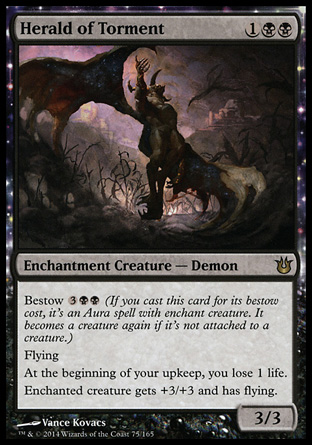
4x Herald of Torment
3x Temple of Plenty
3x Temple of Mystery
2x Yavimaya Coast
2x Wooded Foothills
2x Utter End
2x Twinflame
2x Temple of Abandon
2x Silence the Believers
2x Bloodstained Mire
2x Anger of the Gods
1x Whip of Erebos
[/rare]
[Uncommon]
12x Stoke the Flames
12x Sandsteppe Citadel
12x Mystic Monastery
12x Magma Jet
12x Jeskai Charm
10x Abzan Charm
9x Seeker of the Way
5x Bile Blight
5x Banishing Light
4x Dissolve
4x Despise
4x Frontier Bivouac
3x Kiora’s Follower
3x Drown in Sorrow
2x Heir of the Wilds
2x Briber’s Purse
1x Ulcerate
[/uncommon]
[/deck]

[deck title=Sideboard Cards by the Numbers]

8x Drown in Sorrow
7x Suspension Field
7x End Hostilities
7x Disdainful Stroke
7x Bile Blight
6x Magma Spray
5x Prognostic Sphinx
5x Erase
4x Thoughtseize
4x Savage Knuckleblade
4x Negate
4x Anger of the Gods
3x Swan Song
3x Lightning Strike
3x Elspeth, Sun’s Champion
3x Dissolve
3x Clever Impersonator
3x Arc Lightning
2x Wingmate Roc
2x Silence the Believers
2x Returned Phalanx
2x Polukranos, World Eater
2x Nissa, Worldwaker
2x Murderous Cut
2x Keranos, God of Storms
2x Despise
1x Whip of Erebos
1x Utter End
1x Unravel the Æther
1x Stain the Mind
1x Set Adrift
1x Phyrexian Revoker
1x Pharika’s Cure
1x Pearl Lake Ancient
1x Mass Calcify
1x Liliana Vess
1x Gods Willing
1x Gainsay
1x Duneblast
1x Chandra, Pyromaster
1x Back to Nature
1x Anafenza, the Foremost
1x Ajani, Mentor of Heroes
1x Agent of Erebos
[/deck]

Cards that Have Spiked

Cards that have spiked from the weekend’s results include:

  • [card]Pearl Lake Ancient[/card]
  • [card]Dig Through Time[/card]
  • [card]Perilous Vault[/card]
  • [card]Rakshasa Deathdealer[/card]
  • [card]Siege Rhino[/card]
  • [card]See the Unwritten[/card]
  • [card]Jeskai Ascendancy[/card]

pearllakeancient

For all the above mentioned cards, if you have extra copies you will want to trade them or sell them over the next few weeks since many of these prices are driven by hype. The prices for many of these cards are going to be going down or stabilizing over the next few months, so by trading or selling extra copies you will be in a position of profit due to the PT results. As Corbin likes to say, “Leave the last ten percent for the next guy.” Many of the above cards are rares that are going to hit the market en masse, which will heavily stabilize their prices or even decrease them. The only exception I may make here is [card]Perilous Vault[/card], since it is from M15—yet no copies were in the top eight, so even this might go down.

Cards that have increased in price based on speculated play that also were not seen in the top eight include [card]Hornet Queen[/card] and [card]Genesis Hydra[/card]. Hornet Queen has see the most upward momentum since M15 was released, going from $1 or less to $5.50 or more retail. Genesis Hydra is also included in the Mono-Green Devotion deck. However, the price is still relatively stable at $3.50, only going up $1 from its low of $2.50.

I believe the [card]Hornet Queen[/card] window has passed for now, since the triple-green casting cost prohibits it from being in many different decks and the buy-in point is too high to make a profit (that is, I don’t think it is going to $11 or more in the near future). I think the window has also passed on Hydra as well. At $2.50 I was a buyer, but at $3.50 or more, I don’t think there is a ton of room for growth. If you plan on playing green devotion in the new Standard, you will want to pick up your copies of both cards now. I don’t think they are going below their respective new prices while still in Standard. However, I don’t think this is where you are going to want to speculate since I believe the risk outweighs the reward.

hornet queen

Current Stabilized Staples

Cards that appeared in top eight lists that have stabilized for now or will be slow gainers through the next few months include:

  • [card]Elspeth, Sun’s Champion[/card]
  • [card]Brimaz, King of Oreskos[/card]
  • [card]Hero’s Downfall[/card]
  • [card]Sylvan Caryatid[/card]
  • [card]Thoughtseize[/card]
  • [card]Temples (all of ‘em)
  • [card]Painlands[/card]
  • [card]Goblin Rabblemaster[/card]
  • [card]Courser of Kruphix[/card]
  • [card]Mana Confluence[/card]
  • [card]Urborg, Tomb of Yawgmoth[/card]

These are the cards that won’t be changing much in price, if at all, over the next few months. They only stand to increase with more visibility at SCG Opens or GPs, so if you don’t have your copies for Standard, you will want to pick them up soon.

In terms of speculation, all of these cards are from Theros or M15, so holding onto them for now and waiting for the beginning of next year will be important to maximize profits. Getting out too soon will prevent you from realizing some of the higher prices that a few of these cards might reach if they start dominating Standard over the next few months.

All are too expensive to speculate on, though any copies you might have should be kept in anticipation of future price increases.

Looking at the uncommons, the trilands—particularly [card]Mystic Monastery[/card], [card]Sandsteppe Citadel[/card], and [card]Frontier Bivouac[/card]—are now the frontrunners for maintaining a price of $1 or more for their time in Standard. Start packing away as many copies of these lands as possible for future gains over the next year.

mysticmonastery

Potentially Undervalued

The first card that pops up to me as potentially undervalued is [card]Ajani, Mentor of Heroes[/card]. Three copies across the main deck and sideboard were included in Ari Lax’s winning Abzan deck. Even though this was the only place Ajani appeared in the top eight, he was doing a ton of work on camera and enabled Lax to win against McLaren and Saporito in his final two matches. Not only does Ajani have the PT win going for him, he also has casual appeal as a planeswalker (especially being the first GW walker) and will maintain a large amount of value from that. Heck, Kiora has gone up to $21.50 retail without any results from these top eight decks!

The next card on my list is [card]Anafenza, the Foremost[/card] in foil. She appeared five times across main decks and ‘boards in the top eight, and has real Vintage and Commander playability. I especially like foils if you can get them for $14 or cheaper. I would avoid regular copies for a while since more Khans is soon to hit the market. However, at $2-$3 I would start picking her up for anticipated Standard play in the future.

Another card could be [card]Stormbreath Dragon[/card]—even the pros still aren’t sure whether Stormbreath is necessarily better than [card]Sarkhan, the Dragonspeaker[/card]. It has already started slowly going up from its lows of $13 to $19 and could continue to $20 and beyond once Theros becomes hard to find next spring, especially after Fate Reforged has been released. We’re not going to see [card]Thundermaw Hellkite[/card] prices of $40 or more, since Stormbreath is from heavily opened Theros, but $30 is a real possibility since he dodges all the white removal of the currently popular Jeskai and Abzan decks (and even future Mardu decks). I would not go deep here, but if you plan on playing red in the new Standard, you will want to pick up your Stombreaths soon.

Lastly, [card]Fleecemane Lion[/card] could start doing more work if the Abzan aggro deck starts catching on. At $4 or less, this could be a great pickup in anticipation of winter and spring play.

Final Thoughts

Even though Sorin, Sarkhan, and [card]Wingmate Roc[/card] were the most popular mythics in main decks by the numbers, there is still a good chance that all of them will drop over the next few months leading into January. More Khans product will be opened, which will increase the amount of copies out there. A good case study here is [card]Master of Waves[/card] and [card]Thassa, God of the Sea[/card]. Both were seen in huge numbers at Pro Tour Theros, spiked hugely after the PT, but then went down and even past their preorder prices once Theros saturated the market over the next year. When was the best time to get out at their highest price? The weeks following the PT. One caveat here is that planeswalkers can buck this trend due to overwhelming casual demand in addition to tournament playability. Again, though, you have to consider risk versus reward—do you want to wait and find out if they’re still good three months from now or do you want to capitalize on what you know was a recent spike in price?

In terms of rares, even though [card]Siege Rhino[/card], [card]Mantis Rider[/card], and [card]Dig Through Time[/card] will be staples throughout their entire lives in Standard, I also have a hard time seeing them maintain their current prices. Like the mythic rares mentioned above, their prices are really going to be hit hard by the continued printing of Khans over the next year. Since they are rares, there is a real possibility that they could be printed in an event deck or similar supplemental product, further dissuading me from wanting to target them at this point. The risks outweigh the benefits here for the top rares from Khans as well.

There is still opportunity in Theros and M15 cards, since print runs are starting to come to a close for these sets and many of the hot staples are stabilizing in price. Any card that you feel is underutilized could be a good pickup if it hasn’t already spiked from the PT results. Slow gainers should still go up slowly, at least until the end of January.

Finally, cards like the fetch lands should be dropped like hot potatoes. All are bound to go down in price over the next few months. Where they will finally end up I can’t tell, you but there is no way that expected value of Khans boxes will continue to be more than $180 over the next few months and next year. Higher priced rares are almost all going to drop and reduce this EV to less than the cost of a box, ultimately fulfilling the laws of supply and demand.

Have any questions or comments on this article or tech we saw at the PT? Let me know in the comments.

Brewing with Khans of Tarkir

Welcome back! Today we’re brewing with Khans of Tarkir. For those of you who don’t know, this article is a little later than usual—because I’m prepping for Pro Tour Khans of Tarkir in Honolulu. As I’m finishing up this article, it’s Sunday October 5th, the day after States and the day before I leave for Hawaii. There is a benefit to this delay, though: I’ve had a lot more time to tune the decks and even provide full sideboards. I even made top eight of Ohio States with the Gruul Monsters list in this article on the 4th. Without any further delay, let’s get to some decklists…

Gruul Monsters

This is the leading choice for me for Pro Tour Khans of Tarkir. Not only is it brutally efficient, but I made top eight at States with it yesterday. This deck really only gained from rotation, leaving [card]Stormbreath Dragon[/card] killable by only a few spells. It also gained [card]Nissa, Worldwaker[/card], who simply takes over games by herself, and [card]Sarkhan, the Dragonspeaker[/card], who not only kills things but doubles as your fifth and sixth [card]Stormbreath Dragon[/card]s. The sideboard does feel slightly off, but I can’t quite place where.

[deck title= Gruul Monsters]
[Creatures]
4 Elvish Mystic
4 Sylvan Caryatid
2 Rattleclaw Mystic
4 Courser of Kruphix
3 Polukranos, World Eater
4 Stormbreath Dragon
2 Genesis Hydra
[/Creatures]
[Spells]
4 Lightning Strike
4 Xenagos, the Reveler
4 Nissa, Worldwaker
2 Sarkhan, the Dragonspeaker
[/Spells]
[Land]
4 Wooded Foothills
4 Temple of Abandon
2 Mana Confluence
1 Darksteel Citadel
7 Forest
5 Mountain
[/Land]
[Sideboard]
2 Magma Spray
2 Anger of the Gods
2 Reclamation Sage
2 Harness by Force
3 Fated Conflagration
2 Chandra, Pyromaster
2 Hornet Queen
[/Sideboard]
[/deck]

Beast Wars

I tried to run this for old time’s sake last weekend and only went 3-2 with it due to some pretty terrible draws on my part. I didn’t run it this week so I could get in testing with other decks. I’m not really sure if the metagame is ready for this deck, as [card]Siege Rhino[/card] seems to be everywhere right now and it is a hell of a card. Adding white gave it a few nice tricks, but I’m not sure if it’s enough.

[deck title= Beast Wars]
[Creatures]
4 Elvish Mystic
4 Sunblade Elf
4 Swordwise Centaur
4 Fleecemane Lion
4 Reverent Hunter
4 Boon Satyr
2 Polukranos, World Eater
3 Nylea, God of the Hunt
[/Creatures]
[Spells]
4 Aspect of Hydra
2 Setessan Tactics
2 Bow of Nylea
[/Spells]
[Land]
13 Forest
4 Windswept Heath
4 Mana Confluence
2 Plains
[/Land]
[Sideboard]
2 Ajani’s Presence
1 Back to Nature
1 Setessan Tactics
2 Hall of Triumph
2 Reclamation Sage
2 Banishing Light
1 Ajani Steadfast
4 Nylea’s Disciple
[/Sideboard]
[/deck]

Mono-Black Aggro

This is another deck that had lots to gain from rotation. Unfortunately, everyone is running every sweeper spell they can find. This is still a great deck that can kill out of nowhere, so I won’t count it out.

[Deck title=Mono-Black Aggro]
[Creatures]
4 Bloodsoaked Champion
4 Gnarled Scarhide
4 Tormented Hero
4 Mardu Skullhunter
4 Pain Seer
4 Herald of Torment
4 Mogis’s Marauder
[/creatures]
[Spells]
4 Thoughtseize
4 Bile Blight
2 Hero’s Downfall
[/spells]
[Land]
14 Swamp
4 Bloodstained Mire
4 Polluted Delta
[/Land]
[Sideboard]
1 Hero’s Downfall
2 Grim Horuspex
2 Despise
3 Pharika’s Cure
2 Murderous Cut
3 Phyrexian Revoker
2 Stain the Mind
[/sideboard]
[/deck]

Golgari Rock

Remember, I always brew The Rock, and this time is no different. I’m not convinced this is better than the Abzan decks due to the powerful cards that get added into the mix, but it will be able to more easily cast the ones it has to make up for it.

[deck title= Golgari Rock]
[Creatures]
4 Sylvan Caryatid
4 Rakshasa Deathdealer
4 Courser of Kruphix
4 Reaper of the Wilds
[/Creatures]
[Spells]
4 Thoughtseize
3 Bile Blight
4 Sign in Blood
4 Hero’s Downfall
2 Silence the Believers
4 Nissa, Worldwaker
[/Spells]
[Land]
4 Temple of Malady
4 Llanowar Wastes
4 Jungle Hollow
2 Urborg, Tomb of Yawgmoth
1 Darksteel Citadel
3 Forest
5 Swamp
[/Land]
[Sideboard]
2 Despise
1 Bile Blight
4 Drown in Sorrow
1 Empty the Pits
2 Whip of Erebos
3 Reclamation Sage
1 Garruk, Apex Predator
1 Silence the Believers
[/Sideboard]
[/deck]

Mono-Red Aggro

This was one of the first decks I brewed, and I was super excited about it until I saw the staggering amount of lifegain in the format. This deck can still get there, but it will take a lot more work to do it through all that lifegain.

[deck title= Mono-Red Aggro]
[Creatures]
4 Foundry Street Denizen
4 Frenzied Goblin
4 Firedrinker Satyr
4 Borderland Marauder
4 War-Name Aspirant
4 Goblin Rabblemaster
[/Creatures]
[Spells]
4 Hammerhand
4 Titan’s Strength
4 Lightning Strike
4 Stoke the Flames
[/Spells]
[Land]
12 Mountain
4 Bloodstained Mire
4 Wooded Foothills
[/Land]
[Sideboard]
2 Rouse the Mob
2 Blinding Flare
2 Scouring Sands
4 Searing Blood
2 Hall of Triumph
3 Harness by Force
[/Sideboard]
[/deck]

Jeskai Counter Burn

This was a fun idea I had when I saw [card]Mindswipe[/card]—you just incidentally kill your opponent while controlling the board. This will definitely be good against a lot of the decks in the format, but I haven’t gotten to find out which ones yet.

[deck title= Jeskai Counter Burn]
[Creatures]
2 Keranos, God of Storms
[/Creatures]
[Spells]
4 Lightning Strike
4 Dissolve
4 Banishing Light
4 Jeskai Charm
3 Anger of the Gods
4 End Hostilities
4 Jace’s Ingenuity
1 Fated Retribution
4 Mindswipe
[/Spells]
[Land]
4 Temple of Triumph
4 Temple of Epiphany
4 Temple of Enlightenment
4 Shivan Reef
5 Island
2 Plains
3 Mountain
[/Land]
[Sideboard]
3 Fated Conflagration
2 Thassa’s Ire
1 Anger of the Gods
4 Nyx Fleece Ram
4 Elspeth, Sun’s Champion
1 Pearl Lake Ancient
[/Sideboard]
[/deck]

Sultai Midrange

This was another deck I brewed early and was fairly excited for. I made quite a few changes to it after my initial testing, but have not yet gotten to try them out. I was easily taking down Mono-Green Devotion in testing though, so that’s something.

[deck title= Sultai Midrange]
[Creatures]
4 Sylvan Caryatid
4 Courser of Kruphix
1 Clever Impersonator
2 Prognostic Sphinx
[/Creatures]
[Spells]
4 Thoughtseize
3 Bile Blight
4 Hero’s Downfall
4 Sultai Charm
4 Kiora, the Crashing Wave
1 Silence the Believers
3 Nissa, Worldwaker
2 Murderous Cut
[/Spells]
[Land]
4 Temple of Mystery
2 Temple of Malady
3 Llanowar Wastes
2 Mana Confluence
4 Polluted Delta
3 Forest
3 Island
2 Swamp
1 Urborg, Tomb of Yawgmoth
[/Land]
[Sideboard]
2 Despise
3 Drown in Sorrow
4 Dissolve
2 Dissipate
1 Silence the Believers
1 Aetherspouts
2 Sagu Mauler
[/Sideboard]
[/deck]

Naya Planeswalkers

Naya Planeswalkers is one of the decks that mostly comes from the Theros Block format, but doesn’t gain as much as most of the other decks do. It could be a big deck in the format, but with the Abzan decks being so big right now, it has a lot to contend with.

[deck title= Naya Planeswalkers]
[Creatures]
4 Elvish Mystic
4 Sylvan Caryatid
4 Courser of Kruphix
4 Stormbreath Dragon
[/Creatures]
[Spells]
3 Lightning Strike
3 Banishing Light
4 Xenagos the Reveler
3 Nissa, Worldwaker
2 Sarkhan, the Dragonspeaker
2 Ajani, Mentor of Heroes
4 Elspeth, Sun’s Champion
[/Spells]
[Land]
4 Windswept Heath
4 Wooded Foothills
4 Temple of Abandon
4 Mana Confluence
2 Plains
2 Mountain
3 Forest
[/Land]
[Sideboard]
3 Magma Spray
4 Anger of the Gods
2 Chandra, Pyromaster
1 Banishing Light
3 Destructive Revelry
2 Fated Conflagration
[/Sideboard]
[/deck]

Izzet Artifact Aggro

This deck looks fun, but feels like it’s missing a couple of cards to be good. It could kick around a few of the midrange decks with its speed and shouldn’t be counted out.

[deck title= Izzet Artifact Aggro]
[Creatures]
4 Ornithopter
4 Phyrexian Revoker
4 Goblin Rabblemaster
[/Creatures]
[Spells]
4 Springleaf Drum
4 Ghostfire Blade
4 Ensoul Artifact
4 Lightning Strike
4 Shrapnel Blast
2 Military Intelligence
2 Hour of Need
4 Stoke the Flames
[/Spells]
[Land]
4 Shivan Reef
4 Temple of Epiphany
4 Darksteel Citadel
2 Mana Confluence
2 Island
4 Mountain
[/Land]
[Sideboard]
2 Magma Spray
4 Eidolon of the Great Revel
4 Searing Blood
3 Disdainful Strike
2 Icy Blast
[/Sideboard]
[/deck]

White Weenie

This deck could be strong if there wasn’t so much lifegain in the format, but suffers from [card]Siege Rhino[/card] being played so heavily. I would expect to see it quite a bit despite that.

[deck title= White Weenie]
[Creatures]
4 Soldier of the Pantheon
4 Favored Hoplite
4 Master of Pearls
4 Cavalry Pegasus
4 Phalanx Leader
4 Cavalry Pegasus
4 Brimaz, King of Oreskos
[/Creatures]
[Spells]
4 Launch the Fleet
2 Gods Willing
2 Dauntless Onslaught
1 Spear of Heliod
1 Hall of Triumph
[/Spells]
[Land]
22 Plains
[/Land]
[Sideboard]
3 Ajani’s Presence
1 Spear of Heliod
3 Banishing Light
1 Ajani Steadfast
3 Deicide
2 God’s Willing
2 Suspension Field
[/Sideboard]
[/deck]

Sultai Control

This deck is more Dimir Control splashing green for some very powerful spells than it is Sultai, but that allows it to hit double black and double blue consistently for its best cards. I will be surprised if a variation of this deck is not a contender in the format.

[deck title= Sultai Control]
[Creatures]
1 Clever Impersonator
2 Sagu Mauler
[/Creatures]
[Spells]
4 Thoughtseize
3 Bile Blight
2 Drown in Sorrow
4 Hero’s Downfall
4 Dissolve
3 Ashiok, Nightmare Weaver
4 Sultai Charm
1 Silence the Believers
1 Aetherspouts
2 Murderous Cut
3 Jace’s Ingenuity
1 Garruk, Apex Predator
[/Spells]
[Land]
4 Polluted Delta
1 Llanowar Wastes
1 Yavimaya Coast
2 Urborg, Tomb of Yawgmoth
4 Temple of Deceit
2 Temple of Mystery
2 Temple of Malady
2 Mana Confluence
3 Swamp
4 Island
[/Land]
[Sideboard]
2 Despise
2 Pharika’s Cure
3 Negate
1 Bile Blight
2 Drown in Sorrow
1 Silence the Believers
1 Jace, the Living Guildpact
1 Aetherspouts
1 Pearl Lake Ancient
1 Empty the Pits
[/Sideboard]
[/deck]

Gruul Devotion

This deck is already seeing a lot of play, and I expect that to continue for quite a while. There will be lots of variations on it that are competitive as we’ve already seen with Mono-Green, Golgari, and Gruul versions.

[deck title= Gruul Devotion]
[Creatures]
4 Elvish Mystic
4 Sylvan Caryatid
4 Voyaging Satyr
4 Courser of Kruphix
4 Polukranos, World Eater
2 Nylea, God of the Hunt
4 Arbor Colossus
4 Genesis Hydra
[/Creatures]
[Spells]
4 Xenagos, the Reveler
2 Crater’s Claws
[/Spells]
[Land]
4 Nykthos, Shrine to Nyx
4 Temple of Abandon
4 Wooded Foothills
9 Forest
3 Mountain
[/Land]
[Sideboard]
4 Nylea’s Disciple
3 Setessan Tactics
3 Reclamation Sage
2 Sarkhan, the Dragonspeaker
2 Nissa, Worldwaker
1 Crater’s Claws
[/Sideboard]
[/deck]

Big Boros

While this deck lost a lot of the enablers for devotion it still has some very powerful cards to ramp into. Whether this strategy is good enough yet remains to be seem, but I’m not super optimistic about it at the moment.

[deck title= Big Boros]
[Creatures]
4 Prophetic Flamespeaker
4 Goblin Rabblemaster
2 Iroas, God of Victory
4 Stormbreath Dragon
2 Soul of Shandalar
[/Creatures]
[Spells]
4 Chained to the Rocks
4 Magma Jet
4 Tormenting Voice
3 Chandra, Pyromaster
3 Sarkhan, the Dragonspeaker
2 Crater’s Claws
[/Spells]
[Land]
4 Nykthos, Shrine to Nyx
4 Temple of Triumph
4 Battlefield Forge
2 Wind-Scarred Crag
10 Mountain
[/Land]
[Sideboard]
4 Anger of the Gods
4 Banishing Light
2 Fated Conflagration
2 Harness by Force
3 Magma Spray
[/Sideboard]
[/deck]

Boros Aggro

This deck has two things going for it: being fast and having a lot of built-in card advantage. I will be surprised if I don’t see Boros aggro running around, and smashing face.

[deck title= Boros Aggro]
[Creatures]
4 Soldier of the Pantheon
4 Firedrinker Satyr
4 Master of Pearls
4 War-Name Aspirant
4 Goblin Rabblemaster
4 Brimaz, King of Oreskos
[/Creatures]
[Spells]
4 Launch the Fleet
4 Magma Jet
2 Desperate Stand
4 Stoke the Flames
[/Spells]
[Land]
4 Temple of Triumph
4 Battlefield Forge
4 Mana Confluence
4 Plains
6 Mountain
[/Land]
[Sideboard]
4 Ride Down
2 Banishing Light
3 Chained to the Rocks
3 Magma Spray
3 Ajani’s Presence
[/Sideboard]
[/deck]

Orzhov Warriors

This is a pretty aggressive deck with a lot of built in resistance to a majority of the sweepers in the format. While it does resist the sweepers, it may or may not be enough to be a contender in the metagame.

[deck title= Orzhov Warriors]
[Creatures]
4 Bloodsoaked Champion
4 Gnarled Scarhide
4 Tormented Hero
4 Pain Seer
4 Chief of the Edge
4 Chief of the Scale
3 Brimaz, King of Oreskos
[/Creatures]
[Spells]
4 Bile Blight
4 Sign in Blood
2 Sorin, Solemn Visitor
[/Spells]
[Land]
4 Caves of Koilos
4 Temple of Silence
4 Mana Confluence
2 Urborg, Tomb of Yawgmoth
6 Swamp
3 Plains
[/Land]
[Sideboard]
4 Thoughtseize
3 Banishing Light
3 Pharika’s Cure
2 Grim Haruspex
2 Raider’s Spoils
1 Hall of Triumph
[/Sideboard]
[/deck]

Abzan Midrange

This is so far the most heavily played deck in the format, and I’ve played against it a whopping seven times this weekend. This is the deck to beat.

[deck title= Abzan Midrange]
[Creatures]
4 Elvish Mystic
4 Sylvan Caryatid
4 Fleecemane Lion
4 Courser of Kruphix
4 Siege Rhino
4 Wingmate Roc
[/Creatures]
[Spells]
4 Abzan Charm
4 Hero’s Downfall
2 Utter End
3 Elspeth, Sun’s Champion
[/Spells]
[Land]
4 Sandsteppe Citadel
2 Temple of Silence
2 Temple of Malady
4 Mana Confluence
4 Windswept Heath
2 Urborg, Tomb of Yawgmoth
3 Forest
2 Plains
[/Land]
[Sideboard]
4 Thoughtseize
2 Whip of Erebos
3 Brimaz, King of Oreskos
2 Banishing Light
3 Reclamation Sage
1 Sorin, Solemn Visitor
[/Sideboard]
[/deck]

Temur Monsters

This has a little more utility than the Gruul Monsters list, but utility doesn’t always win. There’s very little reason to splash the blue, but the few cards that are worth it are very very good. We will see Temur Monsters around.

[deck title= Temur Monsters]
[Creatures]
4 Elvish Mystic
4 Rattleclaw Mystic
4 Savage Knuckleblade
4 Courser of Kruphix
3 Polukranos, World Eater
4 Stormbreath Dragon
[/Creatures]
[Spells]
4 Lightning Strike
2 Temur Ascendancy
4 Temur Charm
4 Xenagos, the Reveler
[/Spells]
[Land]
4 Temple of Abandon
2 Shivan Reef
2 Yavimaya Coast
2 Mana Confluence
4 Wooded Foothills
6 Forest
3 Mountain
[/Land]
[Sideboard]
2 Sarkhan, the Dragonspeaker
3 Nissa, Worldwaker
3 Magma Spray
2 Surrak Dragonclaw
2 Chandra. Pyromaster
3 Reclamation Sage
[/Sideboard]
[/deck]

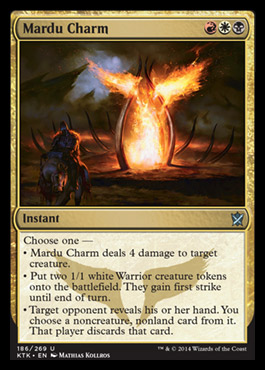
Mardu Midrange

Another deck that’s quickly gaining popularity, but with little reason. This deck is just a mishmash of good stuff barely held together by its removal. I will be surprised if it continues to be a player.

[deck title= Mardu Midrange]
[Creatures]
4 Goblin Rabblemaster
4 Brimaz, King of Oreskos
4 Butcher of the Horde
4 Strombreath Dragon
[/Creatures]
[Spells]
4 Thoughtseize
3 Bile Blight
4 Mardu Charm
4 Hero’s Downfall
2 Sarkhan, the Dragonspeaker
3 Elspeth, Sun’s Champion
[/Spells]
[Land]
4 Nomad Outpost
4 Temple of Malice
3 Caves of Koilos
3 Battlefield Forge
2 Urborg, Tomb of Yawgmoth
4 Bloodstained Mire
2 Mountain
2 Swamp
[/Land]
[Sideboard]
4 Anger of the Gods
2 Silence the Believers
2 Sorin, Solemn Visitor
2 Utter End
3 Pharika’s Cure
2 Despise
[/Sideboard]
[/deck]

Villainous Sultai

This is just a nice fun little list for those of you who want to ramp into [card]Villainous Wealth[/card], since lots of friends have been talking about wanting to play it. I don’t think it really has a place in the format, which is unfortunate for people who like fun.

[deck title= Villainous Sultai]
[Creatures]
4 Elvish Mystic
4 Sylvan Caryatid
4 Courser of Kruphix
[/Creatures]
[Spells]
4 Thoughtseize
4 Sultai Charm
3 Hero’s Downfall
4 Ashiok, Nightmare Weaver
4 Kiora, the Crashing Wave
2 In Garruk’s Wake
4 Villainous Wealth
[/Spells]
[Land]
4 Opulent Palace
4 Temple of Malady
4 Llanowar Wastes
1 Yavimaya Coast
2 Urborg, Tomb of Yawgmoth
4 Polluted Delta
2 Swamp
2 Island
[/Land]
[Sideboard]
4 Drown in Sorrow
1 Hero’s Downfall
2 Garruk, Apex Predator
2 Prognostic Sphinx
3 Nissa, Worldwaker
3 Bile Blight
[/Sideboard]
[/deck]

That’s all I have for now. I’ll be back in a few weeks talking about my Pro Tour Khans of Tarkir experience. If you have any questions of comments, pleases feel free to leave them below and I will do my best to answer them.

Thanks for reading,

Josh Milliken

@joshuamilliken on Twitter

What Wizards Wants: Reprints

Magic players can be selfish. When Wizards of the Coast makes a decision or a change to the game, most people talk about how it affects them. Standard players talk about how it affects Standard, Cube enthusiasts talk about possible inclusions from the new set, Modern and Legacy players look for playable eternal cards, and so on. It’s normal to form your opinion based mostly on how the change affects you.

What strikes me, though, is how oblivious some people can be to WOTC’s perspective. Wizards is in business to sell Magic: The Gathering product and just about every decision the company makes is a means to that end. When you start to look at it like that, the thought process behind business decisions becomes a lot easier to understand. And if you can understand WOTC’s decision making, you can better predict its future actions.

For example, there is a perpetual discussion on whether or not [card]Birthing Pod[/card] should be banned in Modern. People will typically cite power level, diversity, the need to shake up the format, etc., when making a case.

Wizards, at least at a high level, is not overly concerned about optimizing the Modern tournament experience at any given moment. Sure, it’s on R&D’s radar and they certainly want it to be good, but Modern Constructed is just one tool in their toolbox for creating demand for their product.

Wizards is not in business to balance Constructed formats, it is in business to sell product. WOTC doesn’t really care that much when six of eight decks in a grand prix top eight are Pod decks, even though that might be incredibly frustrating to a die-hard Modern grinder.

When it comes to [card]Birthing Pod[/card] and moving product, Wizards is probably considering a menu of options like this one:

  1. Reprint it to sell packs.
  2. Print must-have Pod hate cards to sell packs.
  3. Ban it to shift that demand to something else they can sell.

We underestimate how important sales are to Wizards of the Coast and overestimate how important everything else is. R&D’s decision on Pod is just as likely to result in a fixed [card]Null Rod[/card] in the next block at mythic rare as it is in banning Pod itself. This way they can keep Pod in Modern Masters II and juice sales of both sets.

So today I’m going to write from the other side of the table. I’m going to approach a topic from WOTC’s perspective by taking the sales-first position, explaining what I believe drives the team’s decision making. I’m going to support my points with actual decisions made by Wizards, but be aware that this is really an opinion piece. I don’t have access to anyone at Wizards or to any non-public information.

Since we’ve already started in that direction, today’s topic is going to be reprints.

Printing Money

Reprints are a beautiful thing for Wizards because they allows the company to convert equity in the secondary market (which belongs to someone else) into sales dollars for themselves. Reprints also conserve R&D resources in the process.

Wizards does not have a direct stake in the secondary market. That means that when [card]Thoughtseize[/card] went from $30 to $60, Wizards didn’t see another penny because that card was out of print. The new equity belonged to the players and store owners who owned copies of the card. But Wizards is not out of this game by any stretch of the imagination.

While Wizards doesn’t have a direct stake in the secondary market, it certainly has ways to interact with it. One of the best ways is through reprints. It’s important to remember that WOTC’s production costs are the same whether they are printing a sheet of [card]Thoughtseize[/card]s or a sheet of basic lands. The first is a sheet of twenty-dollar bills, the second is worth less than the paper on which it is printed.

It does feel a little like printing money in that respect. They have been doing it for years with the judge program, using reprints as a currency to buy needed labor.

Now, the players and store owners who had all the Lorwyn [card]Thoughtseize[/card]s lost half of their equity when the reprint dropped them from $60 back to $30, but it undoubtedly moved a ton of Theros packs for Wizards in the process. Our loss is their gain, but cashing in on valuable assets is solid business strategy and I wouldn’t expect anything else.

Was the [card]Thoughtseize[/card] reprint a developmental mistake? Was it too powerful for Standard? These questions are secondary to, “How many Theros packs will a [card]Thoughtseize[/card] reprint move?” Wizards might tell us that [card]Thoughtseize[/card] was printed to give black some play against enchantment creatures, but that’s only relevant because it fits into the larger strategy of reprinting high-dollar cards to move product. A new, lower-power [card]Duress[/card]/[card]Despise[/card] hybrid would have done the trick, too.

Similarly, many were surprised when Mark Rosewater explained that the allied fetch lands were the first cards in Khans of Tarkir, despite lacking the design synergy that we saw with fetches in Zendikar. No one should have been surprised. Printing high-value cards is a lucrative business and these were prime candidates. Trust me, Wizards cares about the efficiency of mana bases in Modern way less than it cares about spiking Khans sales. Way, way less.

Deconstructing Constructed

One very significant thing to note here is that a lot of these reprints are being put into Standard-legal sets. Wizards can print pretty much anything in a supplemental product without worry, but that would be missing out on the huge demand that comes from a Standard printing. This is worth taking some risks in the format. Cards like [card]Mutavault[/card], [card]Scavenging Ooze[/card], and [card]Chord of Calling[/card] are great examples. These cards didn’t need to be in Standard—no one would have missed them if they weren’t.

What it means for us is that we can expect a steady stream of high-profile reprints popping up in large Standard sets. If it can go through Standard, it will go through Standard. Why give cards straight to Modern players in a set like Modern Masters when you can make Standard players buy them too?

Of course, not everything is fit for Standard. Cards that really would wreck the format, would subtract substantially from Limited playability, or feel badly out of place flavor-wise can go straight to the supplemental products. You risk hurting sales as much as helping if you get too ambitious.

If we extrapolate this line of thinking, we come to the conclusion that the enemy fetches will not be in Modern Masters II (but will instead be in Standard at some point). We also come to the general conclusion that things left out of reprint sets have a higher-than-usual chance of showing up in Standard at some point. [card]Damnation[/card] seems like a good possibility in this category.

Let’s take it to the extreme, just for fun. [card]Wasteland[/card] was left out of Vintage Masters for a reason, but you can be sure Wizards is going to cash in on this gem. Is it crazy to consider the Standard implications? If it is ever going to be viable, a Standard where the best mana-fixing involves fetching basic lands would be the place. [card]Wasteland[/card] would keep all the rest of the duals from Khans in check while allowing fetches to do their thing.

I’m sure the chances of [card]Wasteland[/card] in Standard are very small. The point here is that Wizards will surely consider it because that is the highest payout. They will probably conclude that it is too powerful and put it in a Commander product at some point (or something along those lines).

Reprint Sets

If Wizards can’t put a card through Standard, the next best option is a reprint set like Modern Masters, Vintage Masters, or Conspiracy (I realize that set had some new cards).

Reprint sets are great for Wizards for a few reasons. The first is that a draftable set appeals to some people on that basis alone, widening the audience. In other words, you don’t have to play Modern Constructed or care about the reprints at all to enjoy Modern Masters. Very enfranchised players that wouldn’t pay much attention to a product like Planechase dive right into these reprint sets. These sets (although not Conspiracy), also have a nice synergy with Magic Online.

The next reason is that reprint sets are a much less efficient way for players to get the reprints they need. If [card]Tarmogoyf[/card] was in a Commander deck, essentially anyone could buy a ‘Goyf at $30 retail. Instead, it was a mythic rare in Modern Masters, so it appeared in one out of every 120 packs (one mythic in every eight packs, with one-in-fifteen shot at that mythic being a [card]Tarmogoyf[/card]).

Did I mention reprint sets are great for Wizards because they can charge $7 per pack?

On average, Wizards booked $840 of sales of Modern Masters packs for each [card]Tarmogoyf[/card] put into circulation. That’s a bit more than the $30 for Commander decks. This means that players have to dump a lot more money into their reprints in a reprint set.

The “special” rarity in Vintage Masters was born out of this very favorable math. I do not think we have seen the last of it.

The final reason that reprint sets are great for Wizards is that they are inexpensive to produce. They need zero designers, zero creative, and just a few developers to make the set out of existing pieces. This almost seems like the type of thing developers do in their free time, to be honest. Instead of dedicating most of your R&D team to making a new set for a year, you can throw Adam Prosak and Ian Duke in a conference room with a laptop, have them put together what is essentially a cube with rarities, and then sell the packs for twice as much as your current Standard set.

Vintage Masters had to be even more profitable than Modern Masters (on margin, surely it didn’t outsell it) because Wizards didn’t even have to print physical cards!

I expect that we will see a draftable supplemental product virtually every year going forward. These sets will be all or mostly reprints. As long as a card has significant equity in the secondary market, I think Wizards will include it (unless they are printing it somewhere else). So I’m predicting [card]Tarmogoyf[/card] and [card]Dark Confidant[/card] in Modern Masters II. I also expect that Wizards will experiment with stretching rarities even further in paper products. I’m not sure if the company will decide that Modern Masters II is the right time to try it, but it is a great way to preserve equity for future reprint sets.

Finally, I want to point out that none of these strategies work unless you have product on the shelves. This may already be obvious, but I strongly feel that we have seen the last of the ultra-limited print run. Any demand that goes unsatisfied due to a limited print-run just creates equity in the secondary market. Wizards is trying to harvest that equity, not create more.

I expect Modern Masters II to be quite a bit easier to get than the first one. From the Vault sets and Commander decks are already much easier to get then they used to be, and I doubt we’ll see another attempt at a Commander’s Arsenal.

I wouldn’t rule out a straight reprint of the original Modern Masters in the new frame at some point, either. We see this thought process in action already with the Duel Deck Anthology. If there is still demand out there for the first set (and $400 booster boxes indicate there is) and the set was already all reprints, why the heck not? Of course, I would revise my prediction of ‘Goyf and Bob being in the second set if the first one is scheduled to hit the market again.

In Closing

That’s my take on the Wizards of the Coast reprint strategy. If the reception to this article is reasonably good, I will probably write a similar article for Magic Online. Let me know if you are interested in that.

Thanks for reading.

Conjured Currency #34: One More Card

Hey there. How have you been? I hope you’re having an excellent Thursday, and that your Magic finance life has been at least slightly improved by reading my articles. I genuinely enjoy writing each week to try and teach at least one person something new, even if I have to stay up until 3 a.m. on the night of my deadline to think of an idea for a topic. However, that’s actually not the case tonight! I’m sitting here at 8:15 p.m. a night before my deadline, and I actually have an idea ready to go.

Do You Have a Ton of Bulk Rares Sitting Around?

If you all have been buying collections or trading away dual lands like I have, then you might have a ton of bulk rares sitting around. However, what if I told you that not all bulk rares are the same? Obviously a [card]Shipbreaker Kraken[/card] and [card]Fated Infatuation[/card] have different text written on them, but not all of my bulk rares go into the same boxes. Some get set aside for later, for when they might randomly become $20 cards one day.

Does this sound familiar? It should, considering two weeks ago [card]Glittering Wish[/card] went from being a $2 or $3 “cute” Future Sight rare with no home, to being a $20 chase rare in a brand new Modern deck that Sam Black hyped up on SCG (and with good reason, the deck looks to be very powerful). While trying to sound the least bit “humble brags” about this as possible, I’d like to mention that I traded for two non-foil and one foil copy of Wish almost two years ago, because it seemed like it could be broken in Modern if the right card were printed. Fast forward, and [card]Jeskai Ascendancy[/card] somehow makes it to print, allowing a fast and consistent combo deck in Modern.

wish

Another example that happened somewhat recently is [card]Phyrexian Unlife[/card]. When the card was spoiled, it was immediately thrown aside as one of the worst cards in the set, because it effectively read “2W: gain 10 life”. However, it does have the convenient ability to allow a player to drop below 0 life and not die while losing life via [card]Ad Nauseum[/card], so  that player can draw their entire deck and win the game on the spot with [card]Lightning Storm[/card]. In one weekend, it went from my $.25 box to selling on TCGplayer for $4.00.

The point I want to focus on this week is the whole “picking up bulk rares that seem to have powerful or unique effects, and could be broken if the right card(s) were printed” thing. Glittering Wish is one of the only cards in Modern that allows you to have access to your sideboard straight from your main deck, and being from Future Sight meant that there were only 54 copies in existence from the start. With that said, let’s look at some of the stuff I’m jamming in my 1,000-count box that’s affectionately labeled “bulk rare specs”!

Tinkering Around

[card]Kuldotha Forgemaster[/card]:

forge
It’s [card]Tinker[/card], but you have to put a bit more effort in. [card]Blightsteel Colossus[/card] is legal in Modern and vulnerable to [card]Path to Exile[/card], but maybe we’re headed for yet another artifact block in the future, and we get some sort of giant metal monster with hexproof, or a way to consistently pop this guy on turn three. Either way, there’s an extremely low floor here at $.78 TCG mid, and I don’t feel comfortable letting people buy this guy out of my $.25 box. Even if nothing breaks him open to cause a spike, I feel like this guy is popular enough with the casual/EDH crowd to make a slow creep into the $3 range.

Cheap is Good

[card]Heartless Summoning[/card], [card]Semblance Anvil[/card]

In Magic’s history, the words “cost” and “less” have traditionally paved the way for stupid, broken effects when paired together. When cards reach that magic cost of zero, combos start happening and people start getting dealt billions of damage in one turn. I’m a fan my opponent being at negative 6 trillion life, so I pack these two cards away into my spec box when people sell me their bulk rares for $.10 a piece, or trade them to me en masse for dual lands. Maybe Wizards will print [card]Myr Retriever[/card] and [card]Grapeshot[/card], and there will be an absurdly powerful deck utilizing these cards that will allow our own Ryan Bushard to take down the next Modern Pro Tour. (In all seriousness, though, these seem exactly like the type of card that’s one card away from being broken as all hell). Semblance Anvil takes this to the next level and allows anything to cost less (at the cost of a sizable chunk of card advantage), but its sweet, sweet, bulk rare status prevents me from wanting to sell it for a quarter.

heartless

All of the Activated Abilities

[card]Skill Borrower[/card], [card]Necrotic Ooze[/card]

In a format where [card]Griselbrand[/card] and [card]Borborygmos Enraged[/card] are both legal, I really want both of these cards to be broken in some form or another. I actually copied a list off of GatheringMagic.com’s “5 Decks You Can’t Miss This Week” a while ago, and recently built it when I randomly bought a [card]Skill Borrower[/card] in a bulk lot. It’s not competitive enough for a Grand Prix whatsoever (Borrower/Ooze having thre toughness in a format with Bolt just plain sucks), but I had a blast testing Modern against my friends with this:

[deck title=Dead by Dawn]

[Creatures]

*4 Birds of Paradise
*2 Noble Hierarch
*1 Children of Korlis
*1 Mogg Fanatic
*1 Lotleth Troll
*4 Skill Borrower
*4 Necrotic Ooze
*2 Kiki-Jiki, Mirror Breaker
*1 Borborygmos Enraged
*3 Griselbrand

[/Creatures]

[Spells]

*4 Faithless Looting
*3 Inquisition of Kozilek
*2 Zombie Infestation
*2 Life from the Loam
*4 Congregation at Dawn

[/Spells]

[Lands]

*4 Mana Confluence
*3 Gemstone Mine

*1 Stomping Ground
*1 Godless Shrine
*2 Overgrown Tomb
*4 Misty Rainforest
*4 Verdant Catacombs
*1 Forest
*1 Breeding Pool
*1 Hallowed Fountain

[/Lands]

[Sideboard]

*1 Kitchen Finks
*1 Obstinate Baloth
*4 Goryo’s Vengeance
*4 Fist of Suns
*4 Emrakul, the Aeons Torn
*1 Zombie Infestation

[/Sideboard]

[/Deck]

It was so fun to play….

Bringing Stuff Back

[card]Retether[/card]/[card]Faith’s Reward[/card]

download (1)

For those of you who have been playing Modern for at least a couple of years, you might remember dying from boredom to a silly combo deck that involved both [card]Second Sunrise[/card] and [card]Faith’s Reward[/card], allowing a player to loop near-infinitely and eventually kill you with [card]Grapeshot[/card] or [card]Pyrite Spellbomb[/card]. When Sunrise got the axe, Faith’s Reward fell from its $1 high to true bulk. The effect has been proven to be broken before, and I have faith that a single slip-up by WOTC’s R&D team could prove to allow prepared financiers to profit.

[card]Retether[/card] follows the same logic. Cards like [card]Eldrazi Conscription[/card] exist, and I think putting two copies of that card onto a [card]Noble Hierarch[/card] is cute, even if it is vulnerable to every single hate card ever (graveyard hate, removal spells, enchantment destruction, you name it). Maybe [card]Open the Vaults[/card] is a better pick, but that one’s not quite true bulk, so I enjoy buylisting them for $1 when I get the chance, which lets me buy 10 copies of most of the above cards.

That’s So Aggressive

[card]Aggressive Mining[/card]

Alright, I’m digging a bit deep here (hehe). Maybe it’s the Minecraft player in me from high school, but I think that somewhere, somehow, this card might not be bulk in the near future. The “once per turn” really stings, but a lot of us have probably called stuff like this trash before only to be proven dead wrong in the end. If you can design a card that would make this broken/playable, I’d be curious to see what that card looks like in the comments section.

Cost Less, Spells

[card]Battlefield Thaumaturge[/card]

Again we return to the “things costing less” mechanic that always warrants a second glance. Now that the hype train has ground to a halt and this is a true bulk rare, I feel a need to throw it in a separate pile and forget that I own copies until the glorious day that something silly pops up three years from now and causes Thaumaturge to spike to ridiculous levels. Maybe he goes in the same deck as [card]Retether[/card].

And Now We Play the Waiting Game…

This week, we’re not looking to make instant flips or hunt down collections, so it definitely involves being patient and willing to sit on these cards for who knows how long. The opportunity cost is as close to zero as we can get, so it’s not something that needs to be bought out of TCGplayer tonight. Pick the ones you like or agree with, or post your own ideas in the comments below. Sometimes all it takes is the printing of one more card to make previous cards stupid or broken. Sometimes the cards aren’t even broken, but we can at least sell into the hype. Thanks for reading, as always.

Let’s Play Standard – Jeskai Tempo Breakdown

Welcome back, brewers. Today we are going to be talking about Standard. Were you as sick of the last Standard format as I was? See ya later, [card]Lifebane Zombie[/card]. Thanks for making life miserable for us GW mages.

Anyway, I was an avid GW player in the old format. I loved the beef of my giant creatures and just crashing through. The deck always felt like it needed removal, though. So obviously when it came time to switch over to the new format I picked up Abza… Jeskai Tempo.

The Jeskai Tempo deck that Kevin Jones played to win an SCG Open feels great. All the spells feel really powerful and it feels like it rewards good plays. Jeskai seems like it has a really good place in the format. It can burn and block the aggro decks, while flying over the green decks. I also really didn’t have a problem against my control opponents, at least so far.  The deck also feels like it can be modified to fit any metagame, which will give it a lot of staying power as long as people adapt to it. Name aside ( I think it should be called Jeskai Burn as there really isn’t much tempo to it), this is a really solid choice for any player moving forward.

So you want to play Jeskai Tempo, too? Great, that’s probably why you’re here, and you’re in for a treat because we are going to break down each card choice in the Kevin Jones special right here.

The Creatures

[cared]Mantis Rider[/card]

This, in my opinion, is the reason to play the deck. There are a lot of green decks that play a lot of big ground blockers. Mantis Rider is able to swoop overhead and bash the opponent for three. Worst case, he will make your opponent waste their turn with a removal spell. If not, you get to attack again and again. He is also especially good at dealing with planeswalkers. Bye bye, Xenagos.

mantis rider

[card]Goblin Rabblemaster[/card]

Many people have already talked about why this guy is so good. In this deck he can win games on his own. You are able to clear the way with your burn or again force your opponent to spend their turn to deal with him. Having two in play is absurd.

[card]Seeker of the Way[/card]

Now here’s a card. This is a two drop that lets you start attacking early. The fact that he’s a 2/2 lets you swing past opposing Caryatids with the bluff of a burn spell to the face. The lifelink is huge against aggressive decks, but is also equally good against midrange decks. Often times the midrange player will stabilize at a low life and start attacking. You are drawing off the top of your deck looking for that last burn spell. The higher your life, the more turns you have to draw your out. I think this could be a four-of.

The Burn

[card]Magma Jet[/card]

Magma Jet is a very versatile card. It can help you set up your draws early so you get that third color of mana on turn three, or it can dig you into that last burn spell off the top when your opponent is low on life and stabilized. It can also kill an early mana creature. The only real downside is that it only deals two damage.

[card]Lightning Strike[/card]

I think this may be one of the weaker cards in the deck, but it is still necessary. This deck wants to be able to cast two cards in the late game and this will definitely help. Three early damage or being able to kill a Rabblemaster is not too shabby, either.

[card]Stoke the Flames[/card]

Four damage for four is great. Four damage for less than four is insane. Be sure to be aware that you can tap your Rabblemaster tokens to avoid the suicide attack. You can also tap the [card]Mantis Rider[/card] after it attacked for some more free mana.

The Utility

[card]Banishing Light[/card]

This card gets everything out of your way. It’s nice to have a way to remove a creature that has five or more toughness. Its also very good at removing the god weapons that gain life, [card]Bow of Nylea[/card] and [card]Whip of Erebos[/card]. These are continual sources of life gain that you may have a hard time beating.

[card]Jeskai Charm[/card]

This card does everything from four to the face to putting a big blocker back on top of their deck to gaining life and winning the creature war in an aggro matchup. You don’t need me to tell you why this one is good.

[card]Dig Through Time[/card]

This card is very good in the late game, obviously, and there is nothing you want to draw more in a long game against a removal deck. Being able to choose two of seven sets up your perfect next turn, from double [card]Goblin Rabblemaster[/card] to eight damage to the face. Often you can tap five lands on turn five and cast it. This card gives the deck reach against slow decks. I’m not so fond of it in the aggressive matches.

[card]Steam Augury[/card]

At first, I hated this card and refused to play it. Then I started to warm up to it. Now I feel like it’s the first card out of the deck if you want to try other cards. This dives deep to provide some additional cards, but your opponent will not give you the one that will win the game. This also fuels delve, so it shouldn’t be overlooked in a non-aggressive meta.

The Planeswalkers

[card]Chandra, Pyromaster[/card]

Chandra’s plus-one really shines here. Not only can it remove a blocker, but sometimes it can kill that annoying elf or satyr or human that’s in the way. Clearing out a bigger blocker to get your Rabblemaster through is huge. I haven’t been too fond of the zero ability in this deck, as it feels like you always have things to do, unless the game goes very long. I’ve never ultimated her but that probably feels really good.

[card]Sarkhan, the Dragon Speaker[/card]

Sarkhan or Stormbreath? The debate rages on. I think Sarkhan is better in this deck because you really want the versatility. You sometimes want to clear the way and kill that [card]Courser of Kruphix[/card]. Indestructibility is cool, but it still will die to a [card]Hero’s Downfall[/card] before the activated ability resolves. I think the dragon could be better in a meta of lots of white removal.

The Lands

Not much to say here. The lands help you cast your spells. You need all three colors to function. Some tips:

  • If you have the option to fetch blue or white and it doesn’t seem to matter, fetch blue so that your [card]Dig Through Time[/card] can be cast and the cards you draw off of it can be cast. T
  • The fetch lands help with Dig Through Time also, so count that as two mana when you’re ready to cast it.
  • The temples really help you out early and late. I really like the eight this deck plays.

Join us next time when we discuss the Jeskai deck against the different decks in the meta. Thanks for reading and remember: burn them in the face!

Pitt Imps Podcast #89 New Standard Decks Finally

This week, we go over the SCG Standard events and Magic, Magic, Magic. You know the program and what to expect.


Host Angelo Twitter @ganksuou

Co-Host Will

Co-Host Ryan Twitter @brotheryan

Show Email   [email protected]

Brainstorm Brewery #117 – Shout It Out

Goblin Rabblemaster is approaching $20, Mantis Rider is approaching $10, and nothing seems right in the world. What’s going on? Someone has been bitten by the Cube bug and won’t shut up about his Cube. I won’t say which host it is, but it’s Marcel. Cube fever caused him to go on a shout-out rampage, scuttling discussions in the middle, disrupting the flow of the show, and causing general anarchy and disarray. You’ll probably love it. Who was most incorrect about Courser of Kruphix? Which color was overrepresented over the weekend but underrepresented in spiking prices? Which eight cards are likely to start out every decklist for the near future? Find out the answer to all of these questions and more on an episode of your favorite podcast that will have you asking, “Wait, Jeskai Ascendancy is bannable in Modern? What?” Join us for Brainstorm Brewery.

  • What were the big winners and losers over the weekend?
  • Finance 101 is all about being blinded by emotion.
  • Reader e-mail! Send us yours to have it read on the air!
  • Shout outs happen way too frequently this time.
  • Pick of the Week is back, baby!
  • Questions? Concerns? E-mail brainstormbrew at gmail dot com.


Cabe Riseau produced the intro and outro music for Brainstorm Brewery.

Contact Us!

Brainstorm BreweryWebsiteE-mailTwitterFacebook

Ryan BushardE-mailTwitterFacebook

Corbin HoslerE-mailTwitterFacebookQuietSpeculation

Jason E AltE-mailTwitterFacebookQuietSpeculation

Marcel WhiteE-mailTwitterFacebook

Conjured Currency #33: “Comms” of Tarkir

First of all, I’d like to thank the people who commented on Organization Nation to share their organizational methods. It’s interesting to see how others sort and plan out their collections based on what their own needs and interests are.

So I was hoping that you guys would recognize that “Comms” is a terrible substitute for “Commons”, and… yeah, it was a bad pun. Let’s move on. I’ve talked in length about how I’m not a huge fan of set reviews, and I’m sure as hell not going to do a full set review for Khans of Tarkir. However, I realized that it’s been a little while since I’ve discussed the topic of picking bulk commons and uncommons for gems that you can trade off or buylist. I got my start in finance doing almost exclusively this for trade value, and I think it’s a nice Finance 101 topic to return to every now and then to help newer players or financiers establish a growing collection without a whole ton of additional effort on their parts.

Back in the day (well, about four years ago), I had basically zero disposable income to spend on expensive (read: more than $3) rares to put together a Standard deck for FNM. My trade binder was a pitiful husk of bulk rares and… actually, it was just bulk rares. I had a couple [card]Sunblast Angel[/card]s and [card]Dissipation Field[/card]s that nobody wanted, and I treasured my single [card]Elspeth Tirel[/card] like it was a gift from God, jumping up and down when I opened it during a draft. After several weeks of bored Spikes flipping through my binder, I became discouraged. I decided to start putting uncommons that I thought were good into my binder, to make it appear more “full,” and hopefully more desirable.

I ended up being pleasantly surprised when a fellow high-school student looking to build a Myr deck lit up upon seeing a few [card]Palladium Myr[/card] and [card]Myr Galvanizer[/card]. And he valued them at a whole $1 each? Golly me! I vaguely remember getting some number of elves off of him (probably [card]Elvish Archdruid[/card]s or [card]Ezuri, Renegade Leader[/card]s), and being shocked that uncommons could not only be desired by other players at events, but worth actual money. From that point on, I always tried to stay on the lookout for specific commons and uncommons in the new set. [card]Dismember[/card]s at $5 were a no-brainer to stick in your binder, but back then I was willing to throw practically any card I saw in a tournament deck into my crappy three-ring, rarity be damned.

palladiummyr

I bring up this long-lost fairy tale because Khans of Tarkir looks to be absolutely loaded with good common and uncommon picks for the future, even if you don’t plan on shipping out thousands of cards en masse to a buylist. Even though times have changed since 2011, there are still tons of players who care only about the rare (and potentially foil) slot in the pack, leaving the remains to rot on the draft table. Embrace your inner [card]Scavenging Ooze[/card] with me, and let’s look at some of these quarters and $1 bills that you can jam into your trade binder so that you can work your way towards that ridiculously priced $15 [card]Sylvan Caryatid[/card]!

Picking the Picks

[card]Jeskai Charm[/card] and friends: Throughout the entirety of the Return to Ravnica block, I pulled aside every single guild charm I found, organizing them all together. Over those two years, I sold or traded a ton of Azorius and Boros charms, some Selesnya, and even a few Orzhov and Dimir. I never got rid of any [card]Gruul Charm[/card]s, but I had them ready and waiting. These 5 will likely fluctuate based on which clan is favored in Standard, but I recommend making sure you treat these like $1 rares when you pull them out of packs or see them in binders, depending on the charm.

[card]War-Name Aspirant[/card]: I hope this Aspirant finds its war-name soon, because the current card name is just stupid. That aside, the power level is certainly there for this to see play in aggressive red/black/x strategies, so hoarding these doesn’t have much downside. Mardu players will raid your binders for them eventually.

[card]Murderous Cut[/card]: For as long as [card]Doom Blade[/card] and I were in Standard together, we had a mutually beneficial relationship where I would trade off playsets of it for $1 rares that I was speculating on. Delve Blade has zero restrictions of what it can [card]murder[/card] and has the potential to be cheaper to cast, even though the delve bit probably prevents this from being a four-of consistently. SCG sells them for $1, and there are players who use that for pricing.

murderouscut

[card]Savage Punch[/card]: There is one guy (at least) in your tri-state area who wants to collect every copy of this in the world, foil or not. Try to get a few bulk rares in return and have them on hand, even if they’re not taking up space in your binder.

[card]Stubborn Denial[/card]: There are rumors at my school of this being played in Modern or even Legacy decklists with [card]Tarmogoyf[/card]. If you bought a box of Khans or have a weekly FNM draft, pull these aside and wait for a bite. Some players don’t have the patience to proxy things, they just want the cards now. Even if it ends up doing literally nothing in either format, the hype has a few weeks left in it.

[card]Monastery Swiftspear[/card]: If you paid attention to the Legacy Open from last weekend at all, then you paid more attention than I did to the Legacy Open last weekend. Good job, you’re doing better than I am at this stuff. Apparently, this card led the charge of a UR Delver decklist, and it put in some serious work when you can cast multiple spells per turn early on in the game. Because this one is more well-known already, you’re less likely to get them for free off of draft tables. However, when you do pick them up, you can ask for the $1.50 they are on SCG and see if you get any bites.

monasteryswiftspear

[card]Chief of the Edge[/card]: Is Warrior Tribal going to be a competitive deck in Standard? Probably not. Is the guy who wants to build Warrior Tribal in Standard going to care whether it’s competitive? Probably not.

[card]Seeker of the Way[/card]: His brother Swiftspear managed to spearhead the Legacy Open, and this one sought the way to the top of the Standard Open in Jersey as a 3-of. ‘MURICANNNNNNNnn Tempo could very well be a consistent piece of the metagame moving forward (UWx generally is), and there are a lot of people who tend to copy the winning decks from the first weekend of the tournament (at least in my local experience).

[card]Treasure Cruise[/card]: Based on the fact that [card]Glittering Wish[/card] is now a $15 card (for now), people are jumping on a hype cruise that [card]Jeskai Ascendancy[/card] is broken as all hell in Modern. The Sam Black list on SCG Premium played this as a three-of. Foils are a trap at $15, but set aside the ones you open in booster packs as an attempt to use as throw-ins or equalizers in close trades.

[card]Mystic Monastery[/card] and friends: These will not only be EDH all-stars like their Shards of Alara counterparts, but they’ll be players throughout Standard as well. The best part about these is that you can pick them up at rotation as well, and they’ll still hold a good amount of value.

[card]Despise[/card]: I highly doubt this card will see any competitive play whatsoever while [card]Thoughtseize[/card] is legal. To put things in perspective for you young-ins, [card]Despise[/card] didn’t see Standard play when this thing was in Standard:

jtms

It won’t now. So why am I telling you to pull it out? Because people will want to try it. Have them on hand for when that happens.

[card]Raiders’ Spoils[/card]: People like building tribal decks, and this will probably be in them. Worst-case scenario is that you throw it back in with the rest of your bulk in three months if you don’t get any bites.

[card]Arc Lightning[/card]: Fringe-playable Standard-legal burn spell. Someone might need sideboard tech for the Open two months from now, and you can be that person’s hero by taking four seconds to pull this from your bulk that will be attracting dust in two months.

[card]Ride Down[/card]: I thought this was a rare when I first read it in the spoiler. Powerful effect that could very potentially see play in Standard aggro/tempo decks.

ridedown

[card]Secret Plans[/card]: We all know that guy. Be the guy that helps that guy make his UG Morph deck as quickly as possible by having a playset of this thing in the back page of your binder, and grabbing a silly $2 rare that you can proceed to trade up from there.

As [card]Stoke the Flames[/card] has proven to us this past weekend, taking the time to pick out those “maybe it’s playable” non-rares out of the gutter can serve to be quite the boon to our collection values, even if you only had a couple copies. While I highly doubt that any cards from Khans of Tarkir will reach a $4 price point due to the high volume opened, it’s always nice being “that guy” who has any of the remotely playable commons and uncommons from the set. You don’t have to be the guy with playsets of foil fetches to get the attention of grinders who need cards.

A Common Ending

Apologies if you read through this entire thing thinking either, “Duh, of course those are decent picks,” or, “You’re an absolute fool and this was a waste of my time.” When I was an aspiring Standard grinder, I found that picking every possible ounce of value out of my birthday booster box of Mirrodin Besieged was one of the best ways to begin the slow climb towards having a reasonable trade binder and collection. The first steps are always the hardest to climb, especially if you don’t have a huge cash spending budget up front.

As usual, I’d like to thank you for taking the time to read my ramblings, and offer the chance to start a friendly discussion or debate on this week’s topic. Are there any other picks that I might have missed out on or skipped over? Anything you think isn’t worth your time to pick out out that’s in this list? We saved you some room in the comment thread on Reddit, and 140 characters worth of blank space that needs to be filled up with questions on Twitter. Hope your Khans release has been going smoothly—see you next week!

Weekend Magic: 9/26-9/28

Welcome back, guys! Khans of Tarkir has now had a chance to show what it can do in Constructed formats, and there are two Standard and Legacy tournaments to talk about today, both hosted by Star City Games. In New Jersey and Indiana, there was plenty of action, so let’s dive right in.

SCG Standard Open Edison, NJ (US)

Decklists

On the east coast, a brand new archetype emerged victorious, dubbed Jeskai Tempo. The new hotness to come out of the deck piloted by Kevin Jones were four [card]Mantis Rider[/card], three [card]Seeker of the Way[/card], two [card]Sarkhan, the Dragonspeaker[/card], two [card]Dig Through Time[/card], four [card]Jeskai Charm[/card], and two [card]Steam Augury[/card]. In the sideboard, things to note are [card]Ashcloud Phoenix[/card], [card]Disdainful Stroke[/card], and a single copy of [card]Narset, Enlightened Master[/card].

Of the cards mentioned, Mantis Rider has seen a huge increase in retail price, going from around $1.50 TCGplayer mid to about $5. The new price is derived from the hype of Kevin’s win and the lack of supply in the market. If you have any Mantis Riders, offload them now before the price dips as more are opened throughout the next few months.

[card]Sarkhan, the Dragonspeaker[/card] also continues his climb from $22 to $29 TCGplayer mid based on this weekend’s results. To give you a more accurate picture of how many Sarkhans were played across all the top eiht decks, in both New Jersey and Indiana, Reddit user SaffronOlive made a fantastic post over on the mtgfinance subreddit that has a breakdown of all the Khans cards that were featured in the Standard top eight decklists. Please check out this list for yourself if you want a quick reference for the top-played cards of the weekend. Circling back to Sarkhan, if we refer to SaffronOlive’s list, we can see that 16 Sarkhans were played in main decks and one in a sideboard. He was the third-most-popular card from Khans played this weekend. I mentioned him before in my PAX review and it looks like the excitement around Sarkhan is starting to show. He is good in both midrange and control strategies, so I imagine we are only going to see more of him in the future. It’s true that $30 is a high buyin for a mythic, but I see this price sticking and eventually going up if we continue to see Sarkhan across several Standard archetypes.

sarkhan

Of Theros block and M14, we see that Temples made a solid showing in this deck along with [card]Goblin Rabblemaster[/card] (seriously, what deck isn’t this guy good in?) and two [card]Steam Augury[/card]s, as well as two [card]Banishing Light[/card]s. Steam Augury is still near bulk, so this could be a good pickup moving forward if you can trade for them or buy them at bulk. Two [card]Anger of the Gods[/card] in the sideboard is a good indication it will see future play.

Lastly, I want to mention that [card]Stoke the Flames[/card] is now a solid $4 uncommon. This is the premier burn spell of the new Standard, so if you don’t have your copies yet, I would pick them up now because I don’t see this price budging until close to rotation next year.

Second place went to Jon Goss with Mardu Midrange. Notable new hotness here includes four [card]Butcher of the Horde[/card], two [card]Sarkhan, the Dragonspeaker[/card], two [card]Sorin, Solemn Visitor[/card], and four [card]Crackling Doom[/card]. Out of the sideboard, we have [card]Suspension Field[/card] as a two-of. Butcher of the Horde and Crackling Doom have gone up since their release, yet they were only featured in this deck, which so far limits how much they could continue to go up. However, if you like Mardu, those two cards are very solid in the new format and I would recommend picking them up now before they potentially spike if should they be featured in a high-ranking Pro Tour Khans deck. Sorin is a solid card, but right now his price is more hype than anything. Hold any copies you have and wait for results. We’ll know if he is the real deal once Pro Tour Khans comes and goes.

 sorinsolemnv

To finish up the rest of the top eight, we saw four green deck variants: G/R Monsters, G/B Devotion, G/R Devotion, and Mono-Green Devotion. There was also another Jeskai Tempo Deck and a R/W Control deck. Notable new hotness cards from these decks include [card]Crater’s Claws[/card], [card]Rattleclaw Mystic[/card], and [card]Hooded Hydra[/card]. [card]Crater’s Claws[/card] is only around $1, which is pretty low for a rare [card]Fireball[/card]-like effect that can win the game on the spot with a ton of mana.

G/B Devotion had a playset of [card]Doomwake Giant[/card] in it, which I thought was cool since the card is around $0.40 and was one of the main reasons Ross Merriam did so well that day. It was featured on camera doing some pretty devastating things to a token deck, so I think [card]Doomwake Giant[/card] has potential in the future. I also saw several copies of Brimaz across these lists, though at $27 retail, the price is quite high to buy in. However, if he turns out to be a really solid creature in the new Standard, he could easily go past $30.

SCG Standard Open Indianapolis, IN (US)

Decklists

Abzan ruled the midwest this weekend, with two Abzan midrange decks getting both the top two spots. Before I get into the decks, though, let me mention that every single Top 8 deck in Indianapolis was playing green this weekend. Green made a huge showing in the midwest and I cannot state the importance of this enough. Mana fixing is important in an unknown format and green does it best—for now, anyway.

Courser of Kruphix

Though this skews the results in green’s favor more for this particular weekend, also keep in mind the PT will likely shake things up and we may or may not see less green. Make sure to pick up your copies of [card]Sylvan Caryatid[/card] and [card]Courser of Kruphix[/card] if you haven’t already. Also keep in mind that there is plenty of opportunity for non-green decks to also do well.

Back to the results, Samuel Valentine beat the mirror match of William Comminos in the finals to take down the tournament. Though the decks have the same name, they went in completely different directions.

Valentine opted for a reanimator/delve build, which included graveyard self-mill cards like [card]Satyr Wayfinder[/card], [card]Nyx Weaver[/card], and [card]Commune with the Gods[/card] in order to dump cards into his graveyard to either [card]Whip of Erebos[/card] in [card]Hornet Queen[/card] or [card]Ashen Rider[/card], or to easily cast [card]Necropolis Fiend[/card] and go to town on his opponent’s creatures. [card]Empty the Pits[/card] also wins games, I hear. Four [card]Muderous Cut[/card] is pretty sweet in this build, as I imagine that killing anything for one black mana feels pretty good.

Comminos opted to go for a more classic Rock-style Abzan build, essentially playing the best removal and most mid-rangy creatures in the format, hoping to overpower his opponents through sheer attrition. Notables out of Comminos’ deck include [card]Wingmate Rock[/card], [card]Abzan Charm[/card], [card]Utter End[/card], and [card]Anafenza, the Foremost[/card] out of the sideboard. [card]Wingmate Roc[/card], while a rather boring mythic in my opinion, is probably the next card on the list to go up in value if it starts seeing more play, and especially if it is featured in a Pro Tour Khans deck. Pick up your copies now if you plan on playing it, because $9 for a mythic of this power level is a pretty good entry price. Theros staples that appeared included a playset of [card]Elspeth, Sun’s Champion[/card], which is so much Elspeth it hurts, Brimaz, [card]Fleecemane Lion[/card], and a playset of [card]Drown in Sorrow[/card] out of the sideboard. I believe that Elspeth is still the strongest walker from Theros and I think that she will continue to see plenty of play after rotation.

Both decks shared a playset of [card]Siege Rhino[/card] and [card]Sylvan Caryatid[/card], which are both good pickups in my opinion. Siege Rhino provides so much value for four mana that I am not surprised that both players decided to play four of them in their main decks. $5 is a pretty high entry point for a rare, though, so I would wait for more product to be opened before going deep on Siege Rhino. Surprisingly, [card]Courser of Kruphix[/card] was absent from these green lists, which for now indicates that Abzan doesn’t need it. This could change once we get Pro Tour results in, however.

siege fhino

Rounding out the rest of the top eight, there were some more R/G variants, along with Mono-Green Devotion, Jund Monsters, just plain old Mono-Green, and Naya Midrange. [card]Reverent Hunter[/card] popped up in the Mono-Green Devotion list, which is something to note. [card]Genesis Hydra[/card] seemed to be an auto-include in all the Green-based devotion lists because it provides so much value. Polukranos is pretty nuts too, since he is all upside on top of being a four-mana 5/5. Finally, [card]Chord of Calling[/card] is pretty great in green heavy decks so pick up your copies accordingly. I don’t think it is budging from $8 and can only go up from here on out based on tournament results over the next month.

[card]Strombreath Dragon[/card] made a showing as a nice complement to Sarkhan, providing a ton of value against Abzan, Jeskai, and Mardu strategies. At $15, this is cheap for a strong mythic dragon, especially considering that [card]Thundermaw Hellkite[/card] was close to $50 during its peak in Standard. I would pick up some copies at $15 in anticipation of future Standard play.

Nissa didn’t appear quite as often as we would have thought, since she was an auto-include in all green decks prior to rotation and now only appears where she is truly needed. Something to note for the future, since her price is still around $43. Again, don’t discount her until we see the Pro Tour Khans results.

M15-Booster-Nissa

Xenagos is still showing up, so I believe that his new price will continue to stick since he provides mana ramp for all the new X spells that have entered the format.

Overall Thoughts for Standard

Green seems pretty good right now, especially in light of the Indiana results. Temples appeared in vast quantities across all decks, so those are also going to be gaining value in the coming months since Theros is no longer going to be opened. Avoid getting extra fetch lands for now—yes, they are played, but they will continue to drop in price since tons of players and vendors are going to crack product to get at them. Keep any wedge tri lands you draft or crack, since they seem to be used in Standard and will always maintain value from casuals regardless. Let me mention again to check out SaffronOlive’s Khans metrics for the weekend because tthat is some very useful information!

SCG Legacy Open Edison, NJ (US)

Decklists

I’ve got two words for you to sum up this tournament: [card]Treasure Cruise[/card]. Well OK, here’s another two words: [card]Monastery Swiftspear[/card].

treasurecruise

U/R Delver was already a popular archetype, and with the addition of Treasure Cruise, the deck became so much more consistent that it took down the entire tournament! Bob Huang was the pilot of this build, and in addition to Treasure Cruise he also experimented with Monastery Swiftspear to totally alter the look of U/R Delver. Looks like his modifications worked, given that he won. I believe foils of both these cards will be good pickups for the future, since they also have Modern appeal even if they don’t see Standard play. Wait a bit for foil prices to drop though, as I believe Treasure Cruise and Monastery Swiftspear’s foil prices are mainly driven by hype and lack of supply.

Reanimator got second place piloted by Jake Muldowsky. He opted not to play Treasure Cruise, which is probably why he lost. Just kidding—his build is pretty standard because that is how this deck wins. [card]Sire of Insanity[/card] made an appearance in the main deck, which thinking about it is pretty insane in Legacy against certain matchups, especially combo and control decks. Miracles is still pretty popular and Sire can really help in that matchup. Foils of Sire are $2.50, so if it becomes a reanimator mainstay (as opposed to just a metagame choice), that seems like a great buy-in price to me.

sireofinsanity

Sultai Delver played by Stephen Mann had a copy of [card]Sultai Charm[/card] in the main deck. Foils of this are starting to look better. Gerard Fabiano included a copy of [card]Dig Through Time[/card] in his Sultai Delver list. Dig Through Time already has appeal in Modern in addition to Legacy, and foils of this are $20 right now. I think this is hype and lack of supply in the market. Wait a bit and if the price decides to drop pick them up once more enter the market.

The rest of the top eight was rounded out by two Dredge decks (one manaless and one regular), Miracles, and Sneak and Show. The only deck that offered anything new to the scene was Manaless Dredge, which included [card]Blightsteel Colossus[/card], [card]Balustrade Spy[/card], [card]Flayer of the Hatebound[/card], and [card]Mishra’s Bauble[/card] as the new flavors of the moment. No reason outside the normal to target these cards. I think Dredge is more of a pet deck that is easily hated out once it gets popular enough.

SCG Legacy Open Indianapolis, IN (US)

Decklists

So… Elves! Elves, elves, elves! Said that four times because the entire Top 4 were elf combo decks… get it?

The main decks had their slight differences, but each were set up pretty much the same: play elves, cast [card]Glimpse of Nature[/card], play more elves, and repeat until you hit [card]Craterhoof Behemoth[/card]. Targets for price corrections in the deck include Glimpse of Nature, [card]Natural Order[/card], Craterhoof Behemoth, and [card]Heritage Druid[/card]. Pick up copies accordingly if you want to play this deck. I hear GP New Jersey is coming up.

glimpseofnature

One notable from all these Elves decks is that the second place deck had three of a card called [card]Energy Storm[/card] in its sideboard. Go ahead, I’ll give you a minute to read that card. Okay, now that you have, isn’t it quite interesting? It’s a rare from Ice Age that is below $1 and is really good against U/R Delver and also Storm decks. I’m not saying that this is going to spike to $10 overnight, yet it can’t hurt to pick up a few copies, right? It seems good against the right metagame. Cumulative upkeep is bad, I’ll grant you. However, with elves it does give you a few extra turns to go ahead and just win.

Maverick made an appearance at fifth place. That was a good meta call, since it appears like Elves went crazy at this particular tournament. Maverick plays a ton of one- and two-ofs, and most of them are already Legacy staples, so not much to see here except for maybe [card]Knight of the Reliquary[/card].

knightofthereliquary

Rounding out the top eight is Reanimator, Sneak and Show, and Burn. All are standard lists, more or less. Sneak and Show played two [card]Dig Through Time[/card], which should be noted. Dig Through Time looks like it is good across more than one Legacy deck, which helps to bolster its utility.

Final Thoughts

There’s a ton of information to digest this week across two Standard tournaments and two Legacy tournaments, both of which were affected by new Khans cards. It looks like Khans has Standard, Modern, and Legacy appeal.

In terms of Standard, you can’t go wrong with playing green, it seems. Anything with green that appeared across more than one deck is probably going to be pretty decent moving forward. We’ll need to wait until the PT to see final results. However, I still think we’re going to see some green there, too.

In terms of Legacy, as I’ve mentioned previously on Brainstorm Brewery, Elves is really popular and it is only a matter of time before the core staples go up. Get your copies of staples if you plan on playing Elves in Legacy. The new version of U/R Delver also looks awesome, so pick up some Treasure Cruises and Monastery Swiftspears if you like that deck. Dig Through Time has also demonstrated its Legacy potential, so pick up a copy or two if you’re a Sneak and Show or Sultai player.

Financial Five: Khans of Tarkir

When it comes to Standard finance, the prices can only spread so thin before you start scratching you head about powerful rares at $3 or $4 prices.  These head-scratching moments are caused by the reprint of the Onslaught fetches. Most of the time, the one or two planswalkers of the set and one hyped rare hold most of a given set’s financial weight. With Khans, the five fetches, two planswalkers, and the most powerful [card]Clone[/card] effect to date ([card]Clever Impersonator[/card]) are pulling a lot of the financial weight away from other powerful rares. It sounds bad, but it’s not. When fetches start settling around $10, [card]Sorin, Solemn Visitor[/card] drops to under $15, [card]Sarkhan, the Dragonspeaker[/card] fluctuates to around $20, and [card]Clever Impersonator[/card] (non-foils) tank to around $6, the non-hyped rares sitting at $2-5 will have a chance to see an increase according to how Standard settles.  Just like Theros, the increase in these sub-$5 rares will increase parallel to the amount of Khans product that’s opened.

[card]Utter End[/card] <$4

utter endWhen I think about this card’s potential fluctuations, [card]Hero’s Downfall[/card] comes to mind—with a slightly lower spike. Instead of going from $6 to $20 in a breakout weekend, I predict a $4 to $10 spike in the near future. Both removal spells were in big sets that saw a massive amount of packs opened.  What holds this price from spiking any higher is the mana cost. Four mana including two colors just equals a lower number of copies in slightly fewer decks.  I only see Standard potential for this card, but a silver bullet (one copy in a deck list) wouldn’t surprise me in the Modern format if a midrange non-green deck emerges. [card]Maelstrom Pulse[/card] is currently filling this role for decks with green.

I think this card will see a price jump then settle out at close to $5.  Pick them up for a quick flip with fear of its price decreasing.

[card]End Hostilities[/card] $2

end hostIt’s a sweeper, people! I know we are spoiled with [card]Supreme Verdict[/card], but we now have a sweeper with a one-color mana cost instead of two.  It takes care of bestow creatures and equipment along with the creatures you already wanted to deal with. Its mana cost places extra pressure to arrive at five as soon as possible, but with [card]Last Breath[/card] in the same colors, [card]Goblin Rabblemaster[/card] is not as much of a problem as you might think. This fresh Standard format looks molding toward midrange decks leaning on high-toughness creatures ([card]Sylvan Caryatid[/card], [card]Courser of Kruphix[/card], [card]Nyx-Fleece Ram[/card]) to stabilize instead of clearing the board.

This may not have a strong place now, but it’s the sweeper every Standard format needs.  All the playable and powerful planeswalker makes any X/X/W Walkers decks a possibility going forward. Standard-only sweepers tend to never go over $10, if a quick spike occurs, but seems to always settle at $4 or $5.  This is another safe pickup you’ll be glad to have made as the format changes from week to week.


[card]Siege Rhino[/card] <$4

siege fhinoMy favorite card of the whole set! With three colors in the mana cost, this will restrict the financial upside of this horny beast, but picking up any extra copies under $4 will make trading at your LGS a lot easier. The demand for this guy remains high and could be a quick way to assist you in picking up you last few Khanslaught fetch lands.

I predict a price change history similar to [card]Loxodon Smiter[/card] from Return to Ravnica. Powerful but not able to grab financial traction. (Shoutout to Luke and Greg for this constructive card discussion.)

[card]Mantis Rider[/card] $2

mantis riderAnother narrow three-color rare!? What’s wrong with me?! Bear with me, friends. This card doesn’t currently have a deck [Ed. note—this was submitted just before the weekend’s tournaments], but I could see [card]Mantis Rider[/card] pairing with [card]Goblin Rabblemaster[/card], assisted by a couple cheaper evasive creatures, bounce, and efficient burn. Yes, this is a slightly greedy prediction, but spells like [card]Magma Jet[/card], [card]Searing Blood[/card], [card]Crippling Chill[/card], [card]Force Away[/card], [card]Disdainful Stroke[/card], [card]Ride Down[/card], [card]Winterflame[/card], [card]Jeskai Charm[/card], and [card]Arc Lightning[/card] all seem to work well with 16 to 20 efficient creatures.This type of deck could be a good way to combat the predicted Rabble-Aggro and Courser-Midrange meta.


[card]Empty the Pits[/card] $4

empty the pitsIt’s four black and probably only a two-of in the self-mill Standard decks it will synergize with, but what makes this better than all the others on the list is the rarity: it’s a mythic! The amount of packs opened will, of course, not affect a mythic as much as the other four rares in this article. It has casual appeal and EDH appeal which should at least keep it at the current price. I’ve actually already had to change the price from $3 to $4 in this article since the prerelease just concluded this past weekend.  Knowing we have high amounts of Khan of Tarkir booster box preorders, [card]Empty the Pits[/card] should be easy to find over the next couple weeks.  Although you may have to sit on this speculation longer than the previous four cards, I think it’s a worthy investment going forward. If a pair show up in a tier-one Standard deck, this card should a fetch a minimum of $8.  Lastly, foils are $12 and another worthy pickup if you can trade into them.


Bonus #1: Trade for foil [card]See the Unwritten[/card] ($9).  It’s an EDH staple for any deck playing green.

Bonus #2: Dump your $25 [card]Sorin, Solemn Visitor[/card]s. It’s no Elspeth but the $10 jump over prerelease weekend benefits traders that are cracking packs on release weekend.

Overall, this is a great set with a combination of fun play and financial opportunities. I don’t usually recommend cracking packs, but since GP Nashville is coming up, my team decided to invest in sealed product for practicing.  Usually, I would opt out and just crack my teammates’ product, but the set has a lot of value in it and can easily make its money back.  So, if you only buy sealed product once or twice a year, I think this set is worth a purchase.


As always thanks for reading

@TNSGingerAle


Casually Infinite – In KTK, Wedge Good Stuff is a Trap

I’m back from a long night of a midnight prerelease for Khans of Tarkir. My big pulls from the Sealed event were a foil [card]Meandering Towershell[/card] and an [card]Utter End[/card]. While not great, it could have been much worse. While hearing about what I opened probably isn’t why you’re here, understanding what I saw may really help you when the prerelease comes around on MTGO or you find yourself in another KTK Sealed event. I noticed things didn’t go quite as most people expected.

Unpacking the Box

With the seeded boosters you were pushed pretty hard towards a specific clan. While in the past (M15), I wasn’t as fond of this set up but the change to one of eight foils for each clan means you didn’t go into it knowing you were going to open a [card]Phytotitan[/card], which is good because that guy pretty much sucks. It meant you were free to pick any clan you wanted without facing preset disadvantage in packaging. It seems that each of the clans had enough good cards that you weren’t really setting yourself too far ahead or behind by picking any specific one unless you ended up with a [card]Trail of Mystery[/card].

When I opened my Abzan box, I was moderately disappointed by the results. Looking at my first build I had one three-drop. My white was fine and my black was okay but my green wasn’t very impressive. I really wanted to make use of my [card]Siege Rhino[/card], since a 4/5 trample for four mana is really impressive, especially with the slight Grey Merchant payoff. Get out of here [card]Rumbling Baloth[/card], there’s a new beast in town. As expected, I started to build out my three-color deck with my Azban tri land and BG refuge, and a handful of green cards to go with my Rhino.

Wait, This Deck Sucks

This is when I realized there was a problem. It turns out it wasn’t just my problem; it was a problem that echoed through almost every game I played all night and it started with the wedges. It’s important to realize that the prereleases were Sealed, not Draft. What I say here will apply less in Draft, because it is possible to end up with six or more on-color tri and refuge lands. However, there will be competition over these cards and they will be picked very highly in Draft, which could lead to a very similar problem. The issue that was encountered throughout the room was that three-color decks in Sealed just plain suck.

The problem with three-color decks in Limited can be pointed out very easily when you compare them to three-color decks in Constructed. In order to create a stable mana base for Esper Control in Theros-era Standard, players would use the full suite of 12 shock lands, 12 scry lands, and three [card]Mutavaults[/card]. Control was viewed as vastly inferior before it had the third scryland, and until the full set was there, its mana base was a little shaky. There’s two things I’d like to point out here. First off, every land these decks have (besides man lands) tap for two colors. The second thing is that these decks generally didn’t really need to cast anything until a turn-four [card]Supreme Verdict[/card]. In Limited, sitting around until turn four is often fatal, as one of the primary strategies is to play your entire hand as fast as you can. The catch-up features if you fall behind are generally few and far between in Limited. The only three-color decks to have a major impact on Standard in the last year were all control or midrange decks, not aggro.

In Sealed, you don’t have 85 percent of your mana base made up of dual lands. You’ve probably got one wedge land and one or two refuges. You could add in a banner, which essentially guarantees you’re doing nothing until turn four. Your chances of having access to all three colors on turn three are actually incredibly low. Try taking six forests, six mountains, and six islands, shuffling them up, and dealing them out until you have all three colors of land a few times. What you’ll find is that at three lands you only have a 26-percent chance that you have all three colors. At four lands, you’re up to 52 percent and at five lands you’ve got about a 70-percent chance of having all three colors. Assuming you’re running an 18-land deck, you’ve got a 23-percent chance that you won’t have that fourth land on turn four and a 38-percent chance you won’t have the fifth land on turn five.

All this math means that on turn five, you’re only looking at a 43-percent chance that you’ll have all three of your colors—assuming you have just basic lands. Adding in tri lands and refuges will help this number a bit but you’re going to need to add more than just a couple sources to balance out your mana base. This brings me back to my [card]Siege Rhino[/card]. At 1WBG, with a balanced manabase, I probably wouldn’t be able to cast the Rhino reliably until I had five or six mana on the table, which would often wouldn’t be until turn eight or so. While a 4/5 trample with upside for four sounds good, the likelihood of having the colors to pull it off with the lands in my hand made this card far less impressive. If Rhino cost me six mana, he’s still a creature I’d stick in my deck, but I’d never consider adding a color to get him in there.

The Rhino isn’t the only card that suffers from this problem. Cards like Anafenza, Sidisi, the Ascendancies, the Charms, [card]Mantis Rider[/card], [card]Savage Knuckleblade[/card], [card]Crackling Doom[/card], [card]Trap Essence[/card], and [card]Butcher of the Horde[/card] all have the appearance of being highly efficient cards. To a lesser extent, all the five-drop wedge cards are still risky, with a 30-percent chance of really being a six- or seven-drop. In Constructed, the downside is mitigated by having tons of dual lands, but without this luxury in Limited, we need to analyse all these tricolor cards as what they really are: five or six drops.

Would You Splash for That?

When we start to analyse cards, one of the most important parts of analysis is the casting cost. If we took a single card, we could assess the potential rating of that card at various casting costs to see how valuable it really is. For example, [card]Mantis Rider[/card] is a 3/3 creature with flying, vigilance, and haste. At three mana, this is a great creature, probably a A-/B+. At four mana, it is still a very solid creature that earns a solid B. At five mana, you’re looking at a card you’d play but aren’t totally thrilled about, around a C+/B-. At six mana, Mantis Rider would just be playable, but not in anyway impressive and is a C-/C.

The big question with a creature like this is not if it is a good creature on turn three. It is if it is a creature worth throwing your entire mana base off for.  If you were playing a solid GR deck, would you splash for a Mantis Rider if it cost 4U? I know I wouldn’t. It would make me want to play blue, but I wouldn’t be splashing a color just to include a [card]Vigilant Drake[/card]. When you decide to add a color to your deck, you generally do it for a very powerful card. Adding a [card]Doom Blade[/card], a couple of [card]Lightning Strike[/card]s, or a [card]Banishing Light[/card] can make a deck more powerful. Adding a couple of Swamps or a [card]Verdant Haven[/card] so you can cast your [card]Garruk, Apex Predator[/card] is a valid splash.

Three-Color Good Stuff is Bad

The most common deck I saw at the prerelease was what I would call “Three-Color Good Stuff.” Players took their box and played the best cards in the three colors they had signed up for. This left people with bad mana bases and lots of cards they were unable to play. The most common complaint I heard all night was people getting mana screwed, even though they were running one or two banners, their tri lands, and one or two dual lands. Across 30 players, I was the only one playing two colors, and I rolled faces.

I’d wager that the problem with these decks wasn’t the fact that they were running three colors. We often times run three colors in Limited, at least when we can get a couple mana fixers and have a decent splash. The difference is that what works is a splash. What doesn’t work is trying to make a balanced three color deck using all your cards from three colors. Having three mana fixing lands is feasible, having six is going to be incredibly rare. Two or three lands that provide the color you want allows for a free splash, but it doesn’t allow you to just run equal numbers of each color card. The problem with these decks was that they were trying to run three colors equally. Most opponents I faced had at least one game with multiple turns spent wishing they had a specific color of mana. My opponents were mulliganing about half the time and about half the time after that had to go down to five.

If I went for three-color good stuff, I’d have added my [card]Siege Rhino[/card], [card]Incremental Growth[/card], [card]Longshot Squad[/card], [card]Alpine Grizzly[/card], [card]Meandering Towershell[/card], and possibly an [card]Abzan Guide[/card]. These are all good cards but none of them really justify a splash, much less a true move into three colors. While I would have gained power, I would have lost consistency. When I looked through a few of my opponent’s decks, I found that they could have successfully cut down their deck to two colors with a splash for big multicolor cards like Charms, [card]Zergo Helmsmasher[/card], [card]Ankle Shanker[/card], [card]Ponyback Brigade[/card], and [card]Flying Crane Technique[/card], and/or solid splashable monocolor cards like [card]Murderous Cut[/card], [card]Smite the Monstrous[/card], [card]Arc Lightning[/card], and [card]Burn Away[/card]. They would have lost some decent cards by trimming a color down, but this is always the case in Sealed. Their decks would have been much better overall.

Sealed Khans

I think the best path to take in KTK is to build a two-color deck and keep your eye open for the splash to make a wedge. There is a specific advantage to running enemy colors, in that you have two possible wedges to splash towards. WB can end up Mardu (BWR) or Abzan (WBG), while WG can only add B to become a wedge. I’m curious to see if combinations like BR aggro, WG outlast, UB prowess, RG fatties, or UB delve are strong playable options. I don’t see any reason they wouldn’t be if that’s how the cards fall. But remember that each enemy combination has two deck building options. WB outlast and WB raid are very different decks with a very different game plan, but both are quite viable. Also, the double-color gold cards are all enemy colors.

Whatever you do, don’t stick six of each wedge’s basic lands into a deck and grab every good card that comes in your colors. Your manabase won’t actually allow for that. This isn’t a multi-color set where you’re going to be forced to play a large number of gold cards. Most of them are at rare or better, meaning you won’t reliably see them in your draft. Even when you do, don’t be fooled that your three-mana, three-color spell is going to show up on turn three. At turn six or seven, many of these cards become simply acceptable rather than irrationally strong.

Brainstorm Brewery #116 – No Promos

The prerelease is over, and some prices are starting to go a little bit nuts. Should we be panicking? Is it too late to buy into certain cards or are they going to go down before too long? What do we make of this crazy twilight time between the prerelease and the Pro Tour? The gang weighs in and even manages to talk about the wacky situation regarding the new prerelease-promo scheme. Reader e-mails are answered, Fogo bets are discussed, and value is there for the taking. Who doesn’t know how to send an e-mail? Who spent the week getting into the Temur mood by eating salmon like a bear? Who doesn’t think casual players are on Magic Online? Find out the answer to all of these questions and more on a jam-packed episode of your favorite podcast that will have you asking, “Why did they make a textless Cryptic Command?” Join us for Brainstorm Brewery.

  • Jeskai Ascendancy Storm? What in the actual world?
  • Finance 101 is all about promos.
  • What’s the deal with prerelease promos this time around?
  • Reader e-mail! Send us yours to have it read on the air!
  • Questions? Concerns? Want to become a BSB writer? E-mail brainstormbrew at gmail dot com.


Cabe Riseau produced the intro and outro music for Brainstorm Brewery.

Contact Us!

Brainstorm BreweryWebsiteE-mailTwitterFacebook

Ryan BushardE-mailTwitterFacebook

Corbin HoslerE-mailTwitterFacebookQuietSpeculation

Jason E AltE-mailTwitterFacebookQuietSpeculation

Marcel WhiteE-mailTwitterFacebook

Conjured Currency #32: Organization Nation

Hey there! Thanks for stopping by this article. Whether its your first time checking out this website, or you’ve been reading my articles since November, I appreciate you all the same. I tend to repeat a lot of things week after week (Craigslist and Facebook are your friends, every person’s goals and resources in MTG finance are different, etc.), and that’s going to hold especially true for this week’s article. I don’t guarantee that my methods and examples shown this week are the best possible option available, and I’m always looking for improvement myself. What on earth am I talking about?

In the past couple of weeks, I received a comment or two asking about how I organize my personal collection (along with the collections that I buy and assimilate into it) for the purposes of buying, selling, and sorting. I’m going to go on a bit of a virtual tour of my binders, boxes, and sorting station, providing rationale on why this system has been working for me in the particular situation I’m in. Before I continue, I’d like to mention that I welcome any readers to share their organizational methods and pictures of their systems as well, as long as this doesn’t turn into a “who’s collection grants them the biggest dick” competition. I don’t want others being belittled for their collection sizes or lack of organization, it’s meant to be a learning experience for everyone. I’m certain that I don’t have the perfect optimal formula for organizing stuff, so if you have a better idea, I’d be glad to hear it!

The Store

I’m one of the lucky individuals who has the connections and opportunity to sell cards at a retail price out of a display case. The case is located in a used video game store (the name of the store is Infinite Lives, for those of you in the northern New York area who want to check it out) where I used to work. Unfortunately, I didn’t plan ahead to take pictures of the case as it is today, but here’s an example of what it looked like last year when I advertised it on Facebook:

Storefront

The store used to be so clean…

I try to sell around TCG low, and then the owner of the store takes his cut. This lets me sell for more than what I’d make on TCGplayer, and not have to deal with shipping cards out. Instead of a price gun (which I should probably invest in; anyone know a good one?), I just use a sharpie to write the price of the card onto the sleeve that it’s in. Another huge benefit of the cards sitting there is that I buy a lot more collections this way. People walk into the store to buy video games and realize that they still have 15-year-old Magic card collections sitting in their closets that they can get rid of for cash.

Obviously, this method doesn’t help everyone and I’m extremely fortunate to have this setup, but I bring it up because I want you to examine the opportunities around you, and be ready to jump on them. If you see a chance to create a mutually beneficial relationship by selling cards (or putting up a sign that you buy collections) in a highly trafficked area, talk to some people and see if you can’t set something up. Corbin and Jason of the podcast took advantage of an opening in the community, and I’m trying to follow in their footsteps a bit. If you have the motivation, cards, and opportunity, why not give it a shot?

“Strat Night”

That’s basically the name of our college’s “Magic Club”, but there are always additional groups playing other board and card games. Every Tuesday night, I load up this luggage case…

Fullcase1

It’s heavy.

…and drag it up to the Campus Center to set up and serve the students and alumni that gather to play a wide variety of formats, from casual 60-card, to EDH, to testing competitive Modern and Legacy decks. After I pull out all of the boxes and binders, my setup looks like this (pieced together with a few terrible phone-quality pictures):

boxes1

Yeah, I’ve got Pokemon stickers on my laptop. Wanna fight about it?

Com Uncom 1

Casual Naruto playmat photobombing

I buy any NM, English bulk rares for $.10 (or trade for them at $.12), then alphabetize and color sort them into the “quarter rare” boxes. Because there’s way too many to clutter up a binder with, I use the 800-count BCW boxes, and allow players to dig through them to find any cards they want. Casual and EDH players love these boxes, because they can get playsets of bombtastic rares like [card]Shipbreaker Kraken[/card] for only a dollar, or Commanders such as [card]Daxos of Meletes[/card] for just $.25. Even if you don’t plan on collecting thousands upon thousands of bulk rares, I recommend keeping a box on hand at FNM if it’ll fit in your backpack. It takes me back to the good old days to see a new player freaking out about [card]Shipbreaker Kraken[/card].

When the boxes get too full of a certain card (I think I have 30+ copies of [card]Forgestoker Dragon[/card]), I’ll pull the extras and take them to a GP, trying to find a vendor who will pay at least $.12 cash on bulk rares.

As the names suggest, any cards whose TCG mid value falls between $1 and $2.99, I throw into my “dollar box” and “2-dollar box” after sleeving and alphabetizing them. These serve basically the same role as the bulk rare boxes, in that players just love to dig through them and pull out sweet cards. This is also where the competitive players in my group will find their playsets of Standard niche cards such as [card]Boon Satyr[/card] and [card]Nighthowler[/card]. The fact that these boxes are alphabetized helps a ton when I do my buylisting orders through Trader Tools, and being sorted by price helps me to “ogre” them at GPs by picking a cash price point and letting the dealers dredge through the boxes to see if there’s any cards they’re interested from the dollar box at $.50 each. Every time a casual player’s eyes light up at a $2.00 [card]Traumatize[/card], an angel gets its wings. Or something like that.

I also separate out promos, foil rares (there’s a couple of Cube enthusiasts who love digging through these boxes every now and again), and then there are my “common and uncommon picks” boxes. These are also alphabetized, and generally get shipped off to buylists. They’re your [card]Jace’s Phantasm[/card]s, [card]Ajani’s Pridemate[/card]s, and generally any common or uncommon card that I think someone else would potentially want for a reasonable deck. Selling [card]Nature’s Claim[/card]s at a quarter a piece is easy when you’re the only person in the room who brings them, and having these boxes sorted alphabetically helps a ton when ripping my finger nails off—I mean buylisting them.

Binders

binders1

I try to keep everything in my binders at least $3.00 TCG mid. People don’t like flipping through playsets of [card]Spirit Away[/card] and [card]Fellhide Spiritbinder[/card] to find actual relevant cards. I sort my binders by color, simply because that’s the most efficient way that I’m used to sorting them. Maintaining alphabetized binders is obviously an absolute nightmare by constantly moving cards around, so I just try my best to keep multiple copies of a single card on the same page or in the same general vicinity.

If you plan on finishing out a page of a binder with a card (or group of cards), remember to leave room for it. The red binder is almost entirely full of shock lands, and I make sure to grant each different shock land at least two empty pages before starting to fill the next land in, so that I can slide in every extra [card]Hallowed Fountain[/card] without having to solve the new edition of Binder Puzzle! every single time.

I personally use Monster binders and sleeve every single card that enters them. I don’t have a whole ton of experience with alternative brands like Ultra Pro, but I can say that I’ve been satisfied enough with Monster that I currently use six of them at any given point. I’ve never had a card fly out while flipping through pages, and I’ve never noticed any damage on my cards from being in the binders. They’re generally available online from anywhere between $25 to $30, but I found a bunch of the ones I currently use at a GP from a vendor who “wanted to get rid of all of the shitty colors” for $20. If you’re planning a trip to a large event, try to see if you can grab deals on the supplies you need!

Also, I’m sure you’ve noticed by now that I haphazardly tape sticky notes and business cards to every single binder/box that I bring.The business cards aren’t anything special (I got 250 for $7.00 on Vistaprint), and even if you don’t want to present yourself as a “dealer,” they’re a nice way to add your information to your collection so that it can be returned if lost. Just add a name, cell phone, and email address. The sticky notes are just a simple way for me to remember what binder/box currently has what in it, as they tend to change when I get a bright (or not so bright) idea on a better (or not better) way to organize my collection.

Back Home

IMG_20140924_011803_361

Most of the players that know me are aware that I will pay $4 cash on 1,000 common and uncommon bulk cards, as long as everything is NM and English. I try to randomize these as best I can (or leave them color-sorted if they already are), and sort them into 1000-count boxes that I throw up on Craigslist and leave at Infinite Lives. I remember reading a quote by Mark Rosewater (I think) that said approximately 75 percent of players do not have a DCI number and have never played in a tournament before. These are the players that absolutely love buying 1,000 cards for $6 on Craigslist, as long as you don’t include 800 copies of the same card. If those players know that you’re organized and methodical about your business structure, they’ll be more likely to be repeat customers.

playmat

I just recently got the idea to draw up this playmat while sorting a collection a couple of weeks ago, but it’s helped me a bit in keeping everything organized and ready to be sorted/alphabetized into the correct piles. Having a specific sorting station helps me stay focused, and have each type of card always be in the same area to allow quicker placement of cards. Maybe marking up a blank playmat wasn’t the best way to do it though.

I’m Forgetting a Lot of Material, But That’s What Comment Sections Are For

Is this type of article something you’d like to see more of in the future? I definitely missed a few (read: probably a lot) of my collection and organizational processes, but I hope there’s at least something in here that sparked an idea. If not, I’d certainly appreciate reading your take on sorting out your collection, and what the benefits of those methods are. Let me know in the comments section below, on the related Reddit thread in the mtgfinance subreddit, or on Twitter!

Three Ways to Draft With Two People

Welcome back, brewers. Today we are going to take a step back from Constructed, at least until the new set comes out, and take a look at Limited. Playing Limited Magic is as fun as it is rewarding. Building your deck is very challenging and playing against a wide variety of different cards offers up its own set of challenges.

But drafting takes several people getting together to pull off. You need at least four people, and with that few, those drafts often aren’t very fun. With four people, you get to see each pack multiple times so you can strategize in a way that you normally wouldn’t be able to. Drafting team-style with six people is awesome and lets you cheer for your teammates. And then we have the normal style, where you play with eight people. But what do you do if you, like me, have no friends?

Often times, you will be in the mood to draft and you don’t have many other people near. This happens a lot less than when I started college as Magic Online has grown out of control, but maybe you don’t have any money for online packs.

Side note: Make a Magic cube. They are awesome. You get to play with the most powerful Magic cards. You get to play with interactions that you wouldn’t get to play with in any other format. The other night, I cast a turn-one [card]Thundermaw Hellkite[/card] off of [card]Black Lotus[/card]. This is also a way to draft and play Limited Magic over and over again without having to buy new packs. It is worth the investment.

blacklotus

Okay, let’s get back to you not having any friends. You’ll need to find at least one, because today we are going to go over three different ways to draft with only two people.

Side note: I have been playing these formats for a long time and I don’t actually know what they are called now, as I’m sure at one point they were differently named at one point. Also, I did not invent them. I just love them. If you know the names, let everyone know in the comments.

The First One

All right. First up is the [card]Fact or Fiction[/card] format. Here’s what you do: shuffle up six packs in to one giant pile. You can use packs from any set, but again, I love to do all these formats using my cube. The first player will reveal the top five cards from the community pile. They will separate the five cards into two piles. The other player will choose which pile to add to their drafted cards. Then the other person will get a chance to reveal five cards and separate them into two piles. Each player will alternately reveal five cards until all the cards are drafted.

factorfiction

This is a very skill-intensive way to draft. There is a lot of known information because you get to see all the cards that are drafted. You will know what colors your opponent is and you will know what overpowered cards they have. Let’s say we are drafting with my powered cube. I flip up [card]Jace, the Mind Sculptor[/card], [card]Bloodbraid Elf[/card], [card]Lightning Bolt[/card], [card]Doom Blade[/card], and [card]Skullclamp[/card]. Our opponent is playing a UW control deck. We know that Jace is so powerful that we can probably put it in a pile by itself and it will be taken. Other times you can try to get your opponent to take a pile by incentivizing them with a sweet offer. Again, because the cards are revealed, you can really put some skill into how you draft.

The Second One

Next up is the Binder Page format, called so because the layout look like cards in a binder page. In this style of drafting you will again take six packs and make one giant stack of cards. This time you will take nine cards and lay them in a three by three grid face up by without predetermining the order. This time each player will go back and forth drafting a row or a column from among the nine cards until all cards are gone. Then repeat the process until all cards are drafted.

Again, all the card information is seen in this format, so you can draft based on what your opponent is doing. This format is relatively easy and fun to play. Drafting cards this way can lead to some unreal cards combinations being drafted at one time. One person is always going to draft the first three cards of the nine, but after that who knows. Are you going to take a column of three cards and let your opponent take the last three cards? Maybe there is a two-card row you would rather take instead.

The Third One

The last format is Winston Draft. This format takes a little bit longer to explain and is also a little bit more luck-based. Again, shuffle up six packs into one large community stack. Place one card in each of three different piles. Each person, during his or her turn, will look at the first pile. If they want that card they draft it and replace it with a face down card from the stack. If they don’t want it, they will put it back and they will add another face down card from the stack to that pile. If they put the pile back they will move onto the next pile repeating the same actions. If they draft a pile, it’s the other person’s turn. If they go through all three packs and don’t draft one, they will take a random card off the stack and add it to their deck. Keep going until all the cards are drafted. It’s also important to note that you will draft all the cards from each pile not just one of them.

winnow

In this style, not all the information is known. It is also possible that one person might get lucky and get all the good cards because the other person put them face down.

Sometimes You Just Want to Draft with Two People

I personally enjoy drafting each of these different ways. I do it with my cube all the time when I’m just hanging out with one other person or while we are waiting for a group to show up and draft normally. Because you are only playing with two people, the drafting portion is very quick. This style of drafting is perfect for when you are sick of a mono-black and mono-blue Standard (I can’t wait for rotation). Or just want to bust open some prize backs but hate to just open them. Try these formats out. I’m sure you will like them too.

Pitt Imps Podcast #87 Best Of Khans, Kinda Sorta

SCG Atlanta happened during the same week that the community went to battle with the Wizards team for us to get a [card]Survival of the Fittest[/card]. So we covered these events. We announced some major changes coming to the show after we hit episode 100. This was very bittersweet, however, changes are coming. Then we did our own little tradition of trying to guess what the best cards are in the new set before the prerelease. Sometimes we look like geniuses and sometimes, well, not so much.


Host  Angelo  Twitter @ganksuou

Co-Host Ryan  Twitter @brotheryan

Co-Host Will

Show Email [email protected]

Khans of Tarkir Cheat Sheet – European Edition

Writer Sander Van Der Zee took some time today out of his busy schedule of winning PTQs and talking with his funny Dutch accent to replicate the Khans of Tarkir prerelease cheat sheet from Quiet Speculation but with prices from MCM so that European players would not be left out.

There are several very notable price differences that reflect the projected meta and differences in card selection choices between the two metagames. While a card like [card]Crackling Doom[/card] sold out several times on Star City’s prerelease site, causing the price to go up several times, [card]Crackling Doom[/card] is still at its original presale price on MCM. Despite that, [card]Deflecting Palm[/card] is above a bulk rare.

There are lots of odd discrepancies, so hopefully some of our European readers can exploit the differences between the two lists and trade for cards that are already spiked in the US and which are very likely to spike on MCM soon and dump those [card]Deflecting Palm[/card]s while they’re still worth twice as much as [card]Crackling Doom[/card].

Take a look at the European prices. They are in Euros, but I feel silly even telling you that. Chances are if you’re interested in the European market, you’re aware. For reference, the current exchange rate puts 1 USD at 0.78 Euro.

Feel free to print, share and reference this list at the prerelease tonight

European cheat sheet

Brainstorm Brewery #115 – Khans Set Review

It’s time for the Khans of Tarkir set review, and while the cast is short a man, it’s long on enthusiasm. Despite the certainty that most of the rares will end up bulk and Khans will be the most-opened set in Magic‘s history, the gang can’t seem to agree on which cards will be bulk. Everything seems playable, but will it be? What card do Jason and Marcel disagree on so much that a Fogo bet is instituted? Who thinks Commander is receiving a lot of gas? Who has been hard at work testing on Beta and finding playable gems? Who hates most of the set? Who had technical difficulties and spends the episode benched? Find out the answer to all of these questions and more on an extra-long set-review episode that will have you scared to pre-order anything, and that’s the way it should be. Join us for Brainstorm Brewery.

  • It’s all set review all the time. No time for anything else.
  • Questions? Concerns? Want to become a BSB writer? E-mail brainstormbrew at gmail dot com.


Cabe Riseau produced the intro and outro music for Brainstorm Brewery.

Contact Us!

Brainstorm BreweryWebsiteE-mailTwitterFacebook

Ryan BushardE-mailTwitterFacebook

Corbin HoslerE-mailTwitterFacebookQuietSpeculation

Jason E AltE-mailTwitterFacebookQuietSpeculation

Marcel WhiteE-mailTwitterFacebook

Conjured Currency #31: Spec…ialization

Welcome back, individual readers of BrainstormBrewery.com who conjure currency (or cards) based on the information in this weekly column. If you didn’t get a chance to read last week’s article, I highly recommend it. If you’re either in the market for dual lands, or getting maximum value out of dual lands that you currently own, you can secure some useful information there. Without wasting any more time (this is a segue, I swear), let’s go back in time even further to two months ago when I reviewed M15. Spoiler Alert: my review was almost entirely incorrect. I predicted almost every card in the set to plummet in value, when in reality almost all of them stood their ground or even increased in value.

Looking Back

I said back then that I would do a “review of my review” during this week of Conjured Currency, which allows (forces) me to look back at my now cringe-worthy predictions and analyze what went wrong, and where I could change my behavior or thinking for the future.

goblinrabblemaster


Let’s get this out of the way so I can talk about something that I think is much more interesting and useful. My predictions for M15 were…less than accurate. I overestimated the amount of the set that would be opened, and my lack of ability to properly evaluate Standard-playable cards ended up costing me my one-way ticket on the [card]Goblin Rabblemaster[/card] hype train. M15 was a breath of new life into the concept of core sets, but that didn’t prevent the community from giving it a large, “Meh,” as we anxiously await the destruction of all core sets once and for all. As such, there was a lot less of M15 product opened. Nissa and Garruk destroyed all that I knew and loved, and they maintain (or are higher than) their preorder prices. The same can be said for almost every rare/mythic in the set.

Looking Forward

That’s all I have to say about M15 this week. I don’t want to bore you with a repeat mini paragraph of every single card of, “This is why this prediction sucked. And this is why THIS prediction sucked.”

“But DJ, how will this help you prepare for the future?” Well, nameless voice that asks rhetorical questions, I’m glad you asked. I personally took this stance quite a while ago—ever since I got stuck with more than 40 copies of [card]Ghave, Guru of Spores[/card] that I correctly called but was unable to actually profit off of. I’m done with speculating. Yep.

ghave


Well, let’s give a more operational definition. Ever since May of 2014, I’ve officially stopped buying cards for the purpose of awaiting their price increase to sell at a later date. I’ll still trade random jank for other random jank that I believe has more potential, but no more buying out SCG of singleton Commanders that end up tripling in price with zero outs in sight.

There’s too much risk involved, with so very little room for reward other than being able to say, “Called it!” at my LGS. Your order has to not get cancelled (which, let’s be honest, has been happening more and more lately), the card has to double or sometimes triple for you to even make a semblence of a profit, and you have to liquidate your copies before everyone else in the world races to do so at the same time, or else you’re left with a pile of hot garbage.

Speculating is the Worst Thing Ever

Well, it might not be, at least for you. I just made it sound like it was, because of a few of my personal experiences with that particular MTG finance method. I’ve had my fair share of wins (PT Theros paid for a year of my Quiet Speculation subscription with [card]Master of Waves[/card], [card]Nykthos, Shrine to Nyx[/card], and [card]Thassa, God of the Sea[/card]), and my share of losses (RIP [card]Duskmantle Seer[/card]—never forget). However, it’s just not my thing anymore. I don’t play competitively enough (read: at all) to keep up to date on the constantly shifting metagame of Standard or Modern, so I don’t recognize the potential for new tech when it exists. My “new card evaluation” skills are obviously lacking.

duskmantleseer

However, each of our individual cases is different. When I first started writing for Brainstorm Brewery, I realized that it would be difficult for that exact reason. I’m writing to a crowd generally interested in MTG finance, but that can mean entirely different things to two people. On one hand, you might be ready to open up your own store and have tens of thousands of dollars to spend on collections using techniques that I teach in my articles. On the other hand, you might be barely scraping the cards together for a tier-two Standard deck to play at FNM. Our goals in MTG finance can be different, and so can our methods.

Speccing is the Best Thing Ever

And it is, especially for me. Wait, wha..? Yeah. Speccing. Spec(ialization). See what I did there? This entire article so far lead up to that pun. I’m throwing spec(ulation) to the wind, and I’m going to try and focus on a fewer, more concentrated aspects of Magic finance that I tend to do better in. For me, that’s collection buying, selling on social media, picking bulk, buying singles at buylist prices locally, and selling locally at TCG low. Yes, I just realized I started a paragraph about specialization and listed five different tactics, but you get the picture. I’m working on condensing my area of expertise, and cutting off the dead weight where I don’t tend to do well. And you know what’s great? This is customizable for you as well, whoever you are.

Maybe you’re awful at recognizing the nitty-gritty dime and quarter cards in a 5000-count box of commons and uncommons, but you’re a legendary Standard grinder, and can pinpoint the exact card in Khans of Tarkir that’s going to be the next [card]Courser of Kruphix[/card]. In that case, go for it and buy as many of that card as your piggy bank will allow. If you’re confident in your outs and your ability to predict the Standard metagame, then ignore everything I said about speculating and focus on your area of specialization that nets you the most coin.

In order for this to work out for you, it takes a good amount of self-analysis. Cleanse yourself of that cognitive dissonance and open your eyes to your strengths and weaknesses. Take a good look at the last collection you bought, or the last buylisting adventure you undertook. Were you able to maximize your profits? Did everything go according to plan?

Also, don’t be afraid to dabble. If you’re new to the wonderful world of Magic finance and have never bought a collection before, head on over to Craigslist and discover the wonderful world of people asking $400 for a box of water-damaged Fifth Edition commons (I say that, but there are some gems there if you check consistently enough. Use Google Chrome Page Checker or something similar to get updates about new listings). Learn what you’re good at, and learn what you’re not so good at. It takes practice, and it takes trial & error.

What’s your Spec?

Not a card to spec on, but what’s your area of specialization in Magic finance? I’ve personally had the best luck with buying and sorting collections, because it requires the least amount of knowledge about the current Standard/Modern metagames, and I’ve always felt at home with a box of unpicked commons and uncommons.

Bonus Round

If you’re still with me, I’d like to share a story about the most recent collection I just bought. After discussing the collection a bit with the seller over text, I learned that he was a casual player who had never attended a tournament in the 15 years he’d been playing the game. Awesome. I love casual players. After flipping through binders of rares and uncommons, it was clear to me that this man had no idea what any of his cards were worth. He had toploader-ed all of his Mythics, but proxied them in his unsleeved decks proudly labeled “ANGELS” “DEMONS” “VAMPIRES” “ASSASSINS”, etc.

While going through the land binder, I saw a [card]Sunpetal Grove[/card] or two, some bulk rares, a couple of shock lands, and… a foil [card]Scalding Tarn[/card]. Unsleeved. In mint condition. Obviously never touched. I immediately asked for a sleeve, and informed him of the find. I told him that the card was worth nearly $200 retail, and was surprised to see it hanging around unsleeved. Since he played casually, he never saw the point of paying one life for a land. That, and he never made a UR deck so he didn’t need it.

381763

When it came time to discuss the price of the collection, I had found tons of additional goodies during my quick scan of the binders and mythics. I did some quick mental math after estimating the bulk commons and uncommons, and threw out a number. “How’s $700 for everything?” I wasn’t about to go higher, considering that was all of the money I had brought, not expecting a nice piece like this. He replied, “How about… $600? I want to thank you for being honest with me about the cards in this collection. You could’ve totally ripped me off, because I don’t know a damn thing about card prices. You handled this truthfully and professionally, and I appreciate that.”

Honesty pays, even literally sometimes. Until next week.

Weekend Magic: 9/12-9/15

Hey, everyone! This weekend, Star City Games hosted an Open Series in Atlanta and Channel Fireball hosted the Weekend #3 World Magic Cup Qualifier. Unfortunately, Channel Fireball isn’t as good at getting its results posted as Star City so results from the WMCQ haven’t made their way from the tournament floor to a deck database yet. This means I will be focusing solely on Star City to see what types of decks placed in Standard, Legacy, and Modern in Atlanta this weekend.

SCG Standard Open Atlanta, GA (US)

Decklists

Yet again, [card]Goblin Rabblemaster[/card] steals the limelight with a Mono-Red Rabble win by Manuel Orellana. There’s no real innovation in the list, just a ton of burn and tight play by Orellana to take down the tournament. At the time of this writing, [card]Satyr Firedrinker[/card] is out of stock on Star City Games at $1. There could be some demand for the Firedrinker from aggro decks upon rotation. However, the card is very risky to play with since it could potentially deal a ton of damage to its controller. I’m thinking, though, that if Rabblemaster continues to put up amazingly good results, players will continue to jam the previous Standard’s list as close as they possibly can. This means [card]Firedrinker Satyr[/card] could see a short-lived spike in demand upon rotation. If you decide to get in now, I wouldn’t wait too long after rotation to trade or sell them. Aggro cards usually have a short shelf life once the control decks start popping up, and Firedrinker is even riskier than many other aggro cards that could see play.

satyrfiredrinker

Three Jund decks rounded out the rest of the top four. Xenagos was present as a playset in all three decks which means that his future looks promising if Jund is still a deck after rotation. Wedges could totally throw off the landscape of Standard and diminish the number of shard-based decks that show up. Also, Xenagos has already seen a price spike from $8 to $17.50 TCGplayer mid, so if you did not pick him up before the spike, you missed the boat. I would avoid getting in at this point for profit, regardless of the results, because to me the risk is greater than the reward in this scenario—it would take a lot for Xenagos to go to $30 or more.

I’ve noticed that [card]Mistcutter Hydra[/card] is starting to trend upwards, so if you like the card you should pick them up soon. I think they will still be a sideboard card even after rotation. [card]Polukranos, World Eater[/card] also seems to be trending upwards as we reach rotation and fits well with the Temur mechanic of ferocious. Nissa was included in all the Jund lists, but making a profit off of her is very hard at $40. However, she is such a strong planeswalker in her own right that I would expect her to continue seeing play going into rotation. I would recommend that you only pick up copies for decks since the buy-in is so steep. Breaking $50 is not out of the question but still up in the air at this point.

[card]Anger of the Gods[/card] saw sideboard play in two Jund lists in Atlanta. I think it is going to be one of the premier main-deck removal spells after rotation, as we don’t have a wrath effect at four mana. It is still pretty cheap at $2.50. I could see it hitting $4 or more moving forward.

Unfortunately, the Naya and Mono-Black Devotion decks that rounded out the top eight, have many pieces from RTR block, so the decks don’t really indicate anything we don’t already know.

SCG Modern Premier IQ Atlanta, GA (US)

 Decklists

Infect won the Modern IQ, but not piloted by the usual suspect, The Boss. Instead, Aaron Barich was able to defeat [card]Ad Nauseum[/card] in the finals to take down the tournament. I’ve talked about Infect in Legacy quite extensively in a previous piece. The differences between Modern and Legacy Infect mainly involve substituting an aggro-control build in Legacy for a more comboish, quick-kill build in Modern. Since Modern lacks [card]Force of Will[/card] and [card]Daze[/card], the Modern Infect deck instead focuses on having 18 spells dedicated to pumping up infect creatures to kill opponents as fast as possible without worrying about major disruption.

mightofoldkrosa

Three [card]Might of Old Krosa[/card]s were present in the Modern list. This is probably the uncommon that stands to gain the most from these results, since it wasn’t reprinted in Modern Masters and is from a fairly old set. [card]Inkmoth Nexus[/card] could also see a slight bump in price, since Affinity also plays the land to maximize the amount of artifacts they have in play as well as having an alternative path to victory. Could [card]Noble Hierarch[/card] possibly reach a higher price than it is at now? It is already a sickeningly high $72 TCGplayer mid for what is essentially a mana dork plus upside. It may go higher, but it is a horrible time to buy in unless you plan on playing Infect or a variation of a Pod deck over the next six months. This card is probably on the list of top five cards getting a Modern Masters 2 reprint, so stay far away from Hierarch in cash and only trade into them if you need them for a Modern deck.

Second place went to Ad Nauseum, which is a deck that put two pro players into the top sixteen of Pro Tour Born of the Gods earlier this year. It is basically the same build as the PT decks with some modifications to the sideboard to adjust for the metagame. The cards to watch for in this deck include [card]Gemstone Mine[/card], [card]Lotus Bloom[/card], [card]Phyrexian Unlife[/card], [card]Ad Nauseam[/card], [card]Pact of Negation[/card], [card]Simian Spirit Guide[/card], and foils of those cards. Phyrexian Unlife experienced a spike earlier this year due to the pro tour, yet it seems to have dropped back down to around $1 TCGplayer mid. I feel nonfoils of this card stand to gain the most if the Atlanta results garner more interest from Modern players. A caveat with picking up pieces of this deck is that Wizards is known to hate combo strategies and could potentially ban any piece of the combo in the future (Ad Nauseam, Lotus Bloom, etc.).

Other than the top two, the rest of the top eight was diverse but not innovative. [card]Vexing Devil[/card] appeared as a playset in the burn deck that got sixth place… *sigh*. [card]Huntmaster of the Fells[/card] also sees play in Tarmo-Twin and has experienced a drop in price this week, which means that it could be a good time to get in on the card if you want to play it [card]Keranos, God of Storms[/card] made an appearance in the UWR Control list, which continues to showcase his eternal playability on top of his Standard playability.

SCG Legacy Open Atlanta, GA (US)

 Decklists

UWR Miracles took down the tournament piloted by Chi Hoy Yim. It’s pretty much your standard Miracles list, so there’s not a whole lot to report here. Keranos made an appearance in the sideboard, again showing eternal playability beyond even Modern. Yim played two [card]Council’s Judgment[/card] across the main deck and sideboard, so that could be another card to keep an eye on moving forward.

councilsjudgment

Infect continues to make waves in Legacy, putting three people into the top eight of the Legacy Open. Looks like Infect is starting to make its way up the chain from pet deck to established Legacy archetype. Each player put his own spin on the deck; however, the backbone of each list was the same—land an infect creature, pump it up as often as possible, and disrupt whatever your opponent is trying to do while you do it. [card]Berserk[/card] is looking more and more like a great pickup based on these results. Even [card]Pendelhaven[/card] may start seeing some upward mobility regardless of four printings, since you can get it out with [card]Crop Rotation[/card] and it is only around $4 TCGplayer mid for the Timeshifted versions. Foils of [card]Glistener Elf[/card] and [card]Blighted Agent[/card] could also be good pickups.

Elves continues to do well and High Tide even made an appearance in the top eight piloted by Feline Longmore. Keep in mind that Longmore is pretty much the grand master of High Tide pilots. Getting sixth place with the deck is great, but if you’re considering playing it, remember that High Tide is an extremely hard deck to pilot well. It is quite unforgiving which is why I expect we see it less and less these days in Legacy top eights. I believe the last time High Tide placed highly was back in April, so I think it is more of a pet deck these days.

Shardless BUG and Burn round out the final two decks of the top eight. These are pretty much your standard lists, barring a single copy of [card]Vexing Devil[/card] played in Burn, which I’m not sure if I find funny or sad. Guess it’s time to start buying Devils up en masse, everybody.

Final Thoughts

Not much innovation was going on in Atlanta for Standard, so we’ll need to wait until Khans of Tarkir is released to start seeing some brand new archetypes emerge. Hold on to current nonrotating staples now in the top-performing decks. Decide to sell out later if they start to dwindle in performance.

Infect made its presence known, both in Modern and Legacy.  If you’re interested in Legacy Infect pieces, I think now is the time to pick them up. Three Infect decks making the top eight is a solid showing that is sure to spur more interest in the deck. Even in Modern, for the most part the deck is fairly cheap to put together especially because of fetch land reprints.

The core cards from Infect (both Legacy and Modern) and Ad Nauseum have the best chance of seeing a price increase in the future based on last weekend’s results. Make moves accordingly.

Pitt Imps Podcast #86 Welcome Back

Well, it’s spoiler season, so we give a good amount of time to those. We cover the Limited GP in Salt Lake City and the SCG events in St. Louis. The promos were revealed. Oh, and by the way, Will is back from his long hiatus.

Host Angelo   Twitter @ganksuou

co-host Ryan   Twitter @brotheryan

The other co-host Will

Show email [email protected]