Episode Archives

Brainstorm Brewery #93 – GP Sober Train

The gang is back from Grand Prix Montreal, and some things did not go according to plan. With the Booze Cube championship that was planned for the train ride from Toronto to Montreal ending up as a logistical impossibility, could the weekend be salvaged? Whom did the gang meet with at the event? Was Corbin correct in going to Disney World with his in-laws instead of going to the Grand Prix? (No, he was not.) Hear all about the trip as well as this week’s relevant financial information on an episode of your favorite finance podcast that will have you asking, “What kind of name is Hockey Sushi?” Join us for Brainstorm Brewery.


  • Corbin shows up a bit late, but you might not have even noticed if the hosts didn’t bring it up.
  • Pick of the Week is interesting, as a few of the hosts make uncharacteristic calls.
  • Grand Prix Sober Train is on the books. Hear all about the event and why you should be in Portland.
  • Bonus Picks of the Week come later—as they so often do.
  • What is Remand going to look like in three months?
  • The Photoshop contest didn’t receive as many entries as we’d like, but a new contest promises to be easier for everyone to enter.
  • Have pics of you wearing our shirt or using our mat? Send them in for a chance at a prize!
  • The address is brainstormbrew at gmail dot com.


Cabe Riseau produced the intro and outro music for Brainstorm Brewery.


Contact Us

Brainstorm Brewerywebsiteemailtwitterfacebook

Ryan Bushardemailtwitterfacebookgatheringmagic.com

Corbin Hosleremailtwitterfacebook – quitespeculation.com

Jason E Altemailtwitterfacebookgatheringmagic.com – quitespeculation.com

Marcelemailtwitterfacebook


Legacy vs. Modern

Hello, fellow speculators!

After the biggest Constructed grand prix ever, GP Richmond, we’ve been a whole lot of winding down from card spikes. The market seems to be returning to the regular world of value investing. It sure has quieted down around here in the MTG finance world.

But the slower pace really gives us a time to examine some of the more recent events.

I still like all three of my calls from my last article: [card]Grafdigger’s Cage[/card], [card]Thrun, the Last Troll[/card], and [card]Phyrexian Unlife[/card]. [card]Grafdigger’s Cage[/card] and [card]Thrun, the Last Troll[/card] are cards you want to hold going into the Modern PTQ season, but [card]Phyrexian Unlife[/card] is an easy pump and dump.

But aside from all the self-promotion, I also wanted to more closely examine a question that has recently split the MTG finance community.

What is the Effect of Legacy on Current Card Prices?

To argue that Legacy is going to die is pointless. John Maynard is famously quoted saying, “In the long run, we are all dead.” It’s easy to say that the same is true for Legacy, but it will likely be the same for Modern ten years from now. Or maybe even Standard sometime in the future.

What we want to examine is what effect Legacy has on current card prices, not the future a year from now. Which format Star City Games will choose to support next year—Modern or Legacy—is anyone’s guess at this point, much less how Saturday and Sunday will be structured to support those formats. I like speculating, but I don’t speculate on baseless predictions.

Enough ink has been spilled over this. Let’s jump into some data.

Data

Match(Cuts)

Card Name Cut Reason
Abrupt Decay Standard
Aether Vial
Arid Mesa
Aven Mindcensor Uncommon
Batterskull
Blood Moon
Cavern of Souls
Creeping Tar Pit
Dark Confidant
Delver of Secrets Common
Ethersworn Canonist
Flickerwisp Uncommon
Forest Basic
Gemstone Mine Common
Gitaxian Probe Common
Goblin Guide
Grafdigger’s Cage Recent
Horizon Canopy
Inkmoth Nexus
Island Basic
Lightning Bolt Common
Liliana of the Veil
Marsh Flats
Misty Rainforest
Mountain Basic
Mutavault Standard
Noble Hierarch
Plains Basic
Relic of Progenitus Uncommon
Scalding Tarn
Simian Spirit Guide Common
Snapcaster Mage
Spell Pierce Common
Stomping Ground Standard
Swamp Basic
Tarmogoyf
Thalia, Guardian of Thraben
Thoughtseize Standard
Valakut, the Molten Pinnacle
Vendilion Clique
Verdant Catacombs

Above is a list of 40 cards that are commonly played in both Modern and Legacy accordingly to MTG Goldfish. The chart above is based on a comparison between the top 50 spells, top 50 creatures, and top 50 lands in both formats. Cards were chosen across the two formats to control for the differences in supply and prices of the cards. Based on the list, a few of the cards have been taken out due to availability (common) or influence from other formats (Standard). I’ve also chosen to take out [card]Grafdigger’s Cage[/card] because its prices doesn’t reflect its playability due to it being a recent printing and the myth that sideboard cards should be worth less (see [card]Spellskite[/card] and [card]Threads of Disloyalty[/card]).

Match(Final)

Card Name Modern Legacy Price
Aether Vial

7.53%

12.32%

$18.49

Arid Mesa

10.78%

5.25%

$46.84

Batterskull

4.91%

6.34%

$21.49

Blood Moon

8.28%

6.16%

$10.84

Cavern of Souls

3.25%

5.25%

$14.96

Creeping Tar Pit

1.98%

4.53%

$8.75

Dark Confidant

6.66%

8.70%

$65.00

Ethersworn Canonist

4.79%

6.70%

$2.96

Goblin Guide

3.65%

3.26%

$10.00

Horizon Canopy

3.76%

2.36%

$28.49

Inkmoth Nexus

11.09%

1.45%

$9.00

Liliana of the Veil

7.77%

17.30%

$61.64

Marsh Flats

8.04%

10.87%

$40.24

Misty Rainforest

43.34%

23.28%

$74.90

Noble Hierarch

12.24%

1.81%

$36.95

Scalding Tarn

32.96%

27.99%

$76.00

Snapcaster Mage

27.30%

6.88%

$27.25

Tarmogoyf

17.59%

18.12%

$165.00

Thalia, Guardian of Thraben

3.88%

9.42%

$5.49

Valakut, the Molten Pinnacle

3.25%

1.09%

$1.37

Vendilion Clique

8.24%

12.05%

$53.14

Verdant Catacombs

23.02%

22.37%

$47.99

Above is the final list of cards that play in both Legacy and Modern, the respective amount of play in each format, and the lowest listed TCGplayer prices based on data from MetaMox.

Next, I did a regression on Excel comparing each format’s playability as a predictor of price. Feel free to skip to the conclusion section if you’re not interested in the numbers.

Result(Both)

Regression Statistics

Multiple R

0.649513678

R Square

0.421868018

Adjusted R Square

0.36101202

Standard Error

29.63703948

Observations

22


ANOVA


df

SS

MS

F

Significance F

Regression

2

12177.91239

6088.956195

6.932233974

0.005486008

Residual

19

16688.72807

878.3541089

Total

21

28866.64046


Coefficients

Standard Error

t Stat

P-value

Intercept

6.696302336

10.45167841

0.640691579

0.529375415

X Variable 1

27.64720683

85.57048402

0.323092795

0.750153757

X Variable 2

285.3216566

121.4092381

2.35008193

0.029726643

Something amazing just happened. Allow me to explain.

The equation that the Excel equation calculated for the price of a card is as follows:

Price = $27.647X%Modern + $285.322X%Legacy + $6.70

What does this mean? It means that from a purely price point of view, for every 1% more play that a card sees in Modern, it translates to a $0.28 higher price, while for every 1%  more play that a card sees in Legacy, it translates to a $2.85 higher price.

That is insane! Legacy playability has more than 10 times the effect on price!

Let’s make sure the other statistical variable checks out. The R-square value of 0.422 means that about 42% of the variance in price can be explained by the variance in the playability in the two formats. While 42% isn’t a very high number, it’s not bad either.

What if we isolate the X-variable by format?

Result(Modern):

Regression Statistics

Multiple R

0.503803211

R Square

0.253817676

Adjusted R Square

0.21650856

Standard Error

32.81750819

Observations

22


ANOVA


df

SS

MS

F

Regression

1

7326.863589

7326.863589

6.803100732

Residual

20

21539.77687

1076.988843

Total

21

28866.64046

Coefficients

Standard Error

t Stat P-value
Intercept

17.69553437

10.34801366

1.710041652 0.102728117
X Variable 1

172.0295088

65.9552694

2.608275433 0.016822964


Result(Legacy):

Regression Statistics

Multiple R

0.647063885

R Square

0.418691671

Adjusted R Square

0.389626254

Standard Error

28.96585795

Observations

22


ANOVA


df

SS

MS

F

Significance F

Regression

1

12086.22192

12086.22192

14.40514955

0.001134606

Residual

20

16780.41854

839.0209268

Total

21

28866.64046


Coefficients

Standard Error

t Stat

P-value

Intercept

7.159058199

10.11861304

0.707513784

0.487410668

X Variable 1

313.4851146

82.5958141

3.795411644

0.001134606

Legacy is still a much better fit based on the R-squared value, .254 compared to .419. The fact the R squared value only a hair less than the multiple regression of Modern playability and Legacy playability suggest that adding Modern playability to the regression model might not be helpful at all.

Interpretation

As with all things statistics, you should take these numbers with a grain of salt. This analysis in particular should be taken with a boatload of salt. Here’s why.

The regression that Excel attempted is a best-fit regression. That means the difference between Modern being the factor with the larger coefficient might not be that different from Legacy being the factor with the larger coefficient.

While we can assume a normal distribution under the Central Limit Theorem despite there only being 21 total observations, it’s not a strong case.

Result(Both):


Coefficients

Standard Error

Lower 95%

Upper 95.0%

Intercept

6.696302336

10.45167841

-15.17931198

28.57191665

X Variable 1

27.64720683

85.57048402

-151.4538746

206.7482882

X Variable 2

285.3216566

121.4092381

31.20920081

539.4341125

The lack of observations create a huge variance for the 95% confidence interval, where the true coefficient for X%Modern is likely a number between -$151.45 and $206.75 and X%Legacy is a number between $31.21 and $539.43. We really have no idea if we have anywhere close to the real number!

Conclusion

I would argue that for a given Modern-playable card, its playability in Legacy will be the biggest factor in its price. The conclusion makes intuitive sense. The data set began with cards playable in Modern, and the differences in price can be attributed to how playable those cards are in Legacy. Think [card]Thalia, Guardian of Thraben[/card], which sees minimal play in Modern, but because of its playability in Legacy, has seen its price recently jump from $3 to $7.

Speculation Corner

Will anyone please come up with a better name for this section? Hit me up with your suggestions!

[card]Steam Vents[/card] is already at a 25% spread due to its playability in Modern, and it sees close to zero play in Standard. I would target it in trades and buy into copies if you have additional capital. It’s the third-most-played non-basic land in Modern behind [card]Scalding Tarn[/card] and [card]Misty Rainforest[/card], and there’s always money to be made on the top dogs.

I’ve been calling [card]Grafdigger’s Cage[/card] and I will call it again. By all metrics, the card is massively underpriced. Obviously the supply is what’s stopping the price of the card in its tracks. Short of a ban on [card]Chord of Calling[/card]—that is, a huge metagame shift in Modern—[card]Grafdigger’s Cage[/card] will easily be $10 by next year. The card is also on the top of the list on the thread here, and the Brainstorm Brewery podcast has called the card multiple times. Not many cards on the Modern cards list also see massive Legacy play that isn’t already $10, and the fact it’s already a $20 foil means that it’s not your ordinary sideboard card.

Lastly, [card]Ethersworn Canonist[/card] looks to be a good pickup from a theoretical perspective. It sees cross-format play, and the spread for the MMA copy is only 15%. It’s not a card you would expect because it’s not a sexy card like [card]Thalia, Guardian of Thraben[/card], but it sees slightly less play in Legacy and slightly more play in Modern. People don’t give nearly as much respect to sideboard cards as they should—until all the supply runs dry, that is.

Until next time! Stay liquid and sharp, my friends.

Closing

I’ve provided an honest attempt at using regressions to interpret MTG finance data, and it’s my hope that others who are better equipped and knowledgeable with economics will build on my efforts. I apologize in advance if I’ve made any newbish errors and misinterpreted any part of it—if I only learned anything from my econometrics class! If others would like to combine efforts, I would be happy to offer my help to advance the public’s knowledge of MTG finance trends.

Please see below for the download links to the excel sheets.

Legacy vs. Modern

Getting L.U.C.K.y: Playtesting

Opportunity is missed by most people because it is dressed in overalls and looks like work.
-Thomas A. Edison

I’m going to take a bit of a break this week and shift into getting L.U.C.K.y while playing the game. In a game such as Magic, where there are sixty randomized cards built from thousands of options facing an opponent that could be playing any different combination of those thousands of cards, how can you get consistently good results? Is it all just luck? Are we wasting our time? How do we start getting L.U.C.K.y?

Playtesting is the Key to Success

Any great athlete ( I’m not talking about the local star, but a professional athlete) spends more time practicing everyday than we spend at work. I think it’s safe to assume that this holds true for professional Magic players as well. You can’t get better at anything if you don’t spend time at it.


“Practice does not make perfect. Only perfect practice makes perfect.”

-Vince Lombardi

Just as important as how much you playtest is who you playtest with. Find people who are better than you. The only way you ever get better is by raising the level of competition. These should be people you can take advice from, even if it is critical. Surround yourself with players who are at where you want to be: that’s how you get there. Good things to look at when finding members for a playtesting group are time they spend playing, tournament experience, tournament results, attitude, and most importantly, willingness to teach.

The people you playtest with might not be your best buddies. You may hurt a few feelings by not inviting friends to your playtesting groups, but that’s okay. Don’t start ignoring them. You can still play with them, you just need to be doing your hardcore playtesting with hardcore players. I’m not saying that your friends aren’t good either. If you have a group of competitive friends, then by all means, use them. If your friends aren’t where you want to be, though, don’t defriend them. You just need to know they aren’t going to give you the best results by playtesting with them.

Proxy Up Decks for a Gauntlet

You need to know how your deck stacks up against the field. Look at the top eight to twelve decks in the appropriate format and print them off. I personally use MTG Top 8 and MTG Goldfish, but you can use whatever works best for you. If you have a good printer, the easiest way is just to print proxies off. If not, I take a slightly less than card sized piece of paper and write my proxy on that. Use relevant info that will help you remember what the card does exactly (name, mana cost, type of spell, effects, power, toughness, etc.)

From that point I like to do what I call “running the gauntlet.” You need solid playtesting (20+ games) against at least all the tier-one decks in the format. Figure out where your matchups are, how they feel, and ultimately how you feel about your deck. One of my favorite things to do is to operate the gauntlet while a friend runs my deck. There have been times that it completely changed things when I saw someone else running the deck.

Once you run the gauntlet a few times, try out some deck tweaks if you have them. If not, use some variations of other decks and get some additional testing. It may also behoove you to try some rogue decks out. It is good to know what kind of weird stuff you can expect.

Schedule a Time

The worst thing that you can do is to prepare everything and then hope you get around to it. Playtesting needs to be scheduled or it won’t happen. If you just hope to casually meet up, you will just keep casually playing and casually losing. Make sure that you get a time when everyone can meet up and follow through with it. If there are scheduling conflicts, schedule two sessions.

If your group can’t meet all at once, there is nothing wrong with having a playtesting meeting on both Monday and Wednesday.  Some players will go to both while others will only be able to make one. I think sometimes we forget that others have a life outside of Magic. If you have a group that can, schedule them more than a couple times in a week. Personally, I try to hit up three to four sessions every week with different groups.

Set Goals

Do you want to perfect your mainboard? Trying to figure out what to sideboard? Set a goal before you start. When playtesting is focused, way more gets accomplished. Figure out what it is you want to focus on and focus on it. It’s okay to just need experience playing. At some point, though, you are going to need to hone down a playtest to more specific goals.

I like idenifying small goals that you can accomplish while also looking at a large one. How far can I extend against control? What should I be countering in the aggro matchup? What hands are acceptable keeps against a midrange deck? How far can I safely mulligan down and still win? Should I be playing [card]Dissolve[/card] or [card]Syncopate[/card]? What is the biggest threat and how do I deal with it? These are all questions that can and should be turned into playtesting goals.

Sometimes this also looks like designating. If Bobby is focusing on what sideboard options look like while Jeremy is testing out a different sideboard option, you accomplish twice as much. Maybe Kyle is better at figuring out what to cut while Andrew is a stone-cold killer when it comes to mulligans. Figure out where everyone’s strengths are and use them.

Write It Down

I can’t tell you how many times I’ve felt I had a bad matchup when I didn’t because I didn’t know the actual numbers. Or the times when I figured out what to side out and totally forgot what it was when at a tournament. When you keep track of results, sideboard options, how to play against “x” deck, and matchup results, it makes you that much more consistent later.

When you put it down in writing, it also makes it easier to remember later. Studies show that just by writing things down, we increase our odds of remembering even without a later review of our notes. By writing and reviewing, we tremendously increase our retention of information. Why would we not want to do this?

Most of taking “L.U.C.K.” out of Magic has to do with consistency. If you aren’t writing things down, it feels more and more like a chance-based game, which is the last thing that I want when I play. So start playtesting and start “Getting L.U.C.K.y.” Have questions or comments? Let me know below!

Episode 28 – Robot Chicken Control

It’s the day after GP Richmond, and the guys talk Modern accordingly. Cameron learns the ins and outs of Valakut, Curtis puts together an unusual Cube brew, and Dustin makes it rain Modern staples. Thanks for listening!

Hosted by:

Dustin Gore

Cameron McCoy – @cameron_mccoy

Curtis Nower – @CurtisNow

Our show – @spikefeedmtg

Music by – Micah Jones

Weekend Review March 21-23

“Well that was fast,” is something I’ve never heard before. Vidianto Wijaya, on the other hand, likely heard that exact phrase entirely too frequently in the last few days. Vidianto ran Red-White Burn this weekend to a fourth-place finish. The burn list is a pseudo-budget list, as most burn lists tend to be, but is also an entirely reasonable deck choice. Outside of the required [card]Mutavault[/card]s, the deck is pretty darn cheap, but it still sees plenty of play, especially on Magic Online.  Unfortunately, I don’t particularly see any room for immediate growth in any of the cards in the deck.

Standard is beginning to stagnate again, and we just haven’t been seeing much innovation.  One list that caught my attention this week was the Black-Green Graveyard list Ari Lax ran at Grand Prix Cincinnati.

SCG Open Standard Decklists

Grand Prix Cincinnati Decklists

[deck title=Ari Lax Grand Prix Cincinnati 2014 – Standard – Top 16]
[Creatures]
2 Deathrite Shaman
4 Elvish Mystic
3 Herald of Torment
2 Jarad, Golgari Lich Lord
3 Lotleth Troll
4 Nemesis of Mortals
4 Nighthowler
4 Satyr Wayfinder
2 Shadowborn Demon
4 Sylvan Caryatid
[/Creatures]
[Spells]
4 Commune with the Gods
4 Grisly Salvage
[/Spells]
[Land]
9 Forest
4 Overgrown Tomb
7 Swamp
[/Land]
[Sideboard]
1 Devour Flesh
1 Golgari Charm
4 Mistcutter Hydra
1 Scavenging Ooze
2 Shadowborn Demon
4 Thoughtseize
2 Whip of Erebos
[/Sideboard]
[/deck]

This deck seems awesome and I’d love to see Ari publish a primer on the deck at some point. One of the most attractive things about it is that it is ridiculously cheap to build.  Just grab those [card]Deathrite Shaman[/card]s and [card]Overgrown Tomb[/card]s that you have lying around and sleeve ’em up.  Throw in a little bit of [card]Thoughtseize[/card] action and get to cracking skulls!

Don’t have a few [card]Deathrite Shaman[/card]s and [card/]Overgrown Tomb[/card]s lying around?  Well, I believe that you should.  I don’t think the price tag on Shaman will skyrocket in the next week or month, but this guy is a grower, not  a show-er.  Long-term, I can see Deathrite do what [card]Snapcaster Mage[/card] did before him.  We all see the eternal playability in this guy. It’s no question that it will remain an actively-played card long after it rotates, and as copies gradually become more scarce, the price tag should only climb. Shock lands across the board are also a safe long-term buy right now.

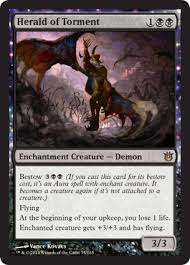
If this particular deck picks up in popularity, I like [card]Herald of Torment[/card] and [card]Shadowborn Demon[/card]. [card]Nighthowler[/card] is all but a bulk rare, so it’s potentially a great low-risk, high-reward target.  I have seen similar lists showing up on MTGO daily results, and the fact that Ari bothered to pick up this 75 is a heavy indication that the rares and mythic rares that aren’t seeing heavy standard play right now should be on your radar too.

Herald

From Born of the Gods, both the aforementioned [card]Herald of Torment[/card] and [card]Pain Seer[/card] seem to have essentially bottomed out and I’m cool with actively seeking out a few playsets in trades right now.  I see [card]Pain Seer[/card] sneak into a handful of deck lists enough that it seems to be several players’ pet card.  Sooner or later, this guy will find a home.

Legacy

SCG Open Los Angeles Decklists

I am really excited about the BUG Control list piloted by Phimus Pan at the Legacy Open this weekend.  Drew Levin had written about the BUG Delver list that has been doing well as of late and described it as “a bit kludge.” I mention this because, first of all, that is an awesome adjective that I intend to incorporate into my vocabulary, but also, it fits the experience that I have had playing the deck quite well.

Following the shift that the Legacy metagame has experienced, BUG has picked up in popularity but moved away from [card]Shardless Agent[/card] and [card]Baleful Strix[/card], which is a shame because both of those cards are incredibly efficient designs and cards that I am quite fond of playing with.  Phimus’s list is the big brother to the BUG Delver list.  It answers it, which is a desirable trait right now, and also eliminates the bipolar tendencies of the BUG Delver list. You no longer have to decide whether you want to play [card]Deathrite Shaman[/card] or [card]Delver of Secrets[/card] on turn one.  Your role is more clearly defined.

[card]Baleful Strix[/card] has [card]Plummet[/card]ed since being reprinted in a Commander deck alongside [card]True Name Nemesis[/card].  I believe this card is near its floor. [card]Baleful Strix[/card] available at $6 is not a price that I anticipate will be around for too long.

[card]Surgical Extraction[/card] is present in the sideboard of the BUG Control list, and also in the U/R Delver sideboard as well. Jacob Kory experienced a fair level of success utilizing [card]Surgical Extraction[/card] alongside [card]Gitaxian Probe[/card] to attack his opponents’ grips while managing to keep them from cantripping through their decks or shuffling away useless spells.  I highlight this because these two New Phyrexia spells are becoming ever-present in eternal formats.  [card]Surgical Extraction[/card] is quite a versatile utility card, and it would be quite difficult to find a way to print a more mana efficient card for this effect.Misthollow Griffin

Mono-Green 12-Post made an appearance at the top tables this week as well.  This deck leans heavily on the utility of [card]Expedition Map[/card]. The same is true of many of the “Tron” strategies in Modern.  Although we are talking about a common, with Modern season around the corner, this card could climb up a couple of bucks, which would mean that it would essentially double in value.

Finally, I’ll ask the question, is this [card]Food Chain[/card] deck real?  The world may never know, but enough people believe that this is the case that currently all of the copies of [card]Misthollow Griffin[/card] have been exiled from Star City. The card is currently priced roughly at $1 on TCGplayer.  It will take a significantly higher amount of success to convince me.  But who doesn’t want to make infinite mana and cast their 3/3’s from exile.

Have comments on today’s article or on this weekend’s eventts? Let me know in the comments below!

Taking Down a PTQ with Black-White Midrange, by Jonathan Marsh

A few weeks ago, I won a PTQ in Dothan, Alabama, playing B/W Midrange. I owe a huge thanks to the tournament organizer and store owner of Fanatix, Phillip Chalker, for hosting one of the best-run PTQs I’ve ever participated in. Also, thanks to Brainstorm Brewery and Danny Brown for giving me the opportunity to share this experience with you guys!

Choosing a Deck

I knew going into this PTQ that I wanted to play a deck that gave me the opportunity to win any game of Magic. Most people who know me notice that I usually pilot U/W/x control decks. But I knew that playing Esper or U/W would give me a huge disadvantage versus R/G Monsters. A week prior to this PTQ, SCG St. Louis saw not four, but five Monster lists make top eight (if you include the Jund Monsters deck piloted by Kent Ketter). Knowing that this was a deck I would have to face multiple times in the tournament, I became extremely disillusioned with U/Wx Control and I immediately began exploring other options. To be completely honest, I was originally disgusted by the idea of choosing another deck, as I love [card]Jace, Architect of Thought[/card], and [card]Sphinx’s Revelation[/card]. Every day for the week prior to the event, I almost switched back to Azorious Control. Then the nightmares came, and these bad boys were the culprits!

domri                                     xenagos

Leading up to the event, I kept having the worst mental images of someone windmill slamming turn-two [card]Domri Rade[/card] into turn-three [card]Xenagos, the Reveler[/card] into turn-four [card]Stormbreath Dragon[/card]! I thought, “Yep! I’m not playing blue…”

Playing a deck and losing a game just because someone cast a certain hard-to-answer card is one of most difficult and frustrating places to be in the world of Magic: The Gathering. It wasn’t until the night before the PTQ that my friend and I decided to switch to B/W Midrange. We hammered out plenty of games versus Monsters. We worked on sideboarding a lot and determined how we wanted our decks to look post-board versus a lot of the major decks in the format.  Below is the list we both decided to sleeve up for the Dothan PTQ.

[Deck title=B/W Midrange by Jonathan Marsh and Jesus Buenrosto]
[Creatures]
*3 Pack Rat
*3 Lifebane Zombie
*4 Desecration Demon
*3 Blood Baron of Vizkopa
*2 Obzedat, Ghost Council
[/Creatures]
[Spells]
*4 Devour Flesh
*4 Hero’s Downfall
*2 Ultimate Price
*4 Thoughtseize
*3 Underworld Connections
*2 Elspeth, Sun’s Champion
[/Spells]
[Lands]
*4 Godless Shrine
*4 Mutavault
*2 Orzhov Guildgate
*2 Plains
*10 Swamp
*4 Temple of Silence
[/Lands]
[Sideboard]
*2 Bile Blight
*2 Dark Betrayal
*2 Doom Blade
*1 Drown in Sorrow
*2 Duress
*2 Glare of Heresy
*1 Revoke Existence
*2 Sin Collector
*1 Underworld Connections
[/Sideboard]
[/Deck]

I really liked the above list going into the PTQ. The wonky two-drop removal may seem a little weird because of the zero copies of [card]Bile Blight[/card] in the main deck, but if you are expecting a lot of R/G Monsters, Blight isn’t a removal spell I would recommend. If you are expecting some Mono-Black Devotion, then maybe play two copies, tops. It doesn’t kill any creatures except for [card]Elvish Mystic[/card] versus R/G Monsters. I knew [card]Devour Flesh[/card] would always trade with a card in any matchup and that [card]Ultimate Price[/card] would hit a large percentage of the creatures I would want dead. Our combined record with the deck was 13-3-1, which is pretty good. We moved [card]Obzedat, Ghost Council[/card] to the main from the sideboard because we wanted to have a chance versus control decks in game one. An empty board with Obzedat is usually GG for most matchups if you have decent follow-up.

Onward to the PTQ!

Round One – David Mathis – U/W Devotion

I’d actually met David previously through a really good friend at a New Year’s party. It turns out we know a lot of the same people. At this time, we were only acquaintances, but after hanging out a few times afterward, I now consider him a friend.

Game One: I opened up with [card]Thoughtseize[/card] and I was able to win game one with a lot of rats. There was a key turn I attacked all out, knowing he couldn’t crack back and lethal me. I knew I would lose if he drew [card]Detention Sphere[/card], so I had to force the issue by attacking and hoping he wouldn’t draw it. He didn’t, so I won.

Sideboarding:  I like bringing in 2x [card]Bile Blight[/card], 1x [card]Revoke Existence[/card], 2x [card]Doom Blade[/card]. Out—3x [card]Underworld Connections[/card], 2x [card]Ultimate Price[/card].

Game Two: We both mulliganed and David started out slow after I [card]Thoughtseize[/card]d his [card]Thassa, God of the Sea[/card]. I played [card]Lifebane Zombie[/card] knowing he would have to [card]Detention Sphere[/card] it. He did, and I jammed [card]Desecration Demon[/card] on an empty board and followed up with Obzedat.

1-0

Round Two – U/B control

This was the most bizarre deck that you could ever hope to face playing a [card]Thoughtseize[/card] deck. His deck was [card]Jace, Architect of Thought[/card] and [card]Ashiok, Nightmare Weaver[/card] followed up with removal and counters…

Game One: After he played a Jace, I Downfalled it during his end step, then untapped and played a Connections. This pretty much won the game as he had no way of removing it once it resolved.

Sideboarding: I like—2x [card]Duress[/card], 2x [card]Sin Collector[/card], 1x [card]Underworld Connections[/card]. Out—1x [card]Bile Blight[/card], 4x [card]Desecration Demon[/card], 1x [card]Hero’s Downfall[/card], 1x [card]Ultimate Price[/card].

Game Two: Game two was a tragedy for me. I mulliganed to six with a very threat-light hand and was quickly dispatched by a few counters and Jaces. The biggest dagger was when I kept a [card]Pack Rat[/card] on top off a scry land. He untapped and Ashioked it.

Game Three: I managed to resolve a [card]Pack Rat[/card] after I [card]Duress[/card]ed him. The rat was able to outpace his one-for-one removal spells and it eventually won me the game.

2-0

Round Three – U/w Control

Game One: Whew! I got blown out. I drew almost no pressure versus him and he started chaining multiple Revelations.  I immediately conceded and went to sideboard.

Sideboarding: I like 2x [card]Duress[/card], 2x [card]Sin Collector[/card], 1x [card]Underworld Connections[/card], 2x [card]Glare of Heresy[/card], 1x [card]Revoke Existence[/card]. Out—2x [card]Ultimate Price[/card], 4x [card]Devour Flesh[/card], 1x [card]Pack Rat[/card], 1x [card]Hero’s Downfall[/card].

Game Two: I managed to deal 15 points of damage between [card]Lifebane Zombie[/card] and [card]Mutavault[/card]! He eventually [card]Supreme Verdict[/card]ed the Zombie and I then used a [card]Duress[/card] I saved to protect the Obzedat I gripped forever to win the game.

Game Three: Turn four, I managed to bait out a counter with a Connections when he had a [card]Detention Sphere[/card] and multiple [card]Revoke Existence[/card]s that I saw off [card]Duress[/card]. I played [card]Blood Baron of Vizkopa[/card] on turn five. The next turn, I untapped, [card]Thoughtseize[/card]d his Elspeth, and won quickly when he couldn’t [card]Celestial Flare[/card] my Blood Baron (because I kept sending my [card]Mutavault[/card] in as well).

NOTE: I feel like a lot of players use [card]Thoughtseize[/card] and [card]Duress[/card] wrong. From playing both control decks and black discard decks, I’ve noticed the negative repercussions a misused discard spell can have on a game. Game one on the blind, it’s almost always correct to open up with [card]Thoughtseize[/card] on your unknown opponent, especially when you know you’re going to be tapping out over the next few turns. Against control, though, I almost always save my [card]Duress[/card]es and [card]Thoughtseize[/card]s for key spells I want to resolve. If I didn’t wait on my [card]Thoughtseize[/card] in this match, I would have never stripped the Elspeth he drew the turn after I played my Baron.

3-0

Round Four – Ryeland Barnard– R/G Monsters

This entire match was an example of how our decks weren’t supposed to run. We both got significantly mana flooded, with me drawing a few more spells to dictate the match at two games to zero.

I’ll talk about sideboarding since there really wasn’t much to discuss about our match.  I sideboard differently in this matchup depending whether I’m on the play or the draw. On the play, I’ll leave in one Connections and side out a Blood Baron for two [card]Doom Blade[/card]s and a [card]Duress[/card]. On the draw, I board out all three Connections and one [card]Pack Rat[/card] for two [card]Duress[/card] and two [card]Doom Blade[/card].

4-0

Round Five – Michael Malone  – R/w Devotion

Overall, the games I lost here were very close. Mike played extremely well and I was still happy for him even in defeat. We’re great friends and we often joke about matches like this. We contemplated drawing but we both agreed that it was best to lock one of us in for sure.

Game One:  This was very close, like I said. I had a turn to do an extra few points of damage with my [card]Pack Rat[/card] but opted to play conservatively because I had drawn a second [card]Pack Rat[/card] and I knew he had mortars in his hand because of an earlier [card]Thoughtseize[/card]. In my mind, I wanted something to follow up with, since at the time my rats could only reach 3/3 with discarding. I was punished for holding back when he played [card]Fanatic of Mogis[/card] the following turn. After he cast Mortars the turn after that, he attacked with exactly lethal.

Sideboarding: I like 2x [card]Glare of Heresy[/card], 2x [card]Bile Blights[/card], 2x [card]Doom Blade[/card], and the one-of [card]Revoke Existence[/card].

Game Two: This game played out exactly how I wanted it to. I played multiple demons backed up with removal. Off for a game three, boys!

Game Three: The final game would decide who could just double draw into the top eight. This was a tough one for me because I was on the draw and he had a pretty quick hand with [card]Nykthos, Shrine to Nyx[/card]. I [card]Thoughtseize[/card]d him on turn one to take a [card]Burning-Tree Emissary[/card], leaving him with an [card]Assemble the Legion[/card], for which I had [card]Glare of Heresy[/card]. But nope, he played a [card]Boros Reckoner[/card] which I had to kill with Heresy so I wouldn’t fall too far behind. I managed to play an Elspeth after he cast the Assemble with me at four life. We were both making tokens and eventually I built my Elspeth up to seven loyalty. Just when I was looking comfortably ahead, he ripped [card]Mizzium Mortars[/card]. Say what? He ripped the Mortars to blow me out!

After the match I immediately congratulated him with the biggest bro hug ever!  I was extremely happy for him and I didn’t mind losing at all because he’s my friend. To me, life is more than what you can do for yourself—sometimes it’s about what you can do for others. Playing this game means nothing if you don’t have the friends to share your experiences with.

4-1

Round Six – Jimmy Smith  R/G Monsters

This was yet another match versus a very good friend. I would have preferred to play someone else, regardless of how comfortable I was with this matchup, but I didn’t. Such is life.

Game One: This was a very close game. I should have mulliganed my opener, given that I knew what I was up against. I kept a hand of Connections, Elspeth, Downfall, and four lands, including one scry land. I had an extremely slow start and I dislike Connections in the matchup. However, we both drew pretty poorly and Connections is fine when your opponent isn’t pressuring you. Elspeth landed, which eventually won me the game at three life.

Game Two: Game two was very close as well. I managed to stabilize at three life again, but this time with Obzedat in play. I backed  it up with a Blood Baron and removal managed to seal the deal.

5-1

Round Seven – Christopher Brickey- Ww spashing black

Before the match, it was questionable whether or not we would both make it with an intentional draw, as we were in seventh and eighth place. I made an offer to Chris: even if I was up a game, if a way opened up so we both could make top eight with a draw, I would do it. He agreed to do the same for me.

Game One: I kept a pretty good three-land hand with Blood Baron and removal. The tricky part was that I needed to eventually draw into my fourth and fifth lands. I eventually got to five lands, but by that point I was pretty far behind on board and life. He cast [card]Brave the Elements[/card] until I was dead.

Opportunity opened up so Chris and I could draw. We went for it since we were both locked in. We congratulated and wished one another good luck in the top eight.

5-1-1

This put me at eighth seed going into the top eight, meaning I would be on the draw for the rest of the tournament.

The Top Eight 

Quarterfinals – (1st seed) –Black Devotion Splashing Green

Overall, I consider this to be a very bad matchup for me. It’s especially bad if the deck is playing more [card]Devour Flesh[/card]es than other lists, which is good practice against Monsters. The fact that I cut a Blood Baron and an [card]Underworld Connections[/card] for [card]Lifebane Zombie[/card]s makes this an extremely miserable matchup.

Game One: My opponent double [card]Thoughtseize[/card]d me and took a [card]Pack Rat[/card] and a [card]Devour Flesh[/card]. He left me with a [card]Desecration Demon[/card] that eventually won me the game because he didn’t draw an answer for it.

Game Two: He kept a two-lander on the play and didn’t get there. Not much more to it than that.

Semifinals – R/G monsters

The main things I remember about this match is me shaking my opponent’s hand with a “good luck” and shaking it again with a “good match.” This round took maybe a little over 15 minutes and the games played out exactly the way I wanted them to. I turn one [card]Thoughtseize[/card]d him and killed any threats he played until I landed a Demon. This took it home in both games. Demons and Lifebanes were so amazing!

Finals – Christopher Brickey  – Ww Spalshing Black

We both congratulated each other on making it to the finals and we struck up a conversation. He had mentioned that he was just getting back into competitive Magic, whereas I really just wanted to go to the pro tour. I offered all of the prize money in exchange for the invite. Chris understood how much I wanted to go and he accepted my offer.

Lessons

There are a few things that this PTQ taught me and a few things it reinforced. Playing this tournament opened me up to playing decks other than just control. For those of you who think you can’t win with something else: you’re wrong. Sometimes you get lucky and meet a great person like Chris and sometimes you don’t. Regardless, it’s important that you have good sportsmanship. Magic is an experience for both players—not just you. Some of my best friends in life were once my opponents and I wouldn’t have the same type of friendship with them if I had been a bad sport. They’re worth more to me than any trophy or amount of money. Honestly, my life would be completely different if it weren’t for the friends I’ve met through Magic. I owe them and Chris a huge thanks!

If you guys have any questions, shoot me an email at [email protected] or leave a comment below. Thanks again for reading!

Pitt Imps Podcast #61 – Drunk Donald Duck

In this week of Pitt Imps we have on Ryan Tice. He’s the official EDH guy for the Pitt Imps Posse. Ryan got in some good questions about that format while I got to say nothing for 15min. Ahhh bliss. We also went over the plethora of Tournaments that happened last weekend. We also announce a big cash award art contest being run by us. Yes I said CASH! Start drawing.

Your hosts: Angelo & Ryan

Angelo’s Twitter: @Ganksuou

Ryan’s Twitter: @brotheryan

Show’s Email: [email protected]

Serum Visions – GP Montreal Local Fare: Unibroue Brewery

Hello, everyone, and welcome back to Serum Visions!

This week is the recovery week from poutine and the four-liter pitchers of beer than can be found in lovely Montreal. One of Canada’s most famous breweries can be found around a half-hour drive from the city in a town called Chambly. The brewery is called Unibroue, and it’s offerings can be found as far south as California and as far north as Alaska, and of course, right across Canada.

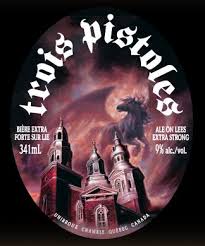
imagesI was recently a guest on a beer podcast where we talked about everyone’s “most important” beers in their craft beer drinking career. Up there on my list was Trois Pisotle/Maudite by Unibroue.  While I was doing my jazz degree, I attended a  weekly concert in the French section of Winnipeg called Mardi-Jazz. (Tuesday Jazz) One evening, I noticed people drinking a beer called Fin du Monde—it’s a 9% Belgian-style triple and it has got a kick!  I took a closer look at the beer fridge and saw all of these labels that had incredible artwork on them with funny-sounding French names. “I’ll take a Trois Pistoles please.” The cap popped off, the beer poured into a glass. It was mahogany red and had head that would make you blush. Upon first sip, the world of craft beer had been opened up to me. There was beer in this world that didn’t taste like “beer.” You know, a beer that tastes like malted grains, whether it be light malt, roasty malt, or chocolate malt. Nor did it focus solely on the hops like so many double IPAs I love. No, this was something new. It was using all of its ingredients to create a new flavor dynamic. It tasted like port, chocolate, dates, raisins, pepper, clove, bananas, and all sorts of things. It was a beer that didn’t taste like beer. At that moment, beer lost all boundaries: it went infinite.

Why do I share this? Because, this is first and foremost a beer education series. If you didn’t know things like this existed, how would you ever find out? Alright, enough sap, lets talk about the brewery.

Unibroue

Unibroue is a fairly young brewery compared to its Belgian role models. Its beers have a very unique flavor compared to most Belgian and Canadian beers that comes from the same yeast. When a commercial yeast producing lab released their signature yeast to home brewers, it was called “Canadian/Belgian.” All of the their beers are “on lees.” This means that they do not completely filter it, but instead leave some of the yeast in the bottle to allow it to “bottle condition,” or ferment a second time. This causes the beer to naturally carbonate. When the yeast is done fermenting, the extra fermenting sugar goes dormant and settles at the bottom of the bottle—this is the lees. The brewery claims that this process adds to its signature flavor. If you have had more than one of these beers, you’ll be able to attest to the particular yeast character that each of them have. When Unibroue released its Blanche de Chambly, it made history by being the first abbey ale—beer on lees—from North America. Another extraordinary achievement they have accomplished is is being one of North America’s most-awarded breweries, with 183 medals! You can go to Unibroue’s website and see the endless list of them here. Among its most highly-honored beers is La Fin Du Monde, which is the most highly-awarded beer in Canada.

Trois_Pistoles

Each of the signature beers are named after stories or legends from the area. Trois Pistoles is named after a small town in Quebec. The legend goes that there was a large black horse of great strength that helped move giant stones needed to build a church. For some reason, it was known that the horse had to stay bridled, or else! One of the workers thought this to be unfair and unbridled the horse to give it some water. The great black horse vanished and the construction of the church was not completed. You can go to Trois Pistoles and see where there is a missing stone in the church to this day. There is a second version of the legend, where the bishop conjured up a “good devil” to help with construction. The bridle was removed before completion and the horse vanished, leaving the church unfinished.

This craft brewery was actually the brainchild of two businessmen from Quebec who, while in Belgium, saw a completely untapped market in North America of readily available abbey-style beers. They came back to Quebec and acquired another brewery and merged it with their own company. Once it was acquired, they found a master brewer in Belgium to teach them how to make abbey-style beer. In 1992, they released the aforementioned Blanche de Chambley. The company grew at an extraordinary rate because it was being treated as a business rather than a hobby gone too far. Where many brewers are concerned about not growing too fast because of potential loss of quality and control, growth seemed to be Unibroue’s goal. The company was purchased by Sleeman’s in 2006, and then Sleeman’s was purchased by Sapporo in 2008. Unibroue still makes great beers and I continue to buy them every once and a while. They have claimed that all that has changed is the ability to exact more control and have wider distribution. Perfect!

I am a great proponent of local beer and most other things for that matter. But this story raises some questions. I would not say that Unibroue can be considered a microbrew anymore—it’s owned by a huge corporation. It’s worth asking whether or not these beers ought to be avoided like BudMillerCoors (BMC) beers. If this beer was created as a product to make money, rather than out of a passion for beer, does that make it somehow a less reputable or a principally objectionable product? Or do we thank our lucky stars that someone brought to us such a wonderful beer, and leave their intentions out of the discussion? I think here we are getting into territory outside of this particular article’s scope. If you would like me to dig into this topic later, hit me up on Twitter, @awcolman, or leave a comment below. Lets talk about either how great Unibroue is or what you think about the companies corporate journey and what it may imply.

Style of the Week: Belgian Quadruple or Belgian Dark Strong Ale

This is the style in which Trois Pistoles resides. Things you’ll be looking for while tasting are raisins, plums, dried cherries, figs and prunes. Full BJCP tasting notes here.  Of course, if you can find a local offering grab that first. If not, you can look for Trois Pistoles by Unibroue or St. Bernardus Abt 12, which is a genuine Trappist abbey ale and by far one of my favorite beers. If you cant find either of those, Chimay Grande Reserve (Blue) is fairly easy to get a hold of. If not any of these, be sure to ask—you may be surprised by what you’ll learn or who you’ll meet!

Thanks for hangin’, everyone.

Andrew

Inventory Management Part I: The Basics

Today I want to talk about inventory management. Others here at Brainstorm Brewery have touched on this subject, but I don’t feel like it’s been explored in enough depth. I think inventory management is a glaring weakness for many financiers, so much so that I am going to dedicate a series of articles to it.

Today is an introduction to the basics—what inventory management is and why it is important. I will cover specific concepts (like inventory turnover) in detail in future articles.

Since inventory management is probably the least glamorous part of Magic finance (or any business, really), it doesn’t always make for an exciting read. I’m going to try using some common mistakes to illustrate the ideas and to make the article less dense. If these sound familiar, you can start improving right away by watching out for them. Future articles will give you more precise tools to manage your inventory.

The What and Why

The goal of Magic finance is to sell cards and make money.

The goal of Magic finance is to sell cards and make money. It’s so important I thought it was worth saying twice.

Inventory enables you to sell cards and make money. That is its only purpose. You can’t sell cards you don’t own (don’t start with the short-selling stuff, either). So the set of cards you have acquired with the intent of selling for profit is your inventory.

We are one section in and I guarantee a lot of people are already doing this wrong. How can that be?

Mistake #1: Collectionventory

Your inventory is not your collection! Your collection is not your inventory! Collecting is about stockpiling cards, finance is about stockpiling money. Big difference.

One of the true rookie mistakes is using your inventory as a measure of success. Owning more inventory does not, by itself, make you a successful financier. It doesn’t necessarily make you unsuccessful either, it’s just the wrong number to look at. The goal at the end of the day is to generate sales and cash. Even if you started with a booster box of Return to Ravnica and traded all the way up to a set of duals, you still have not produced any income and you still have no cash.

Does it feel good to spread 100 copies of [card]Sphinx’s Revelation[/card] out on your desk and post a picture on Twitter? Yes, absolutely. You are only a good financier when you sell that stuff and make a profit, though. If your inventory is increasing dramatically while your sales stay low, you are a good collector, not a good financier. The guy who pays his rent every month with his Magic profits is a good financier. It doesn’t really matter how many duals he has in his binder at any given time.

In summary of this section:

  • You need inventory but it’s not the goal and more doesn’t mean better.

  • Carrying inventory is different from collecting and you shouldn’t get attached to your stock.

Costs of Doing Business

The second thing you need to know about inventory is that it’s expensive and you wouldn’t carry it at all if you didn’t need to. Unfortunately, we just finished covering the first thing, which is that you need to carry inventory. In that regard, inventory management is very much a balancing act.

Here are the ways that inventory is costly:

  1. Most importantly with cards, inventory ties up your money. This is money you could be earning a return on, either through Magic finance or a more traditional investment vehicle, or otherwise using for bills, food, etc. You lose flexibility and you may not be prepared to take advantage if a great deal comes along.

Mistake #2: Dead Money

Let me jump in here with an example. Many of us have had a pretty nice run with the recent Modern spikes. Financiers didn’t really need to be particularly knowledgeable or clever to get a piece of the action, since the entire format essentially corrected in price. The one thing you did need was cash. Whatever was in your binder or spec box that didn’t spike—Standard specs, EDH, Legacy, whatever—was pretty costly whether you realize it or not. You may look at your $100 [card]Scavenging Ooze[/card] spec and still think it’s solid (and it is), but if that was a $100 bill instead, you could have easily jumped on a few sets of [card]Snapcaster Mage[/card]s (or anything else), sold out for a nice profit, and now have a $150 Ooze spec instead. If it’s not making you money, it’s losing you money.

Back to the hidden costs of inventory.

  1. Inventory can be costly to maintain. You have to sort cards, count them to make sure you aren’t missing any, track their prices, buy sleeves or boxes to hold the cards, and so on. You may find yourself putting quite a bit of time into your inventory, or worse, you may be paying someone to do these things. This one is typically not a huge concern for the part-time financier. It’s pretty easy to organize your specs while watching a TV show you planned on seeing anyway. But when you start dealing with large amounts of inventory, buying collections, etc., it’s no joke.

Finally, here’s where all the downside is hiding.

  1. Carrying inventory comes with risk. You could lose or damage cards. They could be stolen. Cards could become obsolete if you aren’t able to sell them before they rotate or a better version is printed. They could be banned. You could buy in at the top of a speculative spike. Wizards could horribly over print Modern Masters II after the volatility this winter. In any case, your inventory could lose substantial value. With the exploding popularity of Magic, it’s hard to lose money being a financier. If it’s going to happen, though, then some version of this inventory risk is the overwhelming favorite to get you.

I’ll talk much more about how you should be tracking your inventory in subsequent articles, but I’ll leave you with this crucial, and very tempting, mistake.

Mistake #3: Ignoring Losses

Losses will kill you, as I said above. We are all inclined to shuffle these experiences to the back of our minds, but it is important that you recognize inventory-related losses. You can’t just forget about them or call it bad luck or stick them in the bad spec box. Here is an example with some numbers to illustrate:

If I buy five copies of [card]Snapcaster Mage[/card] at $20 ($100 total investment), then sell them for $30 cash each, I have $150 for a profit of $50 or 50%. Awesome, 50% is great. But if my dog chews just one of those cards up (or more likely, I confuse collecting and finance again and stick it in my cube) and I can only sell four, I have $120. My initial investment is the same $100, but now my profit is only 20%, meaning I’ve lost more than half of my profit because one-fifth of my inventory disappeared.

When you have a lot of cards you are trying to sell, this stuff will happen and you can’t ignore it. Theft, damage, specs gone horribly bad—these are risks associated with holding inventory and they eat into your profits in a big way. Inventory losses are so painful because you are not only missing out on profits, you are losing your original capital. If you are not recognizing those losses, you are probably less successful at Magic finance than you think. The temptation is to look at the four copies you did sell and conclude that you made a handsome 50% on the Snapcaster spec. However you record this stuff in your spreadsheet, your bank account is going to tell the truth.

Today’s Conclusions

  • Inventory is necessary but costly. You want to keep the smallest possible inventory that will support your sales.
  • Minimize the money you have tied up, the time you have to put in, and the risk of losing value.

Your challenge as a financier is to balance having extra inventory sitting around against missing out on sales because you don’t have the stock.

Next time, we’ll start to talk about the tools you need to do that.

Thanks for reading.

Forced Fruition Episode 2: Diggin’ Through the Yard

[youtube http://www.youtube.com/watch?v=videoseries?list=PLs4gxqbLAAD4mWLoN5o-rqgMG1LCBJ2vE&w=640&h=360]


Hello and welcome back to Forced Fruition, the Magic show where we strive to better ourselves by identifying a theme and sticking to it! This time around I drafted a green-black graveyard deck in a BNG THS THS Swiss event. Some tough decisions were made during the draft portion and the games turned out pretty well. Enjoy the video and please feel free to leave feedback on my drafting, play, or presentation in the comments below. Enjoy!


Drafting Packs 1 and 2

[youtube http://www.youtube.com/watch?v=QNpHk5Aw1G8&w=640&h=360]

Drafting Pack 3 and Deckbuilding

[youtube http://www.youtube.com/watch?v=2NqQ4mY0ac4&w=640&h=360]


[Deck title= Diggin’ Through the Yard]

[Creatures]

*1 Sedge Scorpion

*1 Baleful Eidolon

*1 Leafcrown Dryad

*1 Nyxborn Eidolon

*1 Satyr Wayfinder

*1 Voyaging Satyr

*1 Swordwise Centaur

*2 Mogis’s Marauder

*1 Nighthowler

*1 Cavern Lampad

*1 Disciple of Phenax

*1 Forsaken Drifters

*1 Graverobber Spider

*1 Returned Centaur

*1 Shrike Harpy

[/Creatures]

[Spells]

*1 Pharika’s Cure

*1 Savage Surge

*1 Asphyxiate

*1 Time to Feed

*1 Hero’s Downfall

*1 Lash of the Whip

*1 Sip of Hemlock

[/Spells]

[Land]

*1 Temple of Silence

*8 Swamp

*8 Forest

[/Land]

[/Deck]

Match 1 Game 1

[youtube http://www.youtube.com/watch?v=7WT_vzTM9nw&w=640&h=360]


Match 1 Game 2

[youtube http://www.youtube.com/watch?v=gMJTarHmZXg&w=640&h=360]


Match 1 Game 3

[youtube http://www.youtube.com/watch?v=cDnK61haEEw&w=640&h=360]


Match 2 Game 1

[youtube http://www.youtube.com/watch?v=QsA4cEffC_M&w=640&h=360]


Match 2 Game 2

[youtube http://www.youtube.com/watch?v=w5Of9k1exBc&w=640&h=360]


Match 2 Game 3

[youtube http://www.youtube.com/watch?v=2jyC7AxNE6I&w=640&h=360]


Match 3 Game 1

[youtube http://www.youtube.com/watch?v=xemmoW6iC-g&w=640&h=360]


Match 3 Game 2

[youtube http://www.youtube.com/watch?v=abtZHDq7-aA&w=640&h=360]


Overall I was happy with the performance of this deck, though I do still wonder if things might have gone better had I taken the [card]Nemesis of Mortals[/card] instead of the [card]Hero’s Downfall[/card] in pack 3. Either way, the green-black graveyard deck in Theros Limited is certainly a contender, and if you can get the trifecta of [card]Nighthowler[/card], [card]Whip of Erebos[/card], and [card]Nemesis of Mortals[/card], along with the supporting cast to fill up your yard, you’ll be in business. Also, we didn’t see her, but [card]Pharika’s Mender[/card] also deserves a mention for the archetype as well.


See you next week!

-Andrew

Brainstorm Brewery #92 – Booze Cube Expansion

The gang is joined by the Booze Cube’s architect himself, Scott Peitzer (@TheBoozeCube). With a new Booze Cube expansion, #crackgate, and more Modern price craziness at play, there is a lot to discuss. With a binder twice-related fiasco separating Corbin from the group, it’s up to the rest of the gang to keep the conversation going. Join us for Brainstorm Brewery.


  • Scott Peitzer (@TheBoozeCube) joins the gang.
  • A new expansion for the Booze Cube is announced.
  • Was a six-month ban appropriate in the #crackgate scandal?
  • Got pics of you wearing our shirt or using our mat? Send them in for a chance at a prize!
  • There are still some tokens and mats left. E-mail us to get hooked up.
  • The address is brainstormbrew at gmail dot com.


Cabe Riseau produced the intro and out-ro music for Brainstorm Brewery.


Contact Us

Brainstorm Brewerywebsiteemailtwitterfacebook

Ryan Bushardemailtwitterfacebookgatheringmagic.com

Corbin Hosleremailtwitterfacebook – quitespeculation.com

Jason E Altemailtwitterfacebookgatheringmagic.com – quitespeculation.com

Marcelemailtwitterfacebook

Casually Infinite – Out[fetch]landish Predictions

This normally isn’t my thing, but I figure that making some outlandish predictions about the future is something I’m occasionally good at, so I’m giving it a try.

After GP Richmond’s massive 4,300-person attendance, it’s clear that Modern is really a force in the market. I think that Wizards will continue to show a lot of love to the Modern community simply because the entire format is reprintable. Any card that becomes too scarce or causes too much of a barrier to entry can easily be reprinted in a Modern Masters set or supplemental set.

The last two big sets have included notable reprints in the form of [card]Scavenging Ooze[/card] and [card]Thoughtseize[/card]. Modern Masters showed that reprinting cards without tanking them is a real option. In the future, I think we can expect to see continued reprints keeping prices at a reasonable level, and occasionally crashing sections of the market temporarily.

Modern Barrier

The current barrier to entry in Modern lies primarily in the lands. The reprinting of shock lands in Return to Ravnica block showed the effect of bringing needed lands into the format. Prices for shock lands dropped from around $30 to about $10 due to the reprinting, with values slowly gaining back some of that ground as print runs on RTR ended. Because of this, I’m sure they’re going to reprint fetch lands—the only question is how.

Here are some options they have on how to do it:

1) Reprint Zendikar Fetch Lands in Modern Masters 2 (2015?)

This is currently the most common idea being bantered around, probably because it seems so easy. Clearly Modern Masters was a success in getting many needed Modern cards into the hands of players. Another round of Modern Masters, with a second batch of reprintings, as well as including the cycle of Zendikar fetch lands would clearly be a quick seller.

The problem with this is that it doesn’t really work. Tarmogoyf is back toward $200 after the Modern Masters printing. As a four-of in multiple decks, it’s clear that the recent reprinting wasn’t enough to make the card accessible to everyone. Imagine if we faced the same situation with the primary dual land in the format. We’d quickly see the cost of Modern clashing with the cost of Legacy and pushing new players out of the format. I don’t feel a Modern Masters reprint will work, and I also don’t feel that over 50% of the cost of a deck should be tied up in the lands. That just doesn’t feel good.

2) Reprint Zendikar Fetch Lands in an Expert Expansion

It’s already been proven that this would work to get lands into players’ hands with the success of reprinting the shock lands. They’ve dropped significantly in price and been made very accessible to newer players. I’d expect a quick dip in price when shock lands rotate out of Standard, but I don’t think they’ll stay down for long. All the new players will want them for Modern, and they’re already headed for a steady climb back up. The downside here is that Wizards has already stated it doesn’t like excessive shuffling in Standard, and it would clearly tank prices from current levels. We’d probably be looking at lows of $5 to $10 for fetch lands, which should scare the crap out of anyone who’s seriously invested in them.

However, the current storyline seems to be heading in this direction. With Elspeth going to Theros in order to find help to fight the eldrazi, as well as the clear need for fetch land reprints, Return to Zendikar seems like a likely block. The past several years have alternated between introducing a new plane and returning to an old one. After Theros, we’re up to return to a plane, but Zendikar seems a little early to come back, so it may be up to a couple sets out. But I don’t think we can see reprints of fetch lands waiting that long. The fall 2015 set is the latest I can imagine.

3) Reprint Onslaught fetch lands.

The cutoff point for Modern rules out allied fetch lands, as those came from the block before original Mirrodin. While reprinting Zendikar fetch lands seems the obvious choice, leaving them in Modern while ruling out allied fetch lands doesn’t sit well for me. Reprinting Onslaught fetches would solve a number of the fetch problems. This would have to be done in a block in order to make them Modern legal, since putting them in Modern Masters wouldn’t technically allow them into the format.

The result of this would be pretty impactful. First off, fetches are pretty interchangable. Decks running four [card]Scalding Tarn[/card]s and three [card]Misty Rainforest[/card] would be just as happy to run [card]Polluted Delta[/card]s instead. While Twin decks would still want [card]Scalding Tarn[/card]s and B/G Rock [card]Verdant Catacombs[/card], this would open up the Modern field to some more innovation. We might see some previously missing archetypes when the lands available allows more freedom.

From a financial perspective, we would still see a significant drop in Zendikar fetch lands but not as significant as if they themselves were reprinted in a core set. The ability to fill in decks with a random off-color fetches for an affordable price will keep Zendikar fetches low. I’d expect to see them drop to anywhere from 25 to 50% of their current prices if Onslaught fetch lands get reprinted. This seems like a good option compared to reprinting the enemy fetches outright and crashing the market completely.

4) Don’t reprint fetch lands.

I don’t see this as a realistic option to preserve Modern as a format. The recent spike in Modern staples is going to price a number of people out of the market. Current Standard decks run $200 to $400, Modern $500 to $2000, and Legacy around $2500. If the price of Modern decks continue to rise, we’re likely to end up playing Legacy instead.

In order to keep Modern a viable format, Wizards needs to use the primary resource it has available to it: reprints. For Legacy, this simply isn’t an option. Too many cards sit on the Reserved List for them to be able to keep Legacy alive through reprints. Eventually the cards that can’t be reprinted would either need to be banned or their costs would rule out a large number of players. Meanwhile, Modern allows them to fix the problems of past formats through reprints. Nothing in Modern is on the Reserved List. If Wizards is careful, it can essentially use the format as a reboot for the Magic tournament structure, with powerful-but-reprintable cards allowing for a second-tier eternal format that remains accessible to new players.

Most-Likely Scenario

Personally, I’d be very surprised if we see a Zendikar fetch land reprinting before an Onslaught reprinting. We could very well expect to see a Return to Zendikar block in the future, but I think that there will need to be more than just the five-year gap between Zendikar and Return to Zendikar blocks. I do think that Return to Zendikar is in the works, but I see it three to five years out rather than in the next year. I don’t think fetches can wait that long. A tribal Onslaught-ish block could be in the future, with heavy tribal not being a tool that was recently used (besides Innistrad). It would provide a solid place for the lands to be reprinted. My bet is on seeing Onslaught lands reprinted in the next two blocks.

What do you think? Will we see the Zendikar or Onslaught reprints first?

Conjured Currency #6: Learning from Past Mistakes and Podding into the Future

Welcome back, readers! In my last article, I discussed why I (erroneously) thought that Kiki-Pod would be stronger then Melira Pod at Pro Tour Born of the Gods. Today, I thought it would be a beneficial exercise to analyze why this was a mistake, and take a [card]peek[/card] as to why Brian Liu was able to adapt his Kiki-Pod list to be far more consistent and versatile than my own—enough to take down the 4,300 person field at Grand Prix Richmond. Just for reference purposes, I’m going to list my own personal version of Kiki-Pod that I played in Richmond, Jacob Wilson’s Melira Pod that he earned him second place at Valencia, and Brian Liu’s updated Kiki-Pod from Richmond.

The Lists

[deck title=Kiki-Pod (DJ)]

[Creatures]

*4 Birds of Paradise

*4 Noble Hierarch

*3 Voice of Resurgence
*1 Wall of Roots

*1 Spellskite
*1 Qasali Pridemage

*1 Tarmogoyf

*1 Phantasmal Image

*1 Fauna Shaman

*2 Kitchen Finks

*1 Izzet Staticaster

*2 Deceiver Exarch

*1 Magus of the Moon

*1 Loxodon Smiter

*3 Restoration Angel

*1 Glen Elendra Archmage

*1 Linvala, Keeper of Silence

*1 Murderous Redcap
*1 Zealous Conscripts

*2 Kiki-Jiki, Mirror Breaker

[/Creatures]

[Spells]

*4 Birthing Pod

[/Spells]

[Lands]

*1 Plains

*1 Forest

*3 Arid Mesa

*4 Misty Rainforest

*4 Grove of the Burnwillows

*1 Stomping Ground
*1 Hallowed Fountain

*1 Breeding Pool

*1 Steam Vents

*1 Sacred Foundry

*1 Temple Garden
*2 Gavony Township

*1 Rugged Prairie
*1 Clifftop Retreat

[/Lands]

[Sideboard]

*1 Aven Mindcensor

*2 Scavenging Ooze

*1 Spellskite

*1 Huntmaster of the Fells

*1 Obstinate Baloth
*1 Voice of Resurgence

*1 Domri Rade

*1 Avalanche Riders

*1 Thalia, Guardian of Thraben

*1 Ancient Grudge

*1 Bant Charm

*3 Path to Exile

[/Sideboard]

[/Deck]

[deck title=Melira Pod (Jacob Wilson)]

[Creatures]

*4 Birds of Paradise

*1 Eternal Witness

*4 Kitchen Finks

*1 Linvala, Keeper of Silence

*1 Melira, Sylvok Outcast

*2 Murderous Redcap

*3 Noble Hierarch

*1 Orzhov Pontiff

*1 Qasali Pridemage

*1 Ranger of Eos

*1 Scavenging Ooze

*1 Shriekmaw

*1 Viscera Seer

*2 Voice of Resurgence

*2 Wall of Roots

[/Creatures]

[Spells]

*4 Birthing Pod

*3 Chord of Calling

*2 Abrupt Decay

[/Spells]

[Lands]

*3 Forest

*3 Gavony Township

*1 Godless Shrine

*4 Misty Rainforest

*2 Overgrown Tomb

*3 Razorverge Thicket

*1 Swamp

*1 Temple Garden

*4 Verdant Catacombs

*1 Woodland Cemetery

[/Lands]

[Sideboard]

*1 Entomber Exarch

*1 Harmonic Sliver

*1 Kataki, War’s Wage

*1 Obstinate Baloth

*2 Path to Exile

*1 Scavenging Ooze

*1 Sin Collector

*2 Slaughter Pact

*4 Thoughtseize

*1 Voice of Resurgence

[/Sideboard]

[/Deck]

[deck title=Kiki Pod (Brian Liu)]

[Creatures]

*4 Birds of Paradise

*1 Deceiver Exarch

*1 Eternal Witness

*1 Glen Elendra Archmage

*2 Kiki-Jiki, Mirror Breaker

*2 Kitchen Finks

*1 Linvala, Keeper of Silence

*1 Murderous Redcap

*3 Noble Hierarch

*1 Qasali Pridemage

*4 Restoration Angel

*2 Scavenging Ooze

*1 Spellskite

*2 Voice of Resurgence

*3 Wall of Roots

*1 Zealous Conscripts

[/Creatures]

[Spells]

*4 Birthing Pod

*3 Chord of Calling

[/Spells]

[Lands]

*3 Arid Mesa

*1 Breeding Pool

*2 Fire-Lit Thicket

*1 Forest

*2 Gavony Township

*4 Grove of the Burnwillows

*1 Hallowed Fountain

*4 Misty Rainforest

*1 Plains

*1 Sacred Foundry

*1 Steam Vents

*1 Stomping Ground

*1 Temple Garden

[/Lands]

[Sideboard]

*1 Ancient Grudge

*1 Avalanche Riders
*2 Combust

*1 Ethersworn Canonist

*1 Fiery Justice

*1 Kataki, War’s Wage

*2 Negate

*3 Path to Exile

*1 Shatterstorm

*1 Thragtusk

*1 Thrun, the Last Troll

[/Sideboard]

[/Deck]

Why My Deck was Worse than Wilson’s

One of the interesting statistics about the most recent pro tour is that over 60% of the field was packing some sort of combo that allowed for high rates of degeneracy. Unfortunately, my Kiki list has very few ways of interacting with and disrupting other combo decks. We have [card]Qasali Pridemage[/card], [card]Glen Elendra Archmage[/card], and [card]Linvala, Keeper of Silence[/card] in the maindeck, and these are all situational at best. Pridemage and Elendra don’t help in the mirror, and Linvala becomes much worse without being able to shut down [card]Deathrite Shaman[/card]. We don’t have any way to interact with our opponents’ hands, and the interaction we do have is all creature-based and can be killed off via removal.

If you didn’t figure it out yet, the answer is this: [card]Thoughtseize[/card]. It’s a pretty good Magic card in a field full of combo, and Wilson got to play four copies out of the board to dismantle opposing decks that relied on key cards to function. [card]Sin Collector[/card] probably stole a [card]Cryptic Command[/card] or two, and [card]Slaughter Pact[/card] allowed him to tap out without fear of not having a response to creature-based combos.

In addition to having access to black disruption, the mana in Wilson’s list is far superior to my own. While my list tried to piece together four colors, often dropping to 13 life on turn two to cast Birthing Pod, the Melira Pod deck can run on three colors and utilize [card]Wall of Roots[/card] as an efficient blocker against aggressive strategies like Zoo. This lack of pressure on his own mana base allowed the registering of three copies of [card]Gavony Township[/card], which is now rightfully a $4 card. The activations of this land provide Pod the means to win an inevitability war if it needs to, and by running three in a less demanding deck means that you can draw into it more frequently with a lower chance of missing a color or two.

And Why It was Worse than Liu’s

Both Wilson and Liu brought back a combo that I haven’t used since Modern was first created, back when I played Melira Pod: casting [card]Chord of Calling[/card] to get one of my favorite Magic cards, [card]Eternal Witness[/card]. Witness brings back Chord, so you can Chord again, this time for [card]Restoration Angel[/card], blink Witness, get back Chord…SO MUCH VALUE! Although the Selesnya instant is far too clunky for my build, [card]Wall of Roots[/card] provides a large body that can hold the fort and provide two mana towards Chord by itself (tap it for convoke, and add a mana using its ability). In a field of 4,300 people, this level of consistency was undoubtedly a large part of why Brian Liu made it to the endgame. Instead of four copies of “resolving this card pretty much wins you the game,” he gets to play seven. His Pod deck is far more consistent than my own creation, and shows that I still have a lot to learn about deckbuilding.

Another point that I want to touch on is the number of combo pieces in Liu’s maindeck. I played [card]Phantasmal Image[/card] due to its utility in allowing us to combo off of a Pod, a 1-drop, a 2-drop, four open mana, and eight life. However, I haven’t used that route to combo for several months, and it was against a new player. Any experienced player will know your combo routes just as well as you, and you can’t expect your opponent to just let you start comboing off a large chain without a response, and the same goes for the second copy of [card]Deceiver Exarch[/card]. Neither of these cards efficiently bring the beats on their own, a criticism I made in my last article of Melira and [card]Viscera Seer[/card]. Instead, Liu was able to max out on [card]Restoration Angel[/card]s, and play two copies of [card]Scavenging Ooze[/card] in the maindeck, reinforcing the “fair” plan of beating the opponent’s face in when we can’t combo.

Lastly, I want to discuss why Liu’s sideboard choices were better than my own. Although I do not have Liu himself available to provide a sideboarding guide or explanation, I think his choices are very interesting and powerful, even if counterintuitive at first glance. Pod decks are the most creature-heavy main decks in Modern and are known for their utility toolboxes. Pod sideboards often feature several one-ofs, and the deck runs so enough tutors that it can consistently draw them. What’s strange is that there are 10 spells in Liu’s sideboard, and only five are creatures! Although he can’t tutor for these spells at will, they have extremely powerful effects that make it worth diluting the creature count.

[card]Combust[/card] is one of the most backbreaking answers to a [card]Splinter Twin[/card] combo, and let’s face it: nobody expects an instant-speed response from the 30-creature deck with a [card]Wall of Roots[/card] and [card]Grove of the Burnwillows[/card] open. [card]Ancient Grudge[/card] and [card]Shatterstorm[/card] are a bit obvious in how hard they crush Affinity, and [card]Fiery Justice[/card] is a Magic card that works absolutely beautifully in this deck when facing opposing creature swarms. Much like how we don’t care about giving the opponent a few life with Grove, it seems fine to completely blow out an opposing board of creatures at the cost of five life to an opponent. After all, you plan on swinging for millions.

And That’s All, Folks

I hope that you guys stuck around for my short break from finance-related articles and found something of use in these two pieces. I know that they’re both a bit late to the party, and for that I apologize. It probably seems counterintuitive to write an article, then have the follow-up piece be “TL;DR: Ignore everything I just said,” but I think that there is always value in analyzing the reasons why we are wrong. That way we can learn for the next time!

My next article will be my personal story from Richmond (don’t worry, you won’t have to read about how I went 1-3). I’ll be discussing some of the finance lessons I learned at the grand prix, as well as my process of selling to the dealers there. Until next time!

Episode 27 – That Second Cunning Wish

We’ve returned from our trip to St. Louis, and share our final thoughts on the tournament. Curtis whines about his bad beats, Cameron tries to make Standard interesting, and Dustin attempts to stay awake. There’s also some chatter about Modern and the new duel decks, and Cameron tries to evaluate [card]Hive Mind[/card]. Thanks for listening!

Your hosts:

Dustin Gore

Cameron McCoy – @Cameron_McCoy

Curtis Nower – @CurtisNow

Our show – @spikefeedmtg.com

Music by – Micah Jones

Funning For Your Playgroup: Silver-Bordered Cards in Gold and Artifacts Appropriate for Commander

This article is the final part in the Funning For Your Playgroup series, which explores silver-bordered cards appropriate for Commander. Un- cards offer a lot to a casual Commander playgroup with a strong social contract. Unfortunately, there is only one multicolored card suitable for a rules update in the Un- sets. There are quite a few more artifacts that are far more interesting though.

Multicolored

[card]”Ach! Hans, Run!”[/card] 2RRGG
Enchantment
At the beginning of your upkeep, you may name a creature card, search your library for the named card, and reveal it. If you do, put that card onto the battlefield, then shuffle your library. That creature gains haste until end of turn. Exile it at the beginning of the next end step.

With mana ramp being the abusive mechanic in Commander, [card]“Ach! Hans, Run!”[/card] may fit the Rules Committee’s banning heuristic for failing to create “variable interactive and epic multiplayer games.” With the ability to repeatedly [card]Tooth and Nail[/card] that will enable “ubiquitous, frequently overwhelming, and repetitive” gameplay, this card should probably not be included in Commander.

Artifact

[card]Giant Fan[/card] 4
Artifact
2, T: Move a counter from one target nontoken permanent to another target nontoken permanent. If the second nontoken permanent’s rules text refers to any type of counters, the moved counter becomes one of those counters. Otherwise, it becomes a +1/+1 counter.

Quite possibly one of the most desirable of effects for casual players is the ability to generate or move around counters. [card]Giant Fan[/card] fits this perfectly without unbalancing a game state effectively functioning as a second [card]Coretapper[/card] in a counter-generating deck.


[card]Jack-in-the-Mox[/card] 0
Artifact
T: Roll a six-sided die. If you roll a 1, sacrifice Jack-in-the-Mox and you lose 5 life. Otherwise, Jack-in-the-Mox one of the following effects:
2 — Add W to your mana pool.
3 — Add U to your mana pool.
4 — Add B to your mana pool.
5 — Add R to your mana pool.
6 — Add G to your mana pool.

The Moxen are banned in Commander, but [card]Mana Crypt[/card] is legal in multiplayer Commander for reasons unclear. (This is possibly because [card]Mana Crypt[/card] is banned, legal only in Vintage and casual play. It should also be noted that [card]Mana Crypt[/card] is banned in the French one-on-one Commander deck building rules.) Since this is a Mox with randomness, fails utterly 17% of the time, and has a five-color color identity, it may be closer to the [card]Mana Crypt[/card] example than the Moxen example and merits inclusion in Commander. Playgroups will have to test and see if it is unbalancing in their environments.

[card]Jack-in-the-Mox[/card] is one of the other marque cards from Unglued and is a collector and fan favorite. Despite the difficulties in acquiring them through trading, they’re readily available online for purchase and are particularly cheap through eBay.


[card]Mana Screw[/card] 1
Artifact
1: Flip a coin. If you win the flip, add 2 to your mana pool. Activate this ability only any time you could cast an instant.

Coin flipping or chaos decks will love this card.


[card]Paper Tiger[/card] 4
Artifact Creature – Cat
Rock Lobsters can’t attack or block.
4/3


[card]Rock Lobster[/card] 4
Artifact Creature – Crab
Scissors Lizards can’t attack or block.
4/3


[card]Rod of Spanking[/card] 1
Artifact
2, T: Rod of Spanking deals 1 damage to target player.

This card is just a better [card]Telim’Tor’s Darts[/card] without the verbal mechanic some might find uncomfortable or embarrassing.


[card]Scissors Lizard[/card] 4
Artifact Creature – Lizard
Paper Tigers can’t attack or block.
4/3


[card]Spatula of the Ages[/card] 4
Artifact
4, T, Sacrifice Spatula of the Ages: Put an artifact, creature, enchantment, or land originally printed in the Unglued expansion from your hand onto the battlefield.


[card]Time Machine[/card] 5
Artifact
T: Exile Time Machine and target nontoken creature you own. At the beginning of your your turn X of the next game you play with the same opponent, where X is the exiled creature’s converted mana cost, put all cards exiled this way onto the battlefield. (Time Machine and the creature stay exiled between games with that same opponent.)

Very much like the Double cards, [card]Time Machine[/card] is strategically interesting in that it can create a tension for the next game that again cares not for what happens between games, which includes changing to a different deck. Mechanically, despite being a [card]Quicksilver Amulet[/card]-type ability, [card]Time Machine[/card] doesn’t exactly ramp the creature into play, just makes it consistently show up on a particular turn semi-appropriate for its mana cost.


[card]Togglodyte[/card] 3
Artifact Creature – Golem
Togglodyte enters the battlefield with an on counter.
Whenever a player casts a spell, if Togglodyte has an on counter, remove that counter.
Whenever a player casts a spell, if Togglodyte does not have an on counter, put an on counter on it.
If Togglodyte does not have an on counter, it can’t attack or block and prevent all damage it would deal.
4/4


[card]Urza’s Contact Lenses[/card] 0
Artifact
Urza’s Contact Lenses enters the battlefield tapped and does not untap during its controller’s untap step.
As long as Urza’s Contact Lenses is untapped, all players play with their hands revealed.
0: Tap or untap Urza’s Contact Lenses.

[card]Basalt Monolith[/card] isn’t banned with [card]Mesmeric Orb[/card] in the format, so it’s logical to assume the [card]Urza’s Contact Lenses[/card] can be allowed into Commander as a [card]Telepathy[/card] variant.


[card]Urza’s Hot Tub[/card] 2
Artifact
2, Discard a card: Search your library for a card that has the same name as the discarded card, reveal it, and put it into your hand. Then shuffle your library.

This may have a place in a [card]Mishra, Artificer Prodigy[/card] that wants to do weird rules shenanigans, but generally it will be “unusable in Commander” like [card]Squadron Hawk[/card], [card]Skyshroud Sentinel[/card], and other similar cards.


[card]Urza’s Science Fair Project[/card] 6
Artifact Creature – Construct
2: Roll a six-sided die. Urza’s Science Fair Project has one of the following effects:
1 — Urza’s Science Fair Project gets -2/-2 until end of turn.
2 — Urza’s Science Fair Project deals no combat damage this turn.
3 — Urza’s Science Fair Project gains vigilance until end of turn.
4 — Urza’s Science Fair Project gains first strike until end of turn.
5 — Urza’s Science Fair Project gains flying until end of turn.
6 — Urza’s Science Fair Project gets +2/+2 until end of turn.
4/4

With a 33% chance to have a negative effect and plenty of better artifact creatures available at the six-mana slot in Commander, [card]Urza’s Science Fair Project[/card] will only see play in chaos-themed decks.


[card]Water Gun Balloon Game[/card] 2
Artifact
Whenever a player casts a spell, that player gets a pop! counter.
Whenever a player has five pop! counters, that player puts a 5/5 colorless Giant Teddy Bear creature token onto the battlefield and remove all pop! counters from all players.

[card]Water Gun Balloon Game[/card] is extremely powerful in decks like [card]Talrand, Sky Summoner[/card], as yet another way to generate creature tokens by playing lots of cheap spells. Unfortunately, since pink isn’t an officially recognized color in Magic, it’s best to make the Giant Teddy Bear tokens colorless under modern design templating.


[card]World-Bottling Kit[/card] 5
Artifact
5, Sacrifice World-Bottling Kit: Choose a Magic expansion. Exile all permanents originally printed in that expansion, except for basic lands. (Token creatures and counters created by that expansion’s cards are not removed.)

Similar to [card]Apocalypse Chime[/card], [card]World-Bottling Kit[/card] is an expensive way to get rid of pesky non-commander permanents with hexproof or shroud. However, the ability to consistently gain card or resource advantage for ten mana in an Eternal-based singleton format by nailing more than one permanent from the same expansion is unlikely. As such, it is most likely still better to just build around sacrifice effects or cards such as [card]All Is Dust[/card] and other board wipes.

 And Then There Was Un-

Since it is unlikely that Wizards of the Coast will ever need to standardize the Un- sets tournament legality, here is a .pdf file of the Oraclized Un- Set Visual Spoiler. This is simply a quick reference guide for anyone interested—it is not intended to be used as actual cards. Instead, it serves as an electronic file to be easily accessible on a portable device by interested parties in conjunction with the Commander social contract.

It is clear that the Un- cards will ask a playgroup to make some adjustments. However, the vast majority of playable Un- cards add enough to the game to merit their inclusion. With a proper social contract in place, newer players can find very interesting and potentially powerful effects for their decks at budget prices. Older players who have these Un- cards just sitting in their collections for years would finally have an opportunity and excuse to sleeve up and play. Despite the Commander Rules Committee’s stance on the sets, give the Un- cards a try and see how they play. If there are any comments, feedback, or personal experiences, please add them below.

The Puzzle Box: Specializing the Archetypes – Artifacts

Welcome back to the Puzzle Box!

This week, we’re starting into the next chapter of the life of this cube list. Archetype revisions are a really fun part of being a cube manager. Today I’ll be diving into the artifact archetype and swapping some cards to make it come alive. This deck can be a real contender in your drafts if you decide to include it in your list. I hope you enjoy it!

Inspiration

I recently had an intensive weekend course. It involved spending every night with my class and professors from a Wednesday evening to a Saturday evening. There was lots of reading to do, and it was all seminar/discussion format so everyone actually had to do all of the reading, and do it carefully!

feat217a_inspiration

Needless to say, there wasn’t much cubing going on leading up to that weekend. It had been about a month betweenmy last infinity draft. When I finally got back into it, the packs were on my side! BLUE BLUE BLUE! I drafted the ol’ seven counterspell draw-go deck of your dreams. My finishers were [card]Wurmcoil Engine[/card] and [card]Aetherling[/card]. I unfortunately came up against a mono one-and-two drop Boros aggro deck and got slammed! I proceeded to not switch to my aggro midrange deck game two, because I just wanted to see if I could do the impossible. Nope. I forced my opponent to switch decks and I moved to my  more aggro midrange deck. It turned out that his other deck was midrange control with a ton of removal. Down I went again. It was late, so that was the match. I went 0-3 because I did not let the meta tell me what deck to play. Instead I played the deck I felt like playing. I cant say I’ll ever do that again. Drafting for an hour and building awesome decks to get blown out when it really wasn’t necessary was not very fun. But getting a full study in metagaming felt good a few days later. This is really a great format.

A thought occurred to me while drafting that night that pertains to our project here. My draw-go deck came together so well that I thought the packs must have been seeded with blue. So here’s my thought: if you were to infinity draft with the Puzzle Box, you would be seeing 12 of 18 packs. That’s a very high percentage of your cube in use at any one time. Some people could see this as a negative in that the variance of the drafts is going to be very low. Okay, sure. That could certainly be the case. But where other people see a negative, I almost irritatingly force a positive. The positive is that you can very consistently play archetypes that may not have enough support cards in a larger cube.

The next project lined up for the Puzzle Box will be to create archetype packages. These will work by substituting a certain number of cards from the stock list with the archetype package. I am going to be a little bit more liberal with the budget because this is going outside of the initial project. I won’t go too crazy, though.

Artifact.dec

Artifact.dec Packagewp_tezzeretagentofbolas_1280x960

[card]Tezzeret the Seeker[/card] <> [card]Enclave Cryptologist [/card]

[card]Tezzeret, Agent of Bolas[/card] <> [card]Far // Away[/card]

[card]Academy Ruins[/card] <> [card]Noxious Revival[/card]

[card]Goblin Welder[/card] <> [card]Fire Imp[/card]

[card]Inkwell Leviathan <> [card]Frost Titan[/card]

[card]Karn, Silver Golem[/card] <> [card]Mortarpod[/card]

[card]Basalt Monolith[/card] <> [card]Erratic Portal[/card]


Optional

[card]Tolarian Academy[/card]

[card]Mox Diamond[/card]

[card]Chrome Mox[/card]

The first and most common unique archetype you see is the artifact archetype. There are so many good artifact-centric cards that it makes it easy to support this one. It is most often seen in powered cubes because of the abundance of fast mana artifacts. For us, the fact that each of the guilds has a mana rock should make up for it.

What this deck is trying to do is be a blue-black control shell with as many artifacts as possible. You’re going to be wanting to grab all of the artifact mana, regardless of its color. Jam down as many many rocks as possible and get out a [card]Sundering Titan[/card], [card]Inkwell Leviathan[/card], [card]Myr Battlesphere[/card], or [card]Sphinx of the Steel Wind[/card]. You could say it is trying to be a robotic green deck. Some people really don’t like that green has to fight with artifacts to be the only ramp-style deck. I think it’s fine. It can be lots of fun to have a battle of fatties. The artifact deck does get [card]Tinker[/card] in this list and green does not get [card]Natural Order[/card], so it may be skewed a little to the artifact having the advantage when it comes together. The other side of the argument is that almost all of green is dedicated to the ramp plan, whereas pieces of the artifact deck will be picked up by other drafters at the table due to the lack of fixing. It balances out nicely.

Some comments on the cards going into the cube. The two Tezzerets are essential. It’s both or none, and if it’s none don’t bother with the archetype. [card]Tezzeret, Agent of Bolas[/card], can go down on turn three with a signet and be swinging for five damage on turn four while providing his own protection. Then he starts drawing you cards for the rest of the game. [card]Tolarian Academy[/card] is much better than TAoB but can lead to some very un-fun games. I would not feel bad leaving this out due to its power level (and cost).

I am swapping out [card]Frost Titan[/card] for [card]Inkwell Leviathan[/card], just as another [card]Tinker[/card] target and something to draw into with TAoB. [card]Academy Ruins[/card], [card]Karn, Silver Golem[/card], and [card]Basalt Monolith[/card] are very good value cards in the artifact deck. They don’t do anything in particular but they make the cut because they do well in other decks and support this one.  [card]Goblin Welder[/card] will be a splash in this deck, but it’s basically a specialized reanimator/[card]Tinker[/card] here.

As for the Diamond and Chrome Moxen: I highly recommend these as an upgrade to the basic cube. The obviously make any deck better, but especially make this deck shine.

upheaval_medium

A couple of other cards that I’d like to bring to your attention already in the list are: [card]Upheaval[/card] and [card]Thirst for Knowledge[/card]. If you are fairly new to Magic and you haven’t seen the ridiculous power of [card]Upheaval[/card], contemplate the following scenario: you play all of your mana rocks, tap them and your lands to float 10 mana, play [card]Upheaval[/card] for six leaving four floating, play all of the mana rocks you just picked up with your floating mana, and restart the game three or four turns ahead of your opponent. If you have never played with this card, just jam it in your next blue deck. You’ll see.

Let me know what you think of this new side project, cards I missed for this archetype, or cards I’m crazy to be cutting. Hit me up in the comments section below or you can catch me on Twitter, @awcolman.


As always everyone, thanks for hangin’.

Andrew

Funning For Your Playgroup: Silver-Bordered Cards in Red and Green Appropriate for Commander

This article is the third part in the Funning For Your Playgroup series, which explores silver-bordered cards appropriate for Commander. Like with previous colors, red and green Un- cards offer a lot to a casual Commander playgroup with a strong social contract.

Red

[card]Blast from the Past[/card] 2R
Instant
Madness R, cycling 1R, kicker 2R, flashback 3R, buyback 4R
Blast from the Past deals 2 damage to target creature or player.
If Blast from the Past was kicked, put a 1/1 red Goblin creature token onto the battlefield.

This is possibly the marquee card for proponents of silver-bordered cards in Commander. It’s card advantage for red, very flavorful, extremely complex yet not hard to understand, and very flexible.


[card]Burning Cinder Fury of Crimson Chaos Fire[/card] 3R
Enchantment
Whenever any player taps a nontoken permanent, target opponent gains control of that permanent at end of turn.
At the end of each player’s turn, if that player has not tapped any nonland, nontoken permanents during his or her turn, Burning Cinder Fury of Crimson Chaos Fire deals 3 damage to that player.

The original text on this card is a clear sign of its age. Like improperly templated cards before it, once it’s templated correctly, the mechanics become much clearer. This card is made for chaos, group slug, and [card]Zedruu the Greathearted[/card] players alike.


[card]Chicken Egg[/card] 1R
Creature — Bird
At the beginning of your upkeep, roll a six-sided die. If you roll a 6, sacrifice Chicken Egg and put 4/4 red Bird creature token named Chicken onto the battlefield.
0/1


[card]Curse of the Fire Penguin[/card] 4RR
Enchantment — Aura
Enchant creature
When Curse of the Fire Penguin enters the battlefield, flip it and put the overlay on top of the text box of the creature it enchants.
//
Creature — Bird
Trample
When this creature dies, return CARDNAME from your graveyard to the battlefield.
6/5

If the modern templated card text above still doesn’t explain what [card]Curse of the Fire Penguin[/card] does, then look up the card on the Unhinged FAQTIWDAWCC.


[card]Double Deal[/card] 4R
Sorcery
Double Deal deals 3 damage to another target player. At the beginning of the next game with that player, Double Deal deals 3 damage to that player. (Do this after each player has kept their opening hand.)


[card]Goblin Bookie[/card] R
Creature — Goblin
R, T: Reflip a coin or reroll a die.
1/1

There’s a rules headache here on how this is similar to the use of “retroactively” that was removed from older Magic cards. If someone is playing with this card, its intent is clear and doesn’t need to be “oraclized.”


[card]Goblin Bowling Team[/card] 3R
Creature — Goblin
Whenever Goblin Bowling Team deals damage to a creature or player, roll a six-sided die. Goblin Bowling Team deals damage equal to the die roll to that creature or player.
1/1


[card]Goblin Secret Agent[/card] 2R
Creature — Goblin Rogue
First strike
At the beginning of your upkeep, reveal a card from your hand at random.
2/2


[card]Goblin Tutor[/card] 1R
Instant
When you cast Goblin Tutor, roll a six-sided die. If you roll a 1, Goblin Tutor has no effect. Otherwise, search your library for the indicated card type, reveal that card, and put it into your hand. Then shuffle your library.
2 — Any Goblin Tutor
3 — Any artifact
4 — Any creature
5 — Any enchantment
6 — Any instant or sorcery

[card]Goblin Tutor[/card] is a card that fits well in a chaos deck and ports extremely well into a casual playgroup. Interestingly, in Commander, [card]Goblin Tutor[/card] does nothing 33% of the time (when you roll a 1 or a 2).


[card]Krazy Kow[/card] 3R
Creature – Cow
At the beginning of your upkeep, roll a six-sided die. If you roll a 1, sacrifice Krazy Kow and it deals 3 damage to each creature and player.
3/3


[card]Mons’s Goblin Waiters[/card] R
Creature – Goblin Carrier
Sacrifice any combination of two creatures and/or lands: Add R to your mana pool.
1/1

Another card that uses the ½ mechanic and is easily simplified by combining two activations into one. A goblin tribal token deck could take advantage of this card as another [card]Ashnod’s Altar[/card] or [card]Phyrexian Altar[/card] variant.


[card]Ricochet[/card] R
Enchantment
Whenever a spell is put onto the stack, if it targets a single player, reselect its target at random. (Select from among all legal targets.)

The original design for this card is very thematic, but very time-consuming. The modern template philosophy shortens this up considerably with the same end result.


[card]Rocket-Powered Turbo Slug[/card] 3R
Creature – Slug
At the beginning of your declare attackers step, you may put Rocket-Powered Turbo Slug into play tapped and attacking. At the end of your next turn, pay 3R. If you don’t, you lose the game.
3/1

[card]Rocket-Powered Turbo Slug[/card] was the original inspiration for the Future Sight Pact cycle.


[card]Six-y Beast[/card] 3R
Creature – Beast
If Six-y Beast would enter the battlefield, secretly choose a number up to six. Six-y Beast enters the battlefield with that many counters. An opponent guesses the number of counters. If that player guesses correctly, sacrifice Six-y Beast.
0/0

There are exactly two cards in all of Magic that use the word “secretly.” The other is the tournament-legal [card]Menacing Ogre[/card].


[card]Strategy, Schmategy[/card] 1R
Sorcery
When you cast Strategy, Schmategy, roll a six-sided die. If you roll a 1, Strategy, Schmategy has no effect. Otherwise, Strategy, Schmategy has one of the following effects:
2 — Destroy all artifacts.
3 — Destroy all lands.
4 — Each player discards his or her hand and draws seven cards.
5 — Strategy, Schmategy deals 3 damage to each creature and player.
6 — Roll six-sided dice twice and apply the effects based on the rolls. (On a 1, Strategy, Schmategy has no effect and no further rolls.)

[card]Nekusar, the Mindrazer[/card] decks might look forward to playing this card as yet another possible supplemental [card]Wheel of Fortune[/card]-type card.


[card]The Ultimate Nightmare of Wizards of the Coast® Customer Service[/card] XYRR
Sorcery
The Ultimate Nightmare of Wizards of the Coast® Customer Service deals X damage to Y target creatures and/or players.

This card is unfortunately strictly worse than [card]Rolling Thunder[/card], so it’s very unlikely anyone will actually want to play it. Otherwise, the card is very easy to understand and obviously red.


[card]Yet Another Æther Vortex[/card] 3RR
Enchantment
All creatures have haste.
Players play with the top card of their libraries revealed. Noninstant, nonsorcery cards revealed this way are on the battlefield under their owner’s control in addition to being in that library.

This card is extremely strong for chaos and mono-red decks. The ability to use non-planeswalker permanents on top of your deck as if they were in play is mechanically viable and great card advantage for decks prepared to use it. (Planeswalkers revealed this way would have zero loyalty counters and immediately be put into the graveyard as a state-based effect.) It’s also mildly humorous to see tapped permanents on top of a player’s library.

Green

[card]B-I-N-G-O[/card] 1G
Creature – Hound
Trample
Whenever a player casts a spell, you may put a chip counter on B-I-N-G-O on that spell’s converted mana cost.
B-I-N-G-O gets +9/+9 for each set of three numbers in a row with chip counters on them.
1/1


[card]Double Play[/card] 3GG
Sorcery
Choose another player. Search your library for a basic land card and put it onto the battlefield. Then shuffle your library. At the beginning of the next game with that player, search your library for a basic land card, and put it onto the battlefield. Then shuffle your library. (Do this after each player has kept their opening hand.)

This is possibly the most dangerous of all the Double cards in the cycle. If a player can incur multiple delayed triggers in a prior game so as to ramp out immediately ahead of everyone else with a deck prepared to do so in the next game can be easily ruin an entire match. [card]Double Play[/card] is also in green, the ramp and recursion effect color, making seeing the delayed trigger multiple times very likely. Playgroups that allow this card will want to seriously discuss the social contract beforehand.


[card]Elvish Impersonators[/card] 3G
Creature – Elf
When you cast Elvish Impersonators, roll a six-sided die twice. Elvish Impersonators enters the battlefield with power equal to the first roll and toughness equal to the second roll.
*/*


[card]Flock of Rabid Sheep[/card] XGG
Sorcery
Flip a coin X times. For each flip you win, put a 2/2 green Sheep creature token named Rabid Sheep onto the battlefield.

This is actually a very fair card and compares unfavorably to other token generating spells such as [card]Bestial Menace[/card], [card]Howl of the Night Pack[/card], [card]Raised by Wolves[/card], and [card]Wolfbriar Elemental[/card]. However, it’s the only other card to use those Sheep tokens besides [card]Ovinomancer[/card].


[card]Form of the Squirrel[/card] G
Enchantment
As Form of the Squirrel comes into play, put a 1/1 green Squirrel creature token onto the battlefield. When this token leaves the battlefield, you lose the game.
Creatures can’t attack you.
You have shroud.
You can’t play spells.


[card]Free-Range Chicken[/card] 3G
Creature – Bird
1G: Roll two six-sided dice. If both rolls are the same, Free-Range Chicken gets +X/+X until end of turn, where X is the number rolled. Otherwise, if the total rolled is equal to any other total rolled this turn for Free-Range Chicken, sacrifice Free-Range Chicken.
3/3


[card]Gerrymandering[/card] 2G
Sorcery
Exile all lands and shuffle them together face down. Starting with you, randomly deal to each player one land for each land that player controlled. Each player puts those lands onto the battlefield. (Count the number of lands each player controls before exiling them.)

It is advised that everyone be using different colored sleeves for this effect.


[card]Ghazbán Ogress[/card] G
Creature – Ogre
When Ghazbán Ogress enters the battlefield, the player who has won the most Magic games that day gains control of it. If more than one player has won the same number of games, you retain control of Ghazbán Ogress.
2/2


[card]Growth Spurt[/card] 1G
Instant
Roll a six-sided die. Target creature gets +X/+X until end of turn, where X is equal to the die roll.


[card]Gus[/card] 2G
Creature – Horror
Gus enters the battlefield with a +1/+1 counter for each game of Magic you’ve lost to target opponent since you last won a Magic game against him or her.
2/2


[card]Hungry Hungry Heifer[/card] 2G
Creature – Cow
At the beginning of your upkeep, remove a counter from a nontoken permanent you control or sacrifice Hungry Hungry Heifer.
3/3

Another way to slowly remove ice counters from [card]Dark Depths[/card], age counters from cumulative upkeep, or -1/-1 counters from persist creatures.


[card]Incoming![/card] 4GGGG
Sorcery
Each player searches his or her library for any number of artifacts, creatures, enchantments, and lands and puts those cards onto the battlefield. Then each player shuffles his or her library.

The sheer amount of potential entering the battlefield triggers and to immediately end the game necessitate this card should probably not be included in Commander. There’s always that one player that will want to play it just once to see it go off though.


[card]Land Aid ’04[/card] GG
Sorcery
Search your library for a basic land card and put that card onto the battlefield tapped. Then shuffle your library and you may untap that land.

Without the singing, this card is just a [card]Rampant Growth[/card] variant with a more restrictive casting cost.


[card]Mine, Mine, Mine![/card] 4GG
Enchantment
When Mine, Mine, Mine! enters the battlefield, each player draws cards equal to the number of cards in his or her library.
Each player has no maximum hand size and can’t lose as a result of being unable to draw a card.
Each player can’t cast more than one spell each turn.
If Mine, Mine, Mine! leaves play, each player shuffles his or her hand and graveyard into his or her library.

This immediately hearkens back to [card]Enter the Infinite[/card], but is really just a way to mix Commander with the old Type-4 format. Many deck builders will swoon over the first line of text but miss the “Each player can’t cast more than one spell each turn” line. The player that casts [card]Mine, Mine, Mine![/card] will not be able to react to any spells or cast any further spells on his or her turn.


[card]Team Spirit[/card] 2G
Instant
Creatures target player and his or her teammates control get +1/+1 until end of turn.


[card]Timmy, Power Gamer[/card] 2GG
Legendary Creature – Human
4: You may put a creature card from your hand onto the battlefield.
1/1

This card seems pretty abusive, but it’s pretty par for the course with cards like [card]Sneak Attack[/card], [card]Elvish Piper[/card], [card]Garruk, Caller of Beasts[/card], [card]Norwood Priestess[/card], [card]Kaalia of the Vast[/card], [card]Dragon Arch[/card], and [card]Quicksilver Amulet[/card] already available in black-border.


[card]Uktabi Kong[/card] 5GGG
Creature – Ape
Trample
When Uktabi Kong enters the battlefield, destroy all artifacts.
Tap two untapped Apes you control: Put a 1/1 green Ape creature token onto the battlefield.
8/8

This is semi-comparable to [card]Bane of Progress[/card] with the [card]Creeping Corrosion[/card] effect, but much more expensive. Without crafting a deck built around changing creature types, [card]Uktabi Kong[/card] is a weak token generator as only [card]Ravenous Baboons[/card], [card]Uktabi Orangutan[/card], and a handful of changelings are really playable in Commander.

Only One More

Red brings some very strong chaos effects in addition to some interesting control effects through the Un- cards. [card]Blast from the Past[/card] is almost every red value player’s dream is very much in the same vein as many cards from Time Spiral. Green gets mana ramp and a few ways to dump more creatures directly into play, but generally isn’t improved nearly as much as the other colors have. Even the signature Timmy card, [card]Timmy, Power Gamer[/card], has many other variants already played in various casual formats.

In the final installment of this series, multi-color and artifact cards will be discussed. Have comments on the series so far? Please share below!

Forced Fruition Episode 1: Protect the Planeswalker

[youtube http://www.youtube.com/watch?v=videoseries?list=PLs4gxqbLAAD7RWuQVSbMIoO2K9SIqKV9q&w=640&h=360]

Welcome to Forced Fruition, the weekly show where we find ways to broaden our views on playing the game of Magic. Forced because we’re imposing some kind of rule or theme on our game, and Fruition because we’re going to learn something.

On this episode, we dive into a THS-THS-THS draft. Very quickly, I realized there was a ton of removal coming my way and in pack two, we opened [card]Ashiok, Nightmare Weaver[/card]. That solidified this week’s theme: “Protect the Planeswalker.” While we only got to cast her once over the course of this Swiss tourney, playing to keep opponents’ boards clear of anything that might threaten our blue/black mistress was effective.


Drafting Packs 1 and 2

[youtube http://www.youtube.com/watch?v=dKNN3fpQjZI&w=640&h=360]


Drafting Pack 3 and Deckbuilding

[youtube http://www.youtube.com/watch?v=wBuLj9iTOG0&w=640&h=360]


Decklist

[deck title= Protect the Planeswalker]
[Creatures]

*1 Keepsake Gorgon

*1 Disciple of Phenax

*1 Returned Phalanx

*1 Baleful Eidolon

*1 Stoneshock Giant

*1 Ember Swallower

*1 Borderland Minotaur

*1 Ill-Tempered Cyclops

*1 Fanatic of Mogis

*1 Spearpoint Oread

*1 Shipwreck Singer

*1 Burnished Hart

[/Creatures]
[Spells]

*1 Sip of Hemlock

*2 Lash of the Whip

*1 Pharika’s Cure

*2 Rage of Purphoros

*1 Magma Jet

*1 Lightning Strike

*1 Steam Augry

*1 Ashiok, Nightmare Weaver

*1 Traveler’s Amulet

[/Spells]
[Land]

*2 Island

*8 Swamp

*7 Mountain
[/Land]
[/deck]

Match 1 Game 1

[youtube http://www.youtube.com/watch?v=M5C1RP5f0RQ&w=640&h=360]


Match 2 Game 1

[youtube http://www.youtube.com/watch?v=3_8NVzntSjs&w=640&h=360]


Match 2 Game 2

[youtube http://www.youtube.com/watch?v=eZfjlP7Kn9U&w=640&h=360]


Match 3 Game 1

[youtube http://www.youtube.com/watch?v=rPBh14PYgQ0&w=640&h=360]


Match 3 Game 2

[youtube http://www.youtube.com/watch?v=a0QAWVwC2G8&w=640&h=360]

Brainstorm Brewery #91 – And Then There Were 3

With Ryan taking a week off for travel it’s up to the other three to hold down the fort. While it was a relatively slow week for finance, the gang finds plenty to discuss. What is the forecast for reprints of Modern Staples, namely lands? Who goes overboard with 12 picks of the week and who can’t let the segment end, jamming another last minute selection? Who’s conspicuously absent? Why did I think you wouldn’t remember it’s Ryan and that I said so a few sentences ago? Who did a marathon of podcast appearances this week? Is the attendance at GP Richmond a forecast for Modern demand going forward? Find out the answer to all these questions and more on a jam-packed episode of your favorite podcast that will have you asking “Why am I skipping GP Montreal?” Join us for Brainstorm Brewery.


  • No guest this week. What, we’re not good enough for you? No Ryan either. You’re welcome.
  • What’s the likelihood of Fetchlands being reprinted?
  • With attendance capped at 5,000 for GP Richmond, is Modern the new Standard?
  • Pick of the Week goes super deep as usual.
  • Got pics of you wearing our shirt or using our mat? Send them in for a chance at a prize!
  • There are still some tokens and mats left. E-mail us to get hooked up.
  • The address is [email protected]


Cabe Riseau produced the intro and outro music for Brainstorm Brewery.


Contact Us

Brainstorm Brewerywebsiteemailtwitterfacebook

Ryan Bushardemailtwitterfacebookgatheringmagic.com

Corbin Hosleremailtwitterfacebook – quitespeculation.com

Jason E Altemailtwitterfacebookgatheringmagic.com – quitespeculation.com

Marcelemailtwitterfacebook

Funning For Your Playgroup: Silver-Bordered Cards in Blue and Black Appropriate for Commander

This article is the second part in the Funning For Your Playgroup series, which explores silver-bordered cards appropriate for Commander. Like white, blue and black Un- cards offer a lot to a casual Commander playgroup with a strong social contract.

Blue

[card]Carnivorous Death-Parrot[/card] 1U
Creature — Bird
Flying
2/2


[card]Checks and Balances[/card] 2U
Enchantment
Whenever a player casts a spell, each of that player’s opponents may discard a card. If each opponent does, counter that spell.
You can’t cast Checks and Balances unless there are three or more players in the game.

This card is perfectly political for a Commander game and is one of the cards forming the basis for this article. There is the potential downside that no player will ever be able to cast their commander. However, this could simply bring an entirely new dynamic to the social contract worthy of exploration.


[card]Chicken à la King[/card] 1UU
Creature — Bird
Whenever a 6 is rolled on a six-sided die, put a +1/+1 counter on each Bird creature.
Tap a Bird you control: Roll a six-sided die.
2/2

Another creature lord for a [card]Derevi, Empyrial Tactician[/card] or [card]Kangee, Aerie Keeper[/card] tribal bird deck.


[card]Clam-I-Am[/card] 2U
Creature — Clamfolk
Whenever you would roll a 3 on a six-sided die, you may reroll that die instead.
2/2


[card]Clambassadors[/card] 3U
Creature — Clamfolk
If Clambassadors damages a player, choose an artifact, creature, or land you control. That player gains control of that artifact, creature, or land you control.
4/4

Another [card]Donate[/card] effect for a [card]Zedruu the Greathearted[/card] deck.


[card]Common Courtesy[/card] 2UU
Enchantment
Sacrifice Common Courtesy: Counter target spell.


[card]Denied![/card] U
Instant
Name a card. Target player reveals his or her hand. If the named card is in the player’s hand, counter target spell controlled by that player.

This card is blue’s counterspell version of [card]Cabal Therapy[/card]. The concept could easily see print in Magic one day, as the procedure for playing it is very clear under modern templating. If a version of [card]Denied![/card] is ever printed, it has potential to see play in Legacy alongside [card]Gitaxian Probe[/card] and [card]Thoughtseize[/card].


[card]Double Take[/card] 3UU
Instant
Choose another player and draw two cards. At the beginning of the next game with that player, draw two cards. (Do this after each player has kept their opening hand.)


[card]Fowl Play[/card] 2U
Enchantment — Aura
Enchant creature
Enchanted creature loses all abilities and becomes a 1/1 Bird. (Its color does not change.)


[card]Free-for-All[/card] 3U
Enchantment
When Free-for-All enters the battlefield, exile all creatures face down.
For as long as any of those cards remain exiled, at the beginning of each player’s upkeep, that player chooses a card exiled by Free-for-All at random and reveals it. If it is a creature card, that player puts it onto the battlefield.
If Free-for-All leaves play, each player puts all creature cards he or she exiled this way into its owner’s graveyard. (Noncreature cards remain exiled face down.)

[card]Free-for-All[/card] functions as a chaotic board wipe for blue at a very affordable mana cost. Chaos-style or [card]Zedruu the Greathearted[/card] decks will be interested in including this along with [card]Homeward Path[/card]. Also note that with the original text, permanents animated as creatures will not be put onto the battlefield and remain exiled face down. Magic Rules Manager Matt Tabak concurred with this interpretation.


[card]Johnny, Combo Player[/card] 2UU
Legendary Creature — Human
4: Search your library for a card and put that card into your hand. Then shuffle your library.
1/1

A repeatable tutor is way too easily abused (especially with infinite mana) and probably should not be included in any Commander playgroup.


[card]Mise[/card] U
Instant
Name a nonland card, then reveal the top card of your library. If that card is the named card, draw three cards.

With [card]Sensei’s Divining Top[/card] or any number of deck manipulation cards, [card]Mise[/card] is too easily abused, making it functionally identical to [card]Ancestral Recall[/card], which is banned in Commander. While easily portable into Commander, it is probably not a good idea.


[card]Moniker Mage[/card] 2U
Creature — Human Wizard
U: Moniker Mage gains flying until end of turn.
U: Moniker Mage gains shroud until end of turn.
2/2


[card]Psychic Network[/card] U
Enchantment
Any player may look at the top card of an opponent’s library at any time.


[card]Smart Ass[/card] 2U
Creature — Donkey Wizard
Whenever Smart Ass attacks, defending player may reveal his or her hand. If that player doesn’t, Smart Ass can’t be blocked this turn.
2/1


[card]Topsy Turvy[/card] 2U
Enchantment
The phases of each player’s turn are reversed. (The phases in reverse order are ending, postcombat main, combat, precombat main, and beginning.)
If there are more than two players in the game, the turn order is reversed.


If ever there was a Johnny card, [card]Topsy Turvy[/card] is it. The ability to punish players that draw extra cards outside of their turn by checking maximum hand size will be quite a kicker. Hoping to topdeck into an answer or land drop diminishes greatly. The [card]Topsy Turvy[/card] player will have to run effective vigilance creatures like [card]Sun Titan[/card] or untapping effects as aggressive creature strategies with tapping creatures are only be able to attack every other turn. [card]Seedborn Muse[/card], [card]Murkfiend Liege[/card], and [card]Prophet of Kruphix[/card] get even more backbreaking by essentially moving the untap step back to “the beginning of the turn” to any player in control of one while everyone else is still hamstrung. Lastly, it functions as a pseudo-[card]Time Walk[/card] for the first and second players behind the [card]Topsy Turvy[/card] player when the turn order reverses as well. It is also important to note that “end of turn” triggers remain mostly unchanged with [card]Topsy Turvy[/card] on the battlefield as the net result is that at the beginning of the next player’s turn, they’ll play out their ending phase and all end of turn triggers will happen at that point.

[card]Damia, Sage of Stone[/card] would a great commander to run with [card]Topsy Turvy[/card]. The Damia player could play his or her general with [card]Topsy Turvy[/card] and presumably a [card]Seedborn Muse[/card] effect on the table, untap, refill his or her hand, and pass the turn. Damia players have a great chance to protect Damia and empty their hands as their games progress. The deck can be further strengthened by spells with alternative, non-mana casting costs like [card]Force of Will[/card].


Black

[card]B.F.M. (Big Furry Monster)[/card] BBBBBBBBBBBBBBB
Creature — Beast
As an additional cost for B.F.M. (Big Furry Monster) to enter the battlefield, you must have both halves in the same zone.
B.F.M. (Big Furry Monster) can’t be blocked except by three or more creatures.
(While B.F.M. (Big Furry Monster) is on the battlefield, it is single creature. If either half of B.F.M. (Big Furry Monster) leaves the battlefield, sacrifice the other half.)
99/99

An obvious question not answered by the original text of [card]B.F.M. (Big Furry Monster)[/card] is what happens if a spell or ability attempts to move it from a zone, like the graveyard or hand, to the battlefield. However, there’s an old Fifth Edition ruling from Stephen D’Angelo that answers the question: “You can put the BFM [onto the battlefield] using [card]Living Death[/card]…or any other effect that puts…multiple creature cards [onto the battlefield] at once (if both halves are present). You cannot put it [onto the battlefield] with [card]Animate Dead[/card], [card]Eureka[/card], [card]Spatula of the Ages[/card], or any other effect which only puts one creature card [onto the battlefield].” If a spell or ability puts all creatures from a zone onto the battlefield, then it’s like a fused split card counting as one spell. If a spell or ability puts a single creature card onto the battlefield, then [card]B.F.M. (Big Furry Monster)[/card] goes to the graveyard instead. Obviously this creature is big. Really, really big. No, bigger than that. Even bigger. Keep going. More. No, more. Look, we’re talking krakens and dreadnoughts for jewelry. It is big!

Also note that both halves of [card]B.F.M. (Big Furry Monster)[/card] are considered to each have a converted mana cost of {15} when not on the battlefield.

[card]B.F.M. (Big Furry Monster)[/card] has possibly the highest secondary-market value of any of the Un- cards. Recent eBay auctions of [card]B.F.M. (Big Furry Monster)[/card] for both halves together sell for a wide range between $7.50 and $25.00 (for Buy It Now). Retail stores average around $14.00 for both halves together, but those same stores don’t always have both halves in stock at the same time. The result is that [card]B.F.M. (Big Furry Monster)[/card] appears to have the highest casual appeal of a non-tournament legal set, followed by the Un- basic lands, creature tokens, [card]Blacker Lotus[/card], [card]Jack-in-the-Mox[/card], and a few others.


[card]Bad Ass[/card] 2BB
Creature — Donkey Zombie
1B: Regenerate Bad Ass.
3/1


[card]Double Cross[/card] 3BB
Sorcery
Look at another target player’s hand and choose a card from it. That player discards that card. At the beginning of the next game with that player, look at that player’s hand and choose a card from it. That player discards that card. (Do this after each player has kept their opening hand.)


[card]The Fallen Apart[/card] 2BB
Creature — Zombie
The Fallen Apart enters the battlefield with two arm counters and two leg counters.
Whenever damage is dealt to The Fallen Apart, remove an arm or leg counter.
The Fallen Apart can’t attack if it has no leg counters and can’t block if it has no arm counters.
4/4


[card]Infernal Spawn of Evil[/card] 6BBB
Creature — Beast
Flying, first strike
Forecast — 1B, Reveal Infernal Spawn of Evil from your hand: Infernal Spawn of Evil deals 1 damage to target opponent. (Activate this ability only during your upkeep and only once each turn.)
7/7

The biggest rules question about this card is what creature type does it have? Demon is crossed out and replaced with beast as an obvious nod to creature type practices at the time, but the next card on the list has the opposite as another nod to the change of creature type assignment post-Onslaught. In light of the release date of the card and [card]Infernal Spawn of Infernal Spawn of Evil[/card]’s creature type, [card]Infernal Spawn of Evil[/card] should probably be a beast.

[card]Infernal Spawn of Evil[/card] has the same price discrepancy that [card]B.F.M. (Big Furry Monster)[/card] does. [card]Infernal Spawn of Evil[/card] can sell for as high as $5.00 or so on eBay, but goes for a fraction of that price in retail stores.


[card]Infernal Spawn of Infernal Spawn of Evil[/card] 8BB
Creature — Demon
Flying, first strike, trample
While you’re searching your library, you may pay 1B and reveal Infernal Spawn of Infernal Spawn of Evil. If you do, Infernal Spawn of Infernal Spawn of Evil deals 2 damage to target player. Use this ability only once each turn.
8/8

An 8/8 flying, first striking, trampling demon that provides a mana sink to deal 2 damage for each search through the library is something [card]Kaalia of the Vast[/card] decks might want.


[card]Jumbo Imp[/card] 2B
Creature — Imp
Flying
When you cast Jumbo Imp, roll a six-sided die. Jumbo Imp enters the battlefield with that many +1/+1 counters.
At the beginning of your upkeep, roll a six-sided die. Put that many +1/+1 counters on Jumbo Imp.
At the beginning of your end step, roll a six-sided die. Remove that many +1/+1 counters from Jumbo Imp.
0/0

[card]Jumbo Imp[/card] could have a place in [card]Corpsejack Menace[/card]/[card]Doubling Season[/card]/[card]Primal Vigor[/card]-synergy decks, but risks being too inconsistent to see any real play.


[card]Necro-Impotence[/card] BBB
Enchantment
Skip your untap step.
At the beginning of your upkeep, you may pay X life. If you do, untap X permanents.
Pay 1 life: Exile the top two cards of your library face down. Put those cards into your hand at the beginning of your next end step.

One of the few ½ cards that is easily ported into modern templating philosophy by simply combining two instances of the activated ability into one. Unfortunately, this card is not as good as [card]Necropotence[/card] and requires crafting the deck to support a lot of life gain. Paying a minimum of X (where X equals the number of tapped mana generating permanents you control), every turn will be a very steep cost, even in a 40 life format, just to have a much more efficient [card]Necropotence[/card] effect.


[card]Organ Harvest[/card] B
Sorcery
As an additional cost to cast Organ Harvest, you and each of your teammates may sacrifice any number of creatures.
For each creature sacrificed this way, add BB to your mana pool.

This sacrifice outlet is slightly reminiscent of the maligned join forces mechanic from Commander 2011. However, in a team-oriented format such as Emperor, the ability to ask your teammates to join forces to fuel a potentially game-ending spell may be strategically useful. It’s possible that Wizards may move this effect into the tempting offer mechanic on a future card and keep the effect similar. Until then, it is an additional one-shot [card]Ashnod’s Altar[/card] for black decks.


[card]Poultrygeist[/card] 2B
Creature — Bird Spirit
Flying
Whenever a creature dies, you may roll a six-sided die. If you roll a 1, sacrifice Poultrygeist. Otherwise, put a +1/+1 counter on Poultrygeist.
1/1


[card]Temp of the Damned[/card] 2B
Creature- Zombie
Fading 0
When you cast Temp of the Damned, roll a six-sided die. Temp of the Damned enters the battlefield with a number of fading counters equal to the die roll.
3/3

That’s All for Today

In summation, like white, blue Un- cards offer a lot to the casual Commander playgroup, especially for control players. [card]Checks and Balances[/card] is a great cooperative control card to keep “that player” in check along with [card]Free-for-All[/card]. [card]Common Courtesy[/card] works well as a [card]Counterspell[/card] version of the Seal of cycle. [card]Topsy Turvy[/card] alters the game substantially and veritably creates an entirely new control archetype.

Meanwhile, black has some interesting and very situationally strategic creatures, but unfortunately, only one enchantment to try to build anything around, and one not nearly as risky fun as something like [card]Lich[/card].  Timmy players will greatly enjoy the expanded large creature options at least.

Red and green will be covered in the next article in this series. Look forward to seeing one of the most modal spells ever designed.

Winning a PTQ with Mono-Black Devotion

So this past weekend, I won a PTQ in Tallahassee, Florida. I’d like to give a big shoutout to the tournament organizer, Gamescape, and its owner, Benjamin Bloodworth, for consistently putting on the best tournaments and running the best local shop I’ve ever been to in my twenty years of playing Magic.

I played Mono-Black Devotion this entire PTQ season in a total of five PTQs. This resulted in four top eights and a total record of 34-6-6. All draws were intentional. This is the most recent list I played.

[deck title=Mono-Black Devotion by Dustin Flora]
[Creatures]
4 Pack Rat
4 Nightveil Specter
4 Desecration Demon
4 Gray Merchant of Asphodel
[/Creatures]
[Spells]
4 Thoughtseize
4 Underworld Connections
4 Hero’s Downfall
3 Bile Blight
2 Devour Flesh
1 Ultimate Price
[/Spells]
[Land]
19 Swamp
3 Temple of Deceit
4 Mutavault
[/Land]
[Sideboard]
4 Duress
3 Lifebane Zombie
2 Drown in Sorrow
2 Erebos, God of the Dead
1 Ultimate Price
1 Dark Betrayal
1 Devour Flesh
1 Bile Blight
[/Sideboard]
[/deck]

Deck Discussion

Stock slots:

4 [card]Desecration Demon[/card]
4 [card]Pack Rat[/card]
4 [card]Gray Merchant of Asphodel[/card]
4 [card]Hero’s Downfall[/card]
4 [card]Thoughtseize[/card]
4 [card]Underworld Connections[/card]

I don’t think any discussion really needs to be had regarding these cards.

4 [card]Nightveil Specter[/card]

Many lists are now running [card]Lifebane Zombie[/card] in the main deck over [card]Nightveil Specter[/card]. I believe this is wrong. [card]Lifebane Zombie[/card] slightly improves matchups against decks that aren’t worth hedging against game one (ie. R/G Monsters). Specter improves our game ones against decks that we’re more even with, such as the mirror match and control variants. In addition to the impact this choice makes on game one, many lists aren’t running Specters in the sideboard to replace Zombies with in post-board games. This is a problem, especially in the mirror match, where you end up stuck with awful Zombies or light on threats after boarding them out.

3 [card]Bile Blight[/card]
2 [card]Devour Flesh[/card]
1 [card]Ultimate Price[/card]

The non-Downfall main deck removal suite is pretty versatile and based mainly on metagame calls. [card]Devour Flesh[/card] is obviously a concession to the constant threat of [card]Blood Baron of Vizkopa[/card]. [card]Bile Blight[/card]’s weakness against G/R Monsters should not scare you away from playing at least two in the main deck and I would recommend having access to all four post-board. [card]Ultimate Price[/card] is better than [card]Doom Blade[/card]. Please stop playing [card]Doom Blade[/card].

19 [card]Swamp[/card]
4 [card]Mutavault[/card]
3 [card]Temple of Deceit[/card]

I did not play four Temples because I wanted to avoid drawing two or more of them within the first several turns of the game. Mono-Black Devotion is played as a tempo deck. Being forced to hold off a turn because a crucial land had to come into play tapped can be catastrophic. As for which Temples you should play, that is a call you’re going to have to make for whatever tournament you will be playing in.

Sideboard

  • 4 [card]Duress[/card]
  • 3 [card]Lifebane Zombie[/card]
  • 2 [card]Drown in Sorrow[/card]: Out of 40+ matches this PTQ season, I boarded this card in a grand total of five times. I likely should have cut it, but it is very high-impact in matches where you really need it, like W/B aggro.
  • 2 [card]Erebos, God of the Dead[/card]
  • 1 [card]Ultimate Price[/card]: I ran three [card]Bile Blight[/card] main, which lessens the need for more [card]Dark Betrayal[/card]. [card]Ultimate Price[/card] is also good versus other decks and hits everything [card]Dark Betrayal[/card] does except [card]Nightveil Specter[/card], which is why we have [card]Bile Blight[/card].
  • 1 [card]Dark Betrayal[/card]: See [card]Ultimate Price[/card].
  • 1 [card]Devour Flesh[/card]: This likely should have been another [card]Ultimate Price[/card].
  • 1 [card]Bile Blight[/card]: This card is so high impact in so many matchups that I wanted access to the fourth.

Brad Nelson wrote a sideboarding article for Mono-Black Devotion on Star City Games that is much better than anything I could have written. My only disagreement is boarding in Dark Betrayal’s vs. Mono Blue for Nightveil Specter. That is crazy talk.

The PTQ

Round One – Chris Brown – G/B

Game One: I won’t be going into much detail regarding the first games of each match because it doesn’t really help you very much. I was able to win game one with a lot of rats.

Game Two: In—3x [card]Lifebane Zombie[/card], 1x [card]Dark Betrayal[/card], 1x [card]Bile Blight[/card], 1x [card]Devour Flesh[/card]. Out—4x [card]Underworld Connections[/card], 1x [card]Ultimate Price[/card], 1x [card]Nightveil Specter[/card].

Chris was playing a G/B deck featuring [card]Lotleth Troll[/card], [card]Jarad, Golgari Lich Lord[/card], and [card]Whip of Erebos[/card]. It seemed capable of aggressive draws and I knew he would definitely have [card]Abrupt Decay[/card]s. [card]Underworld Connections[/card] is poor versus aggressive decks and [card]Lifebane Zombie[/card] would be capable of hitting almost every creature I saw game one. I lost game two to a large [card]Lotleth Troll[/card] that was flung at my face by [card]Jarad, Golgari Lich Lord[/card].

Game Three: There was a lot of removal back and forth, but he eventually ran out of non-land resources and I was able to seal the win before he was able to come back with a late [card]Whip of Erebos[/card].

1-0

Round Two – Kevin Stoiber – B/W Midrange

Game One: I lost to a [card]Blood Baron of Vizkopa[/card].

Game Two: In—3x [card]Lifebane Zombie[/card], 2x [card]Erebos, God of the Dead[/card], 1x [card]Devour Flesh[/card], 1x [card]Duress[/card]. Out—1x [card]Bile Blight[/card], 4x [card]Desecration Demon[/card], 1x [card]Hero’s Downfall[/card], 1x [card]Ultimate Price[/card].

Unfortunately, I do not remember much about this match other than that several large Gray Merchants were resolved.

Game Three: This was a repeat of game two.

2-0

Round Three – Stephen Mann – R/w Devotion

Game One: [card]Hammer of Purphoros[/card] ground me out.

Game Two: In—3x [card]Lifebane Zombie[/card],  2x [card]Duress[/card], 1x [card]Bile Blight[/card]. Out—4x [card]Underworld Connections[/card], 2x [card]Devour Flesh[/card].

Game two was a race, and he drew a few too many lands. A couple of timely [card]Bile Blight[/card]s kept me pretty far ahead with a Gray Merchant padding my life total.

Game Three: I don’t remember much of game three, but our life totals were both at five and I believe I won with [card]Pack Rat[/card]s.

3-0

Round Four – Aqueel Majied – B/W/R Midrange

Game One: A turn-one [card]Thoughtseize[/card] revealed [card]Mizzium Mortars[/card], [card]Magma Jet[/card], [card]Boros Reckoner[/card], [card]Godless Shrine[/card], [card]Sacred Foundry[/card], and [card]Temple of Triumph[/card] after he had played a turn one Temple of Silence. I had a [card]Bile Blight[/card] for the Reckoner and both [card]Magma Jet[/card] and [card]Mizzium Mortars[/card] would kill the [card]Pack Rat[/card] in my hand, so I took his options away by forcing him to discard the Magma Jet. He didn’t draw much action after that.

Game Two: In—3x [card]Lifebane Zombie[/card], 2x [card]Erebos, God of the Dead[/card]. Out—1x [card]Ultimate Price[/card], 2x [card]Pack Rat[/card], 1x [card]Bile Blight[/card], 1x [card]Hero’s Downfall[/card].

I assumed he was probably playing [card]Blood Baron of Vizkopa[/card] in his list. He ended up mulliganing to four cards and keeping a no lander.

4-0

Round Five – Zack Duke – Esper Humans/Midrange/Aggro/Control

Game One: I saw [card]Lyev Skyknight[/card], [card]Soldier of the Pantheon[/card], [card]Daring Skyjek[/card], [card]Detention Sphere[/card], [card]Xanthrid Necromancer[/card], and [card]Whip of Erebos[/card]. I promptly died without drawing any removal for his 3/1 flyers.

Game Two: In—3x [card]Lifebane Zombie[/card], 2x [card]Drown in Sorrow[/card], 1x [card]Ultimate Price[/card], 1x [card]Bile Blight[/card]. Out—4x [card]Underworld Connections[/card], 2x [card]Devour Flesh[/card], 1x [card]Desecration Demon[/card].

I saw [card]Supreme Verdict[/card]s, [card]Obzedat, Ghost Council[/card], [card]Mutavault[/card], and [card]Dark Betrayal[/card]. I was able to win this game without taking a point of damage.

Game Three: There was a lot of back and forth this game. My opponent resolved three [card]Detention Sphere[/card]s and a [card]Whip of Erebos[/card]. Fortunately, all of his creatures were very small and similarly-named, so the multiple [card]Bile Blight[/card]s I drew were able to keep him from gaining too much life while [card]Pack Rat[/card]s did the work.

5-0

Round Six – Logan Rodgers

Intentional Draw

5-0-1

Round Seven – Gerald Orrison

Intentional Draw

5-0-2

This put me at third seed going into the top eight.

Top Eight Matches

Quarterfinals – Hayden Bedsole (sixth seed) – Mono-Blue Devotion

This match is on Twitch at www.twitch.tv/gamescape because Gamescape streams its feature matches.

Game One: A timely [card]Bile Blight[/card] locked this game up.

Game Two: In—3x [card]Lifebane Zombie[/card], 2x [card]Drown in Sorrow[/card], 1x [card]Ultimate Price[/card], 1x [card]Bile Blight[/card]. Out—4x [card]Underworld Connections[/card], 2x [card]Devour Flesh[/card], 1x [card]Nightveil Specter[/card].

Hayden’s draw seemed very good until he ran out of steam. Several turns of drawing [card]Judge’s Familiar[/card] and lands, later he had nothing left to compete with Pack Rats.

Semifinals – Logan Rodgers (second seed) – UWb Control

This match is also on Twitch. www.twitch.tv/gamescape

Game One: I had no idea what Logan was playing. Obviously, I figured out early on that it was a variation of UW control, but I didn’t know what specific cards he was playing. My opening hand was rather weak and when it became evident that I wasn’t going to be able to win the game, my goal became to drag it out as long as possible and get as much information as I could. With the round being untimed, this gave me an opportunity to see nearly every card in Logan’s deck.

Game Two: In—4x [card]Duress[/card], 3x [card]Lifebane Zombie[/card], 2x [card]Erebos, God of the Dead[/card]. Out—2x [card]Devour Flesh[/card], 1x [card]Ultimate Price[/card], 3x [card]Gray Merchant of Asphodel[/card], 2x [card]Bile Blight[/card], 1x [card]Desecration Demon[/card].

Chances were pretty good that he had [card]Blood Baron of Vizkopa[/card] in his sideboard, but I couldn’t justify leaving in the copies of [card]Devour Flesh[/card], as they would be completely dead if he resolved [card]Elspeth, Sun’s Champion[/card] before a Blood Baron, kept [card]Mutavault[/card] mana open, or didn’t even board them. I had to rely on my [card]Lifebane Zombie[/card]s, [card]Thoughtseize[/card]s, and Erebos being good enough.

I do not like [card]Gray Merchant of Asphodel[/card] versus control decks. You rarely have enough permanents to get more than two to four life off of the drain effect, he dies to every removal spell they typically play (often with the trigger on the stack), and he is awful at attacking. Aggressively attacking with [card]Pack Rat[/card]s allowed Erebos to carry the team.

Game Three: This game went about as well as I could ask for a game to go. We both drew a lot of lands, but his inability to find a [card]Detention Sphere[/card] to remove my Erebos allowed me to play aggressively and grind down his life total even through a [card]Blood Baron of Vizkopa[/card].

Finals – Gerald Orrison (fourth seed) – Mono-Black Devotion

This match is also on Twitch. www.twitch.tv/gamescape

Game One: [card]Desecration Demon[/card] presented a threat that Gerald couldn’t answer. Followed up with two [card]Grey Merchant of Asphodel[/card], the second of which he saw with a [card]Lifebane Zombie[/card], he conceded.

Game Two: In—2x [card]Erebos, God of the Dead[/card], 1x [card]Ultimate Price[/card], 1x [card]Dark Betrayal[/card]. Out—2x [card]Devour Flesh[/card], 2x [card]Desecration Demon[/card].

[card]Hero’s Downfall[/card] is normally worse on the draw due to not being able to kill [card]Pack Rat[/card] on turn two, but I assumed that because he did not have [card]Nightveil Specter[/card]s, he would likely keep in all of his [card]Desecration Demon[/card]s, making my own [card]Desecration Demon[/card]s and [card]Hero’s Downfall[/card]s better than they normally would be in the mirror match. This also makes [card]Bile Blight[/card] worse, as my only killable targets would be [card]Pack Rat[/card] and [card]Mutavault[/card].

As far as my keep in game two: it was 2x [card]Underworld Connections[/card], 1x [card]Dark Betrayal[/card], 1x [card]Pack Rat[/card], 1x [card]Bile Blight[/card], 1x [card]Swamp[/card], and 1x [card]Nightveil Specter[/card]. Several people have told me that they would have mulliganed this hand (including the commentators). With 25 lands remaining of the 53 cards remaining in my library, being on the draw put me at a 47% chance to draw a land within two draw steps (with the percentage of drawing a land going up, marginally, each time) before I missed a land drop. I had a castable removal spell to deal with a turn-two [card]Pack Rat[/card], a threat when I drew my second land, and another removal spell. If I drew a third land, I would easily be far ahead. Keeping six cards and one land also mitigates my vulnerability to [card]Thoughtseize[/card]/[card]Duress[/card]. In my opinion, I would keep that hand on the draw 100% of the time. It worked out.

On the last turn of the game, he played a [card]Mutavault[/card] then used it to activate a [card]Mutavault[/card] and attack for two. He [card]Thoughtseize[/card]d, putting himself at four life with one card remaining in hand, which I knew was an [card]Ultimate Price[/card] from earlier in the game. This left him dead on board to Mutavault and Nightveil Specter.

Thanks for reading, and may your statistically-based decisions be always in your favor.

If you’d like to contact me, my email address is [email protected]

Dustin Flora has been playing Magic for over 20 years (with a 12-year break between 2000 and 2012). Since coming back to to the game, he’s qualified for the Pro Tour three times, and made top eight of three SCG Opens and an Invitational.

Episode 25 – Xenagos, God of Formats

Our 25th episode is chockablock full as we uncover Conspiracy, speculate on the potential cards in FTV: Annihilation, and do our own fantasy Pro Tour Born of the Gods draft. Cameron also spends a bit of time evaluating [card]Xenagos, God of Revels[/card]. He likes it. He likes it a lot.

Your hosts:

Dustin Gore

Cameron McCoy – @Cameron_McCoy

Curtis Nower – @CurtisNow

Music by: Micah Jones

Funning For Your Playgroup: Silver-Bordered Cards in White Appropriate for Commander

In an interview on CommanderCast #137, during a rapid-fire question-and-answer session, the hosts asked Sheldon Menery, “Would [the Rules Committee] ever consider making the Un- sets legal?” Sheldon’s answer was an expectedly simple, “No.” Sheldon’s justification behind the answer was not explored, but it can be easily intuited. Mainly, many of the silver-bordered cards require an additional physical or verbal interaction for purposes of humor that many players would not expect or desire even in social situations such as their local game stores. This forced level of interaction can be uncomfortable for some people and reduce or eliminate fun from the game, thus breaking the social contract. Breaking the social contract is the exact opposite of what is intended for the Commander casual format. Alternatively, to specifically allow only a certain subset of Un- cards into the format via the Rules Committee would be exhausting to maintain. Instead, the Rules Committee has always stood by the idea that each playgroup plays to make its own social contract work.

However, Wizards of the Coast is aware that the silver-bordered sets contain playable cards and ideas and has mined ideas from these sets in the past. For instance, Mark Rosewater described his failed attempt to include [card]The Cheese Stands Alone[/card] in Tenth Edition. Elsewhere, Rosewater noted if not for a “change in global templating philosophy,” [card]The Cheese Stands Alone[/card] and [card]Barren Glory[/card] would be identical. With the physically and verbally interactive silver-bordered set cards and mechanics removed from the silver-bordered card pool, many of them are playable if generally underpowered and not game-breaking by New World Order design precepts. In some cases, silver-bordered cards are actually quite good and the mechanics are easy to port into an amenable Commander playgroup. For example, dice rolling cards function like any coin flipping cards and is a mechanic that Wizards has yet to include in tournament-legal Magic. Point of fact: many players use dice in place of coin flips by having the chosen player pick even or odd (it’s the same fifty-fifty chance of heads or tails) and are less likely to accidentally go flying off the table. So dice are usually readily available to work with Un- cards in any play environment. Another point of fact: the use of teammates has been found on black-bordered cards (see [card]Imperial Mask[/card]). Lastly, “super haste” on [card]Rocket-Powered Turbo Slug[/card] inspired the Pact cycle of cards.

Silver-bordered cards, such as the Double cycle from Unglued, are quite interesting for Commander and are the basis for advocating silver-bordered card inclusion for willing Commander playgroups. For a playgroup wanting to explore Un- cards without physical or verbal impact on the game, “oraclizing” the cards is an attractive option. Unfortunately, Wizards has neglected to update any silver-bordered cards in Gatherer to match modern templating philosophy. It is this article’s intention to make these cards attractive to the more casual Commander players and add more variety to playgroups by providing a solid rules spoiler under the modern templating philosophy. All of the rules wordings here are subject to some measure of debate, but should be as close to correct as possible thanks to some assistance from Matt Tabak.

Additionally, silver-bordered cards that port well into black-bordered environments can give a Commander deck more uniquity and customization options. They can also function as a way to depower the playgroup’s arms race or direct the power level in a different direction. Lastly, these cards have some effects that simply do not exist anywhere else in Magic yet.

Another reason to explore Un- cards is their dubious financial status in the midst of constant speculative fluctuation. Most silver-bordered cards receive little financial attention or value aside from some marquee cards like [card]Blacker Lotus[/card], [card]Jack-in-the-Mox[/card], [card]B.F.M. (Big Furry Monster)[/card], the full art basic lands, and a few others. This fact makes picking up many of the silver-bordered cards an attractive option for budget players who are in playgroups that allow the cards.

In this article’s “oraclization” of a selection of silver-bordered cards, cards that require a physical, non-die rolling component have been glossed over. This means this spoiler will not contain contact cards like [card]Charm School[/card] or [card]Volrath’s Motion Sensor[/card]. Cards with a verbal mechanic have been simplified to remove the verbal mechanic entirely where appropriate. Notably, without the verbal mechanic, many Un- cards remain relatively unimpressive. Cards referencing ½ or artists are similarly ignored, or in a few cases, appropriately modified. (It is this author’s opinion that playgroups willing to play with the physical and verbal impacting silver-bordered cards are already on the cutting edge of social contract technology and this article is not nearly as applicable to them.) Creature types have been updated where obvious (i.e. chicken to bird). For example, [card]Atinlay Igpay[/card] without the verbal mechanic becomes a straightforward 3/3 double strike boar for 5W. We’ll begin the first part of this article series with white.

In the spoiler below, flavor text has been ignored for brevity. Suggestions for deck construction, strategy, or finance are included after some cards.

White

[card]Atinlay Igpay[/card] 5W
Creature — Boar
Double strike
3/3


[card]AWOL[/card] 2W
Instant
Exile target attacking creature. This creature cannot be returned to the game for any reason.

This card is specifically effective against [card]Riftsweeper[/card] under narrow circumstances. It is not effective against commanders because the return to the command zone is a replacement effect.


[card]The Cheese Stands Alone[/card] 4WW
Enchantment
If you control no nontoken permanents other than The Cheese Stands Alone and have no cards in hand, you win the game.

This obviously combos with [card]Forbidden Ritual[/card] and any number of hand discarding effects in an Orzhov deck for an instant win. Additionally, it functions as a secondary copy of [card]Barren Glory[/card] in those types of combo decks. Remember, [card]The Cheese Stands Alone[/card] is state-based effect and not a triggered one.


[card]Double Dip[/card] 4W
Instant
Choose another player and gain 5 life. At the beginning of the next game with that player, gain 5 life. (Do this after each player has kept their opening hand.)

One of the challenges of applying modern templating to the Double cycle was determining when the delayed trigger would take place for the reminder text. In order to make [card]Double Cross[/card] work effectively, the delayed trigger needs to happen at the same time the Leyline cards would trigger. This is why all the Double cards should have reminder text to trigger after each player has kept their opening hand.

All the Double cards are strategically interesting in that they can create multiple delayed triggers for the next game that care not for what happens between games, which most importantly includes changing to a different deck (and potentially format if the playgroup’s social contract works that way). For example, someone might play a white-green deck with multiple [card]Regrowth[/card] effects to replay [card]Double Dip[/card] two or more games and then lose the game. The next game, depending on the social contract, that player might choose to switch to his or her [card]Erebos, God of the Dead[/card] deck and begin the game with even more life with which to draw cards. If this type of tactic becomes common under a particular social contract, the playgroup may possibly evolve and react. It is this type of social interaction which may be of interest for that playgroup and provide validity to Un- cards. While there’s potential for abuse here—particularly with [card]Double Play[/card]—there’s also possibility for additional strategic complexity. Whether these cards will work for a given playgroup will depend heavily on the social contract and metagame.


[card]Emcee[/card] 2W
Creature — Human Rogue
Whenever another creature enters the battlefield, you may put a +1/+1 counter on that creature.
0/1

A potentially political version of [card]Juniper Order Ranger[/card] for players looking to play more group hug/slug.


[card]I’m Rubber, You’re Glue[/card] WW
Enchantment
0: Change the target of target spell or ability that targets only you. The new target must be a player.

[card]I’m Rubber, You’re Glue[/card] is possibly undercosted, but it’s very similar to [card]Leyline of Sanctity[/card], [card]Solitary Confinement[/card], and [card]True Believer[/card] which aren’t banned.


[card]Knight of the Hokey Pokey[/card] WW
Creature — Human Knight
First strike
1W: The next time a source of your choice would deal damage to Knight of the Hokey Pokey this turn, prevent that damage.
2/2


[card]Look at Me, I’m the DCI[/card] 5WW
Sorcery
Name a card other than a basic land card. Exile all cards with that name. Search each player’s graveyard, hand, and library for any number of cards with that name and exile them. Then that player shuffles his or her library.

“Yes, your commander is definitely going back to the command zone.” [card]Look at Me, I’m the DCI[/card] is also the only card in Magic that allows someone to search through each player’s deck, giving an expensive method to peek through everyone’s deck in the late game after naming the card to see what tricks are left. It also allows for someone to dig their commander out of their deck and put it back into the command zone.


[card]Mesa Chicken[/card] WW
Creature — Bird
0: Mesa Chicken gains flying until end of turn.
2/2


[card]Miss Demeanor[/card] 3W
Creature — Angel
Flying, first strike
3/1


[card]Once More with Feeling[/card] WWWW
Sorcery
Exile all nontoken permanents and all cards from each player’s graveyard. Restart the game. Each player’s life total becomes 10. Exile Once More with Feeling. (Token permanents stay on the battlefield. Each player shuffles his or her current hand into their deck. Players draw a new hand of seven cards. Players may take mulligans. You start the game.)

[card]Sway of the Stars[/card] is banned in Commander, so this card should probably not be included in Commander despite the excellent Terese Nielsen artwork.


[card]Sex Appeal[/card] W
Instant
Prevent the next 3 damage that would be dealt this turn to any number of target creatures and/or players, divided as you choose.


[card]Staying Power[/card] 2W
Enchantment
Change the text of each spell or ability by removing all instances of “until end of turn” and “this turn” from them. (These effects end at end of turn if Staying Power leaves the battlefield.)

This card has no equivalent in current Magic to provide a modern templating philosophy analogue. The overload mechanic is possibly the closest mechanic with which to compare it. However, [card]Staying Power[/card] may be just too complicated to maintain an accurate game state and avoid trashing the social contract for cute interactions.

Until Next Time

With this list, it’s clear that white brings some useful tools to Commander decks. Combo gains redundancy with [card]The Cheese Stands Alone[/card]. Johnny players get to really mess with the game with [card]Staying Power[/card]. Aggressive token generating and political decks can use [card]Emcee[/card].

Blue and black will be covered in the next article in this series and even more tricks will be brought to the kitchen table.

Casually Infinite – Understanding Bots

On MTGO, interacting with bots ends up being a mandatory endeavor at some point. While trading between players is often the most profitable, sometimes you need to interact with a vendor with a large number of cards in order to pick up what you need. Bots drive the MTGO economy in very significant ways. We will be looking at how they work, the role they play, and how to best utilize them.

Ticket (‡) Based EconomyEvent Ticket

In MTGO, the only place you can directly spend money is at the Wizards Store. Here you can only buy product like booster packs, intro and Commander Decks, and tickets. Tickets can be used to enter events such as Draft, Sealed, and Constructed queues. The MTGO economy is entirely based on these tickets. A ticket’s value is pretty stable because they can always be spent to enter events that provide product and they always cost $1 from the store. While the value of cards fluctuate, they are tracked in their value of tickets. Sites like MTGGoldfish track the value of cards in tickets in the same way that TCGPlayer tracks price in dollars.

These prices are primarily determined by bots. Bots represent the stores of Magic Online. Larger stores like SCG are replaced with MTGOTraders. Software developers allow anyone to run his or her own bot just like a mom-and-pop card shop. Bots are regular MTGO accounts that are operated by automatic software that allow the exchange of cards and tickets. You interact with a bot by opening a trade window and picking the cards you want, or asking it to browse your collection for cards it is buying. Bots run 24 hours per day with the larger vendors running 10+ bots, meaning that up to ten people can be browsing a vendor’s wares at a time.

When you trade with a bot, you are being offered or paying very specific prices for your cards. This is broken down in ticket value to the hundred thousandth (.001‡). If you have more that 1.000 in credit, you can cash out for a ticket. If you don’t, the bot will happily hold onto your credit for you until there is a card you wish to purchase. Large vendors with multiple bots will share credit between their bots, meaning you can buy something from one of their bots and use the remaining credit on another. But credit can’t be transferred from a bot of one company to a bot of another company.

Moving the Market

There’s a few things that bots do to the market on MTGO. The first thing they do is play a role in stabilizing the market. If you were relying on the individual online players to determine the price of cards, then prices could fluctuate wildly over the course of a day just based on timezone. The fact that anyone can find numerous different sources to buy a specific card at comparable prices at any time, day or night, provides an effect similar to how cellphones and TCGplayer affect paper trades. I can go and look up what bots are selling a specific card for when deciding how much to trade for it.

While bots stabilize the market, the global availability of cards allows the market to move much faster. During Pro Tour Born of the Gods, prices on cards like [card]Pyromancer Ascension[/card] and [card]Past in Flames[/card] tripled before the end of the weekend. While these cards have been moving in paper, the effect hasn’t been as quick. With global availability of cards, I can purchase a playset of cards and play with them immediately. I can put together and and play the Team Pantheon Storm Deck, played by Jon Finkel and Kai Budde, before they even get into day two of the Pro Tour. If I wanted to, I could sell the cards back before the end of the event. No waiting, no shipping, no additional fees.

Past in Flames - Feb 2014

Past in Flames – Feb 2014

The other thing that bots do is control card prices in the market in two primary ways. First off, they push down the cost of cards that aren’t commonly used in competitive play. For example, [card]Traumatize[/card], which has some casual draw, runs about $1.50 to $2 on TCGplayer. On MTGO, it runs 0.051‡. Meanwhile, [card]Shivan Dragon[/card] runs the same 0.050‡ but only costs about $0.29 on TCG. This disparity is caused partially by MTGO being much more focused on competitive play, with people grinding daily events or queues and using the program to test out decks. It also is because of how the ticket/credit structure works.

In MTGO, cards tend to stick around certain prices that are advantageous to the bots. A card selling for 1.012‡ requires a buyer to spend 2‡ in your store. Imagine if instead of giving you back coins as change, your LGS could force you to buy something else or hold your credit for later. Bots frequently keep prices floating around 1.10‡ or jump them to something like 1.60‡. On the lower end, prices will float above 0.76‡, 0.51‡, 0.34‡, or 0.26‡. If a card falls below a four-per-ticket price point, it will generally quickly end up in the 0.03‡ to 0.05‡ range. Since no one needs more than a playset of a given card, any card that can’t be sold for better than four-for-a-dollar, at best, is going to get a vendor a minimum of one ticket anyway. Vendors don’t care if they have to throw in a few other low-value cards to make up the difference.

Making Money from Bots

In spite of their natural position to take advantage of you, bots can frequently be used to make money. My first trade experience in MTGO was buying 10 copies of M11 [card]Time Reversal[/card] at 1.00‡ from one bot and selling them to another bot for 1.10‡. I had to do this one at a time, because I only started with two tickets, but a few trades later, I had three tickets. If you’re going to try to work with bots, please pay attention to the following things:

1. Cards Per Ticket

Buying cards from Vendor A for 1.250‡ each is not basically the same thing as paying 1.255‡ each from Vendor B. While overall the 0.020‡ price difference is fairly insignificant, the fact that Vendor A takes five tickets per playset while Vendor B takes six tickets per playset is quite significant. If you’re buying a playset of cards for 1.02‡ total, you’re actually paying twice as much as if you’re paying 1.00‡ for the play set. When you can buy cards for a good price and leave as little credit as possible, you’re in much better shape than being stuck with a good deal and 0.89‡ in credit at a store you don’t want anything else from. You can also use the advantage of selling cards at even prices to move product. A card may be selling at 1.10‡ from bots, but you can sell it at 4‡ for a playset pretty easily.

2. Take your Tickets – Track your Credit

First off, if you have more than 1.000 credit with a vendor, take tickets. Tickets are always worth more than credit because all bots take tickets. Be careful that bots you’re trading with have tickets available to trade and never trade for credit with a bot that doesn’t have tickets available. It doesn’t matter if you’re offered 64‡ for your [card]Scavenging Ooze[/card], if you can’t cash the credit out for tickets, it is all just [card]conjured currency[/card]. I keep telling myself I should make a spreadsheet with credit at each bot, but at the very least add every bot you have more than 0.010‡ of credit with to your buddy list. You never know when it’ll come in handy if you’re trying to pick up one common you want for something. Being stuck with credit at reputable bots with a good stock, like MTGOTraders, MTGO_Bazzar, and MTGO_Academy, isn’t so bad. But a bot can always close up shop and then your credit will be [card]totally lost[/card].

3. Use Wikiprice

I don’t know how anyone turns a coin in MTGO without using Wikiprice to one degree or another. There may be other similar sites, but Wikiprice shows the highest-paying and cheapest-selling bots for a given card. It’s not uncommon for there to be a higher buying price at one bot than selling price at another. This is one way you can make sure you’re getting a bigger picture than just what the classifieds are showing you. Sometimes, during a big buyout, the price difference between buying and selling can be multiple tickets, allowing you to make an immediate profit.

Blue Arrows point out a buying price higher than the selling price. Red arrow points out that the vendor has no tickets available.

Blue Arrows point out a buying price higher than the selling price. Red arrow points out that the vendor has no tickets available.

4. Don’t Be Afraid to Sell for More Than the Bots

I have, several times, bought cards from a bot and sold them minutes later through the classifieds for more than I paid at the bot. I’ve sold cards for more than bots are currently asking. This isn’t TCGplayer, where if your cards aren’t on the first page they’ll never be seen. Cards listed in the classifieds rarely show more than five to ten sellers, and a number of people would rather just pay the 3‡ for their cards than deal with finding a bot, pay 2.7‡, and figure out what to do with the remaining 0.3‡.

5. Pay Attention to Bot Prices and Stock

Prices can fluctuate quickly on MTGO. Keeping up with the value of your cards on bots can let you know when to sell them. Don’t be afraid to dump cards to bots when they’re buying. It is often better to sell out to a bot in the hype than try to extract a few more cents by listing the cards on the classifieds yourself. However, when bots don’t have a card in stock, prices can spike because that means people are buying them. It’s pretty easy to set up a tracker on MTGGoldfish for your trade stock and check it to see when prices are rising and falling.

That’s it for today. Have your own MTGO finance tips I may not have mentioned? Please share below!

Weekend Review March 7-9

“Leave the last 10 percent for the next guy.”  This sound line of reasoning has been promoted by the guys from the Brainstorm Podcast and I tend to agree, although it may seem counter-intuitive initially -“Why give up profit margins on my speculation targets that hit?”  Because cards are ultimately only worth what someone is willing to pay for them and while the value of a card may still be on the rise, it’s easier to move a card while it is still on the rise as opposed to trying to move it once it has peaked and is beginning to show signs of decline.  If you are holding Modern staples right now and considering whether or not to move them, I think that we are now in the time frame to make that sale.  Between now and the beginning of Modern season you’ll have the best opportunity to unload Modern staples at the best profit margin.Land Tax

At this point it is certainly unclear how much more valuable [card]Scalding Tarn[/card] and [card]Misty Rainforest[/card] can possibly get.  We are clearly nearing the top of the price point for these cards with Modern season looming and the hype following Grand Prix Richmond this weekend. We may in fact be nearing the top for all the fetch lands.  After all, Wizards has to be salivating at the incredible draw that the Modern format has become.  With the outlandish turn out at Grand Prix Richmond this weekend, any product Wizards produces with the word “Modern” on it will undoubtedly fly off shelves.  The Modern Event deck that is to be available on May 30, 2014, continues to demonstrate that Wizards will increase the supply of Modern staples as long as the demand remains.

Modern

Grand Prix Richmond Decklists

With five of the top 18 finishers of Grand Prix Richmond running Affinity, most of the contents of the deck have already increased in value.  While there is still room for growth, the card from the deck I am most bullish about is a repeat call from last week.  [card]Inkmoth Nexus[/card] is a multi-format staple, being a 4-of in most decks that chose to run it as an alternate win condition.  Sitting at $10 on TCG player, as well as most other major retailers, I feel that this card has not seen the exponential growth that some of the other major players in Modern have seen.  I think this means that this is still a card worth targeting and perhaps even purchasing despite its recent growth and success.  Given the number of decks capable of infinite life, or padding their life total through [card]Phyrexian Unlife[/card] and [card]Angel’s Grace[/card], having an alternate win condition is perhaps undervalued at this juncture.  By the way, if you want to go long on a spec, [card]Phyrexian Unlife[/card].  If you can still find them.  Go to your LGS and buy them up out of the bulk box.   They’re disappearing across the internet.

Affinity faced off against Kiki-Pod in the finals of the Grand Prix this weekend, pod strategies also managed five of the top 18 finishes.  While Affinity has already shown moderate gains, [card]Birthing Pod[/card] is selling for almost double what it cost Friday.  Many of the cards from the deck have also experienced similar astronomical growth in the past weekend.  One card that I feel strongly still has room for growth is [card]Restoration Angel[/card].  The gradual growth that [card]Restoration Angel[/card] has experienced encourages me to target it in trades, as they are occasionally still present in casual binders, you can often get rid of standard cards in exchange for this card that is still trending upward.

The Innistrad land cycle sees play in Modern, and although they don’t see play in incredibly high numbers, both this cycle of lands as well as the Scars of Mirrodin fast lands are all worth acquiring.  [card]Sulfur Falls[/card] and [card]Hinterland Harbor[/card] are likely the most popular Innistrad lands at this point, but they are all probably safe targets.Woodland Cemetery

Snapcaster Mage had climbed to $40.00 from some retailers as early as a week or so ago.  Any blue based decks that aren’t running [card]Snapcaster Mage[/card] likely have to question why they aren’t.    Copies can be had on TCG player at $30.00.  This is a card that will likely not see print in standard ever again, relegating any reprints to smaller sets.  $30.00 is likely the new floor for the foreseeable future.

[card]Blood Moon[/card] was such a successful strategy across several archetypes that for the Grand Prix this week, many shifted their entire mana bases so they could fight through a resolved [card]Blood Moon[/card].  This card is still punishing for so many greedy mana bases, that despite the handful of printings, [card]Blood Moon[/card] is well situated in both Modern and Legacy, and is a good trade target right now.

[card]Grafdigger’s Cage[/card] remains a highly-selected  and diverse sideboard card in both Modern and Legacy.  Foil copies are selling at $18.  I think the way in which foil copies are out pacing non-foil copies is indicative of the direction that this card will trend in the future.  Both clauses are relevant in both Modern and Legacy.

One of the major barriers to the entry to Modern not so long ago was the lack of availability of shock lands.  With Return to Ravnica having resolved that issue, shock lands took a [card]Plummet[/card], but keep an eye on shock land prices.  It is quite possible that they are currently as low as we will see them for some time.  While other cards may dip when they cycle out of Standard, many players will be waiting to swoop up all of the shock lands as they rotate, and I don’t expect much, if any of a dip in their price.  Now is likely a good time as any to pick up shock lands.  While [card]Steam Vents[/card] has been one of the least played during its stretch in Standard, and therefore the cheapest, it is highly played in Modern, and it’s future price will reflect this.

Modern cards are going to continue to fluctuate in value based on results from Modern tournament results, the next Modern Grand Prix the weekend of May 9-11 in Minneapolis.  As I said last week, Modern cards will remain the most financially-volatile assets in your collection.  Treat them as such.