Episode Archives

Brainstorm Brewery #126 – Too Many M Sets

Modern Masters (2015 Edition) is confirmed. Grand Prix Las Vegas 2 is confirmed. There isn’t much else to talk about, but that’s okay because why would we talk about anything else? Modern Masters 2 is extremely significant financially. Grand Prix Las Vegas is extremely relevant socially. It’s Jason’s birthday, and the cast has a house booked, with a second house being investigated. Did you miss Vegas the first time? Correct that—you have half a year to save your bulk rares. Speaking of bulk, Finance 101 and a reader e-mail are all about bulk, but not the exact same way as last time this happened. Different stuff is discussed. The gang is starting to become used to Corbin not being around by this point. There are more awkward silences, but the silence isn’t broken by Corbin, so it’s a net positive. Also, if you haven’t ordered a t-shirt or hoodie, you have until Tuesday before the campaign closes. Represent the brand.


Cabe Riseau produced the intro and outro music for Brainstorm Brewery.

Contact Us!

Brainstorm BreweryWebsiteE-mailTwitterFacebook

Ryan BushardE-mailTwitterFacebook

Corbin HoslerE-mailTwitterFacebookQuietSpeculation

Jason E AltE-mailTwitterFacebookQuietSpeculation

Marcel WhiteE-mailTwitterFacebook

Conjured Currency #42: Protecting Your Cards

Welcome back, everyone. Because I’m relentless in wanting every eligible person to sign up for this year’s Gamers Helping Gamers scholarship, I’m going to leave the link to the application right here. How do I find out more information about this scholarship, you may ask? Well, I’ll leave the link to last week’s article right here so you can find out for yourself.

On the off chance that you’re here to read more about Magic: The Gathering finance and not Magic: The Gathering scholarships, you’re also in luck. However, instead of telling you which cards to buy, sell, or trade, I’m going to try and go over the best methods to protect the cards you already own.

Back in 1995, Magic players used to shuffle up unsleeved [card]Time Walk[/card]s and scrape [card]Black Lotus[/card]s against the pavement. While we’ve come a long way since then by developing protective card sleeves, not all sleeves are created equal. Some are of poor quality, and need to be replaced after only a few short uses. Certain trade binders have the unfortunate side effect of damaging the cards that they’re trying to protect. When things like this happen, it costs you money.

Sleeves

Ever since sleeving our decks has become normal, the type of sleeve that we use has been just as important. Some buy for durability, some buy in bulk for Cube, and some buy for style points to try and “bling” out their deck even more. The recent [card]Brainstorm[/card] sleeves from Grand Prix New Jersey were going on eBay that weekend for as high as $30, and a month after the event they can still be found on eBay for $15. I’m going to tell you right now that there isn’t a correct answer to what sleeves are right for you. It ultimately comes down to personal preference. What I can do, is make your life easier by listing the positive and negative attributes of each of the most popular types of sleeves.

Ultra Pro

ultrapro ultrapro2

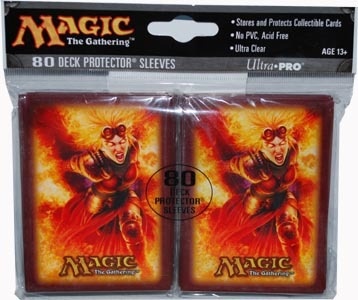
First, we have the basic Ultra Pro sleeves. These come in multiple types: the two most common are a 50-count pack of a single color or an 80-pack with some type of illustration. At most LGSs, the 50-count Ultra Pros will cost about $5, and the packs of 80 go for $8. As far as durability goes, I don’t trust these to last more than a week before at least one sleeve starts to peel or split. While they do give you a few extras, it doesn’t take too many events to make the sleeves appear as though you’ve been using them for years. In addition, Ultra Pro tends to change the color of their sleeves slightly as the years go by. It’s hard to notice while in the packaging, but you might end up buying a pack to match one you got a while ago, only to find out that they’re not exactly the same color.

Unless you’re a huge fan of the artwork or just need a set of 50 for tonight’s draft deck, you’ll be looking to replace them on a regular basis. On the other hand, they’re cheaper and more available than a lot of the other brands. Ultra Pro also got the thumbs up from Wizards to use their images on the sleeves, so that’s why the [card]Brainstorm[/card] ones exist.

Dragonshield

dragon-shield-collage-34

These are the sleeves that I personally use for all of my Commander decks. I used to only use black, but the dirt on those ones is much more visible than Silver, so I’m gradually making the switch when I come across good deals. After around 3 years of only using Dragonshields, I can say from experience that I’ve only had one sleeve ever split and need to be replaced. They’re by far the most durable sleeve I’ve used, and you can find them pretty much anywhere at a safe $10 for 100.

As for downsides, they tend to pick up dirt much easier than other brands. They can take a beating, but they certainly don’t look brand new even after a few uses. It gets annoying, but I personally don’t mind that much considering how rarely I play Magic nowadays.

Also, I’ve heard of more than one instance of someone being called out for cheating for using Dragonshields. Apparently they’re glossy enough that if you peel the top card up, you can technically see the reflection of that card in the back of the sleeve beneath it. While I’ve tried to test the validity of this claim, I can’t get it to work. Maybe it’s because mine are too dirty and old. Overall, I’d recommend using these for Commander decks. They come in packs of 100, and are extremely durable. The colors are also tasteful and not too flashy.

KMC

126771_1
While I have a ton of experience with Dragonshields, I have less experience with the 80-count packs of KMCs. I’ve heard great things, though, including that they rarely break and stay clean throughout play. The KMC Super series and the Matte sleeves will each cost about $8 for 80, the same as the Ultra Pros.

However, I don’t think these are what you want to buy for Commander. 80 is a pretty awkward number, meaning the best bang for your buck would technically involve buying ten sets of 80 for $100,  but most people don’t have ten Commander decks. Buying three sets of 80 gives you enough for two Commander decks, and than 40 leftover for a Draft deck. I think these are better suited towards 75-card Constructed decks, but it’s ultimately up to trial and error, as well as personal preference.

Perfect Fits

KMCPerfectSize

For those who don’t know, Perfect Fit sleeves exist to allow you to “double sleeve” your deck. You first suit up the cards in these clear cases (the top of the card goes in first), and than you sleeve over it with your outside sleeve, whether it be KMC, Dragonshield, or UltraPro. This provides an additional layer of defense against spills and other hazards, while also making your sleeves stick together less (maybe this is just me, but I find shuffling a double-sleeved deck much easier then a single-sleeved one).

However, adding an additional layer to your cards does make it harder to fit into a traditional deckbox, and double sleeving can be a tedious process if you’re the kind of person who switches decks every FNM with only one pair of sleeves. The Perfect Fits are usually about $5 for a pack of 100, but that’s if you can find them at your LGS. Only a couple of stores that I’ve visited have had these in stock, so you might end up having to hunt them down online for $6 a pack. Alternatively, If you want to split a bunch with your friends, you can buy them in bulk online for around $3 a pack.

Binders

Let’s start this off by saying this: Stop using anything that looks like the following:

TR280-3-38-26-362x368_c

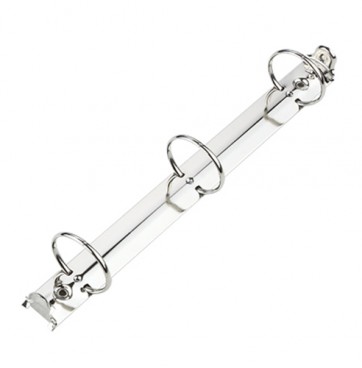
Do you see how the binder closes and the circular ring will press down onto the contents of the binder? That’s how cards get damaged. For the love of all that is holy, stop using these type of three-ring binders to store your collection in. It only serves to destroy you. Now that that’s out of the way, let’s take a look at a couple of other variants.

D-Rings

D-Ring-Binders

Although it looks relatively similar, notice how the side of the ring lies flat on the pages of the binder when closed, so it doesn’t imprint a dent into your cards. While you’ll have to buy the nine-pocket pages separately, this is by far the cheapest way you can go while still keeping your cards relatively safe and organized. You can find binders like this at the dollar store, or given away at yard sales. Regardless of what kind of binder you get, make sure to find 9 pocket pages that are free of any acid or other damaging material. Ultra Pro makes these pages as well for pretty cheap, although they do get dirty and cloudy very easily.

Monster

monster9pkt

These are the binders that I personally use. They’re a bit expensive (anywhere from $30 to $40 a piece), but almost all of mine have been acquired as throw-ins from buying all of the cards in the binder from someone selling their collection. They’re pretty sturdy, and are extremely hard to steal from due to the side-loading nature and small pocket size.

As a downside, some people I’ve interacted with have stated that they believe the binder has the potential to damage cards over time, due to the fact that the surface the cards rest on is ridged and bumpy. I was told that cards had the ridges imprinted into their backs because someone left a binder under a stack of textbooks for too long. I’ve never experienced this problem myself, but I believe any worry can be removed by simply sleeving your cards in your binder. Your biggest obstacle here is price, but you can sometimes find great deals that make them worth it.

Ultra Pro

51dcgsWR5lL

And, we’re back to Ultra Pro again. If you’re looking for a cheap, specifically Magic-related binder that will just get the job done, then this is probably for you. They’re around $20, they’re side-loaded, and they have that cool strap thing to prevent the binder from falling open randomly. And since it’s Ultra Pro, you can get the one with Gideon and Aurelia on it, because that seems to be the most popular binder in the world for some reason. One personal problem I do have with these is that the pockets seem to be really large compared to the Monster binders, and the cards have room to move around a bit while the binder is in transit. It’s probably not gamebreaking, as long as you sleeve the cards in the binder, but I feel like it’s a bit easier to steal from.

Unfortunately, I don’t have time to go over every single type of sleeve/binder, but I think I hit the important ones. Even if you just want the cheapest available option, it’s good to know what exactly you’re  buying and approximately how long you should expect it to last. Cards are valuable, but only if they’re protected well enough. Until next week!

Dr. Brewlove: How I Learned to Stop Worrying and Love Real Decks

By Logan White

So this is what it’s like playing a real deck?  –Logan

Transforming one’s mindset can be difficult. I love making my own decks, and I’ve always had that shared dream of deck brewers: to see your own creations make their way to the top—to post a solid result in a major tournament with a deck of your own creation. I’ve also had the dream of many Magic players: to perform well enough in major events to become a professional player. I’ve learned over the course of my years playing Magic that while this is not mutually exclusive, it’s extremely difficult to accomplish both simultaneously. A few weekends ago, I accepted that I had to change; I decided that I was no longer content with being “just a brewer” and that I wanted to move up in the world of Magic.

I was no longer content with being a second-rate Magic player. The best I had ever done was a top 32 at a Diamond Event nearly three years ago, and I wasn’t getting anywhere. I was tired of losing, tired of dropping from grands prix in the fourth or fifth round after accruing early losses to top-tier decks. I knew I had to change; I had seen the writing on the wall for the longest time. Either I had to be content with being a deck creator and not getting anywhere, or I had to expand my mental horizons. I opted for the latter—I opted to change.

How So?

I knew I wanted to play a good deck for the TCGplayer Max Point Championship and I knew that I was only making so much progress with my brew at the time (GW Chord). This story starts a little over two weeks before the Max Point Championship, when I was still considering things. My Chord deck just kept losing matches I expected to win. It lacked the power of some of the best cards in the format because I didn’t want to play anything that could be remotely connected to a “net deck.” I refused to consider the options of looking at those decks. The pro tour had just concluded, and Abzan had come out ahead over the Jeskai deck. The decks looked sweet, I liked a lot of the different options that they included, but I still wasn’t planning on playing anything remotely like them. I was being stubborn.

I had been discussing with my friend and fellow Magic player, Jon Bohn, what I was planning on doing for the Max Point Championship, and I recall the following conversation:

Me: “Is it worth putting black in my GW Chord deck for Siege Rhino and an Abzan Charm or two, right?”

Jon: “… Just play Abzan without the clunky Chords”

Me: “But Chord is great?”

Jon: “No, it’s really not. Just play a real deck

Usually, I would have just ignored those words, as I had many a time before, but this time it just hit me. The reason I wasn’t actually living up to my potential as a Magic player: I wasn’t playing a real deck. I hadn’t wanted to relinquish my creative side as a player, and because of that, I had never played a “real deck.” If I wanted to actually win, I needed to make my deck be a deck archetype that was fully tuned. I only had a week and a half before I would be heading to Indiana for the tournament, and I had to not time to keep messing around with my Chord build. I needed to play Abzan. It was “the best” deck in the format, after all.

siegerhino

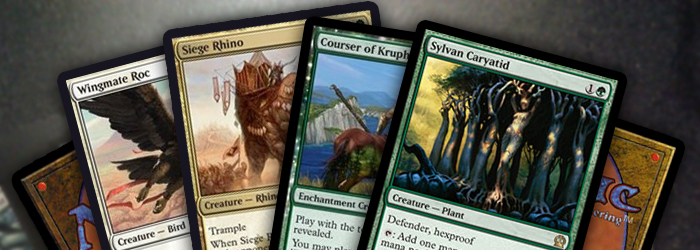
At this point, I started looking at the top eight Pro Tour Khans of Tarkir decks, considering their benefits and flaws, with a specific focus on the Abzan lists. I found numerous versions of the deck in the top eight, and even more in the top 32. After reviewing all of the possibilities, I decided that I liked Thiago Saporito’s deck list from the top, but I also liked different pieces that were present in Ari Lax’s first-place list. I took the time to compare the lists before committing to anything specific and noticed the key trend between all of the lists I had reviewed—the crux of the deck. All of the decks included at least 16 creatures, in the form of a playset of Caryatids, a playset of [card]Courser of Kruphix[/card], a playset of [card]Siege Rhino[/card], and a mix of [card]Elvish Mystic[/card]s and [card]Wingmate Roc[/card]s. The also included at least two Sorins, three [card]Abzan Charm[/card]s, three [card]Hero’s Downfall[/card]s, two Elspeths (in the full 75), and four [card]Thoughtseize[/card]s (in the full 75).

I decided that I could still use my creativity that I had developed as a deck brewer and tweak these deck lists to come up with my own winning combination of Abzan. For all intents and purposes, it was both a brew and a net deck. It was the perfect median for me. I had to test the deck style to find my proper configuration, so I turned to the only real resource I could trust to get some representation of the metagame: Magic Online.

That’s Some Serious Commitment Right There

I dropped the necessary cash, sold one of my two stockpiled VMA Lotuses, and got the deck I wanted to try together. I immediately entered an eight-man and won it. Surprised at how efficient the deck was, I tried for a repeat, but lost in my second match to Mono-Red Aggro. I booted up the next eight-man, promptly went up against Mono-Red, again and lost.

“Well, that was unpleasant. I hate that stupid deck,” I remember stating. I made some more tweaks and played another eight-man. I lost in the finals, but still netted some packs. I was actually enjoying myself playing Standard. It was a new concept for me, since I hadn’t enjoyed playing Standard during the entirety of Theros block.

For the next week and a half, I continued to grind eight-mans and even a Daily Event or two when my schedule synced up with them. I got more proficient with the deck, and began to continue to tweak it. I finally arrived at the following 75:

[Deck Title=Abzan by Logan White]
[Creatures]
4 Sylvan Caryatid
4 Rakshasa Deathdealer
4 Courser of Kruphix
4 Siege Rhino
3 Wingmate Roc
[/Creatures]
[Planeswalkers]
3 Sorin, Solemn Visitor
1 Ajani, Mentor of Heroes
2 Elspeth, Sun’s Champion
[/Planeswalkers]
[Spells]
4 Abzan Charm
3 Hero’s Downfall
1 Drown in Sorrow
2 Thoughtseize
[/Spells]
[Lands]
4 Sandsteppe Citadel
3 Temple of Malady
2 Temple of Silence
1 Temple of Plenty
4 Llanowar Wastes
1 Caves of Koilos
3 Windswept Heath
1 Urborg, Tomb of Yawgmoth
4 Forest
1 Plains
1 Swamp
[/Lands]
[Sideboard]
1 Erase
2 Thoughtseize
3 Bile Blight
2 Drown in Sorrow
1 Whip of Erebos
2 End Hostilities
1 Liliana Vess
2 Duneblast
1 Garruk, Apex Predator
[/Sideboard]
[/deck]

I sleeved it up and took it to the tournament. I was a mix of confidence and nerves, lost somewhere between anticipation and fear. It was going to be the first time I was playing a “real deck” in a major tournament. If it didn’t pan out, would I keep playing real decks? I had attained a round-one bye and took the time to find some breakfast and get myself mentally prepared for the upcoming tournament.  I knew I had prepared for this event, but I was still uncertain as to my chances. After clearing my head, I went and sat down for my first actual match. My opponent was on a black-white brew, a controlling build. I took me three games, but I was able to out pressure him, winning my first match.

I experienced a rush of euphoria as I saw my first opponent fall to the power of a Real Deck. Trying to remain calm, I mentally tasked myself for the third round, and went to go sit down. My opponent this time was on a red-green deck with multiple [card]Crater’s Claw[/card]s. After barely eking out a win in game one, game two went swiftly in my favor.

So this is what it’s like playing a real deck? I thought to myself after round 3. You actually just win matches with these things. Sometimes it’s difficult, but other times everything just falls into place.

I then proceeded to go 5-0 before I came up against my first loss: Mardu Midrange. I had not actually played against this style of deck before this match, so it was learning experience watching a single Rabblemaster take over the entire game unassisted. Quite a sad moment for me, as I went into game two, boarding against an aggressive deck only to see him flip the tables and be the controlling deck. Crap… this isn’t going to end well.

goblinrabblemaster

The rest of the day went average after that, with my day one record ending at 6-2-1. I looked at the chart, found myself hanging around thirtieth place, and sighed with relief. I had made my first day two at a major event. My mind was all jumbled. Should I have taken the last round draw? How would it affect me in day two?  It’s hard to say how things might have gone differently—I might not have had the exact matches I had on day two if I hadn’t accepted the draw.

Tell Us About Those Matches

Day two didn’t start well, but I still wasn’t completely discouraged. I started off by picking up two losses, one to a Temur deck and another to the mirror, before finally getting a win to break my losing streak against a Jeskai deck. Starting day two off with a 1-2 record was disappointing, but I knew I had still done the right thing by bringing the real deck to the tournament.

I decided that this was going to be the beginning of a new phase in my career as a Magic player. I decided that I would focus on winning, playing tight, and being the best player I could be. No longer would I be held back by wayward thoughts against people who net deck. I would change my mindset to allow for that kind of thing. I would not look down on them as uncreative people. Instead, I would see them as my peers, or my superiors, since they knew far before me, what needed to be done to be successful.

In the end, I’m very glad that I decided to do this. I’m glad I was willing to be take a chance playing a net deck or real deck or whatever you want to call it. It helped me post my first real results that got me somewhere. Even if that somewhere was only fiftieth place, it was still something.

Being open to ideas and change is important in both Magic and life in general. If we are not open to this change, then it is impossible for us to grow as people.

–Logan White (You can reach me at a[email protected]. Please feel free to check out my YouTube Account, Atrum Gaming, for my MTG Videos. I usually produce content twice weekly.)

Weekend Magic: 12/05-12/07

Cheers to another weekend! This past one featured the Magic World Championship and Magic World Cup, where both a team and single player were dubbed the World Champions! Also featured was Star City Games: Portland. Let’s check out the action.

Magic World Cup (Nice, FR)

Decklists

The Magic World Cup was taken down by Denmark, who were competing with over 70 countries for the title. Team Denmark’s decks were Mardu Midrange, Blue-Black Control, and Abzan Whip. Second place went to Team Greece, which featured Temur, Mardu Midrange, and Sidisi-Whip. Let’s check out some deck numbers from the final decks.


Mythic Rare (41) Rare (175) Uncommon (75)

8x Stormbreath Dragon
6x Wingmate Roc
5x Sarkhan, the Dragonspeaker
4x Sidisi, Brood Tyrant
4x Perilous Vault
4x Ashiok, Nightmare Weaver
4x Ashcloud Phoenix
2x Soul of Theros
2x Soul of Innistrad
2x Sorin, Solemn Visitor

8x Llanowar Wastes
8x Goblin Rabblemaster
8x Crackling Doom
8x Courser of Kruphix
8x Butcher of the Horde
8x Bloodstained Mire
7x Sylvan Caryatid
7x Polluted Delta
7x Hero’s Downfall
6x Temple of Triumph
6x Temple of Silence
6x Hornet Queen
6x Chained to the Rocks
6x Battlefield Forge
5x Temple of Malady
5x Caves of Koilos
4x Yavimaya Coast
4x Wooded Foothills
4x Windswept Heath
4x Temple of Deceit
4x Siege Rhino
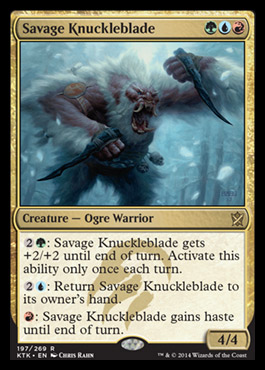
4x Savage Knuckleblade
4x Rattleclaw Mystic
4x Dig Through Time
4x Crater’s Claws
4x Boon Satyr
3x Whip of Erebos
3x Urborg, Tomb of Yawgmoth
3x Thoughtseize
3x Mana Confluence
2x Whip of Erebos
2x Temple of Mystery
2x Temple of Epiphany
2x Shivan Reef
2x Doomwake Giant
1x Utter End
1x Temple of Abandon
1x Silence the Believers
1x AEtherspouts
8x Nomad Outpost
8x Murderous Cut
8x Hordeling Outburst
7x Seeker of the Way
5x Opulent Palace
4x Stoke the Flames
4x Sandsteppe Citadel
4x Heir of the Wilds
4x Frontier Bivouac
4x Dissolve
4x Bile Blight
3x Temur Charm
3x Stubborn Denial
2x Jace’s Ingenuity
2x Drown in Sorrow
2x Despise
2x Banishing Light
1x Sultai Charm


Sideboard (90)
7x Disdainful Stroke
7x Anger of the Gods
5x Read the Bones
5x End Hostilities
4x Thoughtseize
4x Magma Spray
4x Glare of Heresy
4x Elspeth, Sun’s Champion
4x Drown in Sorrow
3x Reclamation Sage
3x Negate
3x Hornet Nest
3x Erase
3x Bile Blight
3x Ashiok, Nightmare Weaver
3x Arc Lightning
2x Utter End
2x Stormbreath Dragon
2x Prognostic Sphinx
2x Nissa, Worldwaker
2x Doomwake Giant
2x Dig Through Time
2x Chandra, Pyromaster
2x Back to Nature
1x Whip of Erebos
1x Sultai Charm
1x Stubborn Denial
1x Silence the Believers
1x Pharika, God of Affliction
1x Pearl Lake Ancient
1x Duneblast
1x Divination
1x AEtherspouts

Main deck cards that grab my attention are [card]Stormbreath Dragon[/card], [card]Crackling Doom[/card], [card]Butcher of the Horde[/card], [card]Murderous Cut[/card], and [card]Hordeling Outburst[/card]. Stormbreath Dragon did very well for itself in the World Cup, which means that once Theros becomes harder to find, Stormbreath could be in for a price increase. Crackling Doom has been very popular lately as well, and I expect that if you want to play Mardu you should pick up your copies sooner rather than later, along with Butcher of the Horde.

Notable mythic rares include [card]Wingmate Roc[/card] (despite its price lowering, the roc should go back up in price over its Standard life once Khans becomes scarce) [card]Sidisi, Brood Tyrant[/card], [card]Perilous Vault[/card], [card]Ashiok, Nightmare Weaver[/card], and two each of [card]Soul of Theros[/card] and [card]Soul of Innistrad[/card]. Clearly the souls are not on the level of titans of yore, but they still see play every once in a while. If you like Souls, picking them up at bulk mythic prices is fine.

Notable rares include eight Bloodstained Mire (which is currently the cheapest fetchland in Khans, by the way—not that now is the time to pick them up, just something to note in case it goes down even further) and six [card]Chained to the Rocks[/card].

For sideboards, popular choices included [card]Anger of the Gods[/card] (which appears to be trending upwards in price) and [card]End Hostilities[/card].

There were certainly small bits of innovation going on in each of the lists, but the card numbers indicate that many of the same established cards, like [card]Goblin Rabblemaster[/card], are still powerful forces in the current format.

Magic World Championship (Nice, FR)

Decklists

Shahar Shenhar took down the World Championships again—the first time this has ever happened two years in a row for a single player! Congratulations to Shahar for performing so well on the world stage. The win was much deserved.

For Khans Standard, Shahar chose to pilot his slightly tweaked version of Sidisi-Whip that featured two Ashioks in the main deck along with a [card]Soul of Innistrad[/card] for some late game reach. Other than this, the list was still running three [card]Hornet Queen[/card], three [card]Whip of Erebos[/card], and four Sidisi, and all the other necessary components from other Sidisi-Whip decks.

Second place went to Patrick Chapin, who like Ari Lax at the Pro Tour, decided to go with Abzan Midrange for his Standard deck choice. Notables from Chapin’s list included two [card]Brimaz, King of Oreskos[/card] and only one [card]Wingmate Roc[/card]. Everything else in the deck was streamlined based on the existing archetype and isn’t anything new we haven’t seen before.

The other Top 4 decks included Yuuya Watanabe’s Jeskai Tokens and Kentaro Yamamoto’s version of Sidisi-Whip. Similar to the deck’s in the Magic World Cup, these decks featured cards like [card]Jeskai Ascendency[/card] and Hornet Queen to bring the beats.

SCG Open: Portland – Standard (Portland, OR)

Decklists

Deck Finish Deck Finish
Abzan Midrange 1st G/B Reanimator 9th
Jeskai Tokens 2nd Esper Control 10th
Abzan Reanimator 3rd Abzan Midrange 11th
Abzan Reanimator 4th Mardu Midrange 12th
Mardu Midrange 5th Jeskai Tokens 13th
Jeskai Tokens 6th W/U Heroic 14th
Sultai Reanimator 7th Temur Monsters 15th
Abzan Midrange 8th U/B Control 16th

The Top 16 in Portland included three Abzan Midrange, two Abzan Reanimator, three Jeskai Tokens, two Mardu Midrange, and five other archetypes.

Sheldon Freerksen took down the Standard portion of the event, beating Brad Nelson’s Jeskai Tokens in the finals. Freerksen’s tech included a maindeck [card]Duneblast[/card] and two Read the Bones while Nelson played four [card]Treasure Cruise[/card] and two [card]Chandra, Pyromaster[/card] to help give himself reach throughout the event. Treasure Cruise is still showing its domination even in Standard, while Jeskai Ascendancy keeps showing its utility in both combo and non-combo decks.

Gerry Thompson placed in the Top 4 of the event playing Abzan Reanimator, which is also the fourth-place deck. Similar to Sidisi-Whip but playing white over blue, these decks utilize the power of Whip of Erebos in order to bring out powerful creatures from the graveyard. Being able to whip up a [card]Siege Rhino[/card] sure provides a ton of value.

The rest of the Top 16 includes decks that have all shown up in one form or another across other recent Standard tournaments. [card]Chandra, Pyromaster[/card] is being played in red decks now to help provide card advantage and unblockability, which is something to note. A few Top 16 decks in Portland were jamming Treasure Cruise into existing builds as well, like many players at the World Championships and World Cup did.

SCG Open: Portland – Legacy (Portland, OR)

Decklists

Deck Finish Deck Finish
Maverick 1st Reanimator 9th
U/R Delver 2nd Jeskai Stoneblade 10th
Burn 3rd Shardless Bant 11th
Elves 4th Temur Delver 12th
U/R Delver 5th U/R Delver 13th
Shardless Sultai 6th Jeskai Ascendancy Combo 14th
Sultai Delver 7th Miracles 15th
Temur Delver 8th U/G Cloudpost 16th

In Legacy, Maverick took down the event piloted by David McDarby. McDarby’s build included a [card]Green Sun’s Zenith[/card] package along with four [card]Knight of the Reliquary[/card], efficient beaters and hate bears, and disruption. Maverick is an interesting choice in a field of Treasure Cruise and Delver, since it can be a very hard deck to pilot if you aren’t familiar with the many intricacies of the deck.

Speaking of Delver, UR Delver came in second, fifth, and thirtheen at Portland. Other notable decks include Burn taking third, Shardless Bant taking eleventh, Jeskai Ascendancy Combo, and UG Cloudpost.

One interesting card choice is three [card]Death’s Shadow[/card] in the seventh place Sultai Delver list. Death’s Shadow is a quirky card that spiked back in April 2013 due to its interaction with [card]Varolz, the Scar Striped[/card] in Modern but has dropped back in price over time since that synergy never surfaced in a well-placing deck. However, it could experience another price upswing due to this inclusion.

Shardless Bant was an interesting deck choice. It included such cards as [card]Thopter Foundry[/card] and [card]Sword of the Meek[/card], along with a mish-mash of artifacts that could be fetched with [card]Enlightened Tutor[/card] and [card]Stoneforge Mystic[/card]. The deck name comes from [card]Shardless Agent[/card] and [card]Ancestral Vision[/card] being in the deck, of course. This deck is so out of left field I’m not sure what to make of it—did Neil Henly just not have the pieces to the other decks and decided to go for whatever was in his binder? Who knows, but I do like the Thopter Foundry and Sword of the Meek synergy in a field full of UR Delver and Burn decks.

Jeskai Ascendancy Combo has made its way into Legacy due to the hype around the World’s Modern decks brewing with it. Legacy players then determined that yes, indeed it is also fine in Legacy. Fatestitcher has already closed its window for financial opportunity—wait for the drop in price, then get in once the hype has died down. [card]Mental Note[/card] is an interesting card choice. Foils of this are still on the cheap at $1 or less if you feel like playing Ascendancy Combo in Legacy.

Wrapping Up

That’s it for this week! Khans certainly is making an impact on every format out there including Vintage! We haven’t seen this much shakeup since [card]Deathrite Shaman[/card] was printed. Keep up the good work, Wizards, with a few more blocks like this, Magic will be diverse for quite some time.

Pitt Imps Podcast #97 Girls Volleyball

This week, the Imps go over GP Ottawa and SCG Richmond. We go over the huge news from SCG with their tournament structure changing. We congratulate Melissa DeTora on her new job. Then we talk about the latest episode of South Park. After finishing that chat, I realized that we didn’t even mention one part of the episode and we are just as bad as the boys on the show. So I named the episode after what we missed. That should make up for it.

Host Angelo    Twitter @ganksuou

Co-Host Ryan    Twitter  @brotheryan

Co-Host Will   Go to face book he’s there somewhere I’m sure

Email [email protected]

Welcome to the Jungle: Sideboarding versus Combo Decks

Hello once again!

I hope everyone in the US had a wonderful holiday, and for those of you from everywhere else in the world, I hope you had an amazing Thursday.

I’m back this week with the final installment of my sideboarding series about my Zoo deck. If you all have any ideas of things you would like me to write about next, I would love to hear them in the comments section below or on Twitter here.

Without further ado here is a quick refresher on my deck:

A Quick Refresher

The Deck

[Deck Title=Big Zoo (Azooni) ]
[Creatures]
4 Wild Nacatl
4 Noble Hierarch
4 Tarmogoyf
4 Qasali Pridemage
4 Scavenging Ooze
4 Knight of the Reliquary
2 Thrun, The last Troll
[/creatures]
[Spells]
4 Path to Exile
4 Lightning Bolt
2 Lightning Helix
2 Ajani Vengeant
[/spells]
[Lands]
4 Wooded Foothills
4 Windswept Heath
4 Arid Mesa
2 Stomping Ground
1 Temple Garden
1 Sacred Foundry
1 Horizon Canopy
1 Kessig Wolf Run
2 Forest
2 Plains
[/lands]
[Sideboard]
2 Spellskite
3 Blood Moon
2 Choke
2 Ancient Grudge
1 Deflecting Palm
1 Bow of Nylea
2 Batterskull
2 Engineered Explosives
[/sideboard]
[/deck]

Sideboard Breakdown

Blood Moon

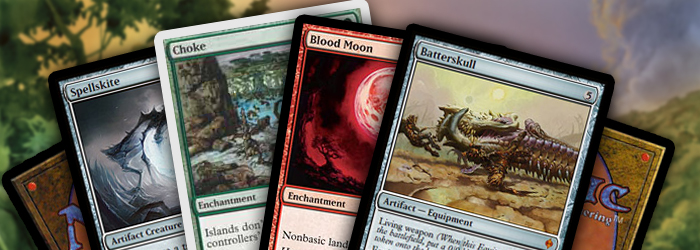
Blood Moon is a fantastic card out of the sideboard and is there to give you free wins or stall the game until you can reach a dominant position. This card is a must against all three-or-more-color decks and can even dominate two-color decks.

Choke

If your opponent plays Islands, you play Choke. I don’t think it can be any clearer than that.

Spellskite

I really like Spellskite. It stonewalls aggro early on and can help you win the burn matchup. I like Spellskite especially in game three of the control and Pod matchups to protect your Blood Moons andChokes from their removal.

Engineered Explosives

Board sweepers are really good and Explosives is no different. If they play creatures, you should play Explosives.

Batterskull

Burn, midrange, control: all of these are matchups where Batterskull can shine. It is your most resilient threat (next to Thrun) and when paired with your creatures can be very potent.

Ancient Grudge

Good versus artifacts.

Bow of Nylea

I think this card is the best card in my sideboard. Every ability on the card is good. The graveyard one, although you use it the least, can be very strong. It lets you bottom some strong cards from your graveyard, and with your large amount of fetch lands, you can shuffle and redistribute your used powerful spells back into your deck.

Deflecting Palm

If you expect to get hit with a lot of damage from a single source, play this card. Creatures holding Cranial Plating, Tron’s creatures, Bogles, Ascendancy Combo (choose the creature, and yes, you can choose Caryatid) are great sources for this card to choose. Palm also has bonus points versus Burn, where it basically acts as an extra Lightning Helix.

Birthing Pod, The Neapolitan of Magic

So imagine a tub of ice cream that contains three different flavors, Vanilla (Melira Pod), Chocolate (Angel Pod), and Earl Gray Sriracha (Kiki Pod). Before I go any further I would just like to point out that Melira Pod and Angel Pod are variants of the same style of deck, while Kiki Pod is a beast of its own.

Melira and Angel Pod

[Deck title=Melira Pod]
[creatures]
4 Birds of Paradise
3 Kitchen Finks
3 Voice of Resurgence
3 Noble Hierarch
1 Thragtusk
1 Reveillark
1 Siege Rhino
1 Restoration Angel
1 Linvala, Keeper of Silence
1 Murderous Redcap
1 Eternal Witness
1 Orzhov Pontiff
1 Sin Collector
1 Melira, Sylvok Outcast
1 Qasali Pridemage
1 Spellskite
1 Scavenging Ooze
1 Viscera Seer
1 Eidolon of Rhetoric
[/creatures]
[spells]
3 Abrupt Decay
2 Chord of Calling
4 Birthing Pod
[/spells]
[Lands]
4 Windswept Heath
4 Verdant Catacombs
3 Forest
3 Razorverge Thicket
3 Gavony Township
2 Overgrown Tomb
1 Temple Garden
1 Godless Shrine
1 Plains
1 Swamp
[/lands]
[Sideboard]
1 Abrupt Decay
1 Orzhov Pontiff
1 Scavenging Ooze
2 Lingering Souls
1 Darkblast
4 Thoughtseize
1 Shriekmaw
1 Thrun, the Last Troll
1 Reclamation Sage
1 Aven Mindcensor
1 Memoricide
[/sideboard]
[/deck]

[Deck title=Angel Pod]
[creatures]
4 Birds of Paradise
3 Wall of Roots
3 Voice of Resurgence
3 Kitchen Finks
2 Siege Rhino
2 Noble Hierarch
2 Archangel of Thune
1 Restoration Angel
1 Linvala, Keeper of Silence
1 Eternal Witness
1 Spellskite
1 Spike Feeder
1 Shriekmaw
1 Scavenging Ooze
1 Murderous Redcap
1 Reclamation Sage
1 Orzhov Pontiff
1 Sin Collector
[/creatures]
[spells]
3 Abrupt Decay
4 Birthing Pod
[/spells]
[lands]
4 Windswept Heath
4 Verdant Catacombs
3 Razorverge Thicket
3 Gavony Township
3 Forest
2 Overgrown Tomb
1 Swamp
1 Temple Garden
1 Godless Shrine
1 Plains
[/lands]
[sideboard]
1 Orzhov Pontiff
1 Sin Collector
1 Thrun, the Last Troll
4 Thoughtseize
2 Choke
2 Fracturing Gust
2 Path to Exile
1 Entomber Exarch
1 Eidolon of Rhetoric
[/sideboard]
[/deck]

While both of these decks contain combo potential, it is rare that they are able to achieve the combo kill against you. Expect both decks to play a much more midrange slugfest rather than them trying to combo you through your disruption. Game one, you need to use your [card]Qasali Pridemage[/card]s to stop every [card]Birthing Pod[/card] that you see and crush them under a large [card]Knight of the Reliquary[/card] or with [card]Thrun, The last Troll[/card]. I feel the need to mention and remind you all that you should always bolt the bird or hierarch.

Sideboard out: 4 [card]Noble Hierarch[/card] and 2 [card] Lightning Helix[/card]

Sideboard in: 3 [card]Blood Moon[/card], 1 [card]Bow of Nylea[/card], 2 [card]Batterskull[/card]

Similar to the BGx matchups, you just want to fight a really grinding midrange battle and try to out topdeck your opponent. Just try to one for one a lot of initial threats and lock them out with a Blood Moon to try and seal the game.

[Deck Title=Kiki Pod]
[Creatures]
4 Noble Hierarch
4 Kitchen Finks
4 Birds of Paradise
3 Restoration Angel
2 Kiki-Jiki, Mirror Breaker
2 Deceiver Exarch
2 Wall of Roots
2 Voice of Resurgence
1 Zealous Conscripts
1 Murderous Redcap
1 Linvala, Keeper of Silence
1 Spellskite
1 Phantasmal Image
1 Glen Elendra Archmage
1 Qasali Pridemage
1 Scavenging Ooze
[/creatures]
[spells]
2 Chord of Calling
4 Birthing Pod
[/spells]
[lands]
4 Grove of the Burnwillows
4 Wooded Foothills
2 Copperline Gorge
2 Stomping Ground
2 Razorverge Thicket
1 Sacred Foundry
1 Breeding Pool
1 Steam Vents
1 Temple Garden
1 Plains
1 Mountain
1 Forest
1 Island
1 Gavony Township
[/lands]
[sideboard]
2 Path to Exile
1 Thragtusk
2 Domri Rade
1 Reclamation Sage
1 Vendilion Clique
1 Aven Mindcensor
1 Kataki, War’s Wage
2 Negate
1 Ancient Grudge
1 Combust
1 Ethersworn Canonist
1 Thrun, the Last Troll
[/sideboard]
[/deck]

I have some history with this deck and I always tend to be on the losing side of the matchup against some very good opponents. One of my friends, who has helped me become a much better player, has been playing Pod variants since I first met him and I think I have a record of 2-12 in Modern against him. I have also run into this deck in the top four of the two Star CIty Games Premier IQs I have played. The first time I got blown away by a [card]Stonehorn Dignitary[/card] being chained with [card]Restoration Angel[/card] and [card]Phantasmal Image[/card]. The second time, my opponent thumbed lands to the top of my deck in our game three and is now banned by the DCI for four years. This deck, when in the hands of a great player, is truly amazing to witness and can be very hard to defeat.

Sideboard out: 2 [card]Thrun, The last Troll[/card], 2 [card] Ajani Vengeant[/card], 2 [card] Scavenging Ooze[/card]

Sideboard in: 3 [card]Blood Moon[/card], 1 [card]Bow of Nylea[/card], 2 [card]Engineered Explosives[/card]

Try to lock them out as fast as you can. Kill everything you see and try to force through as much damage as you can while holding up a decent amount of disruption. Blood Moon wins the game almost immediately, so try to drop it ASAP—but hold removal in case they can hardcast [card]Kiki Jiki, Mirror Breaker[/card] and win the game.

Let’s Talk Twin

[deck title=Splinter Twin]
[creatures]
4 Snapcaster Mage
4 Deceiver Exarch
2 Pestermite
1 Vendilion Clique
1 Kiki-Jiki, Mirror Breaker
[/creatures]
[spells]
4 Serum Visions
4 Lightning Bolt
4 Remand
2 Spell Snare
2 Dig Through Time
1 Izzet Charm
1 Dispel
1 Cryptic Command
1 Electrolyze
1 Flame Slash
4 Splinter Twin
1 Vedalken Shackles
[/spells]
[Lands]
4 Island
4 Misty Rainforest
4 Scalding Tarn
3 Steam Vents
2 Sulfur Falls
2 Tectonic Edge
1 Mountain
1 Desolate Lighthouse
1 Stomping Ground
[/lands]
[sideboard]
2 Ancient Grudge
1 Pyroclasm
1 Anger of the Gods
1 Hibernation
1 Echoing Truth
1 Keranos, God of Storms
1 Threads of Disloyalty
1 Engineered Explosives
2 Relic of Progenitus
1 Spellskite
1 Batterskull
1 Blood Moon
1 Negate
[/sideboard]
[/deck]

Splinter Twin is a fun game where each player can’t really tap out without the other one gaining a large advantage. Try to keep your [card]Qasali Pridemage[/card]s in play or a [card]Path to Exile[/card] in hand to disrupt your opponent’s combo if they go for it. If you can delay them from winning you should be able to win handily as long as you are turning creatures sideways each turn.

Sideboard out: 4 [card]Scavenging Ooze[/card], 2 [card]Lightning Helix[/card]

Sideboard in: 2 [card]Choke[/card], 2 [card]Spellskite[/card], 2 [card]Batterskull[/card]

The way I like to play post-sideboard games against Splinter Twin is as if they are more of a control deck. Just bring in your resilient sideboard threat ([card]Batterskull[/card]), your combo breaker([card]Spellskite[/card]), and of course the Island killer ([card]Choke[/card]). All that remains is a game of cat and mouse to let you resolve a way to win the game while still holding back disruption to stop your opponent.

I don’t like [card]Engineered Explosives[/card] in this matchup, even though when it is set to three counters it will stop your opponent from combo killing you—but setting it to three is a hard task while fighting through counter magic, especially [card]Remand[/card].

[Deck Title=RUG(not Temur)TarmoTwin]
[creatures]
4 Tarmogoyf
3 Snapcaster Mage
2 Deceiver Exarch
2 Pestermite
2 Huntmaster of the Fells
1 Vendilion Clique
[/creatures]
[spells]
4 Remand
4 Lightning Bolt
4 Serum Visions
2 Izzet Charm
2 Dig Through Time
2 Cryptic Command
2 Gitaxian Probe
1 Electrolyze
3 Splinter Twin
[/spells]
[lands]
4 Scalding Tarn
4 Misty Rainforest
3 Island
3 Steam Vents
2 Hinterland Harbor
2 Sulfur Falls
1 Breeding Pool
1 Stomping Ground
1 Mountain
1 Forest
[/lands]
[sideboard]
1 Thrun, the Last Troll
1 Teferi, Mage of Zhalfir
2 Anger of the Gods
2 Dispel
1 Keranos, God of Storms
1 Negate
1 Engineered Explosives
1 Sword of Feast and Famine
1 Batterskull
2 Scavenging Ooze
2 Ancient Grudge
[/sideboard]
[/deck]

So this matchup is a really fun one (I say that about every matchup I know, I just love this game). When your opponent’s combo plan is their backup plan and you can disrupt it pretty well while outclassing their aggressive creature plan, things start to feel really good.

Sideboard out: 2 [card]Lightning Helix[/card], 1 [card]Ajani Vengeant[/card], 4 [card]Scavenging Ooze[/card]

Sideboard in: 3 [card]Blood Moon[/card], 2 [card]Choke[/card], 2 [card]Spellskite[/card]

The goal here is just to lock them out from playing their big threats and then kill them with one of yours.

Scapeshift

[deck title=Scapeshift]
[creatures]
4 sakura tribe elder
2 snapcaster mage
[/creatures]
[spells]
4 Lightning Bolt
4 Cryptic Command
4 Scapeshift
4 Remand
4 Search for Tomorrow
3 Dig Through Time
2 Izzet Charm
2 Pyroclasm
2 Electrolyze
[/spells]
[lands]
4 Misty Rainforest
4 Stomping Ground
4 Steam Vents
3 Breeding Pool
3 Island
2 Valakut, the Molten Pinnacle
2 Forest
2 Mountain
1 Flooded Grove
[/lands]
[sideboard]
2 Krosan Grip
2 Negate
1 Swan Song
1 Batterskull
3 Obstinate Baloth
2 Inferno Titan
2 Anger of the Gods
2 Ancient Grudge
[/sideboard]
[/deck]

The [card]Scapeshift[/card] matchup should be treated in the first game as if it is a control deck because, well, it is. Deploying a lot of threats in the early game and racing should be your game plan and [card]Ajani Vengeant[/card] can help slow them down enough to win game one.

Sideboard out: 4 [card]Qasali Pridemage[/card], 2 [card]Lightning Helix[/card]

Sideboard in: 3 [card]Blood Moon[/card], 2 [card]Choke[/card], 1 [card]Bow of Nylea[/card]

In post-sideboard games you should expect all the heavy hitters to come crash the party and provide a very strong backup plan to fight your creatures. As usual, an early [card]Blood Moon[/card] basically seals the game in your favor and your powerhouse creatures should be able to keep your opponent on their back foot long enough to let you seal the game.

This article ended up longer than expected so I will be writing a fifth part where I will cover matchups against Storm, Ad Nauseam, Living End, and because of the added space, I will throw in the Jeskai Ascendancy Combo. I hope this article and my others have been helpful and informative for you all. Thanks for reading and check back soon for my final piece in this series.

Resurrection Perfection – An Abzan Reanimator Primer

Dredge. Reanimator. Storm.

All of these decks are extremely powerful. All of them are current tier-one strategies in Legacy. All of them have one thing in common: they use their graveyards as a resource.

So why wouldn’t you do the same thing in a less powerful format like Standard?

[deck title=Abzan Whip, by Ken Crocker]
[Creatures]
*4 Satyr Wayfinder
*4 Sylvan Caryatid
*2 Nyx Weaver
*4 Courser of Kruphix
*4 Siege Rhino
*2 Wingmate Roc
*2 Doomwake Giant
*1 Soul of Theros
*1 Soul of Innistrad
*3 Hornet Queen
*1 Ashen Rider
[/Creatures]
[Spells]
*3 Whip of Erebos
*3 Murderous Cut
*2 Banishing Light
[/Spells]
[Lands]
*4 Forest
*1 Plains
*4 Llanowar Wastes
*3 Caves of Koilos
*4 Sandsteppe Citadel
*4 Windswept Heath
*2 Temple of Malady
*1 Temple of Plenty
*1 Urborg, Tomb of Yawgmoth
[/Lands]
[Sideboard]
*1 Whip of Erebos
*3 Bile Blight
*2 Reclamation Sage
*4 Thoughtseize
*2 Duneblast
*3 Hero’s Downfall
[/Sideboard]
[/Deck]

While this looks like a regular Abzan Midrange deck with some odd-balls thrown in, there are some powerful interactions here:

• [card]Siege Rhino[/card], [card]Ashen Rider[/card], [card]Doomwake Giant[/card], and [card]Hornet Queen[/card] all have powerful enter-the-battlefield abilities. These are easily abused when using [card]Whip of Erebos[/card]. Even [card]Wingmate Roc[/card] is capable of being used with Whip, which adds just that little extra value.

• There are 13 maindeck enchantments to trigger [card]Doomwake Giant[/card]’s constellation ability. This helps deal with aggro decks that swarm the board and opposing [card]Hornet Queen[/card] tokens from Mono-Green and GB Devotion.

• Both [card]Nyx Weaver[/card] and [card]Satyr Wayfinder[/card] feed the graveyard for using the [card]Whip of Erebos[/card] ability and [card]Murderous Cut[/card]. Plus, you get to use both of the Souls’ abilities in the graveyard as well and, luckily for you, most of your opponents will never play around these. Free wins!

As for individual cards:

[card]Ashen Rider[/card] – a nice one-of to reanimate in order to deal with a pesky permanent, like a planeswalker or [card]Chain to the Rocks[/card].

[card]Hornet Queen[/card] – the go-to creature to reanimate. There are several decks in Standard that can’t beat one [card]Hornet Queen[/card], let alone several being Whipped back.

[card]Wingmate Roc[/card] – this is a concession to Jeskai Burn/Aggro/Tempo…whatever the hell you want to call it. Basically, your deck has trouble beating [card]Mantis Rider[/card], and [card]Wingmate Roc[/card] solves this problem. Furthermore, it is very good against Mardu Midrange and its [card]Crackling Doom[/card]s.

Finally, [card]Nyx Weaver[/card] may seem like filler, but it is very important to this strategy. Sometimes you mill over a [card]Whip of Erebos[/card] or you need another [card]Murderous Cut[/card]. Well, with the way Nyx Weaver works, you can Whip it back and then use the ability to get back the card you need. One game, I whipped back a [card]Nyx Weaver[/card], used its ability to get back [card]Soul of Innistrad[/card], cast the six-drop, and started using its ability. That was a fun game!

Given all of these interactions, and the usual interactions ([card]Courser of Kruphix[/card] plus fetchlands; [card]Courser of Kruphix[/card] + [card]Sylvan Caryatid[/card], etc.), and the inherent power level of several of the cards, Abzan Reanimator is the king of the midrange decks.

Thou Shalt Not Have Other Gods Before Me: Why Play White (Siege Rhino) Over Blue (Sidisi, Brood Tyrant)?

There has been some recent tournament success for Sidisi Whip and, as such, it seems like one should ask why one should play Abzan instead of Sultai. In order to demonstrate why I think Abzan is a better overall deck, let’s talk about the pros versus the cons to playing Sultai:

PROS:
• [card]Sidisi, Brood Tyrant[/card] can win the game on its own, if left unchecked. Sidisi creates her own brood of [card]Walking Dead[/card] while fueling your own graveyard shenanigans all on her own. She can be a one-woman wrecking crew.
• Your sideboard includes high impact, situational cards, such as [card]Ashiok, Nightmare Weaver[/card], [card]Disdainful Stroke[/card], and [card]Negate[/card].

CONS:
• As good as she is, [card]Sidisi, Brood Tyrant[/card] is extremely fragile. Cards like [card]Bile Blight[/card] and [card]Lightning Strike[/card] are played in numerous decks, both in main decks and sideboards. For a card that fuels an entire deck, Sidisi can lead to some of the biggest blowouts. Don’t believe me? Try attacking with the [card]Sidisi, Brood Tyrant[/card] trigger on the stack, and having your opponent cast [card]Jeskai Charm[/card] to place Sidisi on top of your deck.
• There are no other powerful maindeck cards in the blue version of the deck. White gives you [card]Siege Rhino[/card], [card]Wingmate Roc[/card], and [card]Soul of Theros[/card], which Reid Duke is on record as saying that, “This card is so busted that I say shame on us, as a community, for not finding a home for it sooner.”
• Finally, the white version gives you access to more removal and constellation synergies than the blue version does. [card]Banishing Light[/card] is a premium removal spell for problematic cards such as [card]Butcher of the Horde[/card], [card]Sarkhan, the Dragonspeaker[/card], and opposing [card]Whip of Erebos[/card].

Now that you are obviously convinced that Abzan is our true savior, let’s look into some common matchups and sideboarding you will run into at any given tournament.

The Gospel: Sideboard Guide

vs. Mardu Midrange –
In: +1 [card]Whip of Erebos[/card], +3 [card]Bile Blight[/card]
Out: -1 [card]Soul of Theros[/card], -3 [card]Murderous Cut[/card]

This matchup is amazing. I have yet to lose a game, let alone a match. They can’t beat [card]Whip of Erebos[/card], they can’t beat [card]Doomwake Giant[/card], and they can’t beat [card]Wingmate Roc[/card]. The [card]Bile Blight[/card]s are for [card]Goblin Rabblemaster[/card] and his token friends. Other than that, this matchup should be a bye for you.

vs. Mono-Green & GB Devotion –
In: +2 [card]Duneblast[/card], +3 [card]Hero’s Downfall[/card]
Out: -2 [card]Wingmate Roc[/card], -1 [card]Soul of Theros[/card], -1 [card]Ashen Rider[/card], -1 [card]Nyx Weaver[/card]

This matchup can be a toss-up. If the Devotion deck gets their nut draw, they are about a turn and half faster than you. However, you get to cut some of the fat in order to add extra removal, both mass and spot removal. Since you have Whip, you should win the late game most of the time, as you both have access to [card]Hornet Queen[card], but you have access to more of them. Expect long, grindy affairs, but you should come out on top.

vs. Any Red Aggro deck –
In: +3 [card]Bile Blight[/card], +1 [card]Whip of Erebos[/card]
Out: -1 [card]Soul of Theros[/card], -1 [card]Soul of Innistrad[/card], -1 [card]Ashen Rider[/card], -1 [card]Hornet Queen[/card]

Resolve a Whip, win the game. It’s that simple. …Well, not that simple. But with the amount of incidental lifegain you get from [card]Courser of Kruphix[/card], [card]Siege Rhino[/card], and [card]Wingmate Roc[/card], plus the board clearing capability of [card]Doomwake Giant[/card], you’re set up pretty well against them. Play smart, get a Whip in play, and win the game.

vs. Four-Color Midrange / Abzan Midrange –
In: +1 [card]Whip of Erebos[/card]
Out: -1 [card]Ashen Rider[/card]

You’re both trying to do similar things, but you have Whip. The late game should be yours for the taking. Like I said, we are the Kings of the Midrange.

vs. UB Control –
In: +4 [card]Thoughtseize[/card], +2 [card]Reclamation Sage[/card], +3 [card]Hero’s Downfall[/card]
Out: -3 [card]Murderous Cut[/card], -1 [card]Soul of Theros[/card], -2 [card]Sylvan Caryatid[/card], -3 [card]Hornet Queen[/card]

And now the bad news. You have two very bad matchups: UB Control and UW Heroic. UB Control has several cards that are very good against us, namely [card]Ashiok, Nightmare Weaver[/card], [card]Perilous Vault[/card], and counterspells. This matchup is very difficult to win in game one, but fairly winnable after sideboarding. I suggest testing this matchup several times before going to a tournament…or just hope to dodge Ali Aintrazi and Adrian Sullivan all day.

vs. UW Heroic –
In: +4 [card]Thoughtseize[/card], +3 [card]Bile Blight[/card], +2 [card]Reclamation Sage[/card], +3 [card]Hero’s Downfall[/card]
Out: -3 [card]Hornet Queen[/card], -1 [card]Soul of Theros[/card], -1 [card]Soul of Innistrad[/card], -3 [card]Whip of Erebos[/card], -1 [card]Ashen Rider[/card], -3 [card]Satyr Wayfinder[/card]

This is why you don’t see this deck out right now. As the popularity of UW Heroic goes up, the chances this deck has goes down. Luckily, we have a bunch of sideboard cards to help the matchup…but it’s still not pretty. If you are aware that your metagame has a good amount of U/ Heroic, I might suggest a different deck. The matchup isn’t unwinnable, but it is very lopsided in their favor.

Now that you are armed with a new weapon and the proper knowledge to wield it, go forth and spread the news of Abzan Reanimator! Praise be to Rhino!

Brainstorm Brewery #125 – Ryan Plays EDH

The number of members of this podcast who poop on EDH as a format is down to 1. Marcel “cubeycubecubecubitycubecube” MTG is the lone holdout as Ryan succumbs to his desire to play a deck with Séance in it. Corbin’s in France this week and couldn’t record, so that’s good, but Marcel is going to really determine whether the episode is a total hash and it’s going to come down to how much time he has to go all Stitcher Geralf on the chunks of usable material. Long-winded rants fill the empty space where we usually have Corbin talking and the segue is abandoned in favor of the jump-cut. If history is any indicator, you’re all going to really like this episode a lot. Why would you not? This is the best and only MTG Finance podcast around. We demystify the complicated process of buying and selling Magic cards in an educational and entertaining manner. We’re a big part of your week. We’re Brainstorm Brewery.

  • Ryan is finally playing EDH. Direct jeers and laughter to our e-mail
  • In honor of Ryan, Finance 101 is all about the appeal of EDH
  • Marcel said this is episode 25. Last week he said it was 24.
  • Speaking of 25, we want people to send in their favorite moments from 100-125
  • Corbin and Ray are in Nice, France. Must be Nice.
  • What financially relevant came out of Champs?
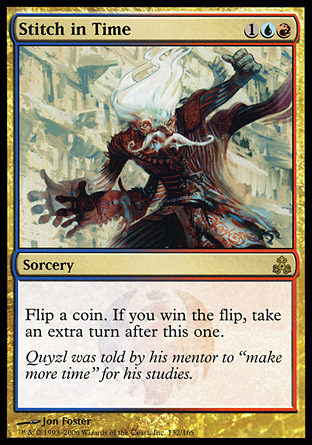
  • What is up with foil Fatestitcher?
  • We actually do a Pick of the Week. You’re welcome.
  • A lot gets done with Corbin not around. Weird.
  • We’re doing Tee Spring again. Ask Santa for a new hoodie or t-shirt.
  • I applaud you for sticking with it and reading all of this.
  • Questions? Concerns? e-mail [email protected]


Cabe Riseau produced the intro and outro music for Brainstorm Brewery.

Contact Us!

Brainstorm BreweryWebsiteE-mailTwitterFacebook

Ryan BushardE-mailTwitterFacebook

Corbin HoslerE-mailTwitterFacebookQuietSpeculation

Jason E AltE-mailTwitterFacebookQuietSpeculation

Marcel WhiteE-mailTwitterFacebook

Conjured Currency #41: A Gamer Helping Gamers with Gamers Helping Gamers

Welcome back, everyone! I took a week off of writing about Magic finance for Thanksgiving, so I hope you enjoyed the throwback article that we posted, found here. Clicking on that article brought back some memories, and I realized it’s now been officially a year since I started writing for Brainstorm Brewery. I actually just went back and read my first article ever on the site, and it’s funny to see how some things have changed. I’ve learned a lot through my writing, and I’ve gotten to meet some people who I looked up to as role models.

Back in my first article, I introduced myself as a kid who won a $20,000 scholarship for Magic: The Gathering. It’s undoubtedly the achievement in my life that I most pride myself on, and one of the reasons I can focus my money toward Magic instead of drowning in student loan debt. Back when I first won that scholarship in the summer of 2012, I wanted to let the entire world know. It was a huge goal of mine to write an article for a website—any website—and help every high school- or college-aged Magic player learn that this was a thing. Teachers and guidance counselors will tell you that there’s a scholarship for anything, but usually it’s something along the lines of, “Here’s $200 for your parents being divorced, it helps our admissions statistics look better.” That’s what this week’s article is for. Now that I have a platform, I want to help spread the word about the opportunity that I had, and let everyone else know that they have a chance at it, too.

Who’s Helping Who?

The organization that started all of this is called Gamers Helping Gamers. Headed by some old-time MTG notables such as Tim McKenna, Bob Maher, Jr. ([card]Dark Confidant[/card]), Chris Pikula ([card]Meddling Mage[/card]), and Jon Finkel ([card]Shadowmage Infiltrator[/card]), GHG is a charity organization that looks to provide scholarships to Magic: The Gathering players.

If you’re a senior in high school or currently attending college, you’ll need to submit your FASFA (Free Application for Student Federal Aid) information, a high school transcript, and answers to a few essay questions (some related to Magic, some not). When I first saw that GHG was being put together during my senior year in high school, they weren’t ready to accept applications yet due to not having enough money. That changed after Finkel donated portions of his winnings from Pro Tour Dark Ascension and Pro Tour Avacyn Restored, and I ended up submitting my application in the nick of time—I think it was on the day before the deadline.

I’m here to suggest that you not do what I did. Instead, start working on your application right now. Entry just opened up this past Tuesday, and the last day for submissions is on March 31, 2015. Start thinking of ideas for the essay questions, and get your paperwork ready in advance. I personally enjoyed the look on my high school guidance counselor’s face when I asked for my transcript so that I could submit it for a trading card game scholarship.

Break Out the [card]Bloodletter Quill[/card]

Essay 1 asks for a few personal statements: What is your background in Magic, what is the role Magic has had in your life, why would you be a good applicant, and what are your personal academic/career goals? When I answered this, I started at the beginning and simply told the story of how I learned to play Magic: sitting at a cafeteria table in exchange for teaching a friend how to play Yu-Gi-Oh!. The game has been a huge influence in my life ever since learning it, from making friends, to strategic thinking, expanding my vocabulary, and a bit of knowledge about economics and finance.

Essay 2 should be a piece of cake. Everyone has that one card, or maybe that one game mechanic that they’re emotionally attached to. Maybe it was your first rare out of a booster pack, or maybe you just played with a Mirrodin Sunburst precon for five years before meeting other players who shared your interests. This is your chance to tell people who care what that aspect of Magic that you love is, and potentially get paid to do so. My story involves [card]Glissa, the Traitor[/card], and a perfectly healthy obsession of hoarding every existing copy of the card in the state of New York. I own a copy of the card that someone sunk their teeth into, put into their trade binder, then stared me straight in the eye saying, “You know you want it anyway.” He wasn’t wrong. I still own that card.

On the other hand, I wrote about how I absolutely abhor storm as a game mechanic. Looking back, I’m surprised that I wasn’t instantly rejected, considering Finkel was probably involved in passing down judgment on the essays. Anyway, I ended up discussing how storm is a very linear gameplay mechanic, and how it allows for very little interaction between the two players. Either player A enjoys his game of solitaire and wins, or player B resolves [card]Rule of Law[/card]. Do you hate how bestow was absolutely the worst thing to happen to Limited Magic in the history of the world? Do you think [card]Jace, the Mind Sculptor[/card] ruined Standard for over a year? Let’s hear it. Even if you don’t or can’t submit an application, I’d love to read your love/hate relationship with cards and mechanics. Everyone’s got their own stories.

Apparently, there are new questions that have been added to the roster since the inaugural year that I was a part of. You have a choice to pick between one of these;

4a)  What can be done to increase diversity in the Magic community?  What factors, if any, do you see as inhibiting or encouraging diversity?

4b)  It is your turn 3.  Do you attack your 2/2 into your opponent’s 3/3?  Please explain the factors that would influence your decision.


If you’re looking for some ideas for 4a, maybe discussing how enforcing stereotypes doesn’t help our community, or how the boys’ club mentality of the game needs to be removed. As amazing as this community can be when we all work together, sometimes that group cohesion can lead to the alienation of others who just want to feel included.

Apparently Worlds is This Week

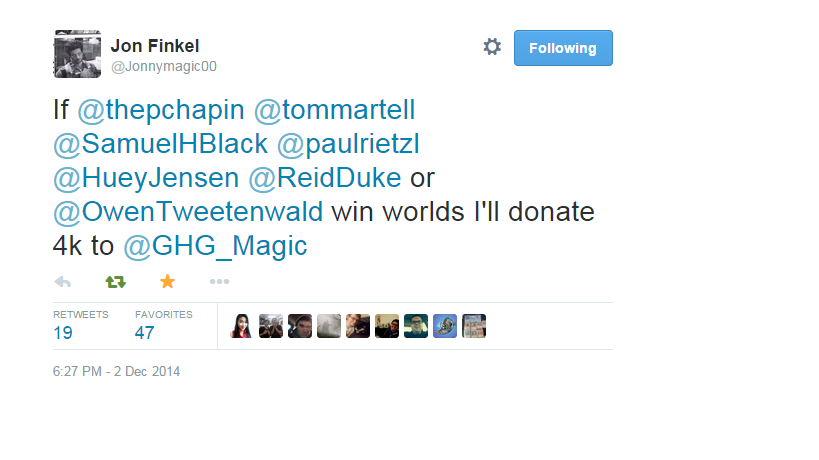
On a more positive note, day one of the Magic World Championship just wrapped up. By the time this article goes up, the tournament will probably be finished, and someone else on this website will be writing about the financial implications of the tournament results, as well as cards you’ll want to look out for. On an unrelated note, I’d like to mention that I’m currently rooting for Patrick Chapin, Tom Martell, Sam Black, Paul Rietzl, William “Huey” Jensen, Reid Duke, and Owen Turtenwald. Sorry Ray Future Pro… nothing personal.

ghg
Gamers Helping Gamers has been a huge reason for my successes in life these past few years, and I wanted to do what I could at this point in my life to try and give a bit back. If this article convinces even one person to go for it and try to win this scholarship, I’ll consider it a success. One of my goals in this column has always been to help other Magic players play the game without having to go broke, and removing the dark cloud of college loans definitely falls under that category. Good luck to all of my readers who apply!

The Hypnotic Specter That Saved My Life

By Christopher B.

“It’s cancer in an advanced stage,” the doctor told me on a Friday afternoon in a hospital far away from home. “Be glad that we found it now—in a few weeks it might have been too late. On Monday morning, we will start with the chemotherapy. Please sign these papers…”

BAM, that hit hard.

Actually, 2010 should have been my year. I was finally living in a new apartment—even the garden was set out. I had just started my dream job and worked for the biggest employer in my hometown. In addition to my job, I had been attending university on Saturdays for the last few years and had just finished my studies. But in a matter of seconds, I fell into a deep black hole.

Today, three years after my treatment is over, I want to share my personal Magic: The Gathering story with you.

Flashback

I started playing Magic in 1995 at the age of 11. My first deck was a Fourth Edition Starter Set. The deck itself was pretty annoying and had bad cards in it, so I was looking forward to improving it. Back in the days without internet or earning money from a job, the only chance to get new cards was to trade with friends at school or check the crapbox at my LGS, where people threw in all the cards they didn’t need.

4theditionstarter

Buying booster packs was really expensive as a kid, but sometimes my friends and I would all throw in on a booster pack to split. We would roll a die to determine who got to choose a card first, then went around in a circle. I always chose the red cards, especially goblins. So it is no wonder that my first self-designed deck was a mono-red goblins list with some [card]Goblin Grenade[/card]s, [card]Lightning Bolt[/card]s, [card]Incinerate[/card]s, and [card]Blood Lust[/card]s.

Mostly, we played before and in between classes at school, or at home in the attic of my parent’s gardenhouse. Even today, you can see the name of every child that went into that attic, written down on the wooden beam. Up there, we sat cross-legged on the ground and played the game. We didn’t care much about the rules. We just played.

Sometimes we had problems with English cards (I’m German). On the one hand, our English skills improved by playing Magic (and also by playing computer games in English in general). On the other hand, there was always something we didn’t understand. I don’t know why, but our LGS didn’t have many German cards. So for example, among my group of friends, [card]Force of Will[/card] was a bad card. After all, it was a counterspell for five mana and you had to pay one life in addition—the problem was that we didn’t knew the word “instead.” The more words were written on a card, the more mistakes we could make. Maybe that’s one reason I liked goblins.

There was always one card that I wanted to have and never got: [card]Hypnotic Specter[/card]. Though I played mostly red, [card]Hypnotic Specter[/card] caught my attention at school. There was this one guy with a mono-black list I just couldn’t win against. I thought that deck, especially that particular card, was so unfair. For me, it was unreal.

hypnoticspecter

Coming back to the bad card availability in the old days: it was hard to get playable rares because everyone played them in their own decks. I can’t remember someone having more than two rares of the same card in one deck. So it was impossible for me to trade for a [card]Hypnotic Specter[/card].

So we played against each other with our bad decks and only went to the LGS to trade or buy new cards. With Urza’s Legacy in 1999, my interest in Magic drifted away. One reason was that I didn’t liked artifact cards and the Urza’s block was really artifact-heavy. Also, foil cards were introduced. For me, this gave a kind of childish touch to the game and I was quickly becoming a teenager. While the people at the LGS and some friends loved the new set, I lost my interest in Magic.

Maybe if I had seen [card]Unearth[/card] from Urza’s Legacy I would have stayed in the game, especially if I could have picked up a [card]Hypnotic Specter[/card] to combo with it. But besides other card and board games, there were different things that caught my interest at the age of 15—for example, my first girlfriend. After six months of not playing, I sold my shoebox of cards for very little money to some guy and quit Magic after playing it for four years.

urzaslegacybooster

Flashforward

But after my diagnosis, I had much more time to myself. The treatments always were on the first, third, and seventh days of a cycle, followed by four days rest. And again. And again. And again… On the treatment days, I felt so bad that I can’t find words to describe it. I lost much weight, all my hair fell out, and my immune system was actually not existent anymore—not to mention my self-esteem. My parents had to visit me with masks, because even a little infection could have been life-threatening for me. I really had to take care what I was about to eat, and how it was prepared. I wasn’t allowed to go into the sun.

As you can imagine, with all these things, I was really alone. So I had to find something to get the time to pass by. But then there were further problems: the sound of the TV, even on quietly, was breaking my head. Because of the medicine, I didn’t have a feeling of satiety and my sleeping rhythm changed. I slept during the day and had my waking hours during the late evening.

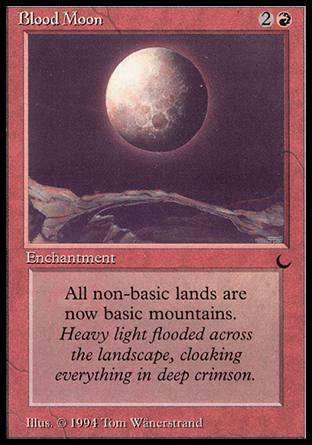
bloodmoon

Now that everything is over, I can’t really tell you where I got my power from to get all through this. I learned to be patient. I always knew that I would be healthy again. I never had a doubt. But I didn’t knew when, nor if I would suffer permanent damage. Of course, there were days where I was desperate and totally depressed—isolated from the world, sick to death, and weak. Even my best girl friend and my best friend turned their backs on me after 14 and eight years respectively. They just couldn’t handle the situation. Until today, I never hear anything from them, although they do both know that I survived. The only backing I had were my parents, my doctor and… Magic: The Gathering.

It all began with a [card]Hypnotic Specter[/card]. After enduring many sessions of chemotherapy, I wanted to do something good for myself. Something that I would be happy about. Something to enjoy and that would be personally meaningful. One thing I did was buy a Super Nintendo with Zelda, Mario Kart, and so on. On the internet, I was searching for that one Magic card—the one I couldn’t get when I was a kid. I ordered a [card]Hypnotic Specter[/card] and couldn’t stop smiling that day. Then I saw that Magic was still alive and so many new cards had been printed since I quit the game. And that changed everything.

So after all these years, Magic was back in my life. Imagine you quit the game in 1999 and came back in 2010. Can you even comprehend how many new cards were printed since then? I had magical Christmas land 24/7. Every day, I explored new cards that blew my mind.

How had the game changed? Black has a counterspell? What are planeswalkers? Hey this new card frame is…. pretty ugly. But hey, this cool card is only available in the new card frame, so let’s buy it. I bought every card that I was excited about. It was great to be able to buy inexpensive cards that were too pricey or hard to come by in the ’90s.

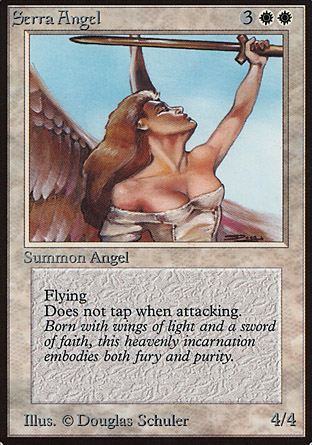
serraangel


Almost every day in the first weeks after buying my Specter, I bought new cards. I was happy to have a growing collection, thinking that my cards were so powerful. It was nice to see how the game had developed in all these years. But my gaming skills were 11 years old—exactly the age I started playing Magic for the first time. So I watched games on the internet and started to learn to play again. With every new card I was excited about, I was brewing new decks. Hours… Nights… Days…

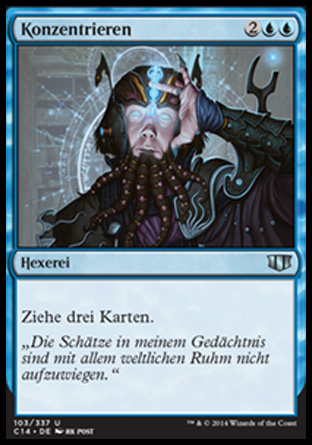
I would stay awake for long periods thinking of new brews I could build. Magic was a way to busy myself and to push all the bad things in my head away. Plus, I really had concentration problems at the time. I was very forgetful. Even if my only plan for the day was to take my medicine, I forgot it sometimes. That’s a side effect of the chemo. But with all the reading about Magic and the brewing in my head, I trained myself to be better able to concentrate.

concentrategerman

When I finished my chemo and radiation, I went to rehab. After rehab, I finally wanted to play with my new cards. Over at the Mothership, I searched for where to play Magic in my hometown. The first deck I took to my LGS was a UB discard deck playing four [card]Hypnotic Specter[/card]s, four [card]Shadowage Infiltrator[/card]s, four [card]Hymn to Tourach[/card]s, four [card]Duress[/card]es, and so on.

Down in the cellar of the store, I finally had my first match. One random guy, now a friend of mine, immediately wanted to play against me. He noticed that I was kind of new to the game and helped me playing with game phases and steps for the first time.

“Why don’t you play some [card]Nyxathid[/card]s?” he asked. Then to the group: “Hey, does somebody have [card]Nyxathid[/card]s?”

“Yes, I have one. Here, you can keep it,” said a nice guy.

Wow, that was even faster then buying a card on the internet, I thought. 

It felt like the old times—it was just on another level. It wasn’t so easy to get fitting cards for your deck so quickly back in the ’90s. The next week, Scars of Mirrodin was spoiled. When Evan Erwin’s Magic Show #205 showed my future Standard Goblin deck, I decided to get into competitive Magic for the first time. I even got some deck tips from Patrick Chapin. He checked my decklist on Facebook and suggested adding some [card]Teetering Peak[/card]s.

In the next weeks, I attended my first FNM, and even though I didn’t made first place, I was happy for every match I was playing. Now that I was back on the Goblins deck from my childhood, I traded my draft cards into Legacy-playable goblins like [card]Goblin Lackey[/card] and [card]Goblin Ringleader[/card], intending to play Legacy someday.

goblinguide

I had some long-term goals in mind after my recovery: to travel to Mexico as often as possible, to learn Spanish and Salsa, to play the guitar, and to attend a Grand Prix.

As of today, I have attended GP Amsterdam in 2011, GP Strasbourg in 2013, and GP Paris in 2014. Of course, all three were Legacy GPs, and I brought with me my little red guys. I know that I’m not the best player and sometimes make disastrous mistakes, because now and then I still have those concentration problems. But for me, it’s all about having a good time.

I remember my third round at my first GP. There was this old man playing against me with a big hat on. On the front side of his hat there was a goblin token. I looked at it while shuffling for the first game and he said “spoiler alert” and made a crazy face. The whole table was laughing.

It’s for these moments that I go to GPs. You get to travel, speak other languages, and meet people from all over the world. I spoke to Rich Hagon, Nathan Holt, and Gerry Thompson. I watched Tomoharu Saito, Joel Larrsson, Jacob Wilson, Raphael Levy, Thomas Enevoldsen, and Paulo Vitor Damo da Rosa play—guys I normally watch playing on the screen at home. Looked through binders for hours to finally find a new-old card for my collection. At GP Paris, I didn’t want to play in day two and instead went to the opening of the Star Wars Museum. For me, it’s not about winning. It’s just spending some time with a thing that you love and bringing back good memories.

stichintime

For me, Magic is more than just a game. With this article I want to give the game something back to the game that has given so much to me. Thank you all for making this game what it is. If you ever find yourself in a similar situation to where I found myself, this article is for you. Besides your close friends and family, find something that you can hold onto—something that was there all the time but that maybe you forgot about. Something out there can be your own personal [card]Hypnotic Specter[/card].

Weekend Magic: 11/28-11/30

This weekend featured Grand Prix San Antonio and Star City Games Open Series: Atlanta. Along with a plateful of turkey, we got a nice heaping side of Magic to go along with it. Let’s see how delicious it was.

Grand Prix San Antonio (TX, USA)

Format: Standard

Decklists

San Antonio was taken down by Ryan Scullin piloting Mardu Midrange. He took down UW Heroic in the finals to claim the win. The notables from his deck included three [card]Chained to the Rocks[/card] and four [card]Crackling Doom[/card], which assisted Ryan in getting rid of threats like [card]Stormbreath Dragon[/card], [card]Sarkhan, the Dragonspeaker[/card], and [card]Siege Rhino[/card] all weekend.

Orry Swift was piloting UW Heroic. Notables from the deck include four [card]Hero of Iroas[/card], which is a card that has been trending upward from its lows of $1.50 to now $3.50 and climbing. Pick up your copies sooner rather than later if the UW Heroic deck interests you for Standard play.

In third and fourth were Temur and Sultai. Notables from the Temur deck include three [card]Rattleclaw Mystic[/card]s, four [card]Savage Knuckleblade[/card]s, two [card]Ashcloud Phoenix[/card]es, and three [card]Crater’s Claw[/card]s. The Sultai deck featured a [card]Sagu Mauler[/card], two [card]Doomwake Giant[/card]s, and four [card]Sidisi, Brood Tyrant[/card]. Sidisi is down to around $3.30, her lowest since Khans was released. She is definitely powerful in the Sidisi-Whip deck, which continues to place well at major tournaments. She may drop a little bit more, but if you want to play with her in Standard, I think picking up copies for $3 is fine.

Rounding out the Top 8 were two Abzan decks, one Jeskai deck, and another mono-red deck that splashed blue for [card]Treasure Cruise[/card]. Highlights from the Mono-Red Cruise deck included four [card]Fated Conflagration[/card] and four [card]Satyr Firedrinker[/card], along with four [card]Monastery Swiftspear[/card] and three [card]Treasure Cruise[/card]. Looks like UR Delver has come to Standard as well, folks!

SCG Open Atlanta – Standard (GA, USA)

Decklists

Finish Deck Finish Deck
1st Sultai Reanimator 9th Abzan Midrange
2nd Abzan Midrange 10th Mardu Midrange
3rd Abzan Midrange 11th Abzan Midrange
4th Mardu Midrange 12th Esper Control
5th G/R Monsters 13th Mardu Aggro
6th Mardu Midrange 14th Abzan Midrange
7th Mardu Aggro 15th Temur Midrange
8th Abzan Aggro 16th G/B Devotion

John Farrow took down the Standard portion of Atlanta piloting Sultai Reanimator. Similar to GP San Antonio’s Top 4 finish, the deck wins by using self-mill along with graveyard recursion and Sidisi in order to generate advantage against your opponent. The tech in this version included four [card]Ashiok, Nightmare Weaver[/card] out of the sideboard.

Rounding out the rest of the Top 8 were two Abzan Midrange decks, an Abzan Aggro deck, two Mardu Midrange decks, a Mardu Aggro deck, and a GR Monsters deck.

GR Monsters was a unique deck. It featured four Ashcloud Phoenix, four [card]Hornet Nest[/card], four Stormbreath Dragon, four [card]Xenagos, the Reveler[/card], and three [card]Setessan Tactics[/card]. I love imagining Hornet Nests fighting random creatures—so awesome! You can also play another Tactics later to have your deathtouch hornets kill huge guys.

Like last week, Abzan Aggro now features four [card]Bloodsoaked Champion[/card] and four [card]Soldier of the Pantheon[/card] along with three [card]Gather Courage[/card]. Three Anafenza and two [card]Boon Satyr[/card]s also appeared in this list.

The rest of th Top 16 included three Abzan Midrange, Mardu Midrange, Mardu Aggro, Esper Control, Temur Midrange, and GB Devotion.

Esper Control featured four [card]Dig Through Time[/card] and four [card]End Hostilities[/card] are the only outstanding cards to me in the main deck. Out of the sideboard [card]Ashiok, Nightmare Weaver[/card] makes an appearance as a three-of.

Tymaret made an appearance in the 13th place Mardu Aggro deck, three Stubborn denial and four Temur Charm were seen in the Temur Midrange deck, and three Doomwake Giants were seen in the GB Devotion deck as cards to watch.

SCG Open Atlanta – Legacy (GA, USA)

Decklists

Finish Deck Finish Deck
1st U/R Delver 9th Reanimator
2nd Temur Delver 10th Ad Nauseam Tendrils
3rd Reanimator 11th Merfolk
4th Sneak And Show 12th Lands
5th Storm 13th Miracles
6th Elves 14th Miracles
7th Lands 15th Miracles
8th Jeskai Stoneblade 16th Death And Taxes

UR Delver piloted by Will Fleischman took down the event with its brother, Temur Delver, taking second place. Surprisingly, the second-place deck was playing [card]Nimble Mongoose[/card] over Treasure Cruise. It was a throwback to the old Canadian Threshold decks that have been around since Odyssey block. The deck featured a full stock of [card]Stifle[/card], [card]Force of Will[/card], [card]Brainstorm[/card], and [card]Daze[/card] in order to maximize the tempo plan.

The rest of the Top 8 included a diverse slew of decks. Out of the remaining decks, Reanimator played two [card]Hapless Researcher[/card] to help against aggro decks and Lands featured [card]Mox Diamond[/card] and [card]Gamble[/card] to speed up the end game.

The rest of the Top 16 included Merfolk, Miracles, and Death and Taxes. Merfolk hasn’t been seen in a Top 16 for quite a while and has changed much from the [card]Standstill[/card] days of yore. Merfolk gets to play a full playset of [card]True-Name Nemesis[/card] along with [card]Cavern of Souls[/card] in order to have uncounterable TNNs. [card]Phantasmal Image[/card] is another card that is seen as a playset in the deck and does a ton of work, becoming a lord or a copy of the best creature on the field quickly. Three [card]Vapor Snag[/card]s main deck have been added to help Merfolk against Burn and UR Delver. Out of the sideboard, [card]Back to Basics[/card] punishes Lands and other greedy manabases.

* BONUS* SCG Premier IQ Atlanta – Modern (GA, USA)

Decklists

Finish Deck Finish Deck
1st U/R Delver 9th U/R Twin
2nd Temur Twin 10th G/W Hatebears
3rd Jeskai Flash 11th Amulet Combo
4th Temur Delver 12th Abzan Pod
5th Affinity 13th Affinity
6th U/R Delver 14th G/R Tron
7th Scapeshift 15th U/R Delver
8th Temur Delver 16th Burn

UR Delver also took down the Modern portion of SCG Atlanta. This version main decked three Gut Shots. In addition to being totally Legacy playable, Gut Shot has also killed a Delver or two in Modern. I still like foil copies if you can get them for $4 or less. The price seems be rising for foils as time goes on.

Rounding out the rest of the Top 8 were Temur Twin, Jeskai Flash, two Temur Delver Decks, Affinity, another UR Delver, and Scapeshift.

Jeskai Flash is a new take on the Jeskai Midrange decks in Modern. Jeff Hoogland put a spin on the deck by playing an [card]Aven Mindcensor[/card] and [card]Stormbreath Dragon[/card] in the main deck along with four [card]Geist of Saint Traft[/card]. Geist seems to come and go in Modern as the format speeds up and slows down. Now that Treasure Cruise has taken over the format, Geist has become much better due to hexproof. He has reached all-time lows of $13.50 and could see an uptick in price if Jeskai Flash continues to place well in the Treasure Cruise metagame. [card]Kor Firewalker[/card] is also a real card out of the sideboard. Foils are still less than $1 and seem like a good pickup to me.

The Top 16 included GW Hatebears, Amulet Combo, Abzan Pod, GR Tron, and Burn.

Hatebears played a ton of creatures: thirty in the main deck! Among these included three Aven Mindcensor, four [card]Leonin Arbiter[/card], four [card]Loxodon Smiter[/card], three [card]Thalia, Guardian of Thraben[/card], and two [card]Thrun, the Last Troll[/card] to provide a constant stream of haterade. Two [card]Sword of War and Peace[/card] were also seen in the deck, a card which is becoming awesome in Modern to help against fast decks like Delver and Burn. Again, Kor Firewalker is seen out of the sideboard.

Amulet Combo also has a ton of unique cards. [card]Primeval Titan[/card], [card]Azusa, Amulet of Vigor[/card], [card]Hive Mind[/card], [card]Summoner’s Pact[/card], and [card]Summer Bloom[/card] are all cards to watch from this deck. Amulet Combo is rather janky, but can put up results if the pilot has lots of experience with the deck.

Abzan Pod seems to be the new version of Birthing Pod decks going forward since Treasure Cruise has entered the format. Four- and five-color pod decks have gone away in favor of this new deck that plays [card]Siege Rhino[/card]. It also plays three [card]Voice of Resurgence[/card], another card I’m targeting now that Return to Ravnica block has rotated.

Burn continues to showcase the power of [card]Eidolon of the Great Revel[/card], along with of course splashing blue for Treasure Cruise and white for [card]Boros Charm[/card] to give the deck even more reach and power.

Wrapping It Up

GP San Antonio and SCG Atlanta—Standard showed us that Sidisi is the real deal. She is still very cheap for a mythic and could easily double up in price once Khans redemption dries up. Other cards to keep an eye out on in Standard include Hero of Iroas, Chained to the Rocks, and Crackling Doom.

The Modern portion of SCG Atlanta showed us that there is still plenty of innovation going on despite Treasure Cruise entering the format (even if that innovation has been created due to the format warping around Treasure Cruise).

Legacy showed us that Merfolk is still a deck. Also, Delver decks can still win without Treasure Cruise, though this game plan probably isn’t recommended. If you decide to go this route, Nimble Mongoose is where you want to be.

Pitt Imps Podcast #96 Really Random Everything

This week, we had what can only be described as one of our best posse members on: Mr. Corey Brown. We talk about the Madrid mess that was a GP and head over to talk about Legacy over at GP Jersey. Then we just seem to hit every random thing you possibly could: from tailgating to MLP to outer space. Even Ryan’s shoutouts were about as random as you can possibly get.

Host Angelo  @ganksuou

Co-Host Ryan   @brotheryan

Co-Host Will  find him on Facebook I guess

Guest Corey  @HowlingJackkyl

email   [email protected]

Privileged Perspective 7 – Extended

Hi!

Note from the author- this article was originally meant to be published December 7th, but was pushed up a week by me to help spread awareness of the format. Next week’s article will be the one originally advertised for today about how to evaluate and maximize your methods of trading. Oh, and I archive these on my PC as “PP[X]”, and today’s is PP7, so shout-out to ‘Goldeneye 64’.

5-Reasons-GoldenEye-64-Should-Have-Failed-1088837

We are currently missing out on the coolest format ever. While I was always a fan of the original, seven-year Extended, it occurred to me recently that the current-four year iteration (M12 through Khans) is probably one of the better Constructed formats to ever exist. Forget everything else that is going on—today we are going to really explore this format.

SHAMELESS PLUG: If you live in the Central Florida area, you can play in my super sweet Extended tournament on Saturday, December 6! Premier Sports Cards in Orange City is hosting, and I expect it to be a good turnout. More details will be available soon (likely by the time this finishes getting written!), so I’ll make sure to get them out.

UPDATE! Entry will be $5, with all entry money going to payout. Additional prizes will be raffled off based on attendance, including boosters from various Extended-legal sets. Registration begins at noon, tournament starts at 1:00. I’ll be collecting decklists, so expect to see the results here on Brainstorm Brewery the following week.

The Format Overall

The format has what I would consider perfect mana. Like Modern, it has fetchlands, shocklands, and buddy lands (the M10 duals and their Innistradian cousins). Unlike Modern, it currently has [card]Deathrite Shaman[/card]. Unlike Standard, it has [card]Birds of Paradise[/card] and [card]Llanowar Elves[/card] (but for only one more year!). The format has several sweet “build around me” pillars, including [card]Sphinx’s Revelation[/card], [card]Pack Rat[/card], [card]Primeval Titan[/card], [card]Jeskai Ascendancy[/card] (the most obvious combo deck), [card]Maze’s End[/card], and [card]Delver of Secrets[/card]. I’ve gone through a lot of decklists from the last couple of seasons, and every archetype seems to get something that makes them more efficient and exciting. The best part? A lot of the cards that have rotated are actually pretty cheap. Obvious staples for Legacy and Modern, like [card]Liliana of the Veil[/card], are still going to be pricy, but some of the prices surprised me. [card]Thragtusk[/card], a card that most assumed wouldn’t make the leap, is at about $2.50 right now, and I’m pretty sure my deck will play four of them.

Brief Aside: “Making the leap” is another way of expressing what used to be called “Broodstar Syndrome.” Broodstar was a Standard powerhouse that never made enough of an impact in Extended or Legacy to keep its pricetag out of the bulk zone once it rotated. Famous other examples include [card]Malakir Bloodwitch[/card], [card]Hell’s Thunder[/card], and University of Florida product Tim Tebow1.

broodstaring

TRGR, Extended Edition

The first thing to do when cracking into any new format, is to find out what worked in the closest analog formats. This isn’t the key to long term success, but it does help fill in some of the large gaps of information relatively quickly (this is where the “Block is future Standard!” notion comes from, which is neither right nor wrong). The first deck that came to my mind was the Mono Black Devotion list of last season, but with some noticable improvements:

[deck title=Mono-Black]

[Creatures]

*4 Deathrite Shaman

*4 Pack Rat

*4 Desecration Demon

[/Creatures]

[Spells]

*4 Thoughtseize

*4 Abrupt Decay

*4 Lingering Souls

*4 Hero’s Downfall

*4 Underworld Connections

*4 Liliana of the Veil

[/Spells]

[Lands]

*3 Bloodstained Mire

*3 Polluted Delta

*3 Overgrown Tomb

*3 Godless Shrine

*6 Swamp

*1 Urborg, Tomb of Yawgmoth

*1 Gavony Township

*3 Mutavault

*1 Sandsteppe Citadel

[/Lands]

[/Deck]

This deck uses a lot of the technology from last year, while maximizing on a couple obviously strong synergies. [card]Gavony Township[/card] is a very low-cost option that can help win stalemates, and is the main reason I upped us to four [card]Lingering Souls[/card]. Deathrite Shaman is incredible here, and can very easily stick a turn-two Lili or Connections while also making it very easy for us to hit the occasional green or white mana that we need. [card]Pack Rat[/card] continues to be insane. There absolutely is a strategy similar to this that leans harder on Pack Rat, pitching [card]Unburial Rites[/card] and [card]Thragtusk[/card]/[card]Angel of Serenity[/card] (Pack Rat Reanimator was easily one of my favorite decks for ISD/RTR standard).

Here’s another archetype that’s near and dear to me:

[deck title= Experiment Jund, Part Deaux]
[Creatures]

*4 Experiment One

*3 Bloodsoaked Champion

*4 Burning-Tree Emissary

*4 Gore-House Chainwalker

*4 Lightning Mauler

*3 Mayor of Avabruck

*3 Ghor-Clan Rampager

*4 Falkenrath Aristocrat
[/Creatures]
[Spells]

*3 Lightning Strike

*3 Dreadbore

*2 Abrupt Decay
[/Spells]
[Land]

*1 Kessig Wolf Run

*4 Bloodstained Mire

*4 Wooded Foothills

*2 Rootbound Crag

*3 Blood Crypt

*3 Stomping Ground

*2 Overgrown Tomb

*2 Mountain

*1 Forest

*1 Swamp
[/Land]
[/deck]

This is actually less the evolution of Experiment Jund, and more a hybrid between that deck and some of the Aristocrats decks. [card]Rakdos Cackler[/card] is benched in favor of the rookie [card]Bloodsoaked Champion[/card], which gives us the extra incentive to max out on the “humans matter” theme. Bloodsoaked also has a cute interaction with veteran signal-caller [card]Falkenrath Aristocrat[/card], who can eat the Champion for potentially multiple counters during combat. [card]Mayor of Avabruck[/card] on turn two (hopefully off of one or two Emissaries!) is a solid play, and bloodrushing a Rampager on turn three does not count as casting a spell for the turn, if you feel like you want to get him flipped right away. A more straight-forward version of this list would eschew the human synergies for [card]Flinthoof Boar[/card] and [card]Mogg Flunkies[/card]— possibly Cackler back in over Champion, although that may just be due to unfounded concerns regarding mana.

This is likely not optimized, but it’s terrifying.

[deck title= Red Deck Wins]
[Creatures]

*4 Firedrinker Satyr

*4 Grim Lavamancer

*4 Vexing Devil

*4 Ash Zealot

*4 Eidolon of the Great Revel
[/Creatures]
[Spells]

*2 Bonfire of the Damned

*4 Bump in the Night

*4 Boros Charm

*4 Skullcrack

*4 Stoke the Flames
[/Spells]
[Land]

*4 Blood Crypt

*4 Bloodstained Mire

*6 Mountain

*Sacred Foundry

*4 Wooded Foothills
[/Land]
[/deck]

This legitimately scares me. The Bonfires and full set of Lavamancers tell you that it isn’t optimized, although a surprise Bonfire will help your little guys get through (I’m not sure how Bonfire for Miracle + Eidolon works, but if I find out, I’ll pass the word along). Red Deck is an archetype that always has a couple pieces in a format, so the larger your format is, the more tools at your disposal. Former teammates that didn’t make the cut include [card]Stromkirk Noble[/card], [card]Hellrider[/card], [card]Monastery Swiftspear[/card], and [card]Rakdos Cackler[/card]. There is almost certainly a creature-heavy red deck that maxes out on the cheap aggressive creatures and [card]Titan’s Strength[/card], Bump, etc. Red seems really deep!

I’m not a traditional UW control player, but those of you that are should be able to figure this out on your own. [card]Ponder[/card], [card]Sphinx’s Revelation[/card], and [card]Snapcaster Mage[/card] are legal. If you can’t get excited about that, then maybe you should be sleeving up RDW after all.

That Boy Band That Marky-Mark Was In

The most exciting part of exploring a new format is step two: finding new decks that didn’t exist before. The first one is a saucy number that I stumbled upon while working on that red deck we just talked about. Tell me this doesn’t get you excited:

[deck title= Down, Down to Goblin Town]
[Creatures]
*4 Foundry Street Denizen

*4 Legion Loyalist

*4 Burning-Tree Emissary

*4 Mogg Flunkies

*Goblin Chieftain

*4 Goblin Rabblemaster

[/Creatures]
[Spells]

*4 Goblin Grenade

*4 Krenko’s Command

*1 Hall of Triumph

*3 Hordeling Outburst

*4 Stoke The Flames
[/Spells]
[Land]

*3 Mutavault

*4 Bloodstained Mire

*4 Wooded Foothills

*9 Mountain
[/Land]

[/deck]

[card]Hordeling Outburst[/card] may not make the cut, but it certainly looks good when it’s six haste damage on turn four. Other possible considerations include [card]Obelisk of Urd[/card], [card]Hellrider[/card], and seeing if your opponent doesn’t realize [card]Goblin Guide[/card] isn’t legal in the format. Just looking at that list, I may have talked myself into playing it. [card]Goblin Grenade[/card] and [card]Stoke The Flames[/card] is a big turn four.

[deck title= Sultai Dredge]

[creatures]

*4 Deathrite Shaman

*3 Birds of Paradise

*3 Lotleth Troll

*4 Satyr Wayfinder

*4 Nighthowler

*3 Splinterfright

*2 Jarad, Golgari Lich Lord

*3 Shadowborn Demon

[/creatures]

[spells]

*3 Tracker’s Instincts

*4 Mulch

*4 Commune With The Gods

*2 Whip of Erebos

[/spells]

[lands]

*3 Polluted Delta

*3 Wooded Foothills

*3 Overgrown Tomb

*2 Watery Grave

*2 Breeding Pool

*1 Urborg, Tomb of Yawgmoth

*1 Rogue’s Passage

*3 Forest

*3 Swamp

[/lands]

[/deck]

This is perhaps the most raw of the lists, and could benefit from a few rounds of practice. Sidisi, [card]Boneyard Wurm[/card], [card]Splinterfright[/card], and a [card]Chord of Calling[/card] package seem like more exciting options for this list. The mana base also has to be constructed with Jarad in mind.

Community Contributions

These other brews were sent in from other deckbuilders. People are starting to really get on board the Extended train, none more so than reader Davie, @FullOfGravy. He sent me twelve (12!) different deck lists, which I would absolutely publish here if Marcel paid us by the word2. The first we will feature is a spin on a Modern menace:

[deck title= Bant Hexproof]

[creatures]

*4 Gladecover Scout

*3 Birds of Paradise

*4 Invisible Stalker

*3 Voice of Resurgence

*4 Geist of Saint Traft

*1 Eidolon of Countless Battles

[/creatures]

[spells]

*4 Rancor

*1 Curiosity

*4 Ethereal Armor

*4 Spectral Flight

*4 Unflinching Courage

*2 Ajani’s Presence

[/spells]

[lands]

*4 Windswept Heath

*1 Flooded Strand

*3 Breeding Pool

*3 Temple Garden

*1 Hallowed Fountain

*1 Mana Confluence

*3 Cavern of Souls

*1 Forest

*1 Island

*2 Sunpetal Grove

*2 Hinterland Harbor

[/lands]

[/deck]

How saucy is that [card]Eidolon of Countless Battles[/card]? I have a feeling that one or two is likely the right amount, but I bet when you connect with it, it feels pretty unstoppable. The only change I would make is likely upping the fetchland count and playing [card]Deathrite Shaman[/card] over Birds—in conversation with Friend of the Show Byron King, he said Deathrite Shaman is likely bannably good in this format. Time will tell.

[deck title= Jeskai Delver]

[creatures]

*4 Delver of Secrets

*4 Monastery Swiftspear

*2 Young Pyromancer

*2 Snapcaster Mage

[/creatures]

[spells]

*4 Ponder

*3 Thought Scour

*2 Pillar of Flame

*3 Vapor Snag

*4 Boros Charm

*4 Mana Leak

*4 Lightning Strike

*4 Treasure Cruise

[/spells]

[lands]

*4 Flooded Strand

*3 Polluted Delta

*2 Hallowed Fountain

*3 Steam Vents

*2 Island

*2 Mountain

*1 Sacred Foundry

*3 Shivan Reef

[/lands]

[/deck]

From Davie: “The lack of Gitaxian Probe means that the land count has to be realistic, but Scour and Cruise are BFFs. Pillar has to be one of the best spells in the format. It kills all of the mana creatures, red aggro creatures, Delvers, Snapcasters, Voices, Huntmasters, and it still goes to the face”.

I agree on all counts, especially with Pillar. I think it’s one of the smaller factors in defining the format (whatever is below “pillar” in the hierarchy), and is probably the benchmark for removal. Also, [card]Thought Scour[/card] and [card]Treasure Cruise[/card] seems firmly awesome.

The last community list I will feature here is from the aforementioned Mr. King:

[deck title= Dimir Delver]

[creatures]

*4 Deathrite Shaman

*4 Delver of Secrets

*3 Snapcaster Mage

*4 Pack Rat

[/creatures]

[spells]

*4 Ponder

*4 Thoughtseize

*4 Mana Leak

*4 Abrupt Decay

*1 Liliana of the Veil

*1 Ashiok, Nightmare Weaver

*2 Hero’s Downfall

*1 Bile Blight

*3 Dig Through Time

[/spells]

[lands]

*4 Polluted Delta

*3 Flooded Strand

*3 Bloodstained Mire

*4 Watery Grave

*1 Urborg, Tomb of Yawgmoth

*1 Overgrown Tomb

*1 Breeding Pool

*2 Island

*2 Swamp

[/lands]

[/deck]

This list definitely looks aggressive. [card]Ponder[/card] and [card]Deathrite Shaman[/card] are both banned in Modern, and [card]Mana Leak[/card] and [card]Pack Rat[/card] have each made a lot of enemies. I would not be surprised to see something like this make the top eight of my Extended event.

Financial Impact

Those of you who don’t play as much (but still made it this far), are probably wondering if there are any financial possibilities here. There are, but they are a combination of moderate- to long-term holds and cultivating local interest. The multi-format staples won’t change in price, but getting local players interested in acquiring them can draw people into trading for things they may not have otherwise wanted (allowing you to divest out of one blue-chip stock into multiple options with potential for more aggressive future gains). There are also some cards with awkward price discrepancies: [card]Huntmaster of the Fells[/card] is $4.50 on TCGplayer, and $8 on SCG—this may be something to move on, especially if they are something you can get in trade. The trick to this, however, is getting people motivated to play. My store has great showings for Standard, but not enough people to regularly sanction Modern play; I anticipate that this format will be better suited to the collections and appetites of our current playerbase.

A part of me also wonders if there may be some hidden Modern potential here. As Modern gets bigger, the marketshare of a single deck will diminish—you think everyone will still be on [card]Birthing Pod[/card] in five years? Anything that you like in Extended that seems to play well is a possible future player in Modern, especially since this format has a high bar in terms of power level. If you stumble on any hidden Extended gems, they may have high enough potential upside to be worth an investment—especially if they have a set-specific mechanic or name. I’m still talking about Huntmaster of the Fells.

Grassroots formats are not unheard of. Prior to the advent of Modern, former pro player and possible time lord Gavin Verhey got people genuinely and earnestly excited about OverExtended, which in part helped him get his current position at Wizards. And really, that’s all I care about too—getting a sweet WOTC job so I can leave this no-horse town.

Thanks for reading, and make sure to come back next week when we talk about what we were supposed to talk about this week! 

BEST,

Ross

1 Cue the “I don’t know why Birthing Pod won’t give him a chance! He beat Pittsburgh in the Wild Card!” crowd.
2 That is a very, very, very, very, very, very, very, very, very, very, very, very, very, very, very, very, very, very, very, very, very, very, very, very, very, very, very, very, very, very good idea.

BSB Classic: Brave New World

Editor’s note: Due to Thanksgiving, we’re taking the next couple days off. Enjoy this BSB classic and your holiday!

“All right then,” said the savage defiantly, “I’m claiming the right to be unhappy.”

On A Comedown

When Brian Kibler first started ranting about the November MOCS crashing, many Magic Online regulars rolled their eyes. We already knew that MTGO was a terrible piece of software: multiple MOCSs have crashed, PTQs die on a frequent basis, and Wizards is tightening the screws and milking every ticket from the player base (as I briefly discussed in my previous article). The thing is, many of us don’t want to listen to Kibler and quit Magic Online. We didn’t grow up with Hearthstone or Hex or SolForge. We like the instant gratifications (both playing and trading) that digital offers over paper. Heck, some players just don’t want or can’t handle in-person interactions. It’s not like the community has been silent, either; criticism has been loud and constant when these things happen, it’s just that nothing has improved.

However, I guess when you’re a two-time PT winner with nearly $250,000 of winnings important people start taking notice.

Wizards is making a high-risk, high-reward play, but it’s certainly a nuclear option. I’ll discuss my personal opinion of the changes towards the end of this article, but I’m not just here for opinions. I’m also here to provide some more cold, hard numbers.

We’ve got some new events to analyse!

Pay For Stability

As always, I’m calculating these based on current prices from supernovabots. At the time of writing:

Theros: Sell 3.6, Buy 3.49
Magic 2014: Sell 3.21, Buy 3.12

Constructed 8-Player Swiss (Standard, Modern, Legacy)

Entry: 6 tickets
Payout: Swiss (1 Theros pack per win)

50% Match Win = -0.765
55% Match Win = -0.242
60% Match Win = +0.282
65% Match Win = +0.805

Constructed 8-Player Single Elimination (Standard, Modern, Legacy, Block, Pauper, Momir Vig)

Note: only Pauper and Momir are new, but given that these are the stand-ins for DEs it’s worth visiting them.

Entry: 6 tickets
Payout: 5-3-2-2 Theros

50% Match Win = -0.765
55% Match Win = +0.056
60% Match Win = +0.952
65% Match Win = +1.928

Two-Ticket Tuesdays (Phantom M14 Sealed)

Note: These are only available for 2 days in November – 19th and 26th, but are now going to be on-demand queues.

Entry: 2 tickets (or 4 phantom points; not calculated here)
Payout: 6-4-2-1 M14 for Top 8

50% Match Win = -0.245
55% Match Win = +0.348
60% Match Win = +1.091
65% Match Win = +2.01

Conclusions

  • The days of printing tickets by playing constructed with a 50% win rate (read: Momir) are dead.
  • Constructed Swiss queues are terrible value.
  • If you need your fix, play 5-3-2-2s if you’re good and 2-man queues if you’re bad.
  • Two-Ticket Tuesdays are pretty decent value even if you’re just paying tickets. Paying phantom points make these a steal.

The Right to be Unhappy

“You’ve got to be hurt and upset; otherwise you can’t think of the really good, penetrating, X-rayish phrases.”

I want to wrap up my feelings on the matter in two parts: the financial impact and the wider health of Magic Online.

Financially, this blows for those of us who help to fund our Magic playing through daily events. This change by Wizards reflects a serious reduction in the equity of these events. To help put this into context, the current EVs for the old-style DEs are:

50% Match Win = +1.63 (change of -2.395)
55% Match Win = +3.78 (-3.72)
60% Match Win = +6.21 (-5.26)
65% Match Win = +8.90 (-6.97)

In the past, I’d have given Wizards the benefit of the doubt, but when the trend over the last couple of years is taken into consideration, I have to come to the obvious conclusion: This has been in the cards for some time. Kibler-geddon has simply provided an opportune moment to roll these out. If DEs ever come back (and it definitely is “if,” not “when.” See leagues.) I wouldn’t expect to see them paying 11-6.

It isn’t all doom and gloom for grinders, however. This will force the majority of the player base to move to 5-3-2-2 queues which will be a lot more convenient and allow for much greater volume. From a purely personal standpoint, it’s wonderful to see some Momir queues worth playing, especially given many of the DEs started at 11pm where I live.

Regarding the long-term health of Magic Online, I don’t think these changes will actually have much of an impact. I return to the title of this section and the quote at the top from “Brave New World.” Although not a perfect analogy, we the userbase are choosing to be unhappy. We’re taking the crashes and the squeezing of prizes and the shitty beta because we love this game and are willing to put up with it. This is a damn shame – Wizards desperately needs the kind of shock Kibler calls for to actually improve Magic Online for the better but I just don’t see these issues or the competition hitting their bottom line. Growth might get hit as new players choose to take up Hearthstone or Hex instead, but those of us already addicted to digital paper crack are probably just going to keep trading our tickets over for another hit.

Maybe we all collectively need to check into rehab.

Brainstorm Brewery #124 – Prototype

Can I level with you? I’m not entirely sure which portion, if any, of what we recorded is fit for consumption. This isn’t a gag; really, I’m serious. We sat down and we really, truly had the best intentions. Corbin made show notes, and they had topics on them. We had plenty to talk about, but somehow, we just got kind of?.?.?.?sidetracked. The cast got mean, guys—real mean. You’re going to find yourself asking, “Are these guys even friends?” We know what you want—you want us to focus on Magic. Even if it’s not Magic finance, you want us to focus on Magic. It didn’t really happen this week. I mean, it did, and it also kind of didn’t. You’ll see.

The great part about this episode is that if you don’t like it, you’ll have to listen to the entire thing before you know you didn’t like it, and that’s still a win for us. And it’s not as though you’re gone forever; you’ll be all, “Wow, the cast is usually better than this. I hope next week’s is better,” and you’ll listen to next week’s, too—because you’re a listener. You know the sick thing? A lot of you are going to love this episode. It’s irreverent and funny, and it’s all over the place. People express sincere and unpopular opinions. We tell Corbin to shut up. I don’t know what was cut out, but when you hear the stuff we left in, you’ll be all, “They cut stuff out? What was that stuff like?” and maybe you’ll find out some day. If you listen the whole way through, you’ll be glad you did—that much I know. I mean, we did e-mails and Finance 101 and all the stuff we do in a real episode. So give us an hour of your time because, at the end of the day, this podcast is still better than paying attention to your job or your commute or your daughter’s ballet recital or whatever we’re drowning out right now. This is your favorite podcast. This is Brainstorm Brewery.

  • The episode starts off with an awkward story involving Jason telling lies.
  • Marcel said this is Episode 24. If you don’t hear it, he cut it out so he doesn’t look dumb.
  • Grand Prix New Jersey is briefly touched upon. It was like a month ago—who cares, right?
  • E-mails and Finance 101 blend together. I told you we recorded a real episode.
  • What do StarCityGames changes mean for Magic? Is it good or bad or really bad?
  • Why does everyone hate Ari Lax?
  • We’re doing Tee Spring again. Ask Santa for a new hoodie or t-shirt.
  • I applaud you for sticking with it and reading all of this.
  • Questions? Concerns? E-mail brainstormbrew at gmail dot com.


Cabe Riseau produced the intro and outro music for Brainstorm Brewery.

Contact Us!

Brainstorm BreweryWebsiteE-mailTwitterFacebook

Ryan BushardE-mailTwitterFacebook

Corbin HoslerE-mailTwitterFacebookQuietSpeculation

Jason E AltE-mailTwitterFacebookQuietSpeculation

Marcel WhiteE-mailTwitterFacebook


BSB Classic: Trading to Your Outs

Editor’s note: Due to Thanksgiving, we’re taking the next couple days off. Enjoy this BSB classic and your holiday!

Hello again! For those of you who took the time to read my last article and still bothered to click on the link to my second piece, I thank you. I hope I was able to share enough information to make it worth your while. If you’re just jumping on this article series (if you can call it a “series”…I don’t even have a cool name for it), you can read my last piece here.

Last time, I mentioned that I would be discussing your “outs” to make the most out of every card you own. To some of us MTG financiers (someone really needs to come up with a better name for those of us who dabble in the MTG finance market), the things I’m about to list are common knowledge, but I hope that everyone reading this learns something. Either way, I’d greatly appreciate any constructive criticism or feedback on my writing to help me improve the reading experience for you.

Somewhere in your Magic lifetime, a friend may have walked up to you after you scooped up your cards in the face of overwhelming odds and told you that you still had “outs.” This means that, no matter how small a chance, there was a sequence of events that could have followed that ended with you pulling an amazing comeback and taking the game for yourself. Barring situations where you concede to save time on the round clock, it’s generally correct to play the game until your possible outs approach as close to zero as possible.

This philosophy of playing to your “outs” applies to the financial world of Magic as well. If you picked upMaster of Waves at $12 in the middle of its massive spike before the Pro Tour, then you were probably happy when it proceeded to climb as high as $25. However, if you didn’t get rid of them immediately, then you were gradually less happy as it progressively dropped back down to $12 where it is now. If you have all of the knowledge in the world of when a card will spike in price, that doesn’t help you at all unless you can actively get rid of it (unless your goal is to just get cards cheaply for decks, making Magic less expensive to play competitively). Let’s discuss a few “outs” you can use to get value out of your cards when they hit that sweet spot on the top of the price graph.

1. Trading:

This is the most obvious method. Trading off cards that have spiked (i.e. Hero’s Downfall) to Standard FNM players for sleepers looking to spike soon (i.e.Inkmoth Nexus and Birthing Pod. How are these not $10 yet?) is a good way to continuously increase the invisible value of your binder and make connections with your local community. The downside is that you don’t see any actual cash return by solely doing this. As much as we wish they did, Magic cards don’t pay the rent, or help towards gas and hotel costs when traveling to events. However, trading is a good way to get full retail value for cards, considering most people trade at TCG average or SCG.

If you plan on trading a lot, it’s important to remember to see as many binders as possible. I know that I am personally guilty of only going to a very small LGS because it’s five minutes away from where I live. After a while, trading can get quite stale. Take advantage of opportunities to broaden your connections, and you’ll meet many new players who need your cards!

1.5. Pucatrade:

Pucatrade.com is a website that just recently came out of beta and is now in revised (ha). You put up a list of cards you have for trade and send them to people who have that card on their want list. When the recipient confirms he or she got the card, you receive the cards’ value in “PucaPoints.” Once you’ve accumulated some points, you put cards on your own want list, and people can send you those cards in exchange for your PucaPoints. Unfortunately, there are some features that are behind a paywall, so if you’re looking for things like foil cards, e-mail notifications, or an advanced search feature, there’s a subscription fee involved.

Personally, I’ve had great success using the site to trade off cards that are hard to move in my local area (getting $72 in trade for a Rishadan Port and $90 for a Polluted Delta seems fine, especially when there is nobody else in my local area who plays Legacy). I can save these points to get other cards for speculating or foils for my EDH decks. It’s also a good way for players who don’t have high-dollar cards to slowly trade smaller cards into bigger ones little by little. If you don’t care about special features and just want to trade, the site is free to use, so I highly recommend trying it out regardless of if you can afford the paid benefits. Just take Nick Becvar ‘s word for it, he’s certainly using it to his advantage to speculate on targets such as Forced Fruition, foil Griselbrand, and foil ZEN basics.

bevcarpuca

Also, if you’re not following Becvar on Twitter, you should be. He’s often ahead of the curve on price spikes, and is good at pointing out cards with stupidly low spreads (the difference between the highest buy price and the average sell price). You can find him @Becvar, because he’s probably the only person in the world with that last name [Ed. Note: except possibly for his dad].

2. eBay and TCG Player:

I’m going to lump both of these outlets together because they are very similar. I have personally sold very little on eBay but am max level on TCG Player. Both websites provide a solid way to turn your collection into cash (well, money directly deposited into your bank account, but you get the point). From here on out, when I refer to eBay, I am talking about BIN (Buy it Now) listings and not auctions. Here are some benefits and downsides to each site, so you can figure out which works best for you.

  • Cost to list: eBay’s listings are free initially, but cost an insertion fee once you pass 50 listings in a month. Listing a card on TCG Player is free no matter what. If you plan on selling more than 50 items in a month, but don’t want to set up an official eBay store, then TCG Player might be better for you. You don’t want to eat the costs for putting up items that may not even sell, and that will happen on eBay.

  • Fees: TCG Player’s fee for selling a card is 11% + $.50 per order, not taking shipping into account. eBay’s fees are 12.9% of your sale (10% goes to eBay, 2.9% goes to PayPal), also not including shipping. Given these fees, it is more cost-efficient to sell cheaper cards on eBay, and more expensive cards on TCG Player. I believe that the tipping point for being better to sell on TCG Player is approximately $26.00 for a listing (my math skills are really bad, and that may or may not be correct. Feel free to correct me).

  • Time to list: Multiple friends of mine who sell on eBay (including Brainstorm Brewery’s own Jason Alt, @JasonEAlt on Twitter. If you’re not following him, you have me honestly astounded) have informed me that it takes much longer to list cards on eBay. One of the reasons is that eBay will no longer accept stock pictures of cards from Gatherer, so you would have to take the picture yourself and upload it. Doing that for every listing takes much more time. As financiers, we all know: time is money.

  • Extra options: eBay gives you the option to pay $50 and become an “eBay store”, which grants access to lower fees and more free listings. This is obviously a benefit if you would have otherwise spent over $50 in fees while selling on eBay.

  • Navigation: The storefront on TCG Player is extremely easy to navigate and is very user-friendly. For example: when listing a card, TCG Player will bring up the current lowest price + shipping per card, per listing. This is very helpful when trying to match the lowest price to ensure your card sells quickly.

In the end, it’s up to you to take these pros and cons and figure out which of these sites is right for you. The nice thing is that neither service requires you to take much time out of your day. Just a few clicks on a computer or phone, and a few minutes to package and ship.

To me, it appears that TCG Player is a better out if you want to get rid of higher-valued cards at a slower pace, especially if you don’t have much time. eBay looks to be your better option if you plan on doing a much higher volume of sales and have more time on your hands to spend listing items.

3. Social Media

Most of you reading this article (if I have a readerbase large enough that the word “most” can mean two or three, I’ll be overjoyed) probably have a Facebook, or some other form of social media. Making an Excel spreadsheet of the cards you have for sale and slapping it onto the page of your local Facebook MTG group can net you a surprising number of sales (don’t have a local Facebook MTG group? Make one. It’s an excellent way to keep in touch with everyone you regularly play or trade with, and allows you to contact all of them at once).

You can list cards for the TCG low, or a certain percentage under the average, and still make more money then listing on eBay or TCG, because you won’t have to deal with fees, shipping, or supplies like toploaders, sleeves, printer ink, and envelopes. This is personally my favorite way to sell cards. You can almost always meet face-to-face to check condition of cards, you build a reputation as an honest seller, and both parties have the opportunity to negotiate. If my Hero’s Downfalls aren’t selling on TCGplayer at $13.00, and I list them on my spreadsheet that I’m selling them at $11, I’ll probably take $10 if someone asks, considering the highest buylist price right now is $8.00.

3.5. Craigslist:

Craigslist doesn’t have to be the land of $300 shoeboxes of Ice Age commons. In addition to Facebook, posting reasonably-priced singles on Craigslist might bring players out of the woodwork. I’ve also heard that this is a good place to unload bulk commons and uncommons for anywhere from $8-$10 per thousand, where most retail stores will only give you $5 per thousand. This also beats dragging massive amounts of bulk to larger events, or eating shipping costs by sending it to stores in the mail.

4. Sell for your LGS:

This option will be feasible for fewer readers then the previous three, but I feel the need to mention it because it is a huge boon to the community if you can pull it off. I have lived in two cities in the past three years where the LGS was unable to sell MTG singles. While you do need a larger collection to attempt this, it’s an option to offer a deal with your LGS owner: if they can provide you with the space to sell cards, then they can take a cut of your profits. Even if they don’t have a spare glass display case, you can generally find those on Craigslist for only a couple hundred dollars, a cost you might be able to split with the LGS.

If you’re a regular FNM goer, this doesn’t have to be much more effort than you already put into MTG finance. Just restock the case when you stop by as you normally would. Selling cards out of a display case also gives you an opportunity to get cards for buylist prices.

5. Buylists:

I have to admit, I cringe at the word “buylist” sometimes. To a lot of players, buylisting means getting rid of cards at much lower than full value, taking hours to fill an online shopping cart, sort the cards in the correct set order, and then waiting forever to get paid, only for the store to reduce your payment because they felt that the cards were not up to their standards of NM. Sometimes these things can indeed happen.

Buylisting is my least favorite part of making money off of Magic, but sometimes it can be a necessary evil. Buylisting copies of Dark Confidant, Snapcaster Mage, and other liquid staples generally isn’t the correct play, but where else are you going to get someone to pay you the TCG mid price of $.50 for each of yourJudge’s Familiars or Selesnya Charms? This is where buylisting comes in handy, especially if you tend to purchase a lot of collections, since you probably have a lot of playable commons and uncommons around.

Since buylisting is so boring and time-consuming (well, at least for me. If you actually enjoy the process, you might be able to market yourself off to lazier financiers such as myself), some noble paragons from the MTG finance heavens have created tools to help us quickly determine which stores have the highest buylist prices. Quiet Speculation’s Trader Tools, a wonderful little program found at mtg.gg, lets you search for the highest buylist price of any card. If you want to see which store is offering that price, though, you’ll have to subscribe to become an Insider at the site, which grants a bunch of other neat features. MTG Price also offers a buylist aggregator on its website, so you can figure out exactly to which store you should send your 10+ copies of Exsanguinate. Each program has some stores that the other doesn’t, so using both can secure you maximum value. In my experience, Card Kingdom, ABU Games, Adventures On, and Troll and Toad consistently have the highest buy prices and process orders quickly.

Now You Know Your Outs

I hope that at least some of this information was new to everyone, because it’s a goal of mine as a writer to make sure that readers walk away with something new every piece. I know that this article could be improved, so please use the comment section below. Have constructive criticism as to outlets left out? Care to critique the content of the article itself? Here’s your chance. I want to learn from my readers as much as you do from me. Also, I’m looking to name my column, and am very open to ideas. Thanks for reading!

Casually Infinite – Preserving Khans for Future Play

One thing I really like to do is draft good sets. While most cubes provide a unique experience in which you get to play with a wide variety of powerful cards from various sets, there is something about a well-designed and playtested Limited environment that far outshines the enjoyment of having to decide between [card]Jace, Architect of Thought[/card] and [card]Jace, Memory Adept[/card]. Personally, I prefer the questions like [card]Murderous Cut[/card] versus [card]Highspire Mantis[/card] or [card]Seeker of the Way[/card] versus [card]Abzan Battle Priest[/card]. I also vastly enjoy the weaker decks that these formats create as they are more about Magic fundamentals than having ways to outplay your opponent’s deck. I also really like Khans of Tarkir and have decided I’d like to draft it in the future.

The issue with drafting sets is that it is fairly costly. Here at Casually Infinite, we are all about value. While I’m willing to pay $15 once every couple months to sit around and draft, I’d much prefer to be able to do so whenever I want without a cost. There are also some formats that I’d love to be able to draft that I’m even less willing to purchase the packs for. I can’t go back and draft Innistrad unless someone pulls out a box from their vault or I shell out five bucks a pack, either of which isn’t very likely to happen. If I want to be able to draft Khans in the future, I’m going to need to pick up two boxes for every three drafts I want to fund. I’ll have to sink $200 at least, with a best possible result of being able to draft three times. I’m not thrilled with that result.

I’ve decided to look at preserving the Khans draft environment in a cube. Having a cube of Khans would allow me to essentially draft the format whenever I wanted without any ongoing fee. I could even test Sealed deck builds, or even Team Sealed practice builds, from the cube. While cubes are substantially different from a regular set in a number of ways, there’s some steps we can take to mitigate the impact and have our cube play out more like opening boosters. In this article, I’ll be spelling out some of the ways to cube a set and how those ways affect how the overall cube plays out.

mantis rider

Full Set Cubed

While cubes generally only have one of each card, Khans only has 249 cards. Picking up a full set would create a pretty pathetic cube, capable of supporting only five drafters. When Fates Reforged comes out, I could combine the two sets into one 434-card cube. This gets us across the important 426 line needed to run eight 14-card draft packs. But there’s always a chance I won’t be that fond of Fates Reforged—and I do really like the Khans set. One of the quickest ways I could build a cube with it is pick up two complete sets of Khans. This gives me almost 500 cards.

One problem with running a cube like this, besides the cost (which would be around $400), is that it won’t play anything remotely like the current Khans limited environment. With a cube made from two complete sets, we’d see see a one-to-five ratio of rares to other cards, uncommons would be almost as numerous as commons, and an average draft pack would contain one mythic. While this would be a way to play Khans, I don’t feel it really captures the environment for the future. I’m also relatively sure that in this draft environment, solid Limited cards like [card]Archer’s Parapet[/card] and [card]Monastery Flock[/card] would never see play, and I actually like those cards. If I want to capture the Khans Limited environment, I’m going to need to work closer to what can actually be found in a booster pack.

treasurecruise

Building Boosters

One option that I’m not very fond of is manually building boosters from random cards in Khans. While this can be one of the cheapest ways to exactly replicate the Limited environment, the process of putting together one rare/mythic, three uncommons, and ten commons is incredibly time consuming. While this is probably the most accurate way to directly replicate the Limited environment, the idea of sorting some 500 cards into piles by rarity, then manually reassembling boosters makes the entire project sound far less enjoyable. I’ll admit that there may be some times that I’d consider this such as testing for a Team Sealed event, but overall I’d rather just build a cube that closely replicates what is likely to be found in boosters. If you don’t mind resorting after each draft, this is going to be the best way to go.

Khans has 101 commons, 80 uncommons, 53 rares, and 15 mythics. The current ratio of cards found in packs is 10 commons, 3 uncommons, 7/8 rare, 1/8 mythic. Each draft contains 24 boosters, meaning every draft will contain 240 commons, 72 uncommons, and an average of 21 rares and three mythics. Trying to replicate a self-contained cube with almost this exact ratio requires a huge number of cards. You’d need ten copies of each common, four copies of each uncommon, two copies of each rare, and one copy of each mythic—for a grand total of a 1451 cards in your cube. This brings a slightly higher percentage of rares (about one percent more than normal) and slightly fewer commons (two percent fewer commons) but lets you use every single card found in the set. I can’t imagine trying to shuffle this, much less lug it around. It doesn’t seem very realistic to me.

siegerhino

Cube Options

One of the first things I note about wanting to build a cube around a set is that I’m trying to capture the feel of a set, not necessarily capture an exact replica of the Limited environment. This means a few things. First off, I want it to play similar to the Limited environment, but not necessarily exactly the same. This means I don’t actually have to include every card. Personally, I wouldn’t feel like the Limited environment was being messed up if there wasn’t a single copy of [card]Lens of Clarity[/card] in my cube. That card is awful. If I really wanted to include one, I could probably just stick a singleton in to preserve the feel, as I wouldn’t need a full playset of them in order to feel like I’m capturing Khans. Now, getting my hands on five copies of [card]Lens of Clarity[/card] isn’t going to be hard, but the same theory can be held with rares and mythics.

The second issue building the cube really comes with the mythic rares. With 53 rares and 15 mythics, the ratio is substantially off and the only way to fix it and replicate the environment would be to get two copies of each rare to go along with the mythics. What I don’t like about this option is the cost. Even if we’re only looking at a dollar a rare, this is still adding $50 to the cost of my cube, and there happens to be many-high cost rares. There are two ways around this. The easy way is just to consider mythics as rares and have one of each rare and one of each mythic. This skews the cube towards a greater number of more powerful cards, as the vast majority of mythics are slam-dunk first picks. But if you’re okay with seeing mythics more often, you can still have a very similar feeling in your set by including essentially 68 “rares.”

Personally, I don’t feel that I need to include every mythic from the set in my cube. There are a number of mythics that are very warping to the Limited environment and you might actually enhance the environment by removing them from your cube. The first two on my list are [card]Sorin, Solemn Visitor[/card] and [card]Sarkhan, the Dragonspeaker[/card]. While these are two very good cards, there’s two things fighting against them being in my cube. The first is they have such a significant impact on Limited as to often make people who draft them have a very significant advantage. This could be somewhat of an issue in a cube if they were going to show up as often as a regular rare. The second issue is that these are fairly costly chase cards in the set. I’d rather have them to trade away or sell while they still have value than stick them into my cube box to be played with in the future. If I can avoid locking $60 worth of mythics in my cube, I’ve made my cube substantially less expensive. While I can see arguments to include Sarkhan in the set (it is his plane after all), I’d rather leave the planeswalkers out entirely.

Looking at the options at mythics, I’m heavily inclined to keep the clan leaders, but I really feel that most of the rest of the cards can go. [card]Wingmate Roc[/card] is worth decent money now and the only other cards that really call to me are [card]Hooded Hydra[/card], [card]Ashcloud Phoenix[/card], and [card]See the Unwritten[/card]. I suppose an argument can be made for [card]Pearl Lake Ancient[/card], but that’s not really a card I need to feel like I’m playing Khans Limited. I’m inclined to settle somewhere between five and seven mythics in my cube. This requires some heavy cutting, but can remove some of the mostly costly cards to acquire and make the cube far more affordable.

If we’re cutting mythics, we can also take a swing at rares. If we have somewhere between six and seven mythics, we will want between 42 and 49 rares to keep things at about the right percentages. The first thing I’d cut is the fetch lands. These cards are worth quite a bit in trade or cash and there’s nothing that a [card]Wooded Foothills[/card] adds to a draft that a [card]Rugged Highlands[/card] doesn’t do just as well. These are fantastic constructed cards in old formats, but they just don’t have a big impact on Draft. Personally, I’d just be glad not to have to first pick them to maintain value in my collection. Not having them in the cube doesn’t really hurt the mana in any meaningful way. A couple other rares I’d consider pulling simply because they’re insultingly bad in Limited include [card]Altar of the Brood[/card] and [card]Howl of the Horde[/card]. With the fetch lands plus a couple rares pulled from the set, we can settle right around 45 rares. Pulling out the fetches saves us another $60 as they are the most valuable cards in the set besides the two planeswalkers.

strand

Total Number of Cards

With about six mythics and 45 rares, we want to keep our percentages even on commons and uncommons while including them in our set. A normal draft is 71.4 percent commons, 21.4 percent uncommons, 6.2 percent rares, and 0.9 percent mythics. The bulk of our cube is made up of commons. The cheapest option is to run a 3/1/1 cube in which there is three of each common, one of each uncommon, and one of each rare. With our trimmed numbers, this gives us about 430 total cards, but our uncommon and rare percentages are pretty off. We’re down to 18 percent uncommons and up to 10 percent rares. I feel this is a pretty big deviation as we have almost doubled the number of rares and mythics in each draft. Additionally, having only one of each uncommon prevents being able to pick up multiple copies of single cards that can provide some fun build-around-me options. A draft normally contains 72 uncommons. With only 80 in the set, it is far more likely that there are a handful of duplicates in each draft than not. If you stick with only one copy, you’ll never have two copies of [card]Secret Plans[/card] in your deck, but there will be one in almost every draft.

Another option is a 4/2/1 split, where we double up on each uncommon and add a fourth common for a total of about 610 cards. Our rares and mythics are back in line here, but we’ve pumped the uncommon percentage up to 25 percent and dropped our rare percentage to 65 percent. This is more acceptable to me than running a huge number of rares, but it isn’t balanced quite right. My final idea is a 5/2/1 split, where we run five of each common for a total of about 710 cards. This provides us with a single extra percent of uncommons and a single percent of fewer commons. This could easily be fixed by cutting a couple basically unplayable uncommons from being needless waste of space. An added advantage of 710 cards is that it can also make the necessary cut of eight 84-card Sealed deck pools. I’d warn that Sealed pools without balanced rare and uncommon distribution can be significantly less balanced. Rare distribution is incredibly unlikely, and the guy stuck with only three rares may feel slighted by the exchange.

savageknuckleblade

Building the Cube

In order to build this cube I need five of each common, two of each uncommon, and one of each rare in the set: approximately 711 cards in total. A booster box contains 504 cards (not counting land and tokens) in approximately the proper proportions of rares, uncommons, and commons that we’re going for, but we’re in no way guaranteed to end up with the perfect distribution by opening a box and a half. I’d advise going with two full booster boxes, selling off or adding to your collection Sorin and Sarkhan and the fetch lands, which should give you around $100 in sell-back value. So for approximately $100, you can have enough Khans that you can play it forever—now you just need to invest in decent sleeves. Too bad MTGO doesn’t let us use our  online collection to run our own cubes.

Weekend Magic: 11/21-11/23

This past weekend featured Star City Games: Richmond. Let’s take a look at what decks were featured in Standard, Modern, and Legacy.

SCG Open Richmond – Standard (VA, USA)

Decklists

Finish Deck Finish Deck
1st Jeskai Combo 9th U/B Control
2nd Esper Control 10th Abzan Midrange
3rd Abzan Aggro 11th Temur Midrange
4th Jeskai Aggro 12th Mardu Aggro
5th 4-Color Midrange 13th Temur Aggro
6th G/B Constellation 14th W/B Aggro
7th Mardu Midrange 15th Abzan Midrange
8th Mardu Midrange 16th Mardu Midrange

Harlan Firer took down the Standard portion piloting Jeskai Combo. This combo version featured plenty of tokens in order to have a backup game plan in case the infinite combo didn’t work out. A highlight of the deck is four [card]Hordeling Outburst[/card], a card that seems to be seeing play in more and more archetypes as Khans Standard goes on. [card]Stoke the Flames[/card] was also a four-of in Firer’s build. However, I would recommend getting rid of your Stokes since a reprint of the card anywhere is going to completely tank its price (Event Decks!!!).

Other highlights from the Top 8 included:

  • Three copies of [card]Ashiok, Nightmare Weaver[/card] in Shaheen Soorani’s second-place Esper Control.
    • Ashiok has been declining in price since the October highs of $15 TCGplayer median (all prices quoted in the article will be TCGplayer median). Now down to $10, this could be a good time to pick up your copies if you like them for Standard.
  • Four [card]Bloodsoaked Champion[/card]s, four [card]Soldier of the Pantheon[/card]s, and three [card]Gather Courage[/card]s from Aaron Birch’s Abzan Aggro.
    • Champion is still high, but Soldiers and Gather Courages are still pretty cheap.
  • A Four-Color Midrange monstrosity created by Brad Nelson, which featured three [card]Chained to the Rocks[/card] alongside cards such as [card]Siege Rhino[/card], [card]Butcher of the Horde[/card], and [card]Elspeth, Sun’s Champion[/card].
    • Nothing new in the main deck, just a hodge-podge of good stuff. Out of the sideboard, Xenagos was seen but nothing else really jumped out to me.

Highlights from the Top 16 included:

  • Three more Ashioks in the UB control list that placed ninth.
  • Four [card]Ashcloud Phoenix[/card]es in the 11th-place Temur Midrange list.
    • Phoenix is the real deal, but wait until the Khans lowest prices are reached next year to pick them up for value.
  • Four [card]Savage Knuckblade[/card]s in the 13th-place Temur Aggro list, along with two [card]Sagu Mauler[/card]s and two [card]Polymorphist’s Jest[/card]s out of the sideboard.
  • Three Brimaz, King of Oreskos in the 14th-place W/B Aggro list.

SCG Open Richmond – Legacy (VA, USA)

Decklists

Finish Deck Finish Deck
1st Death And Taxes 9th Miracles
2nd Miracles 10th Miracles
3rd U/R Delver 11th Elves
4th Jeskai Stoneblade 12th Sultai Delver
5th Miracles 13th Storm
6th Infect 14th Jeskai Delver
7th Jeskai Stoneblade 15th Dredge
8th Lands 16th Jeskai Stoneblade

Marc Konig took down the even with Death and Taxes, a Legacy standby that continues to place well in the new UR Delver world. [card]Containment Priest[/card] is the new addition to the deck and Konig played one in the main deck and one in the sideboard. Containment Priest works against D&T’s plan slightly by messing with its own [card]Aether Vial[/card]s, but clearly the upsides outweigh this annoyance. Two [card]Gut Shot[/card]s were featured in the sideboard, and Konig mentioned that this card was currently underrated in Legacy. Foils at $4 or less seem like a good pickup.

Other highlights from the Top 8 included:

  • Three [card]Containment Priest[/card]s out of Ben Friedman’s Jeskai Stoneblade sideboard.
    • Also a playset of [card]Flusterstorm[/card] between the main deck and sideboard.
  • Another two [card]Containment Priest[/card]s out of Tomas Vicek’s Miracles sideboard.
  • Ryan Macedo’s Infect build featured two copies of [card]Become Immense[/card] in the main deck. He also mentioned that [card]Hydroblast[/card] worked really well out of his sideboard.
  • Yet another three [card]Containment Priest[/card]s in the sideboard of Fred Edelkamp’s Jeskai Stoneblade build.
  • David Long’s Lands featured four [card]Mox Diamond[/card]s and four [card]Gamble[/card] in the main deck, along with four [card]Krosan Grip[/card]s out of the sideboard

Highlights from the Top 16 included:

  • [card]Keranos, God of Storms[/card] was featured as a one-of in the ninth-place Miracles build
  • [card]Massacre[/card] made an appearance as a two-of in the 13th-place Storm deck
  • [card]Flayer of the Hatebound[/card] was featured in the 15th-place Dredge list

Taking a count across the Top 16, there were nineteen [card]Containment Priest[/card]s across the decks, with an average of two copies per deck (well, per sideboard, really). Priest is making an impact on Legacy but still feels overpriced to me.

SCG Richmond – Modern Premier IQ (VA, USA)

Decklists

Finish Deck Finish Deck
1st Scapeshift 9th Abzan Pod
2nd 4-Color Pod 10th U/R Delver
3rd Jeskai Control 11th G/W Auras
4th Scapeshift 12th Abzan Midrange
5th Temur Twin 13th Abzan Midrange
6th Skred 14th Blue Moon
7th U/R Twin 15th Affinity
8th Affinity 16th Abzan Pod

Modern also provided some interesting decks. The Modern Premier IQ was won by Niklas Kronberger who piloted Scapeshift to victory. Cards to watch from the deck include [card]Remand[/card] and from the sideboard [card]Obstinate Baloth[/card]. Remand has gone down to $12 and could go up from now until MM2. Obstinate Baloth only had one printing in M11 and could also go up if more discard strategies start being used in Modern.

Other highlights from the Top 8 included:

  • Two [card]Siege Rhino[/card]s in Adonys Medrano’s secondnd-place Four-Color Pod deck
    • Watch for foils of this card. If [card]Siege Rhino[/card] becomes a mainstay in Modern, the foil price will eventually reflect this demand.
  • A deck called Skred, which placed sixth. Tyler Forshaw built a deck around Snow-Covered Mountains in order to utilize the deck’s namesake, [card]Skred[/card], as a cheap answer to many of Modern’s creatures.
    • The whole deck uses cards that aren’t seen much in Modern: [card]Boros Reckoner[/card], [card]Stormbreath Dragon[/card], [card]Koth of the Hammer[/card], [card]Volanic Fallout[/card], and [card]Pyroclasm[/card] are the main takeaways (along with [card]Skred[/card] and Snow-Covered Mountain of course).
    • Out of the sideboard, three copies of [card]Chalice of the Void[/card] popped out to me. In addition to the Legacy applications, Chalice is also pretty good against the Modern variants of UR Delver. I feel like it is only a matter of time until Chalice’s price goes up to match this demand.
  • Two main-deck [card]Chalice of the Void[/card]s in Erik Aliff’s eighth-place Affinity deck.

Highlights from the Top 16 included:

  • Two Abzan Pod decks, which played five [card]Siege Rhino[/card]s between them.
  • Two Abzan Midrange decks, which played eight [card]Siege Rhino[/card]s between them.
    • Six [card]Scavenging Ooze[/card] were also played across both main decks.
    • The 13th-place Abzan Midrange deck played one [card]Sorin, Solemn Visitor[/card] in the main deck.
  • The 10th-place UR Delver list played an [card]Isochron Scepter[/card] in the main deck.
  • The 15h-place Affinity deck played one [card]Ghostfire Blade[/card] main deck.
    • It also played two [cad]Feed the Clan[/card] out of the sideboard.

That’s all for this week! Richmond showed us that there is still innovation in Standard, Legacy, and Modern. Until next time.

Pitt Imps Podcast #95 The Future

In what can only be described as a slow week, the time is taken to explain exactly what to expect once the next century of the Pitt Imps begins. We go over SCG Columbus and let you guys know that the PPTQ schedule has been announced.


Host Angelo @ganksuou

Co-Host Ryan @brotheryan

Co-Host Will

Email [email protected]

Welcome to the Jungle: Sideboarding versus Midrange and Control

Welcome back again! I hope my previous article was able to help you all with the more explosive matchups you will face and I hope this one will help you with the more grinding matchups.

A Quick Refresher

The Deck

[deck title= AZooni (Big Zoo) ]
[Creatures]
4 Wild Nacatl
4 Noble Hierarch
4 Tarmogoyf
4 Qasali Pridemage
4 Scavenging Ooze
4 Knight of the Reliquary
2 Thrun, the Last Troll
[/creatures]
[Spells]
4 Path to Exile
4 Lightning Bolt
2 Lightning Helix
2 Ajani Vengeant
[/spells]
[Lands]
4 Wooded Foothills
4 Windswept Heath
4 Arid Mesa
2 Stomping Ground
1 Temple Garden
1 Sacred Foundry
1 Horizon Canopy
1 Kessig Wolf Run
2 Forest
2 Plains
[/lands]
[Sideboard]
2 Spellskite
3 Blood Moon
2 Choke
2 Ancient Grudge
1 Deflecting Palm
1 Bow of Nylea
2 Batterskull
2 Engineered Explosives
[/sideboard]
[/deck]

Sideboard Breakdown

[card]Blood Moon[/card]

Blood Moon is a fantastic card out of the sideboard and is there to give you free wins or stall the game until you can reach a dominant position. This card is a must against all three-or-more-color decks and can even dominate two-color decks.

[card]Choke[/card]

If your opponent plays [card]Island[/card]s, you play Choke. I don’t think it can be any clearer than that.

[card]Spellskite[/card]

I really like Spellskite. It stonewalls aggro early on and can help you win the burn matchup. I like Spellskite especially in game three of the control and Pod matchups to protect your [card]Blood Moon[/card]s and [card]Choke[/card]s from their removal.

[card]Engineered Explosives[/card]

Board sweepers are really good and Explosives is no different. If they play creatures, you should play Explosives.

[card]Batterskull[/card]

Burn, midrange, control: all of these are matchups where Batterskull can shine. It is your most resilient threat (next to Thrun) and when paired with your creatures can be very potent.

[card]Ancient Grudge[/card]

Good versus artifacts.

[card]Bow of Nylea[/card]

I think this card is the best card in my sideboard. Every ability on the card is good. The graveyard one, although you use it the least, can be very strong. It lets you bottom some strong cards from your graveyard, and with your large amount of fetch lands, you can shuffle and redistribute your used powerful spells back into your deck.

[card]Deflecting Palm[/card]

If you expect to get hit with a lot of damage from a single source, play this card. Creatures holding [card]Cranial Plating[/card], Tron’s creatures, Bogles, Ascendancy Combo (choose the creature, and yes, you can choose Caryatid) are great sources for this card to choose. Palm also has bonus points versus Burn, where it basically acts as an extra [card]Lightning Helix[/card].

Let’s Begin with UWR

[Deck Title=UWR Control]
[creatures]
3 Snapcaster Mage
2 Restoration Angel
2 Vendilion Clique
1 Keranos, God of Storms
[/creatures]
[Spells]
4 Lightning Bolt
3 Mana Leak
3 Electrolyze
3 Lightning Helix
3 Path to Exile
3 Cryptic Command
2 Supreme Verdict
2 Remand
2 Spell Snare
1 Sphinx’s Revelation
1 Timely Reinforcements
1 Ajani Vengeant
[/Spells]
[lands]
4 Celestial Colonnade
3 Scalding Tarn
3 Island
3 Tectonic Edge
2 Hallowed Fountain
2 Sulfur Falls
2 Flooded Strand
2 Steam Vents
1 Arid Mesa
1 Sacred Foundry
1 Mountain
1 Plains
[/lands]
[sideboard]
2 Stony Silence
1 Batterskull
1 Spellskite
1 Engineered Explosives
2 Relic of Progenitus
1 Combust
2 Counterflux
1 Celestial Purge
1 Timely Reinforcements
1 Anger of the Gods
2 Wear // Tear
[/sideboard]
[/deck]

I personally love this matchup. You need to establish multiple threats early and luckily your deck is great at that! They have no answers to [card]Thrun, the Last Troll[/card] in the first game and you can ride him or a large [card]Knight of the Reliquary[/card] to victory. I approach this matchup as if they are a critical mass burn deck so I want to apply a lot of pressure and force them to engage with me before they want to.

Sideboard out 4 [card]Qasali Pridemage[/card],  2 [card]Lightning Helix[/card], and 1 [card]Path to Exile[/card]

Sideboard in 3 [card]Blood Moon[/card], 2 [card]Choke[/card], and 2 [card]Batterskull[/card]

The sideboard plan is to lock them out and kill them while they sit there doing nothing. [card]Batterskull[/card] is great because you can cast it through your [card]Blood Moon[/card]s, which in and of themselves are game winners in their own right.

Blue Moon

[Deck Title=Blue Moon]
[creatures]
4 Snapcaster Mage
2 Vendilion Clique
[/creatures]
[spells]
4 Serum Visions
4 Cryptic Command
4 Lightning Bolt
3 Remand
3 Spell Snare
3 Vapor Snag
2 Electrolyze
2 Mana Leak
1 Dig Through Time
3 Blood Moon
2 Vedalken Shackles
1 Batterskull
[/spells]
[lands]
8 Island
4 Scalding Tarn
4 Misty Rainforest
3 Steam Vents
2 Flooded Strand
1 Mountain
[/lands]
[sideboard]
1 Blood Moon
1 Batterskull
2 Relic of Progenitus
1 Spellskite
1 Counterflux
1 Magma Spray
2 Negate
1 Keranos, God of Storms
3 Anger of the Gods
2 Vandalblast
[/sideboard]
[/deck]

In the first game its easy to get caught thinking you are playing against UR Delver or Splinter Twin, but in both of those matchups (Delver moreso than Splinter Twin), you should be fetching basics to keep yourself from getting burnt out. Qasali Pridemage is your allstar keeping [card]Vedalken Shackles[/card] at bay and your [card]Tarmogoyf[/card]s under your control.

Sideboard out 4 [card]Scavenging Ooze[/card]

Sideboard in 2 [card]Choke[/card], 2 [card]Batterskull[/card]

If you choke your opponent, you should win. I like to leave in all of my removal, including the [card]Path to Exile[/card]s, because I expect to see [card]Batterskull[/card] and [card]Spellskite[/card] in the post-board games.

Pick Your Poison (BG, Jund, or Junk)

In these matchups, your sideboard plan is the same in all matches but for shits and giggles, here are three decklists.

[Deck Title=The Rock]
[lands]
4 Verdant Catacombs
4 Treetop Village
4 Twilight Mire
4 Swamp
3 Overgrown Tomb
2 Marsh Flats
1 Forest
1 Urborg, Tomb of Yawgmoth
1 Woodland Cemetery
[/lands]
[creatures]
4 Dark Confidant
4 Tarmogoyf
3 Phyrexian Obliterator
3 Scavenging Ooze
2 Courser of Kruphix
[/creatures]
[spells]
4 Abrupt Decay
4 Thoughtseize
3 Inquisition of Kozilek
2 Maelstrom Pulse
2 Dismember
1 Slaughter Pact
4 Liliana of the Veil
[/spells]
[sideboard]
1 Scavenging Ooze
3 Fulminator Mage
3 Creeping Corrosion
1 Drown in Sorrow
1 Damnation
1 Thrun, the Last Troll
2 Grafdigger’s Cage
1 Torpor Orb
1 Sword of Light and Shadow
1 Batterskull
[/sideboard]
[/deck]

[Deck Title=Jund]
[creatures]
4 Dark Confidant
4 Tarmogoyf
3 Scavenging Ooze
2 Courser of Kruphix
1 Olivia Voldaren
[/creatures]
[spells]
4 Lightning Bolt
3 Inquisition of Kozilek
3 Abrupt Decay
3 Thoughtseize
2 Slaughter Pact
1 Terminate
1 Maelstrom Pulse
1 Anger of the Gods
3 Liliana of the Veil
1 Chandra, Pyromaster
[/spells]
[lands]
4 Blackcleave Cliffs
4 Verdant Catacombs
3 Raging Ravine
2 Overgrown Tomb
2 Forest
2 Bloodstained Mire
2 Swamp
1 Marsh Flats
1 Grove of the Burnwillows
1 Stomping Ground
1 Blood Crypt
1 Fire-Lit Thicket
[/lands]
[sideboard]
1 Anger of the Gods
1 Olivia Voldaren
1 Obstinate Baloth
1 Rakdos Charm
1 Choke
1 Thrun, the Last Troll
1 Sword of Light and Shadow
1 Batterskull
1 Shatterstorm
1 Engineered Explosives
1 Golgari Charm
1 Grafdigger’s Cage
2 Ancient Grudge
1 Grim Lavamancer
[/sideboard]
[/deck]

[Deck Title=Junk]
[lands]
4 Verdant Catacombs
3 Marsh Flats
3 Tectonic Edge
2 Stirring Wildwood
2 Twilight Mire
2 Treetop Village
2 Swamp
1 Forest
1 Urborg, Tomb of Yawgmoth
1 Overgrown Tomb
1 Godless Shrine
1 Temple Garden
1 Isolated Chapel
1 Misty Rainforest
[/lands]
[creature]
4 Tarmogoyf
4 Dark Confidant
3 Scavenging Ooze
[/creatures]
[spells]
4 Inquisition of Kozilek
4 Thoughtseize
3 Abrupt Decay
2 Slaughter Pact
2 Path to Exile
2 Lingering Souls
1 Darkblast
1 Dismember
4 Liliana of the Veil
1 Garruk Wildspeaker
[/spells]
[sideboard]
1 Lingering Souls
2 Thrun, the Last Troll
2 Stony Silence
2 Skinrender
3 Fulminator Mage
1 Aven Mindcensor
2 Grafdigger’s Cage
2 Black Sun’s Zenith
[/sideboard]
[/deck]

Sideboard out 4 [card]Noble Hierarch[/card] and 4 [card]Qasali Pridemage[/card]
Sideboard in 3 [card]Blood Moon[/card], 2 [card]Batterskull[/card], 2 [card]Engineered Explosives[/card], and 1 [card]Bow of Nylea[/card]

In these matches, you want to try and topdeck better than the BGx decks, and yes, it is possible. This is why you cut all the little fluff that couldn’t become a threat late in the game. [card]Blood Moon[/card] wins games on its own, and the player with the last [card]Scavenging Ooze[/card] standing also tends to win the game. Seriously, it is the best card in the matchup, so make sure you deploy Goyf into removal first so you can eat it with your Ooze.

[deck title=The New Junk]
[creatures]
4 Siege Rhino
4 Tarmogoyf
3 Scavenging Ooze
2 Courser of Kruphix
[/creatures]
[spells]
4 Abrupt Decay
4 Thoughtseize
3 Lingering Souls
3 Inquisition of Kozilek
2 Darkblast
1 Duress
1 Maelstrom Pulse
1 Dismember
1 Slaughter Pact
3 Liliana of the Veil
[/spells]
[lands]
4 Verdant Catacombs
3 Marsh Flats
3 Treetop Village
2 Swamp
2 Overgrown Tomb
2 Twilight Mire
2 Windswept Heath
2 Tectonic Edge
1 Temple Garden
1 Godless Shrine
1 Forest
1 Plains
[/lands]
[Sideboard]
1 Liliana of the Veil
1 Drown in Sorrow
1 Golgari Charm
3 Leyline of Sanctity
3 Fulminator Mage
2 Timely Reinforcements
2 Stony Silence
1 Thrun, the Last Troll
1 Creeping Corrosion
[/sideboard]
[/deck]

Honestly, I would sideboard the exact same way as I do with other BGx decks and just fight the topdeck/attrition battle.

GR Tron

[Deck Title=GR Tron]
[creatures]
4 Wurmcoil Engine
1 Ulamog, the Infinite Gyre
1 Emrakul, the Aeons Torn
[/creatures]
[spells]
4 Ancient Stirrings
4 Pyroclasm
4 Sylvan Scrying
4 Relic of Progenitus
4 Karn Liberated
4 Chromatic Star
4 Oblivion Stone
4 Chromatic Sphere
4 Expedition Map
[/spells]
[lands]
4 Urza’s Mine
4 Urza’s Power Plant
4 Urza’s Tower
3 Grove of the Burnwillows
1 Forest
1 Ghost Quarter
1 Eye of Ugin
[/lands]
[Sideboard]
2 Torpor Orb
2 Platinum Angel
1 Sundering Titan
2 Choke
4 Nature’s Claim
4 Combust
[/sideboard]
[/deck]

You have to be a conservative aggro deck in this matchup—and I know that sounds weird. You don’t want to overextend against them into a [card]Oblivion Stone[/card]. [card]Scavenging Ooze[/card] will hopefully be there to be your second wave of attacking.

Sideboard out 2 [card]Thrun, the Last Troll[/card], 2 [card]Lightning Helix[/card], and 1 [card]Scavenging Ooze[/card]

Sideboard in 3 [card] Blood Moon[/card], and 2 [card]Ancient Grudge[/card].

Just add better removal and try to lock them out. Blood Moon while ticking up [card]Ajani Vengeant[/card] is a blowout, or just use the Moon to delay until you can kill them.

Mono U Tron and UW Tron also exist, but I don’t view them as being the most competitive.

For Mono U, I would side out 4 [card]Lighting Bolt[/card], 2 [card] Lightning Helix[/card], and 1 [card]Scavenging Ooze[/card].

I would side in 3 [card]Blood Moon[/card], 2 [card]Choke[/card], and 2 [card]Ancient Grudge[/card].

For UW I would board the same as GR Tron, unless they played an insane amount of Islands.

The Faerie Conclave

[Deck title=UB Faeries]
[Creatures]
4 Spellstutter Sprite
2 Mistbind Clique
2 Vendilion Clique
2 Snapcaster Mage
[/Creatures]
[Spells]
4 Thoughtseize
3 Cryptic Command
3 Spell Snare
2 Dismember
2 Mana Leak
2 Shadow of Doubt
2 Smother
1 Go for the Throat
1 Tragic Slip
1 Inquisition of Kozilek
4 Bitterblossom
[/spells]
[Lands]
4 Mutavault
4 River of Tears
4 Secluded Glen
4 Darkslick Shores
4 Island
3 Creeping Tar Pit
2 Ghost Quarter
[/Lands]
[Sideboard]
1 Vendilion Clique
1 Negate
1 Squelch
1 Damnation
2 Duress
1 Darkblast
2 Sower of Temptation
1 Spellskite
1 Pithing Needle
2 Engineered Explosives
1 Batterskull
1 Memoricide
[/sideboard]
[/deck]

What I have found with the Faerie matchup is that you just need to be all-out aggressive in game one. Killing their [card]Bitterblossom[/card] and deploying a large amount of threats is just too much for them to handle. Maindeck Thrun also just makes them jump through hoops to win.

Sideboard out: 2 [card]Lightning Helix[/card], and 4 [card]Scavenging Ooze[/card]

Sideboard in: 3 [card]Blood Moon[/card], 1 [card]Bow of Nylea[/card], and 2 [card]Batterskull[/card]

Just kill their meager threats post board, and if you resolve a Blood Moon, you should win. I think it appears obvious why you don’t side in Choke for this matchup, but I’ll explain anyway: Faeries does not play Islands.

Sideboarding Mastery

Well thats all for this week! thanks for checking in and I’ll be happy to answer any questions you could have and I will be back next week with my final installment on sideboarding versus the combo decks of the format.

Privileged Position 5: No Sleep ‘Til Edison

Last weekend was Grand Prix New Jersey, the third-largest GP (or any tournament, really) of all time. I had a great time, but more than anything else, the past couple of days were a glimpse into what is likely the future of Magic’s organized play program.

The official attendance for this tournament was 4003, but that number is a little bit disingenuous, at least in terms of explaining how the weekend went. That count does not include vendors, judges, floor traders, side-event participants1, security personnel, etc. The venue, especially on Friday and Saturday, felt packed. I think a lot of people got a different impression of the final number because they compared it to SCG’s publicly announced cap of 6500 attendees (as if 4000 could be small somehow), but in no possible sense was this a loss for them.

I think the biggest question we have to ask is: was this a successful Magic tournament? Obviously we know what BBD’s answer would be, and SCG’s as well, but was this representative of the GP system? Someone2 recently mentioned that GP weekends are starting to resemble conventions, rather than pro-level tournaments, and this weekend certainly made that statement more apparent as well. So my question is: if it was a Magic Convention, what would have actually been different? If the main event did not award Pro Points or PT invites (but maybe offset that by paying out more cash), how many people would that have really turned away? The closest analog would likely be Eternal Weekend or the European Bazaar of Moxen (named presumably for my cat, Mox Kitten). Eternal Weekend didn’t attract 4003 players, but it also was not run by Star City Games, which has been plugging #GPNJ for the past several months.

Okay, so it turns out that everyone is writing about this, and you’re probably sick of it by now. As a means of compensation, please accept this excellent Strong Bad Email

Of course, the main event is the crucial axis that the financial aspect relies on for weekends like this. Cards like [card]Chalice of the Void[/card] were in heavy demand all day Friday and into Saturday morning, and [card]Containment Priest[/card] was selling for the price of two Commander decks! I won’t credit myself as getting that called shot correct (who are we kidding, of course I will), but I think there is a trend starting to emerge—when there’s a Legacy-playable option in a Commander release that goes on sale the week before a big Legacy event, bring lots of copies. These decks are already more plentiful than last year’s offering, so I don’t expect that price to stay high long term, but this definitely shows the pressure a deck registration deadline can put on a Legacy singles market.

Power Overwhelming

Have you seen the prices of Power this week? Probably not, since they’re so high. They’re so high, you’d need a telescope to price them, since they are likely breaking through the ionosphere right now. They’re so high, Tal Bachman wrote a hit song about them. Their prices are getting so high, Lindsey Lohan tried snorting a Mox Ruby.

Those terrible jokes are right, though: these prices are getting out of hand. You can now trade a NM Alpha Lotus for a NM Hyundai Elantra. Of course, there are very few mobile pieces of near-mint Power left in the world, if any. The best ones have already been graded, and graded Power has always had a higher market price. Power also doesn’t change hands very often, especially pieces that have been personalized or are too played to attract an interested buyer. Star City is saying they didn’t aggressively target Power over the weekend, but at least a few floor traders are saying they were. The SCG buy prices changed almost immediately after the weekend was over, though, and there doesn’t seem to be any other possible reason why.

If you have plans of ever owning Power, start getting it soon. There are a couple of things to be aware of when acquiring Power, so let’s touch on them here:

  • Power has multiple prices: The retailer price, the eBay price, and the cash price.
    • If you went over to SCG’s website and added an Alpha Time Walk to your cart, you are paying the retailer price. This is the highest possible price, although the trade-offs include a very high probability that the card is real, and they are pretty strict about condition3. They will also probably give you some Game Night tokens.
    • The eBay price is going to be somewhere in between retail and cash. Like everything online, it will involve fees in some form or another, shipping costs, and waiting, but with eBay you have a higher chance of getting burned by less than authentic cards. This isn’t to say that this type of thing is common, but always temper yourself if you see a deal that has to be too good to be true. This is where you want to deal with experienced sellers with great feedback.
    • The cash price (sometimes colloquially known as the “Bro Deals Price”), is often times going to be the cheapest option. Cash talks, and very often it strikes a solid bargain. The downside to this is that it almost always happens in person, or with someone who you’ve dealt with consistently online (outside of a structured system like eBay). This is the price where trade-ins will get you the most value, especially if the person with the Power has a stronger market for newer cards.
  • If you are at a large event with dealers, you can absolutely go up to a dealer table (if they aren’t busy!) and ask a buyer to inspect a piece of Power. Fakes are getting better and better, and if you aren’t confident in your ability to spot a counterfeit, then don’t buy something without a second opinion.
  • I’ve said this before, but always trade Modern or Standard cards for eternal staples and Power if you can. When I got my first piece of Power, it was entirely off of trades, and many of the cards I traded have actually gone down in value since that trade was made. While this is unfortunate for the dealer, he likely sold all of them before that happened, since his ability to move those cards is greater than mine.
  • Understand that it is okay to convert the majority of your collection to Power. Keep what you absolutely need for the decks you can’t live without, and be willing to part for the rest if you get the right price. Remember, life is a game of Mario Party, and Power is stars. All other cards are just coins.

Even though the prices on Power are the only things to have gone up significantly so far this week, I would expect things like Library of Alexandria and Time Vault to go up soon as well. If you have ever wanted something from the first few Magic sets, you may want to start working towards it now.

Cheers and Jeers: GPNJ Edition!

Cheers: SCG. Even though there were some logistical issues throughout the course of the weekend, I am confident that any other TO would have done a much worse job. Also, Ben was seriously on top of stuff this weekend, including indirectly helping me get to the event on time Saturday!

Jeers: My deck. You should be guaranteed a feature match and day two if you play above a certain percentage of sweet foils, regardless of what the deck actually does (or in my case, doesn’t do).

Cheers: Legacy. Despite everyone saying that Treasure Cruise, Monastery Swiftspear, and Dig Through Time ruined the format, they were proven wrong. The format is still rich, diverse, and impossible to predict. I didn’t play against UR Delver once this past weekend!

Jeers: Legacy. This format is rich, diverse, and impossible to predict. I showed up ready to crush UR Delver and didn’t play against it once. Instead, I got crushed by Food Chain and turn two’d by Through The Breach. Go home, Legacy, you’re drunk.

Cheers: The high-end vendors. There was a lot of cool stuff at the vendor booths this weekend (not to mention literal Cool Stuff, the store). I saw a test print City of Brass, which I didn’t realize existed, as well as a textless foil Lightning Bolt (picture below). There was allegedly a Summer Sol Ring and Bayou, as well as some other fascinating obscurities, along with quite a lot of Power.

Test City

Jeers: SCG. I’m not sure if this is just a Star City policy, or if it extends to other Tournament Organizers, but there were hardly any packs for sale at vendor booths. One vendor told me it is because SCG sells current Standard packs, and so they tell other vendors not to bring them as a condition for buying booth space. Another told me it is to prevent people from buying packs and going to the hotel bar to draft, rather than signing up for a side event. I’m leaning more towards the first, since if that was SCG’s modus operandi, then they wouldn’t be slinging packs either. Anyways, it was hard to find sufficient packs for wacky draft, and that is a shame. I WANT MORE WACKY DRAFTING. WHY ISNT THERE A WACKY DRAFT PRO TOUR?

P.S. New term: A wacky packs Winston Draft is henceforth known as a “Crazy Ivan”.

Cheers: The building the tournament was in. It was almost like it was built specifically for Magic events. VIP lounge was nice, even though the somelier’s recommendation of the malbec with the duck confit was a bit pedestrian. The free box of Arturo Fuentes with our VIP Modern Masters draft was a nice touch though. Oh wait, we were instructed not to tell the proles about the super secret VIP perks. Sorry. :(

Jeers: Everything outside the building in a roughly three-mile radius, the state of New Jersey. Turns out, the convention center was in the middle of an industrial park. No convenient access by train, bus, or subway. There were also no restaurants within walking distance, and if you elected to stay at one of the cheaper hotels, renting a car was a necessity.

I know it’s common for people to crap on New Jersey. The roads are confusing and full of crazy people. They think “Thunder Road” is the magnum opus of western composition. Garden State was a terrible movie. And thanks to semi-recent political shenanigans, they are constantly being shit-talked by Wesley Crusher look-alike Rachel Maddow. But don’t worry, New Jerseyians (Jerseites? Jersuits? Jersey Boys?). I just want you all to know, deep down in your heart of hearts, that it’s all absolutely true.

Sorry for the short article this week, but due to travel and catching up on work, I didn’t have the time needed to write this article and fully put off writing this article. Come back next week, when I talk about building and growing your network. Until then, keep standing on the overpass screaming at the cars you want to get better.

BEST,

Ross


1 I played a couple Modern events, and I don’t think any of my opponents actually played in the main event.

2 I honestly spent the better part of an hour trying to find out who. I want to say it was Matt Sperling. Anyways, I really wanted to link you the article, so if you find it, please post the link in the comments and we will tack it on somehow.

3 By American standards. Apparently the Japanese are on a whole other level when it comes to this kind of thing.


Brainstorm Brewery #123 – Unpronouncable

Winter strikes, and the cast has a difficult time assembling at the designated time. It’s actually going to be a bit telling who assembles the show notes because someone both shows up late and doesn’t really know what was discussed for the first fifteen minutes of the episode. That same person may or may not be in charge of assembling the show notes. Is that revealing too much? Don’t worry about it—you read the show notes, so you pretty much earned it. Can I level with you? I’m not really entirely sure who, if anyone, reads the show notes. It reads like ad copy every week outside of the bullet points. If you’ve clicked on the link, we pretty much have you. It’s like having ads inside a McDonald’s—you’re already hooked, and you’re already probably pretty sad about it. Our podcast isn’t McDonald’s; let’s be obvious. We’re like Kobe beef served on China plates paired with a twelve-year-old Cabernet Sauvignon in a crystal goblet. We’re the podcast Kanye West imagines Kanye West’s podcast would be. We’re seconds away from being in your head holes, and you’re welcome for that.

  • Grand Prix Edison was last weekend, and Jason, Corbin, and Ryan were in the Money Draught Mansion with @Time_Elemental and @SlickJagger. How many of JR’s belongings were destroyed?
  • Jason got stuck in a snow drift, and who knows what the first fifteen minutes of the cast were about? Not him.
  • Jason and Ryan learn that Marcel is the actual scum of the earth.
  • Marcel pronounces a bunch of words funny.
  • Reader e-mails dragged on, so some of it was cut so Marcel could get up early.
  • Pick of the Week goes super-esoteric. Jason essentially just rants. It was weird.
  • Ryan describes this episode as “better than not doing one.”
  • Questions? Concerns? E-mail brainstormbrew at gmail dot com.


Cabe Riseau produced the intro and outro music for Brainstorm Brewery.

Contact Us!

Brainstorm BreweryWebsiteE-mailTwitterFacebook

Ryan BushardE-mailTwitterFacebook

Corbin HoslerE-mailTwitterFacebookQuietSpeculation

Jason E AltE-mailTwitterFacebookQuietSpeculation

Marcel WhiteE-mailTwitterFacebook

Conjured Currency #40: Lessons from Grand Prix New Jersey

Grand Prix New Jersey has come and gone, and it was certainly an event to remember. With 4,003 people playing in the main event, Magic players have proven once again that Legacy is not a dead format. MTG even finally managed to beat Farm Simulator 2015 on Twitch, reaching over 15,000 viewers at its peak. But I’m not here to tell you which deck won, how many copies of [card]Treasure Cruise[/card] were in the top eight, or how many copies of [card]Forked Bolt[/card] you should be selling at $4 right now (hint: all of them). That information is just a Google search away. Today, I’m going to explain to you my methodology while buying/selling/trading, my first-hand experience with the vendors on site, and why you should tie a balloon to your backpack the next time you walk into a convention center containing 5,000 people. Let’s get to it.

Wheeling and Dealing

After suffering through the six-hour drive from Upstate New York, I arrived at the Expo Center at approximately 11:00 a.m. After saying hello to a few friends, my first order of business was to stop by every on-site vendor, pick up a copy of their printed-out buylists (if they had one), and quickly skim through the binders. Some vendors have multiple binders off to the side where they mass price random EDH/casual stuff that doesn’t deserve to be in the high-end display case. This is a great place to pick up things that have crept up recently (I found a foil [card]Kuldotha Forgemaster[/card] for $5), or grab the weird foils you’ve been missing for EDH.

Anyway, step two is to bunker down with your multiple sheets of homework, grab a pen, and circle/star/whatever you need to do to mark off prices for cards that look acceptable. I managed to throw all of mine away in my infinite wisdom, but I think you get the picture without having to actually have a picture. Circle the boxes that say, “[card]Voice of Resurgence[/card]: $12,” and stay away from the boxes that say “[card]Polukranos, the World Eater[/card]: $4.” Once that’s done, dig through your binders for the cards, and separate them by store. You save a ton of time (both yours, the vendors, and the people that would’ve been waiting in line while you sat at the table) by doing this.

“But DJ, what about the stores that don’t have printed out buylists?” Honestly, I usually stay away from the stores that don’t have a physical copy. You only have so much time in a weekend, and I’m not going to sit down at the table just to say “no” to 80 percent of the cards and prices they name. There are certain exceptions to this rule, though; LegitMTG at Grand Prix Philadelphia had a promise to honor every single other paper buylist on site unless their prices were “unreasonably high,” and I was perfectly happy to just give them everything. Some promise to match their online buylist in person, and others are well known to buy specific types of cards (like bulk) for a high price. Still, a few quick questions should determine whether you want to sit down at their table or not.

Individual Vendor Review

My first stop of the weekend was CoolStuffInc. The name might sound familiar to you, because you’ve probably heard Marcel telling you to show your support to them. I’ve always had an amazing experience with unloading casual gems to CoolStuff, and Jersey was no exception. They took stuff like [card]Fabled Hero[/card] at quarters, [card]Essence Warden[/card]s for $.50, [card]Rancor[/card]s for $.75, and all of my Ravnica bounce lands for $.10. It doesn’t seem like much, but it adds up over time. The dealer that handled my buy was very friendly, and we talked a bit about the weird cards that I was selling (also getting $.50 for [card]Congregation at Dawn[/card] that I used in the stupid [card]Skill Borrower[/card] deck was great). He was also happy to pick through several thousand bulk rares and pull out the cards that he would buy for higher than bulk, keeping my cards in order when I told him they were alphabetized. Overall, I highly recommend CoolStuffInc when getting rid of the casual gems and near-bulk cards that I talk about all the time in this column. Very personable, great prices on a specific niche of the market, and a fast transaction. 10/10, highly recommend.

After CoolStuff, I noticed that GamingEtc was having a deal on Monster binders. These binders normally go for between $30 and 35 on most retail sites, and many vendors on location were unloading them for $25. GamingEtc took it one step further, and created a bunch that had their logo on them, dropping the price on these to $20. I’m perfectly fine being a walking label if it means I can get supplies for cheaper (even if you for some reason hate GamingEtc, three minutes and a roll of duct tape can solve your internal crisis), so I had my target. At the same time, the store was offering $.50 cash for any NM bulk mythic, with a 25 percent trade-in bonus. I counted out all of my [card]Malignus[/card]es, [card]Tree of Redemption[/card]s, and [card]Champion of Stray Souls[/card]s, and dumped them all on the table (metaphorically), walking away with five new binders and a small wad of cash. Considering I buy bulk mythics for $.25 a piece, it was a great way to stock up on supplies for very little buy-in.

binders2

Next up was a certain famous (or infamous, depending on your past experiences) store that has built quite the reputation throughout the community, StrikeZoneOnline. The abridged version of my experiences with this vendor have always been, “Don’t mail cards to them, but always stop by and sell things to them in person.” This past weekend, I managed to sell a [card]Sublime Archangel[/card] to them for $7, original [card]Grim Lavamancer[/card]s for $5, and a few other nice deals that were oddly close to retail. Normally, I ask them to skim through my binder for odd foils. I remember buylisting a foil [card]Sorin Markov[/card] for practically retail, and was hoping the same would happen this weekend. Unfortunately, I was told that, “If it’s not on our paper buylist, we don’t want it at all this weekend.” That also meant that they wouldn’t honor their online buylist, which I was really hoping would be the case. I guess they wanted to save their cash to grab up dual lands and Legacy staples, but it left me not being able to execute my plan of action. My recommendation going forward is to still stay away from mailing cards (they’re much harsher grading when you’re not sitting across the table from them), and only plan on selling cards that are on their list when you pick it up.

After SZO was a store called Card Advantage. After hearing about issues with them not honoring their paper buylist in person, I wanted to see for myself. I pulled my cards from my binders that were on their hot list, and they honored their prices without giving me any trouble. Getting $3 per Thalia was more than what I was trying to get in my display case back home, so their hot list was definitely worth picking up and scrolling through. In addition to having great prices on certain cards, the people behind the booth (@amistod and @zachsellsmagic on Twitter) were very personable and nice to talk to, which wasn’t true with every vendor that I visited over the weekend.

Other Notes

[card]Containment Priest[/card] was impossible to find this weekend, and I watched a few copies sell out of cases for $40 or more. This does not mean that Priest is the [card]True-Name Nemesis[/card] of the set. Priest is not a four-of in its deck—it barely sees main-deck play. These new Commander decks will be printed to death, so wait until Priest is $10 in a couple of weeks, then buy in if you need your copies for Legacy or EDH.

Keep an Eye on Your Stuff!

Yes, this is supposed to go without saying. Yes, it’s a broken record to say, “Don’t let people steal your Magic cards.” However, here’s a story from this weekend. I sat down to trade with a young gentleman (probably younger than myself), and he hands me his binder to flip through. It’s not a bad binder, probably a couple thousand dollars (retail) worth of stuff in it. Before I’m finished, he tells me, “I’ll be right back, I’m gonna go get the rest of my cards.” Before I can even hand him his binder back, he sprints across the hall, awkwardly leaving the binder with me and two people I was sitting with. We are sitting less then 50 feet from the exit to the convention center, and are shell shocked as to what just happened. It takes him almost ten minutes to return with a few more fat pack boxes, and I end up letting him know how lucky he is that neither I nor the people I was sitting with were terrible people. Do not let anyone else watch your collection for you. There are already multiple stories of stolen collections surfacing from this past weekend, and there’s no guarantee that things get returned.

On the Other Hand…

There are some good people in the world. My experience on the New Jersey road system was less than ideal, and I ended up hitting a massive pothole in the middle of the night, and breaking the exhaust pipe on my car. The back half of the pipe dragged on the road the entire way back to the hotel, and it almost certainly wouldn’t have lasted the entire drive back to New York. Thankfully, a good Samaritan decided to help my group and me before we drove back on Sunday morning. Shout out to Bobby for patching my car back together! As much as everyone tends to focus on the negative, there are definitely some amazing people in our community who will stop what they’re doing and help others out.

How Was Your GPNJ?

Did you play in the event? Did you get any good trades or notice any financial trends? I can’t cover the entire weekend in one article, so feel free to fire away any questions about what happened on the floor last weekend, or anything about Grands Prix in general. I’ll reply in the comments section here, on Reddit, or on Twitter. Until next week!

Finance 201: Putting Theory to Practice

For the purpose of this article, I will be using fictional card prices that may or may not reflect the current prices as of the date this article is written or released. All prices quoted are in US dollars.

As a Magic: The Gathering financier, you likely hold a substantial number of cardboard Magic cards. But how do you properly register the value of your collection? How do you determine the profit per card, and how can you avoid getting confused by all the historical numbers, price changes, trades, or whatever else might distort your price memory? That, my fellow entrepreneurs, is all a matter of proper bookkeeping, and I am here to help you with your ABCs.

The Price Basis: A Historic Price System

In order for a company (or our little enterprises) to express their assets in monetary values, one must settle on a price basis. The most commonly used price basis is the price of purchase. That means that with the price of purchase as price basis, our valuation of our assets happens at the moment of purchase for the actual value that you have paid for that asset.

For example, Jason has saved up $100 and starts his own little venture in Magic: The Gathering finance named “Alt F4.” On January 1, he purchased 40 copies of [card]Rattleclaw Mystic[/card] at $2.50.

Balance Sheet January 1 Alt F4

Debit Credit
Inventory Equity $100
Rattleclaw Mystic 40 X $2.50 $100
Total $100 Total $100

This is a very simple way of showing what the value is of Jason’s assets. Here Jason has only a single product, Rattleclaw Mystic, all purchased together for the same price per copy. This, for us Magic: The Gathering financiers, is not all that representative of how we acquire our assets. In this article, we will follow Jason as he acquires his assets in all sort of different fashions and how that reflects on his balance sheet. In the following year, only a single relevant event occurs. On June 1, Jason sells 20 copies for $4 a piece. For the purpose of these examples, other costs are disregarded. The profit of this year will be calculated as follows:

Balance Sheet December 31st Alt F4

Debet Credit
Inventory Equity $100
Rattleclaw Mystic 20X $2.50 $50 Profit $30
Cash                         20X $4.00 $80
Total $130 Total $130

Income Statement Alt F4

Sales: 20 X $4 $80
Cost of goods sold 20 X $2.50 -$50
Profit $30

The example above shows the essence of profit calculating using the price of purchase as price basis. From here on out, I will elaborate on the following subjects relevant to Magic: The Gathering finance working off this concept in the following weeks:

  • How to incorporate trading
  • Purchase of same goods in different batches (with different prices of purchase) (next article!)
  • Price drops (next article!)

The Basics of Trading: 201

Equal trades

For most of us, most of our assets comes from acquiring cards by trading for them with our own cards. The concept of trading is ancient: I give you something you need in exchange for something I need. Back in those days, any item or service worth anything to anyone was a virtual currency. However, not everyone had something the other person wanted. That’s when the coin was introduced, an item that represents value. The real currency.

Trade goods Practical value Virtual currecy
Money Virtual value Practical currency

If we want to determine the value of a traded card properly, we need to imagine we are taking an extra step between the trades: exchanging the cards for money. Once you realize that you are actually selling your goods for money, then using that money to purchase someone else’s goods, then you can safely use the price basis of price of purchase.

To determine how much imaginary money is being exchanged, you need to have a baseline way to evaluate prices. Pick a single source for yourself and stick to it. I don’t care what source you use to actually facilitate the trade, as long as you always use the same source for when you determine the value that you are going use to register your cards. Because your source determines what price you theoretically paid for your assets, you must choose your source responsibly. The cheaper the source is comparatively, the more profit you appear to make. If your source’s prices are too high, it might appear as though you’re making no profit at all!

Example: Corbin is visiting a local grand prix and has a binder full of cards. He stumbles across another player named Ryan and they both settle on a trade. Corbin notes the cards he has traded and checks his chosen source, StarCityGames.com, to evaluate the purchased goods and his sold goods. We will assume that Corbin valued his [card]Giant Shark[/card] for $5 on his balance sheet. Corbin has traded his $5 [card]Giant Shark[/card] for Ryan’s two $2.50 [card]Shambleshark[/card].

In theory, this means that Corbin sells his Giant Shark for $5 and then purchases two Shamblesharks for $2.50$ each. That’s an even trade with an even value, at least according to Corbin’s source. That’s an easy one. Let’s assume that this is the only thing Corbin does the entire year.

Balance Sheet December 31st Corbin’s Cabin

Debet Credit
Inventory Equity $50
Giant Shark      9 X $5 $45
Shambleshark  2 X $2.50 $5
Total $50 Total $50

Income Statement Corbin’s Cabin

Sales: 1 X $5 $5
Cost of goods sold 1 X $5 -$5
Profit 0$

As you can see, an even trade results in no profit made. Now let’s see what happens if Corbin trades in his favor at the moment of his purchase.

Profitable Trades with Single Cards

“That means that with the price of purchase as price basis, our valuation of our assets happens at the moment of purchase for the actual value that you have paid for that asset.” This time, Corbin avoided Ryan completely and instead encountered Marcel. Marcel also wants to trade Corbin for his Giant Shark and Marcel insists on using a price source that results in the following numbers according to Corbin’s price source: Corbin trades his $5 [card]Giant Shark[/card] for four of Marcel’s $2 [card]Stinkweed Imp[/card]s.

This trade seems to be in Corbin’s favor: Corbin’s $5 versus Marcel’s $8. That seems easy—a profit of $3, right? Well, that’s not how it works. Let’s take another look. What truly happens is that Corbin sells his Giant Shark for $5 and purchases four Stinkweed Imps for $5. ($1.25 / piece). Again, no other relevant events occur during the year.

Balance Sheet December 31st Corbin’s Cabin

Debet Credit
Inventory Equity 50$
Giant Shark      9 X 5$ 45$
Stinkweed Imp  4 X 1.25$ 5$
Total 50$ Total 50$

Income Statement Corbin’s Cabin

Sales: 1 X 5$  5$
Cost of goods sold 1 X 5$ -5$
Profit 0$

In practice, Corbin simply traded for no profit, selling an asset to purchase another asset. Remember, the price that we value it as is the price of purchase, so that is why it seems like we made no profit. Profit only happens once we are able to sell our Stinkweed Imps.

Instead, let’s assume that after Corbin traded with Marcel, one relevant event occurred. He sold four copies of Stinkweed Imp for $2 a piece to a customer.

Balance Sheet December 31st Corbin’s Cabin

Debet Credit
Inventory Equity $50
Giant Shark      9 X $5 $45
Cash                  4 X $2 $8 Profit $3
Total $50 Total $50

Income Statement Corbin’s Cabin

Sales: 1 X $5, 4 x $2 $13
Cost of goods sold 1 X $5, 4 x $1.25 -$10
Profit $3

I split the cards out in the income statement to create clarity for the reader. Usually, the accumulated sales and costs of goods sold are clumped together, considering there are usually over a thousand per year, even for a small company.

As you can see, the profit is only acknowledged when Corbin actually sells the cards. And unlike some other Magic financiers, Corbin can clearly see what his profit margins were because he used the price of purchase when he did his bookkeeping. The important lesson to be learned here is that profit is generated through sales, not through purchases. When you trade for a card, you are in fact purchasing.

Profitable Purchase =/= Profit

(The clue is in the word: profitable.)

Profitable Trades with Multiple Cards

When you make a trade where you acquire more than a single card and the trade is not equal according to your source, the way to determine the value for each card is a little trickier to evaluate. This is where your baseline source is key.

Corbin makes another trade. Corbin trades his 5$ Giant Shark for Raymond’s $6 [card]Lightning Bolt[/card] and his $4 [card]Merfolk of the Pearl Trident[/card]. You can’t simply value the Lightning Bolt at $6 and the Merfolk of the Pearl Trident at $4. After all, you only paid $5 for them, so according to the price of purchase, both should equate to $5. This means we should make the values proportional. The total cited value of the cards according to Corbin’s source is $10. We need to decide what percentage of that $10 is Lightning Bolt and what percentage is Merfolk of the Pearl Trident. The formula is as follows: cited value of single card / total cited value X 100%.

Lightning Bolt: $6 / $10 *100 = 60%

Merfolk of the Pearl Trident: 4$ / 10$ * 100 = 40%.

Now we know what the individual cards are in relation to the total amount, we can easily determine their price of purchase value.

Lightning Bolt: 5$ * 0.6 (60%) = $3

Merfolk of the Pearl Trident: 5$ * 0.4 (40%) = $2

Balance Sheet December 31st Corbin’s Cabin

Debet Credit
Inventory Equity $50
Giant Shark      9 X $5 $45
Lightning Bolt  1 X $3 $3
Merfolk of the Pearl Trident 1 X $2 $2
Total $50 Total $50

And that’s how it looks on the balance sheet after you’ve properly deduced the value of each card.

There is a lot of ground left to cover, but it’s best to let this sink in first.

Practicing

I highly suggest practicing with these methods.

Start off small: make a new imaginary company where you slowly incorporate each new card acquired. Your inventory is your current trade binder. Odds are you don’t remember what you paid for those cards in the past. Use the naïve method to determine the value of your cards (assets)—assume you paid for them in the past what you would pay for them now, according to your cited source. This way you are not incidentally making a profit where there is none.

Summary

A trade consists of the sales of your own assets for virtual cash, followed by purchasing assets with the amount of cash generated. The value of your purchased assets are equal to the amount of virtual cash you spent on them, proportionally to the value cited by your source.

Stick to one source. Simple value any card you acquired in the past for the value of your source as if you were to purchase it.

Be consistent. Practice. Practice. Practice.

See you all next article, where we will delve into purchasing similar (same) goods at different prices, as well as what happens if a price drops!

Weekend Magic: 11/14-11/16

Two Grands Prix for the price of one! This weekend featured Grand Prix New Jersey and Grand Prix Madrid. New Jersey featured some sweet Legacy card slinging, where players were either playing [card]Treasure Cruise[/card] or playing around it, and Madrid featured some great Modern action where players were… basically doing the same thing. Let’s see what happened at the events.

Grand Prix New Jersey (NJ, USA)

Format – Legacy

Decklists

BBD took down the event piloting the Jeskai Stoneblade deck. The most obvious innovation in the list is the removal of [card]Delver of Secrets[/card] for [card]Young Pyromancer[/card]. Young Pyromancer foils have already spiked to $40 and I don’t see them moving from there, especially because a deck other than UR Delver featured them. [card]Meddling Mage[/card] is still hovering around $6 TCGplayer mid (all cited prices moving forward will use TCGplayer mid unless otherwise stated) and could continue its upward trend in price since it is so good out of the sideboard in the current Legacy metagame.

Second place went to The Boss, Tom Ross, who as usual was piloting his famous Infect deck. One [card]Become Immense[/card] in the main deck is the takeaway here. Watch out for foils of this card over the coming months. If you can snag them for under $1, I think that is a good pickup.

Rounding out the Top 8, we have Storm, two Miracles, UR Delver, Metalworker, and something called UR Landstill.

[card]Snapcaster Mage[/card] showed up in both Miracles and the UR Landstill lists. Snapcaster Mage seemed to wane in popularity due to [card]Deathrite Shaman[/card]. However, since more players decided to get on the UR Delver bandwagon to play [card]Treasure Cruise[/card], it seems that Snappy is back in action again in Legacy in addition to the Modern play he sees.

There were four copies of [card]Containment Priest[/card] across the sideboards of the Top 8. Sell into the weekend hype, then when more copies of the Forged in Stone mono-white Commander deck hit the market, you can pick up the Priests on the cheap.

[card]Flusterstorm[/card] was a popular card during the weekend. Many players were looking for copies in trades and it will continue to be popular in Legacy. [card]Forked Bolt[/card] was also a popular card at New Jersey, as many vendors seemed to be selling out of them at $5. I would expect this card (which is from the same set as [card]Inquisition of Kozilek[/card]) to maintain that price until a reprint. Another card that that will continue to go up in price is [card]Smash to Smithereens[/card]. This card has hit $4 and will continue to trend upwards since it is a popular option for Burn and UR Delver players both in Modern and Legacy.

[card]Chalice of the Void[/card] could be a potential sleeper. There were four of them in the main deck of the [card]Metalworker deck[/card], and in addition, [card]Blood Moon[/card] decks and even Merfolk lists were main-decking a playset of this card in order to fight through all the cheap cantrips of UR Delver and similar variants. At $6, this could be a very good buy-in point.

Another card out of the Metalworker deck that has been trending is [card]Metalworker[/card] itself (which spiked when it was unbanned from EDH from $13 to $30, but has been trending down to $27 at this point). If you were savvy enough to get in on foils before the unbanning, they are now going for $220—though these results are misleading since there are only three listings.

[card]Kuldotha Forgemaster[/card] foils are up to $20 while regular copies are still below $1. There is a ton of buzz surrounding this card and its exclusion from the Built from Scratch mono-red Commander deck. I think eventually this could affect its price, and $2 or more certainly isn’t out of the question.

Lastly, the UR Landstill deck was the most unique deck of the Top 8 to come out of post-[card]Treasure Cruise[/card] Legacy format. The deck played one copy of the newly infamous spell and instead opted to play three [card]Standstill[/card]s, manlands [card]Mishra’s Factory[/card] and [card]Faerie Conclave[/card], and a control package featuring cards like [card]Spell Snare[/card] and [card]Sudden Shock[/card] in order to control the game until either Jace, Snapcaster Mage, or manlands kill the opponent. The cards to watch from this deck include Standstill and Sudden Shock, especially foils.

Outside of the Top 8, Omni-Tell placed ninth and a Grixis Control deck placed thirteenth. Omniscience is around $8.50 and I think that it could continue to trend upwards because it is also a popular Commander card. Foils are $40 and I could also see this price increasing over time as well. Grixis Control featured two [card]Dack Fayden[/card], which is a card already poised to go up based from casual demand alone. The possibility of it being featured in Legacy will also have price implications for the future.

Grand Prix Madrid – Modern (Madrid, ES)

Format – Modern

Decklists

Immanuel Gerschenson won Grand Prix Madrid piloting a Temur Delver build. Based off the longstanding Canadian Threshold/RUG/Temur Delver lists that have been a staple of Legacy for years, Gerschenson adopted the archetype to Modern with great success. The deck plays playsets of ‘Goyf, [card]Young Pyromancer[/card], and Delvers, along with a ton of one-mana cantrips and disruption/removal spells in order to cast [card]Treasure Cruise[/card] as fast as possible and to keep casting more spells. Highlights from this deck include two [card]Vapor Snag[/card] in the main deck and [card]Dragon’s Claw[/card], [card]Hibernation[/card], and [card]Molten Rain[/card] out of the sideboard. I would be looking to pick up foil copies of these cards since they hadn’t been seeing much play before Treasure Cruise and may continue to see play based on Temur Delver winning the GP.

Second place went to Till Riffert who was piloting Scapeshift. The notable card here was [card]Dig Through Time[/card] (three copies), which seems to have boosted the power of Modern combo decks because it allows you to look seven cards deep. Another Scapeshift deck made the Top 8, but it didn’t have blue cards and instead utilized [card]Through the Breach[/card] as an alternate way to combo off and win with an Emrakul if the Scapeshift plan didn’t work out. Notables from the Breach Scapeshift deck include Through the Breach, three [card]Summoning Trap[/card]s, and three [card]Chalice of the Void[/card]s in the main deck.

Rounding out the Top 8 we have three Birthing Pod decks, Abzan, Martyr Life, and another Scapeshift deck. Martyr Life is the outstanding deck here. Cards to watch from this deck include [card]Serra Ascendent[/card], [card]Ranger of Eos[/card], [card]Proclamation of Rebirth[/card], and [card]Ghostly Prison[/card]. [card]Flagstones of Trokir[/card] also appeared as a playset. These cards could see an uptick in price based on the results.

What a weekend! Plenty of cards seem like great opportunities based on the shaken up Modern and Legacy formats. Until next week!