Episode Archives

Plant of the Gods

Three things I think I know:

1. Modern has had a barrier-to-entry problem since its inception. It used to be (incorrectly) attributed to things like copies of [card]Hallowed Fountain[/card] being $40, but as the format has grown in popularity, very real scarcity issues have caused staples to spike at a rate far beyond anything most of the Magic community has seen before.

2. Modern is as interesting as it’s been for the past year-and-a-half thanks to the recent DCI Banned & Restricted List changes and the upcoming pro tour. Unfortunately, the element of intrigue and uncertainty the announcement caused has only made Modern even more expensive as more people try to buy in.

3. The high barrier to entry means that most Modern staples are too expensive for many people to effectively speculate on by actually buying cards.

Fear not! There is still money to be made in Modern. I don’t think buying in is the best plan right now, given the type of gains the market has already made. Instead, I think now is the time to trade.

The Targets

Broad like Sir Mix-A-Lot

Remember [card]Snapcaster Mage[/card]? I think many people have forgotten about him (we may as well call him doctor at this point) and how good he was before [card]Deathrite Shaman[/card] came into our collective lives. This is my pick for most played non-fetch land card in the top eight next weekend. I expect the card to come to the forefront of Modern due to its versatility as much as anything else—you’re just as likely to see it target [card]Cryptic Command[/card] as [card]Tribal Flames[/card]. The type of broad demand that versatility creates makes Snapcaster an appetizing target. eBay listings are closing as low as $15, making this the only card on the list I’m comfortable buying. I expect buylists to be in the low-to-mid $20s after the pro tour.

The natural response many people had to the banning of [card]Deathrite Shaman[/card] was to shove four copies of [card]Noble Hierarch[/card] in whatever they were playing and call it a day. The card went nuts, ending as high as $57 on eBay during the buying frenzy that happened the first few days after the announcement. eBay is still averaging around $45, and while Hierarch’s spread of 28% is not ideal for a buy in, its certainly not awful.

I think [card]Noble Hierarch[/card] is going to be white hot at Pro Tour Born of the Gods. From [card]Birthing Pod[/card] decks, to Infect, to Zoo, to various midrange strategies, I expect Hierarch to be one of the most played cards next weekend (outside of the fetch lands) and I expect eBay to head back up to $60 right after the pro tour. I would trade for every copy I could—as long as it didn’t cost me any copies of [card]Snapcaster Mage[/card].

eBay auctions for [card]Arid Mesa[/card] are ending in the low $30s for single copies. The card is due for a price correction soon. Between various [card]Wild Nacatl[/card] decks, Burn, and [card]Kiki-Jiki, Mirror Breaker[/card]-[card]Birthing Pod[/card] decks, I think [card]Arid Mesa[/card] will see a surge in popularity after Pro Tour Born of the Gods. This increase in demand should send Mesa into the price range of [card]Verdant Catacombs[/card] (mid-to-low $40s on eBay, $50 TCGplayer mid). While this is not enough of an increase to make it a buy if your best out is buylisting, it is still a no-brainer as a trade target.

[card]Geist of Saint Traft[/card] and [card]Knight of the Reliquary[/card] are likely see an increase just by riding the coattails of [card]Noble Hierarch[/card], though I like Geist much more so than the Knight, given the one printing its seen compared to Knight’s three, as well as Geist’s applications in aggressive U/W/R strategies.

If you want something a little more dangerous (and cheaper for that matter), the best option I can think of is [card]Vengevine[/card]. [card]Deathrite Shaman[/card] was keeping the plant man down, and now that it’s gone, people are ready to embrace their inner spiteful broccoli. eBay is already at (and in some cases, above) TCGplayer mid, which tells me people are excited about this card despite it being off the radar for such a long time. It’s by far the biggest risk/reward card on this list, because unlike the previous cards I mentioned, there is no broad demand supporting Vine’s current price, given how narrow and demanding the card itself is. That said, it is becoming harder and harder to find, despite last year’s promo version, and I would not be surprised if any type of success (or possibly just camera time) caused a noteworthy, if temporary, price increase. A top eight would make the card $30-40+ overnight. I like [card]Vengevine[/card] much less than the other cards on this list, but I still feel its potential is worth mentioning if you’re interested in a possible home run.

I think Modern graveyard-strategy staples are generally underpriced given how much easier their decks’ game ones have gotten. Cards like [card]Living End[/card] and [card]Goryo’s Vengeance[/card] still have significant room to grow despite their upward trends.

Now is the time to be trading into Modern. The PTQ season doesn’t start until June, but given the excitement about the format and the upcoming pro tour, there should be a window to trade out for a gain, if not simply cashing out everything you pick up this week. You should be able to out your positions during the month following the PT while still having time to take other positions before the summer season starts.

Bonus Tip

[card]Chromatic Lantern[/card] has started to climb. Its up to $3 TCGplayer mid from what I can only hope is [card]Chromanticore[/card]-fueled hype (apparently a [card]Chromanticore[/card] deck made top eight in a six-round Standard tournament in Japan. I can’t be the only one that desperately wants this to become a thing). I wouldn’t be surprised to see Lantern hit $5 before rotation due to its potential competitive-casual appeal. I love it as a deal evener.

Brainstorm Brewery #87 – Finance Shminance

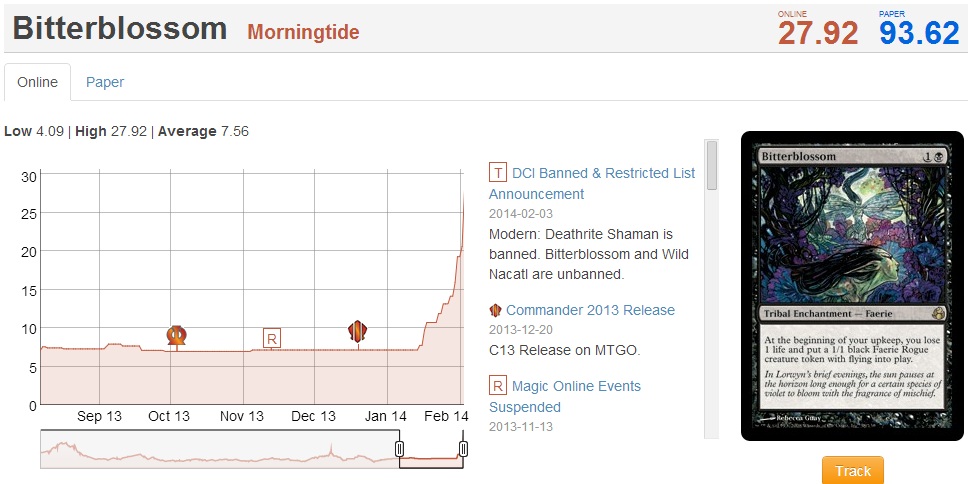
It’s a Modern-tastic episode as the gang is joined by Mox Reuby himself—Reuben Bresler (@moxreuby). With bannings and unbannings shaking up the Modern format, there is a lot to discuss. How much of it is finance, and how much of it is general speculation about what the Modern format will look like? You decide! So who plays devil’s advocate in what turns into most of the cast wanting to compliment Courser of Kruphix even more than the last guy? How does Reueben feel about Chromanticore? Will you be mailing Chromanticores to Jason like everyone else? What other overlooked banning is going to affect people? Was the early buyout of Bitterblossom due to bad, new speculators; good, old speculators; or dirty, rotten cheaters using insider information? Is Faeries going to be the new king of Modern? Find out the answer to all these ques-tions and more on a fun-filled episode that will have you saying, “That’s too many Picks of the Week, even for them.”

  • Reuben Bresler makes a special guest appearance (@moxreuby)
  • The Photoshop contest winners need prizes. What do they win? We still don’t know!
  • Picks of the Week go so deep I pluralized it and said “Picks” instead of “Pick.”
  • How will the banning of Deathrite Shaman affect Modern? Was it necessary?
  • How will the unbanning of Bitterblossom and Wild Nacatl affect Modern?
  • How will the banning of Sylvan Primordial in Commander affect how Jason casts Tooth and Nail?
  • What is Reuben doing with his newfound free time?
  • Is there a Bitterblossom-related conspiracy to go along with #mtgconspiracy?


Cabe Riseau produced the intro and outro music for Brainstorm Brewery.


Contact Us

Brainstorm Brewerywebsiteemailtwitterfacebook

Ryan Bushardemailtwitterfacebookgatheringmagic.com

Corbin Hosleremailtwitterfacebook – quitespeculation.com

Jason E Altemailtwitterfacebookgatheringmagic.com – quitespeculation.com

Marcelemailtwitterfacebook

Shot in the Dark at the New Modern

Buying season for Modern is here. Or long past, as some would like to say, as prices of perceived staples have already quadripled or more.

To say that there has been a cataclysmic shift in the Modern metagame due to the B&R announcements would be an understatement. Modern prices are shooting through the roof as speculation opportunities abound. The pro tour has yet to happen, but players have already begun to make their moves in getting into the archetypes they want to play, or the ones they think will do well.

But as speculators who are reluctant to stay on the sidelines, what are some of the possible changes that we are looking at?

Today, I’ll go over the current players in Modern, the up-and-coming players, and some of the less-playable decks, including guesstimates on what the effect of the banned list update will be. I will also name the speculation opportunities, if any, that may have emerged from the changes.

Affinity

Due to the introduction of [card]Bitterblossom[/card] as a tier-one contender, slower clocks and more attrition-based strategies have become worse in Affinity. [card]Etched Champion[/card] will remain as valid a card as ever, but [card]Thoughtcast[/card] might just be a bit slow. [card]Shrapnel Blast[/card] and [card]Galvanic Blast[/card] are looking like the better meta choice to punish life loss.

Speculation opportunities: I don’t see any real speculation opportunities here.

G/R Tron

Tron takes a huge hit in the new meta, being weak to both Zoo and Faeries. Mainboard [card]Relic of Progenitus[/card] is likely a plus due to the many graveyard strategies that will spawn. At the same time, [card]Pyroclasm[/card] is likely to be replaced by [card]Firespout[/card] because [card]Pyroclasm[/card] misses all of Zoo’s creatures.

Speculation opportunities: [card]Firespout[/card] is likely to be highly relevant in Modern, foil copes are already hovering around $5.

Melira Pod

Some argue that Melira Pod improved through the ban because half of its combo involved the graveyard, while others argued that it was already strong against [card]Deathrite Shaman[/card] decks anyway. Either way, Melira looks to contend for tier-one status in the new meta because of key cards like [card]Kitchen Finks[/card] and [card]Voice of Resurgence[/card] that are well positioned against expected strategies.

Speculation opportunities: [card]Birthing Pod[/card] reached $10 earlier in the year, but since then NM copies have fallen back down to $7 on TCGPlayer. [card]Voice of Resurgence[/card] seems great in the new meta, there is no way that foil [card]Voice of Resurgence[/card], a third-set, barely-drafted mythic, should be much lower than foil [card]Snapcaster Mage[/card], a first-set, heavily-drafted rare, if the cards are only one block apart.

Kiki Pod

Unlike Melira Pod, Kiki Pod is not reliant on the graveyard to combo off, although it did benefit from [card]Deathrite Shaman[/card] being banned since it still plays [card]Kitchen Finks[/card], [card]Murderous Redcap[/card], and [card]Glen Elendra Archmage[/card]. Not having to replace any cards in the deck is nice, and so is the option to Pod into [card]Magus of the Moon[/card].

Speculation opportunities: [card]Magus of the Moon[/card] looks to be a house against all the poor mana bases in Modern, and it will also prey on Faeries which lacks the [card]Polluted Delta[/card] to fetch for on-color basics. [card]Restoration Angel[/card]’s body will be much more relevant, as will be [card]Voice of Resurgence[/card] in the new Zoo/Faeries meta.

U/R Delver

Jeff Hoogland is optimistic about the future of this deck because of a suite of strong burn spells and the power boost that [card]Snapcaster Mage[/card] received due to the [card]Deathrite Shaman[/card] ban. While control is likely to weaken due to the introduction of [card]Bitterblossom[/card], aggro is strengthened, which improves the position of tempo strategies.

Speculation opportunity: [card]Sword of Light and Shadow[/card] may become more relevant in the Modern meta if [card]Bitterblossom[/card] takes over the format, and decks playing it can benefit in mirror matches from the life gain and creature recursion.

Splinter Twin

Splinter Twin remains powerful because it can end the game at will, regardless of how many faeries tokens are on the other side of the board. Because of the boost to [card]Snapcaster Mage[/card], I can see both the tempo and the combo variant being successful.

Speculation opportunity: I am a huge fan of foil [card]Steam Vents[/card] and foil [card]Sulfur Falls[/card] for the long-term, both of which look to be mainstays in the Modern format. The price of [card]Threads of Disloyalty[/card] has already jumped.

B/W Tokens

Tokens is likely to become one of the new tier-one archetypes due to the power of [card]Bitterblossom[/card]. Coupled with cards like [card]Zealous Persecution[/card], [card]Intangible Virtue[/card], and [card]Auriok Champion[/card], the deck is very hard to take down early and will grind out wins over time.

Speculation opportunities: [card]Windbrisk Heights[/card] is way too cheap for a card in Lorwyn that will likely be played as 3-4 of. Do be wary to sell non-foils into any hype as they will most likely to be printed in the Modern Event Deck.

Merfolk

If Corbin Hosler is to be believed, Merfolk is still a viable strategy, although weak to variations of Zoo. [card]Threads of Disloyalty[/card] and [card]Kira, Great Glass-Spinner[/card] are strong out of the board. [card]Master of Waves[/card] will continue to be a powerhouse if left alone, and [card]Aether Vial[/card] is a strong way to get around any form of control.

Speculation opportunities: I think Corbin got them all.

U/W/R Midrange

I don’t like how the deck is positioned against [card]Bitterblossom[/card] decks. This deck relies on the opponent to make the first move, whereas the player with [card]Bitterblossom[/card] in play does not have to do anything to win the game. [card]Geist of Saint Traft[/card] just seems bad against Zoo and Faeries because of its 2/2 body, while [card]Restoration Ange[/card] is just big enough to stop all the creatures in Zoo and play around Faeries.

Speculation opportunities: [card]Restoration Angel[/card] looks to be on the rise due to its relevant body. [card]Geist of Saint Traft[/card] looks to be on the rise because of Bant and Tribal Zoo, although I don’t know how relevant it’ll be in Modern. Promo [card]Lightning Helix[/card] is a good pickup because of how many potential decks will be playing it.

U/W/R Control

As with all decks that cannot end games in a quick fashion, [card]Bitterblossom[/card] is likely to generate enough advantage over time to eventually overrun the other player. Control strategies have not been as successful in Modern due to the vast variety of decks, and I don’t expect the new format to be solved quickly. [card]Wall of Omens[/card] is awesome in the new meta against Zoo and Faeries, though.

Speculation opportunities: [card]Lightning Helix[/card] is critical for stabilizing; the promo version looks like a sure bet to double because the card is likely to be played in multiple decks. [card]Wall of Omens[/card] also has a promo that may be promising if the card becomes more relevant.

Jund/Junk

Losing both the card [card]Deathrite Shaman[/card] and the efficacy of [card]Liliana of the Veil[/card] due to [card]Bitterblossom[/card] is a huge blow. That being said, [card]Abrupt Decay[/card] is now the best removal in Modern precisely for the reason that it deals with Faeries, Affinity, Tempo, and Zoo efficiently. [card]Tarmogoyf[/card] will also get a bump in power/toughness now that enchantments are likely to be played in a good number of Modern decks post-board ([card]Blood Moon[/card], [card]Threads of Disloyalty[/card], [card]Bitterblossom[/card]). The archetype is likely to remain a mainstay in Modern, although less dominant at the top tables compared to before the update.

Speculation opportunities: Foil [card]Abrupt Decay[/card] should not be worth less than foil [card]Deathrite Shaman[/card] if it sees more play in both Modern and Legacy. Others would argue for [card]Scavenging Ooze[/cad], but if everyone is speculating on them, it’s probably not a good spec.

Scapeshift

[card]Firespout[/card] will likely be main-deckable in the new meta—either that or [card]Anger of the Gods[/card] to wipe out all the [card]Voice of Resurgence[/card]s and [card]Kitchen Finks[/card]. [card]Cavern of Souls[/card] may become more relevant

Speculation opportunities: [card]Boseiju, Who Shelters All[/card], may become the answer to the disruptions in Faeries. The supply is running low

Burn

I daresay that Burn might now be a legitimate tier-one archetype with [card]Deathrite Shaman[/card] no longer being a card. Burn is also one of the few strategies that benefits from [card]Bitterblossom[/card] being widely adopted,

Speculation opportunities: Is there ever any speculation opportunity with Burn? Rhetorical question.

Living End

Losing public-enemy [card]Deathrite Shaman[/card] bodes well for the deck, but [card]Spellstutter Sprite[/card] and [card]Remand[/card] keeps the deck in check. The fact that other graveyard strategies will rear their heads mean that there will be more sideboard cards dedicated against the graveyard. Based on consistency, the deck will likely be top-tier since it can also beat graveyard hate.

Speculation opportunities: I don’t see any speculation opportunities here.

Naya/Zoo

Domain Zoo is either the smaller version with [card]Kird Ape[/card], [card]Loam Lion[/card], and [card]Wild Nacatl[/card] or the bigger version with [card]Lingering Souls[/card] and/or [card]Geist of Saint Traft[/card]. Personally, I feel that the smaller version is better positioned because it is able to run more burn spells, which will likely be very effective in the new meta because of various cards that cause life loss. Naya is bigger than Zoo, but where it lacks in speed it makes it up in having a greater resilience to [card]Lightning Bolt[/card] and a more stable mana base.

Speculation opportunities: Promo [card]Lightning Helix[/card] appears yet again alongside [card]Voice of Resurgence.

U/R Storm

Storm is likely to make a return due to absence of [card]Deathrite Shaman[/card], which eliminates the need for [card]Lightning Bolt[/card] in the board. As Craig Wescoe said on his stream, Storm is one of Zoo’s worst matchup, and he was playing Small Zoo with a curve that stops at two.

Speculation opportunities: [card]Past in Flames[/card] is a mythic that has yet to make any movement.

Tin Fins

With [card]Deathrite Shaman[/card] out of the way, half the enablers are more playable than before.

Speculation opportunities: [card]Goryo’s Vengeance[/card] can reasonably return to its previous peak at $15 and go on to do more if the deck performs well.

Dredgevine

Like it or not, Dredgevine will now be a real archetype, although a shaky one, due to its issues with consistency. While Dredgevine is better positioned against Faeries, Four-Color Gifts is better positioned against Zoo.

Speculation opportunities: Copies of [card]Vengevine[/card] are running low and will spike should the deck see any success, a likely scenario. Another card that is seemingly disappearing into thin air is [card]Bloodghast[/card], which is both a Vampire and a recurring creature.

Four-Color Gifts

Turn-three[card]Gifts Ungiven[/card] into turn-four [card]Elesh Norn, Grand Cenobite[/card] is enough to win most games. However, the deck is weak to counter magic and [card]Path to Exile[/card]. Where it loses to disruption, though, it wins against aggro because of the ability to [card]Gifts Ungiven[/card] for four different wrath effects. You can bet that players will be brewing to break this card with insane card advantage, like the [card]Tezzeret, Agent of Bolas[/card] variant seen on Channel Fireball.

Speculation opportunities: [card]Elesh Norn, Grand Cenobite[/card] has already risen substantially, but [card]Gifts Ungiven[/card] has remained at its previous level despite a rise on MTGO.

Infect

With Zoo and Faeries being a part of the meta, Infect will change quite a bit and likely run [card]Phyrexian Crusader[/card] in its 60 cards. Whether the deck will survive as an archetype is questionable, although I can see the mono-black version succeeding if Zoo becomes a major player in Modern.

Speculation opportunity: [card]Phyrexian Crusader[/card] seems like an absurd card against both Faeries and Zoo.

TL;DR: Link

Modern Overload

C+C Magic Factory #3 – Eternal Bargain Review

For the third installment of C+C, we’ll be reviewing the Eternal Bargain preconstructed deck, looking at the impact of new cards and notable reprints for Cube and Commander.  The first two installments can be found here and here.

Here’s a review of the grading system we’ll be using.  I’m switching it up to match the title, so from now on the first grade will be for Cube, the second for Commander.

Cube:

[A+]: First-pick card on power level alone or tier-one for associated archetype(s).

[A]: High-powered alone or in the context of two or more archetypes.

[B]: High-powered in the context of one archetype.

[C]: Role-filler in a niche archetype or mid-powered utility card.

[D]: Might see play in large or restricted lists (e.g. peasant)

[F]: Not playable in Cube.

Commander:

[A+]: Best in Class.  These cards are at the top of the list for any deck wanting the effect.

[A]:  Excellent card according to two or more of: power level, size-of-effect, card interaction, or politics.

[B]:  Excellent card according to one of: power level, size-of-effect, card interaction, or politics.

[C]:  Solid role-filler or theme-supporter.

[D]:  Playable, but better options exist.

[F]:  A knife at a gun fight.

Esper Deck: Eternal Bargain

arc1338_b

Commanders: [card]Oloro, Ageless Ascetic[/card] [F]/[A], [card]Sydri, Galvanic Genius[/card] [F]/[C], [card]Sharuum the Hegemon[/card] [F]/[A]

Proxy by Brandon Long

In Cube, none of these cards are going to challenge [card]Sphinx of the Steel Wind[/card] for the Esper slot, so let’s focus on their application for Commander decks.  Sharuum is a perfect if unexciting reprint here, fitting the artifact theme nicely and giving players another chance to obtain an Alara block mythic.  I’ve seen one Sydri deck so far, and after watching how it used her abilities, have concluded that Sydri fits in pretty much one deck: mana rocks into bigger mana rocks into big do-nothing artifacts.  Despite being linear, it nevertheless made for a good game and it was pleasing to play against a less popular general.  While I previously thought of Orzhov as the life drain color combo, I sense that Oloro will be popular enough that blue will get associated with the strategy from now on, though you could easily make Oloro the commander of BW lifegain and he’ll be good without ever getting cast.

I built an Oloro deck to help me remember triggers and still I find myself on turn five with the starting 40 life.  The command zone trigger is extremely powerful, and I see Oloro being the obvious choice for any Esper good-stuff build that also has no intention of casting him.  Yet, the decks that will want him most are those that seek to abuse his unstoppable trigger, as evidenced by the reprinting of [card]Well of Lost Dreams[/card] and [card]Ajani’s Pridemate[/card].  What keeps Oloro from the elusive A+ is that he’s actually pretty miserable once cast, as he’s expensive, on the small side, and too slow to really accrue significant card advantage unless you’re running additional life gain.  This last strategy seems bad, since the whole point of running Oloro is to get all your life gain in one place and just jam all the synergy cards.  That caveat aside, he works nicely with incidental lifegain such as [card]Prismatic Talisman[/card] or lifelink creatures.

New Cards

[card]Diviner Spirit[/card] [F]/[D]

See Mind Seize review .

[card]Serene Master[/card] [F]/[C]

As much as I want to give this guy a better rating, I feel he doesn’t do enough to be good.  The mechanic of using an opposing monster’s power against it is a perfect flavor fit for the card, but even then the master is comparable to [card]Fog Bank[/card], which isn’t particularly exciting for EDH and even less so for Cube.  At his best, he can hold off all the attackers he’d take in a fight and one that he wouldn’t, which is a nice ceiling for a two-mana defensive card.  However, finding a home will be difficult since most defensive decks would just rather load up on sweepers than entrust their fort to this fragile Bruce Lee.

[card]Tidal Force[/card] [F]/[C-]

The final installment in the Force cycle, Tidal Force has a less exciting trigger than his black counterpart, but one that will play better than it seems.  Tidal Force has deceptively many modes: it can give your best creatures pseudo-vigilance, help you leave mana up for your opponents’ turns, keep those opponents off offense or defense, and even go into full griefer mode by tapping karoo lands on upkeeps.  The main problem with this Force is that the good Forces essentially accrue card advantage while masquerading as big dumb vanillas.  I think this effect would be sweet on a card that could come out earlier, as anyone who has 5UUU to drop on a blue dude would rather just slam [card]Tidespout Tyrant[/card] and really ruin someone’s day.  In Cube, this card has to compete with much better options.

[card]Act of Authority[/card] [D-]/[C+]

At first glance, Act seems like a bad [card]Oblivion Ring[/card] with extra downside, but it has a few features which make this card quite solid in the right deck.  Firstly, there is no return to the battlefield clause, so once you get something, it’s “got.”  Secondly, you don’t have to pass it until you use the upkeep trigger, which means at its worst, it is a 1WW [card]Revoke Existence[/card]. In EDH, the difference between 1W and 1WW isn’t as keenly felt.  Lastly, if you can build your deck with few-to-no artifacts or enchantments, then this is a great card to have on the table as your opponents just pass it back and forth, netting you card advantage.  In most games, I expect it to be played to nuke a [card]Sol Ring[/card], then sit on the battlefield keeping other players off their best toys just by threat of activation.  In Cube, the effect is also good but the cost and sorcery speed will keep it from the big leagues.

[card]Curse of Inertia[/card] [F]/[D-]

See Mind Seize review.

Curse of Shallow Graves [C]/[A-]

See Power Hungry review.

[card]Curse of the Forsaken[/card] [D]/[F]

The first thing to notice about this card is how badly it compares to [card]Path of Bravery[/card] in any 1v1 game.  Focusing on political implications, we are again let down.  Gaining life is worth nowhere near a card, even if it stacks for each creature.  As an incentive, this curse is also a dodgy proposition, since for any player to whom the appeal of gaining life is attractive, so is the appeal of having blockers.  The best application of this card seems to be in a deck with cards like [card]Ajani’s Pridemate[/card] that benefit from multiple lifegain triggers, but once you go down that road, you’ll soon realize you just wasted two slots in your deck.

[card]Darksteel Mutation[/card] [D]/[C]

Darksteel Mutation is a nice design that presents another way to deal with problematic commanders other than tucking. That said, it’s card disadvantage in a format where spot removal is already card disadvantage, so whether or not you decide to run this card really depends on your meta and the sorts of commanders you play against.  In Cube, there has been some talk about this card and some lists are trying it out.  It’s not making my cubes since I support white aggro and giving my opponent an inviolable blocker doesn’t seem like a path to victory.  However, the card seems fine in W/x control, as it has a similar effect to [card]Journey to Nowhere[/card], a cube staple.

[card]Order of Succession[/card] [F]/[C+]

Cubes won’t run Order considering all the other broken [card]Control Magic[/card] effects, like the namesake card, [card]Treachery[/card], and [card]Vedalken Shackles[/card], but I could see this card finding a home in creature-light EDH lists. Obviously this card is best when your opponent is forced to take your 1/1 token or your nothing, so look to include this in decks that can work towards that board state with non-creature defense like [card]Propaganda[/card] and the freshly reprinted [card]Crawlspace[/card].  What makes this card much more attractive than [card]Juxtapose[/card] is that it involves the whole table and will undoubtedly lead to name-calling, sales-pitching, obfuscation, and some fun.

[card]Tempt with Immortality[/card] [F]/[D]

These Tempting Offer cards keep getting worse.  Tempt with Immortality suffers from a big problem: you can’t control the effect so this card might rot in your hand if an opponent has a Primordial in his or her ‘yard you can’t let out.  This problem works the other way too, since if you have the best targets, then no one will take the offer.  In theory, this tension could balance out the power level of accepting or not accepting the offer, but the upshot is that if you are the caster of Tempt with Immortality, then you would rather have [card]Rise from the Grave[/card] in almost every situation.  In Cube, we like to pay two mana or less to cheat our fatties into play.

[card]Toxic Deluge[/card] [A]/[B+]

And we have a winner! Second only to [card]True-Name Nemesis[/card] on hype, Toxic Deluge is an excellent card for Cube and EDH decks alike.  Prior to this printing, [card]Damnation[/card] was sold out in my area despite holding a $30 price tag, a fact which speaks to the demand for aggressively-costed black sweepers.  That Deluge is better than Damnation along several metrics (casting cost, scalability, ability to deal with indestructible creatures) puts Deluge squarely in the “better-than-expected” category.  In most Cube games where Damnation would be good, Deluge is just as good, with the life loss being offset by the mana reduction and ability to cast it a turn earlier.  However, where the card really shines is in reanimator decks where you can leave your fatty on the field while wiping your opponent’s board through a judicious choice of X.  The ability to kill indestructible creatures comes up more often in EDH, but there you have a larger life total to play with and you can bet it’s worth it to pay 11 life to get that [card]Blightsteel Colossus[/card] off the table.

Notable Reprints

[card]Divinity of Pride[/card] [F]/[B]

This reprint is kind of less interesting that it would have been had the card not been reprinted in Modern Masters, but Divinity is still nice for players that missed their chance the first or second time it came around.  Usually coming down as an 8/8 flying lifelinker for 5, the card has the power to make things happen before truly degenerate seven- and eight-drops hit the field.  Even though the clause is easier to turn on in a 40-life format, the card ends up at an appropriate power level rather than being completely unfair like [card]Serra Avatar[/card]. Divinity misses in Cube due to casting-cost violation.

[card]Kongming, “Sleeping Dragon”[/card] [F]/[D+]

Sadly, Kongming’s relevance is hampered by the modern-bordered power creep on creatures.  [card]Glorious Anthem[/card]-on-a-stick is an effect white weenie Cube decks would want, as well as certain aggressive EDH builds, but simply put, Kongming costs too much for too fragile a body.

Alter by BlackWingStudio

[card]Myr Battlesphere[/card] [A-]/[B]

Katamari, like the next reprint in [card]Sphinx of the Steel Wind[/card], is a great card for both 40-card and 100-card formats.  What makes the myr ball so good is that it provides significant board advantage even if it’s killed immediately, can be played fairly, and can be cheated out early off colorless mana acceleration or [card]Tinker[/card].

A key metric for whether or not a fatty is good for Cube is how many of the following cards it plays nicely with: [card]Tinker[/card], [card]Reanimate[/card], [card]Sneak Attack[/card], [card]Channel[/card], [card]Natural Order[/card], or various ramp cards. Consideration should only be given to those that can score a two or better on that quiz.  Battlesphere scores a solid five, as it even leaves behind value after a [card]Sneak Attack[/card].

[card]Sphinx of the Steel Wind[/card] [A-]/[B]

Even though it only scores a two on the “How can you cheat with me? Let me count the ways” test, the body Sphinx provides is so awesome that in many cubes, it has the Esper slot locked down.  What puts it over the top is the combination of vigilance and lifelink, as those two together can swing an aggro matchup even through an alpha strike.  Only bounce, [card]Control Magic[/card]s, and white spot removal deal with it in Cube, as it is impervious to green’s [card]Naturalize[/card] effects, all the burn and shatters, as well as most of black’s removal except [card]Hero’s Downfall[/card].  This card is still good in EDH, as it can take down any titan in a fight and still gives its controller offense, defense, and the happy end of 12-point life swings.

[card]Brilliant Plan[/card] [D]/[D+]

Though not particularly powerful or exciting, this P3K reprint is nice because it gives players access to some redundancy, should they want it.  My next Cube project is to build a 360-card beginner’s cube, and this sort of pared-down simple effect is exactly what that cube wants.

[card]Nevinyrral’s Disk[/card] [A-]/[A]

The original artifact bomb is back.  Not hitting planeswalkers has modified how this card gets played, as now players can craft a board state to take further advantage of the effect.  The entering tapped drawback is significant, but necessary to keep this card from being totally over the top.  Disk is solid as ever in both cubes and EDH decks, though I prefer the original art for the nostalgia factor.

[card]Phyrexian Reclamation[/card] [C]/[D+]

The best reprints are the ones that players either forgot about or were completely unaware of.  Phyrexian Reclamation falls into this category and there has been some talk of it getting adopted in Cube lists to bolster the ranks of [card]Oversold Cemetery[/card] and [card]Oath of Ghouls[/card] in graveyard and Braids strategies.  The mana on the activation hurts it a bit too much for my taste, but the ability to recur your [card]Shriekmaw[/card]s and [card]Bone Shredder[/card]s is undoubtedly powerful.

[card]Reckless Spite[/card] [C-]/[D]

Spot removal in multiplayer games is card disadvantage, and while Reckless Spite addresses that somewhat, it does so only slightly and at a hefty cost to your life total.  This card could have a home in peasant cubes by virtue of giving some card and tempo advantage to black.  Not being able to fire this off at a single creature in a pinch does hurt its chances, as dying to a green dinosaur with this in your hand would feel like digesting bicycle parts.

[card]Well of Lost Dreams[/card][F]/ [C+]

Though unplayable in Cube—except in a life gain decks where it would still be unplayable because no one would want to play it—this card is significant because many players with multiple EDH decks have one with either a life gain or life drain theme.  In those decks, this is one of the first cards to be included simply because of how efficiently it turns life gain into cards.  Being reprinted here should put this card back on the map for many players.

Overall – Value: [C+] / Playability: [C]

Eternal Bargain has a few winners, but the card quality drops pretty quickly after the first few big hitters.  There are some nice inclusions for Esper EDH players in Sphinx and Sharuum, but both have been reprinted since their original release and could already be obtained without too much difficulty.  Even [card]Nevinyrral’s Disk[/card] was only ever a few dollars.  Sydri has a very narrow application as a commander, which puts the value of this precon squarely on the shoulders of Oloro, [card]Toxic Deluge[/card], and the [card]Sol Ring[/card] and [card]Command Tower[/card] duo.  Luckily, Oloro is quite good and can be built several ways, and Toxic Deluge is excellent and has appeal across even more formats than [card]True-Name Nemesis[/card].  That said, you can get your Oloro for about $4, and Deluge for $13, giving you pretty much all the excitement of this product for just over half the MSRP.  All things considered, this points to Deluge as a solid trade target.

While there are several cards in this deck that mesh with the artifact and life gain themes, this deck works best if you salvage it for parts and build two separate decks. Overall, it lacks the focus that we saw in Power Hungry.

Contact:

Email: djkensai at gmail dot com

Twitter: @djkensai

Pitt Imps Podcast #54 – Laughing, Choking

Well on slow tournament week we decided to finally have Chewie on to share his Pre-Release story from Born of the Gods. Angelo shares his as well and Ryan sucks. We talk about the need(or lack of one) for seeded packs at a Pre-Release and put in our 2 cents on the B&R announcement.


Our Guest Chewie’s Twitter: @themanapool


Your hosts: Angelo & Ryan

Angelo’s Twitter: @Ganksuou

Ryan’s Twitter: @brotheryan

Show’s Email: [email protected]

Weekend of February 7-9 Review

This weekend marked the first in the tenure of Born of the Gods in Standard.  That being said, every Standard deck that managed a top-eight finish this weekend belonged to a preexisting archetype.  While I have no doubt that Born of the Gods will have a significant impact on the Standard landscape, it seems that one week was not enough time for the new brews to break into the upper echelon of Standard play.  The winning mono-blue list had a total of zero cards from Born of the Gods.  The same is true of the other copy of Mono-Blue Devotion that managed a top-eight finish this week. While mono-black pilots are in the process of modifying their 75 in order to better combat the new, often self-imposed hate in [card]Bile Blight[/card], mono-blue has seemingly supplanted mono-black as the current “best deck.”  While we can anticipate a significant amount of change in the coming weeks, mono-blue seems quite viable as is.

Standard

SCG Open Nashville Standard Decklists

If we want to find innovation from the results from this weekend, it begins with the second-place green-red list piloted by Ken Ketter.  This past week, I read several articles attempting to assess the power level of [card]Courser of Kruphix[/card].  This card was initially very polarizing—players either felt that it was strong or overrated.  I feel that the outcome of this week’s tournament points out the power level of this card, and as I feel this archetype will have a place in the format, [card]Courser of Kruphix[/card] looks as it will become a real format staple.  Without getting too deep into an assessment of the card itself, if the G/R deck continues to play [card]Courser of Kruphix[/card] as a four-of, then expect it to increase in price.Courser of Kruphix

Another card that is played in the G/R shell that is trending upward is [card]Scavenging Ooze[/card].  Scavenging Ooze hasn’t necessarily gotten any better in Standard, but due to the Modern banning of [card]Deathrite Shaman[/card], [card]Scavenging Ooze[/card] stands to gain in value as a result. Foil promo copies are significantly cheaper than the M14 or Commander set versions, and those may be the copies to target right now.

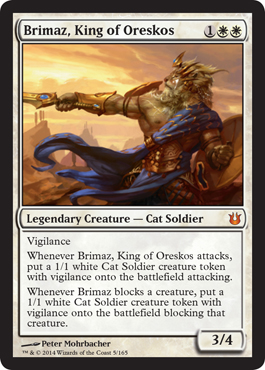
Although it didn’t post particularly impressive results, finishing in 31st, Brian Braun-Duin’s Bant Walkers decklist, from a pure power level, is staggering.  I think the cost of the deck is equally impressive and this may actually prevent too many players from building this deck, at least in the short term.  That being said, as a financier, I really don’t see any room for upward movement in virtually any card in the deck.  This deck is one of several jamming [card]Brimaz, King of Oreskos[/card] this week, and while I think he is a fine man, I think that the current price point is partially due to hype.  Unless you intend to play them and are willing to pay a premium, or are looking to trade them very quickly, I don’t recommend acquiring this card right now.  It is certainly near, if not at the top of the price range for this card during his run in Standard.  Even [card]Voice of Resurgence[/card] capped out near the current price for the legendary cat soldier.  That card was printed in a set that was opened and redeemed in very small numbers with very few other chase cards in the set.  Time will tell, but I do not believe that the same factors will apply with Born of the Gods.  Finally, this deck is lacking some degree of synergy.  While it plays perhaps the most powerful cards in Standard, the deck as a whole could potentially become more effective swapping high-cost threats for cheaper, more reactive spells.  Of course, following the old adage, “There are no wrong threats, only wrong answers.”  It is probably more effective at this juncture to be more threat dense.

Legacy

SCG Open Nashville Legacy Decks

With [card]True-Name Nemesis[/card] running around, life has gotten pretty difficult for the RUG Delver player.  But somehow, despite the hostile environment, Taylor Scott was able to win the Legacy open.  I don’t think that this will be the deck we see win the next open, but isn’t that the beauty of Legacy?  There are just so many viable decks in the format.  If I were to play a [card]Delver of Secrets[/card] deck next weekend, it would be something better equipped to deal with [card]True-Name Nemesis[/card].  BUG Delver would be my personal recommendation, one similar to the sixth-place list piloted by Scott Tompkins.  The 25th spell in BUG Delver is more or less interchangeable, and Tompkins optioned for a single copy of [card]Gitaxian Probe[/card].  Scoop all the copies of the FNM promo that you can find, this is a can’t miss.  Long-term, this card will appreciate.  Legacy players love to pimp their decks.Spirit of the lab

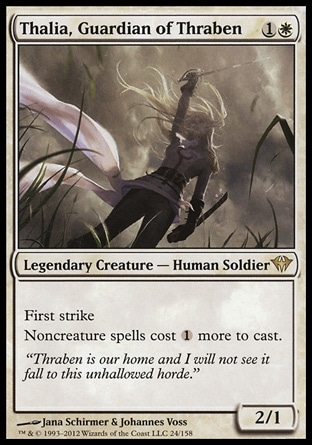
Andrew Shrout frequently pilots Death and Taxes in Legacy.  I was curious to see how [card]Spirit of the Labyrinth[/card] performed, and Shrout did not shy away from the challenge.  Running four copies in his main deck, Shrout was the only Death and Taxes pilot to post a reasonable finish at the open, so the jury is still out on the card.  I would initially assess the card through the same prism as [card]Thalia, Guardian of Thraben[/card].  The initial/current price for this card is likely a little high for now, and there will likely be a better time to buy in.

I am looking forward to seeing more innovation with Born of the Gods.  I am also looking forward to seeing the impact that Born of the Gods has on Legacy, Modern, and Standard.  Let me know what you think about this weekend’s results in the comments, and follow me on Twitter!


Getting L.U.C.K.y: Buying Into Hype

The time around the release of a new set is one of the best to be involved with our favorite trading card game. New product being opened, new decks breaking the format, and best of all, money to be had. The question is, what do I buy? What will be good in the upcoming meta? Hopefully I’ll be able to shed some light on that today.

In the past, I have found myself buying into hype every time a new set comes out. Whenever a pro player posts on Twitter that they are excited about a card or deck, or just when Woo is brewing, I tend to pay attention. Many times, I fall into the trap of letting it affect the financial side of my life. The truth is that we really have no idea what is going to happen to the meta.

Odds are, you’re not a professional magic player, so don’t pretend to be. Pro players will be working hard to come up with new decks or add tech to old ones. Let them figure it out. Most of the time, cards that are obvious tend to be inflated. Let them do the hard work and don’t try to beat them to it. Odds are that you won’t.

Alarm Clock

Look for sleepers

Look for sleepers. Usually your best bet for turning a profit is in the bulk or nearly-bulk section. [card]Desecration Demon[/card], for instance, was a complete sleeper. Remember that at one point it dropped from $2.50 to $2.00 before it ever shot up to $10.00. [card]Nightveil Specter[/card], [card]Nykthos, Shrine to Nyx[/card], [card]Voice of Resurgence[/card], and [card]Mutavault[/card] all dropped at least a little before getting to where they are now. Sure, you could have the next [card]Sphinx’s Revelation[/card], but you’re more likely to have [card]Niv-Mizzet, Dracogenius[/card]. Go for the guarantee.

Listen to the podcast. Corbin, Jason, Marcel, and Ryan know what they are talking about. Two of them supplement their income with Magic—for the other two, it is their income. They have a ton of collective experience, so for me, their word is worth ten times that of random people from Reddit. (Not to say that people on Reddit have no idea what they’re talking about, or never catch onto to something, just not nearly as often as the Brew Crew does.)

Pay to get on the Quiet Speculation forums. This is one of the single most valuable resources I have in my toolbox. Having to pay for access guarantees that most of the people on the site make more than $12 a month from Magic. The people you end up talking to have a clue. They aren’t just some random player with $3,000 invested into Magic and only one Standard deck to show for it. They didn’t just stumble on the site and want the world to know their opinion. They actually have invested something into the financial end of the game. Listen and participate—you will be surprised what you learn.

Chalkboard with formulas

The more you know, the more opportunity you have to profit

Knowledge = Power and Money. The more that you know about the game, or the financial aspects of it, the better off you are. Knowing more can’t hurt profits, it can only grow them. Look everywhere you can for knowledge (and be wary of where it comes from). Even social sites like Reddit and Twitter can offer you something. The worst thing that you can do is close your ears and eyes to the world around you and try to figure it out on your own.

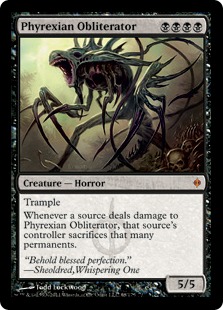
Diversify your portfolio. Where most people (myself included) seem to get screwed up is when we are all-in on something. Risk management says to invest in multiple things so one bad call doesn’t screw you. If you went all-in on [card]Aluren[/card], then you are now stuck with three-fifths of what you had (because buylisting is about the only way now). Conversly, if you went partial into [card]Aluren[/card], [card]Phyrexian Obliterator[/card], [card]Goryo’s Vengeance[/card], and [card]Niv-Mizzet, Dracogenius[/card], you would be fine right now.

In the end you will end up getting far more L.U.C.K.y by staying smart about your speculations rather than buying into hype. It’s up to you to get L.U.C.K.y.

Question: What are you speculating on from Born of the Gods? What about cards from previous sets that will be affected by Born of the Gods?

Brewing with Born of the Gods, Part 2

Welcome back for part two of Brewing with Born of the Gods. You can read part one here. Once again, I can’t provide tuned lists or sideboards, as there’s no way I could test that much, but I can provide some suggestions to consider for each sideboard. I’ve updated a couple of the top-tier decks this time, as well. That way, we’ll have an idea of where those decks are going with the new cards.

[deck title= Naya Midrange]

[Creatures]
4 Elvish Mystic
4 Voice of Resurgence
4 Sylvan Caryatid
3 Brimaz, King of Oreskos
2 Polukranos, World Eater
2 Trostani, Selesnya’s Voice
3 Ghor-Clan Rampager
3 Stormbreath Dragon
[/Creatures]

[Spells]
2 Selesnya Charm
3 Xenagos, the Reveler
4 Advent of the Wurm
2 Elspeth, Sun’s Champion
[/Spells]

[Land]
4 Temple of Abandon
4 Temple of Plenty
4 Sacred Foundry
4 Stomping Ground
4 Temple Garden
4 Forest
[/Land]
[/deck]

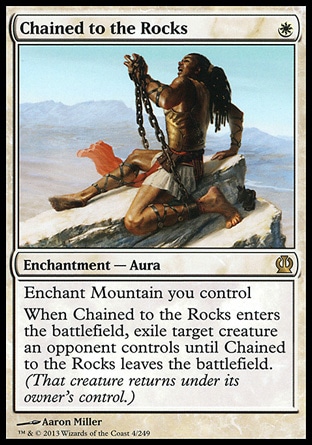
Sideboard Suggestions: [card]Boros Charm[/card], [card]Chained to the Rocks[/card], [card]Mizzium Mortars[/card], [card]Revoke Existence[/card].

Naya just keeps getting all kinds of fun toys. Unfortunately, they can’t all fit in the same deck due to most of them costing so much mana. One that does fit quite well, though, is [card]Brimaz, King of Oreskos[/card], since he’s an early drop that helps create a lot of board advantage. If Naya doesn’t pick up with this set, it will soon, as it is the number one deck in Theros Block Constructed tournaments right now.

[deck title= Boros Aggro]

[Creatures]
4 Dryad Militant
4 Firedrinker Satyr
4 Rakdos Cackler
4 Soldier of the Pantheon
4 Daring Skyjek
4 Boros Reckoner
3 Brimaz, King of Oreskos
[/Creatures]

[Spells]
4 Boros Charm
4 Lightning Strike
4 Searing Blood
[/Spells]

[Land]
4 Sacred Foundry
4 Temple of Triumph
2 Mutavault
5 Mountain
6 Plains
[/Land]
[/deck]

Sideboard Suggestions: [card]Legion’s Initiative[/card], [card]Mizzium Mortars[/card], [card]Revoke Existence[/card], [card]Skullcrack[/card].

Boros Aggro is another deck that greatly benefits from [card]Brimaz, King of Oreskos[/card]. [card]Searing Blood[/card] is also another solid addition that keeps the board clear for your troops to march to victory. While I don’t see this deck getting a lot of play, it will show up and surprise its way to victory.

[deck title= Mono-Black Aggro]

[Creatures]
4 Tormented Hero
4 Rakdos Cackler
4 Rakdos Shred-Freak
4 Pack Rat
4 Pain Seer
4 Mogis’s Marauders
4 Xathrid Necromancer
[/Creatures]

[Spells]
4 Thoughtseize
4 Bile Blight
2 Hero’s Downfall
[/Spells]

[Land]
4 Mutavault
18 Swamp
[/Land]
[/deck]

Sideboard Suggestions: [card]Duress[/card], [card]Gild[/card], [card]Lifebane Zombie[/card], [card]Pharika’s Cure[/card].

Mono-Black Aggro is a serious consideration now. It has an aggressive element while still being able to run [card]Pack Rat[/card] and [card]Thoughtseize[/card] quite effectively. This deck also gains [card]Pain Seer[/card], to help generate card advantage, and [card]Bile Blight[/card], which is one of the best removal spells we’ve seen in Theros block so far. I suspect this may replace some of the other B/x aggro decks in the format, due to having an easier time with its mana base.

[deck title= Black Devotion]

[Creatures]
4 Pack Rat
4 Nightveil Specter
4 Desecration Demon
3 Mogis, God of Slaughter
4 Grey Merchant of Asphodel
[/Creatures]

[Spells]
4 Thoughtseize
3 Devour Flesh
4 Hero’s Downfall
4 Underworld Connections
[/Spells]

[Land]
4 Temple of Malice
4 Blood Crypt
4 Mutavault
14 Swamp
[/Land]
[/deck]

Sideboard Suggestions: [card]Drown in Sorrow[/card], [card]Duress[/card], [card]Pharika’s Cure[/card], [card]Slaughter Games[/card].

The boogeyman of the format, Mono-Black Devotion, gets some new firepower too, which is pretty scary, considering how dominant it has been the last few months. I, for one, hope it didn’t gain enough to keep it at the top of the heap, as I would like to see a more diverse variety of decks in Standard. Notably, it can now splash any color except green with scry lands—and green will be possible in a few months when the next set is released.

[deck title= Bant Control]

[Creatures]
1 Aetherling
[/Creatures]

[Spells]
3 Syncopate
3 Last Breath
4 Detention Sphere
4 Dissolve
4 Sphinx’s Revelation
4 Supreme Verdict
4 Jace, Architect of Thought
3 Kiora, the Crashing Wave
3 Elspeth, Sun’s Champion
[/Spells]

[Land]
4 Temple of Enlightenment
4 Temple of Mystery
4 Breeding Pool
4 Hallowed Fountain
2 Temple Garden
3 Mutavault
4 Island
2 Plains
[/Land]
[/deck]

Sideboard suggestions: [card]Gainsay[/card], [card]Glare of Heresy[/card], [card]Selesnya Charm[/card], [card]Voice of Resurgence[/card].

This is more Azorius Control splashing green for [card]Kiora, the Crashing Wave[/card], but she is really quite good in this kind of deck. The sideboard also opens up for cards like [card]Voice of Resurgence[/card] to fight other controls decks, and [card]Selesnya Charm[/card] to exile those beefy monsters and pesky gods. I won’t be surprised when Azorius Control decks ditch black and [card]Dark Betrayal[/card] for green and [card]Kiora, the Crashing Wave[/card].

[deck title= Gruul Monters]

[Creatures]
4 Elvish Mystic
4 Sylvan Caryatid
4 Boon Satyr
4 Ghor-Clan Rampager
3 Polukranos, World Eater
4 Stormbreath Dragon
3 Xenagos, God of Revels
[/Creatures]

[Spells]
2 Flesh // Blood
2 Mizzium Mortars
4 Domri Rade
3 Xenagos, the Reveler
[/Spells]

[Land]
4 Stomping Ground
4 Temple of Abandon
2 Mutavault
7 Forest
6 Mountain
[/Land]
[/deck]

Sideboard Suggestions: [card]Chandra, Pyromaster[/card], [card]Mistcutter Hydra[/card], [card]Ruric Thar, the Unbowed[/card], [card]Unravel the Aether[/card].

Go big or go home—that’s the motto of the Gruul Monsters deck. The addition of [card]Xenagos, God of Revels[/card] to this deck makes it that much more potent. Now you too can be swin for fourteen with a hasted [card]Polukranos, World Eater[/card], bloodrushed by a [card]Ghor-Clan Rampager[/card] on turn five. This deck will likely continue to be a recurring monster in the format, as it has been in the past.

[deck title= Archangel Combo]

[Creatures]
4 Elvish Mystic
4 Voice of Resurgence
4 Kiora’s Follower
3 Brimaz, King of Oreskos
4 Fathom Mage
4 Horizon Chimera
4 Archangel of Thune
[/Creatures]

[Spells]
4 Gods Willing
2 Savage Summoning
4 Commune with the Gods
[/Spells]

[Land]
4 Temple of Mystery
4 Temple of Plenty
4 Breeding Pool
4 Hallowed Fountain
4 Temple Garden
3 Forest
[/Land]
[/deck]

Sideboard Suggestions: [card]Aetherize[/card], [card]Centaur Healer[/card], [card]Detention Sphere[/card], [card]Unflinching Courage[/card].

Turn 5: untap, draw, kill you…that’s what the Archangel Combo deck wants to do, but now it has more options to be able to play as a normal aggro deck. For those who don’t know the combo, let me break it down for you. When you gain a life, [card]Archangel of Thune[/card] lets you put a +1/+1 counter on all your creatures, then you draw a card from putting a +1/+1 counter on [card]Fathom Mage[/card], then you gain a life from [card]Horizon Chimera[/card] because you drew a card, which starts the whole chain over again until you have lots of cards, life, and giant monsters. While it doesn’t see much play, it does keep getting more toys to make it a pretty appealing option.

[deck title= Grixis Control]

[Creatures]
1 Aetherling
[/Creatures]

[Spells]
3 Quicken
2 Syncopate
3 Far//Away
3 Mizzium Mortars
4 Ashiok, Nightmare Weaver
4 Dissolve
3 Drown in Sorrow
3 Hero’s Downfall
4 Jace, Architect of Thought
2 Ral Zarek
1 Whelming Wave
3 Opportunity
[/Spells]

[Land]
4 Temple of Deceit
4 Temple of Malice
2 Blood Crypt
4 Steam Vents
4 Watery Grave
6 Island
[/Land]
[/deck]

Sideboard Suggestions: [card]Bile Blight[/card], [card]Gainsay[/card], [card]Slaughter Games[/card], [card]Thoughtseize[/card].

So far, Grixis Control hasn’t seen much play because most of the things it can do, Azorius or Esper Control can do better. But a deck doesn’t always have to do certain things better than others to be a good deck. I wouldn’t be surprised to see someone playing Grixis over some of the other control options currently available. It gets a fairly unique set of spells to keep the board clear. The cards that really give it a good push are [card]Drown in Sorrow[/card], which can keep the board clear of small creatures, and [card]Whelming Wave[/card], which bounces every creature that sees play except [card]Mutavault[/card].

[deck title= Blue Devotion]

[Creatures]
4 Cloudfin Raptor
4 Judge’s Familiar
4 Frostburn Weird
4 Tidebinder Mage
4 Nightveil Specter
4 Thassa, God of the Sea
4 Master of Waves
[/Creatures]

[Spells]
2 Rapid Hybridization
4 Fated Infatuation
2 Bident of Thassa
[/Spells]

[Land]
4 Temple of Deceit
4 Watery Grave
4 Mutavault
12 Island
[/Land]
[/deck]

Sideboard Suggestions: [card]Dark Betrayal[/card], [card]Gainsay[/card], [card]Thassa’s Rebuff[/card], [card]Thoughtseize[/card].

The other boogeyman of Standard, Mono-Blue Devotion also got a few new toys. While cards like [card]Thassa’s Rebuff[/card] may or may not end up in the main deck, [card]Fated Infatuation[/card] is destined for abuse with [card]Master of Waves[/card] to make even more tokens at instant speed. Other nice tricks are using [card]Fated Infatuation[/card] to make instant-speed [card]Tidebinder Mage[/card]s or using it as a [card]Rampant Growth[/card] by copying a [card]Mutavault[/card].

[deck title= Orzhov Humans]

[Creatures]
4 Soldier of the Pantheon
4 Tormented Hero
4 Cartel Aristocrat
3 Imposing Sovereign
4 Pack Rat
4 Pain Seer
3 Banisher Priest
4 Xathrid Necromancer
[/Creatures]

[Spells]
4 Bile Blight
3 Spear of Heliod
[/Spells]

[Land]
4 Godless Shrine
4 Temple of Silence
4 Mutavault
4 Plains
7 Swamp
[/Land]
[/deck]

Sideboard Suggestions: [card]Hero’s Downfall[/card], [card]Sin Collector[/card], [card]Spirit of the Labyrinth[/card], [card]Thoughtseize[/card].

Finally, we have Orzhov Humans, bringing back currently underused gems like [card]Cartel Aristocrat[/card] and [card]Imposing Sovereign[/card] while allowing some new toys like [card]Pain Seer[/card] and [card]Bile Blight[/card] to really shine. This deck is pretty customizable, with cards like [card]Orzhov Charm[/card] and [card]Brimaz, King of Oreskos[/card] not making the cut in the above list. This is another deck that can use the [card]Pack Rat[/card] and [card]Thoughtseize[/card] two-card whammy we’ve been seeing in Standard for a while now. It also has the ability to just go with a resource denial plan against control decks. Using [card]Sin Collector[/card] and [card]Thoughtseize[/card] to disrupt your opponents’ hands and [card]Spirit of the Labyrinth[/card] to keep them from drawing a bunch of extra cards is pretty powerful.

So Many Brews

That’s all I have for Born of the Gods, but expect more brews once we get Journey into Nyx in May. I always have a ton of fun brewing, and as long as people keep reading, I’ll keep writing. If you have any questions or comments, please feel free to leave them for me and I will try to get back to everyone.

Thanks for Reading,

Josh Milliken

@joshuamilliken of Twitter

Serum Vision: Brewing Methods 201

Hello, everyone, and welcome back to Serum Visions!

Last week we took a look at some introductory methods of making beer: the can, the kit, and the steep. If anyone has taken a shot at making their own beer—whether through inspiration from this series or as long-time home brewer—leave me a message in the comment section. I’d love to hear what you’ve done so far.

This week, I was planning on going over a few methods of making beer, but I ended up only being able to cover one: the partial mash. This works out well because it covers much of the information I’ll be referring to while talking about all-grain brewing next time. All-grain brewing can be a real spectacle! When you go all the way, you end up with what is called a brew sculpture. It’s a beautiful thing and it deserves its own article. But today we will talk about the beginning of my adventure…


The Partial Mash

The next step up from the steep method we went over last week is the partial mash. This was the first beer I ever made. After I learned the full scope of how disastrous home brewing could be, I took a step back, did a lot of reading, and made a few steep batches before diving back into partial mashing. These days, because I am working in a much smaller space (in an apartment and not my parent’s kitchen), I switch back and forth between steep and partial-mash beers. They both make a very good product. Which method I choose depends on how ambitious I am feeling, or whether I am teaching someone a certain method.

To understand what a partial mash is, you need to understand that all of the grains used to make beer have been mashed at some point.  When you make a partial-mash beer, you are extracting a portion of the total sugar that will be turned into alcohol from malted grains. The other portion comes from malt extract.

A Couple Terms

Mash: the process where your grains soak in hot water to convert their starches to fermentable sugars. The sugars absorb into the water to create wert.

Malt Extract: Wert that comes off of mashed grains and has been boiled down to a very high sugar concentration, thus becoming liquid malt extract (LME). It can be boiled down to the point where it becomes a solid and processed to be a powder. This is called dry malt extract (DME).

Strike Temperature: This is the temperature of the water before you add your grist, or milled grains. It takes into consideration the temperature difference between the grains and the water to ensure that when the grains are added to the water, their temperature equalizes to your exact mash temperature. This temperature needs to be very precise.

Various Ways One Could Skin this Cat

The Stovetop Mash

One way of doing a partial mash is in your boil kettle, most likely a pot. You start by adding the proper amount of water to your pot, around 1 1/3 pints (or 630 ml) per pound of grain, and bring it up to your strike temperature. You then mash in—slowly add your grains to the hot water—and make sure you hit your mash temperature. If it’s too hot, add some ice. Too cold? Turn up the heat for a minute. If you are doing a stovetop mash you would need to keep a very close eye on the temperature with a thermometer, making sure the temperature does not fluctuate more than a couple degrees. If this sounds like a serious pain in the ass, you’re right. If you are doing it this way, which I did for a long time, you’ll need to raise the heat on the element if it dips below your mash temperature and take it off the element if it rises above it.

The Mini-Mashtun

Another option is to get a picnic cooler with a spigot on the bottom. The idea here is that you add your grains and hot water to the cooler and they balance out to their mash temperature. When you put the lid on, the insulation of the cooler keeps the temperature with no fuss.  A few modifications do need to be made to the cooler, however. You need to either add a false bottom and drain with the spigot, or rig up some sort of straining system. I use a brand new stainless steel plumbing braid with the rubber hose removed, clamped to a small copper pipe that fits through a rubber stopper. Place the stopper in the spigot hole from the inside, then add a piece of hose to the external piece of the pipe with a hose clamp to keep the water from spilling everywhere. An example of a ball-valve version of this setup can be found here.  If you like to jimmy rig things to serve unintended purposes, like [card]Keen Sense[/card], guttersnipe and fossil find, you are going to love being a home brewer!

The Hybrid

Quick aside: I’d be curious what images come to your mind when you think of a stovetop picnic cooler method. Leave a comment?

In the spirit of jimmy rigging things, you can come up with any number of ways of getting your mash done. Sometimes my mini-mashtun has been too small for the amount of grains I wanted to mash. In this case, I’ve used a hybrid stovetop-cooler method. Let’s call it the insulated-pot method. I’ve had great success putting my pot in a box that has been lined with towels after achieving mash temp on the stove top. This is as about as hack as you can imagine, but in the end it made beer, and it was good!

The Sparge

After you’ve mashed for the hour, you strain your wert and move into sparging. This is a fancy word that means rinsing off the remaining sugar that has stuck from the grains. It would be a rather unfortunate event if any of the very-fermentable dextrose (VFD), the sugar that comes from corn, were left on the mashed grains. There are many methods available for sparging which we won’t discuss here. Simply stated, you heat your water up to 170 degrees and pass it over your grains to extract the last bits of VFD and other sugars, then add that to your other wert before the boil. From here, you continue on as you would as if you were doing a steep, where you boil until you reach your 15 minute mark. Then take the pot of the stove, add the malt extract, and stir until it’s dissolved. Finally, bring it back up to a boil, boil for another 15 minutes, and cool.

This may seem like a lot of extra work to come to the same result of drinking homemade beer. But as I stated in my previous article, you are able to exact a far greater amount of control over your beer this way. For instance, there are a multitude of different base malts, all of which have distinct characteristics. If you are steeping and using malt extract, you will only get the character of the specialty grains you are using and whatever base malt was used to make the extract. Again, this will make good beer, it just wont be very precise. If you wanted to make a beer with exactly 4% alcohol but you wanted to use some corn to lighten the flavor, you’d need to mash it to get that result. Another reason may have to do with the fact that the temperature at which you mash your grains plays a massive part in how your beer will turn out. If you want a sweeter beer, you need to mash at a slightly higher temperature. A dryer beer requires mashing at a slightly lower temperature. None of these ends can be achieved by steeping and adding malt extract alone. Furthermore, unless you are doing an all-grain batch, where you mash for 100% of the fermentable sugar, you will not get exactly the result you are looking for if it is outside the spectrum of the malt extract’s fermentability.

I don’t want to promise too much for next time because it may turn out that going over the brew-in-a-bag process takes an entire article as well. So instead I’ll say coming soon to a Magic finance website near you: brew in a bag, all grain, and the Tassimo of home brewing!

As always everyone, thanks for hangin’.

Andrew

P.S. Go make your own beer!

The Financial Five: Born of the Gods

It’s the first set of 2014! The second installment of Theros block, Born of the Gods, is here, ready to improve your favorite Standard brew.  More importantly for MTG financiers, a whole batch of potential investments are waiting for speculation. Here are my five picks for a beneficial Born of the Gods speculation session (say that five times fast).

[card] Spirit of the Labyrinth [/card] ($6)

spirit of the L

Looks like Wizards of the Coast (WotC) just made [card]Brainstorm[/card] an even harder card to play. Articles, books, and long-winded conversations have discussed how [card]Brainstorm[/card] “should” be played. Now we can just stop playing it all together! I’m joking, of course. Let’s be honest, we know this is to limit the power of [card]Sphinx’s Revelation[/card] in Standard (with maybe a slight kick below the belt to blue Legacy mages). I don’t see its value as much as other Standard staples. Standard control decks have more than enough answers to creatures without bonuses (e.g, [card]Voice of Resurgence[/card]) or protection (e.g., [card]Blood Baron of Vizkopa[/card]).

However, this is a $6 rare that limits powerful blue-based staples in all three constructed formats (Standard, Modern, Legacy). You having an [card]Aether Vial[/card] on two just might be the first time you pray your opponent is holding a [card]Brainstorm [/card].  For so long, the decision was when to [card]Brainstorm[/card], not can I [card]Brainstorm[/card]?

This are staple cards that [card]Spirit of the Labyrinth[/card] affects in some manner:

Standard: [card]Sphinx’s Revelation[/card], [card]Azorius Charm[/card], [card]Underworld Connections[/card], [card]Erebos, God of the Dead[/card]
Modern: [card]Serum Visions[/card], [card]Izzet Charm[/card], [card]Faithless Looting[/card], [card]Vendilion Clique[/card], [card]Electrolyze[/card] , [card]Sword of Fire and Ice[/card] , [card]Chromatic Star[/card] ,[card]Chromatic Sphere[/card], [card]Relic of Progenitus[/card]
Legacy: [card]Brainstorm[/card], [card]Ponder[/card], [card]Jace, the Mind Sculptor[/card], [card]Careful Study[/card], [card]Vendilion Clique[/card], [card]Sylvan Library[/card]

With an effect on this many staples, I find a $6 price tag more than reasonable.

[card]Whelming Wave[/card] ($1)whelming wave

No, I don’t have a kraken or leviathan deck to exploit the last half of this card. What I do have is a global bounce spell that provides tempo and safe haven for the non-creature permanants that take up a large amount of your control deck. I don’t see a home for it right now, but do expect a shift from WotC in future Standard. I know you all want to say that [card]Jace, Architect of Thought[/card], was a powerful card all along and you saw his high amount of play coming, but I don’t believe most of you. When WotC makes a pool of cards for standard, I’d like to think they intend to make half that pool strong at release and the other half strong after the next rotation. It makes sense to maximize profits and keep us buying, trading, and selling cards. [card]Whelming Wave[/card], to me, is a potential future Standard staple. At a bulk price, you might as well believe me!

[card]Oracle of Bones[/card] ($1)oracle of bones

Honestly, not a huge fan of the “punisher” cards that WotC transformed into the mechanic, tribute. This smores-making minotaur will likely make you call a judge for slow play when your opponent that can’t seem to decide how he would like to die. Are you holding two burn spells or are the two cards left in your hand a couple sandbagged lands?

This card is no [card]Hellrider[/card], but it does fit in a variety of red-based strategies, both viable and absent, in current Standard. This card could win you more games than it should due to your opponents’ terrible decision making, and I foresee this oracle finding a home in a red deck near you. When [card]Flesh // Blood[/card] players find out this guy casts both sides of a fuse card, I see a demand of far more than a bulk rare price. It may not cast spells with overload, but I wouldn’t count out an increase in demand, even if the source is primarily from casual players.


[card]Flame-Wreathed Phoenix[/card] ($6)flame-wreathed

I give to you: [card]Stormbreath Dragon[/card]’s best bodyguard! This is a four-drop flier that can fight through a [card]Nightveil Specter[/card] no matter what your opponent chooses. Opponent doesn’t pay tribute? Sacrifice a creature to tap [card]Desecration Demon[/card] and get in. Opponent pays tribute? Your phoenix will most likely eat a removal spell and clear the way for your dragon next turn. [card]Ash Zealot[/card], [card]Boros Reckoner[/card], [card]Flame-Wreathed Phoenix[/card], and [card]Stormbreath Dragon[/card] could be a commonly occurring curve out in upcoming Standard. Even when [card]Brimaz, King of Oreskos[/card], was spoiled, I still thought Phoenix would be a prime candidate for chase mythic of the set. If it sees play in a deck, I see nothing short of a playset. That said, the potential in a large price spike is something I am willing to invest in.


Uncommons (<$1)

bile blightsearing blooddrown in sorrowunravel the aetherfanatic of Xkioras follower

These cards are proof that this set is a miniature tool box for Standard players looking for a format shake up without having to invest in a whole new deck or multiple high-dollar chase rares. I recommend going ahead and picking up a playset, as well as any extras you can pick up for free or as throw-ins. I can’t even recall the amount of [card]Burning-Tree Emissary[/card]s I have turned into [card]Boros Reckoner[/card]s or shock lands.

Final Thoughts

Though the power of this set as a whole may feel underwhelming, I do trust that WotC has a plan to bring some of these cards from rags to riches during upcoming sets. The cards in Born of the Gods give every format just enough to entice boxes, packs, and singles to sell. The puzzle we must solve is determining what cards will be destined for greatness.

If you plan to travel to Nashville the weekend of February 8 for the SCG Open, don’t hesitate to send me a Tweet or leave a comment to set up a hearty handshake and a free Tap N Sac lifepad to keep track of your card slinging adventures.

As always, thanks for reading.
@TNSGingerAle

Brainstorm Brewery #86 – Bored of the Gods

It’s the moment you’ve all been waiting for: the Born of the Gods set-review episode. Dispens-ing with a confusing letter grade, the gang decides to focus its energy on analysis and predicting what the cor-rect price to pick up and sell off each card will be. Are the rares or mythics more exciting? Which card does Jason think is the worst card ever printed? Does anyone have a good grasp on what actually is played in Commander? What is the “Voice of Resurgence effect” anyway? Find out the answer to all these questions and more on another set review episode that will have you asking “What does Rout do?”

  • There isn’t time for much else, as the set review takes up a lot of time.
  • The Photoshop contest winners are finally announced. What do they win? We don’t know!
  • Which rares seem under- and overpriced?
  • Are there any mythics worth preordering?

Cabe Riseau produced the intro and outro music for Brainstorm Brewery.


Contact Us

Brainstorm Brewerywebsiteemailtwitterfacebook

Ryan Bushardemailtwitterfacebookgatheringmagic.com

Corbin Hosleremailtwitterfacebook – quitespeculation.com

Jason E Altemailtwitterfacebookgatheringmagic.com – quitespeculation.com

Marcelemailtwitterfacebook

Conjured Currency – The Costs of Magic that Aren’t Magic

Welcome back, readers, to [card]Conjured Currency[/card]! Until now, this series hasn’t had a name, but thanks to my roommate and good friend, Sean, that is no longer the case. Although my articles won’t always have an extremely specific common topic, everything I write for this website does deal with specific goals. I always want to be helping you make and save money through Magic: The Gathering. In one way or another, I want to conjure you all some currency.

Grinding the Roads

Every weekend, Star City Games gets hundreds of players to travel and participate in their Open Series. I didn’t exactly survey everyone at the last open, but it’s safe to assume that the majority of players traveled at least a few hours to attend the tournament. If you’re a true grinder who wants to make it to every PTQ or GPT in your area, you have probably traveled upwards of eight to ten hours in order to make it to a specific event. Now, how much did that event cost you? If your answer was “whatever the entry fee was,” then you’re mistaken. Magic tournaments cost a lot more money than just the entry fee, especially when driving long distances. Yes, this is probably obvious to a lot of you: traveling does cost money. However, this is going to be an article that tries to save you money without dealing with trading cards specifically. Today, I will be attempting to give a few tips and tricks on how to reduce the overall costs of your tournament experience.

Gas is expensive these days. One of the easiest ways to save money on traveling is carpooling. The more people you can cram into a single vehicle, the more money you save on gasoline. If you normally travel to events with less than a full car and don’t know of anyone else to invite, ask your LGS owner if you can leave a flyer that says you are looking for people to travel to a given tournament. Put your contact information down, the times you intend on leaving and returning, and estimated shared costs for gasoline and hotel. If you don’t have a car, you can also generally rely on your local Facebook MTG group (if your local area doesn’t have one yet, make one yourself) to look for eager drivers looking to split costs. If you are the one with a car and are looking to reduce gas costs, expect that college kids without a vehicle will be more than willing to chip in their fair share to obtain transportation.

Another concealed cost of traveling for events is parking. Although I have personally never had to deal with it, I have heard of stories where the parking fee was as high as $30 a day. Plan accordingly for potential fees, and call ahead to your designated parking garage and learn how much your wallet is going to suffer.

This same logic applies to hotel costs. If you have any extra space in your hotel room, be on the lookout for anyone who looks like they might be planning on sleeping in their car, or who wanted to stay for Sunday but couldn’t due to lack of availability in the hotel. You’d be surprised how many people don’t think ahead to rent a hotel room until the last minute, and you can capitalize on this, literally. That person gets a room to sleep in, and you get $20 or 30 to mitigate your travel costs. In addition, SCG often has deals on rooms in nearby hotels if you mention the tournament that they are hosting.

Unless the financial costs of playing Magic are negligible to you, I can not recommend flying to tournaments. Not only are airline tickets incredibly expensive, but you incur other hidden costs throughout the trip, such as baggage fees, check-in fees, and taxis to and from the event. As much as I am dreading the eight-hour drive to Grand Prix Richmond in March, my wallet will thank me for not taking to the skies instead. Also if you fly, you risk much more severe delays than if you were to drive. A slight rain can cause a delay of hours, meaning you risk not getting to the event on time.

Finding Sustenance

Fist of SunsOne of the not-so-secret costs of traveling is food. Anyone who has traveled in their lifetime knows that food on the road is largely overpriced, and the convention cuisine is anything but an exception. Six-dollar hot dogs are real, with four-dollar small sodas. Wouldn’t you rather buy a [card]Fist of Suns[/card] with that money? No? Good, I didn’t think so. Don’t buy that card. Anyway, the point is that you can save a significant amount of money and hunger by preparing your own food and beverages at home, so that you don’t get forced into the misplay of seven-dollar burritos that also make your bowels feel like the guy who did buy [card]Fist of Suns[/card] at ten dollars.

If you are in a gambling mood and want to [i]potentially[/i] save money on food, you can always try your hand at the credit card game when eating out with friends. After agreeing with your fellow diners to put your genetalia on the proverbial chopping block, call the server over and have them take each party members’ card, selecting one at random. The unlucky owner of that card has their dinner transformed into a pricey night out, while everyone else lives to eat another day. Attempt at your own risk.

Squeezing Every Dollar

When selling cards to cover costs of a trip (yes, I know I said I wasn’t going to talk about actual cards in this article, but who hasn’t shaved off a bit of their collection to a dealer to feel better about how much they were spending at a tournament?), try to resist accepting the first offer you receive from a dealer, even if it sounds tempting. Make a trip around the room and get a quote from each of the dealers on their buy prices. Printing out buylists in advance can help you make the most money. Also, when planning on selling cards to dealers, expect to get less cash on Sunday. After a long day of buying on Saturdays, dealers will have less to offer. However, this means you can negotiate for a better deal on trade-ins if you are looking for speculation targets or pieces to a deck.

If the tournament you are planning on attending is a Grand Prix, be prepared to preregister for the tournament ahead of time, and potentially sign up for the VIP package to lock in your playmat. As the attendance of Grands Prix (yes, that is the plural of Grand Prix, it’s weird) have increased, the number of playmats given out have not. Not all 4,492 players at Vegas got the [card]Sword of Fire and Ice[/card] mat, and I doubt everyone will get an [card]Eternal Witness[/card] playmat at Richmond. If you like to sell the mat to recuperate some costs of playing in the tournament, then the initial $100 investment into the VIP package may be worth it in the long run—securing the mat and all the other VIP bonuses certainly has its perks.

Strategic Planning

Have a Plan

Overall, the most important aspect to saving money on any expedition, MTG related or not, is planning. Be sure to figure out who you are traveling with, how much it will cost, and determine your itinerary several weeks in advance. Budget your funds to allow a specific amount for food, fun, emergencies, and travel expenses.

Feel free to leave a comment below with interesting ways you save money, or as always, tell me ways in which I can improve my writing!

Feel free to join in on the discussion on Reddit.com, Twitter, or by emailing me directly. I will reply to every comment!

The Spike Feed #23 – Death Rites

Following up on last episode’s talk, we go in-depth on the changes to the banned and restricted list in Modern. Dustin covers the financial impact, Curtis hits the new metagame, and Cameron dreads his impending bankruptcy. We also spend a little time on the prerelease, and Cameron gets a whole ten seconds to review a card before discussing it.

Hosted by:

Dustin Gore

Cameron McCoy – @Cameron_mccoy

Curtis Nower – @CurtisNow

Music by Micah Jones

The Unwilling Speculators

There has been a lot said and written about the spikes in Modern card prices over the past few months, and much of it has been aimed at speculators. I completely understand the frustration with ever-increasing Modern card prices—I am a player and I feel it too. Until last weekend, I would have told you that this was a normal side-effect of Magic’s popularity and that speculators were not at fault.

After the DCI Banned & Restricted List announcement on Monday, I am ready to lay some blame. Not on the speculators, but on the people who are ultimately responsible for the health of this game (which includes the secondary market). The rash of spikes may be a normal side-effect to some extent, but I’m convinced now that mishandling by Wizards of the Coast is making things far worse.

Setting the Record Straight

Before I go there, I want to talk about the “blame the speculators” movement that’s been gaining traction over the past few weeks. I don’t think it is fair.

Now, not everyone uses the term “speculator” the same way. For some, a speculator is a market-manipulator, artificially propping up prices through buyouts and then cashing in. I assure you that this type of “speculator” is looked upon fondly by no one, myself and the writers at Brainstorm Brewery included. I’m not convinced that there is as much of this going on as some people think, but if there is then “speculator” is the wrong term anyway. Market manipulation is just that, there is no speculation involved as far as I can tell. I have no defense of this group, though I don’t think they are much of a problem either. Maybe if you are big enough to run your own tournament series you could do some damage with this method. Otherwise, it’s just stupid and risky and not as profitable as it might seem.

Others use the term “speculator” in a broader sense. Just about anyone buying, selling, and trading cards with profit motive can be lumped in, and that covers quite a range of people. This is the group that is being criticized unduly, in my opinion. Stocked up on rotating staples ahead of Modern season? Speculator. Picked up some Standard cards because your testing showed a potential breakout deck? Speculator.

God forbid you buy into whatever Modern card is being hyped on Twitter. May the seven plagues descend on your home for your role in the destruction of Magic: The Gathering.

Yes, I’ve heard some pretty dumb things said about speculators. Some of them were said by people who usually say dumb things, some weren’t. All of them boil down to this: frustration with constantly increasing and unpredictable card prices. I get it.

The root cause of these spikes is the explosion in Magic’s popularity. New players are pumping dollars into the game like a Street Fighter II cabinet in the 90s, and spiking prices just represent these dollars finding a home. If you think this foreshadows the end of Magic somehow, then we need your help. Please save us from all the money.

I wasn’t upset with the Modern spikes when they were happening, unlike some others. I felt that, for the most part, those spikes happened to cards that were due for increases. Modern is becoming an incredibly popular format and the cards don’t rotate. That means that there will be constant upward pressure on prices barring reprints, so you can’t durdle when buying the cards you need. I can only feel so bad for someone because Primeval Titan didn’t wait around at $7 until he or she finally decided to pull the trigger on a set.

The fact is that speculators are not the cause, they are the symptom. The money rushing in is making it quite profitable to buy, sell, and trade Magic cards, and there is nothing wrong with taking advantage of that as long as you do it with integrity.

Unregulated Market?

The bigger question is: why do these opportunities exist? Magic has never cheap to play but it has never like this, either. The volatility in prices today is remarkable, especially in Modern.

I get a kick out of it when people call the Magic secondary market “unregulated.” This is a market where a single company has unilateral control over supply and heavy influence on demand. While it doesn’t oversee each transaction, this company—if it was paying attention—could do quite a bit to control prices in the secondary market. That could make buying out TCGplayer a much less attractive proposition.

Although it’s hard to see, someone is regulating this market. They are just doing a awful job. And so:

Thanks, Wizards. I’m not one of those guys who blames WotC for everything, but this is a problem.

Wizards lit a fire when they created Modern, and it is obvious to me now that it is burning out of control. The format is more popular than they imagined and they have fallen woefully short of matching this with new supply. I keep picturing the scene in Office Space where Peter, Michael, and Samir find out that their program dropped $300,000 in the bank account the first day. Whoops.

Markets hate uncertainty and instability. The Modern market is insane because Wizards has done nothing but create uncertainty and instability. The banned and restricted update is just the icing on the cake (or should I say, gasoline on the fire).

Let’s recap this DCI Banned & Restricted List change and the events that led up to it:

  1. Wizards decided when they created Modern that they would be heavy-handed with bans, creating uncertainty about how long any particular card would be playable in the format (assuming it was a good card).

  2. Wizards then decided that they would keep the format fresh by regularly unbanning cards, creating uncertainty not only around what is leaving the format, but what is coming back in.

  3. Wizards scheduled the announcement for just a few weeks before the Modern Pro Tour. This created as much uncertainty as possible around what would be playable at the biggest Modern event of the year and then gave everyone a short window to acquire the new cards they would need.

  4. Wizards decided to unban a card that they knew was in short supply. This card was printed six years ago and left out of Modern Masters. Seems good.

Oh, and I don’t want to forget that [card]Bitterblossom[/card] spiked 50% ten days before the announcement. I don’t know for sure if it leaked, but I do know that [card]Jace, the Mind Sculptor[/card] didn’t spike. I know that [card]Ancestral Vision[/card] didn’t spike. And I also remember [card]Aluren[/card].

What did they think was going to happen? They could not possibly have aggravated the market more if they tried.

The truth is that Wizards didn’t think about the market implications at all. They don’t seem to have a cohesive plan to make Modern an accessible format, and if they did, they certainly wouldn’t tell us. Maybe we can look forward to Modern Masters II next year and [card]Tarmogoyf[/card] will drop from $250 to $200. Maybe they’ll just ban it. Who knows!? For their part, Wizards only needs a few more months of goldfishing Modern decks to figure out if Jace is safe to unban. Don’t worry, Starcitygames.com has them for only $400 each! Non-foil, of course.

If you are a Modern player, what are you supposed to do? New players and new money keep flowing in and Wizards keeps doing nothing about it (when they aren’t making it much worse). They have vaguely indicated that they don’t want constructed Magic to be “too expensive,” but what does that mean? The most played deck in Modern right now (Jund, according to mtggoldfish.com) is $1,700 in paper. Even if they wanted to reduce that, they have not shown the agility as an organization to keep up with demand.

Modern Masters gave us nothing more than a breather. Modern Masters II is a rumor and thought to be scheduled for 2015. It’s not enough. They aren’t getting the job done. What is a [card]Misty Rainforest[/card] going to cost in June of 2015?

All of this leads Modern players to the following conclusions:

  1. There is a very good chance that any particular Modern-playable card will never be cheaper than it is right now. Money and players continue to pour in. Reprints are coming slowly and they may not even reduce the price (‘Goyf, Bob). The cards won’t rotate. Buy Modern playables now, otherwise you might not be able to afford them.

  2. Cards that are not Modern playable now but are powerful enough to be playable in the right deck will probably never be cheaper than right now. Wizards has shown a willingness to shake up the format dramatically and unpredictably with bans and unbans which can pop these cards overnight. Buy potential Modern playables now, otherwise you might not be able to afford them.

  3. Cards that are on the Modern banned list will probably never be cheaper than they are right now. Wizards has shown the willingness to unban cards in Modern and these cards tend to skyrocket overnight. Buy banned Modern cards now, otherwise you might not be able to afford them.

Wizards’s inability to scale supply means that if you want to play Modern, you really should buy everything you need or might need right now. I mean that. It is very difficult to justify waiting on buying any Modern card right now. Prices are going up, up, up and there is very little relief in sight. It is a constant struggle to avoid being priced out of this format.

In this way, Wizards has turned every Modern player into an Unwilling Speculator.

So please, don’t blame the speculators.

Thanks for reading.


Standard Commander Gatecrash Archetypes and Example Decks, Part 1

Author’s note: Since this article series was started, Born of the Gods has been released. Its addition alters the Dimir, Simic, and Gruul decks enough to warrant a revision of the example deck lists. Those lists will be included in part two of this article.

For a Standard Commander format, Gatecrash guilds are going to get an ever-so-slight advantage over the Return to Ravnica guilds when it comes to deck building. This is because Theros came with scry lands for all five of the Gatecrash guilds. However, Boros and Gruul do not have blue or black for card advantage options available in the Standard Commander card pool. This will make it more difficult for those guilds to perform smoothly.

Orzhov

Orzhov got two very interesting teaser creatures in Magic 2014 that combo with Theros‘s enchantment themes: [card]Ajani’s Chosen[/card] and [card]Blightcaster[/card]. This thematic control build focuses on maximizing casting enchantment creatures, board-controlling enchantments, and auras. With this in mind, the Orzhov deck is best served by using [card]Obzedat, Ghost Council[/card] as its commander. The repeated incremental life gain will help keep the deck pilot alive while politically chipping away at the most threatening opponent.

[deck title=Obzedat Standard Commander]
[Creatures]
1 Celestial Archon
1 Gideon, Champion of Justice
1 Nighthowler
1 Erebos’s Emissary
1 Fate Unraveler
[/Creatures]

[Token creature generators]
1 Ajani’s Chosen
1 Brimaz, King of Oreskos
1 Heliod, God of the Sun
1 Angelic Accord
1 Murder Investigation
1 Elspeth, Sun’s Champion
[/Token creature generators]

[Creature buff]
1 Archetype of Courage
1 Path of Bravery
1 Ethereal Armor
1 Holy Mantle
1 Herald of Torment
1 Archetype of Finality
1 Whip of Erebos
1 Mark of the Vampire
1 Gift of Orzhova
[/Creature buff]

[Card draw]
1 Erebos, God of the Dead
1 Dark Prophecy
1 Underworld Connections
1 Liliana of the Dark Realms
1 Sanguimancy
[/Card draw]

[Creature removal]
1 Spear of Heliod
1 Pacifism
1 Arrest
1 Baleful Eidolon
1 Blightcaster
1 Viper’s Kiss
1 Bile Blight
1 Hero’s Downfall
1 One Thousand Lashes
1 Teysa, Envoy of Ghosts
[/Creature removal]

[General removal]
1 Martial Law
1 Ashen Rider
[/General removal]

[Noncreature removal]
1 Revoke Existence
[/Noncreature removal]

[Graveyard hate]
1 Rest in Peace
[/Graveyard hate]

[Board wipe]
1 Fated Retribution
1 Planar Cleansing
1 Merciless Eviction
[/Board wipe]

[Life gain]
1 Sanguine Bond
1 Vizkopa Guildmage
1 Blood Baron of Vizkopa
1 Obzedat, Ghost Council
1 Debt to the Deathless
[/Life gain]

[Control]
1 Blind Obedience
1 Sphere of Safety
[/Control]

[Recursion]
1 Silent Sentinel
1 Treasury Thrull
1 Immortal Servitude
1 Obzedat’s Aid
[/Recursion]

[Tutors]
1 Plea for Guidance
1 Diabolic Tutor
[/Tutors]

[Mana ramp]
1 Astral Cornucopia
1 Chromatic Lantern
1 Darksteel Ingot
1 Orzhov Cluestone
1 Orzhov Keyrune
[/Mana ramp]

[Lands]
1 Encroaching Wastes
1 Godless Shrine
1 Mutavault
1 Nykthos, Shrine to Nyx
1 Orzhov Guildgate
19 Plains
1 Rogue’s Passage
12 Swamp
1 Temple of Silence
[/Lands]
[/deck]

The Orzhov player will most often seek to find and play [card]Sphere of Safety[/card] or [card]Teysa, Envoy of Ghosts[/card], to defend his life total while playing key threats such as [card]Blood Baron of Vizkopa[/card] or [card]Obzedat, Ghost Council[/card]. The production of creature tokens will further assist in holding back opponents while working toward large life swings with [card]Sanguine Bond[/card] or [card]Vizkopa Guildmage[/card] on the back of a [card]Blood Baron of Vizkopa[/card] or [card]Debt to the Deathless[/card].

Boros

A Standard Commander Boros deck is heavily saddled with some of the weakest mechanics for Commander: battalion, heroic, and, now, inspired. Separately, these mechanics require building a deck that is fast enough to kill opponents before they can interact with the board state. This strategy comes with clear disadvantages in a singleton format. Together, these mechanics require risking overextension into a board wipe, often for minimal damage gain. Furthermore, Boros decks are complicated by the greatest lack of card draw of any of the guild color combinations. Therefore, Boros is forced to handle its inherent weaknesses with the possibility of a voltron army strategy with [card]Anax and Cymede[/card] or pseudo-damage doubling with [card]Aurelia, the Warleader[/card]. [card]Tajic, Blade of the Legion[/card], could also be a voltron strategy, but there are not quite enough tricks in the Standard Commander format (i.e. [card]Worldslayer[/card]) to ensure that Tajic gets to 21 commander damage consistently. These deck-building themes will probably lead to unsatisfying gameplay. Instead, a Boros deck could focus on having some of the best token creation in the format to gain resource advantage while hoarding cards in hand to recover. With this in mind, a semi-competitive Standard Commander Boros deck could look like this:

[deck title=Aurelia Standard Commander]

[Creatures]
1 Spirit of the Labyrinth
1 Frontline Medic
1 Seraph of the Sword
1 Gideon, Champion of Justice
1 Boros Reckoner
1 Tajic, Blade of the Legion
[/Creatures]

[Token creature generators]
1 Precinct Captain
1 Evangel of Heliod
1 Brimaz, King of Oreskos
1 Heliod, God of the Sun
1 Elspeth, Sun’s Champion
1 Assemble the Legion
1 Trading Post
[/Token creature generators]

[Creature buff]
1 Archetype of Courage
1 Frontline Medic
1 Phantom General
1 Archangel of Thune
1 Angelic Skirmisher
1 Path of Bravery
1 Spear of Heliod
1 Rootborn Defenses
1 Ajani, Caller of the Pride
1 Legion Loyalist
1 Archetype of Aggression
1 Pyrewild Shaman
1 Ogre Battledriver
1 Purphoros, God of the Forge
1 Hammer of Purphoros
1 Legion’s Initiative
1 Gleam of Battle
1 Boros Charm
[/Creature buff]

[Additional combat steps]
1 Aurelia, the Warleader
[/Additional combat steps]

[Card draw]
1 Chandra, Pyromaster
[/Card draw]

[Creature removal]
1 Angelic Edict
1 Arrest
1 Banisher Priest
1 Chained to the Rocks
1 Five-Alarm Fire
1 Molten Primordial
1 Boros Battleshaper
1 Firemane Angel
1 Foundry Champion
1 Warleader’s Helix
[/Creature removal]

[Noncreature removal]
1 Solemn Offering
1 Revoke Existence
1 Wear/Tear
[/Noncreature removal]

[Artifact removal]
1 Batterhorn
1 Vandalblast
1 Wild Celebrants
1 Shattering Blow
[/Artifact removal]

[Enchantment removal]
1 Keening Apparition
1 Ray of Dissolution
[/Enchantment removal]

[Board wipe]
1 Angel of Serenity
1 Luminate Primordial
1 Mizzium Mortars
1 Street Spasm
[/Board wipe]

[Mana acceleration]
1 Boros Cluestone
1 Boros Keyrune
1 Chromatic Lantern
1 Darksteel Ingot
1 Burnished Hart
1 Opaline Unicorn
[/Mana acceleration]

[Tutor]
1 Plea for Guidance
1 Ring of Three Wishes
[/Tutor]

[Lands]
1 Encroaching Wastes
13 Mountain
1 Mutavault
1 Nykthos, Shrine to Nyx
20 Plains
1 Rogue’s Passage
1 Temple of Triumph
[/Lands]
[/deck]

There’s certainly at least one Commander player who will still want to try a Heroic deck with [card]Anax and Cymede[/card] at the helm for a voltron win. However ill-advised it may be under competitive stratagems and deck building precepts, [card]Anax and Cymede[/card] could still win, fits a tighter budget, and improves its odds in a one-on-one Standard Commander format:

[deck title=Anax and Cymede Standard Commander]

[Double strike creatures]
1 Fencing Ace
1 Ghostblade Eidolon
1 Bonescythe Sliver
1 Two-Headed Cerberus
[/Double strike creatures]

[Heroic creatures]
1 Favored Hoplite
1 Fabled Hero
1 Phalanx Leader
1 Vanguard of Brimaz
1 Hero of Iroas
1 Akroan Crusader
1 Arena Athlete
1 Anax and Cymede
[/Heroic creatures]

[Token creature generators]
1 Brimaz, King of Oreskos
1 Heliod, God of the Sun
1 Murder Investigation
1 Assemble the Legion
[/Token creature generators]

[Creature buff]
1 Archetype of Courage
1 Frontline Medic
1 Archangel of Thune
1 Angelic Skirmisher
1 Path of Bravery
1 Spear of Heliod
1 Brave the Elements
1 Rootborn Defenses
1 Ajani, Caller of the Pride
1 Legion Loyalist
1 Pyrewild Shaman
1 Purphoros, God of the Forge
1 Aurelia, the Warleader
1 Legion’s Initiative
[/Creature buff]

[Auras]
1 Nyxborn Shieldmate
1 Hopeful Eidolon
1 Eidolon of Countless Battles
1 Observant Alseid
1 Ethereal Armor
1 Ordeal of Heliod
1 Gift of Immortality
1 Holy Mantle
1 Indestructibility
1 Nyxborn Rollicker
1 Everflame Eidolon
1 Spearpoint Oread
1 Purphoros’s Emissary
1 Lightning Talons
1 Madcap Skills
1 Ordeal of Purphoros
1 Shiv’s Embrace
[/Auras]

[Equipment]
1 Prowler’s Helm
[/Equipment]

[Instants]
1 Aerial Maneuver
1 Dauntless Onslaught
1 Gods Willing
1 Coordinated Assault
1 Titan’s Strength
1 Boros Charm
1 Martial Glory
[/Instants]

[Creature removal]
1 Five-Alarm Fire
[/Creature removal]

[Card draw]
1 Chosen by Heliod
1 Chandra, Pyromaster
1 Dragon Mantle
[/Card draw]

[Recursion]
1 Silent Sentinel
1 Strionic Resonator
[/Recursion]

[Mana acceleration]
1 Boros Cluestone
1 Boros Keyrune
[/Mana acceleration]

[Lands]
1 Boros Guildgate
1 Encroaching Wastes
12 Mountain
1 Mutavault
1 Nykthos, Shrine to Nyx
17 Plains
1 Rogue’s Passage
1 Sacred Foundry
1 Temple of Triumph
[/Lands]
[/deck]

This deck quite literally goes all-in on playing a heroic creature or two and relying on heroic triggers from auras and instants. Each aura in this list either draws a card, replaces itself in the event the aura recipient dies (via bestow), or causes some sort of recursion/resilience for its voltron target. Instants either scry, target multiple heroic or double strike creatures (twelve total including the general), or bump power by two or more. [card]Five-Alarm Fire[/card] functions similarly to [card]Umezawa’s Jitte[/card], but with a slower activation cost. [card]Elspeth, Sun’s Champion[/card], has even been cut to streamline the deck’s mana curve while [card]Silent Sentinel[/card] has stayed in order to recur enchantments if possible.

It is important to note that plays such as [card]Madcap Skills[/card] followed by a [card]Boros Charm[/card] after a turn three [card]Anax and Cymede[/card] deals 14 points of general damage. The opponent has to be able to successfully eliminate [card]Anax and Cymede[/card] on the next turn or be able to prevent further general damage to avoid losing quickly.

Once this particular deck enters topdeck mode, it will have an extremely difficult time winning if any other player takes the lead. Additionally, this deck has very weak removal. In this format, white and red are already short on ways to draw into cards that can handle indestructible gods. Without [card]Angelic Edict[/card], [card]Trostani’s Judgment[/card], or [card]Revoke Existence[/card], this deck simply is unable to deal with these threats.

Thanks for reading today! Please share any comments below.

The Dark Holds a Variety of Depths

There is something slightly poetic about [card]Dark Depths[/card] dominating Legacy events while the Midwest is trapped in a seemingly never-ending “polar vortex.” Today I’d like to look at a pile of different [card]Dark Depths[/card]-powered combo decks that have been seeing success in Legacy recently.

Maverick Depths

The first time a Dark Depths deck posted successful results at a high-profile event was actually at the end of 2013. It was a Maverick-style deck that splashed red for [card]Punishing Fire[/card] and played singleton copies of [card]Dark Depths[/card] and [card]Thespian’s Stage[/card] in its [card]Knight of the Reliquary[/card] package:

[deck title= Maverick Depths]

[Lands]
4 Windswept Heath
3 Wasteland
3 Wooded Foothills
3 Grove of the Burnwillows
2 Savannah
2 Taiga
1 Bayou
1 Plateau
1 Dark Depths
1 Thespian’s Stage
1 Karakas
1 Horizon Canopy
1 Forest
1 Dryad Arbor
[/Lands]

[Creatures]
4 Deathrite Shaman
4 Mother of Runes
4 Knight of the Reliquary
2 Scavenging Ooze
1 Aven Mindcensor
1 Gaddock Teeg
1 Qasali Pridemage
1 Birds of Paradise
1 Noble Hierarch
[/Creatures]

[Spells]
4 Punishing Fire
4 Swords to Plowshares
4 Green Sun’s Zenith
1 Life from the Loam
2 Umezawa’s Jitte
1 Elspeth, Knight-Errant
[/Spells]

[Sideboard]
1 Stony Silence
1 Pithing Needle
2 Enlightened Tutor
1 Surgical Extraction
1 Tormod’s Crypt
1 Oblivion Ring
1 Engineered Plague
1 Slaughter Games
1 Mindbreak Trap
1 Phyrexian Revoker
1 Ethersworn Canonist
1 Harmonic Sliver
1 Garruk Relentless
1 Bojuka Bog
[/Sideboard]

[/deck]

Unlike most Legacy decks, this list is extremely conservative with its mana sources. Six mana dorks, in addition to four [card]Green Sun’s Zenith[/card], allow it to produce three mana on the second turn fairly often. [card]Punishing Fire[/card], a full set of [card]Swords to Plowshares[/card], a pair of [card]Umezawa’s Jitte[/card], and Knight being able to fetch up a combo finish give this Maverick-style deck a powerful fair Magic matchup.

I would be slightly worried piloting this deck in a field of unfair decks, though. If a combo player is fetching to blank your [card]Wasteland[/card]s, then a singleton [card]Gaddock Teeg[/card] and four copies of [card]Green Sun’s Zenith[/card] to find him are your only ways to interact with unfair Magic during the first game.

Thankfully, the sideboard is packed full of hate cards that [card]Enlightened Tutor[/card] is able to find. Speaking from experience, planning to win every game two and three against combo decks in Legacy is not a good plan. Sometimes you just die, no matter how many hate cards you happen to have.

If I knew I was going to play fair Magic for 90% or more of my rounds, I would play the above decklist in a heartbeat. However, in the diverse field Legacy tends to be, I would strongly consider cutting the red and playing [card]Thalia, Guardian of Thraben[/card] in the [card]Punishing Fire[/card] slots. If you really feel the need for more removal beyond [card]Swords to Plowshares[/card], you can always add another black source or two and play a few [card]Abrupt Decay[/card].

Jund and Junk Depths

Flash forward to 2014. At the first Legacy Open of the year, we see not just one, but two [card]Dark Depths[/card]-based combo decks wreck their way into the top eight. First up, we have a Junk-colored list that I personally helped develop:

[deck title= Junk Depths]

[Creatures]
2 Dark Confidant
1 Deathrite Shaman
4 Knight of the Reliquary
3 Vampire Hexmage
1 Gaddock Teeg
1 Dryad Arbor
[/Creatures]

[Planeswalkers]
2 Liliana of the Veil
[/Planeswalkers]

[Lands]
1 Forest
1 Swamp
2 Barren Moor
3 Bayou
2 Cavern of Souls
1 Marsh Flats
1 Savannah
2 Scrubland
1 Thespian’s Stage
4 Verdant Catacombs
2 Wasteland
1 Windswept Heath
1 Karakas
1 Urborg, Tomb of Yawgmoth
2 Dark Depths
[/Lands]

[Spells]
4 Chalice of the Void
4 Mox Diamond
2 Sylvan Library
4 Abrupt Decay
2 Green Sun’s Zenith
2 Life from the Loam
4 Living Wish
[/Spells]

[Sideboard]
1 Ethersworn Canonist
1 Phyrexian Revoker
1 Orzhov Pontiff
1 Peacekeeper
1 Qasali Pridemage
1 Vampire Hexmage
1 Diabolic Edict
2 Golgari Charm
1 Gaddock Teeg
2 Thalia, Guardian of Thraben
1 Bojuka Bog
1 Wasteland
1 Dark Depths
[/Sideboard]

[/deck]

This is a toolbox deck that play a powerful game of fair Magic, all while threatening a combo finish at a moment’s notice. Sometimes you create a turn-two 20/20 with a Hexmage, sometimes you grind out a long game with [card]Life from the Loam[/card] plus [card]Wasteland[/card], and sometimes you simply play your [card]Dark Confidant[/card], [card]Sylvan Library[/card], and [card]Knight of the Reliquary[/card] and beat them down with creatures.

I think it is fair to say that this deck is easily the most flexible of the [card]Dark Depths[/card] decks I will highlight here today. Your mana base provides utility with [card]Knight of the Reliquary[/card], your green creatures provide utility with [card]Green Sun’s Zenith[/card], and most of your sideboard turns [card]Living Wish[/card] into a silver bullet for a variety of different situations. Maindeck [card]Gaddock Teeg[/card], in addition to [card]Chalice of the Void[/card], ensures that you are not soft to other combo decks in game one.

Next up, we have a Jund-colored [card]Dark Depths[/card] deck innovated by Kennen Haas:

[deck title= Jund Depths]

[Creatures]
1 Nether Spirit
1 Squee, Goblin Nabob
[/Creatures]

[Planeswalkers]
4 Liliana of the Veil
[/Planeswalkers]

[Lands]
1 Badlands
2 Bayou
1 Bloodstained Mire
1 Bojuka Bog
4 Grove of the Burnwillows
1 Maze of Ith
1 Taiga
3 Thespian’s Stage
4 Verdant Catacombs
4 Wasteland
2 Wooded Foothills
1 Karakas
1 The Tabernacle at Pendrell Vale
2 Urborg, Tomb of Yawgmoth
2 Dark Depths
[/Lands]

[Spells]
4 Mox Diamond
2 Crop Rotation
4 Entomb
1 Punishing Fire
4 Faithless Looting
4 Life from the Loam
1 Raven’s Crime
4 Smallpox
[/Spells]

[Sideboard]
3 Pithing Needle
1 Sphere of Resistance
1 Phyrexian Ingester
1 Exploration
1 Ancient Grudge
1 Coffin Purge
1 Crop Rotation
1 Punishing Fire
1 Ray of Revelation
2 Innocent Blood
1 Maze of Ith
1 The Tabernacle at Pendrell Vale
[/Sideboard]

[/deck]

For those of you who think this deck might just be a fluke, 74 of Kennen’s 75 top 8ed two weekends later at the Columbus SCG open. After speaking with Kennen a bit, he agreed that there are two weak points for his Jund list—combo decks and [card]Rest in Peace[/card]. Thankfully, both of these things are fairly easy to solve working in the colors that Kennen’s deck plays.

For combo decks, the fix is as easy as playing some targeted discard ([card]Thoughtseize[/card] is wonderful) or a few more copies of [card]Sphere of Resistance[/card] in the sideboard (the Jund deck doesn’t really play any creatures, so Sphere is strictly better than [card]Thorn of Amethyst[/card]). Dealing with [card]Rest in Peace[/card] is even more straight forward—play a few [card]Abrupt Decay[/card]! [card]Abrupt Decay[/card] really was R&D’s gift to Legacy—the card solves all sorts of problems.

The glue that holds this Jund deck together is its playset of [card]Demonic Tutor[/card], err, I mean [card]Entomb[/card]. The card is capable of finding a copy of [card]Life from the Loam[/card], whatever land you need, [card]Punishing Fire[/card], [card]Nether Spirit[/card], or even [card]Squee, Goblin Nabob[/card], and at instant speed, too. The sideboard even includes a few clutch one-ofs to tutor for at a moment’s notice.

GR Lands Combo

Then, as if three different Dark Depths decklists wasn’t enough, in Baltimore this past weekend, yet another Dark Depths combo deck won the entire event. In the hands of Kurt Speiss, a green-red “all in” lands combo deck took first:

[deck title= GR Lands Combo]

[Lands]
1 Forest
1 Glacial Chasm
4 Grove of the Burnwillows
4 Maze of Ith
4 Rishadan Port
2 Taiga
4 Thespian’s Stage
3 Tranquil Thicket
4 Wasteland
1 Windswept Heath
3 Wooded Foothills
1 Karakas
1 The Tabernacle at Pendrell Vale
2 Dark Depths
[/Lands]

[Spells]
4 Mox Diamond
4 Exploration
2 Manabond
3 Crop Rotation
4 Punishing Fire
4 Gamble
4 Life from the Loam
[/Spells]

[Sideboard]
1 Chalice of the Void
4 Sphere of Resistance
2 Thorn of Amethyst
1 Primeval Titan
1 Crop Rotation
3 Krosan Grip
1 Bojuka Bog
2 Dark Depths
[/Sideboard]

[/deck]

Kurt’s decklist is closest thing to traditional lands that I’ve talked about today. The deck features a full four copies of each of [card]Rishadan Port[/card], [card]Wasteland[/card], and [card]Maze of Ith[/card], powered out by [card]Exploration[/card] and even [card]Manabond[/card]. Kurt’s deck is just as capable of massive mana disruption as it is fast combo starts. Speaking of combos, if Kurt feels the need to have more than four copies of [card]Maze of Ith[/card] on the table, he also plays a full four copies of [card]Thespian’s Stage[/card] in his main deck.

Just because this is a lands shell doesn’t mean it doesn’t rely on a few spells to go about winning the game. Similar to how the Jund deck plays [card]Entomb[/card] and the Junk deck utilizes [card]Living Wish[/card], Kurt has chosen to go with [card]Gamble[/card] as his tutor effect of choice. Considering most of the time he won’t care if the card he finds is in his hand or graveyard, this is a fantastic effect to play.

Kurt has opted to have his maindeck set up to beat creature decks with a combination of [card]Punishing Fire[/card] and [card]Glacial Chasm[/card]. To combat combo decks, we find a full set of [card]Sphere of Resistance[/card] in addition to two copies [card]Thorn of Amethyst[/card] in the sideboard. There are also several copies of [card]Krosan Grip[/card] to deal with the occasional [card]Rest in Peace[/card].

I suppose with [card]Manabond[/card] in the maindeck, Kurt also has the option to just make a 20/20 on turn one, allowing him to outright kill his opponent on turn two.

In fact, I would say the only thing I’m really afraid of when playing Kurt’s list is a [card]Surgical Extraction[/card] or two. Taking out his [card]Dark Depths[/card] leaves him with [card]Punishing Fire[/card] as the only way to close out a game—if they extract that as well, then I guess you just have to hope to deck them.

Wrap Up

I think it is really interesting that [card]Thespian’s Stage[/card] has been legacy legal for nearly a year now, but it has only been the last couple months that we’ve seen it making waves at events. Maybe the printing of a certain unblockable, hexproof 3/1 is just what the format needed to generate some innovation.

These combo decks are exceptionally powerful because they are difficult to interact with. Counter magic is bad. Discard spells are bad. Wasteland only buys you a turn or two, and they’ll just Loam back their combo pieces…

What is your opinion on these various [card]Dark Depths[/card] combo decks that have been popping up? Are they just a Legacy fad or are they here to stay? Let me know in the comments below.

~Jeff Hoogland


Pitt Imps Podcast #54 – Goodbye Old Friend

In this weeks episode of the Pitt Imps we say goodbye to the original co-host of the show Will. We will miss him but understand his reasons for exiting.

After all that we go over the 2 GPs and the Baltimore SCG event. We then do our traditional best of the set run down, and give our overall impression of Born of the Gods.


Host: Angelo Twitter @ganksuou

Co-host: Ryan @brotheryan

Podcast Email: [email protected]

Brewing with Born of the Gods, Part 1

Welcome to my first brewing article for Brainstorm Brewery. For those who haven’t read my brewing articles in the past, I try provide a glimpse at what I feel is possible in Standard. Since I obviously can’t test all of these decks, though, I don’t build complete 75-card decks. Instead, I provide four cards to heavily consider when building your sideboard. This will be the first of two Born of the Gods brewing articles. Today I will primarily cover aggro decks, and the second part, coming very soon, will cover a wider range of decks.

[deck title= Mono-Green Devotion]

[Creatures]
4 Elvish Mystic
4 Experiment One
4 Swordwise Centaur
4 Kalonian Tusker
4 Boon Satyr
4 Reverent Hunter
2 Polukranos, World Eater
3 Nylea, God of the Hunt
[/Creatures]

[Spells]
4 Aspect of the Hydra
2 Bow of Nylea
2 Enlarge
[/Spells]

[Land]
4 Mutavault
19 Forest
[/Land]
[/deck]

Sideboard Suggestions: [card]Mistcutter Hydra[/card], [card]Nylea’s Disciple[/card], [card]Unravel the Aether[/card], [card]Witchstalker[/card].

Mono-green holds a special place in my heart, as I qualified for Pro Tour Return to Ravnica with Dungrove Stompy, and this deck feels quite a bit like it. The card that likely pushes this deck over the top is [card]Aspect of the Hydra[/card] to deal an insane amount of damage for just one mana. The only downside to [card]Aspect of the Hyda[/card] is that it doesn’t give the creature trample, but hopefully [card]Nylea, God of the Hunt[/card] and [card]Enlarge[/card] will do that just fine.

[deck title= Selesnya Aggro]

[Creatures]
4 Experiment One
4 Soldier of the Pantheon
4 Fleecemane Lion
4 Voice of Resurgence
4 Boon Satyr
3 Brimaz, King of Oreskos
3 Trostani, Selesnya’s Voice
[/Creatures]

[Spells]
4 Selesnya Charm
3 Ajani, Caller of the Pride
4 Advent of the Wurm
[/Spells]

[Land]
4 Temple Garden
4 Temple of Plenty
2 Selesnya Guildgate
6 Forest
7 Plains
[/Land]
[/deck]

Sideboard Suggestions: [card]Fiendslayer Paladin[/card], [card]Revoke Existence[/card], [card]Rootborn Defenses[/card], [card]Unflinching Courage[/card].

Selesnya Aggro is currently a small-time player in the Standard metagame, but now it gets the uber powerful [card]Brimaz, King of Oreskos[/card] to launch cats at your opponents face and [card]Temple of Plenty[/card] to make the mana signifigantly better. It may look like a straightforward aggro deck that just makes dudes and attacks, but it has plenty of tricks up its sleeve for the technical player.

[deck title= Boros Burn]

[Creatures]
4 Satyr Firedancer
4 Young Pyromancer
4 Chandra’s Phoenix
4 Guttersnipe
[/Creatures]

[Spells]
4 Shock
4 Boros Charm
4 Lightning Strike
4 Magma Jet
4 Searing Blood
2 Warleader’s Helix
[/Spells]

[Land]
4 Sacred Foundry
4 Temple of Triumph
4 Mutavault
8 Mountain
2 Plains
[/Land]
[/deck]

Sideboard Suggestions: [card]Blind Obedience[/card], [card]Chained to the Rocks[/card], [card]Revoke Existence[/card], [card]Skullcrack[/card].

Burn decks just want to do twenty damage to their opponents as quickly as possible—the problem is having to throw some burn at those pesky creatures your opponent controls that are trying to kill you. The introduction of [card]Satyr Firedancer[/card] means you never have to throw a burn spell at your opponent’s creature as long as Satyr is in play, freeing up your burn to finish your opponent while incidentally killing his creatures. The creature compliment of this deck is unified in getting the most out of your burn spells so you don’t have to worry about your opponent getting ahead very often.

[deck title= Gruul Aggro]

[Creatures]
4 Dryad Militant
4 Firedrinker Satyr
4 Rakdos Cackler
4 Burning-Tree Emissary
4 Firefist Striker
4 Fanatic of Xenagos
4 Ghor-Clan Rampager
3 Mistcutter Hydra
[/Creatures]

[Spells]
4 Lightning Strike
4 Domri Rade
[/Spells]

[Land]
4 Temple of Abandon
4 Stomping Ground
2 Gruul Guildgate
2 Forest
9 Mountain
[/Land]
[/deck]

Sideboard Suggestions: [card]Burning Earth[/card], [card]Mizzium Mortars[/card], [card]Searing Blood[/card], [card]Unravel the Aether[/card].

Quick and painful is how Gruul Aggro likes to kill the opposition. With this version, turn four wins can happen quite often, which will make your opponent think twice about tapping out. [card]Borborygmos[/card] would be proud to lead an army so efficient at crushing the opposition.

[deck title= Minotaurs]

[Creatures]
4 Deathbellow Raider
4 Fellhide Brawler
4 Pack Rat
4 Minotaur Skullcleaver
4 Rageblood Shaman
4 Ragemonger
2 Fellhide Spiritbinder
3 Kragama Warcaller
[/Creatures]

[Spells]
4 Shock
4 Dreadbore
[/Spells]

[Land]
4 Temple of Malice
4 Blood Crypt
4 Mutavault
8 Mountain
3 Swamp
[/Land]
[/deck]

Sideboard Suggestions: [card]Fanatic of Mogis[/card], [card]Hammer of Purphoros[/card], [card]Hero’s Downfall[/card], [card]Thoughtseize[/card].

Stampede! Here come the minotaurs to pillage the battlefield. This decks might not quite be there, but it is certainly fun to play lots of hasted pumped minotaurs trying to find out. And to back them up they brought a [card]Pack Rat[/card] army to clean up the corpses.

[deck title= Mono-Red Devotion]

[Creatures]
4 Firedrinker Satyr
4 Rakdos Cackler
4 Ash Zealot
4 Burning-Tree Emissary
4 Firefist Striker
4 Boros Reckoner
3 Chandra’s Phoenix
4 Fanatic of Mogis
[/Creatures]

[Spells]
4 Lightning Strike
4 Searing Blood
[/Spells]

[Land]
18 Mountain
3 Mutavault
[/Land]
[/deck]

Sideboard Suggestions: [card]Act of Treason[/card], [card]Burning Earth[/card], [card]Legion Loyalist[/card], [card]Skullcrack[/card].

Mono-Red Devotion is almost as fast as Gruul Aggro, but a little more consistent. [card]Fanatic of Mogis[/card] sees red, and he’ll set everything on fire to see more of it with the help of his new friend [card]Searing Blood[/card]. With Mono-Red Devotion, it’s all or nothing in an attempt to overwhelm your opponent as quickly as possible.

[deck title= Golgari Aggro]

[Creatures]
4 Dryad Militant
4 Rakdos Cackler
4 Tormented Hero
4 Lotleth Troll
4 Pack Rat
4 Pain Seer
4 Dreg Mangler
4 Herald of Torment
[/Creatures]

[Spells]
4 Abrupt Decay
2 Bile Blight
[/Spells]

[Land]
4 Overgrown Tomb
4 Golgari Guildgate
4 Mutavault
3 Forest
7 Swamp
[/Land]
[/deck]

Sideboard Suggestions:[card]Golgari Charm[/card], [card]Hero’s Downfall[/card], [card]Lifebane Zombie[/card], [card]Mistcutter Hydra[/card].

We have definitely seen a lot of [card]Dark Confidant[/card] imitations over the last few years, and [card]Pain Seer[/card] is the closest one yet. This little guy happens to be backed by some dark new firepower in [card]Bile Blight[/card] and death from above in [card]Herald of Torment[/card], but sadly no scry land as of yet. I look for this deck to get better the less Mono-Black Devotion is around.

[deck title= Reanimator]

[Creatures]
4 Elvish Mystic
4 Satyr Wayfinder
4 Sylvan Caryatid
4 Voice of Resurgence
3 Blood Baron of Vizkopa
4 Angel of Serenity
[/Creatures]

[Spells]
4 Commune with Nature
4 Grisly Salvage
4 Rescue from the Underworld
2 Obzedat’s Aid
[/Spells]

[Land]
4 Temple of Plenty
4 Temple of Silence
4 Godless Shrine
4 Overgrown Tomb
4 Temple Garden
3 Forest
[/Land]
[/deck]

Sideboard Suggestions: [card]Centaur Healer[/card], [card]Drown in Sorrow[/card], [card]Sin Collector[/card], [card]Thoughtseize[/card].

Has [card]Satyr Wayfinder[/card] given us the missing piece of the puzzle to make Reanimator a reality in Standard again? I’m rooting against it, but with twelve ways to dig deep into your library I wouldn’t count it out just yet. Bringing [card]Blood Baron of Vizkopa[/card] back repeatedly against Mono-Black Devotion could be just what they fear the most.

[deck title= White Weenie]

[Creatures]
4 Dryad Militant
4 Soldier of the Pantheon
4 Daring Skyjek
4 Imposing Sovereign
4 Precinct Captain
4 Spirit of the Labyrinth
4 Banisher Priest
3 Brimaz, King of Oreskos
4 Fiendslayer Paladin
[/Creatures]

[Spells]
2 Ajani, Caller of the Pride
2 Spear of Heliod
[/Spells]

[Land]
17 Plains
4 Mutavault
[/Land]
[/deck]

Sideboard Suggestions: [card]Archetype of Courage[/card], [card]Frontline Medic[/card], [card]Pacifism[/card], [card]Revoke Existence[/card].

[/card]Imposing Sovereign[/card]’s falvor text reads, “Some are born to rule.The rest are born to bow before them.” [card]Brimaz, King of Oreskos[card], is definitely born to rule. That means we had better bow before our new cat overlord. He does a very good [card]Hero of Bladehold[card] impersonation while still getting to block and keep adding more cats to the board, so it’s no wonder he is currently the chase mythic of Born of the Gods.

[deck title= Rakdos Aggro]

[Creatures]
4 Rakdos Cackler
4 Tormented Hero
4 Pain Seer
4 Rakdos Shred-Freak
4 Spike Jester
4 Mogis’s Marauder
4 Xathrid Necromancer
2 Mogis, God of Slaughter
[/Creatures]

[Spells]
4 Bile Blight
4 Lightning Strike
[/Spells]

[Land]
4 Temple of Malice
4 Blood Crypt
4 Mutavault
3 Mountain
7 Swamp
[/Land]
[/deck]

Sideboard Suggestions: [card]Dreadbore[/card], [card]Searing Blood[/card], [card]Skullcrack[/card], [card]Thoughtseize[/card].

This deck needs some reach to stay competitive, and [card]Pain Seer[card] backed by [card]Mogis, God of Slaughter[card], may be just what it’s looking for. Combine that with [card]Bile Blight[card]to fight [card]Pack Rat[card]s and this might just be a winning combination. I can see this deck being quite popular as a way to fight Mono-Black Devotion if it remains a huge force in Standard.

That’s all I have for this time, but I’ll be back soon with more brews. If you have any questions or comments please feel free to leave them for me and I will try to get back to everyone.

Thanks for Reading,

Josh Milliken

@joshuamilliken of Twitter

The Puzzle Box: Reflections and Updates

Hello, everyone! Welcome back to the Puzzle Box.

Today, we’ll be reflecting on the past couple months. When this whole thing got started, I actually had no idea what I was doing and how good this cube would look  in the end. I was afraid that this thing could be a catastrophic failure and my writing career would be over before it even started. Well, that didn’t happen. It turned out fairly well. We came up with a list that looks respectable, very fun to play, and came in well under $200 on TCGplayer. It actually came in at $182 the first time I checked. When I refreshed the list a few days later, it came to $160, and still another day later it dropped a further $14 to $146. This leaves me throughly confused.

The fact is, I scrapped for every dollar in each section in an attempt to keep them under the $25 mark. Occasionally I fudged a section by a dollar in hopes that I could save it somewhere else, which I did in the multicolored section.  But after all of this scrutinizing and penny pinching, it ended up amounting to less than 75% of the original goal!

Moving Forward

Now the question is: where do we go from here? One thing I’ll be doing for sure is a monthly update of the list. We don’t get to do spoiler season like the rest of the cube community. For instance, I’ve already got my [card]Brimaz, King of Oreskos[/card] preordered. I think $25 is pretty good and the card will be going up from there. This, however, is not really an option for this list. We’ll have to wait for things to settle before we get to do our updates. The most exciting time for us will be rotation, when Standard all-stars become Modern durdles and prices tank. Here’s lookin’ at you, [card]Thragtusk[/card]! In the second Puzzle Box article of each month, I will revisit the existing list and replace cards that have become too expensive or add cards that have become less so.

I am resolved to keep the list at 270 cards, because moving it up to 360 would dilute the high quality concentration. In the next update, I will bring the list up to the original $200. This means that there will be some significant changes, but fear not! When you are building a cube, the first thing you’ll learn is that its first iteration will last only about as long as your pack one, pick one. I had this silly idea that when this cube was built it would cease to act like a cube. But a cube is a dynamic thing, and one based on a price ceiling is especially so. (Keep in mind that I still maintain that this is a starter list and once built I recommend adding to it and expanding to fit your budget and playgroup.)

Know Your Resources

If you are interested in being a cube manager and would like some good resources to dig into, I heartily recommend going and listening to all of the back episodes of the podcast The Third Power. Its hosts are Usman Jamil, @UsmanTheRad , who writes on Cube for Star City Games, and Anthony Avitollo, @antknee42, who writes on Cube for Gathering Magic and Legit MTG.  Even though they haven’t come out with an episode in a while, all of the the topics they covered during their heyday run of episodes are a very valuable tool to a new cube manager.

I bring this up because they did a podcast on the importance of an on-deck binder. This is a binder where you hold cards in a kind of a purgatory. These are the cards that you want to test but haven’t decided what to cut, or the cards that you have cut but don’t want to lose because they may be back one day in a future update. I can imagine such a binder for the Puzzle Box bulking up very fast, especially if the total price keeps fluctuating the way it has been. I will keep a running list of all of the cards that have gone in and out of the 270 cards. This will make it easy for anyone who comes to this series, finds they have most of the cards in the current list, and wants to expand it right away.  Cards like [card]Archon Vengeful[/card] and [card]Black Vise[/card], which have already been replaced by far more cube-worthy cards like [card]Angel of Serenity[/card] and [card]Cursed Scroll[/card], will not be added to the on-deck binder. If we have $56 of extra money, there is no good reason for them to be around. This week, however, I am only going to swap out the few cards in the list that have strict upgrades. Then we’ll wait and see how the price settles.

Tristan Sean Gregson, better known as TSG, gave the Puzzle Box some serious praise on the Heavy Meta podcast last week. Here’s a shout out to say a huge thanks to TSG and the guys on Heavy Meta for bringing this project such great attention! You should check out The Magic Box podcast and stream.  I have watched all of the Magic Box episodes and have learned much from the two cube masters that glow by screen-light: Kyle Eck, @youngmecca, and TSG, @TristanGregson. I plan to go deep on some of these episodes in future articles, because they are a serious wealth of information.

Wrapping Up

I did promise the Google Doc spread sheet that would help with keeping the ratios of the cards consistent as you added cards. Unfortunately, I am not the most proficient with Google spreadsheets so it is taking me a little bit longer to get it as customizable as I would like it to be. If anyone is a whiz with these things, I would greatly appreciate some help. You can catch me on Twitter, @awcolman, or leave a comment and we’ll sort something out.

As a good Canadian, I must extend an apology for the hodgepodgeyness of this article. There were a bunch of things I felt like I needed to cover: further resources, the budget and updating goals of this list moving forward, and the importance of an on-deck binder. This should set you up quite well to get on with managing and customizing your cube!

Alright, that’s all for this week. As always, thanks for hangin’, everyone!

Andrew

http://cubetutor.com/viewcube/5381

Changes

[card]Black Vise[/card] —>[card]Cursed Scroll[/card]

[card]Vengeful Archon[/card] —> [card]Angel of Serenity[/card]

[card]Sphinx of Jwar Isle [/card]—> [card]Aetherling[/card]

[card]Shrine of Loyal Legions[/card] —> [card]Entreat the Angels[/card]

[card]Massacre Wurm[/card] —> [card]Grave Titan[/card]

[card]Reckless Waif[/card] —> [card]Goblin Guide[/card]

Brainstorm Brewery #85 – Jason in Stereo

Brainstorm Brewery doubles down on Jasons as they are joined by real world and MTG Financier Jason (@time_elemental) to talk about Born of the Gods, the 20 tix contest, his finance philosophy and more. Is this set really Dragon’s Maze 2.0? Is Pain Seer the next Bob or the next Blood Scrivener? How many cards do you draw from a Blood Scrivener, anyway?  Ryan was right about something causing Jason to dub him “King of the Vorthos” but what was it? What goes into how much a set should cost total? If Ryan is the Kind of the Vorthos, who is the King of the Wescoes? Is it going to get confusing with two guys named Jason? Will our Jason let it not be? It’s a photo finish at the hour mark as the gang tries once again to cram too much value into an episode and as always they’ll leave you wanting more and ready for next week. Join us for a fun-filled episode that will have you running over to gatherer to look up Mindclaw Shaman and Blood Scrivener and will leave you asking “How long DID people draft Dark Ascension?” Join us for Brainstorm Brewery


  • The usual gang of miscreants is joined by guest financier Jason (@time_elemental)
  • How does Jason (JR to his friends) go about finance given his background in actual finance?
  • Marcel very famously hung JR out to dry- catch the retelling if you missed Meavy Meta #1
  • Pick of the week is a veritable cornucopia as the guest comes more prepared than the hosts.
  • What is your strategy for potential unbannings? Does Modern need bannings more than unbannings?
  • The second Pick of the Week is even better than the first.
  • Who is really affecting the market? It may be more complex than we thought
  • Spoilers galore are discussed, and the set is all but revealed.
  • OK, last chance to enter the photoshop contest. You’re lucky we keep forgetting to announce a winner.


Cabe Riseau produced the intro and outro music for Brainstorm Brewery.


Contact Us

Brainstorm Brewerywebsiteemailtwitterfacebook

Ryan Bushardemailtwitterfacebookgatheringmagic.com

Corbin Hosleremailtwitterfacebook – quitespeculation.com

Jason E Altemailtwitterfacebookgatheringmagic.com – quitespeculation.com

Marcelemailtwitterfacebook

Putting GW Scion Through the 20-Game Challenge

Lately, I’ve been a little down on GW’s chances in the new metagame. You may have noticed that recent results show mono-blue and mono-black winning almost ever tournament. Neither of these matchups are great and sometimes these decks can have hands where you just lose. I love GW Scion too much to just quit, however. I need to determine if the deck is still good enough against the changing metagame. Does GW Aggro still have a place?

What is the 20-Game Challenge?

The 20-Game Challenge is how I evaluate whether a deck is still good enough. Lately, Standard is an ever-changing and unfamiliar place. Decks are constantly changing and adapting, and because of this, your Standard deck from two months ago may not be good anymore. For example, mono-black used to be a very good match up against my GW Scion deck. GW could just keep jamming creatures that mono-black would have to deal with. [card]Nightveil Specter[/card] was only a 2/3 and [card]Desecration Demon[/card] would never untap. Then the deck adapted four [card]Pack Rat[/card] in the main, turning a good matchup into a very close one.

In situations like these, I like to is study the metagame and make small changes to the deck I am working on. These small changes don’t affect the deck’s overall goal—you should already be familiar with the way your deck plays. What this does is let you try out new cards and see how your deck does against the shifting card choices from other decks. Twenty games is not enough testing to completely understand all the matchups. Don’t just replace your normal testing with this method. What it does do is determine if your deck is still good enough and whether you should continue to test.

You could theoretically complete 20 games wherever, but because of my lack of time, I like to play in MTGO two-man events. This lets you play quickly against lots of different people and deck types. Make sure you choose a place where your results are going to mean something. It’s much easier to think your deck is awesome when you play all your games in the practice room.

The Deck

Below is the deck that I ran for 20 games straight. I will conclude with observations and changes.

[deck title= GW Scion]

[Creatures]

*4 Experiment One

*4 Voice of Resurgence

*1 Scavenging Ooze

*4 Fleecemane Lion

*2 Loxodon Smiter

*1 Banisher Priest

*4 Boon Satyr

*2 Polukranos, Eater of Worlds

*3 Scion of Vitu-Ghazi

[/Creatures]

[Spells]

*4 Advent of the Wurm

*3 Ajani, Caller of the Pride

*4 Selesnya Charm

[/Spells]

[Land]

*4 Temple Garden

*4 Selesnya Guildgate

*9 Forest

*7 Plains

[/Land]

[Sideboard]

*1 Polukranos, Eater of Worlds

*1 Last Breath

*1 Pithing Needle

*1 God’s Willing

*2 Unflinching Courage

*2 Mistcutter Hydra

*2 Banisher Priest

*3 Glare of Heresy

*2 Useless cards

[/Sideboard]

[/deck]

The Results

I kept a list of the decks I played against, my record, and occasional notes about something that happened during the game.

GW W 2-0

Rw Devotion W 2-0

Bant Midrange W 2-0

Esper Midrange Splashing Red W 2-1

Green Devotion Splashing Blue W 2-1 (Mulled to five in game three)

Black Devotion Splashing White W 2-1 (Turn-two [card]Pack Rat[/card] all three games)

RB Aggro L 1-2

Esper Midrange W 2-0

Black devotion L 1-2 (Mulled to five then flooded against [card]Desecration Demon[/card])

GW Chronicler W 2-1 (Games were won based on keeping [card]Ajani, Caller of the Pride[/card] alive)

UWR Aggro W 2-1 (All his X/1s died to Polukranos)

Black Devotion W 2-0

GU Something W 2-0 (He was not so good)

BW Aggro L 1-2 (Mulled to five and six cards in my two losses)

Bant Evolve (GW Splash U) W 2-1 (Scion goes the distance)

Mono-Black Devotion W 2-0

GW SCG Deck W 2-1

RBW Control L 1-2

GR Monsters W 2-1

Mono-Red L 0-2 [card]Madcap Skills[/card] both games to make 4-1s that don’t die to [card]Selesnya Charm[/card]

Overall match record: 15-5.

Observations

  • There were a lot of different decks that were represented and the GW deck did well against all types.
  •  GW lost to some of aggro decks, which surprised me. A lot of the new aggro decks have a lot of reach to close out games. [card]Brave the Elements[/card], [card]Boros Charm[/card], and [card]Fanatic of Mogis[/card] can all end games very quickly. Don’t make the mistake of thinking that you are safe. Because of this, it is very important to decide when to switch roles and attack. Too early or too late can often spell disaster.
  • Mono-black was not as difficult as I previously thought it would be, even with main deck [card]Pack Rat[/card]. I ended up winning three of four games against the format’s most popular deck. I also ended up noticing something else very strange: GW can beat a turn-two [card]Pack Rat[/card]. You have to race it. Always attack even if it means that you will trade because when you make opposing rats smaller, you are basically setting your opponent back a turn. Oftentimes they won’t block, which just equals more damage you’re getting through.

Times I beat turn-two [card]Pack Rat[/card]: 4

Times I lost to turn-two [card]Pack Rat[/card]: 2

  • I am the king of the GW mirror. Scion helps a lot with that.
  • Mono-Green Devotion used to be a very difficult matchup. Ajani fixes this problem. Oftentimes, they will play nothing but ramp the first few turns. This gives you the time to set up a few blockers plus Ajani. Each turn, you can plus Ajani and your opponent will not be able to break through. Ultimate FTW. [card]Experiment One[/card] does not care where the counters came from to regenerate. This makes it a nice wall to protect Ajani. The green devotion that splashes blue does not fall to this tactic because they play [card]Cyclonic Rift[/card].\

Times I won with Ajani: 6

  • The new Esper Midrange deck that took America by storm seems like a solid matchup for GW. The creatures are annoying, but we have the answers. Scion’s birds can block the 3/1 flier. Polukranos can kill basically every oposing X/1 creature—and you have [card]Selesnya Charm[/card] for Obzedat.

ajani

[card]Ajani, Caller of the Pride[/card] is the bees knees. This is a card I have been hesitant to play because it is not actually a creature, but let me tell you—I was wrong. This card is the Swiss army knife the deck was needing. Against control, he turns your creatures into must-kill threats by pumping them every turn, then threatening to deal double damage. Against aggro, he makes all your creatures bigger . On turn two, I like to EOT make a knight with [card]Selesnya Charm[/card] then play Ajani on turn three. Plussing Ajani to make a 3/3 vigilant knight that attacks and blocks is pretty good against aggro. Against midrange, he is a must-answer card that can ultimate to win the game or just combine with [card]Advent of the Wurm[/card] to give us a 5/5 flying, double striking, trampling wurm. Ajani breaks stalemates, makes your creatures bigger, and can win the game on his own. Play this card.

What Should Be Changed?

To be honest, the deck has been running well. I’m not sure if the correct number of Ajani is two or three, but I like the current number. The deck has been skewed towards green so that it can beat a [card]Blood Baron of Vizkopa[/card], but [card]Boon Satyr[/card] has been less than stellar for me, since he can’t block against aggro decks. I would probably reduce the number by one. I would also cut a [card]Fleecemane Lion[/card]. It’s very good, but oftentimes I draw it only to be stopped by a 2/1 with protection from multicolored. It has also been the target of a [card]Detention Sphere[/card] when there is more than one copy on the battlefield, and Sphere seems to be one the rise.

-1 [card]Fleecemane Lion[/card], -1 [card]Boon Satyr[/card]

So what would I add in? As much as I hate it, I think the deck needs to maindeck more [card]Banisher Priest[/card]s. The card is just so good at its job. You need to kill [card]Pack Rat[/card], [card]Master of Waves[/card], and a surprisingly high number of times, you need to kill a god. All your cards can be blocked by every god, so you need a good way to break through.

+2 [card]Banisher Priests[/card]

I also wasn’t a big fan of the [card]Last Breath[/card] and the [card]Pithing Needle[/card] in the sideboard. I probably need to replace them with mono-blue hate. [card]Skylasher[/card] seems fine.

This week I want to start a new segment entitled “What do you think of this GW card, Ryan?”

What Do You Think of This GW Card, Ryan?

With spoiler season upon us, I want to jump to the very top. The card we have all been waiting for. The reason to be playing all these green and white mana symbols. The one, the only, the green white god!

karametra

Wait…What…?

What the hell is this?

You mean to tell me that red-green gets to make creatures hasty and big…and we get to…put a land into play? Hold on, I have to reread this. No, that’s what it says. Well, needless to say, this card sucks for competitive Magic. I would not play this at five mana. I would not play this at three mana. Ramping on turn six is not what any deck is looking to do right now. Some cards might come along that make that ability mean something, but for now, just don’t play this. So much for those Trostanis people have been speculating on.

Next time, I will take a look at what cards from the new set might make a way into the future GW Scion. Hint hint—it’s Brimaz. That card is bonkers.

brimaz

Have a card you want me to review on “What do you think of this GW card, Ryan?” Throw it out in the comments or on Twitter. Yeah, I started using it. So follow me at @FyanArcherMTG. Thanks for reading!

Investing 204 – What is the Value of a Short-Term Pick?

The Dude abides.

I don’t have to take this abuse from you, I have hundreds of people dying to abuse me.

Well, here’s another nice mess you’ve gotten me into.

Congratulations! You have slogged through a sea of numbers to get here. The last couple Investing 200 articles were short but dense. We broke down each of the Brew Crew’s picks in a sterile environment, compared each against the other, and awarded scores. But what is the value of their picks?

Let start by reviewing the headline stats:

Jason’s 30-day average: 27% per trade
Corbin’s 30-day average: 26% per trade
Marcel’s 30-day average:8.4% per trade
Ryan’s 30-day average: 7% per trade

Let’s put this into perspective: if you had purchased all the picks of any of the Brew Crew each week, you would have increased the value of your Magic portfolio. Combined, they offered over 10% average returns per month!

For those of you who are unfamiliar with the power of compounding interest, here is a year-long example of 10% a month:

January $100
February $110
March $121
April $133
May $146
June $161
July $177
August $194
September $214
October $236
November $259
December $285
Next year’s total: $314

According to Kiplinger.com’s investing tools, the top large-company mutual fund in the last 10 years averaged only 12.56% per year!

Before calling a pick, our heroes try to identify whether it has upside or downside at its current value. Correctly identifying the direction a card is heading is actually more important then its target price. So when it come to successfully identifying that trend, here are their 30-day success rates:

Jason 40%
Marcel 37.5%
Ryan 37%
Corbin 35%

While the results are less then 50%, no Crew member experienced a negative return. Consider what that means to you. Let’s say you chose one pick to purse from each given podcast. Even though your odds of a pick going up in the next 30 days were a little under 50%, the amount a pick could go down was significantly limited and your upside potential was tremendous. In many cases, the guys identify a trend or opportunity correctly, but either identify it too late or overestimate the target price.

These results excluded cards that moved less then 20%. Magic cards have been experiencing significant growth over the last couple of years and card values as a whole are rising a little bit each month. Different websites have spreads that can easily top 20%. If we included the moves under 20%, each Crew member’s success rate would rise to over 60%, but we would be including a lot of statistical static. So these rates are above and beyond the normal incremental moves of the market at large.

It’s important to point out that even with these success rates, each Crew member returned positive results overall. Their percentage losers were all overwhelmed by the gains of their winners. This is a form of “return alpha,” where your gains are higher then other returns in the same risk pool.

” But wait!” you say, “I listen every week and I didn’t get anywhere near that return!” This is where the vacuum of results disappears and is replaced by the reality of your returns. Not only is it unlikely that you bought and sold each pick, they don’t want you to.

I asked Jason and Corbin how they would feel if their picks of the week completely sold out on TCGplayer every Friday:

Jason: “I would be disappointed in our listenership if they blindly followed our calls. We’re giving advice. I think if we were seen as having that much pull it would adversely affect the market in a bad way. I hope we never get that many blind adherents. ”

Corbin: “To be honest, I wouldn’t want this to happen if it would mean that people are buying because we told them to. The goal is not for cards that have flat-lined for a year to then sell out the day we mention them. That should never happen. People should take our advice into consideration, but ultimately make up their own mind on what to buy. I don’t consider my advice ‘good’ if it becomes a self-fulfilling prophecy. I want to help direct people to cards that are showing signs of rising in price in the future, not create hype spikes based on what we say.”

Unless you track every trade and every decision, it’s likely your confirmation bias is causing you to remember only the biggest choices that affected you. It is also likely that you are not giving the Crew credit if they offer an opinion that is the same as your own.

For example, you might say, “I think I should trade these [card]Thragtusk[/card]s away this weekend, but I’m not sure.” Then Corbin says, “I love Merfolk and I cannot lie! Also, sell [card]Thragtusk[/card].” So he confirms your notions and you trade it away. All the while, your memory is biased in a way that you get the credit in your own mind.

Another issue is the card that you avoided because of a sell call. Your card portfolio is better off without it, but you don’t have a line item for “what could have been.”

The next question is how to use the picks. The first thing you need to do is identify your goal (see Sander van der Zee’s Setting Your Goals). Then identify which Brew Crew member’s strength are best aligned with that goal (see Investing 202 and 203). Then have fun. With the raw data put out by these guys, you can run almost any system you want.

For example:

1. If you had bought every pick that Jason and Corbin made, then sold each 30 days later and bought the picks that Ryan and Marcel had made 30 days before, you would have returned over 80% by rotation.

2. Make a list of every card you want a playset of and wait for the buy signal from the Crew.

3. Sell cards you’re not using when the Crew calls a top and buy back in after they drop.

The key principle to remember is that their picks have returned statistically way above average. Your job is to take this information and apply it to your own plans.

So what is the value of short-term pick? On paper, it’s 10%. In real life, it’s somewhere between -40% and 300%. And stories about your triple up, or your unexpected losses…. well, those are priceless.

Casually Infinite – Understanding EV, Part 2

In my last article, I discussed all the parts that play into estimated value (EV). This article is going to have lots of terms and math from the previous article, so if you haven’t read it yet, I’d recommend going back and doing that first.

Picking a Queue

The math behind picking a queue takes a couple of different things into account. First off, there is the real entry fee for the event. For Constructed and phantom events, you only have to take into account the ticket cost for picking a queue, though the cost of building a deck is also a factor. For Limited events, you need to consider both the ticket cost plus the pack spread for each pack you open. This represents the amount you paid for the pack minus the value you can expect to get from opening each pack—which you are essentially “paying” each time you open a pack.


Queue Pack Price Pack EV Pack Spread
Theros 3.10 0.86 2.24
M14 3.48 1.23 2.25
RTR 3.86 1.37 2.49
GTC 3.63 0.89 2.74
DMG 2.10 0.85 1.25

Fortunately, MTGO is kind enough to reward you for opening packs in order to compete in tournaments by increasing the prize support or decreasing the entry fee compared to Constructed queues. The current Constructed 5-3-2-2 queues cost a massive 6‡ to enter. Meanwhile, an 8-4 Theros draft costs you 2‡ plus the pack spread three times (2.24 x 3 = 6.72) for a total entry cost of 8.72‡. The reality is that it is more expensive to enter a Limited queue than it is to enter a Constructed queue.

As an aside, the difference between Limited and Constructed is hidden in deck cost, which is something more difficult to calculate. If you need to build a 400‡ Esper Control deck in Standard to hold your own, the cost of your individual queues will go up significantly. You could possibly sell back the cards you used to build your Esper deck and perhaps even make a profit there. The basic logic stands that if you have a strong Constructed deck, then EV is in favor of you playing Constructed over Limited. I don’t happen to have (or want) a strong Constructed deck so I’ll just be looking at the Limited queues for now.

What to Do With It All?

All of this information makes for a massive math problem. But the simplest way to take it into perspective is to assume that you are an average player rather than a superb player. If you assume yourself to be average, you can calculate out the average prize won from an event. In the case of an eight-man Swiss draft, there are 12 packs paid out, so the average person gets 1.5 packs. Oddly enough, this is the same average as an 8-4 draft. However, a 4-3-2-2 has only 11 prize packs paid out, meaning that the average person gets 1.375 packs. Therefore, you are better off playing Swiss or 8-4s than 4-3-2-2s. Unfortunately, the math doesn’t stop there.

Queues

Many Queues = Many Options

When you start looking at EV, you need to look at all your options. Comparing the three draft options is easy because they all have the same cost and require the same number of boosters. Your only question is which format to draft. The answer, according to the math, is always the format with the lowest pack spread. However, other events will occasionally provide a better EV than drafts. For example, a four-booster Sealed event requires an extra pack to play. This means there is an additional pack spread you have to make up from the results. However, there are an additional nine boosters offered as prizes, for a total of 21 booster prizes versus the 12 in 8-4 and Swiss drafts. Considering the pack spread is always less than the value of a pack, playing four-booster Sealed events actually has a better prize structure for the entry cost. Below is a breakdown of some events.

The below is based on the Theros prices of pack cost 3.02‡ and pack value of .82‡. These prices fluctuate all the time, so the fact that these numbers a probably a few days out of date isn’t that significant.


Queue Packs Tix Players Total Prizes Average Total EV
4-Booster Sealed

4

2

8

18

-3.925

8-4 Draft

3

2

8

12

-4.01

4-3-2-2 Draft

3

2

8

11

-4.3875

Swiss Draft

3

2

8

12

-4.01

Sealed Daily

6

2

16

53

-5.07625

Premier Sealed(65)

6

2

65

228

4.48676923

Premier Sealed(128)

6

2

128

228

-9.700625


Average Total EV = [ (Total all value of prizes) + (Total value of packs opened) – (all entry costs including pack cost) ] / Number of Players

Or

Average Total EV = [ (Total value of all prizes) – (Number of Packs * Pack Spread)  – (Entry Ticket Fee)] / Number of Players

As you’ll notice, playing in the Premier Sealed at 65 players is a much better value than playing against 128 players. This is because the prize structure in Premier events doesn’t change based on the number of participants. If you get into a smaller pool with the same prize results, your chance of winning prizes goes up significantly. By what we have listed here, your prizes in a four-booster Sealed event are actually better than any other options. But this will change as pack spread alters. In formats with a lower pack spread, opening more packs (by playing Sealed over Draft) benefits you more as you get a step up in prizes that exceeds the value. In formats with a high pack spread, opening fewer boosters will lead to a better EV.

What’s the Best Queue?

Overall, premier events with a low turnout are fantastic value. They’re kind of like going to a PTQ with only 16 people. After low-turnout premier events, the next best queues are phantom events that pay out in packs (not phantom points), like when Thursday Night Magic Online and Two Ticket Tuesdays are around. These events provide great value for the cost.

BNG Release EventIn phantom events, there is no pack spread to make up, entry fees can be pretty low, and prizes are generally pretty solid. Following that, four-booster Sealed remains a solid value format, though many people hate it. Then Sealed daily events or Draft, depending on the pack spread. If the pack spread is under 1.8‡, Sealed Daily is generally better than Draft, based on the prize numbers right now. Please be aware that factors can change quickly, though. Keep an eye on prerelease and release queues, which will sometimes offer even greater prizes. Born of the Gods Sealed release queues pay out one additional pack for 4-0 and three additional packs for 3-1 over Theros Sealed daily event.

Swiss vs. 8-4

There are two more things to cover in this analysis. The first is win percentage. Obviously, if you win more matches, your EV goes up. If you’re “guaranteed” to be in the top 50% of an event, then playing events like premier Sealed become a significantly better value. If you’re winning below 50% of your matches, you want to play anything Swiss.

One of the most common questions is when should you switch from Swiss to 8-4 Drafts. My answer is two-fold. First, you should wait to switch until you can afford to receive no prizes for several events. Breaking even in an 8-4 requires that you win one out of every three queues or place second every other queue. Pulling home no prizes will happen when you play 8-4s. If you can’t afford to do that three or four times in a row without running out of tickets, you should probably play Swiss formats.

Secondly, you should probably wait until you can reliably win over 50% of your games. Remember in Swiss, you can lose your first match and still go on to receive prizes. This is not the case in an 8-4. If you’re rocking a win percentage around 60%, you could get better value from an 8-4 than Swiss. One of the problems with single elimination is that the second-best deck doesn’t necessarily place second. I receive some consolation from watching my opponent from the first round, who fought a hard earned 2-1 victory over me, go on to place first in the draft overall. Even if my deck and skill is second only to him, the fact that we got paired together in the first or second round cuts me from prizes entirely. If you’re the best player with the best deck, you win, but depending on how things fall out in the seeding, second best doesn’t guarantee you anything in an 8-4 draft.

Oh, and you should never play 4-3-2-2s. Every time you do Marshall Sutcliffe main decks a [card]Fog[/card].

Dingus Egg

Final Notes

The final thing that is worth mentioning is that no EV can really substitute for a format you hate. If you think Sealed is the worst thing Magic has designed since [card]Dingus Egg[/card], don’t play it. Even though Dragon’s Maze has one of the best pack spreads you’ll find, if you hate drafting in a heavily multicolor format where you’re forced to grab gates over cards you want to play, don’t draft it. While it does affect your bottom line, you are going to be playing in a non-premier queue for up to four hours. Don’t spend those four hours fuming against MTGO because you entered the format you hate that might save you one ticket. You have to enter a queue that you’ll enjoy. If it’s just work, you’re better offering to mow your neighbor’s lawn because the EV of that is probably $10, and few queues can match that kind of value.

Shifting Metagame

Hello, fellow speculators!

Are you all looking forward to the prerelease this weekend? I know I’m not, as Born of the Gods has close to zero implications for Modern. As if it wasn’t bad enough that the prerelease is on Super Bowl weekend.

What everyone does care about is the upcoming Modern banned and restricted list changes that will be announced roughly a week after this article. The general gist among pros is that [card]Wild Nacatl[/card] and [card]Bitterblossom[/card] are the most likely to be unbanned, while [card]Deathrite Shaman[/card] is the most likely to be on the chopping block. Keep in mind that this is nothing more than speculation at this point.

Enough talk about talk about the banned list, though, I’ve already covered the topic extensively in my previous article here. Let’s move on to the main topic of today’s discussion: the MTG finance metgame.

Shifting Metagame

I wanted to cover a topic that I’ve brought up on reddit, and it’s the idea that MTG Finance has a metagame.

What metagame, you say?

The current metagame is to bandwagon-buy cards that are being bought out. For example, one might buy when a card like [card]Summoner’s Egg[/card] is debuted in a Travis Woo brew or when the supply of a card dips below 100 vendor listings on TCGplayer.

Let’s look at the past month’s worth of specs that have spiked to make up the current MTG finance metagame.

Splinter Twin

Image

[card]Splinter Twin[/card] is a rare from a set released over three years ago. It is played as a four-of in a tier-one Modern deck. The card doubled over the course of a day from $5 to $10 and has stayed stable since, albeit at low supply of vendor listings. Going into Modern season, the card likely still has more room to grow if there’s yet another shortage on the internet.


Phyrexian Obliterator

Image (4)

[card]Phyrexian Obliterator[/card] is a mythic rare from over two years ago that sees play in a popular Modern mono-black devotion brew as a two- or three-of. It is a casual favorite because making an opponent sacrifice permanents is dirty. The card spiked on two occasions, culminating in a doubling of price from about $14 to $28. Prices are falling overall because Mono-Black Devotion isn’t actually a competitive deck.

Genesis Wave

Image (3)

[card]Genesis Wave[/card] is a rare that is three years old and played in Modern Green Devotion as a four-of win condition. The card also sees a good amount of EDH play according to MetaMox.com. Prices have actually gone up from spike levels of $5 to the current $6, suggesting that the demand for the card is real.

Birthing Pod

Image (1)

[card]Birthing Pod[/card] is very similar to [card]Splinter Twin[/card] in that it’s a rare played in a tier-one Modern decks as a four-of. Likewise, it doubled from $5 to $10 overnight, albeit the price has given a little. I think this is because there is more supply, given that it’s a two-year-old card as opposed to a three-year-old card like [card]Splinter Twin[/card]. Also like [card]Splinter Twin[/card], there is more growth for the card so long as it’s not banned in Modern.

Summoner’s Egg

Image (2)

[card]Summoner’s Egg[/card] is getting to the really shady territory in that it’s just seeing play in Travis Woo’s Modern brew as a four-of. Partly due to the price jump that [card]Disrupting Shoal[/card] saw, speculators didn’t want to miss out on another spike and bought the card out. Egg is now a $4 card, up from its previous $0.60 price. I don’t think the card is done dropping from its current price yet, because the deck isn’t any good.

Wurmcoil Engine

Image (5)

[card]Wurmcoil Engine[/card] is a mythic rare from a set over three years old that is commonly played in Modern Tron as a three- or four-of. It also sees a fair amount of play in EDH. Its price has steadily gone up from under $10 at the beginning of 2013 to the current $23, and the card could go up even further during Modern season.

Coming Out Ahead

I hope that this review has struck a chord. If you want to actually come out ahead in MTG Finance, it’s about the fundamentals, not trying to bandwagon into hype. Just because the card goes up some 600%, like in the case of [card]Summoner’s Egg[/card], doesn’t mean that there’s money to be made. You have to find a buyer for the cards before you can sell.

Based on previous cards, there are some general inferences that can be drawn for future speculating.

  • If you haven’t read my colleague Brainstorm Brewery writer Anthony Capece’s article, Rare is the New Uncommon, I highly recommend reading it here. Mythic rare is a big deal because it is literally half the supply of rares. Even if there isn’t a great demand for a card, like in the case of [card]Phyrexian Obliterator[/card], it will likely at least maintain its price. If it’s a card that is a multi-format staple, like [card]Wurmcoil Engine[/card], there’s no telling where the price will settle.
  • On a similar note, supply reigns supreme over demand. Sure, demand might spike due to a new deck or brew, but demand is fickle. The card that everyone wants today is likely not going to be the card that everyone wants tomorrow. [card]Kami of the Crescent Moon[/card]’s price is going down so slowly because where in the world is someone supposed to find an eight-year-old card that never saw any play?
  • Cards that don’t become staples will go back down, albeit to levels higher than previous price points. [card]Genesis Wave[/card] was a huge deal on the day that it spiked, but how much profit was there to make on a card that sold at $5 at its highest point? Unless you were one of the first onto the card, getting in at the lowest point of $2, there was very little money to be made.
  • Market algorithms are constantly changing. I’m glad to be one of the first to have written about the number of TCG vendor listings as a way to predict future price spikes here. But nowadays cards are constantly flirting with 50 or fewer vendor listings. It’s time to go back to the fundamentals. Find the next gap in demand and supply. Buy into the next undervalued card that no one’s discovered yet and get it for cheap. When the price finally catches up, not due to hype, but actual demand, you’ll know that you made the right call (credit to Jason Alt for the concept). For me, that card is [card]Phyrexian Metamorph[/card] because of its massive EDH appeal and the tight buylist spread, despite seeing close to zero competitive play.

I hope that this article was informative on the most up-to-date info in the MTG finance world. I continue to be intrigued by the ever evolving nature of the metagame, where to think like the average person is to be behind.

Until next time!

The Spike Feed Episode 22 – To Ban or Not to Ban

In this week’s episode we go over Cameron’s recent pursuit of Legacy, discuss some of the new spoiled cards, and speculate wildly about the fate of the banned list for Modern. Thanks for listening!

Your hosts:

Dustin Gore

Cameron McCoy – @Cameron_mccoy

Curtis Nower – @CurtisNow

Music by Micah Jones