Episode Archives

Puzzle Box – The Final Golden Reveal

Hello everyone, and welcome to the Puzzle Box!

Here we are. This is it! This is the mutli-colored section of the cube, and it’s the last section to be posted. After today, anyone can come to this website and find a powerful and balanced cube for under $200. This is exciting! I’m just going to dig right in because there’s lot’s to be said this week.

General Notes on the Gold Section of the Puzzle Box

In this cube, the largest and most detrimental omission due to the financial constraints is the mana base. That being said, just because you don’t have all of the very expensive lands does not mean you won’t have a lot of fun playing this list. When I started building my own cube, I had only a few of the M10 check lands and ten [Card]Terramorphic Expanse[/Card]s as fixing—and it was an absolute blast to play. Why is that? Because you are going to build the best decks you can, they will be at balanced power levels, blowouts won’t happen, and games will just be fun. I would, however, recommend that the mana base is the first place you put any real money into this list. If you don’t already have the ten shocks, you can start by getting the M10 check lands as they are quite inexpensive. However you feel like acquiring the lands for cube is up to you. One thing I would suggest, though, is that you add them in cycles to keep things balanced.

Regarding the dual lands, and mana rocks for that matter, in our list I chose the best lands and mana artifacts within our price restrictions. Each archetype got one dual land and one mana rock—which one depended on the focus of the archetype.

Control and midrange decks such as Dimir, Azorius, Selesnya, Orzhov, Golgari, Simic, and Izzet got the Ravnica bounce land and its signet. Rakdos was the only guild to get its pain land and Mirrodin talisman. Gruul and Boros each got its corresponding pain land and signet. These two guilds are good for aggro but also for [card]Wildfire[/card] deck. The pain land gives each deck the option for a turn-one [Card]Goblin Guide[/Card] and a mana rock aids in breaking the symmetry of [Card]Wildfire[/Card] and [Card]Armageddon[/Card].

I think it’s interesting how things ended up balancing out. You’ll find that the signets will be very high picks in this cube because of the general lack of fixing. What this might mean is that aggro decks will be happy to main deck a [Card]Pillage[/Card] or [Card]Disenchant[/Card],  because it could very well blow out an opponent that is relying on signets for fixing. I walked in late at my LGS one night and there was a six-man team cube draft going on. Two team members were looking at a decks and a comment was made that the deck just died to a [Card]Stone Rain[/Card] because the mana base was so greedy. In our case, we don’t run [Card]Stone Rain[/card], as there aren’t that many targets for it (compared to a normal cube). For this list, where the concentration of mana-fixing artifacts is very high, that comment translates rather well to [Card]Disenchant[/Card].
Lets look at the lists.

Azorius

These colors are firmly rooted in control. There won’t be much opportunity for a U/W tempo deck because we’re missing cards like [Card]Geist of Saint Traft[/Card], [Card]Delver of Secrets[/Card], [Card]True-Name Nemesis[/Card], and [Card]Master of Waves[/Card]. If you have these and would like to push blue tempo rather than control, that’s a good place to start.

[deck title=Azorius]
[Cards]
Azorius Chancery
Judge’s Familiar
Azorius Signet
Azorius Charm
Plumeveil
[/Cards]
[/deck]

Dimir

Dimir’s cards are a little more flexible. [Card]Psychatog[/Card] and [Card]Shadowmage Infiltrator[/Card] are good cards to have in both U/B tempo or U/B control decks. This is a better color combination for tempo than U/W, mainly because there is so much instant-speed removal and more removal attached to creatures.

[deck title=Dimir]
[Cards]
Dimir Aqueduct
Dimir Signet
Far // Away
Psychatog
Shadowmage Infiltrator
[/Cards]
[/deck]

Rakdos

Rakdos in this list is pure aggro, mainly made up of above-curve one- and two-drops and unconditional removal. Fixing that is immediate and causes yourself damage: what more could you want? An obvious exclusion is [Card]Murderous Redcap[/Card]. Add it if you’d like, but I wanted to keep this section as focused on aggro as possible due to the fixing that we have available to us.

[deck title=Rakdos]
[Cards]
Sulfurous Springs
Rakdos Cackler
Spike Jester
Talisman of Indulgence
Terminate
[/Cards]
[/deck]

Gruul

Gruul is a bit of a mashup in this list. It has two one-drops and a [card]Bloodbraid Elf[/card]. I included the two one-drops to help out aggro decks and [Card]Bloodbraid Elf[/Card] because it’s a card I am extremely happy to have in my deck all the time! If you don’t like this section, there is certainly room for innovation here. Have at it!

[deck title=Gruul]
[Cards]
Kird Ape
Tattermunge Maniac
Bloodbraid Elf
Gruul Signet
Karplusan Forest
[/Cards]
[/deck]

Selesnya

Selesnya is by far the deepest guild as far as the quantity of quality cards. Luckily for us, [Card]Kitchen Finks[/Card] was just reprinted and can be found fairly inexpensively. However, when Modern season hits, this may need to be adjusted as it could break our budget depending on if Reddit decides to buy it out.

[deck title=Selesnya]
[Cards]
Selesnya Sanctuary
Dryad Militant
Qasali Pridemage
Selesnya Signet
Kitchen Finks
[/Cards]
[/deck]

Orzhov

I really like this selection of cards. [Card]Lingering Souls[/Card] is very powerful and has thankfully been reprinted enough times to allow for its inclusion. I find [Card]Tidehollow Sculler[/Card] to be a very fun and powerful card to play.  [Card]Mortify[/Card] is awesome removal with a sometimes-relevant second option. If I know that my opponent has a [Card]Curse of the Shallow Graves[/Card], I’m going to be happy this kills it!

[deck title=Orzhov]
[Cards]
Orzhov Basilica
Tidehollow Sculler
Orzhov Signet
Mortify
Lingering Souls
[/Cards]
[/deck]

Golgari

This is an interesting section. In most lists, it includes removal spells and more removal spells, such as [Card]Abrupt Decay[/Card], [Card]Pernicious Deed[/Card], [Card]Putrefy[/Card], [Card]Maelstrom Pulse[/Card], and [Card]Vraska the Unseen[/Card]. We can afford none of these, so we get to include all the fun creatures that other cubes don’t get to include! As Mark Rosewater always says, “Restriction breeds creativity,” and being creative is always more fun.

[deck title=Golgari]
[Cards]
Golgari Rot Farm
Lotleth Troll
Putrid Leech
Golgari Signet
Dreg Mangler
[/Cards]
[/deck]

Simic

Simic is great because it lends us one of the very few combat tricks in the cube: [Card]Snakeform[/Card]! Again, because of our monetary restrictions, we are going to need to include some cards that are not as good, but may end up being more fun. So are they truly not as good, even when more fun? Only you can say.

[deck title=Simic]
[Cards]
Simic Growth Chamber
Simic Signet
Trygon Predator
Snakeform
Mystic Snake
[/Cards]
[/deck]

Izzet

Izzet is the most shallow of our guilds. The one staple that we have in this guild is [Card]Ral Zarek[/Card], but he doesn’t make or break the section. Again, here we have room for innovation. If you would like to push U/x tempo you could add [Card]Frostburn Weird[/Card] here. Use your imagination and see if you can come up with some fun things to include.

[deck title=Izzet]
[Cards]
Izzet Boilerworks
Izzet Signet
Fire // Ice
Izzet Charm
Prophetic Bolt[/Cards]
[/deck]

Boros

Here we have the home of aggro: one-drops and some burn spells. I would have included the Mirrodin talisman had it existed to help out aggro further. But I’m not sad to include the signet instead, because we have [Card]Wildfire[/Card] in the red section.  Not much else to be said here other than if you have an [Card]Ajani Vengent[/Card], you should get that guy in here because he is a pack one, pick one all day long!

[deck title=Boros]
[Cards]
Battlefield Forge
Figure of Destiny
Boros Signet
Boros Charm
Lightning Helix
[/Cards]
[/deck]

And So It Has All Come Together

Everything about cube can be debated. I invite that debate in the comment section. Considering that I have $8 left from the $200 budget, you could easily call me out for not including cards like [Card]Murderous Redcap[/Card]. However, I made sure each section got at least one or two of its non-budget inclusions and kept things at their lowest cost which I felt was in the spirit of this list.

Here I have included the link to this list on cube tutor so you can see it in its fullness.


I will be back next week to wrap up and reflect on this project and talk about some plans going forward. If you have any ideas of what you would like to see, please share them in the comment section. Or if you’ve been building this list as we have been going along, (and I know there is at least one or two of you), I would love to hear about it in the comment section. Or you can hit me up on Twitter @awcolman.


As always everyone, thanks for hangin’.


Andrew

A Modern Merfolk Primer from Fish’s Biggest Fan

It’s not a secret to anyone who knows me that I love Merfolk. Or that anyone who may have heard me say anything in passing knows that I love Merfolk. Or that anyone who has ever had a single limited interaction with me knows I love Merfolk.

I have a good reason, after all. I’ve won several thousands dollars with the deck, from splitting the finals of an SCG Open at my first-ever Legacy tournament and an SCG Invitational after that.

Most people know me as a finance guy, and while that’s true, I like to think I also have some playing chops. The last major tournament I played in was Grand Prix Las Vegas, where I finished in the top 32 of a 4,500-person tournament in which I had zero byes. I’ve made top eight of a few PTQs and had a rating that earned me two byes (back when the system used an ELO score and I played competitively).

I’ve also played Merfolk since the day Modern was announced, so I like to think I know a thing or two about the deck. So for the rest of the article, at least pretend that I’m not a complete idiot.

Merfolk in Modern

Since Modern was created, I’ve been telling people that Merfolk was the best deck, and even though I knew it was a lie, I kept working to improve it. Thanks to the bannings and the new tools we’ve gotten for Fish, it’s actually a little less of a lie these days. Don’t believe me? A Merfolk deck made top 16 of Grand Prix Prague, just missing top eight in the last round.

There’s more. Every week, it seems a new “big name” is talking about it, and the results of this recent Premier Event on Magic Online also lend credence to the deck.

Merfolk also happens to be one of the more budget-friendly decks in the format, which doesn’t hurt it. Yes, [card]Mutavault[/card] is expensive, but most players have it in their Standard decks already, and even if they don’t, it is at least available for trade in many binders. Any deck that doesn’t need [card]Misty Rainforest[/card], [card]Scalding Tarn[/card], or [card]Verdant Catacombs[/card] to play will typically qualify as “budget” in Modern, and that’s not a bad thing at all.

So Why Would Someone Play Merfolk?

Several reasons. First of all, the deck is pretty flexible. You can adapt it based on the matchup: for aggro, add [card]Vapor Snag[/card]s; for Pod/Jund, add [card]Tidebinder Mage[/card]; and for combo, play more copies of [card]Spell Pierce[/card]. There’s also [card]Dismember[/card], which helps against most creature-based decks.

But why is Merfolk just now making a splash? The biggest reason has to be [card]Master of Waves[/card]. I wasn’t a fan of it on paper when it was spoiled, but it happens to do something extremely important for Merfolk that no card has done before: it beats Jund.

It’s not a stretch to say that the card can actually “solo” Jund. I’ve had unimpressive board states, like a single [card]Cursecather[/card] and [card]Spreading Seas[/card], and then slammed this guy and pretty much won on the spot.

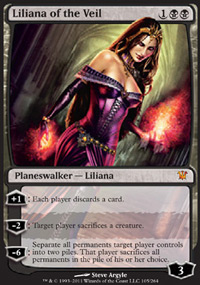
The reason it’s so good is because it’s really just in the sweet spot. Making tokens means it can’t really be killed by [card]Liliana of the Veil[/card],  a converted mana cost of four means it can’t be [card]Abrupt Decay[/card]ed, and protection from red means nothing in the typical Jund deck (outside of [card]Maelstrom Pulse[/card]) can touch it. Throw in the [card]Bloodbraid Elf[/card] banning from a while back, and suddenly what was your worst matchup is completely winnable.

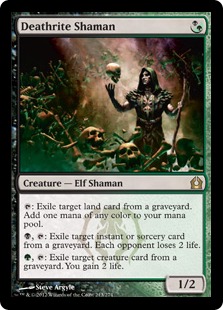
It’s basically impossible to say that your Modern deck is good these days if it can’t handle Jund or just [card]Deathrite Shaman[/card]. Well, Merfolk can. It also presents a fast enough clock with just enough disruption to handle value decks like Pod or RWU.

You also have the distinct advantage of being an aggro deck that happens to be blue. This means you get access to counterspells that other aggro decks don’t. There’s also that whole islandwalk thing that is relevant in every single game thanks to [card]Spreading Seas[/card], a quirky card that happens to do everything you want it to while also serving as maindeckable hate for the Tron decks.

If you ask somebody who’s not familiar with Merfolk what the best card in the deck is, you’ll stump them for a few minutes before they eventually decide the right answer has to be [card]Aether Vial[/card].

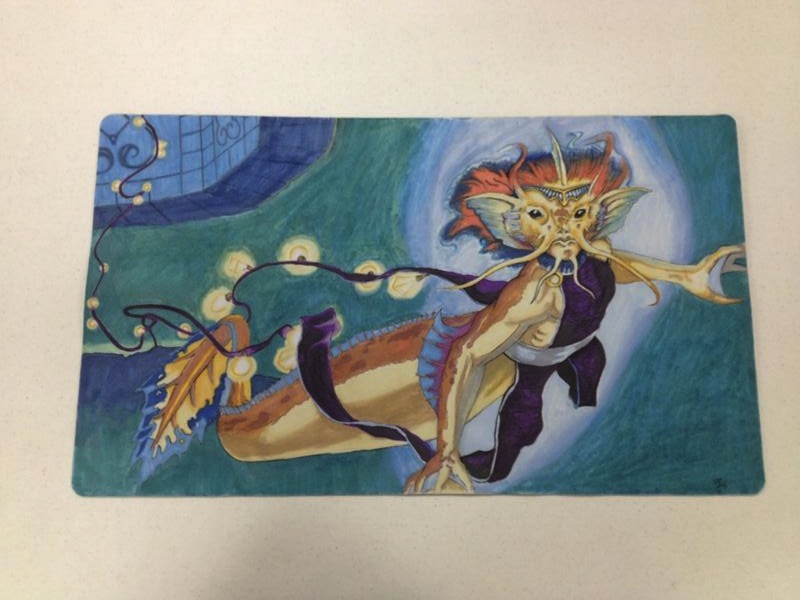
But that’s wrong. The best card, by a mile, is [card]Silvergill Adept[/card]. It does everything you could possibly want to do. It costs two mana for your Vial, doesn’t take double blue to cast, is a Merfolk, and draws you a card. As we know, that last part is one of the most important things any Magic card can have on it, and every time your opponent has to trade a card for your Adept, you’re winning. I feel confident in saying that if Adept wasn’t a card, Merfolk wouldn’t be a deck. Of course, this is coming from the guy with this playmat:

Silvergill Playmat

The final piece of the puzzle to Merfolk’s new place in the world is [card]Thassa, God of the Sea[/card]. Another advantage Merfolk has over the other “turn dudes sideways” decks (besides the obvious [card]Aether Vial[/card] benefits) is that Thassa really helps you control your draws in the late game and prevent you from running out of gas.

The List

Before we go any further, here’s my current list:

[deck title=Modern Merfolk]

[creatures]

*4 Cursecatcher

*4 Master of the Pearl Trident

*4 Lord of Atlantis

*4 Silvergill Adept

*1 Sygg, River Cutthroat

*2 Phantasmal Image

*2 Master of Waves

*4 Merrow Reejery

*2 Thassa, God of the Sea

*1 Kira, Great Glass-Spinner

[/creatures]

[Spells]

*2 Spreading Seas

*4 Aether Vial

*4 Vapor Snag

*2 Spell Pierce

[/spells]

[Lands]

*3 Mutavault

*3 Cavern of Souls

*14 Island

[/lands]

[Sideboard]

*2 Spreading Seas

*1 Master of Waves

*1 Spell Pierce

*2 Hurkyl’s Recall

*2 Annul

*2 Threads of Disloyalty

*2 Relic of Progenitus

*1 Tidebinder Mage

*1 Unified Will

*1 Grafdigger’s Cage

[/sideboard]

[/deck]

The sideboard is obviously dependent on the metagame you’re facing, and mine varies regularly. I don’t play Magic Online, but I’ve tested extensively with this list in paper. For the last three weeks, I’ve taken first or second in a local weekly Modern tournament that averages 15 to 20 players.

Okay, let’s talk some specifics to my list, and I’ll touch on the sideboard at the end.

3 [card]Mutavault[/card]s

I’ll start with what’s probably the biggest head scratcher: the fact I only run three [card]Mutavault[/card]s right now.

Early in playtesting, I found that I would lose way too many games to simply not having access to double blue on turn two. [card]Mutavault[/card] is sweet, but if you can’t cast a lord on turn two, you’re just going to lose the game. I’ve gone up to 20 land from 19 since those games, so it’s possible the fourth would be okay, but I think the theory still holds. Over the course of a long tournament like a Grand Prix, you can’t really afford to lose any games to color screw in your one-color deck.

Here’s another way to look at it: there is a certain percentage of games you’re going to win by having a fourth [card]Mutavault[/card] in the deck; I just think that number is smaller than the games you’re going to lose because you don’t have access to two blue mana on turn two.

3 [card]Cavern of Souls[/card]/0 [card]Ghost Quarter[/card]/0 [card]Tectonic Edge[/card]

This is a metagame call for me. I get that you want a bunch of land destruction if Tron is rampant, but if it’s not, you get a ton more value out of Cavern.

There was one Tron deck in the top eight of GP Prague. There were 21 counterspells in that same top eight, and the winning deck ran eight of them. Extend that down to the top 16 and things become even more skewed toward counterspells.

I’ve tested the RWU matchup extensively, and having access to Cavern means there’s seven cards in your deck that can almost completely blank their counters. If you open on an [card]Aether Vial[/card] or a [card]Cavern of Souls[/card], a lot of the time you’ve effectively made them mulligan to six or even five cards. When their counterspells can’t stop you from developing your board, their point removal just doesn’t go far enough. Add in the fact that [card]Vapor Snag[/card] can allow you to save a lord from a removal spell or the fact that you can sometimes blow them out with a [card]Spell Pierce[/card], and suddenly the matchup is not all that scary.

And it’s not just RWU that runs counters. A lot of the combo decks rely on slowing you down for a turn with them, and the ability to fearlessly cast guys goes a long way toward accomplishing what Merfolk wants to do, which is overload the board quickly and throw in a timely piece of disruption.

1 [card]Sygg, River Cutthroat[/card]

Lists doing well seem to be split 50/50 on this right now, but I’ve been running it for around 18 months and will never cut it. It checks every major checkbox for Merfolk: it’s a two-drop, it has double blue for devotion, and it draws you cards. Since I can’t ignore the financial aspect, I’ll tell you that this could easily be the next Merfolk card to spike, especially since it’s from Shadowmoor.

I’ve heard the argument that Merfolk just wants to be as streamlined as possible and this card doesn’t help with that. I don’t buy it, though, because the point of streamlining your deck is to draw your best cards every game. Well, were I given the option, I would draw Sygg every single game. The problem is that you never, ever want to draw two of them, because it only has one power and is legendary. But I promise you will never be sad to draw this card. It punishes opponents for bolting themselves with lands, it makes their blocking awkward, it blocks plenty of relevant creatures early, and like Silvergill Adept, it keeps the gas coming.

2 [card]Spell Pierce[/card]

Spell Pierce is another one of those cards you don’t really want to see more than one of in a game. It’s great in the right situations or against the right decks, but it’s completely dead against others and can also be really clunky. I’m happy running two along with [card]Cursecatcher[/card] as a disruption suite against combo and control decks.

4 [card]Merrow Reejery[/card]

I include this card just so I can address all the tricks it enables. Remember, its ability triggers on casting, not on entering. So you can cast a Merfolk and get the trigger before it resolves, but you won’t get one from Vialing in a guy. If you have multiple copies on the field, you can actually generate mana with this by stacking the triggers to untap the same land and then tapping it for mana in between the resolution of the triggers. It also allows you to untap Vial or tap down one of your opponent’s blockers.

1 [card]Kira, Great Glass-Spinner[/card]

As the deck tech at the GP talked about, ticking your Vial up to four mana for [card]Master of Waves[/card] can sometimes leave you with a turn where it’s on three mana and it doesn’t do anything. The singleton Kira is a concession to that. With this card, we have seven three-drops that we can drop into play.

2 [card]Master of Waves[/card]

I don’t understand lists that play this as a four-of. It’s a good card, but there are a bunch of matchups where it’s completely irrelevant. You are happy drawing one Master in most matchups to close out the game, but you definitely don’t want to put yourself in a position where you see two of these in the first three turns of the game. How miserable is it to play against [card]Splinter Twin[/card] and see a Master in your first draw step? Two in the main and another in the board for Jund or other midrange decks is where I want to be.

2 [card]Spreading Seas[/card]

I know a lot of people run this as a four-of, and I can’t blame them. If Tron were more prevalent in my area, I could see myself doing that. But to me, this is another card you’re happy seeing one of in a game but don’t always need. It’s too good to not play, but most of the time I’d rather play more dudes in the place of Seas.

0 Two-Mana Counters

I’ve been saying since day one of Modern that [card]Remand[/card] is not where you want to be with Merfolk, and it’s nice to see that people are finally coming around.

Cards like [card]Remand[/card] or [card]Mana Leak[/card] are awesome in Magical Christmasland where you have a turn-one [card]Aether Vial[/card] every game and then just sit back on counterspells, but that’s not how it works in the real world. A lot of the time you have to play hands without Vials, and two-mana counters are about the worst thing imaginable. You’re faced with the decision on turn two of playing a lord or holding up a counterspell, and I’m sure we’d all agree that playing the guy there is correct almost every time.

The problem is turn three. What are you going to do then? You’re either tapping out for a three-drop or playing another two-drop. That’s when Spell Pierce and Vapor Snag are at their best, because that’s the turn where you pull ahead of your opponent by stopping their play while advancing your board. [card]Remand[/card] doesn’t let you do that. You just end up sitting there with an open Island and nothing to do.

Turn four is when your [card]Remand[/card]s would theoretically become good, except that we’re playing a 20- to 21-land deck and hitting four lands by turn four is by no means guaranteed. There’s a huge number of games where you’ll still be staring at a two-drop, a [card]Remand[/card] and three lands on turn four, and you’re going to hate yourself.

So, please, save yourself the trouble and just play [card]Vapor Snag[/card] and [card]Spell Pierce[/card] instead. The one time we actually want two-mana counters is when we need a hard counter against combo decks, and that’s what a sideboard is for.

Sideboarding

As I said, this varies quite a bit, and my sideboard is by no means as tight as it could be. I love the [card]Tidebinder Mage[/card], but I used to have more and it’s probably on the way to being cut. It’s a nice card against mono-red or Pod or sometimes Jund, but it’s not really a maindeckable card and a lot of the time you have plenty of other stuff to bring in anyway. I think I’ll end up cutting it for another [card]Unified Will[/card] or [card]Spellskite[/card] or something.

I’m not going to detail every matchup, but I will note that Affinity is very difficult. You can’t really have too much hate for it. [card]Hurkyl’s Recall[/card] is obviously the best, but it can eat up a lot of slots. I started last year with [card]Steel Sabotage[/card], which a lot of people are going back to, but I’ve moved recently to [card]Annul[/card] because you can also bring it in against Splinter Twin to give yourself another one-mana counterspell. Just know that no matter what you do, Affinity is going to be tough.

[card]Relic of Progenitus[/card] is your all-star here, and I’d like to find room for a third, probably by cutting the Cage. Relic is insane against Jund, RWU, Living End, Pod, and probably several other decks I’m forgetting right now. It’s a must-include. Spreading Seas is obviously there for your Tron matchup. The rest should be pretty obvious as well.

 Fear the Fish

So there you go, the long-overdue Merfolk primer by the world’s biggest fan of Fish. The deck is powerful, adaptable, affordable, and fun to play. In Modern, that’s all you can ask for, and more than you can say about most decks. It’s a great deck for anyone looking to get into the format, and it scales with the skill of the player playing the deck, since there’s way more thought than just the “turn dudes sideways” approach you may see at first glance.

Any questions, or anything I missed? Let me know!


Thanks for reading,

Corbin Hosler

@Chosler88 on Twitter


P.S. [card]Cosi’s Trickster[/card] is not a real card, nor is [card]Mothdust Changeling[/card] or [card]Aquitect’s Will[/card]. Of these, the most common one people ask about is Trickster. Tell me this: if you open with a hand of [card]Aether Vial[/card] and Trickster, which one are you playing first? I don’t think there’s any way the answer isn’t Vial, but Trickster on turn two is about the most miserable thing you can do. Stick with [card]Cursecatcher[/card] and disruption at one mana and you won’t regret it.

Brainstorm Brewery #83 – Gathering of Magi

he cast is celebrating an actual milestone—this marks this point when more episodes were recorded on GatheringMagic than not. To help celebrate, the usual gang of miscreants is joined by GatheringMagic’s Con-tent Manager and Head Honcho Adam Styborski (@the_stybs). With price spikes and new card borders to discuss, the gang gets down to business and ships you all the content you can handle in an hour without having to contact poison control about a value overdose. Whose Pick of the Week is the boldest proclamation? Whose is the most controver-sial? Who actually likes the new card border? How many awkward silences are possible? Find out the answer to all these questions and more on an episode of your favorite podcast that will have you asking, “When did Standard become fun again?” Join us for Brainstorm Brewery.

  • How does Adam Styborski feel about the Commander decks?
  • Someone likes the new card borders. Can you guess who?
  • Are the new card borders necessary? Perhaps so, with convincing Chinese counterfeits spotted.
  • Is the Magic Online community toxic? How have other games fixed their toxic communities?
  • Pick of the Week is contentious this week. Find out how.
  • What do we have to look forward to from Born of the Gods?
  • Stybs talks a bit about himself and his Magic career so far.
  • What was the deal with Genesis Wave?
  • If you are artistically inclined, the best Photoshop or alteration of either the video of Corbin hitting the light pole or a still frame from it wins a prize. Send entries to brainstormbrew at gmail dot com. We will extend the contest a little bit longer. Please enter.
  • Want to be part of the Brainstorm Brewery Team? If you can write, stream, or Photoshop, or if you have a keen eye for design, contact altjason17 at gmail dot com to find out how you can join the fastest-growing brand in Magic.


Cabe Riseau produced the intro and outro music for Brainstorm Brewery.


Contact Us

Brainstorm Brewerywebsiteemailtwitterfacebook

Ryan Bushardemailtwitterfacebookgatheringmagic.com

Corbin Hosleremailtwitterfacebook – quitespeculation.com

Jason E Altemailtwitterfacebookgatheringmagic.com – quitespeculation.com

Marcelemailtwitterfacebook

Investing 203: Marcel vs. Jason, Round 1

“William has already made us $15k. Cool, you want me to break something else?”

“Do you think it will work? It would take a miracle.”

“When will then be now? Soon!”

Timing is everything in investing. The difference between making 100% and losing 50% can be as little as 24 hours. Being in the right place at the right time can mean selling an Elspeth for $40 because the tournament is starting in 20 minutes.

Marcel is involved in MTG finance mainly on MTGO. This gives him some extra benefits because he can buy and sell quickly. However, he is also limited because he can’t click over to TCGplayer and buy 30 copies of a near-mint mythic.  Jason is able to flip his wares quickly, too, but because he buys and sell at events. Jason also runs his MTG business so that he can be in tune with what his potential clients will want. This is necessary in order to not be sitting on a stack of worthless cardboard at rotation. Profit per trade means more trades (or volume) is key.

This first round, we will compare Marcel and Jason from the period starting November 1, 2012, going through April 30th, 2012.  During this time, each individual made a different number of calls.  As before, we are going to pretend like you went out and spent $100 on each and every card they said buy, and by coincidence you sold exactly $100 worth of every card they said to sell (if you are spazzing about the math here please read Investing 201). Then we’ll divide the profits by the number of trades.

Let’s start with the short-term results:

Marcel’s average return 30 days after his calls:
8.4% profit  per trade

Jason’s average return 30 days after his calls:
27.6%  profit per trade

Based on these short-term results, you might think that Marcel should stick to smooth jazz radio stations. But don’t turn on the Kenny G just yet. Marcel’s picks are meant for longer terms and are low-risk specs. This way, he doesn’t have to micromanage his portfolio. Jason, on the other hand, pays the bills on turning cards quickly. Making 27.6% on one’s investments per month will pay a lot of bills.

Despite a large variance in returns, they actually have similar prediction ratios:

Marcel correctly called the direction of a cards price 37.5% of the time.

Jason correctly predicted the direction of a card price 40% of the time.

Some Examples

Here are some examples of buy recommendations to show why the returns are so different (all price changes are the prices 30 days after the call):

Marcel:

[card]Birthing Pod[/card] (MTGO): $2 –> $4.  (100% profit)
[card]Underworld Connections[/card] (MTGO): $0.40 –> $0.40  (0% profit)
[card]Lilliana of the Veil[/card] (MTGO): $35 –> $40.   (14% profit)

Jason:

[card]Invisible Stalker[/card]: price $1.50  –> $3.50 (133% profit)
[card]Spellskite[/card]: $3.50 –> $10.00    (185.71% profits)
[card]Obzedat, Ghost Council[/card]: $25.00 –> $15.00   (-40% losses)

So far, Jason’s short-term business approach for his calls is beating Marcel’s slow-and-steady approach. Lets take at look at the percentages at rotation. Remember that we are looking at a period starting in November 2012 to April 2013, so all picks were at least six months old upon the release of Theros.

Marcel’s  returns on picks through rotation:
79% profit per trade.
Correct buy/sell calls: 56.25% of the time

Jason’s  returns on picks through rotation:
1.6% profit per trade
Correct buy/sell calls: 36%  of the time

Wait, what? What happened?

A very high 78% of Jason’s picks peaked shortly after he called them, but they all dropped by rotation. Marcel’s picks, on the other hand, rose steadily. He did hit 500% profit on his [card]Counterflux[/card] call (starting price of $0.05), but even if we remove that one, he still earned an average of 48.7% per trade.

Here are some examples of cards Marcel and Jason called, their prices 30 days later, and their prices at rotation.

Marcel:

[card]Craterhoof Behemoth[/card] (sell recommendation): price, $18 –> 30 days later, $12 (33% value preserved) –> price at rotation, $5 (72% value saved).

[card]Liliana of the Veil[/card] (buy recommendation): price, $35 –> price at rotation, $55 (57% profit).

[card]Mutilate [/card] (buy recommendation): price, $2 –> 30 days later, $3 –> price at rotation, $4 (100% profit).

Jason:

[card]Invisible Stalker[/card] (buy recommendation): price, $1.50 –> 30 days later, $3.50 (133% profit) –> at rotation, $1 (-33% loss).

[card]Rhox Faithmender[/card] (buy recommendation): price, $1 –> 30 days later, $3.50 (250% profit) –> at rotation, $0.50 (50% loss).

[card]Chalice of the Void[/card] (buy recommendation): price, $9 –> 30 days later, $10 (11% profits) –> at rotation, $4 (-55% loss).

Conclusion

Marcel is a classic Alex-profile investor. His picks seem to favor low-risk, long-term growth. Though he makes fewer sell calls, he’s a buy-and-hold investor, not a buy-and-forget guy. Jason, on he other hand, is almost single-handedly building the Gordon psychographic from scratch. If you want to flip short-term specs, Jason seems to have it down. His picks turn fast, so “leave the last 10% for the next guy.”  While an Alex type will advise you with less risk and more upside, a Gordon will get bored waiting for results.

Join me next time when we watch two more Brew Crew members face off!

-Brian Dale

Debunking Foils

That’s right, I’m that guy.

Every Magic community has at least one. We generally lurk in your local game shop a few nights a week, poring over the same binders as weeks go by, hoping to glean just one glance of blinding salvation to make up for the piles and piles of nonsense we flip through for hours. We’re the first in line at midnight as soon as the singles are sorted, counting down the hours until we can hand our hard-earned cash over. We want first dibs.

We want the foils. And we’ll do whatever it takes to get them.

My name is Jeff Greenberg and I was born and raised in Toronto, Canada. When I was eight years old, I walked into my local Blockbuster Video and bought an Urza’s Saga pack for $2.50. The rare? A [card]Gaea’s Cradle[/card], which I promptly sold to my LGS about a year later for $18 without regret. My game has gone in many different directions since that moment. Like many others, I found myself annoyed by the persistence of Affinity and stopped playing during Fifth Dawn, where I picked up another TCG briefly before returning to Magic in my university years. Ever since that first booster, I have wandered the great white north in search of binders to peruse and cards to acquire. I constantly listen to podcasts (especially Brainstorm Brewery), read articles, and follow the trends of the Magic secondary market. I spend countless hours at GPs and PTQs where, instead of playing in the main or side events, I scurry to and fro across the venue to try and acquire every single thing that sparks my interest, either for myself or a trading partner. As a community builder in my professional life, I constantly work to make people happy and comfortable, and trading is no different – if both parties leave unhappy and unappeased, I haven’t appropriately done my job as a Magic financier.

In this article series, I’d like to open your eyes to a different side of Magic finance: foil (AKA premium) cards.

Foils have always occupied an interesting position in the Magic secondary market. Since their first printing in Urza’s Destiny, foils have been printed in parallel with every expansion set release. While much discussion and debate exists internet-wide, foils seem to, on average, be opened in around 18-20% of Magic packs (source: WotC discussion forums). This means that, in a booster box, one can expect to open between six and eight total foils.

Contrary to urban Magic myth, however, foil cards have a print run that can be determined in the same fashion (mapping) that some Magicians use to cheat the system. Personally, I have never needed to rely on mapping to find success and make solid investments. If you are the kind of person that would prefer to randomly crack packs looking for secrets according to the foil print run, my articles are not for you. I much prefer to focus on the person rather than the printer, and that will be emphasized in further writings.

Thankfully, it is herein where we find the most interesting aspect of the foils market: valuation. For those that are less than financially literate, valuation can be defined as an estimation of the the approximate value of an asset as carried out by a professional appraiser. While we are not professionals, accurate and honest valuation of assets can make or break you as an investor in the eyes of your potential trading partners. This takes knowledge of some simple economic terms and, more importantly, knowledge of the tools available to get you and your partner the information you need to both leave your trade happy.

In the future, I hope to cover all of these different concepts in enough detail to allow you to use your resources most effectively in the foil market. For now, let’s take a look at a real-world example where some typical trends in the foil market can be seen. For this, we need a staple card that has been around for a long time. I’ll pick one of my favorites: [card]Pernicious Deed[/card].

Here is the current MTG Report for the non-foil copy:

DeedMTGReportAs we can see from the longview graph above, the non-foil version of this card has not been this low at any point during the last two years. Let’s take a look at the current prices from the online dealers with foil stock available:

StarCityGames.com – NM sold out at $69.99, four copies at LP-HP, between $59.99-64.99.

eBay.com – Last three sales between $66.00-69.00. Current auctions for EX/LP copies range between $42.00-60.00.

StrikeZone Online – sold out weeks ago (Dec. 1) at $60.99.

As with many other legacy gems, Deed has been immortalized in foil as a (notably hideous) judge promotional foil)—this adds to the supply and the price of the judge foil must be considered in this discussion:

StarCityGames.com – NM sold out at $59.99, one MP copy in stock at $49.99.

eBay.com – Last three sales between $45.00-70.00, current auctions for NM copies list for between $60.00-72.00.

ChannelFireball.com – one NM copy available at $56.99.

Looking at this information, people may be tempted to keep things simple—an old foil with low distribution without a true reprint is obviously going to be worth a pretty penny, but why invest now? Mostly, the problem here isn’t the investment, it’s that the majority of traders cannot understand or manipulate the foil market. Many traders will look through a binder and naturally dismiss foils as being too expensive, while others cannot see themselves able to ship their foils at good value without dealing with a vendor and taking a hit. Either way, both traders are missing opportunities.

So why is any foil Deed worth the investment? This query brings us to another myth that needs debunking—foil cards are analogous to their non-foil counterparts. While this seems blatantly obvious, with older cards like Deed, it isn’t so easy to see and many people disregard this. The foil here sits at nearly five times the value of the non-foil, mostly due to its rarity, as well as a lack of further distribution after the judge foil in 2006. However, this doesn’t mean it wouldn’t see a further spike if it were deemed playable in a higher-tier deck. Such a situation would allow for some real profit (> $100).

Thus, it is reasonable to see the foil as a fairly safe investment for the time being, and even a strong buy if people start jumping on non-foil versions. Despite the deep preference of most players for the original art, this trend would follow for both foil versions. Promotional foils, however, often have their own distribution issues to deal with, making them some of the more interesting foil investments—but that is a discussion for a different day.

Thanks for reading, and I hope you’ve learned something!

Jeff Greenberg
@Cassarek
[email protected]

La Choix de la Semaine – Jan. 16, 2014
(Pick of the Week, for the upper class)

Don’t laugh, but it’s [card]Pernicious Deed[/card], but the non-foil version. At an internet average of just over $13.00, it is at its lowest price at any point in the last 105 weeks. I predict a jump in Legacy play as people discover how effective it can be at beating the eponymous two-card combo of [card]True-Name Nemesis[/card] and [card]Umezawa’s Jitte[/card], as well as [card]Stoneforge Mystic[/card] and [card]Delver of Secrets[/card] decks. While it is less effective against [card]Show and Tell[/card] and other combo decks, it is certainly worth more than what I would pay for a [card]Boros Reckoner[/card] online today. Strong buy.

Casually Infinite – Understanding EV, Part 1

My editor says that articles are best at around 1500 words. My problem is that I’m a teacher. I teach sixth through twelfth grade students. In teaching we use something called the Zone of Proximal Development (ZPD) dictates what students are and are not able to learn based on what they currently know. I want to make sure that I don’t start off talking about things that are out of another person’s ZPD because they don’t have the groundwork laid to begin in a new direction. As such, many of my articles are likely to be in series of multiples, like this one.

Basic Business

Understanding estimated value (EV) is vital to pinching pennies or tickets (‡) on Magic Online. It is the most common catch-all term for Return On Investment (ROI) in MTGO. ROI is a business term that indicates how much money is made by one investment over another. If you were to stick money into a bank account, your expected ROI would be <1% per year. If you were to instead purchase a five-year CD, you could expect around 3% per year. It may be even better to spend the money than save it—something like replacing the windows in your home with higher quality windows might save you $30 per month in heating costs. When you have something that you are looking at in business terms, you have to consider what your expected ROI is for various ways to spend it. In Magic, calculating EV is how you do this.

Let’s assume you have six boosters and 4‡ (tickets) in your account. You have a number of options for what you can do. First off, you can sell the six boosters and have more tickets. This isn’t a very exciting option, since the way you probably got the boosters was by paying tickets for them in the first place. So you decide you’re going to enter a queue. But which queue you enter can drastically alter your expected results. For the sake of this article series, I’m going to assume you are likely to have average results regardless of the queue you enter. While there is a documented difference in the quality of players in 8-4 versus Swiss Drafts, and there tend to be better players in large premier events, I’m going to work under the assumption that you are in the middle of the pack for every queue you join. The reason for this is that if you’re better, most of the same advice still stands, and if you’re worse than average, you are going to lose money regardless. In this case, you should only play Swiss queues in order to minimize your losses.

I also can’t take into account the possibility that you happen to crush triple RTR drafts but happen to be really bad at M14 sealed. I’ll note that the differences from one queue to another is small enough that if there is a format you specifically don’t enjoy playing (triple DGM anyone?), it is probably not worth the advantages of playing it over a format you enjoy. Generally, as humans, we dislike things we’re bad at and enjoy things we’re good at. But three hours of your time to play Sealed over Draft when you really just want to draft isn’t worth the .32‡ it might save you. But it is important to understand how the choices you are making affect you.

The Math

If you don’t have strong math fundamentals, this may be a difficult article series for you to understand. I’d say you need a decent grasp on algebra to work through all the numbers. Unfortunately, I don’t have time to explain these fundamentals to you. If you’re having trouble grasping the math, just skip the confusing parts and move along to the results. We’ll be calculating a lot in the next article, so bear with me. If you want to skip the math, that’s okay, but today’s article is about the math specifically.

Terms

Queue EV = (What you pay to enter an event) – (what the average person gets from an event)

How exactly people calculate EV on queues varies slightly but it stands to reason you want to play the queue with the best EV and avoid those with the worst. Your EV is heavily affected by your win percentage. If you’re winning less than 50% of your matches, then a prize structure for winning a queue matters less to you and the prize structure for winning some matches will matter more. Regardless of where you stand, high EV basically means the queue is better for you, low EV means worse. However, queue EV is frequently negative. This means the average player will walk away with fewer ticets in card- and pack-value after playing a queue than they had before playing the queue. The key here is to pick the queues where you lose as little as possible, or if available, play in queues with a positive EV. Increasing your win percentage will increase your EV significantly.

Pack Cost – The market price to buy a booster pack of a given set.

The cost of purchasing a pack of a given set from a bot. Following Rule #2 (never buy packs from the store) from my article 10 Rules for Profit, we learn that the cost per pack is not $3.99 and playing a draft doesn’t cost you 14‡. Pack cost fluctuates wildly over the course of a set’s run and is even less predictable when dealing with flashback Draft formats (drafts where out-of-print formats return on MTGO). During prereleases, prices fall as people want to jump back into another queue and are more than willing to unload their draft winnings to do so. As release events finish up, prices tend to stabilize unless there ends up being a number of expensive rares in the set. Core set pack cost drops very quickly once the queues stop and the next core set comes out. The third set of a block often has a lower pack price because it is main set given as prizes but is primarily being used in block drafts, meaning more are being won than are being opened. The first set in a block will often rise in price later in the block as people go back to needing it to play full block drafts. Overall, packs can range as low as 1.25‡ all the way up to over 4‡.

Also note that there is a buy and sell pack price. You can generally sell packs for about 5% less than you can buy them. I generally use only the buy price because I rarely sell packs that I can still use to get into another queue.

Pack EV = (The value of each card in the set) / (How likely that card is to be in a single booster)

When you open a pack of Return to Ravnica, you have a chance to pull a [card]Sphinx’s Revelation[/card] worth 30‡ or a [card]Volatile Rig[/card] worth .03‡. Before the pack was opened, it had a potential value that included both of these cards. Once the pack is opened, there’s no more guessing.

The pack value can be calculated by adding up the value of all the cards in the set, adjusting for rarity, and dividing by the potential you’d see in each pack. Individual high-priced cards heavily impacts pack EV, but a number of other factors play a role as well. Currently, M14 has a very high pack EV due to [card]Mutavault[/card] being a rare instead of a set with a similarly-priced mythic like [card]Voice of Resurgence[/card] out of Dragon’s Maze. Cards like [card]Wasteland[/card] (an uncommon worth somewhere around 60‡) or even [card]Ancestral Mask[/card] (a 6‡ common) will increase the Pack EV way more than a 60‡ mythic. After all, there are 80 commons opened for every mythic.

There’s a few Excel spreadsheets with this already calculated out and all you have to do is punch in the totals for the set. If you want to know the current pack value, take a look at MagicEV, which calculates it for you (down on the bottom right). Pack EV generally ranges from about .75‡ to 1.5‡ for sets in Standard.
An example that makes a clear point about how pack value works is an unopened booster of Beta costing about $2000. There’s only one card you could open out of 117 rares that would provide you with a value that would be more than your initial cost. You could open a $5000+ [card]Black Lotus[/card] or a $6 [card]Warp Artifact[/card]. With so many rares and only 30 or so worth over $100, your pack EV is probably in the $500 range.

Pack Spread = Pack Cost – Pack EV

The difference between the pack cost and the pack EV is the pack spread. The greater the spread, the more packs you need to win to make up for your loss in opening up packs. If the spread is small enough or negative, then you can almost make a profit just by ripping packs open and selling the contents. For almost all packs on MTGO, you’ll find the pack cost is significantly above the pack value. The price for a pack doesn’t generally drop below 2‡ while there are active queues for it. In general, a 2-3‡ pack spread is common in MTGO. This means that you have to win about two packs for each three packs you open in the tournament to come out even after you pay entry fees. As I’m writing this, the pack spread on Theros is 2.23‡, M14 is 2.09‡, Modern Masters is 3.99‡, and Mercadian Masques is 1.10‡. While the high value of cards in Modern Masters makes it inviting and it has a significantly above average pack value, the pack spread is so high due to the cost of purchasing the packs. Thus, Modern Masters is one of the least profitable packs to open. You’re actually better off playing M14 or Theros.

Prize Structure

There are a number of different rewards for playing in various tournaments and queues. Sometimes the names of the event speak about the prize structure, such as 8-4 and 4-3-2-2 events, which indicate the number of packs given to each place. The reward for taking first place is significantly affected not only by the prize structure, but also the pack cost of the packs you are winning. If you win an 8-4 Draft at a 3.8‡ pack cost, you pick-up about 30.4‡ in prizes. Meanwhile, an 8-4 with a 2.8‡ pack cost will only give you about 22.4‡ in prizes.

Some events have a prize structure that rewards the players that did well significantly more than others in the tournament. Other events seek to reward everyone who performs decently, and still others reward everyone that plays and manages a win. Larger events will reward the top eight, 16, 32, or 64 players, regardless of how many enter. This could provide either a fantastic chance to a very mediocre chance of winning prizes based on the number of players. Prize structures based on number of wins are often much better than prize structures based on place, because the number of players doesn’t change your chances of winning. In an event that rewards the top 32 players, your chances of making it with 65 players is much better than with 256. On MTGO, premier events frequently have the same prize structure regardless of number of players.

Entry Fee = (Tickets) + (Pack Spread * Number of Packs)

Various events—from Draft queues, to dailies, to premier events—have entry fees. Entry fees for most events can be paid in tickets (bad idea) or a combination of some small number of tickets and product (good idea). The posted entry fee in MTGO isn’t the real entry fee you end up paying. When calculating potential winnings, you need to understand the portion of entry fees that you’re essentially paying to get into the prize structure as well as the fees you’re paying in pack spread. You end up paying the tickets, but you still get the value from the cards in the packs you open. If I have to open six packs to play in a Sealed event, I lose my pack spread six times instead of the three times I’d lose opening a draft. This means the prizes in a Sealed event would have to be almost twice as good as in a draft to have the same EV.

Next Time

Since I’ve probably already given my editor a heart attack, I’ll stop here and pick it up in part two where we’ll discuss what to do with all these numbers. This article gave you the basics regardingthe terms I’ll be using and we’ll get into the gritty details in my next article. I’ll break down each queue as well as some historic prize structures and explain why they good or bad value so you can be on the lookout for changes in the future that provide you with good opportunities.

Standard Commander: Mono-Colored Analysis

Previously, this article series has covered the basic considerations for a Standard-only Commander card pool consisting of Return to Ravnica, Gatecrash, Dragon’s Maze, Magic 2014, and Theros. This second part will cover the eight mono-colored legendary creatures provided by Theros and their possible inclusion in mono-colored decks. These legendary creatures are a good start for exploring a Standard-only Commander format by exemplifying the best resources available to each singular color. By combining typical deck building concepts such as card advantage, mana acceleration, tutoring, and removal, interactive decks are still very possible even with a narrower card pool. All the example decks below will attempt to maximize the key themes Wizards of the Coast has implemented in each color under the New World Order design philosophy. In a Standard Commander format, do not automatically discount a mono-colored deck pilot despite his lack of color flexibility. Instead, these decks will capitalize on their steady mana bases to bring their strength to the fore.

Mono-White

[card]Heliod, God of the Sun[/card] naturally has white gravitating towards a vigilant token creature theme, but doesn’t have much in the way of cheap, non-narrow creature removal. What white does have are ways to wipe the board of creatures and start over with Heliod: [card]Angel of Serenity[/card], [card]Elspeth, Sun’s Champion[/card], [card]Luminate Primordial[/card], and [card]Planar Cleansing[/card]. A deck built around Heliod might work to get board states consisting of a populated token army with pump effects or protected by [card]Rootborn Defenses[/card] followed by a board wipe. Alternatively, [card]Gideon, Champion of Justice[/card] is a semi-indestructible threat that continually gets larger. White also has access to an inordinate amount of life gain. By buffing the player’s life total, a [card]Heliod, God of the Sun[/card] deck can recover from an opponent’s board wipe and have enough life buffer to rebuild its army. Such a deck might look like this:

[deck title=Heliod Commander]
[Creature token generators:]
*1 Precinct Captain
*1 Heliod, God of the Sun
*1 Evangel of Heliod
*1 Scion of Vitu-Ghazi
*1 Urbis Protector
*1 Angelic Accord
*1 Murder Investigation
*1 Rootborn Defenses
*1 Elspeth, Sun’s Champion
*1 Devout Invocation
*1 Strionic Resonator
*1 Trading Post
*1 Akroan Horse
[/Creature token generators:]

[Creature buffs:]
*1 Frontline Medic
*1 Phantom General
*1 Archangel of Thune
*1 Angelic Skirmisher
*1 Path of Bravery
*1 Spear of Heliod
*1 Fortify
*1 Ajani, Caller of the Pride
*1 Righteous Charge
*1 Haunted Plate Mail
[/Creature buffs:]

[Creature removal:]
*1 Banisher Priest
*1 Court Street Denizen
*1 Haazda Snare Squad
*1 Master of Diversion
*1 Heliod’s Emissary
*1 Martial Law
*1 Pacifism
*1 Divine Verdict
*1 Trostani’s Judgment
*1 Gideon, Champion of Justice
*1 Angelic Edict
*1 Vanquish the Foul
[/Creature removal:]

[Board wipes:]
*1 Angel of Serenity
*1 Luminate Primordial
*1 Planar Cleansing
*1 Ratchet Bomb
*1 Volatile Rig
[/Board wipes:]

[General removal:]
*1 Soul Tithe
*1 Renounce the Guilds
[/General removal:]

[Enchantment removal:]
*1 Keening Apparition
*1 Ray of Dissolution
*1 Solemn Offering
[/Enchantment removal:]

[Graveyard hate:]
*1 Rest in Peace
[/Graveyard hate:]

[Control:]
*1 Pithing Needle
[/Control:]

[Life gain:]
*1 Soldier of the Pantheon
*1 Dawnstrike Paladin
*1 Riot Control
*1 Congregate
*1 Elixir of Immortality
*1 Bubbling Cauldron
*1 Staff of the Sun Magus
[/Life gain:]

[Recursion:]
*1 Codex Shredder
*1 Illusionist’s Bracers
[/Recursion:]

[Tutor:]
*1 Traveler’s Amulet
*1 Ring of Three Wishes
[/Tutor:]

[Mana acceleration:]
*1 Chromatic Lantern
*1 Darksteel Ingot
*1 Burnished Hart
[/Mana acceleration:]

[Lands:]
*1 Encroaching Wastes
*1 Mutavault
*1 Nykthos, Shrine to Nyx
36 Plains
*1 Rogue’s Passage
[/Lands:]
[/deck]

This deck may also want [card]Fiendslayer Paladin[/card] as an early threat with life gain and semi-protection. However, it can be a dead draw later in the game given a lack of synergy with the token theme and without a variety of efficient equipment normally available to white to increase its combat survivability. [card]Riot Gear[/card] may also be something that a Heliod player might want to consider because it pumps a creature out of first strike damage range and can be moved around after combat. +1/+2 on any key creature may be enough to keep it on the table and be a continued threat in many scenarios. Lastly, [card]Vial of Poison[/card] has potential to combo with [card]Trading Post[/card] and the token theme of the deck.

Mono-Blue

[card]Thassa, God of the Sea[/card] easily fills the expected classic blue control, draw-go build despite the focus of the color in Standard on milling a single opponent. A blue Thassa deck will be able to draw into more answers consistently than other mono-colored decks and lay down singular threats while simultaneously protecting them. The downside of blue is going to be lack of multiple large threats to quickly eliminate opponents. The blue player will possibly need to lean heavily on the social contract and deal-making to avoid being stereotypically eliminated first before attempting to take control and win the game. Playing a kingmaker role to remain in second place and waiting to bounce the entire board with a well-timed [card]Ætherize[/card] or [card]Cyclonic Rift[/card] may be a heavily-treaded strategy used by this deck’s pilot.

[deck title=Thassa Commander]
[Creatures:]
*1 Clone
*1 Master of Waves
*1 AEtherling
*1 Stolen Identity
*1 Trading Post
*1 Haunted Plate Mail
[/Creatures:]

[Card draw:]
*1 Scroll Thief
*1 Stealer of Secrets
*1 Thassa, God of the Sea
*1 Thassa’s Emissary
*1 Messenger Drake
*1 Prescient Chimera
*1 Prognostic Sphinx
*1 Horizon Scholar
*1 Windreader Sphinx
*1 Bident of Thassa
*1 Divination
*1 Inspiration
*1 Opportunity
*1 Jace, Architect of Thought
*1 Jace, Memory Adept
*1 Thassa’s Bounty
[/Card draw:]

[Counterspells:]
*1 Annul
*1 Mizzium Skin
*1 Spell Blast
*1 Swan Song
*1 Essence Scatter
*1 Negate
*1 Cancel
*1 Dissolve
*1 Scatter Arc
[/Counterspells:]

[Board wipe:]
*1 Shipbreaker Kraken
*1 Cyclonic Rift
*1 AEtherize
*1 Curse of Swine
*1 Ratchet Bomb
[/Board wipe:]

[Creature removal/bounce:]
*1 Tidebinder Mage
*1 Voidwielder
*1 Colossal Whale
*1 Blustersquall
*1 Gridlock
*1 Rapid Hybridization
*1 Griptide
*1 Voyage’s End
*1 Inaction Injunction
*1 Vial of Poison
[/Creature removal/bounce:]

[Bounce permanent:]
*1 Disperse
*1 Totally Lost
[/Bounce permanent:]

[Recursion:]
*1 Meletis Charlatan
*1 Archaeomancer
*1 Elite Arcanist
*1 Mnemonic Wall
*1 Jace’s Mindseeker
*1 Diluvian Primordial
*1 Strionic Resonator
[/Recursion:]

[Tutors:]
*1 Traveler’s Amulet
*1 Ring of Three Wishes
[/Tutors:]

[Mana acceleration:]
*1 Chromatic Lantern
*1 Darksteel Ingot
*1 Burnished Hart
[/Mana acceleration:]

[Lands:]
*1 Encroaching Wastes
36 Island
*1 Mutavault
*1 Nykthos, Shrine to Nyx
*1 Rogue’s Passage
[/Lands:]
[/deck]

[card]Annul[/card] may seem an odd counterspell inclusion, but it has real strength as one of the singular ways to preemptively deal with the Theros Gods. [card]Clone[/card] is a card that will have tremendous power in this type of environment given it’s flexibility and very reasonable casting cost. For Johnny-type players, [card]Conjured Currency[/card] may be a card to consider. It’s a very slow [card]Switcheroo[/card] that can create some unexpected, possibly advantageous board states as it makes its way around the table. Additionally, the possibility of taking control of key god creatures is one of blue’s limited ways to deal with the troublesome permanents.

Mono-Black

A mono-black Commander deck has two options for its general, but a deck lead by [card]Erebos, God of the Dead[/card] has a strong draw engine that will compare with Standard Commander [card]Niv-Mizzet, Dracogenius[/card] or [card]Prime Speaker Zegana[/card] decks with the added benefit of a low casting cost and indestructibility. Despite black’s inability to deal with non-creature permanents, black has some strong synergies and has potential to hold its own against the dual-colored decks possible in a current Standard card pool. Black also has a Johnny player’s type of deck when combining [card]Shadowborn Apostle[/card] with [card]Abhorrent Overlord[/card], [card]Desecration Demon[/card], [card]Lord of the Void[/card], and [card]Shadowborn Demon[/card].

[deck title=Erebos Commander]
[Creatures:]
*1 Tenacious Dead
*1 Thrull Parasite
*1 Pack Rat
*1 Wight of Precinct Six
*1 Lifebane Zombie
*1 Mogis’s Marauder
*1 Nighthowler
*1 Desecration Demon
*1 Returned Centaur
*1 Necropolis Regent
*1 Nightmare
*1 Pontiff of Blight
*1 Lord of the Void
[/Creatures:]

[Creature token generation:]
*1 Xathrid Necromancer
*1 Liliana’s Reaver
*1 Ogre Slumlord
[/Creature token generation:]

[Card draw:]
*1 Blood Scrivener
*1 Erebos, God of the Dead
*1 Dark Prophecy
*1 Underworld Connections
*1 Liliana of the Dark Realms
*1 Read the Bones
*1 March of the Returned
[/Card draw:]

[Sacrifice outlet:]
*1 Gnawing Zombie
*1 Vampire Warlord
*1 Abhorrent Overlord
*1 Altar’s Reap
*1 Rescue from the Underworld
*1 Bubbling Cauldron
[/Sacrifice outlet:]

[Creature removal:]
*1 Festering Newt
*1 Slum Reaper
*1 Keepsake Gorgon
*1 Shadowborn Demon
*1 Quag Sickness
*1 Devour Flesh
*1 Doom Blade
*1 Ultimate Price
*1 Hero’s Downfall
*1 Grisly Spectacle
*1 Launch Party
*1 Liturgy of Blood
*1 Corrupt
[/Creature removal:]

[Board wipe:]
*1 Hythonia the Cruel
*1 Ratchet Bomb
[/Board wipe:]

[Recursion:]
*1 Corpse Hauler
*1 Sepulchral Primordial
*1 Whip of Erebos
*1 Grave Betrayal
*1 Grim Return
*1 Rise of the Dark Realms
[/Recursion:]

[Graveyard hate:]
*1 Cremate
*1 Vile Rebirth
*1 Crypt Incursion
[/Graveyard hate:]

[Life gain:]
*1 Gray Merchant of Asphodel
[/Life gain:]

[Mana acceleration:]
*1 Crypt Ghast
*1 Darksteel Ingot
*1 Burnished Hart
[/Mana acceleration:]

[Tutors:]
*1 Diabolic Tutor
*1 Traveler’s Amulet
*1 Ring of Three Wishes
[/Tutors:]

[Lands:]
*1 Encroaching Wastes
*1 Mutavault
*1 Nykthos, Shrine to Nyx
*1 Rogue’s Passage
36 Swamp
[/Lands:]
[/deck]

Mono-Red

[card]Purphoros, God of the Forge[/card] obviously needs to have multiple creatures come into play as often as possible to utilize its trigger. Unfortunately, a Standard Commander deck has limited options to make tokens repeatedly or en masse: [card]Goblin Rally[/card], [card]Hammer of Purphoros[/card], [card]Molten Birth[/card], [card]Utvara Hellkite[/card], [card]Young Pyromancer[/card], [card]Akroan Horse[/card], and [card]Trading Post[/card]. Given the small amount of feasible red instants and sorceries in Standard for Commander, [card]Young Pyromancer[/card] and [card]Molten Birth[/card] really fail to fit in this deck.

An idea to work with this limitation is to explore additional themes unexpectedly found in red Standard Commander: Cheating large creatures into play and playing all the dragons available with [card]Utvara Hellkite[/card]. Red has the ability to cheat creatures into play with [card]Guild Feud[/card] and [card]Possibility Storm[/card]. The important detail about Guild Feud is, “If no creatures or only one creature is put onto the battlefield this way, no fight happens.” Unfortunately, with only 25 creatures in the deck, this is a risky deckbuilding strategy, but will appeal to Johnny-type Magic players. (There is a finite number of red or artifact creatures in Standard currently with both high power and toughness with which to utilize with [card]Guild Feud[/card].) Accelerating straight into a [card]Furnace Whelp[/card] from a [card]Dragon Egg[/card] is fun too. [card]Possibility Storm[/card] acts as a secondary and even perhaps better alternative to [card]Guild Feud[/card]. The difference between the two is that [card]Guild Feud[/card] allows you to consider trying minor group politics while [card]Possibility Storm[/card] risks accelerating your opponents far beyond your own board state.

Second, if a Purphoros player can land an unanswered [card]Utvara Hellkite[/card], it can quickly take over a battlefield within a few turns. [card]Hellkite Tyrant[/card] offers another way to cheat large threats onto the table by stealing key artifact acceleration with the side benefit of taking away opponents’ Theros artifact enchantments. [card]Hellkite Tyrant[/card] will probably never win Purphoros the game, but has potential for serious card advantage with permanent theft of opponent’s resources.

Humorously, [card]Guild Feud[/card] works on a very Vorthos level to demonstrate red’s attempt at politics: “You’re in the lead and you want a put a creature into play? Fine, I’ll try to kill it and you’ve milled three cards. Hey, look! My guy is meaner than yours too!” This is also aided by [card]Akroan Horse[/card]: “Give that weaker player over there a blocker. I get an army for doing so? Imagine that…” Just don’t attack the [card]Akroan Horse[/card]’s controller with a [card]Hellkite Tyrant[/card].

[deck title=Purphoros Commander]
[Creatures:]
*1 Fanatic of Mogis
*1 Ill-Tempered Cyclops
*1 Stoneshock Giant
*1 Wrecking Ogre
*1 Chaos Imps
*1 Ripscale Predator
*1 Guardian of the Ages
*1 Colossus of Akros
[/Creatures:]

[Dragons:]
*1 Dragon Egg
*1 Scourge of Valkas
*1 Stormbreath Dragon
*1 Hellkite Tyrant
*1 Shivan Dragon
*1 Utvara Hellkite
[/Dragons:]

[Token creature generation:]
*1 Goblin Rally
*1 Trading Post
*1 Akroan Horse
[/Token creature generation:]

[Creature buff:]
*1 Legion Loyalist
*1 Pyrewild Shaman
*1 Purphoros, God of the Forge
*1 Ogre Battledriver
*1 Hammer of Purphoros
*1 Skyblinder Staff
*1 Fireshrieker
*1 Fleetfeather Sandals
*1 Prowler’s Helm
*1 Riot Gear
[/Creature buff :]

[Sacrifice outlet:]
*1 Barrage of Expendables
*1 Bubbling Cauldron
[/Sacrifice outlet:]

[Card draw:]
*1 Dragon Mantle
*1 Chandra, Pyromaster
*1 Wild Guess
[/Card draw:]

[Creature removal:]
*1 Fleshpulper Giant
*1 Molten Primordial
*1 Five-Alarm Fire
*1 Ordeal of Purphoros
*1 Volcanic Geyser
*1 Vial of Poison
*1 Rod of Ruin
[/Creature removal:]

[Land destruction:]
*1 Ember Swallower
[/Land destruction:]

[Artifact removal:]
*1 Batterhorn
*1 Wild Celebrants
*1 Vandalblast
[/Artifact removal:]

[Board wipe:]
*1 Street Spasm
*1 Homing Lightning
*1 Mizzium Mortars
*1 Anger of the Gods
*1 Ratchet Bomb
*1 Volatile Rig
[/Board wipe:]

[Recursion:]
*1 Codex Shredder
*1 Strionic Resonator
*1 Trading Post
[/Recursion:]

[Control:]
*1 Pithing Needle
[/Control:]

[Mana acceleration:]
*1 Guild Feud
*1 Chromatic Lantern
*1 Darksteel Ingot
*1 Burnished Hart
*1 Opaline Unicorn
[/Mana acceleration:]

[Tutor:]
*1 Traveler’s Amulet
*1 Ring of Three Wishes
[/Tutor:]

[Lands:]
*1 Encroaching Wastes
36 Mountain
*1 Mutavault
*1 Nykthos, Shrine to Nyx
*1 Rogue’s Passage
[/Lands:]
[/deck]

Mono-Green

[card]Anthousa, Setessan Hero[/card], [card]Nylea, God of the Hunt[/card], or [card]Polukranos, World Eater[/card], despite having access to almost all of the mana acceleration available in Standard, will all have a very difficult time facing off against other Commander decks. The color has extremely limited and narrow card draw, few board wipes with limited effectiveness, and minimal fight-based creature removal. Additionally, Anthousa requires a deck built around the Heroic mechanic, but without recursive spells. This makes her a poor choice. Nylea herself does not have trample and is considered by eternal Commander players to be a less effective [card]Kamahl, Fist of Krosa[/card]. Polukranos provides some effective removal with its cheap cost, but that benefit will dwindle over time as its command zone cost continually rises with multiple deaths. Timmy-type Magic players could possibly be interested in this archetype for a while due to its potentially large creatures, but it lacks resiliency and will frequently get stuck in topdeck mode. Eternal mono-green players may find this color to be a little frustrating to play.

[deck title=Nylea Commander]
[Creatures:]
*1 Arbor Colossus
*1 Giant Adephage
*1 Howl of the Night Pack
*1 Kalonian Hydra
*1 Miming Slime
*1 Mistcutter Hydra
*1 Nemesis of Mortals
*1 Sporemound
*1 Colossus of Akros
*1 Haunted Plate Mail
[/Creatures:]

[Creature buff:]
*1 Boon Satyr
*1 Bow of Nylea
*1 Crowned Ceratok
*1 Death’s Presence
*1 Ivy Lane Denizen
*1 Nylea, God of the Hunt
*1 Oak Street Innkeeper
*1 Primeval Bounty
*1 Wild Beastmaster
*1 Fireshrieker
[/Creature buff:]

[Card draw:]
*1 Garruk’s Horde
*1 Nylea’s Presence
*1 Warriors’ Lesson
*1 Garruk, Caller of Beasts
*1 Witches’ Eye
[/Card draw:]

[Creature removal:]
*1 Deadly Recluse
*1 Polukranos, World Eater
*1 Time to Feed
*1 Hunt the Weak
*1 Vial of Poison
[/Creature removal:]

[Noncreature removal:]
*1 Rust Scarab
*1 Sylvan Primordial
*1 Naturalize
*1 Artisan’s Sorrow
*1 Fade into Antiquity
*1 Bramblecrush
[/Noncreature removal:]

[Board wipe:]
*1 Windstorm
*1 Ratchet Bomb
*1 Volatile Rig
[/Board wipe:]

[Graveyard hate:]
*1 Scavenging Ooze
*1 Serene Remembrance
[/Graveyard hate:]

[Control:]
*1 Pithing Needle
[/Control:]

[Life gain:]
*1 Nylea’s Disciple
*1 Bubbling Cauldron
*1 Staff of the Wild Magus
[/Life gain:]

[Mana acceleration:]
*1 Elvish Mystic
*1 Gyre Sage
*1 Voyaging Satyr
*1 Karametra’s Acolyte
*1 Into the Wilds
*1 Ordeal of Nylea
*1 Burnished Hart
[/Mana acceleration:]

[Recursion:]
*1 Wildwood Rebirth
*1 Codex Shredder
*1 Elixir of Immortality
*1 Strionic Resonator
*1 Illusionist’s Bracers
[/Recursion:]

[Tutors:]
*1 Gatecreeper Vine
*1 Lay of the Land
*1 Seek the Horizon
*1 Traveler’s Amulet
*1 Ring of Three Wishes
[/Tutors:]

[Lands:]
*1 Encroaching Wastes
34 Forest
*1 Mutavault
*1 Nykthos, Shrine to Nyx
*1 Rogue’s Passage
[/Lands:]
[/deck]

With this deck, Nylea is the optimal commander and the cards work together to capitalize on making large creatures with trample. The Nylea player should be careful about overextending into removal and may want to help the table keep the focus on another threat by actually holding back attacking frequently. When the opportunity arises to hit the player that everyone fears the most, the green player will swing with an impressive force. As always, the green player will need to hold removal spells to remove key flyers found in blue and enable trample as frequently as possible to deal with tokens and pump effects.

Mono-Colored Summary

With a single commander (except for black) and a limited card pool available for mono-colored decks, a Standard Commander deck may appear obvious for optimized builds when compared to guild-colored decks. Mono-colored deck builders will have to trade a set of color weaknesses for a consistent mana base and a potentially more dedicated theme.

This format will no doubt be exciting. Each color on its own appears to have deckbuilding highlights that can be fresh, interactive, and interesting to play in a multiplayer game with red players possibly having the most fun. The red players trying the build found in this article are going to be most likely to understand the Joker metaphor presented in one of Adam Styborski’s articles: “Just shooting Batman holds no appeal for the Joker. He must die by a laser mounted on the moon instead.” Those specific games will be memorable long after the Return to Ravnica/Gatecrash/Dragon’s Maze/Magic 2014/Theros Standard Commander card pool has rotated out and faded away.

Post Modern

I love Modern because of all the value.

Even though Modern is a format where everything is subject to reprint, in addition to the likely release of more Modern Masters sets, the prices of staples are still low. In the year 2013, [card]Splinter Twin[/card] doubled in the U.S. shortly after doubling in Europe; [card]Chord of Calling[/card], [card]Fulminator Mage[/card], and [card]Horizon Canopy[/card] all more than doubled due not being reprinted; and novel new competitors like [card]Disrupting Shoal[/card] quintupled overnight.

Even fringe cards like [card]Threads of Disloyalty[/card] and [card]Restore Balance[/card] saw a bump just because it’s Modern and it’ll see more and more players as the format becomes more popular. [card]Threads of Disloyalty[/card] jumped 50% just because it was seeing play in two tier-one decks, and [card]Restore Balance[/card] is up 200% since six months ago, even though it sees close to zero competitive play outside of popping up in dailies every now and then.

For Magic financiers, it’s a good idea to play Modern, just like it is to play EDH, another eternal format that has a lot of room for speculation. The value proposition for playing the format is there. If a card has already been hit by a reprint in Modern Masters, you can only expect the value to go up from here. While Legacy has more stability, Modern has more spikes in value due to price corrections. Staying up to date about the Modern meta-game will give you a huge leg up to get to the spikes before the news goes around.

Modern tournaments are also heating up. Grand Prix Antswerp marked the biggest Modern Grand Prix to date with 1601 players, a respectable number even compared to other formats. Being that Modern is an eternal format with cards that don’t rotate, we can only expect the growth rate to accelerate going forward. As players jump on the bandwagon, more and more players will want in on the ride. And unlike Legacy, Modern is a pro tour format, which means that even if Star City Games can ignore the format for the time being, it can’t ignore it forever.

Post Modern: Banned List

Being that we’re getting closer to banned list announcements, I thought I’d take a minute to talk about the topic. It seems to always create controversy no matter what circle I’m in. Wizards of the Coast has more or less consistently banned/unbanned a card in Modern every six months or so, and we’re due for another change in the format.

Originally, I intended to list all the cards that will stay on the banned list no matter what, but the list is so long that it would likely take up the whole article. The banned list is unnecessarily long so that Modern would be protected as a new format, but that gives it space for cards to be unbanned (see [card]Valakut, the Molten Pinnacle[/card]). Let’s talk about other cards that can (and should?) be unbanned.

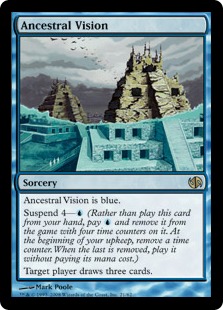
[card]Ancestral Vision[/card]

Image (3)

Modern doesn’t have any good cascade cards now that [card]Bloodbraid Elf[/card] is banned. The [card]Shardless Agent[/card] following a [card]Brainstorm[/card] into [card]Ancestral Vision[/card] wombo combo doesn’t exist in Modern. Control in Modern is severely lacking, and UWR Control is currently on its knees due to having bad matchups against all of the tier-one Modern decks except Affinity. Recently, UWR has turned into more of a midrange deck. It runs a variety of creatures because there aren’t enough good cards to make a pure control strategy viable. [card]Ancestral Vision[/card] may be a powerful card, but it doesn’t win the game on its own and it tends to be a dead draw later in the game. It’s also quite slow, because that the earliest it can go off is turn five, while Modern is a turn-four format.

[card]Dread Return[/card]

Image (1)

Call me crazy, but I can see the argument for [card]Dread Return[/card] being unbanned to really shake up the format. Dredge is non-existent in Modern, in part because [card]Deathrite Shaman[/card] is one of the most-played creatures in the format. Three creatures is a lot to sacrifice, and without [card]Narcomoeba[/card] and [card]Bridge from Below[/card], it’s just not happening on a regular basis. I would love to see more variety in Modern, even if it means playing against broken decks.

[card]Golgari Grave-Troll[/card]

Image

Speaking of Dredge, why not unban the best Dredge creature? While [card]Dread Return[/card] would be a risky unban since it enables more trippy plays, [card]Golgari Grave-Troll[/card] is the safer unban because it’s just an upgrade over the Dredge 5 alternative [card]Stinkweed Imp[/card]. I don’t see this and [card]Dread Return[/card] being unbanned at the same time, but rather one or the other. Because graveyard hate is readily available in Modern now that [card]Rest in Peace[/card], [card]Deathrite Shaman[/card], and [card]Scavenging Ooze[/card] have been introduced to the format, there are plenty of cards to keep graveyard strategies in check.

[card]Wild Nacatl[/card]

Image (2)

The card that I’m most stoked about the possibility of being unbanned is [card]Wild Nacatl[/card]. It would introduce a Naya Zoo archetype into Modern, an exciting alternative to the only other existing aggro deck in Modern, Affinity. [card]Wild Nacatl[/card] is a card that is strong but not broken, because like all fair creatures, it dies to [card]Lightning Bolt[/card]. The reason that it’s on the banned list is because it limits variety in aggro decks, but being that aggro in Modern is as limited as it already is, I don’t see the reason for it to stay on the banned list.

Kibler

So says the man who shook up MTGO and nearly caused an apocalypse. Could this be another shift of public opinion in the making? Love or hate the guy, apparently Brian Kibler’s opinions are the only ones that matter in the realm of Magic: The Gathering.

Seriously though, it’s not the end of the world if [card]Wild Nacatl[/card] is unbanned. [card]Delver of Secrets[/card] is already a flying [card]Wild Nacatl[/card] once it flips. Are players really in danger of dying to a vanilla 3/3 when [card]Tarmogoyf[/card] is legal in the format?

On the other hand, if none of the graveyard strategies are unbanned in Modern, I can see [card]Deathrite Shaman[/card] being banned. On his stream, Craig Wescoe happened to mention the possibility even though he was using [card]Deathrite Shaman[/card] for his Naya Burn deck.

Image

[card]Deathrite Shaman[/card] wrecks deck diversity in Modern. From forcing midrange to go down the BGx route to denying graveyard shenanigans in Modern, [card]Deathrite Shaman[/card] is a public enemy. Let’s also not talk about the strange stalemate interaction of having [card]Deathrite Shaman[/card] on both sides of the table. Not many decks in Modern can answer a turn-two [card]Liliana of the Veil[/card] or [card]Birthing Pod[/card], which is unfair since Modern lacks a good [card]Force of Will[/card] substitute. [card]Deathrite Shaman[/card] is the second-most played creature in Legacy, only recently being dethroned by [card]Stoneforge Mystic[/card].

Once again at GP Prague, [card]Deathrite Shaman[/card] led the BGx decks to dominate in 50% of the top 8 finishes. While t’s hard to argue that [card]Deathrite Shamanp[/card] makes BGx an overpowered strategy, it does make for Modern a stale format. On the other hand, banning [card]Deathrite SHaman[/card] would open the door for other midrange strategies like Naya, Bant, or RUG decks like Eternal Command. Because [card]Deathrite Shaman[/card] demands a turn-one answer, a ban would give decks more space to have cards other than turn-one removals spells. [card]Path to Exile[/card] would get a significant bump if [card]Deathrite Shaman[/card] is not in the format.

Post Modern: Disrupting Shoal

Image (5)

While the hype has died down on [card]Disrupting Shoal[/card], the TCGplayer mid price has stayed at $10.30 despite having zero copies in Day 2 of GP Prague. What gives?

Simply put, the Mono-Blue Ninja Bear deck is a fun deck. Here is a decklist in case you’ve missed it.

[Deck Title= Ninja Bear Delver] [Creatures] 4 Delver of Secrets 4 Phantasmal Bear 4 Snapcaster Mage 4 Ninja of the Deep Hours [/Creatures] [Spells] 4 Cryptic Command 4 Vapor Snag 4 Remand 4 Disrupting Shoal 4 Serum Visions 4 Gitaxian Probe [/Spells] [Land] 18 Island 2 Mutavault [/Land] [Sideboard] *4 Vedalken Shackles *4 Hibernation *3 Vendilion Clique *2 Hurkyl’s Recall *1 Wurmcoil Engine *1 Echoing Truth [/Sideboard] [/Deck]

How good? I think that after playtesting it for a week, I think it would be fair to say that it has the potential to be a tier-1.5 deck with more tweaking, including a splash for Red.

The deck is consistent in the sense that literally half of the deck’s draws net cards in the form of [card]Remand[/card], [card]Serum Visions[/card], [card]Gitaxian Probe[/card], [card]Ninja of the Deep Hours[/card], [card]Cryptic Command[/card], and [card]Snapcaster Mage[/card]. Promo and foil [card]Gitaxian Probes[/card] are looking good if the deck places well in upcoming GP Prague.

What about [card]Disrupting Shoal[/card]? I don’t think it’s anywhere near the power of [card]Force of Will[/card] because it’s easier to play around, but it does have a place in Modern where a simple play like turn-one [card]Deathrite Shaman[/card] or turn-one [card]Expedition Map[/card] can determine the course of a game. In a format where going first is a huge deal, [card]Disrupting Shoal[/card] helps to offset the balance of the tempo gained by going first versus the card advantage by going second. If you’re still holding onto the card, I would advise you try to trade it away, but nevertheless, it’s a fun card to play.

I personally still think that the UR Delver deck that Jeff Hoogland popularized is better than the mono-blue version because it plays [card]Lightning Bolt[/card], the best card in Modern, as opposed to [card]Vapor Snag[/card], a temporary solution to permanent problems. [card]Spellstutter Sprite[/card] has really proven itself to be one of the premier cards in Modern due to its versatility in playing defensive as a control card and aggro as a threat on the table. While all the UR Delver decks that Day 2’d GP Prague were of the [card]Young Pyromancer[/card] variety, I believe that the [card]Spellstutter Sprite[/card] style has the most consistency because of the ability to counter most spells and also flash in threats.

For more talk about Modern, you can follow me on Twitter @fyawm or the MTGFinance subreddit where I post under the same name. Until then, please feel free to discuss the contents of this article in the comments below or on Reddit!

The Financial Five: Multicolored Devotion

I know what you might be thinking. Why talk about multicolored creatures in regard to devotion? High devotion needs to be built up in the first three of four turns, right? You’re not wrong.  All that extra mana can enable a hand-barf, but why not play a powerful creatures earlier than intended?  Even better, what if you could build devotion for two different colors? You can! Some multicolored cards don’t have an aggressive mana cost.  Instead, providing powerful spells to sink you extra mana into can help take advantage of those devotion-boosting permanents you’ve already resolved.obzedat

[card]Obzedat, Ghost Council[/card] ($8)

“Ghost Dad” has been bouncing between from $5-15 since Gatecrash prices settled.  Though he may not see heavy play at the moment, a switch with [card]Blood Baron of Vizkopa[/card] after a meta change can be a quick fix to keep your deck up to speed with the ever-changing Standard format. He works better with [card]Gray Merchant of Asphodel[/card], avoids sorcery-speed removal, and can add two devotion to white or black.   He quickly applies consistent life total swings and will always enjoy riding the [card]Whip of Erebos[/card] (Ghost Ride da Whip!).  Though $8 may seem high, I think you will be glad to have some copies when he falls into favor again.


polis[card]Polis Crusher[/card] ($.25)

Let’s call this guy my sleeper in the hole.  He may not be good in any playable deck at the moment, but when Wizards of the Coast (WotC) prints a card with protection from the featured card type of the block, the cranial alarm bells should ring. How would you like to block any god (except [card]Thassa, God of the Sea[/card]) throughout the entire block?  [card]Polis Crusher[/card] can block and run past all bestow creatures, and unlike [card]Polukranos, World Eater[/card], cannot be hit by [card]Chained to the Rocks[/card].  I know four mana for a 4/4 is not all that impressive these days, but when a creature has protection from ‘X’ it should be kept in mind.  Pick this guy up as a throw-in at the end of any trade.

varolz[card]Varolz, the Scar-Stripped[/card] ($1.50)

With the printing of the B/G scry land coming to a LGS near you, I think the likelihood of Varolz finding a home is only a matter of time. Bestow creatures provide pump, a creature,  a self sacrifice to Varolz, and a scavenge into a creature of choice. Mana dorks have more purpose and extra value from the graveyard, as does [card]Desecration Demon[/card] after it catches an early removal spell to the face.  In a reanimation shell, engage ‘build your own fatty’ mode until you draw your reanimation spell.  Even a BUG list with [card]Thassa, god of the Sea[/card] can make Varolz or [card]Reaper of the Wild[/card] an unblockable fatty, but with a form of self-protection latched on to each of their tool belts.  This is another speculation that can consistently become a throw-in at the end of an almost equal trade.

Bonus Thought

We all know [card]Boros Reckoner[/card] and [card]Nightveil Specter[/card] will see consistent play through their Standard life.  Both creatures add to your devotion count in a big way. “But Ginger Ale, [card]Prime Speaker Zegana[/card] can only come down on turn five (using [card]Nykthos, Shrine to Nyx[/card] with two mana at four devotion plus two mana of the other color)!” True, but what if I told you I think [card]Prophetic Prism[/card] can enable devotion ramp decks at little to no cost?  Don’t believe me? Let’s change your mind.

prime speaker zegana[card]Prime Speaker Zegana [/card] ($2.50)

This seems like a sweet pickup at the current price tag, especially being from an under-opened expansion (Gatecrash). Zegana combos with a four-power creature to make her a draw-five 5/5 for only six mana.  I mentioned [card]Arbor Colossus[/card] in the last Financial Five as being a worthy speculation target. With [card]Elvish Mystic[/card], [card]Gyre Sage[/card], and [card]Burning-Tree Emissary[/card] (BTE) building early devotion, we already know getting to six mana isn’t hard. But how do we get blue mana? BTE can lead right into a free [card]Prophetic Prism[/card] to set up converting green mana to blue for an easy turn-four Prime Speaker. G/R Nykthos Ramp decks run out of cards if they don’t land [card]Garruk, Caller of Beasts[/card] early enough.  Ramping to Garruk requires a heavy number of creatures to maximize his +1. Prime Speaker lets you keep hitting your land drops as well as your desired tempo or removal spell. Is one strategy better than the other? No, but it is a new way to abuse Nykthos.  Though I could talk about how great his card is for days, know that $2.50 is as low as it will ever be.  A worthy pick up to have in your collection moving forward.

HYPOCRITE ALERT! HYPOCRITE ALERT!

I know I’m suppose to suggest cards that help devotion strategies, but when a strategy become established, a strategy to counteract it must be found.  As speculators, we must stay ahead of the metagame to maximize price increases. This last pick is already a solid card but also has potential to fight popular devotion strategies.

duskmantle seer[card]Duskmantle Seer[/card] ($1.50)

Playing against devotion strategies implies high-costing spells that this wizard could turn into heavy-damage burn spells.  [card]Dimir Charm[/card] can even mess up a recent scry or force them to take a chunk of damage next draw step. Cheap removal in all shapes and sizes, e.g. [card]Cyclonic Rift[/card], [card]Doom Blade[/card], [card]Ultimate Price[/card], [card]Dimir Charm[/card], and [card]Rapid Hybridization[/card], can help minimize the amount of damage you take. Splash white for [card]Azorius Charm[/card] to force their prized high-drop back to the top of their deck or splash green for [card]Abrupt Decay[/card] to take care of small permanents.  Cast a  [card]Thrill-Kill Assassin[/card] to trade or eat an early removal spell to help clear the way for Seer.  A price tag of $1.50 is a crime and I am ready to solve it when the time comes.


Final Thoughts

I feel that these picks have high profit potential and are just waiting for a minuscule meta change or one new card to take them to the level WotC intended them to be.  All of these cards have solid synergies (Obzedat + Whip, Varolz + Bestow, Duskmantle + Dimir/Azorius Charm).  Keep your eyes peeled for the new card that could turn your bulky rares/mythics into Standard staples.  Ask [card]Desecration Demon[/card], [card]Pack Rat[/card], [card]Nightveil Specter[/card], and [card]Blood Baron of Vizkopa[/card]. They’ll vouch for me.


As always, thanks for reading.

Houston ‘Ginger Ale’ Whitehead
Follow: @TNSGingerAle
Listen: Tap N Sac Podcast (RSS Feed)
Read: TNSGingerAle.com


The Township That Could

Modern season is getting closer and closer. People are preparing for Pro Tour Valentia, the big Modern event before the PTQ season starts.  At the PT, we’ll see the world’s best players brewing all manner of new decks that will inspire entire communities to speculate on cards. Competitive players will need to slowly start picking up playsets of Modern cards for their decks. This is an opportune time for me to talk about a card I would consider a great pick-up, both short- and long-term.

Kessig_red

First allow me to tell you something about the way I’ve learned to work in MTG finance. As some of you might know, I wasn’t as knee-deep into finance a year ago from now. I had made some profitable trades, had a good sense of what cards were going to be good and how to grow my collection, but actually profiting from my hobby was not something I considered. Back then I listened to the Brainstorm Brewery podcast “just for fun.” But as I listened, I got more and more drawn into the appeal. Part of that is the joy that I get from watching numbers grow. It’s like gardening, but with numbers.

And because I love seeing my collection and finance account grow, I absolutely despise watching it fall. This causes me to be careful with what I trade for or purchase as “specs.” Hype-driven cards such as [card]Phyrexian Obliterator[/card] or [card]Disrupting Shoal[/card] are known to be mostly artificial price spikes, based on no results or actual demand, and offer very little profit with a high risk. Some opt to gather as many 10-cent rares as they can, hoping one of them becomes a hit. If not, they can just out them all at eight cents each. This is a low-risk investment but with an equally low reward. What I really want to shoot for are the cards that fall into the low-risk, high-reward section. Cards that aren’t going to unexpectedly drop in price (barring influence from Wizards of the Coast through bannings) and only have room to grow, but in a more pronounced fashion than the 10-cent bulk rares. Take a look at the grid I made.


Financegrid


This matrix gives you a clear demonstration of what I mean regarding risk versus reward. Through a few example cards, you can piece together how any given card will fall into these quadrants. Hopefully this grid will be useful to you, and you can also show it to other people if you ever want to explain how a card can be considered a bad spec based on the risks. But after this long introduction, it is time to get to what I really came for to talk about this week.

Gavony


Does this art remind you of something? Some place? A township of sorts? There’s a link between this image and the matrix I showed you earlier. The card that this image depicts falls under that sweet category I spoke of. Low risk, high reward.

[card]Gavony Township[/card]


Image

For a card that you can get around a dollar on TCGplayer or 1.50 euros on MagicCardMarket, this land does a lot of work. It is featured in several prominent decks in Modern, mostly variations of [card]Birthing Pod[/card] decks and green-white decks. Its functionality includes resetting your persist creatures, such as [card]Kitchen Finks[/card] and [card]Murderous Redcap[/card], as well as getting aggressive with your [card]Birds of Paradise[/card] as they quickly grow out of control with +1/+1 counters. And because both of these deck archetypes, which each have several variations, run mana accelerants, the Township activations come earlier and more often. Until, of course, the game has been ended by a bunch of 3/4 [card]Noble Hierarch[/card]s and [card]Birds of Paradise[/card].

[card]Gavony Township[/card] is excellent to pick up simply because of its utility and staying power versus its cost. Picking copies up as filler in trade isn’t hard because Township doesn’t inspire a particularly strong price memory. People think of this as rotated Standard fringe card.

And if that wasn’t enough of a reason to acquire some of these lovely pieces of real estate, just take a look at the Magic Online price. I’ve been picking up my fair share of those online as well.

Image (1)


Twelve cents. Do you know how easy it is to double your money on a twelve-cent card? Don’t be surprised if you more than quadruple your investment. Before rotation, the card’s price had gone as high as 1.1 tickets, more than nine times as much as it is now. And the card sees more Standard play than it did Modern..

So there you have it. My off-air pick of the week. I know this article was a short one, but that should make up my 2000-word wall of text last time. I would like to know if you found the above matrix to be useful (and it still needs a name!). Also, if you enjoyed the sweet landscape images, you should definitely check out Jung Park’s work and support him by playing the Zendikar basic lands with his artwork. If you want to contact me, you can do so as usual on my mail [email protected] or hit me up on Twitter @TheMeddlingMage.


MtG After Hours #9 – EDH World Problems

This week’s episode comes from episode 83 of Brainstorm Brewery with guest host Adam Styborski (@the_stybs).  Jason and Corbin inquire about how to make a fun yet powerful EDH deck.  Corbin gives his reasons for playing Combo elements in his decks.  Jason is still looking to find the perect 75% EDH deck.  Adam see red about a new commander, wishing it would go away is being kind.

MtG After Hours is basically all the good shit that gets cut on the editing floor. Often while recording a podcast, the banter that’s not being recorded for the show can sometime be better than the actual episode. Get a rare behind the scenes in to the minds of your favorite podcasters, the featured podcast will rotate each week.

Contact Us

Brainstorm Brewerywebsiteemailtwitter

Ryan Bushardemailtwitterfacebookgatheringmagic.com

Corbin Hosleremailtwitterfacebook – quitespeculation.com

Jason E Altemailtwitterfacebookgatheringmagic.com – quitespeculation.com

Marcelemailtwitterfacebook

Weekend Review January 10-12

This weekend marked the first major Modern event of the year: Grand Prix Prague.  As we creep closer and closer to Modern season, Modern staples are beginning to ascend in price almost across the board.  If you don’t believe me, go TCGplayer and search [card]Birthing Pod[/card].  It’s already almost a $10.00 card, and Modern season doesn’t technically start until June.  I will be selling my copies of [card]Birthing Pod[/card] at $10.00 if and when we get there.  While it will very likely climb to higher heights, I am quite content with the profit I’ll be making at that point.  As the guys from the Brainstorm Brewery podcast like to say, “Leave the last ten percent for someone else.”  With that being said, Wizards just announced a new deck product for Modern.  We don’t know what will be printed in the deck, and I won’t speculate on its contents.
Liliana of the Veil Wizards would like to capitalize on some of the Modern hype and this product will assuredly be in high demand despite the MSRP.  I am still
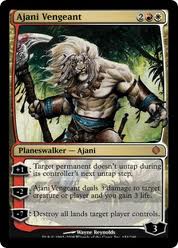
quite bullish on almost all Modern staples, (the more recent the reprint the safer bet).  If you aren’t already, I recommend targeting Modern staples in trades.  Many casual players are still out there who cracked Modern Masters packs in hopes of living the dream and ended up with a handful of Modern playable cards sitting in their trade binders.  A couple of cards that haven’t seen reprint in awhile that I am a little more hesitant to acquire as speculation targets: [card]Remand[/card] and [card]Noble Hierarch[/card].


Modern:

Grand Prix Prague 2014 Decklists

I am happy to report that Jund is alive and well.  Four of the top 8 decklists fit the description (at least loosely) of what modern Jund has evolved into following the banning of [card]Bloodbraid Elf[/card].  Meanwhile, not a single copy of [card]Birthing Pod[/card] managed a top 8 finish with one copy in the top 16.  Going into day two, each of the following archetypes, U/W/R midrange, Merfolk, Urza-tron, Splintertwin, and Jund had at least one pilot that remained undefeated.  Birthing-pod strategies are surprisingly missing from that list, but a number of factors may contribute to this and we are only examining the results from a single tournament.  Consider the following decklist:

[deck title=Emanuele Giusti Grand Prix Prague 2014 Top 8 – Modern]

[Creatures]

*4 Dark Confidant
*4 Deathrite Shaman
*1 Olivia Voldaren
*3 Scavenging Ooze
*4 Tarmogoyf

[/Creatures]
[Spells]

*2 Abrupt Decay
*3 Inquisition of Kozilek
*4 Lightning Bolt
*2 Maelstrom Pulse
*2 Terminate
*3 Thoughtseize
*4 Liliana of the Veil
[/Spells]
[Land]
*4 Blackcleave Cliffs
*1 Blood Crypt
*1 Forest
*3 Marsh Flats
*1 Misty Rainforest
*2 Overgrown Tomb
*3 Raging Ravine
*1 Stomping Ground
*2 Swamp
*2 Treetop Village
*4 Verdant Catacombs

[/Land]

[Sideboard]
*2 Ancient Grudge
*2 Grafdigger’s Cage
*2 Jund Charm
*2 Obstinate Baloth
*1 Olivia Voldaren
*2 Slaughter Games
*1 Sword of Light and Shadow
*1 Terminate
*1 Thoughtseize
*1 Thrun, the Last Troll
[/Sideboard]
[/deck]

I would consider this particular Jund decklist relatively “stock” in the sense that there are no big surprises.  Liliana of the Veil is a four of in almost every Jund deck I have seen as of late, and I don’t believe that her current price point reflects her current popularity.  I could easily see price correction moving her price to $50.00 and higher during Modern season.  I saw copies earlier this week as low as $40.00 and she is trending upward as I write.  When did Olivia Voldaren become the four drop of choice in Modern Jund?  She has been showing up in recent MODO daily decklists as well, but I am under the impression that the general population of magic players would not think of this card as an auto-include in Modern Jund.  I might try to target a few copies now in trades as the casual appeal alone for this card can potentially drive its value upward. At less than $5.00 it feels pretty safe.  The versions of Jund splashing white tend toward Ajani Vengeant, and there were numerous copies of this card in a variety of archetypes.
Ajani Vengeant

Standard:

SCG Open Orlando Standard Decks

At the Star City Standard Open in the top 8 there were three copies of Mono-Blue Devotion, one copy of Mono-black, two copies of pseudo-Mono-Black plus [card]Blood Baron[/card] and [card]Sin Collector[/card] (otherwise known as B/W midrange).  Seems about par for the course.  Standard is clearly stagnate. [card]Liliana’s Reaver[/card] did make its way into the 11th place B/G devotion deck that Shawn Ellis ran.  I don’t really see any financial implications for the card, but it did seem like a reasonable card choice both contributing to devotion, strong on offense and defense, and a nice little upside.  I think that the four drop spot isn’t really contested and still belongs to [card]Desecration Demon[/card], but the hand disruption element to an unchecked reaver may be something worth trying out.

Legacy:

SCG Open Orlando Legacy Decks

Yet another unique deck chock-full of answers to the [card]True-Name Nemesis[/card] showed up and took it down this week in BUG Delver.  This deck can proactively fly over [card]True-Name Nemesis[/card], with [card]Delver of Secrets[/card] or [card]Tombstalker[/card] or just kill it.  Not by coincidence we see another three copies of [card]Liliana of the Veil[/card] in this deck.  I see a trend here.  She’s everywhere.  Another card that shows up in the sideboard of the winning BUG list is [card]Grafdigger’s Cage[/card].  This card is also showing up in a number of places, and it’s incredibly versatile, with one or the other clause of text being very relevant in numerous match-ups in Legacy as well as Modern.
With the amount of discussion of True-Name Nemesis being an unfair card as of late, it is quite pleasing to only see four copies throughout two decks in the top 8 of the open this weekend.  The winning list did not have a single copy, and no one archetype had more than one pilot in the top 8.  One could argue that [card]Delver of Secrets[/card] is an archetype in and of itself, but I would argue that it is more of a super-type.  What is clear is that Legacy is incredibly diverse, rewards good play, and would appear to remain rather healthy despite the addition of [card]True-Name Nemesis[/card].


Paul’s Pre-GP Rundown

You have less than a month to sell your [card]Mutavault[/card]s or trade them away for something insane five minutes before a PTQ starts. This card should be in an event deck soon, and even if it’s not, demand can’t get much higher. There’s no upside left in the card, and it’s time to turn your copies into something else if you haven’t already.

Jan van der Vegt is apparently on the [card]Goryo’s Vengeance[/card]/[card]Through the Breach[/card] deck for GP Prague, but with a five-color manabase to support [card]Fist of Suns[/card] as a third way to cheat in [card]Emrakul, the Aeons Torn[/card] and [card]Griselbrand[/card]. I have no idea if this version of the deck is good, but you can get Fist for under $2 and its casual appeal will help mitigate the risk (it has a 27% spread, though some of this is likely due to potential hype about the deck). I think this is close to a free roll if you’re paying attention this weekend and can cash out before stores update their buy prices should the deck flop.

[card]Primeval Titan[/card] has a 15% spread and is 20 tickets on MTGO. These are both giant signs pointing towards the card going up fairly dramatically in the near future. It’s in some versions of [card]Scapeshift[/card] as well as the fringe [card]Amulet of Vigor[/card] deck. It’s also in the Green Devotion deck everyone has been secretly brewing at 3:00 a.m. I’ll admit I bought in pretty hard on these last week and I still like the price they’re at—between GP Prague and Pro Tour Born of the Gods in the short term, as well as Modern PTQ season coming in a few months, this bet feels hard to lose.

[card]Gemstone Mine[/card] is another interesting pickup. It’s in the [card]Fist of Suns[/card] – [card]Griselbrand[/card] deck I mentioned earlier as well as the [card]Amulet of Vigor[/card] – [card]Primeval Titan[/card] deck. Normally being in two fringe strategies wouldn’t be very interesting, but it also has a 30% spread and lots of demand outside of Modern. I don’t think Mine is an outright buy so much as a trade target, but it’s something to keep an eye out for during the next few weeks when you’re at events.

I cannot keep copies of [card]Cabal Therapy[/card] for more than a day or two. There are 32 total listings on TCGplayer right now and the internet is slowly drying up (Star City Games is completely sold out, for instance). I think this card could hit $20 or more over the course of a day and is a fantastic pick up.

Avacyn Restored is in the middle of a price adjustment. [card]Avacyn, Angel of Hope[/card], [card]Craterhoof Behemoth[/card], and [card]Griselbrand[/card] have seen significant increases over the past few months and I don’t think the set is done experiencing these kind of jumps. I love [card]Cavern of Souls[/card] as a pickup right now—this has real long-term potential to hit $20 or more in a few years with no competitive results, a la [card]Vampire Nocturnus[/card] before the reprint. However, the card also has real legs in Modern and Legacy Merfolk decks, which makes it even more appealing. Cavern isn’t a cash buy right now, but it’s a very solid trade target that I don’t think you can lose on in the long term.

Andrew Shrout continues to show us that green-white is not completely dead in Standard. His results combined with the upcoming G/W temple in Born of the Gods would normally lead me to believe that buying into Standard G/W staples this month is an easy way to turn a profit, but I’m not sold in this case. Take a look at his list:

[deck title= GW Shrout]

[Creatures]

*4 Experiment One

*4 Soldier of the Pantheon

*4 Fleecemane Lion

*2 Skylasher

*4 Voice of Resurgence

*4 Banisher Priest

*4 Boon Satyr

*3 Mistcutter Hydra

[/Creatures]

[Spells]

*4 Advent of the Wurm

*4 Selesnya Charm

[/Spells]

[Land]

*8 Forest

*8 Plains

*3 Selesnya Guildgate

*4 Temple Garden

[/Land]

[Sideboard]

*1 Mistcutter Hydra

*2 Skylasher

*3 Unflinching Courage
*2 Last Breath

*2 Rootborn Defenses

*2 Polukranos, World Eater

*3 Glare of Heresy

[/Sideboard]

[/deck]

That’s 34 rares and mythics. Granted, eight of them are [card]Mistcutter Hydra[/card]s and [card]Skylasher[/card]s, but they could just as easily be [card]Ajani, Caller of the Pride[/card], [card]Loxodon Smiter[/card], or [card]Witchstalker[/card].

With around half the deck being made up of rares and mythics, I think any type of price increase will be spread out among too many cards for anyone to make any money. The lone exception is [card]Advent of the Wurm[/card] because everyone hated Dragon’s Maze, so the relative supply will be much lower. It’s also entirely possible that [card]Lifebane Zombie[/card] is actually the best pickup if we think G/W is going to be good, but it’s almost three times as expensive as Advent, so it has less upside. We can probably wait a bit longer before picking it up.

I invested in [card]Scavenging Ooze[/card] instead of [card]Mutavault[/card] this September. Oops. I like Ooze as a trade acquisition this month, if not an outright buy, while it’s price is so significantly depressed. I don’t think there’s much more time than that to get in because the temples coming in Born of the Gods should help make midrange strategies relevant in Standard again, which is where Ooze is at its best. Don’t get me wrong, [card]Sylvan Caryatid[/card] is the main reason to play Green in midrange strategies and Ooze will probably be riding its coattails, but I don’t think that matters. The promo hurts the ceiling somewhat, but I still think Ooze can hit $12 with broad demand once the format evens out a little.

It’s very interesting that Standard prices haven’t really moved much despite PTQs starting a month ago. At the same time, various older cards have doubled. We all have to learn the pricing patterns of the new PTQ schedule and how the different block structures fit within it. For instance, I’m staying away from all Theros cards until June (right before M15 and during Modern season). We haven’t had a big-small-small block since Scars of Mirrodin, when the playerbase was significantly smaller, and while I don’t know what drafting a set for nine months is going to do with this large a player base, I have a hunch.

Have comments? Please share below.

Andrew Colman – Serum Visions: Sphinx’s Brew-velation

Hello and welcome to Serum Visions everyone


It’s been a quiet week in the MTG world it seems. Or maybe I haven’t been paying any attention. I was stretching to come up with a topic that was related to the MTG world and my wife recommend to “just give them a good old history lesson.” I though that was a great idea but it needed to be inspired. I wandered over to the Mother Ship (Daily MTG) and there it was, [card]Black Lotus[/card], as the Card of the Day. That’s the hallmark beginning of the impressive history of our game.

The earliest beer has been a topic of beer scholars for around hundred years. They have found more than 800 paintings on the walls of the pyramids and had temples dedicated to the goddess beer. Home brewing was an everyday occurrence, and existed as sustenance for the people of the time. There were also major breweries alongside microbreweries. There were different styles, ingredients, and regions. So let’s dig in to some fun stuff.

The Gods and Goddess of Beer

As I think we can all remember from elementary school, Egyptians life revolved around the culture’s gods and the stories that surrounded them. Beer was no exception to this rule. It was believed that Dionysus was the inventor of beer. There is a somewhat contradictory story that reads that Dionysus actually fled to Mesopotamia because he was disgusted that the Egyptians enjoyed beer. Take from this what you will, it’s all here to say that the gods and beer were linked right from the beginning. If, however, Dionysus invented beer and somehow humans got a hold of it, we would need to be able to produce more of it. Since we are not gods who can just create things from nothing, we needed a process of making it: brewing. With that process came the goddess Hathor (see statue). She was the “inventress of brewing.” Another name that she carried was “the mistress of intoxication.” The temple that was dedicated to her was aptly named “the place of drunkenness.”  We then have another goddess associated with beer, her name is Menqet. She was often seen with Hathor and carried the name “the goddess who makes beer” and also “overseer of the brewery women.”

The Earliest Home Brew

It is not a surprise, then, that the people who made the beer in this culture were the women. At home the women would have often brewed the beer as it may have been considered a task akin to cooking daily meals. Reasons for this might have been that beer was safer to drink than the water and it was also a source of calories and nutrients. They were not yet using hops to preserve their beer, so this home brewed beer would have been much lower in alcohol content. Therefore, it would not have been able to keep infections at bay for very long. So it would have been consumed very fresh, possibly as soon as the primary fermentation was complete. If the beer is only being made at two to three percent alcohol, it would only take a few days to completely ferment and would need to be consumed within a few days. It seems like it would not be unreasonable to say that they may have been brewing at home two or three times a week.

Glyphs

If you read my Grain to Glass post, you’ll have a good idea how beer makes into your glass. The process used in ancient Egypt, however, has been hotly debated. In the last thirty years, the argument has been distilled down into what we can actually discern from the information that’s left to us. The debate stems from a long artistic interpretation tradition of beer scholars. Scholars took art on the walls of the pyramids and used it to discern ingredients, processes, and other elements of the beer culture in ancient Egypt. These interpretations have led to some misconceptions, but it is now generally agreed that the beer was actually made from bread that had lots of yeast added to it. It was lightly baked and then stomped to break it up much like wine grapes. It would have been put into a large vessel for fermentation, then strained and put into a jar to be sealed for storage or transportation.

Big Business

Wait a second, I just said that these beer would have been made every few days and drunk very quickly. But just like we have big breweries today, there were big breweries back then. Egyptian beer was produced at such high volumes that breweries were able to supply all the local demand as well as leave some left over for export. The most popular beer from Egypt would have been from a city called Pelusium. It was so popular, in fact, in later times it was exported to Rome. Ian Hornesly writes in his book what this exported beer might have looked like.

“The possibility exists that we are looking at an ancient equivalent or our much-exported “India Pale Ale” from the ninetieth century. Beer destined for export must have had some “keeping quality to them, maybe via a herbal addition. Maybe IPA actually signified ‘Imperial Pelusian Ale’ ”

This just goes to show that nothing is new under the sun. If a beer has to travel, it  will need to to last longer. The only way to achieve that is to increase the alcohol content and add a preservative. Maybe a history of IPA will serve us well in the near future. Something else that is not new is that people of all walks of life and time like variety. Egypt was also a big importer of beer. The most popular beer they imported was from an area called Qode from somewhere near Babylonia. This beer is important because it seems to be the first beer that was produced outside of its original region. Hornsely asks if it is the first instance of brewing under license, meaning that the demand was too big for the main brewery to handle so itlicensed the recipe out to other breweries to make up for its shortfall. However, I wonder if this is actually the start of the Anhiseir-Busch beer corporation lineage…

Making a Living

With all of this beer being brewed in Egypt and imported from abroad, you might wonder what it is that they did with it. Or maybe you don’t, drinking it seems like a fairly obvious answer, but that is only part of the story. Beer and bread were actually a means of payment for working certain jobs. One person might be paid four khar (ancient Egyptian unit of measurement) of emmer (a type of wheat) and 1.5 khar of barley per month. This works out to roughly 202 kilograms or 444 pounds of grain per month. The person being paid does not receive this as raw grain, but rather receives it in its processed form of beer and bread. To put this into some perspective, it takes around 10 pounds of grain to make five gallons of 4%-ABV beer. So, 444 pounds of grain will make you 44.4 five-gallon batches of beer. Each five gallon batch of beer yields around 55 bottles, so in the end you end up with 2,420 bottles of beer per month, or 80 per day. There are, however, a great number of caveats to these calculations, not all of which I will be able to discuss here. I’ll mention a couple, though, the first one being that one person’s wage would probably be feeding a whole household. It would also be fair to say that a given household might want some bread during a given month, which would cut down drastically on the amount of beer it would get, especially with a larger family. So after these, and still other, allowances have been made, it’s probably fair to say that a worker would earn about a six pack of beer per day. Not too bad if you ask me.

And finally I’ll end with a list of names that the Ancient Egyptians would have called the varying styles of beers.

Dark beer, Sweet Beer, Thick Beer, Iron Beer, Garnished Beer, Friend’s Beer. Beer of the Protector, Beer of Truth, Beer Which Does Not Sour, and Beer of Eternity. I personally want to try the Friend’s Beer and the Beer of Truth, which was drunk by the 12 gods who protected the Shrine of Osiris.

There’s much I have sadly had to leave out, but I’ll have another swing at the ancient Egyptian beer culture one day. Until that day, I’ll leave you with the main resource I used so you can go dig in for yourself if you’d like. The book is called The History of Beer and Brewing by Ian S. Hornsey, Published by the Royal Society of Chemistry in Cambridge, England.

Style of the Week: Wheat Beer/ Hefeweizen


Most of the beer, if not all, made in Egypt would have had emmer wheat in it. So if you can find an emmerwheat beer, try that. If not, then go out and try a local offering of a wheat beer! Tasting notes can be found here.


As always thanks for hangin’.
Andrew

Ryan Archer – How to Deal With Being a Loser

In every game of Magic, there is a winner and a loser. This is never more evident than playing in the first round of a large tournament. Sure, all of us want to win, but the truth is that some of us will lose that round. In fact, half of us will. That’s a lot of people at even semi-large events. In fact, most everyone in any given tournament will be a loser. Even the guy who places second will feel like a loser because he almost got there (though he shouldn’t, second place is still very good). All this losing can take a toll on the best of us. The trick is to be ready.

Magic is a game of variance. The cards you draw are random. This can lead to the better player losing because his opponent drew better than him. We have all lost to someone when we thought we should have won but instead just drew lands. If you haven’t, keep playing, it will happen to you, and you will hate it. If you want to grind tournaments, you need to be able to handle losing mentally. It’s important to keep your cool, not only in the a current tournament when riding the X-1 bracket, but also in future tournaments.

Tilt

Tilt is that feeling of unnerve that can happen when we make a bad play and get punished, or when our opponent gets lucky, or maybe when we just plain lose. I bet almost everyone has ended a round of Magic and walked over to a friend.

“Get there?”

“No, my opponent was so lucky. I [card]Thoughtseize[/card]d him and took his [card]Supreme Verdict[/card]. He ripped another one the next turn and cast it to kill all my creatures. Then he ripped [card]Elspeth, Sun’s Champion[/card]. He was just so bad. I wish I was as lucky as he was. I hate [card]Supreme Verdict[/card]. I hate Magic.”

On and on and on.

It’s sometimes very hard to lose a game. Maybe you’re playing in a PTQ and your dream is to make the pro tour. Maybe you’re playing in an open and you’re playing for top eight only to have your opponent top deck the one card he needs to win. Overcoming tilt is a very difficult skill to acquire, but it is one you must acquire in order to do well in real tournaments. Here are some things I do to help overcome tilt.

Realize That Sometimes People Get Lucky

Let me say this again: Magic is a game of variance. You can practice every matchup and still lose to only drawing land. It’s just part of the game. Even the dice roll and going first can lead to a huge blowout, and the dice are also random. You just have to deal with it. Understand it. Sometimes you will get lucky, sometimes they will. I bet you don’t agonize over the time you got lucky to win. Though, [card]Thoughtseize[/card] guy above, sure remembers that sting when his opponent got lucky.

I heard somewhere that the best Magic players, I’m talking pro-level players, can only hope to have a win percentage of 70% against a field of good players. That means in a ten round tournament, they had to get lucky twice to make top eight at 9-1. Crazy.

Take a Closer Look at Why You Lost

In my experience, this is the single most-helpful technique you can perform to get better at Magic. It’s very easy to just claim your opponent got lucky, but it’s much more difficult to admit you lost because of you. After every losing match, I like to replay each game over in my head to try to understand what happened. In the game, oftentimes we get tunnel vision and are so sure our opponent will do something based on the plays made so far. Maybe he is playing a control deck and he didn’t cast a removal spell on turn three so you assume he has a [card]Supreme Verdict[/card]. You play the rest of the game assuming he had the card and don’t commit enough to the board out of fear, and eventually you end up losing.

If we think about the match afterwards, it’s easy to pick up on things that we didn’t think about during the games. Maybe during gameplay you didn’t consider that the opponent mulliganned and could have kept a sketchy hand. Maybe he played [card]Divination[/card] on turn three to try to draw his fourth land. Maybe your threats were not big enough to warrant a removal spell. Maybe his plan was to play a [card]Jace, Architect of Thought[/card] to stop your attack. The point is, don’t let one possible play distract you from other potential reasons your opponent is playing a certain way.

The other person in the match to take a look at is yourself. Odds are you didn’t play perfectly. Maybe you made a bad attack, maybe you played your [card]Thoughtseize[/card] too early, maybe you played your creatures in an incorrect order, maybe you forgot a trigger, or maybe you forgot to do something obvious. When you realize that you made a mistake, things will go much better for you if you catch yourself before making that mistake again. But mistakes are not always obvious.

At a recent tournament, I had two bird tokens and a [card]Scion, of Vitu-Ghazi[/card] in play. I had a [card]Boon Satyr[/card] in hand. I wanted to get in as much damage as quickly as possible. He had one untapped mountain. I attacked with the bird tokens and wanted him to shock a bird and in response I would cast the Satyr. When he didn’t cast it I thought the coast was clear so I paid five mana to enchant my 1/1 flyer. He then cast shock in response. Afterwards I realized there was no reason for him to shock the bird and I should have waited. There was a lot more going on, but you get the basic idea.

Reevaluate Mulligans

Another area to improve is your mulliganning skill. Do you mulligan correctly? If not, you may be losing games because of it. You should be aware of what hands you keep against what opponents. One could write a whole article about how to mulligan, and I’m sure someone has, but just be aware that the mistakes could have happened as early as your starting hand.


Scion GW Update

For the last few weeks, I have been working on updating the GW list I have been playing. I noticed that a once-good matchup has been moving slowly towards the not-so-good side of the spectrum. Mono-Black Devotion used to be favorable, but a recent change to the list changed things. That move?

[card]Pack Rat[/card]. Times Four. In the Main.

It is very difficult to beat that card when played on turn two. This led to me adding two [card]Last Breath[/card] to the main. [card]Last Breath[/card] is very good at attacking [card]Master of Waves[/card]. I also shifted the deck to be more green to be able to attack through a [card]Blood Baron of Vizkopa[/card]. Here is my most recent list.

[deck title=GW Scion]

[Creatures]

*4 Experiment One

*4 Voice of Resurgence

*4 Fleecemane Lion

*1 Vitu-Ghazi Guildmage

*3 Loxodon Smiter

*4 Boon Satyr

*2 Polukranos, World Eater

*3 Scion of Vitu-Ghazi

[/Creatures]

[Spells]

*4 Selesnya Charm

*2 Last Breath

*1 Ajani, Caller of the Pride

*4 Advent of the Wurm

[/Spells]

[Land]

*4 Selesnya Guildgate

*4 Temple Garden

*7 Plains

*9 Forest

[/Land]

[Sideboard]

*1 Last Breath

*1 Trostani, Selesnya’s Voice

*1 Ratchet Bomb

*1 Pithing Needle

*1 Polukranos, World Eater

*2 Gift of Orzhova

*2 Glare of Heresy

*2 Mistcutter Hydra

*2 Rootborn Defenses

*2 Banisher Priest

[/Sideboard]

[/deck]

I played this list in a PTQ over the weekend and didn’t do so well. In fact, I didn’t win a match. My opponents were just so luc—eh—nevermind. I still like the deck and I will continue to work on it. I’m hoping we get some late Christmas presents in the next set for GW.

Have any tips to keep you from tilting? Have any questions about the changes to my GW decklist? Sound off in the comments. Thanks for reading.

Brainstorm Brewery #82 – 2013 Retrospective

2013 is in our rearview mirrors, and what a year it was. There were a lot of financially-relevant happenings in the year gone by, and the gang reminisces. What happened in 2013, and how can that help us look at 2014? What will we be ready for when history repeats itself? Tune in for a rundown of a year’s worth of financial news and all of your favorite inside gags—as well as the announcement of contest winners. Who baits Jason with a bad chemistry reference? Who is on the receiving end of some computer trash talk? More importantly, who won some fabulous prizes for helping out the cast? Find out the answer to all of these questions and more on an extra-large episode of your favorite Magic podcast that will leave you asking, “Why do they keep talking about Aluren?” This is Brainstorm Brewery.


  • StarCityGames had an announcement that impacted the future of Legacy. But how?
  • The banning of Bloodbraid Elf warped Modern.
  • Will players ever want to “pimp out” their Modern decks?
  • How did the increase in Magic Online redemption prices affect redemption?
  • The face of GPs changed this year—in some ways you might not have considered.
  • What do we do with a set like Dragon’s Maze?
  • What does the gang mean by “Aluren?”
  • Mutavault is discussed at length
  • What are the gang’s thoughts on Theros after a while to adjust?
  • What will the economics of From the Vault: Twenty look like in 2014?
  • Commander (2013 Edition) had a big impact. But how?
  • San Diego Comic-Con planeswalkers were a game changer.
  • What was the “MODOpocalypse”?
  • If you didn’t click this link before, don’t click it now.
  • What did Brainstorm Brewery accomplish as a brand in 2013? What does 2014 look like?
  • Shout outs go a bit long
  • Bet you can’t watch it just once.
  • If you are artistically inclined, the best Photoshop or alteration of either the video of Corbin hitting the light pole or a still frame from it wins a prize. Send entries to brainstormbrew at gmail dot com.
  • Want to be part of the Brainstorm Brewery Team? If you can write, stream, or Photoshop, or if you have a keen eye for design, contact altjason17 at gmail dot com to find out how you can join the fastest-growing brand in Magic.


Cabe Riseau produced the intro and outro music for Brainstorm Brewery.


Contact Us

Brainstorm Brewerywebsiteemailtwitterfacebook

Ryan Bushardemailtwitterfacebookgatheringmagic.com

Corbin Hosleremailtwitterfacebook – quitespeculation.com

Jason E Altemailtwitterfacebookgatheringmagic.com – quitespeculation.com

Marcelemailtwitterfacebook

DJ Johnson – Getting Value Out of Lesser Commons and Uncommons

I don’t think I would be alone if I said that the MTG finance world is surrounded by a lot of misconceptions, especially as of late. With the recent [card]Splinter Twin[/card] and [card]Phyrexian Obliterator[/card] price spikes, speculators are pointed at maliciously. Casuals and grinders alike believe that those of us who want to make money in Magic are manipulating puppet strings behind the curtain to control the market and initiate price spikes. While this is not an article dedicated to disproving that misconception (the Brainstorm Brewery crew already discussed it in multiple recent episodes of the podcast, and my co-writer Anthony Capece addressed the topic in his incredibly well-written article Anatomy of a Spike), I’d like to bring up a different, less-discussed topic. If you ask most MTG financiers what the most profitable aspect of our game is, I think the most unanimous decision would be collection buying. If you have the cash on hand, buying a collection to piece out and sell can yield far more profits than speculation, value trading, or purchasing singles at FNM for buylist prices to later sell on TCGplayer or eBay.

The misconception is that there are still a lot of people who think that all of the value in a collection is held in the rares and high-dollar cards. While we all want to be the guy who goes to a garage sale and grabs the $50 shoe box of cards with a NM Revised [card]Underground Sea[/card] sticking out of the top, it’s probably not going to happen. It does on occasion, and I’m sure that someone will reply in the comments section about how they just found that exact collection yesterday, but stay with me for the sake of the argument. The objective of this piece is to show you how there can be a lot of value left between the cracks in the form of commons and uncommons, and they don’t even have to be the [card]Imperious Perfect[/card]s or [card]Merrow Reejeerey[/card]s of a collection. Those are common knowledge. We need to go deeper. We need to find the cards that nobody else cares about, the type left on draft tables for free pickings.

Turning Junk to Dollars

Most of these cards won’t be worth selling on eBay or TCGplayer, and it’ll be more effort than it’s worth to find a buyer or trade partner locally. That means we’ll have to resort to buylisting our diamonds in the rough in order to make a profit. I’ve mentioned this before, but there are two tools I like to use to make buylisting a less painful experience than it would otherwise be.

One of those methods is by inputting cards into Trader Tools at mtg.gg (requires an Insider subscription to Quiet Speculation). QS’s buylist aggregator is fast, simple, and removes stores that have a questionable history. You can also add cards to a list within the program and see the exact total of how much you’ll be getting from each store in advance. The downside is that seeing which stores are offering which prices is behind a paywall, so you need to be a QS Insider in order to get full value from Trader Tools.

A free alternative is MTGprice.com. They also have info on multiple buylists, but I have noticed that they omit some of the buylists that Trader Tools shows. If you don’t mind spending a bit more time for a bit more profit, use both. If you want to save even more time, follow my advice and restrict yourself to CardKingdom.com, ABUgames.com, and AdventuresOn.com. TrollandToad.com used to be at the top of my buylisting sites as well, but the amount of time it takes to process an order has steadly increased over the years. If you don’t mind waiting months to get paid, use T+T at your own risk.

While the process can be arduous and boring, it’s still a profitable way to spend an afternoon if you don’t have anything else going on. Turn on the TV, or put some music on, or listen to the latest episode of Brainstorm Brewery. Let’s take a look at some cards that I’ve found in piles of “stripped” commons and uncommons from a collection I bought somewhat recently, none of which are in Standard anymore, and none of these see heavy Modern or Legacy play like the obvious hits of [card]Kitchen Finks[/card], [card]Path to Exile[/card], [card]Brainstorm[/card], or [card]Hymn to Tourach[/card].

The Picks

  • [card]Mind Sculpt[/card] currently has a buylist price of $.19. Yep, casual players really love destroying each others’ decks, especially when they can’t afford Glimpse the Unthinkable, or if they want to play mono blue.
  • [card]Squadron Hawk[/card] only sees play very periodically in Modern Soul Sisters, but if a person needs one, they need a playset. If that person needs a playset, so do the online retailers. That’s why AdventuresOn.com is buying them at $.10. That may not seem like a whole lot, but every economics major in the world will tell you that every little bit counts.
  • [card]Fog Bank[/card] is a casual all-star, as many of my friends who do not play competitively tell me. In a mill deck that needs to not die while getting rid of the opposing 60 cards, [card]Fog Bank[/card] is a cheap blocker that lasts forever as long as the opponent doesn’t have removal. It also commands a price tag of at least a quarter in all of its editions, topping out at a little above $.75 for the original Commander copy.
  • [card]Vapor Snag[/card] is in the new Ninja Bear Delver Whatever deck that Travis Woo has been playing recently, but that hasn’t affected its price at all. The [card]Unsummon[/card] with bite has been buylistable ever since its rotation for quite a lot, as in $.24 to AdventuresOn for the New Phyrexia version. Or you could sell to Cardkingdom for a whopping $.39 for Duel Deck version.
  • [card]Spirit Mantle[/card] is another casual all-star, because giving your guys protection from their guys lets you hit them directly. Auras may get a bad reputation, but removal be damned, the core set version of these are $.43 to ABU Games, and the Planechase versions are $.65 to Card Kingdom.
  • [card]Go for the Throat[/card] rotated a while ago, and it was a valuable uncommon while it was in Standard. That hasn’t changed, and you can still buylist them for $.78 to ABU Games.
  • [card]Unburial Rites[/card] is in the same boat. It rotated, sees no play in Modern or Legacy, but it’s a reanimation spell that doesn’t mind getting dredged away. That earns it a price of $.17 to Adventures On, which adds up quickly if you happen to have a bunch still sitting in a box from previous Standard, like I did.
  • [card]Vampire Nighthawk[/card] is an interesting case. It’s been reprinted to death, but it has three extremely powerful keywords that work well in casual vampire decks, so the reprinted version is still worth quite a bit, up to $.69 each depending on the edition. Compare this to [card]Lingering Souls[/card], which sees even more Constructed play than Nighthawk does, has also been reprinted twice, and has a lower buylist price for both the Duel Deck and the DKA version. This is another great example of how strong a hold casual players have on the MTG market.
  • [card]Geosurge[/card] is something I’m not sure what to make of. It never saw Constructed play as a ritual because of the restrictions on what you can cast with it in addition to it costing RRRR, but it still has a buylist price of up to $.08. I guess casual players enjoy slamming down Shivan Dragon-esque monsters on turn 4 with only a single card, which is fine for both them and us.
  • [card]Rancor[/card] rotated along with [card]Vampire Nighthawk[/card], but the core set version can still buylist for almost $0.50 to Card Kingdom. Built-in aura insurance probably helps with that. It sees occasional play in the Modern Hexproof deck,
  • [card]Full Moon’s Rise[/card] and [card]Moonmist[/card] are worth $.10 and $.05 respectively, probably because people who missed out on Innistrad want to make their werewolf decks. I have long been advocating pulling these out of draft leftovers and piles of bulk that other people don’t care about, and now they’re finally worth something.
  • [card]Triumph of the Hordes[/card] is an extremely powerful [card]Overrun[/card] effect in EDH that can leave your opponent dead when they least expect it, and it can be buylisted for…okay, there are no stores that want it right now. Bear with me though, I’ve died to this thing in EDH more often than I want to admit, and it’s a whole mana cheaper than the original [card]Overrun[/card]. I’m fine with hoarding these somewhere until they’re worth $.15 or so. I don’t advocate going out to buy any, but if you ever go through bulk commons and uncommons looking for gems, there’s not really a downside to setting [card]Triumph of the Hordes[/card] aside.
  • [card]Mask of Avacyn[/card] is currently worth a dime to Adventures On, and I’ve seen it pop up on other buylists for up to $.20 at times. It’s a lot less expensive then [card]Lightning Greaves[/card] for players who want to keep their Commander decks on a light budget, and the power/toughness boost isn’t irrelevant in a format where 21 is a magic number.
  • [card]Palladium Myr[/card] lets any color jump from three to five mana in a single turn, and is a cheaper alternative for those who don’t want to buy [card]Coalition Relic[/card]s. Even though it’s vulnerable to almost all removal, these are a dime a piece to ABU Games.

What About Standard Cards?

While these casual cards are always great targets to pick out of bulk, I’m not going to assume that everyone has piles of unsorted commons and uncommons to dig through. For players who primarily deal with Standard cards, there is still hope. There are a lot of gems throughout Return to Ravnica block that you can buylist now to receive a nice sized check in the mail later. While many grinders I know look only for the [card]Magma Jets[/card], [card]Burning-Tree Emissary[/card]s and [card]Boros Charm[/card]s of a set, there is hidden value to be had elsewhere. Let’s see what RTR block brought us:

  • [card]Judge’s Familiar[/card] is up to $.23 on ABU Games from $.18 a couple of weeks ago. I recommend selling these now if you can, as I don’t see Mono-Blue Devotion ever being more powerful than it is now.
  • [card]Rakdos Cackler[/card] is sellable for $0.34 on ABU Games. Like the Familiar, I don’t see Cackler holding value post-rotation. It doesn’t seem to have any casual appeal, so if you have extra copies that you can’t unload elsewhere, this is a great way to get rid of them before they take their leave of Standard. At the very least, it’s a good idea to keep an eye on the price throughout their remaining year.
  • [card]Unflinching Courage[/card] doesn’t see much play at the moment, save for the sideboards of GW aggressive decks, but it’s worth almost a quarter to Adventures On. If you want to squeeze every bit of value out of these possible, I recommend waiting until Born of the Gods comes out with the GW temple. Having access to a non-gate dual land helps the chances for the voice of green white decks to resurge.
  • [card]Wight of Precinct Six[/card] is a Standard staple, and as such…wait, what? Yes, this creature is actually worth money, even though it sees no Standard play. This is a [card]Mind Sculpt[/card]-esque card whose value is sustained by players who want to put the top cards of their opponents’ decks into the graveyard, and then beat face with this guy and [card]Jace’s Phantasm[/card] (who is also worth a good amount of money for a casual uncommon from a recent core set). I wouldn’t be in such a hurry to get rid of these though, as the casual demand won’t fade upon rotation.
  • Interestingly enough, even some commons have value to buylists if their power and demand is high enough. At the time of this writing, you can dump 40 copies of [card]Frostburn Weird[/card] for $.04 each, and 39 copies of [card]Gray Merchant of Asphodel[/card] for $.07 to Adventures On. Prices like that aren’t worth making a buylist cart alone, but they’re a nice way to cover a small percentage of the shipping fees for sending in your cards.

As for the uncommons from Theros, I recommend picking up the ones that see even fringe Constructed play, or ones that you think have potential. When you’re at FNM drafting, here are some targets I recommend scavenging and holding for later if you get the chance:

  • [card]Dissolve[/card] only has a buylist price of $.10 at the moment, but [card]Dissipate[/card] went a lot higher than that in comparison when it was in Standard. you might be able to get $.30 each a year down the road.
  • [card]Nemesis of Mortals[/card] has synergy with the scavenge cards from RTR block, so it might fizzle out after RTR block rotates. People love their graveyard-based decks though, so maybe this will be an uncommon worth buylisting at some point this year.
  • [card]Magma Jet[/card] is only a quarter on the highest buylist, but you can actually just trade these off at a dollar a piece in your binder.
  • [card]Arena Athlete[/card] seems like it could be an all-star in the right hyper aggressive deck, in a [card]Lightning Mauler[/card]-esque role supplemented by [card]Titan’s[/card] Strength and other cheap heroic tricks. That card ended up being buylistable for almost a dollar, and Google Drive thinks “buylistable” is a word without me having to tell it to accept it. Huh.
  • [card]Fanatic of Mogis[/card] already gets a lot of attention for being able to just kill people on turn four, and there are certain grinders out there who ensure that RDW will never die. I can see this guy being sellable for more than the $.07 he’s worth now.
  • [card]Mogis’s Marauder[/card] and [card]Tormented Hero[/card] both currently play a role in a Rakdos aggro deck with [card]Xathrid Necromancer[/card], [card]Rakdos Cackler[/card] and [card]Rakdos Shred-Freak[/card]. Once Theros isn’t a 3x Draft format and supply becomes more limited later in the year, these two black aggressive cards may be able to hold their own at a solid quarter or more. They’ve already proven themselves in Constructed, so I don’t see the downside in putting them aside for later.

Extracting Value

Even though this article wasn’t full of tips to make big money on the next Modern speculation target, I hope it helped at least a few readers look at one of the more unexplored areas of MTG finance. Making money off of Magic isn’t all about rares, and it isn’t all about the obvious hallmark uncommons like [card]Manamorphose[/card], [card]Spell Snare[/card], and [card]Memnite[/card]. The best way to make money is by taking control of a field that nobody else knows about, and this seemed like an area that (at least in my locale) is largely unexplored and ignored. It doesn’t seem like much, but there’s very little effort required, and its a great feeling getting the checks in the mail from stores for taking cards that you had no use for anyway. Thanks a bunch for reading. As always, feel free to leave constructive criticism on either the topic of the article, or any way in which I could improve my writing in general.

Brian Dale – Investing 202: Corbin v.s Ryan, Round 1

Go big or go home. Two wrongs don’t make a right, but three rights do make a left. I am never going to see a merman, ever!

The Dow is up due to speculators. Oil is down due to speculators. These are common phrases in today’s investment  world. One would think that speculators are responsible for everything since the dinosaurs died off.  But with the exception of the rare “London whale,” the markets are moving based on 10,000 different factors and most speculators are just trying to scry the patterns.

A few, like the Brew Crew, put themselves out there as someone who should be followed. Today we are starting with Corbin ” It’s a Merfolk” Hosler versus Ryan “Baby Face” Bushard.   Click the “Hosts” link at the top of this page if you don’t know them. We are only looking at results today.

Before we dig into the results, some context. The Major League Baseball Hall of Fame is filled to the brim with players who failed at bat seven out of every 10 times. The highest-paid hedge funds in 2013 underperformed the markets by almost 20%. Donald Trump has filed for bankruptcy four times.  The bar for success in life is often very low. The expectations, on the other hand, are often very high.  Speculating on MTG cards is the act of guessing the drive and finances of 13 million people at the same time.

On To The Battle

This first round we will compare Corbin versus Ryan from the period starting Nov 1, 2012 going through,April 30th, 2013. During this time, each individual made a different number of calls.  So we are going to pretend like you went out and spent $100 on each and every card they said buy, and by coincidence you sold exactly $100 worth of every card they said to sell (If your are spazzing about the math here, please read Investing 201). Then we divided the profits by the number of trades.  We are going to start with the short-term results:

Ryan’s 30-day returns: 7% per trade

Corbin’s 30-day returns: 26% per trade

Okay, if we stopped here, everybody would be joining the cult of merfolk. Corbin’s average return per trade in the first 30 days was on average more then three times higher then  Ryan’s. Let’s take a look at some of Corbin’s average buy calls:

[card]Tree of Redemption[/card]: $0.50 –> $2.00 (300% profit)
[card]Cryptic Command[/card]: $18.00 –> $12.00 (-33% loss)

Here’s Ryan’s:

[card]Huntmaster of the Fells[/card]: $25 –> $30 (21% profit)
[card]Deathrite Shaman[/card]: $10 –> $14 (40% profit)

Corbin seems to be swinging for the fences, while Ryan is targeting cards with incremental value.  Next, let’s look at some sell calls.

Corbin:

[card]Thundermaw Hellkite[/card]: $30 –> $38  (-26% lost profit)
[card]Hellrider[/card]: $15 –> $6 (+60% added value)

Ryan:

Shock lands: $10.00 –> $9.00 (+10% added value)
[card]Mind Grind[/card]: $3.50 -> $2.50( +28% added value)

Again,  Ryan is going for incremental and Corbin is pointing to left field (I think that should be last baseball reference). Here’s the 30-day final call rates:

Corbin correctly called the direction of a card’s price 35% of the time.

Ryan correctly predicted the direction of a card’s price 37% of the time!

Remember that each card had to move 20% or more before we counted it as a win for each of these guys.

Now, using the assumption that you will hold cards more then 30 days, let’s look at the rest of our time line. Ryan is  more likely to give a target price and to change his opinion when the price changed dramatically. Corbin is more likely to double down. For example, Corbin said to sell [card]Thundermaw Hellkite[/card] at $30 in episode 33 and then picked it again as a sell at $40 in episode 35.

Let’s look at the card values at rotation. Corbin’s returns on picks through rotation were 41% per trade. He made the correct buy/sell calls 56% of the time. Ryan’s returns on picks through rotation were 21% per trade. He made the correct buy/sell calls 62% of the time

Again, Corbin’s returns are stronger, except they are little misleading. If you remove Corbin’s [card]Aven Mindcensor[/card] call ( 300%!), his returns drop to 32% per trade on average.  And 75% of his picks move more then 50% up or down after he picked them, while the Magic universe at large moved less the 20% in any one direction.  In the investment world, we call this a high Beta.

Conclusions

Corbin’s picks during this round were more high-risk, high-reward, while Ryan’s pick were incremental and value-driven.  A gambler (Gordon profile) will more then likely find Ryan’s pick unsatisfying. While an investor (Alex profile) who fears risk more then he desires gains will jettison Corbin’s picks too quickly to realize gains.

Join as next time we pit more Brew Crew members against each other!

Anthony Capece – Going Deep

I am not really one for the called shot in Magic finance. Aside from the fact that there is no accountability whatsoever, I’m not the type to deploy my capital based on one person’s opinion (unless that person is me). I read two or three Magic finance articles each week that use this methodology for specs:

“Card X is $5 right now but it should go to $10 (or some other arbitrary price) in some vaguely defined time frame that we can all agree is in the future. Just look at Card Y for proof and ignore the fact that it is a fundamentally flawed comparison and these cards have nothing in common. For further proof, see the recent increase in price of Card Z, which hindsight bias allows me to say was super obvious even though no one actually saw it coming. Anyway, if Card X catches on in whatever new deck is out there, though I have no reason to believe it will, we could be looking at $20. In closing, I’ll point out that casuals and EDH players will love this card, even though they won’t, making it a can’t-miss spec. Now let’s look at 15 other cards, so that even if I hit on one of the calls in this article, you will have a very slim chance of guessing which one it is.”

It’s impossible to convert a hundred poorly supported opinions into a good Magic finance plan. I won’t invest in anything I don’t feel like I understand very well, so called shots don’t have much value for me.

I’m going to talk about individual cards today, but instead of glossing over two dozen possible specs and tossing out a dollar figure for each, I’m going to dive deep on just a few cards. You will have a good understanding of how I reached my conclusion, so you can decide if you agree or disagree up front and act accordingly. Also, I’ll point out when the analysis is transferrable. If you understand the dynamics of [card]Snapcaster Mage[/card], for example, you really understand the dynamics of the post-rotation large-set Modern-staple rare. That means that [card]Deathrite Shaman[/card] and [card]Thoughtseize[/card] are going to fit neatly into the same bucket.

So without further ado:

[card]Snapcaster Mage[/card]

As one of the most played cards in Modern, many financiers were looking forward to nabbing this card at a post-rotation discount. It stayed in a very tight range of $23-24 (all prices TCG Player mid unless otherwise noted) for most of its Standard life and has now dropped to about $19 with signs of leveling off. Snapcaster is a cornerstone creature of Modern, along with [card]Tarmogoyf[/card] and [card]Dark Confidant[/card], and conventional wisdom says that the price will eventually reflect this.

I’m staying away from this card, though. I think most people are falling into the trap of demand-only analysis with Snapcaster. I am in full agreement that Snapcaster will be a key card in Modern going forward, but demand isn’t the story here—the huge supply is. The card may look similar to Bob or ‘Goyf in playability, but the supply is drastically larger and that is going to keep the price down for quite a while. In fact, Snapcaster should not be compared to those cards at all. Take a look back at my article Rare is the New Uncommon for more on this.

Working against Snapcaster is that its Modern playability has been priced in for a long time. It was obvious from day one that it would be a Modern powerhouse, so most Modern players already have their set and aren’t letting go. Look at [card]Restoration Angel[/card] for comparison—it’s also a rare from that block that sees some Modern play, but players are clearly taking a wait-and-see approach with it. Sell it now, buy it back later if you need it. There is no question whether you need Snapcasters to be competitive in Modern, and that is why Resto lost almost 75% of its peak value while Snapcaster took a smaller 20% cut. This is a great card that will always be relevant in Modern, and that’s exactly why it’s priced at $19. There is no post-rotation discount to be found.

Snapcaster’s Modern saturation also severely limits the upside from a demand perspective. You really can’t play Snapcaster in too many more decks than it’s already in. What that means for a financier is that any meta shift in your favor will only bring an incremental price increase. There is no scenario where you double or triple up on Snapcaster any time soon and this is actually a pretty big negative in my eyes. You need some of your specs to hit big to be successful in Magic finance, so investing a bunch of money into something that has zero potential to do so is not usually a good plan. Especially at $19 a pop.

Opportunity cost is one of the most critical concepts in Magic finance. The game is exploding in popularity so virtually anything playable you buy is going to increase in value over time barring reprint. But as I’ve said before, a good Magic financier doesn’t spend his time finding good specs, he spends his time picking great specs out of a sea of good ones. I don’t doubt that you’ll make some money on Snapcaster if you hold it for several years, but I think you can make a whole lot more elsewhere.

At $19, I won’t go near Snapcaster—it’s way too expensive considering how many are out there. It’s a perfectly good time to buy a playset for Modern season, but that is where I would stop. If I had to guess, I’d say it will see a pretty drawn-out bottom and then drift back up into the low-mid $20’s over the next year or 18 months. That’s definitely not worth the huge investment this card would be at $19 per copy. [card]Snapcaster Mage[/card] is very much the prettiest girl at the bar this rotation, and I’m afraid we will have to find our value elsewhere.

As I mentioned above, much of this analysis will apply to [card]Deathrite Shaman[/card] and [card]Thoughtseize[/card] when they rotate. I’m more excited about Deathrite because the lack of Standard play is keeping it at a much more reasonable price, and also because Return to Ravnica was on the bench for a while during Gatecrash. [card]Restoration Angel[/card] is similar in some ways. It sees much less Modern play but also comes much cheaper, and there are fewer out there. Like Snapcaster, I think it lacks big upside, but $5 is a lot less than $19 ,so I think it’s a fine spec.

[card]Craterhoof Behemoth[/card] and [card]Entreat the Angels[/card]

For all the same reasons I’m cold on Snapcaster Mage, I am excited about these cards.

These are third-set mythics, so right off the bat there are maybe half as many of each of these cards in existence as there are Snapcasters. Second, they are both under $5 as I write this [Editor’s note: Craterhoof Behemoth has ticked up to $7-8 since Anthony’ submission. Pay attention to this guy!]. That combination of small supply and low price tells me that these cards are powder kegs—if an uptick in demand ignites them, they will explode.

If you go back and look at Scars block, you will see that mythics bottom quickly and even fringe eternal playability (or strong casual playability) is enough to move them to the $7-10 mark a year after rotation. These two cards meet that requirement, both seeing Legacy play, so in the worst case you will be able to trade these away for a small to moderate gain a year from now.

The real seller is the upside, though. Both [card]Craterhoof Behemoth[/card] and [card]Entreat the Angels[/card] are exceptionally powerful and unique cards. Craterhoof is the single best card for a creature-combo kill and Entreat uses a potent mechanic that we may not see for a while due to the mixed reception it received (and the tough flavor fit). These cards are good enough for Modern but priced a notch above bulk. If they hit, the payoff will be big. This is exactly the risk/reward profile I am looking for—minimal downside with a chance to double or triple up within a year if things go well.

[card]Craterhoof Behemoth[/card] is already starting to tick up in paper, and it’s over 10 tix on MTGO. I’d be the first to tell you that a “sure thing” doesn’t exist in Magic finance (or life), but I can say that you won’t find a better candidate for the next spike than this card. Any appearance in a good Modern deck or just another Legacy top eight might be enough.

Entreat is a little more of a sleeper, but I still like it. The main reason that this card doesn’t see Modern play is the lack of card filtering—[card]Sensei’s Divining Top[/card], [card]Ponder[/card], [card]Brainstorm[/card], etc. really make this thing go in Legacy. There is a chance the scry cards in Theros get us there. Would a full set of scry lands plus [card]Magma Jet[/card] be enough to make miracles work in Modern? If not, how many new Modern-playable scry cards would we have to see in Born of the Gods or Journey into Nyx before UWR control with Entreat and [card]Terminus[/card] is viable? It goes without saying that Entreat will spike overnight if they ever unban [card]Ponder[/card] or [card]Preordain[/card] in Modern.

I can’t really say that [card]Craterhoof Behemoth[/card] or [card]Entreat the Angels[/card] will take off in Modern over the next year. I don’t predict demand. What I’m looking for is the risk/reward profile. Even if Entreat or Craterhoof don’t break out, you will probably make as much in the first year as you would have with [card]Snapcaster Mage[/card]. However, these cards come with a very special bonus that Snapcaster doesn’t—enormous upside. You just can’t pass that package up at $5. Heck, third-set mythics don’t even really need to do anything at all to spike to $30 (I’m looking at you, [card]Phyrexian Obliterator[/card]). Both of these cards are better than Obliterator, and they are dirt cheap.

Powerful mythics that get this cheap are always worth looking at. There are others in the Innistrad block that are good buys, although I don’t think they have as much upside. For example, the ship has sailed on Griselbrand.

Well, I’m already at my word cap so it looks like we’re stopping at three specs today. I’ll write more of these columns in the future if the feedback is positive.

Michael Cuevas – Weekend of January 4-5 Review

Over the holiday break, on New Year’s Eve,  I was fortunate enough to get married to a beautiful woman I love very much, who has been supportive and encouraging, and without whom I would not be writing this article.  Nika was the one who suggested that I take the opportunity to write for Brainstorm Brewery when I mentioned the possibility.  She allows me to play and write about Magic: The Gathering and chooses not to [card]Stifle[/Card] my passion for the game. Although she would generally prefer I don’t spend hours on end at my LGS, she understands that it is important to me.  For her love and support I am forever grateful.  If you take away nothing else, my one piece of advice this week is to surround yourself with people who support you in pursuing your passion and are quick to let you know when you are wrong.  I am quite ecstatic to have married my best friend to start 2014 and our life together.

Standard

SCG Open Indianapolis Standard Decks

This weekend was the first of the new year, and also brought us the first Star City Open of 2014.  The weekend was marked by yet another victory for Mono-Black Devotion.  I find it quite telling that  Owen Turtenwald showed up running a decklist full of four-ofs.  There wasn’t any new “tech” or any dramatic changes from the typical build.  He just showed up with the biggest, baddest deck in the format and won the tournament.  Not all that exciting.  But the mono-black list itself isn’t all that exciting, or complicated to play. It just wins games.

Mono-black runs four copies of [card]Mutavault[/card], as do many of the other top-tier decks in the format. As discussed on this past week’s Brainstorm Brewery podcast, [card]Mutavault[/card]’s outlandish price right now reflects its prevalence in the format.  It’s also quite a powerful card in its own right. However, its price is likely unstable, and I doubt seriously that [card]Mutavault[/card] can maintain this price point for its entire run in Standard.  It was printed as a rare, not a mythic.  I think that unless you are actively playing every copy of [card]Mutavault[/card] you own, you need to dump them.  I am only referring to non-foil, non-full art copies.  Foil copies of M14 [card]Mutavault[/card] are only $20 lower now than the Morningtide foils were before the reprint.

Mr. Andrew Shrout showed up to the Indianapolis open with a decklist that varied in a few notable ways from the decklist we saw him run at the Las Vegas Invitational last month.  It seems that he has modified his creature suite, lowering his curve and eliminating the need for [card]Elvish Mystic[/card]. He added four copies of [card]Soldier of the Pantheon[/card] and is now running a full eight one-drops.  The deck is also slightly less pre-boarded for blue decks, running fewer [card]Mistcutter Hydra[/card]s and fewer [card]Skylasher[/card]s in the main deck.  Shrout also moved the copy of [card]Last Breath[/card] from the mainboard to the sideboard.  While some of these choices were metagame calls, I think the list Shrout chose to run this weekend is overall a better build against an unknown metagame.  With the manabase for this deck getting better, look for it to continue to be a contender following the release of Born of the Gods.

Every week, it seems like there’s a group of players who show up with a new brew. This week those players were Brian Braun-Duin and Chris VanMeter.  Inspired by Keisuke Sato’s decklist from GP Shizuoka, BBD and CVM ran a GR Monsters list stacked with planeswalkers and the [card]Flesh // Blood[/card] tech that Brad Nelson previously championed.  This deck is resilient to the current metagame of control-based strategies because it runs eight main-deck planeswalkers and two in the sideboard.  As VanMeter suggests, I feel that [card]Xenagos, the Reveler[/card] is underrated right now.  At the current price point, it’s likely a safe acquisition.

Legacy

SCG Open Indianapolis Legacy Decks

Delver remained quite relevant this weekend. Only one RUG Delver pilot managed a top-eight finish, but several UWR Delver decks were in the mix.  I think it’s safe to say that at this juncture, UWR is the better deck against an unknown field of Legacy players.  [card]True-Name Nemesis[/card] is more effective in a shell that has access to [card]Stoneforge Mystic[/card] and equipment.  Specifically, [card]Umezawa’s Jitte[/card].

The new year also brought us a spike in the price of [card]Stoneforge Mystic[/card].  The kor artificer began a price spike with foil copies disappearing first, followed by non-foil copies.  This feels to me like a permanent price shift, rather than one of the more fleeting price changes that we have seen in recent months.  While the card may still see some price settling, I imagine there will be a new floor for copies of Stoneforge, although perhaps slightly lower than the $27 we see NM copies moving for at the moment, but $25 [card]Stoneforge Mystic[/card] is likely here to stay.

One of the most interesting decks from this weekend is the Jund Depths list that bullied all the other fair decks to a first-place finish.  [card]True-Name Nemesis[/card] has put [card]Diabolic Edict[/card] effects at a premium in Legacy.  I personally prefer my decks to win faster than paint dries, but this deck showed that it is quite viable.  It is unclear how this deck manages to beat traditional combo decks and it is likely quite weak in those types of match-ups.  The “Depths” portion of the deck’s namesake comes from the [card]Dark Depths[/Card] and [card]Thespian’s Stage[/card] combo.  While [card]Thespian’s Stage[/card] isn’t exactly a new speculation target, this card could pick up quite quickly in value as applications for the card continue to be found and created.  [card]Thespian’s Stage[/card] is an interesting target, because at 65 cents a piece, it has almost reached bulk-rare status.  No one is paying much attention to this card at the moment, and it can be acquired in large quantities for a relatively small amount of money.  While this card may never be anything but a bulk rare, the long-term potential for it is quite high.

When selecting speculation targets for the long-term, one should look for a card that provides a unique effect that will only get better as the card pools for eternal formats grow. [card]Thespian’s Stage[/card] fits this definition, and has already begun creeping into the Legacy format in decks such as Lands and Twelve-Post. This weekend, the card showed its efficacy in combination with [card]Dark Depths[/card].

It is quite exciting to see the Legacy metagame contort to answer the presence of a card like [card]True-Name Nemesis[/card].  While this card initially seemed too good, and many [Card]Ponder[/card]ed whether or not it should be banned altogether, it appears that we have only begun to scratch the surface of what decks might come to the fore-front.

Have thoughts on this weekend’s events or my picks here? Please share in the comments below!

Long-Term Plans – Building to Your Playgroup

Hey everyone!  Sorry for the hiatus. I hope everyone enjoyed their holidays.  I have been debating a lot of the future of this column and I’m writing a mini-article to bring the series up in the new year.

What’s changing, you ask?  I will be making the articles more poll-driven, with multiple per article to help shape the deck, as well as including some caveats for the inclusion of some cards in certain playgroups.   The goal is to have a deck built mostly by the community and I want to involve everyone as much as possible in the process!

How Competitive is Your Playgroup?

Today, I want to discuss the different ways to approach Commander from a playgroup perspective.  A lot of people have different views on how Commander should be played (French rules, don’t be a dick, etc.), but it’s important to match your deck’s competitiveness with those of the people you play with.  A lot of people play Commander as a more casual format for gunslinging fatties and generally just having a good, stress-free time.  Other people are coming just to win.  They are the kinds of guys that will play [card]Azusa, Lost but Seeking[/card] with [card]Crucible of Worlds[/card] and [card]Strip Mine[/card]. Some groups have a bunch of people playing Commander pre-cons straight out of the box.  You need to find the sweet spot to maximize the enjoyment of everyone at the table, because in the end, you can’t play Commander with a bunch of people that don’t have fun.

Figuring out how competitive your playgroup is is the key to having fun playing Commander.  There are a number of things you should consider when determining how people want to play the game.  The most obvious is the choice of Commander. Some Commanders are generally just much more abusive than others and consequently lead to much more competitive decks.  [card]Azusa, Lost but Seeking[/card], [card]Sharuum the Hegemon[/card], and [card]Niv-Mizzet, the Firemind[/card] are some of the more competitive Commanders.

Another thing to consider is what kind of spells they are playing.  Are the blue decks loaded with counterspells?  Is anyone playing Eldrazi? How synergistic are the spells that they are playing with their general?  Is the Sharuum player playing a [card]Mindslaver[/card]?

The last thing I look for is how much mana denial and acceleration they are playing.  Generally speaking, most players would rather play more acceleration and not much mana denial.  Only the highest tier of competitive players will end up playing cards like [card]Armageddon[/card] or recurring [card]Wasteland[/card]s and [card]Strip Mine[/card]s, and then you should be ready to fight to keep your mana.

I generally rate decks on a scale of 1 to 5 to determine how I should approach playing with that group.

1.  Precons:  They may not be homemade, but the power level of most of the cards is pretty low and the decks are pretty fair. Due to the fact that the decklists are readily available and you may know most of the cards in them, I think they are the lowest power level on the totem pole.

2. Rough Home Brews:  These are usually first-iteration decks that probably don’t have a mana curve and have a lot of pretty bad niche cards that haven’t been cut yet.  Many cards may be acting as filler while more expensive and powerful cards are purchased.

3. More Refined Brews:  These decks are usually third- or fourth-iteration decks that have fewer useless cards and better mana curves.  Most of the power cards are included unless they are very niche. These decks are a bit more competitive.

4. Final Version:  These decks are the last iteration of building and are when people usually start foiling them out.  They’ve committed to the card choices and have the most powerful versions of all spells to win.

5. Ultra Competitive: These decks are piloted in tournaments and personally I think ruin all the fun of Commander.  The only difference between Final Versions and Ultra Competitive is that Ultra Competitive decks include large amounts of mana denial.  I am a supporter of players being able to cast spells and having an interactive game.  Losing a game to a well-timed mana-denial spell is just the worst.

Matching your deck’s amount of “trying” is really important to get the most enjoyment out of playing Commander. Making sure you aren’t causing anyone to not have fun is imperative.

[poll id=”6″]

[poll id=”7″]

MtG After Hours #8 – Slick Pub Talk

This week’s episode comes from to episode 67 of Brainstorm Brewery with guest hosts Slick Jagger (@SlickJager) & Motyka (@mmotyka).  Come listen to the brainstorming process behind the beer that Motyka is creating for the podcast. The debut of Brainstorm Brewery’s Black IPA will happen at #GPMontreal this March!  Come learn a thing or two on this weeks After Hours!

MtG After Hours is basically all the good shit that gets cut on the editing floor. Often while recording a podcast, the banter that’s not being recorded for the show can sometime be better than the actual episode. Get a rare behind the scenes in to the minds of your favorite podcasters, the featured podcast will rotate each week.

Contact Us

Brainstorm Brewerywebsiteemailtwitter

Ryan Bushardemailtwitterfacebookgatheringmagic.com

Corbin Hosleremailtwitterfacebook – quitespeculation.com

Jason E Altemailtwitterfacebookgatheringmagic.com – quitespeculation.com

Marcelemailtwitterfacebook

Andrew Colman – The Puzzle Box: Real Traditional Brown Section

Welcome to the Puzzle Box, everyone!

It has been an awesome Christmas season! Lots of family and food and beer. I’m lucky that my brother was the one to introduce me to Magic. I bring my cube and  we always fire couple of quick drafts after everyone has tired of each other. There was lots of watching the holiday cube while eating  Oma’s short bread and drinking some lambswool. Hope you had as much fun as I did!

We are coming to the end of our Puzzle Box building—we’ve got colorless this week and multicolored next week. I have seen a bunch of cool ideas from people on Twitter and in the comments section here on Brainstorm Brewery suggesting ways to continue with this series while sticking to the budget-yet-powerful theme. I had grand ideas of doing a “Pack to Puzzle Box” a la FMN Hero. But realistically, I’ve got school coming up again, then I’ll be heading to Europe for six weeks. From there I’ll be flying back and landing in Toronto, where I’ll engage in a three-year master’s degree at Trinity College at the University of Toronto.  All of this is to say that I don’t think I’ll have enough time to dedicate to getting out on a regular-enough basis to make that project worth while. Maybe after I’ve settled into a routine in Toronto and found a good  MTG scene I’ll engage in the “Pack to Puzzle Box Mission.” Or if I hear enough screams from the crowd maybe I’ll give it a shot. Lucky for me, chances of that are slim.

I’ll put it out again, if anyone out there knows where the good MTG scene in Toronto is,  please let me know.

Puzzle Box Artifact Section Ho!

I’ll start by saying it’s a good thing that we had some extra money from the red section left over. There was no way that this section could be $25. First of all, we’ve got more cards than the WUBRG sections and artifacts are inherently more expensive because they go in every deck everywhere ever.

The size of this cube is going to be really exciting for many reasons, but the colorless section is one that I am particularly looking forward to playing. Because we don’t have lots of the really broken stuff like the Mirrodin swords, Umezawa’s Friendship Ruiner ([card]Umezawa’s Jitte[/card]), or [card] Batterskull[/card], it means that underrated artifacts like [card]Zuran Orb[/card] , [card]Ankh of Mishra[/card], and [card]Mortar Pod[/card] will not be snap excluded from the a slot in a deck by the Jitte and will get some more regular play.

Luckily for us, there are some artifacts that are indeed very broken that do get to be included because of their banned status in most sanctioned formats. We get to include a card that could arguably be included in an extended list of the powered cards of Magic, the mentioned-in-previous-installments [card]Skullclamp[/card]. Also, [card]Tangle Wire[/card] is another of those absolutely backbreaking cards that we get to add to this list. If you have never resolved a [card]Tangle Wire[/card], let me take you through it.  You play it for three mana with four counters on it. You pass the turn and at the beginning of your opponents upkeep they have to tap four permanents. Your opponent probably does nothing and passes the turn, and at the beginning of your upkeep you remove a counter and tap three permanents, one of which is [card]Tangle Wire[/card], so only two pertinent cards. You pass and your opponent taps three permanents for a total of seven so far. You remove a counter and tap [card]Tangle Wire[/card] and one other permanent for a total of three relevant ones. On your opponent’s upkeep, he taps two more bringing his total to nine. On your turn remove a counter, tap only [card]Tangle Wire[/card], and go on with life. They tap their last permanent bringing the total number of permanents they had to tap to ten while you only tapped three.

[card]Bonehoard[/card] was an artifact that was tested out in many cubes when it was spoiled, but unfortunately, it ended up not being good enough for the very high-power cubes. Fortunately for us, our environment is not as powered and I think [card]Bonehoard[/card] will benefit from that. It should be made better by another fringy inclusion in [card]Mortar Pod[/card]. [card]Mogg Fanatic[/card] and its black version, [card]Fume Spitter[/card], are amazing cards and [card]Mortar Pod[/card] turns all of your outclassed creatures into a Mogg Fanatic. Green deck with lots of mana dorks that have outlasted their usefulness will turn into an extra few damage or spot removal for any X/1 creatures.

One of the concerns that I had at first was the [card]Tinker[/card] target count—I was one short of what I felt was optimal. With only two, [card]Sundering Titan[/card] and [card]Myr Battlesphere[/card], I did some digging and found [card]Steel Hellkite[/card]. A 5/5 flyer with with a conditional [card]Engineered Explosives[/card] is certainly no [card]Blightsteel Colossus[/card], but If you curve into it on turn three with a [card]Tinker[/card], you should be able to wipe most of their board the next turn and lock them out of the game. Of course, if you have a [card]Wurmcoil Engine[/card] or Colossus feel free to swap it out.


[deck title= Colorless List According to Type]
[Mana Artifacts]
Everflowing Chalice
Coldsteel Heart
Mind Stone
Darksteel Ingot
Worn Powerstone
[/Mana Artifacts]

[Equipment]
Bonesplitter
Trusty Machete
Skullclamp
Mortarpod
Grafted Wargear
Loxodon Warhammer
Bonehoard
[/Equipment]

[Utility Artifacts]
Zuran Orb
Black Vise
Pithing Needle
Ankh of Mishra
Ratchet Bomb
Crystal Ball
Mimic Vat
Tangle Wire
Icy Manipulator
Nevinyrral’s Disk
[/Utility Artifacts]

[Creatures]
Squee, Goblin Nabob
Perilous Myr
Phyrexian Revoker
Lodestone Golem
Masticore
Molten-Tail Masticore
Solemn Simulacrum
Precursor Golem
Steel Hellkite
Triskelion
Myr Battlesphere
Sundering Titan
[/Creatures]

[Land]
City of Brass
Evolving Wilds
Terramorphic Expanse
Grand Coliseum
Mishra’s Factory
[/Land]

[Other]
Noxious Revival
[/Other]
[/deck]

[deck title= List According to Cost]
[$3+]
Nevinyrral’s Disk
City of Brass
[/$3+]

[$2-$2.99]
Solemn Simulacrum
Skullclamp
[/$2-$2.99]

[$1-$1.99]
Grand Coliseum
Mishra’s Factory
Tangle Wire
Mimic Vat
[/$1-$1.99]

[$.50-$.99]
Pithing Needle
Masticore
Sundering Titan
Grafted Wargear
Coldsteel Heart
Squee, Goblin Nabob
Ratchet Bomb
Phyrexian Revoker
Warn Powerstone
[/.50-$.99]

[$.25-$.49]
Lodestone Golem
Ankh of Mishra
Molten-Tail Masticore
Everflowing Chalice
Myr Battlesphere
Steel Hellkite
Noxious Revival
Loxodon Warhammer
[/.25-$.49]

[$.01-$.24]
Icy Manipulator
Bonehoard
Triskelion
Black Vise
Zuran Orb
Crystal Ball
Mortarpod
Perilous Myr
Precursor Golem
Mind Stone
Evolving Wilds
Darksteel Ingot
Terramorphic Expanse
Trusty Machete
Bonesplitter
[/.01-$.24]
[/deck]


A couple of colored inclusions that you’ll notice in this list are [card]Squee, Goblin Nabob[/card] and [card]Noxious Revival[/card]. Squee just does a great many colorless things. One of my favorites is pitching him to [card]Fauna Shaman[/card] or [card]Masticore[/card] forever and ever. He’s one of the best [card]Skullclamp[/card] or [card]Mortarpod[/card] targets. If you use your imagination, Squee will be on your side! As for [card]Noxious Revival[/card], [card]Regrowth[/card] is good, and the fact that this only goes on top of you library is negated by the fact that it is free and instant speed. When you get miracles in your cube, they get way better in your opening hand when you have [card]Noxious Revival[/card] in your deck. And if need be, you can blank your opponent’s draw step by putting something useless from his graveyard on top of his library as well.


Remember, shoot me some more ideas on what you’d like to see in this column going forward, either here or on Twitter @awcolman, and I’ll do my best to oblige.

As always, thanks for hangin’.

Andrew

Brian Dale – Investing 201: Tracking

Investing 201: Tracking

Buy low sell, high. Double down when the dealer shows a six. Never get involved in a land war in Asia, but only slightly less well known is this—always track your progress. Ahahahahahaha…..haha…..ha………….

In today’s world of investing, the media will all too often glorify a wild call that went right. A hedge-fund manager can make dozens of bad investments, but if he calls the surprise fall of a major company, then he becomes the hero of Wall Street. In fact, unless it’s a high-profile individual, the media almost never tracks results. This leads many investors to jump on a bandwagon with three flat tires (or the Wild West equivalent).

This leads us to where we are now.

You are looking for ways to improve your MTG finance skills. You are learning the ropes and listening to Brainstorm Brewery (if not, then you can’t be very serious about it).  The Brew Crew each have thriving business interests and MTG finance cred in the community. And while they each track their own investments, this is the first time that they are taking the steps to review their podcast picks and share the results with the readers.

Methodology

Valuing

Every MTG financier purchases from different sites and trades for different values.  Some pick up a copy of a card at FNM, others buy 100 deep from TCG Player. However, most sites move up and down together over time.  So while the difference between TCG Player and Star City Games makes a difference for a single trade, for our tracking purposes all that matters is that we use the same source and the same investment amount for each trade. We are also using retail prices without accounting for commissions, fees, or buy-listing. We are assuming the retail value of the cards is the value of your portfolio.

Investing

In order to keep the high-value cards from overshadowing the cheaper cards, we will be “investing” $100 into each pick, buying two $50 cards or 10 $10 cards. This will sometimes lead to odd card amounts. For example, we would need 22.22 of a $4.50 card. You might be thinking, you can’t buy .22 of a card! Don’t freak out. The percentages scale just fine. “What about sales?” you ask. “You can’t profit from selling!”

On the contrary: If you sell a $100 card for cash, and then it drops to $1, your cash value is 100 times more than if you had done nothing. Also, if you know a way to short-sell magic cards, please call me ASAP!

Timing

Unless a ‘Crew member specifically mentions a change in opinion or an initial target price, we are assuming that you held onto or avoided the card based on the original recommendations. To that end, there will be two time-frames examined: the 30 days following the recommendation and the value of the card at rotation. Why rotation? Two reasons:

1. Standard card values are directly affected.

2. In this batch, rotation is at least six months following the Brew Crew pick.

Measuring Performance

There are many ways to measure performance. You could list total right and wrong. But what if someone is right 51% of the time, but all the bad picks drop 90%? What if someone is wrong 75% of the time but their wins are all 1000% gainers? Here’s the plan: we will be listing the Brew Crew’s win/loss percentages and their total combined returns. So, a 50% gain on card A and a -25% loss on card B will result in a portfolio gain of 25% and a win loss of 50/50.  Also, due to market inefficiency and transaction cost, any moves under +/-20% are considered “flat performers” for our purposes.

Results

Every person who plays Magic has a little MTG finance in them. Much like the player psychographics made famous by Mark Rosewater (Timmy, Johnny, Spike) there are also MTG finance psychographics: Alex and Gordon. Alex is the guy who, as a kid during Alpha, lost a little value when he traded his extra Mox for 10 awesome creatures to finish his collection.  Gordon (greed is good) Gecco is the guy who offers you buylist prices for your cards and SCG prices for his. More on these guys later.

Please remember these results are from a short time frame—a season if you like. Every season will have different challenges and timing.

Here are some teasers to whet your appetite:

  • Which Brew Crew member had a better season average than the Baseball Hall of Fame hitter Hugh Duffy?
  • Which Brew Crew member did in six months what Wall Street titans couldn’t do in 12?
  • Which Brew Crew member offered three trades on one podcast that EACH returned over 90% in under six months?

Stay tuned for future installments to see how the Crew members did on their picks!


Remember when we asked podcast listeners to volunteer to listen to old Brainstorm Brewery episodes and to tell us what our picks of the week were and what we said to do? Well, the data is in and Brian Dale has analyzed it and above is the introduction to his series where he will present the data and help you figure out which kind of investor you are and whose opinion you find yourself agreeing with more. Is one of the ‘Crew under or over-performing consistently? Are all four members making a net profit with their picks? The most important component of MTG Finance is accountability, and this series looks to keep the ‘Crew on their toestheir picks will be scrutinized. What’s going to come out? That’s half the fun! On behalf of Brainstorm Brewery, I would like to extend our heartfelt thanks to everyone who volunteered to mine our old episodes for this data. We hope when you see how it’s presented in this series you will agree it was worth it. – Jason Alt